


Biodiverse and Climate-Resilient
The new Calwer Passage captivates with an innovative approach to green architecture.
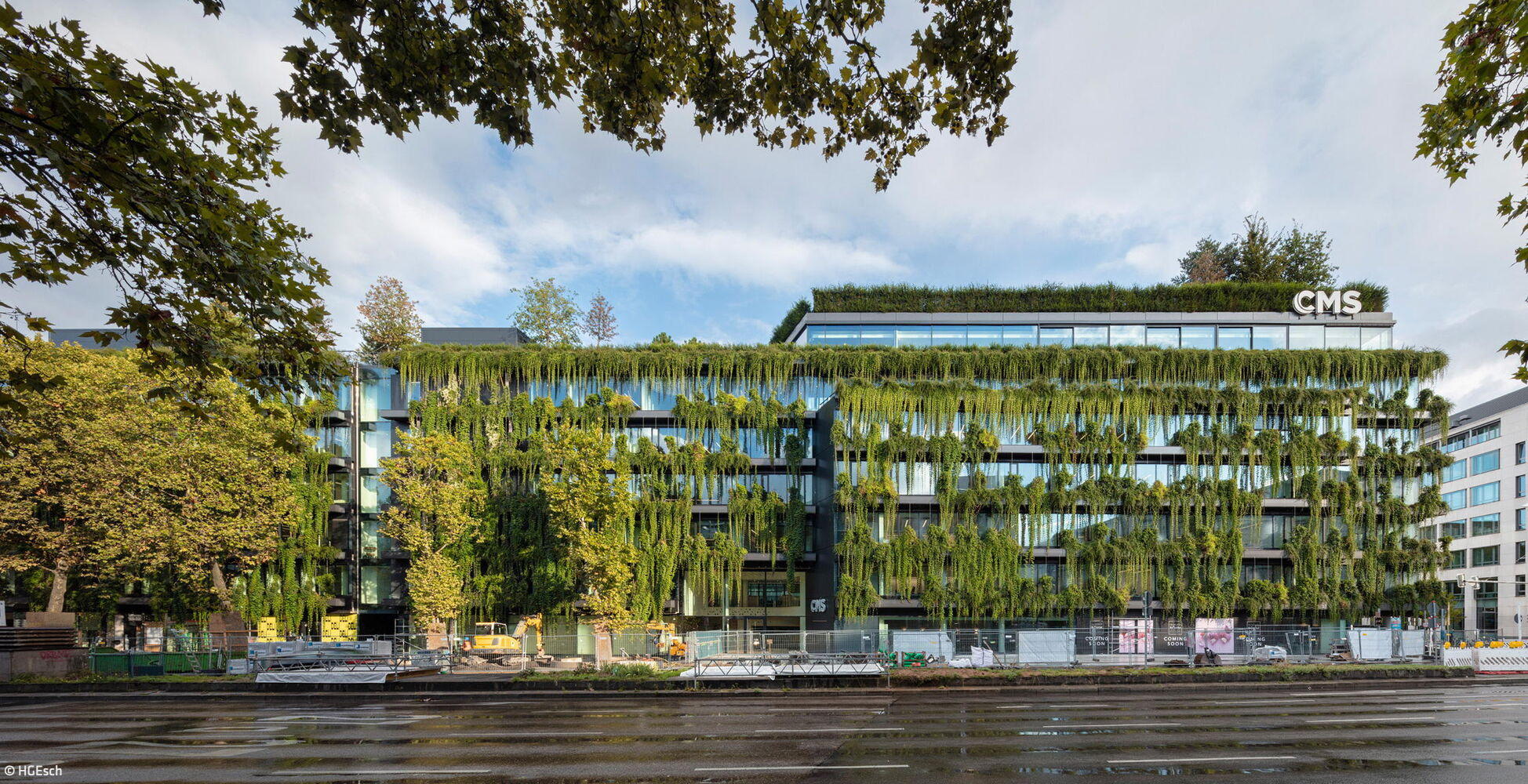
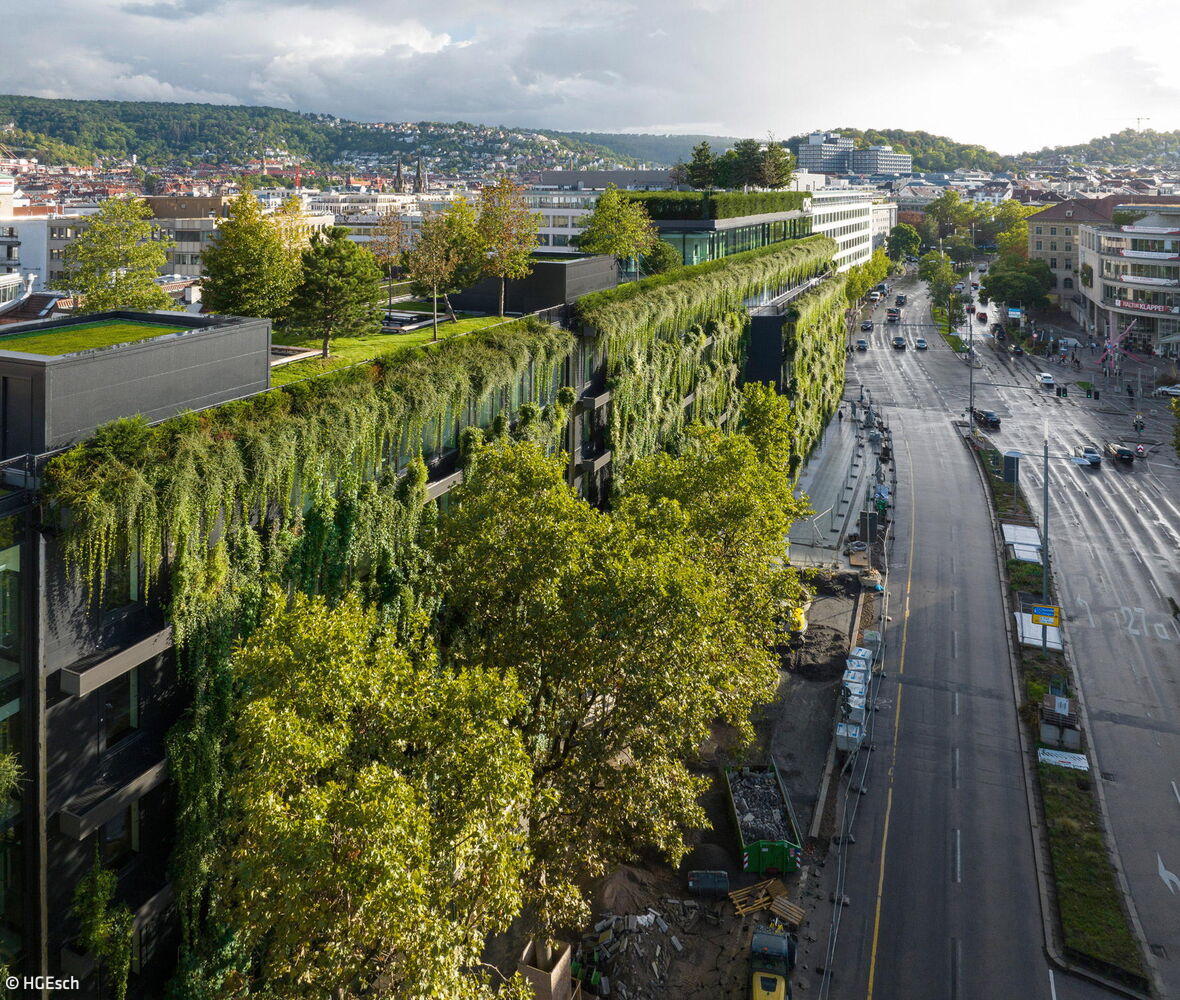
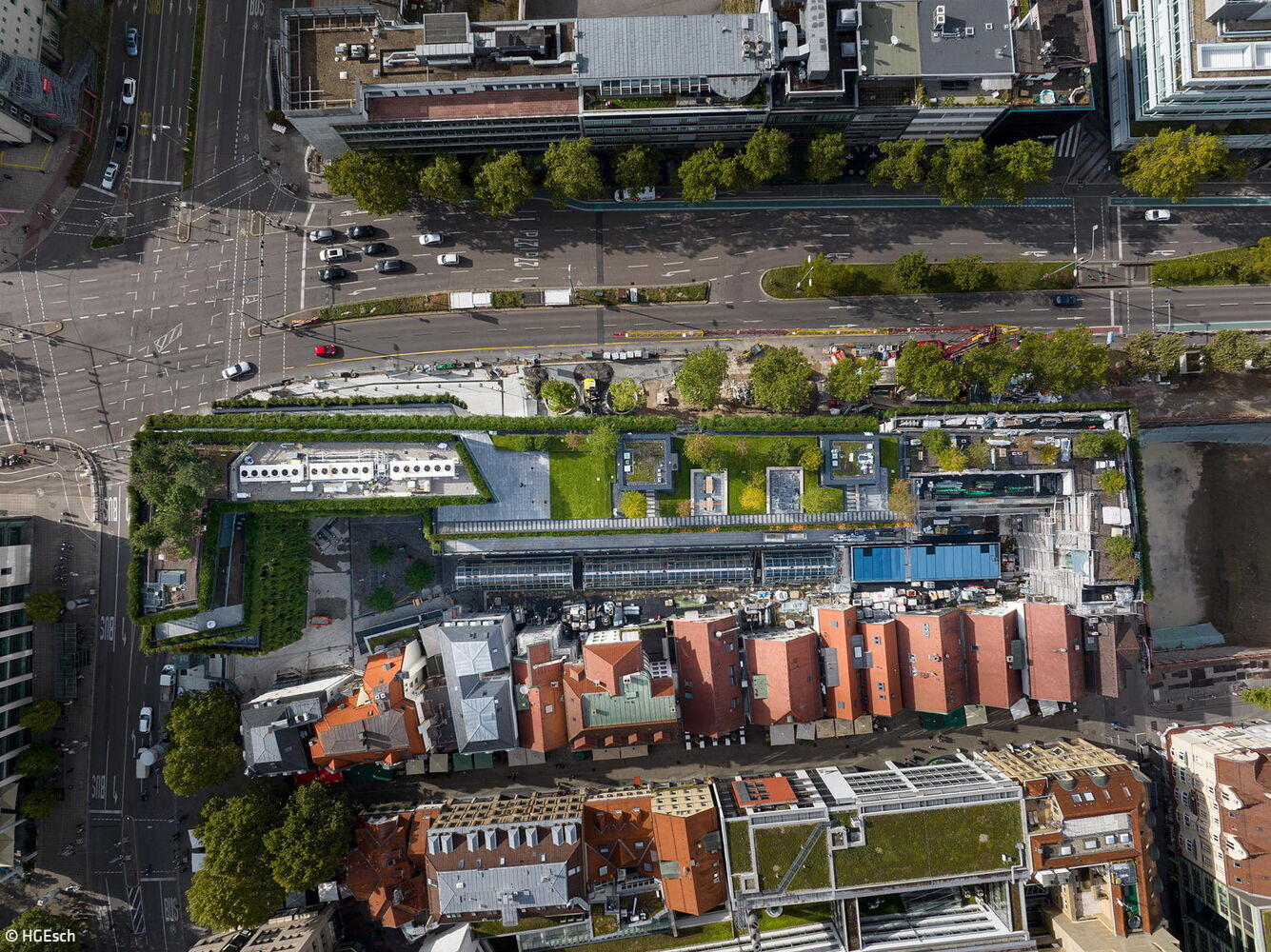
For over four decades, the Calwer Passage has been Stuttgart's favourite urban promenade. Constructed between 1974 and 1978 by architects Kammer + Belz and Partner, it connects a mixed-use quarter with the restored historic half-timbered buildings across the street via a glass dome spanning Calwer Straße—a design inspired by Milan's iconic Vittorio Emanuele II passage. Now, the new development by ingenhoven associates and Tennigkeit Fehrle Architekten transforms this quarter into a six-storey mixed-use complex housing offices, retail, and residences. The design seamlessly integrates the landmark glass passage and existing timber-framed structures into a unified pedestrian zone. At 133 metres long, the street façade emerges as a powerful statement for a greener urban future in Stuttgart's valley basin.
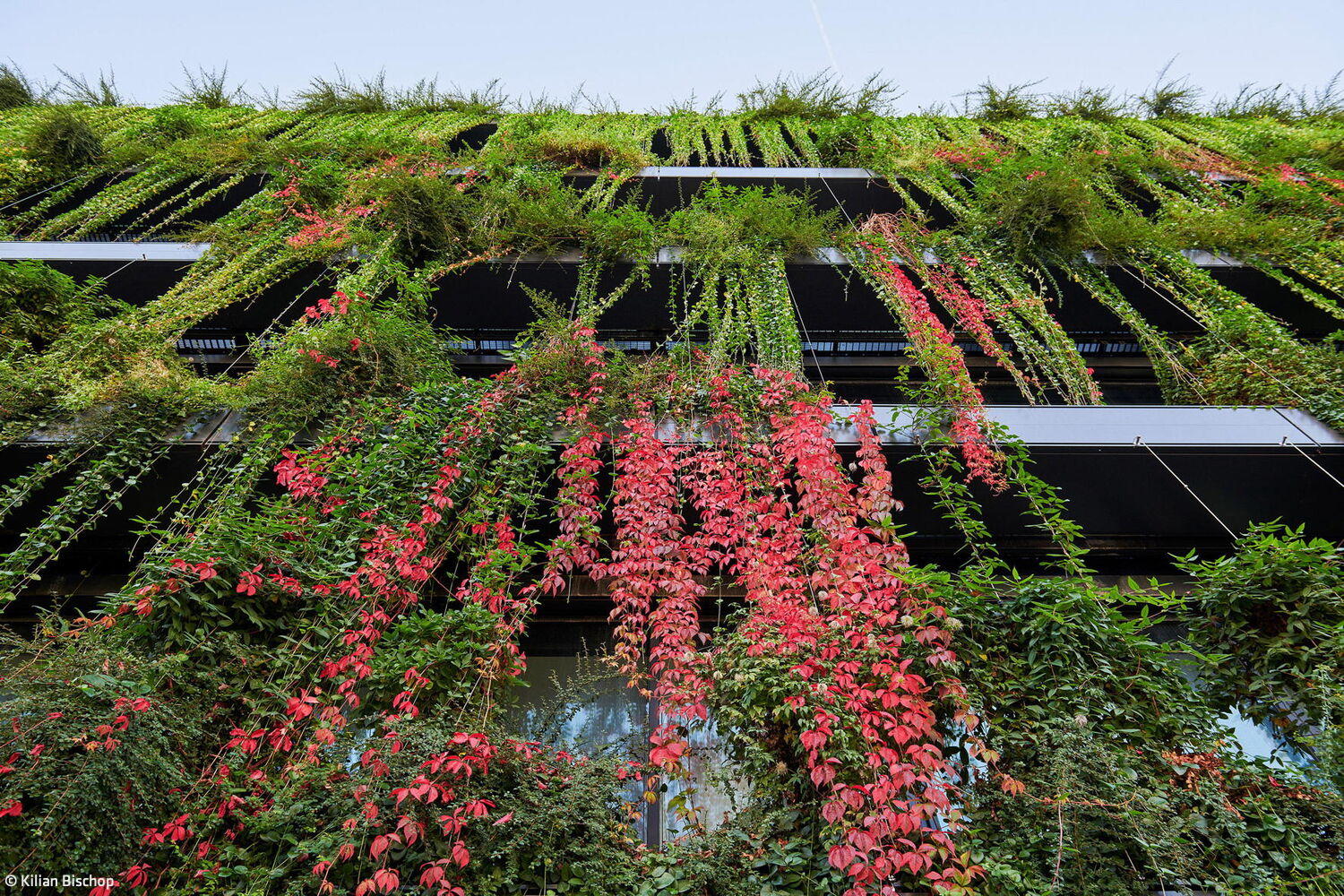
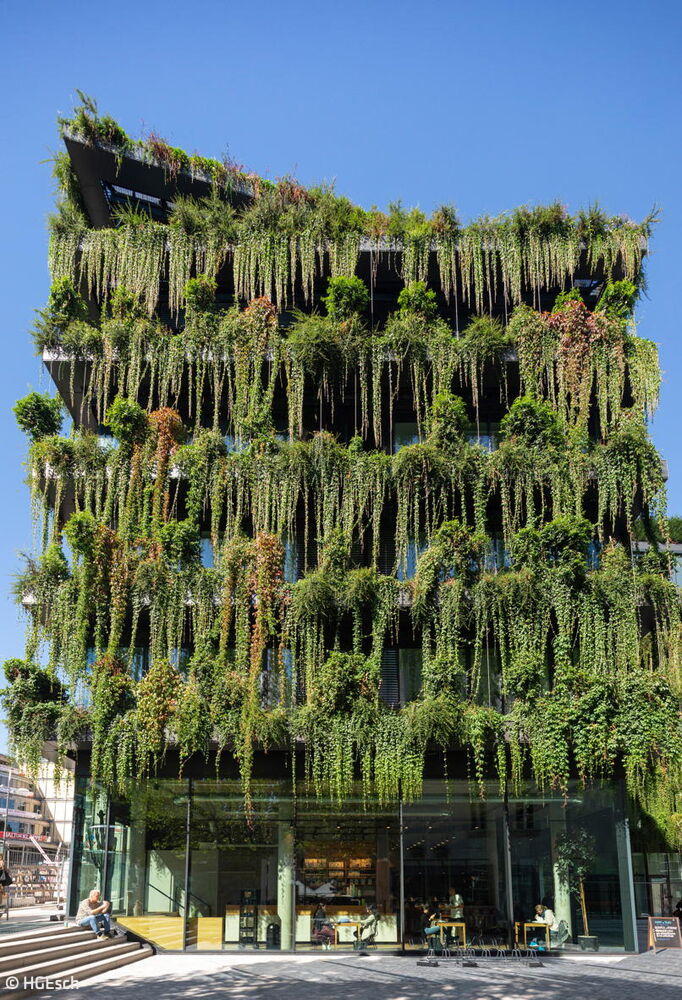
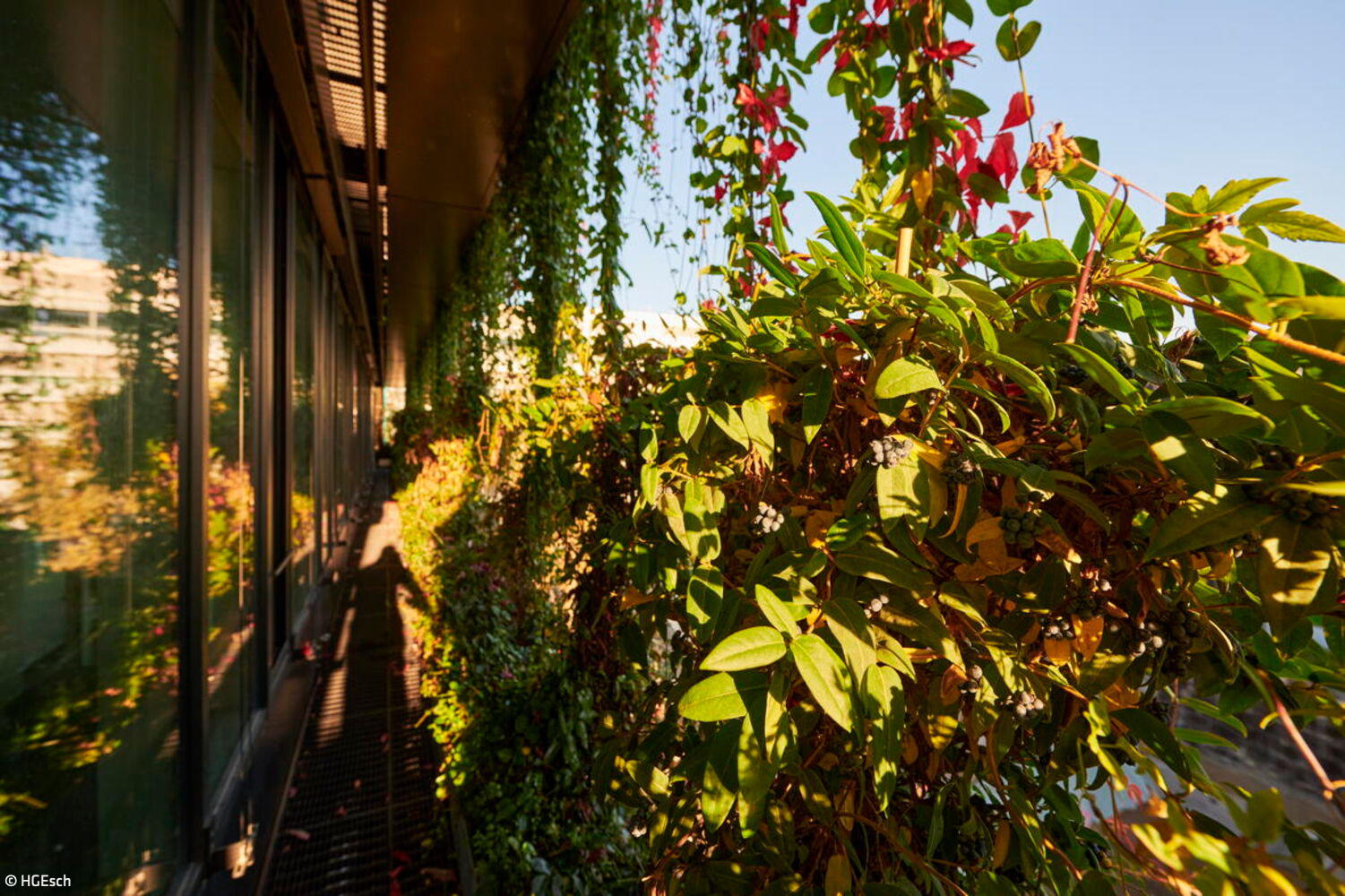
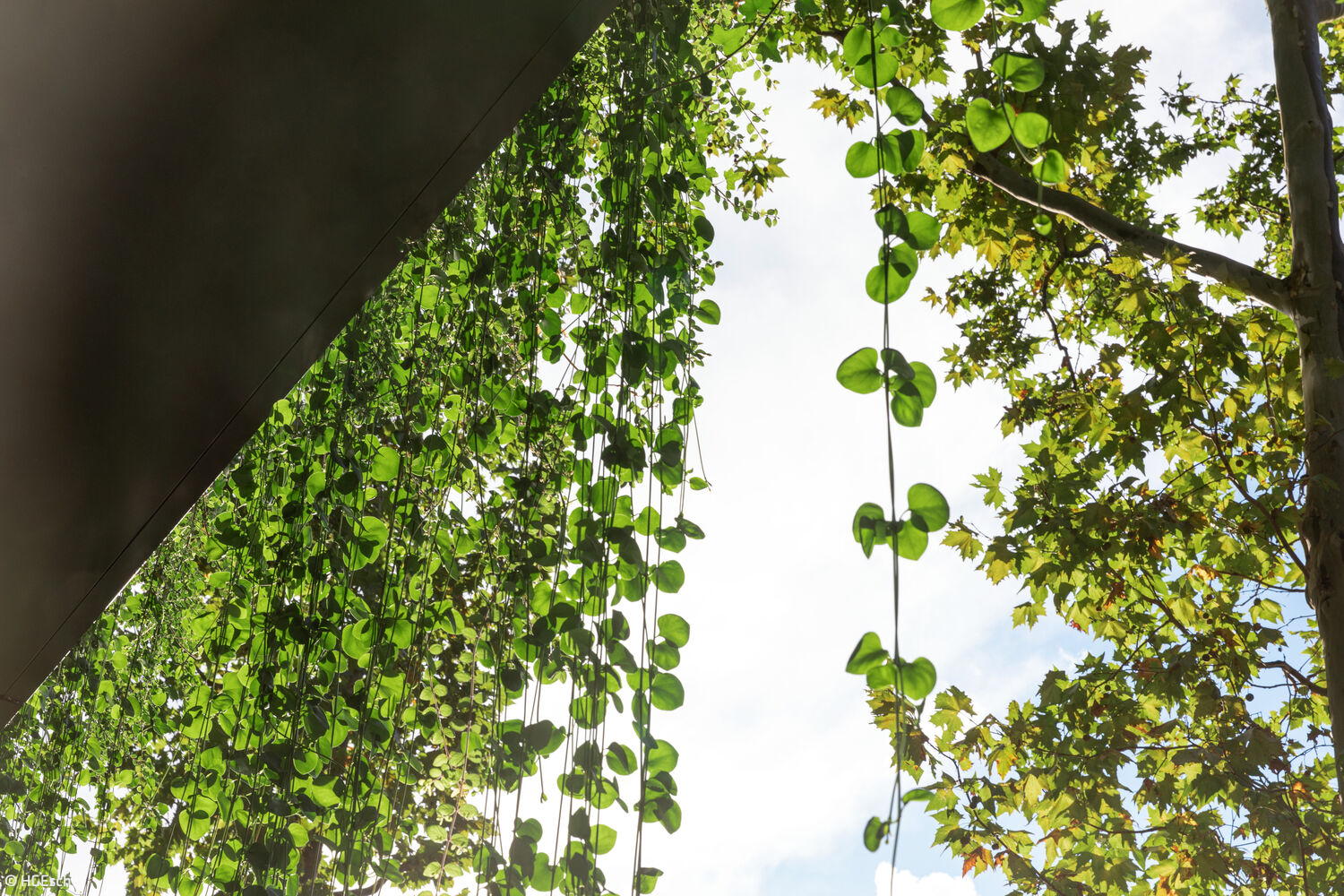
Developed under the direction of ingenhoven associates, the green design transforms the building's transparent façades and roofs into lush vertical landscapes. Forty mature trees—each 15-20 years old—anchor the structure, secured by root ball and crown anchoring systems that withstand wind pressures. The centerpiece: a layered mixed forest of black pines, English oaks, Swedish service trees, and hornbeams crowning the sixth floor. The expansive planted rooftop extends beyond trees, featuring herb gardens, flowering beds, and multiple gathering spaces. Complementing this greenery are 11,000 seedlings in 2,000 planters distributed across the façade structure. Developed with counsel from Prof. Dr. Strauch (phytotechnologist, University of Applied Sciences) and Prof. Dr. Reif (vegetation ecologist, University of Freiburg), the design achieves remarkable biodiversity: alongside trees stand flat-growing species, trailing vines, and climbing plants interconnected via steel cables and mesh systems that stitch the building's floors together. The planting strategy emphasizes year-round vitality, with every specimen chosen for stress resilience and regenerative capacity—essential qualities in such exposed conditions. To ensure rapid establishment, trees were cultivated in nurseries three years prior, then potted into insulated aluminum containers, arriving at installation already well-rooted and ready to acclimate. A lifting apparatus hoists each planter into custom steel frameworks that simultaneously house irrigation systems and maintenance walkways.
A fully automated, sensor-driven irrigation system with integrated nutrient delivery ensures optimal plant health. Real-time monitoring adjusts water and nutrient supply precisely as needed. The result: a vibrant green sanctuary that naturally absorbs pollutants and noise, reduces urban stormwater runoff, and cools the microclimate through evaporative cooling. This innovative living architecture creates a thriving habitat for both people and wildlife—transforming a dense urban setting into a genuinely liveable space.
Photography:
HGEsch
www.hgesch.de
(Published in CUBE Stuttgart 02|25)

Revived with character
A 1920s Apartment Thoughtfully Restored

Las Vegas in Stuttgart
Upscale renovation of a single-family home

For Body and Soul
A Historic Pharmacy Transforms: Landmark Half-Timbered House Becomes Contemporary Restaurant
Play and Living Spaces
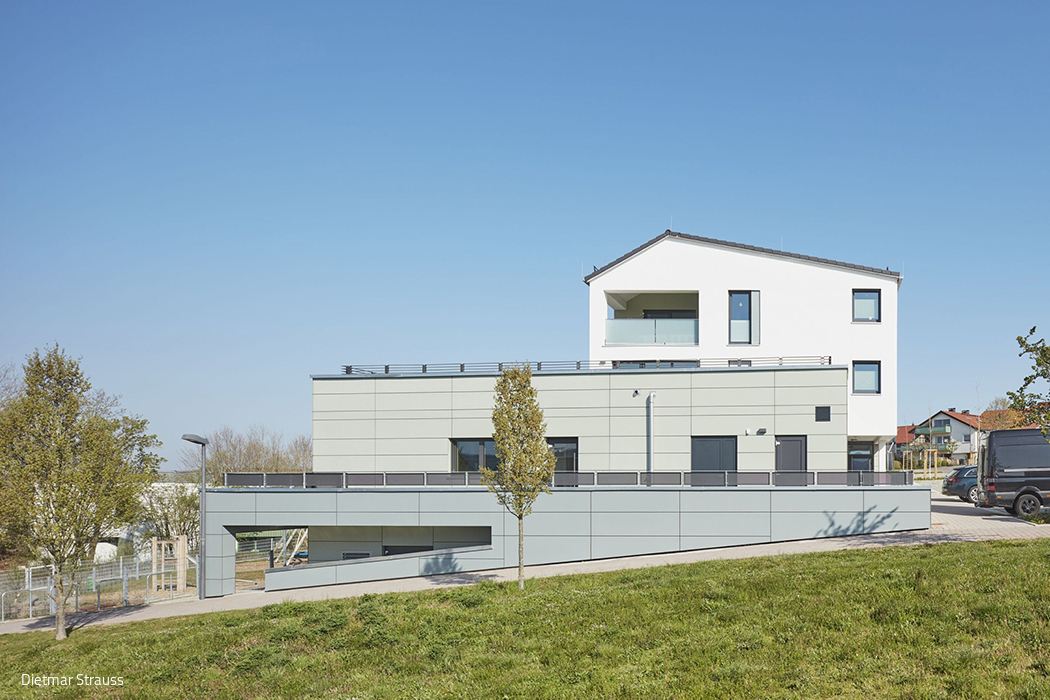
Two-level kindergarten with flat roof serving as the base for residential units above