


Natural yet distinguished
The Neven-DuMont House in Niehl greets visitors with a flourishing landscape of gentle hills
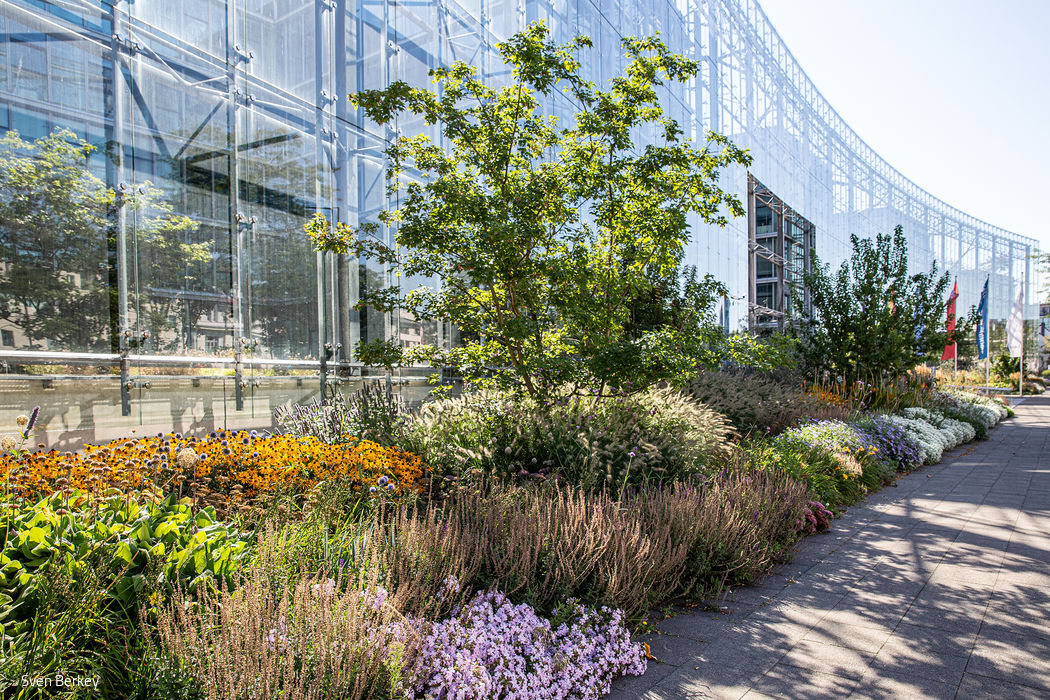
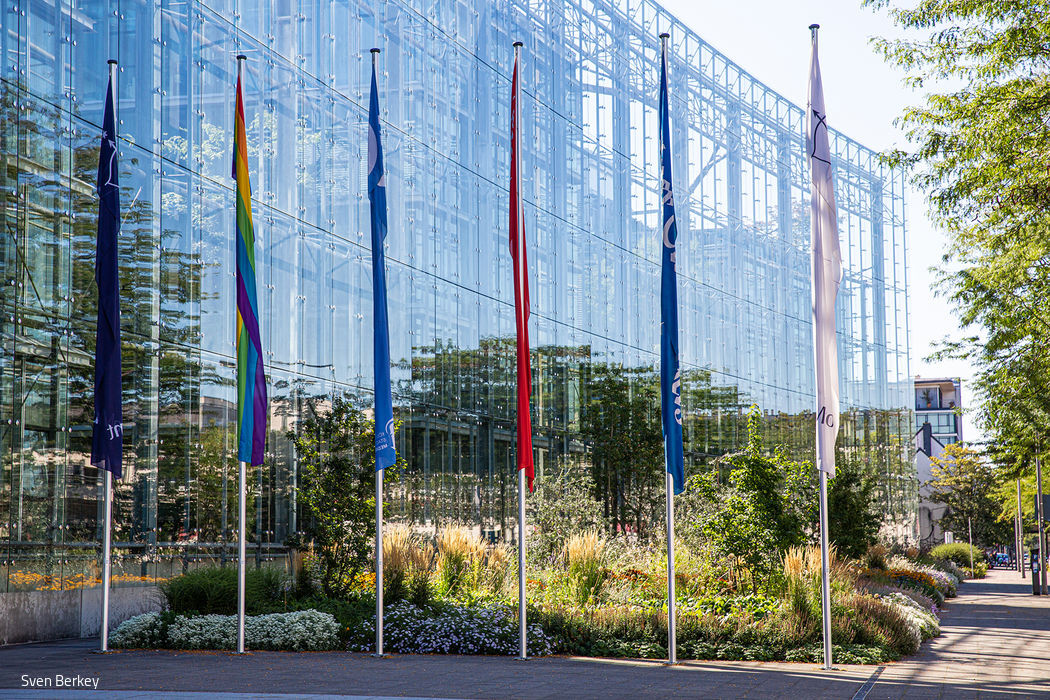
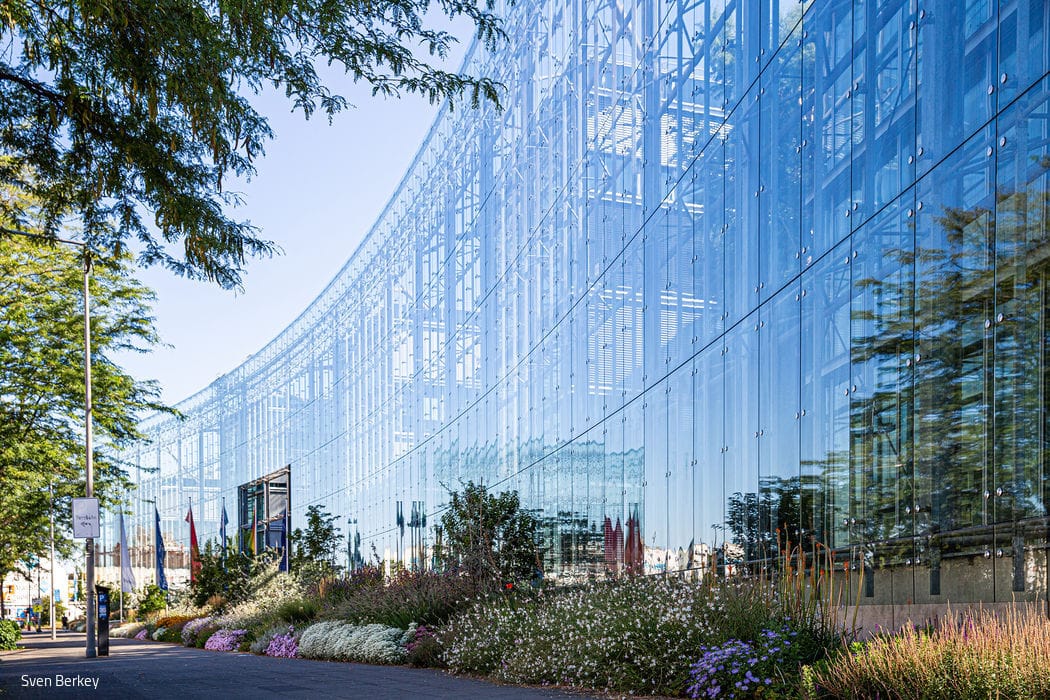
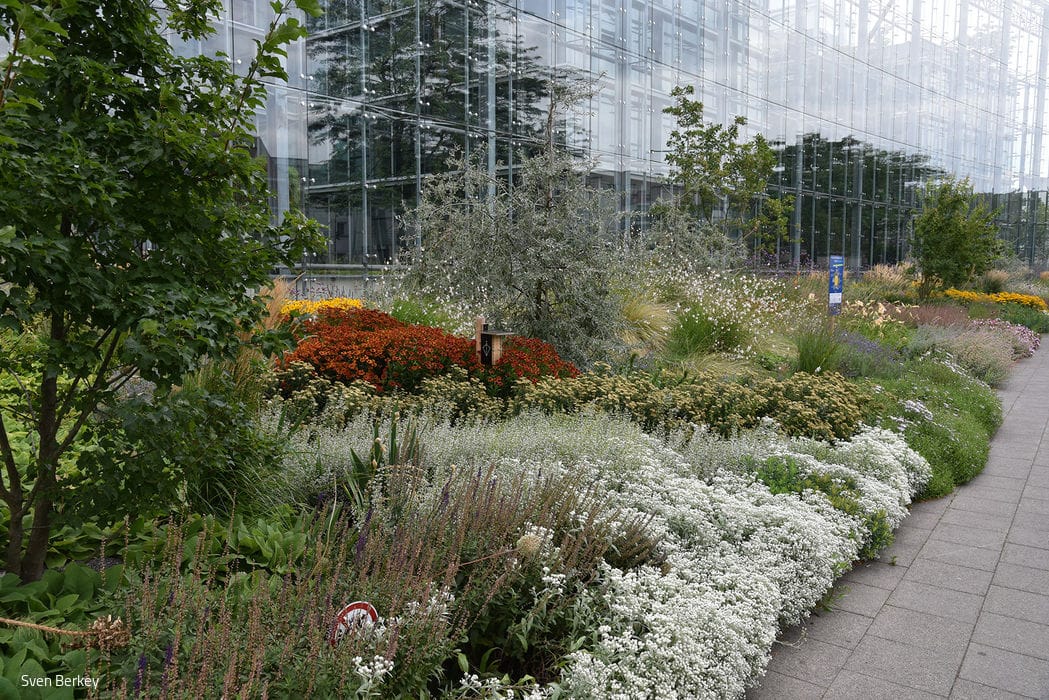
Since opening in 1998, the publishing house on Amsterdamer Straße has anchored the Niehl district as a landmark of the neighborhood. Its prominent front garden demanded complete redesign—particularly given the 150-metre-long, concave-curved noise barrier of clear glass that faces the bustling street. Landscape architects Berkey from Wermelskirchen rose to the challenge, creating an expansive, gently rolling landscape that delivers striking color and fragrance through its carefully considered plantings while simultaneously performing essential ecological functions.
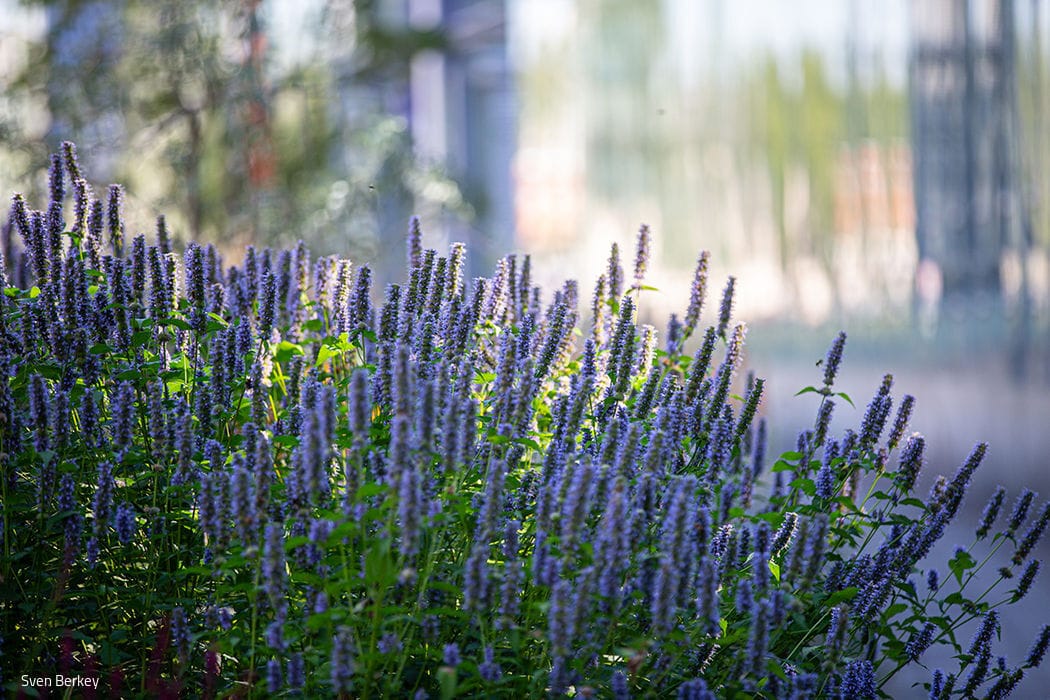
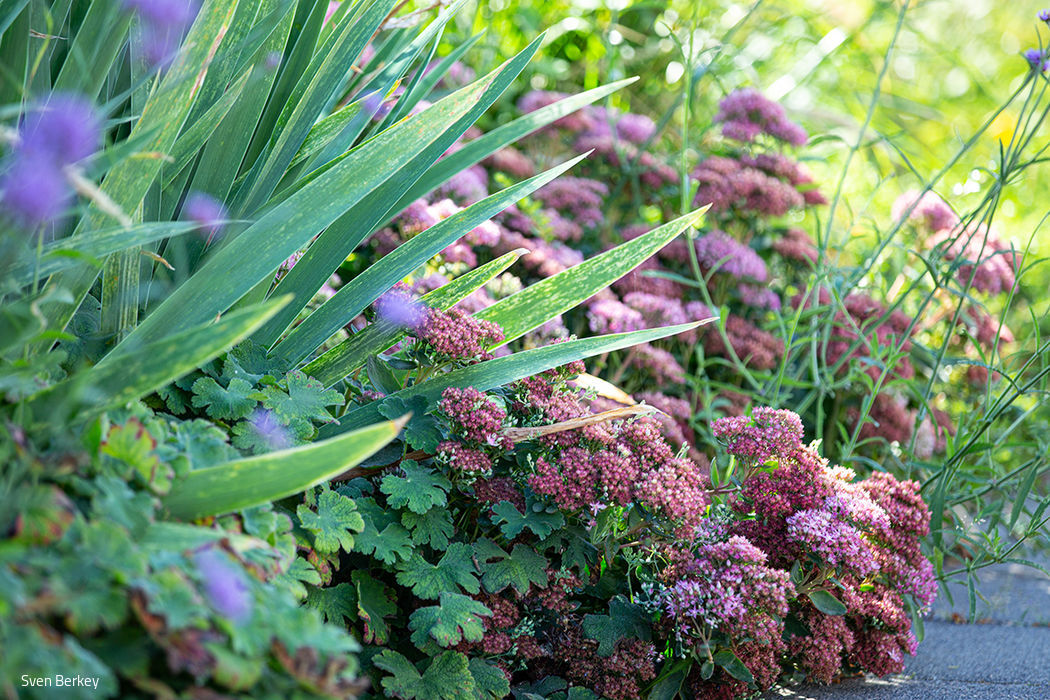
The project began with a critical challenge: the boxwood parterre beds fronting the street had fallen victim to box tree moths and were beyond repair. For the two prominent areas flanking the broad plaza before the main entrance, Berkey Landscape Architects developed three redesign concepts for the 900 m² green space. The executed design transforms the site into a softly undulating landscape: fourteen earthen mounds, ranging from 10 to 60 m² and varying in height from 0.50 to 1.40 metres, create a flowing topography. Their gently curved forms echo the curved noise barrier wall, seamlessly weaving building and landscape together. Beyond their visual appeal, these mounds provide additional substrate depth—improving root development and water retention for healthier plantings. The planting strategy embraces a timeless, naturalistic approach: approximately 20 low-growing specimen trees, 6,500 shrubs, perennials, ornamental grasses, and over 26,000 flowering bulbs work in concert. The result is an ordered, architecturally coherent landscape that captivates year-round—from spring blooms through winter's structural beauty. Rhythmic plant repetitions establish a serene, site-appropriate composition. Fire maple and willow-leafed pear serve as focal specimens, prized for their winter resilience, striking autumn colours, and distinctive bark textures. These anchor sophisticated perennial combinations selected for heat tolerance: coneflowers, knotweed, and globe thistles among them. Supporting grasses—including feather reed grass, purple fountain grass, and deschampsia—complete the palette. Supplemented by a discreet irrigation system, this mixed planting transcends mere aesthetics. It creates essential habitat for pollinators, enhances erosion control and water infiltration, and captures fine particulates. In essence, the entire urban microclimate is strengthened by this thoughtful intervention.
Photography Credits:
Sven Berkey
(Published in CUBE Cologne 03|23)
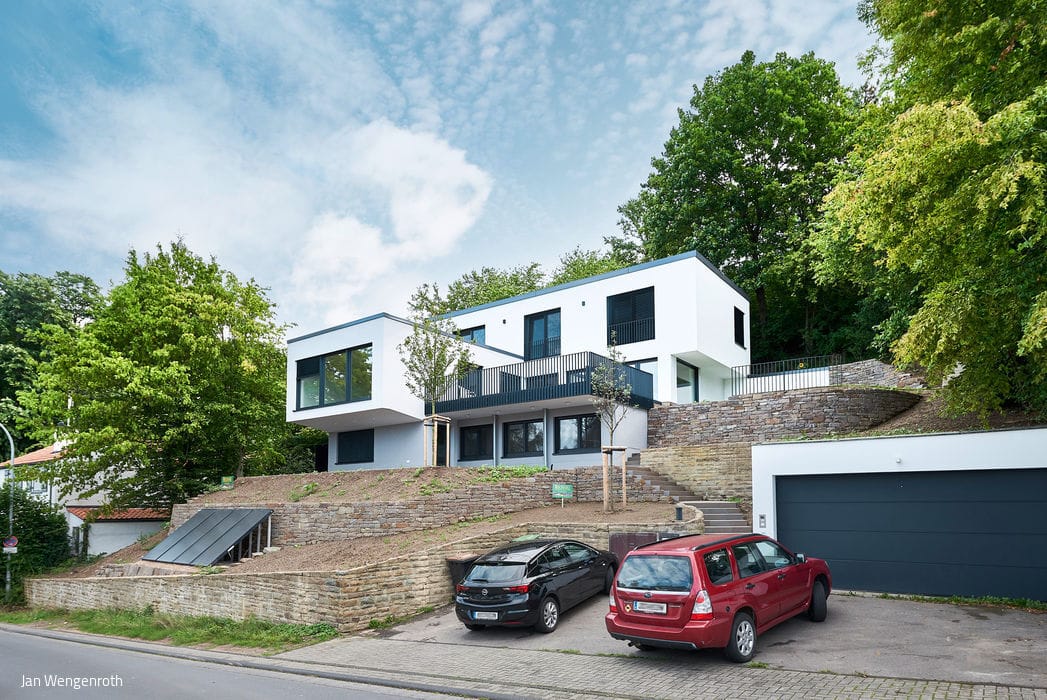
Suspended on the Hillside
A 1964 Bungalow Renewed: This Bad Honnef Home Feels as Fresh as New Construction
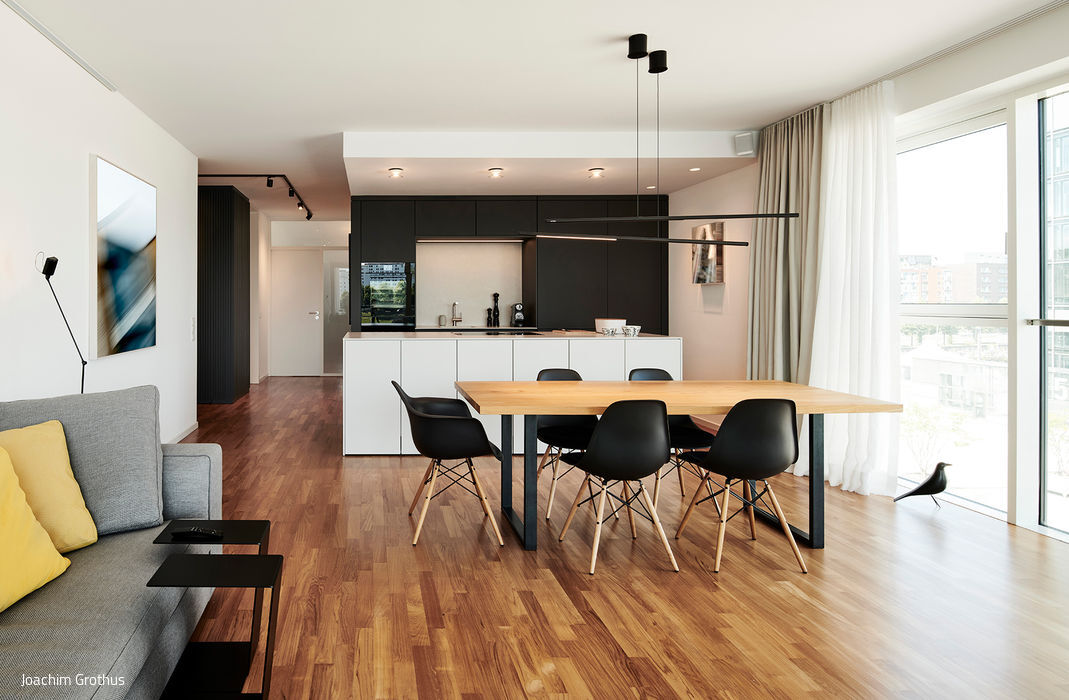
Old meets new
The refined restraint of the design draws focus to the art and the Rhine.

Dynamic Ensemble
The "New Chancellor's Square" completes Bonn's high-rise ring
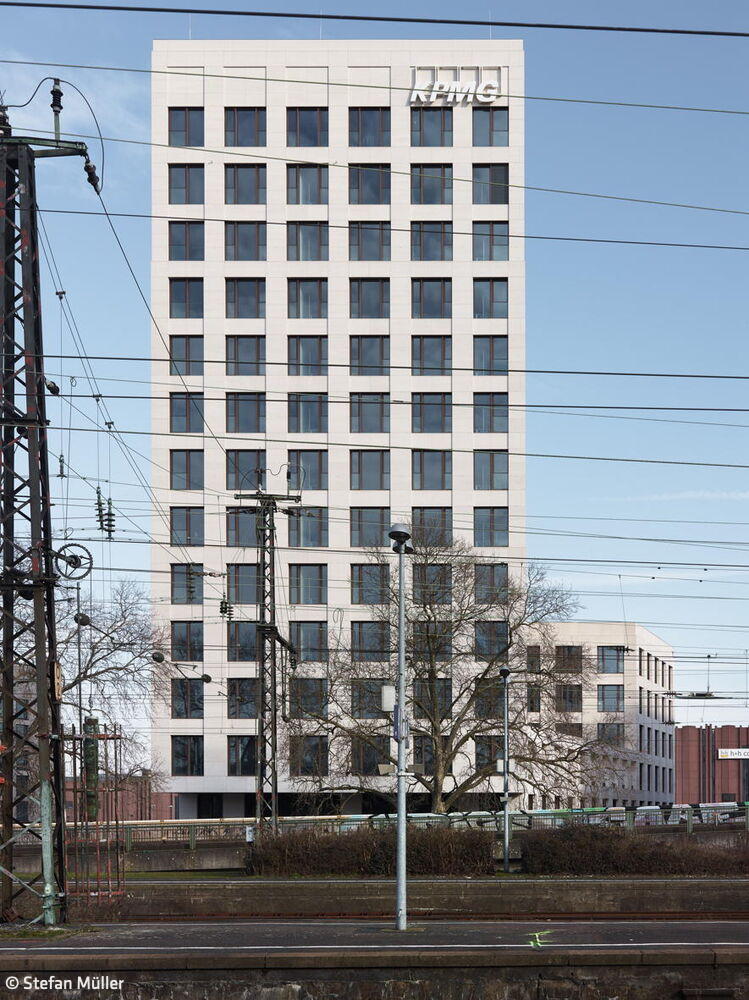
Luminous Landmark
The Centraal: a sculptural icon defining MesseCity's skyline