


Living Space Under the Roof
Transforming Unused Attics into Attractive Homes
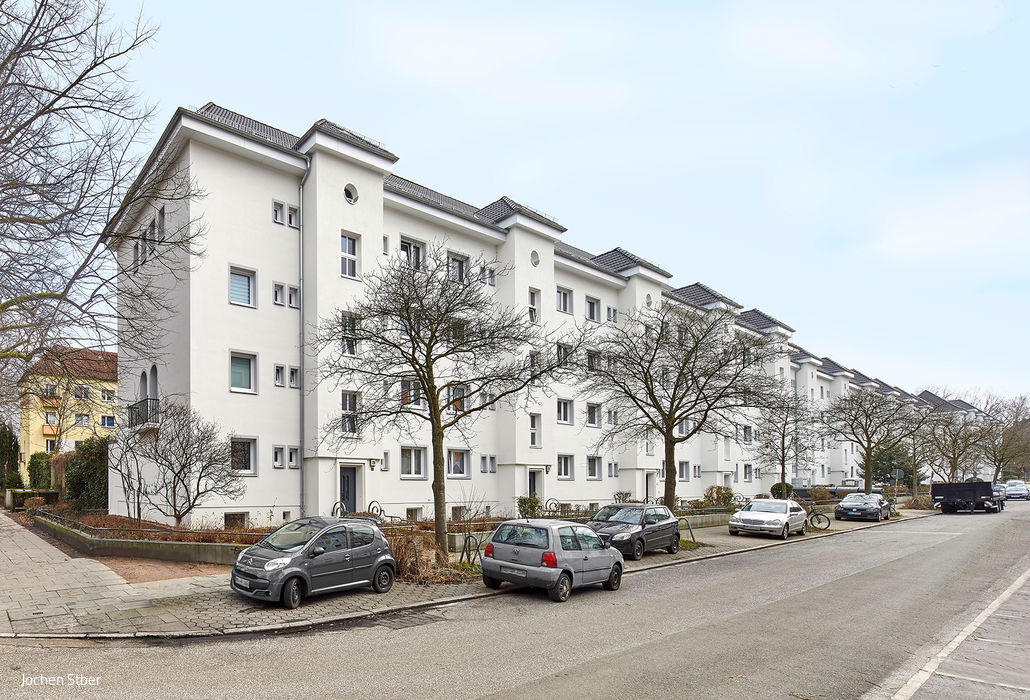
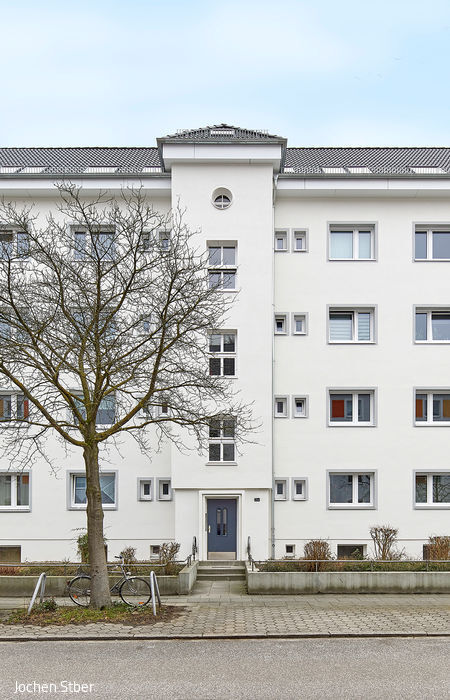
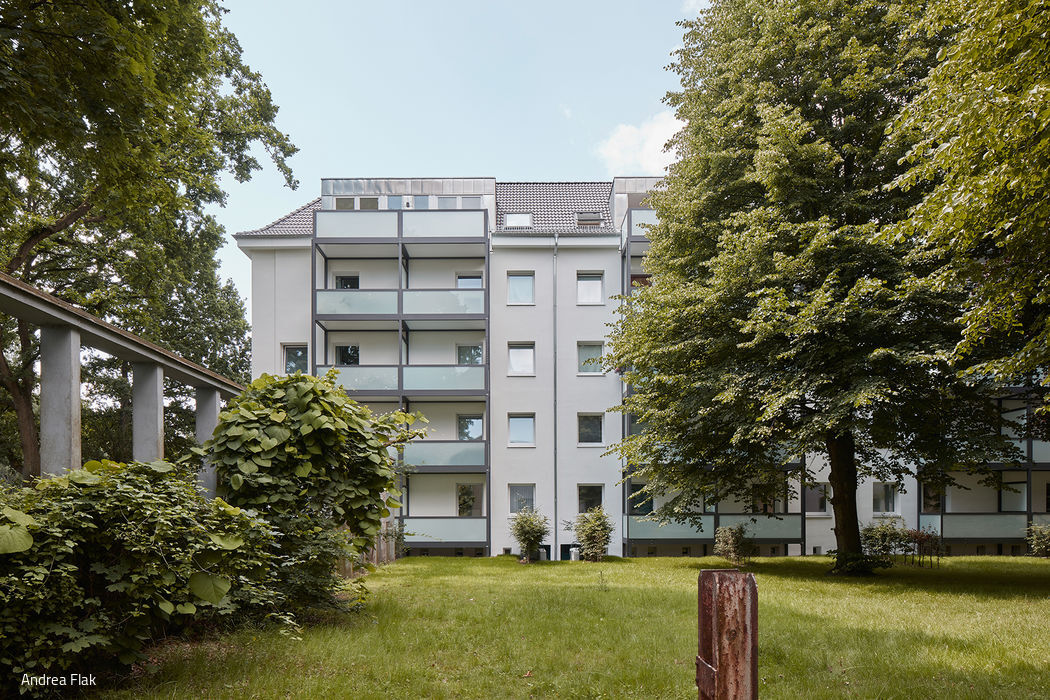
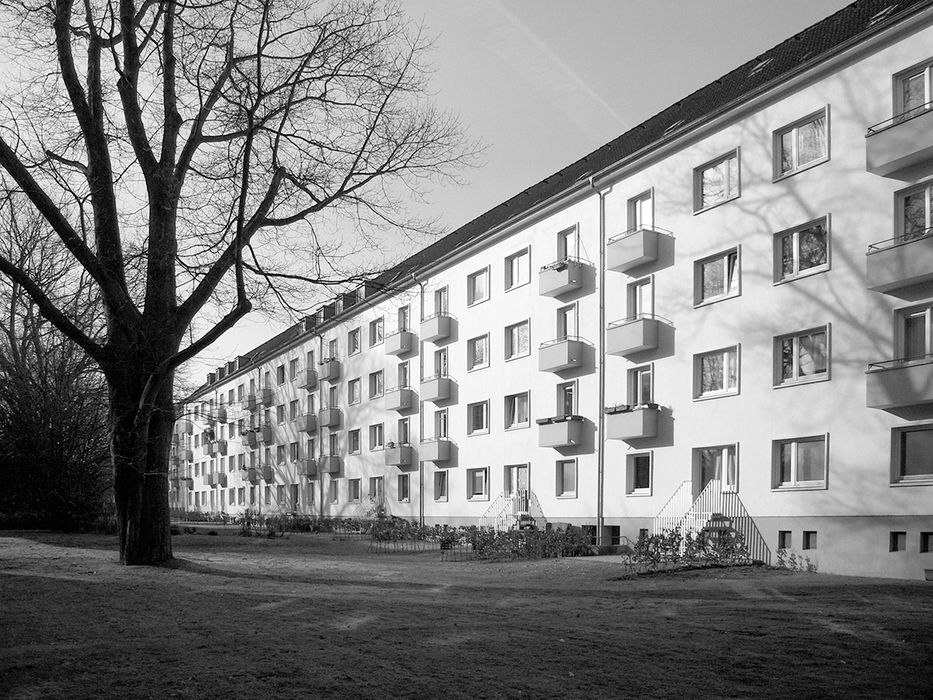
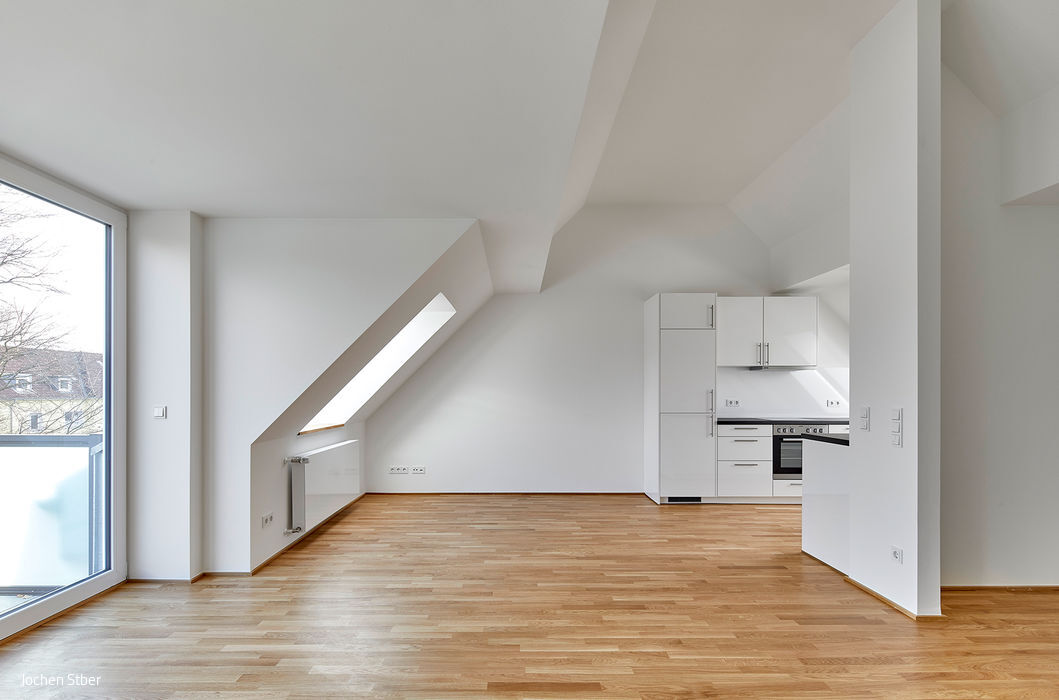
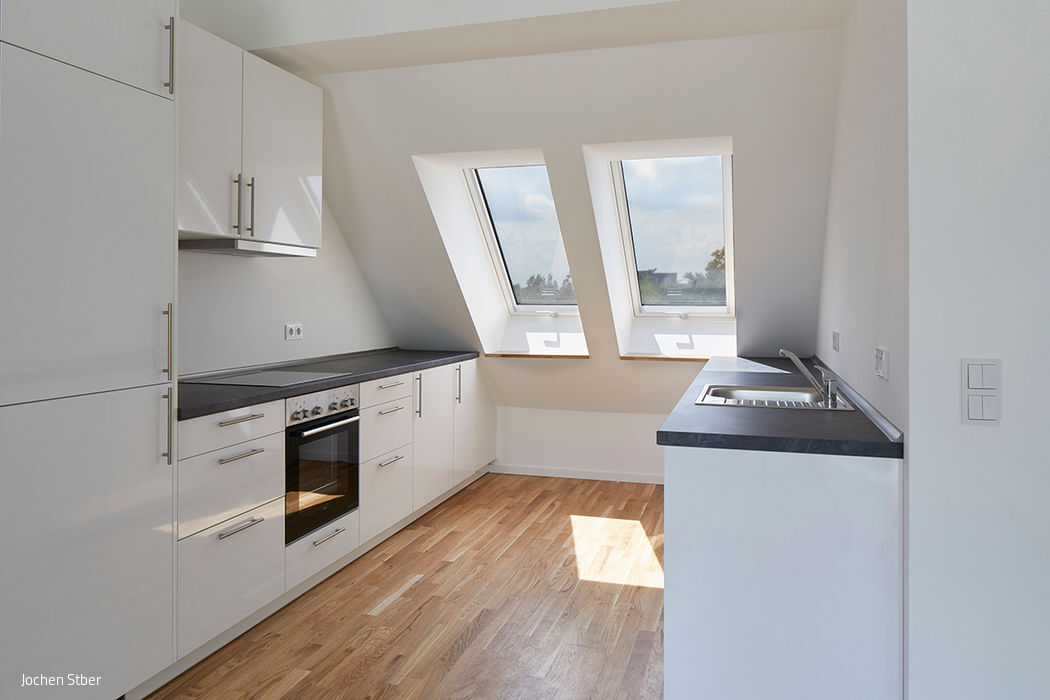
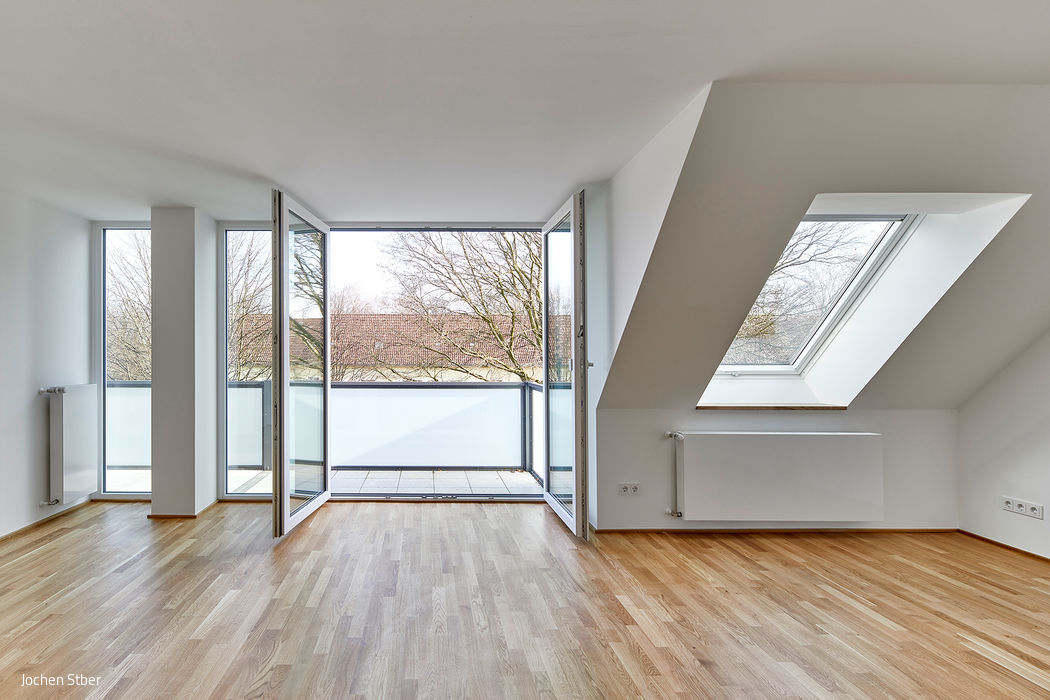
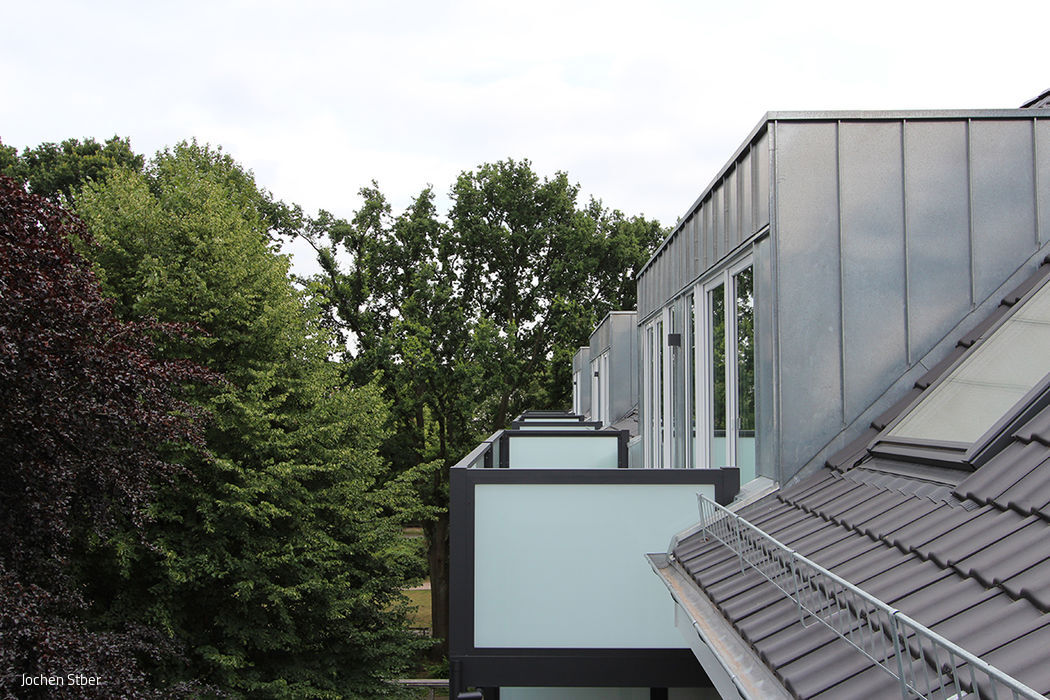
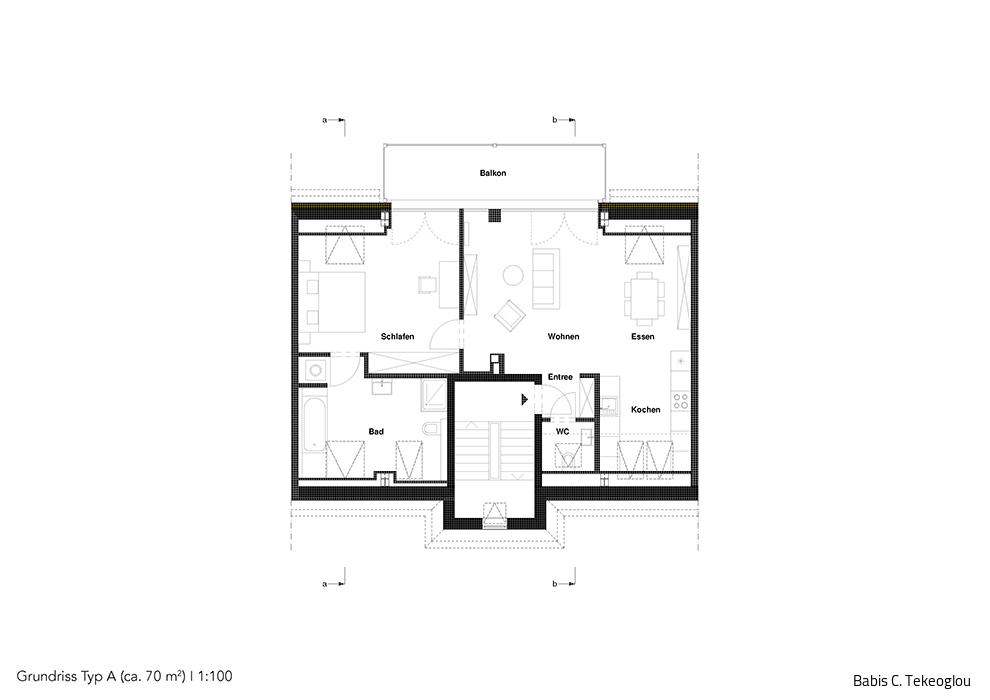
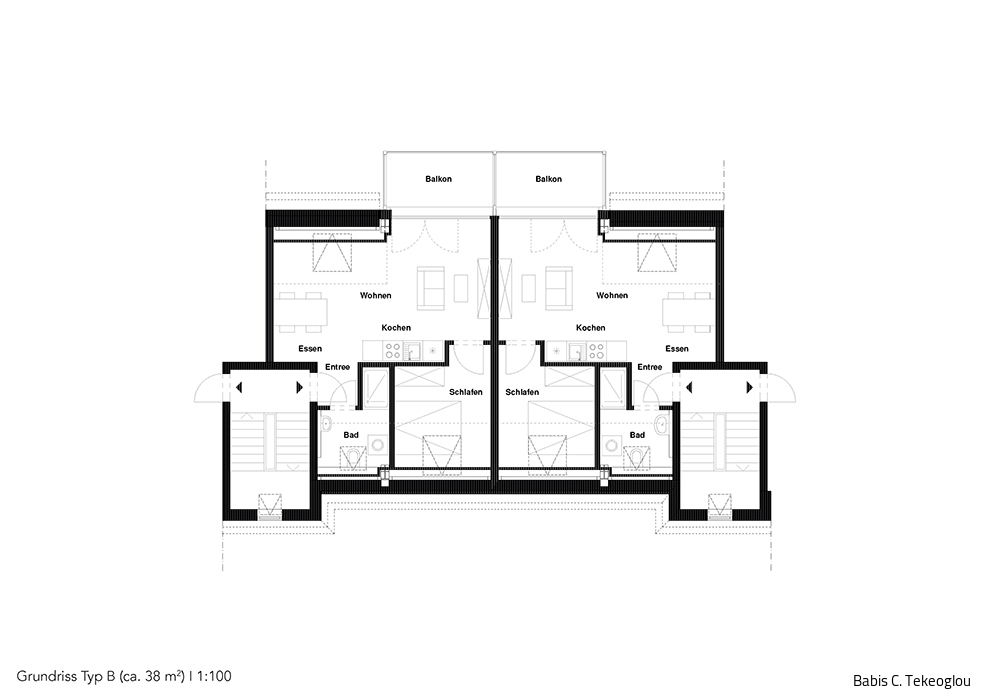
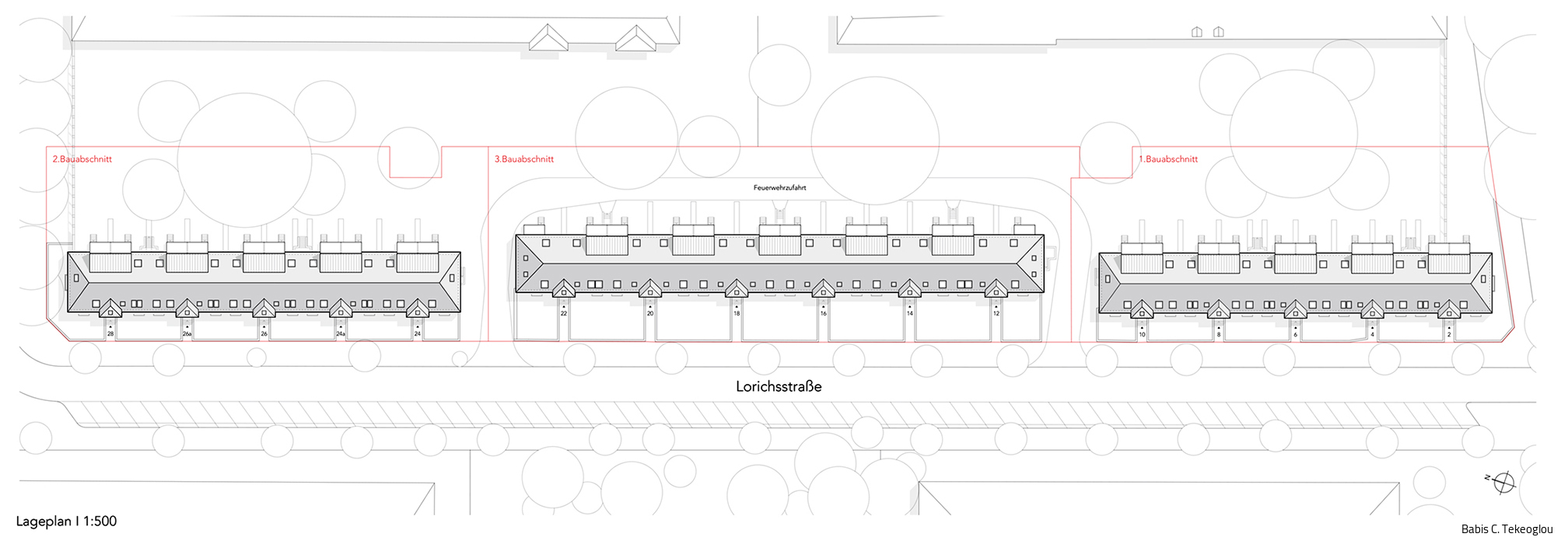
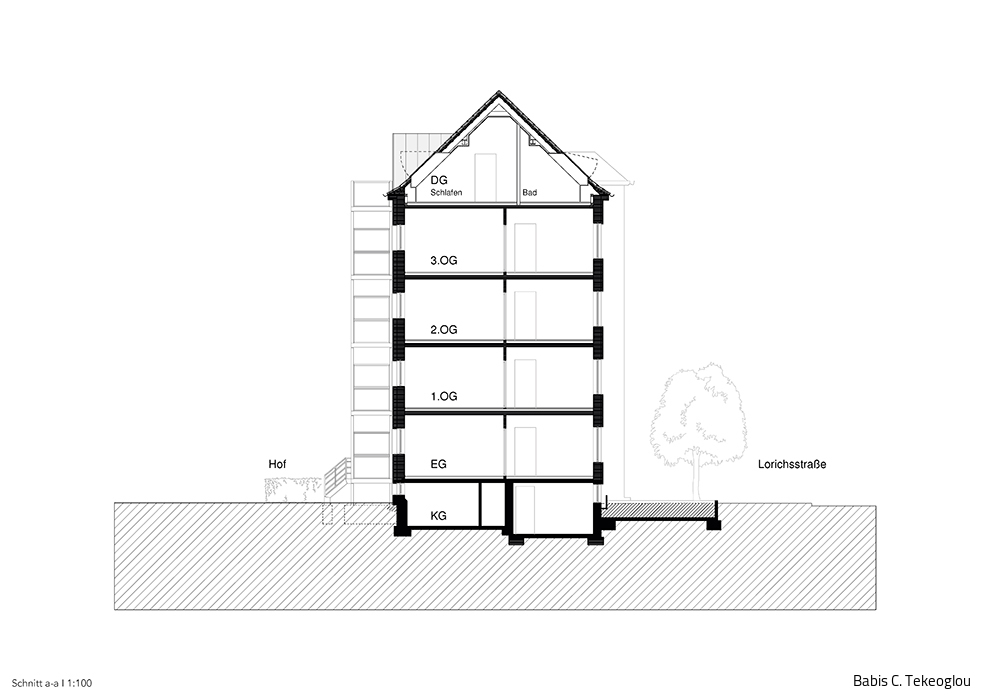
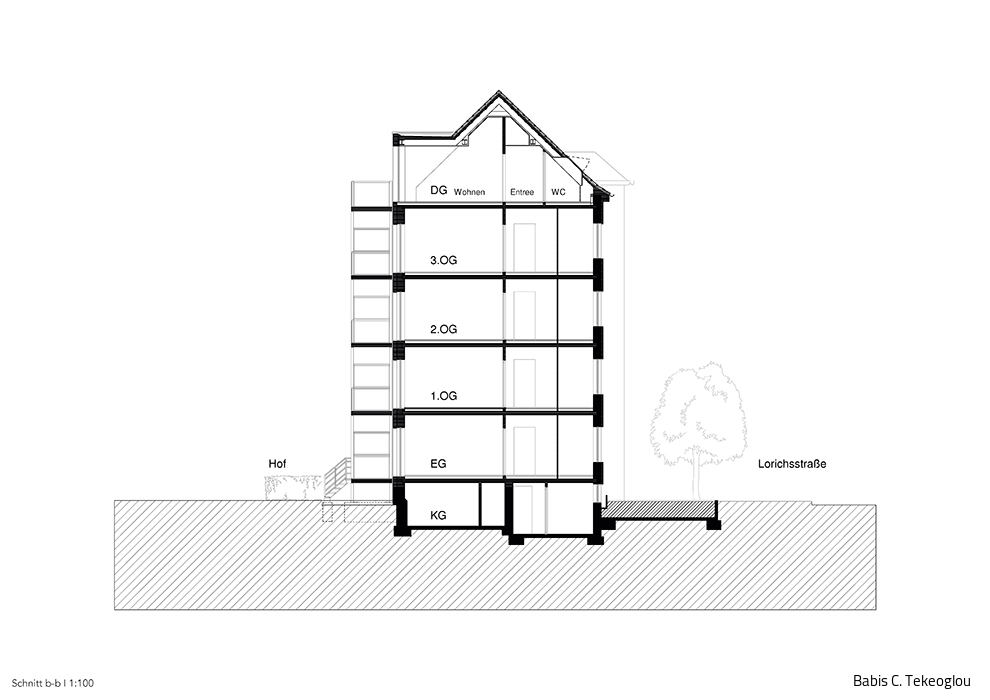
With housing demand soaring and buildable land in short supply across Hamburg, intelligent densification strategies are more critical than ever. Vacant plots, rooftop extensions, and loft conversions represent tremendous untapped potential. Architect Babis C. Tekeoglou and his team have made a speciality of breathing new life into these overlooked "leftover spaces." At a residential complex on Lorichstraße in Barmbek-Nord, his firm transformed the neglected attics of three buildings into atmospherically rich living quarters. This project exemplifies how thoughtful urban densification can unlock appealing new residential space beneath the eaves.
Built in 1936, the complex epitomized Nazi-era architecture with its steep roofs and rendered facades—a stark contrast to the brick and flat-roof reform housing that defined the 1920s. Heavily damaged during the war, it was rebuilt after 1955 by a housing cooperative. The three buildings contained 128 rental units, 16 stairwells, and roughly 1,100 m² of attic space that had languished unused. When new ownership took over, they saw an opportunity: renovate the stairwells as part of an energy-efficiency upgrade, introduce new, larger balconies in the courtyard for all units, and repurpose the dormant roof space as contemporary apartments. Planning quickly revealed that a complete roof replacement made both economic and practical sense. The conversion unfolded over two years in three phases, leaving the facades and stairwells looking bright and inviting.
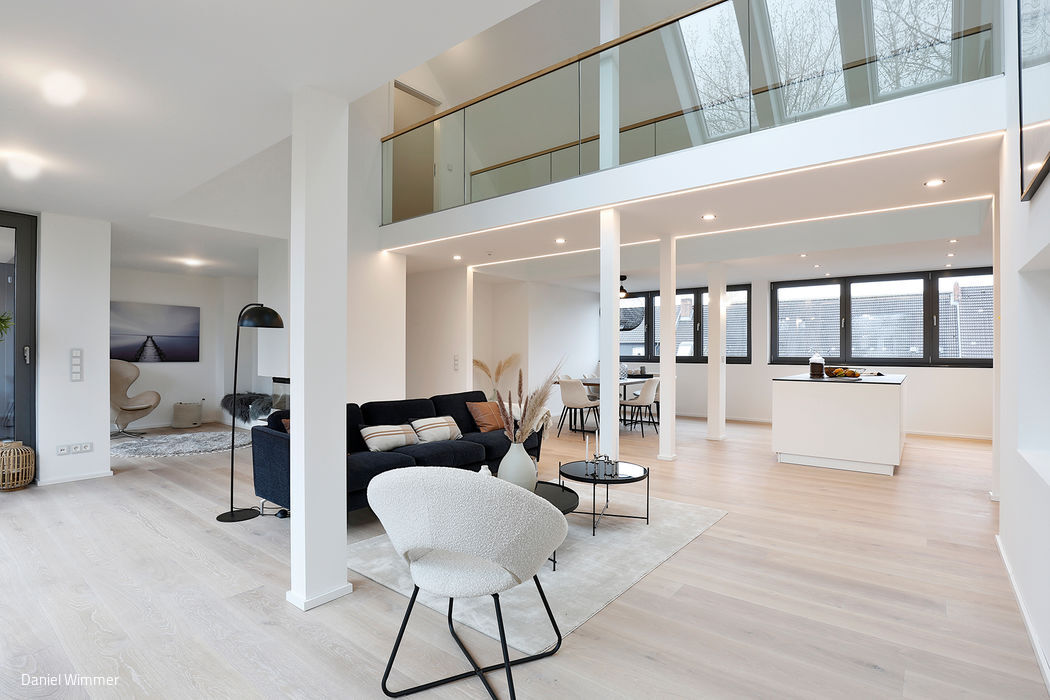
The new roofscape now houses 20 apartments: twelve two-room units with 70 m² of living space, and eight studios or one-bedroom units of 38 m² each. Both types feature thoughtfully conceived floor plans. As you enter, you step directly into an open-plan living, dining, and kitchen area with access to a private outdoor space. From the living room, the sleeping quarters connect seamlessly—with direct balcony access in select layouts—alongside a full bathroom and guest toilet. The generous 3.50 m ceiling heights and expansive balconies that extend the living experience create an impressive sense of spaciousness. The varied interplay of daylight and shadow, orchestrated through carefully positioned windows and openings, adds particular atmospheric richness. In total, approximately 130 skylights bring natural light and character throughout the development.
Photography Credits:
Jochen Stüber
www.jochenstueber.de
Andrea Flak
www.andreaflak.de
(From CUBE Hamburg 02|20)


The Beauty of the Second Row
Bespoke Living Space for a Growing Family
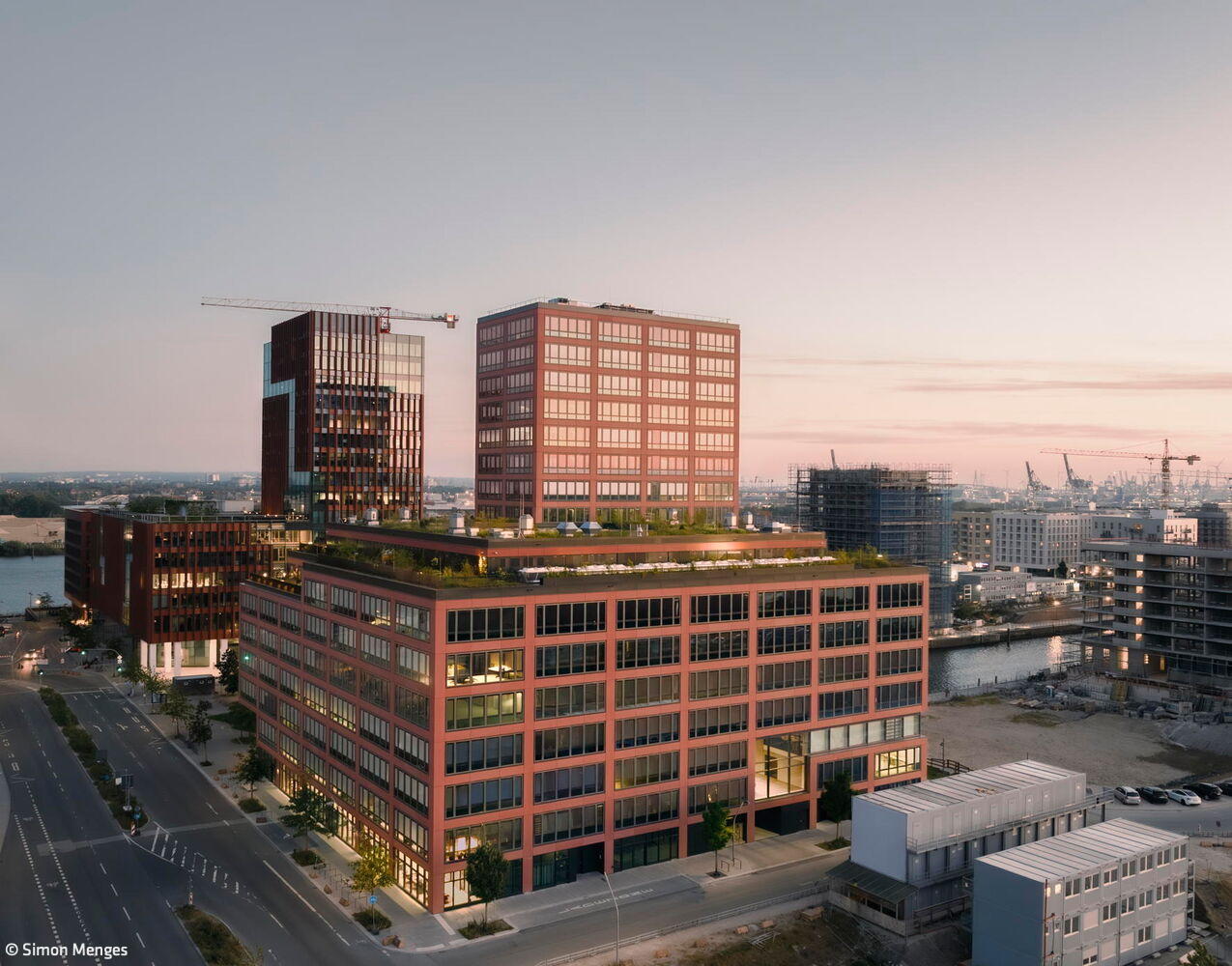
Like a Small Town
This office building actively fosters interaction and cross-team collaboration.
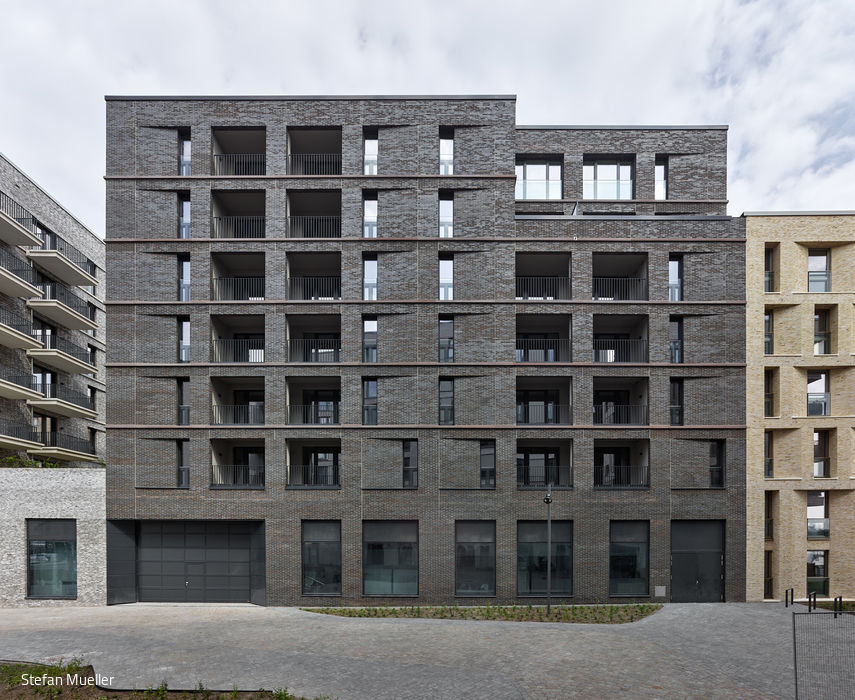
In the Heart of It All
Vibrant Diversity and Public Housing in the Multigenerational Quarter
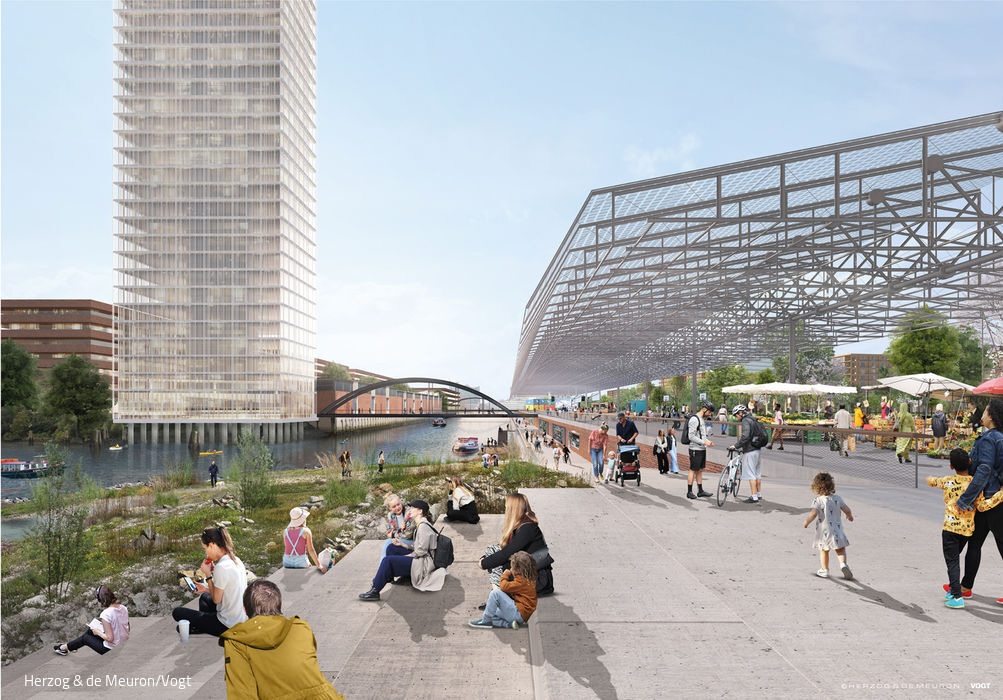
Grasbrook: A New Urban Quarter
Envisioned as a verdant peninsula between the Norderelbe and Moldauer Harbour, Grasbrook will emerge as a vibrant mixed-use district—a showcase of urban living combined with accessible green space.