


Gardens with a past
Gardens on former harbour grounds reflect industrial history
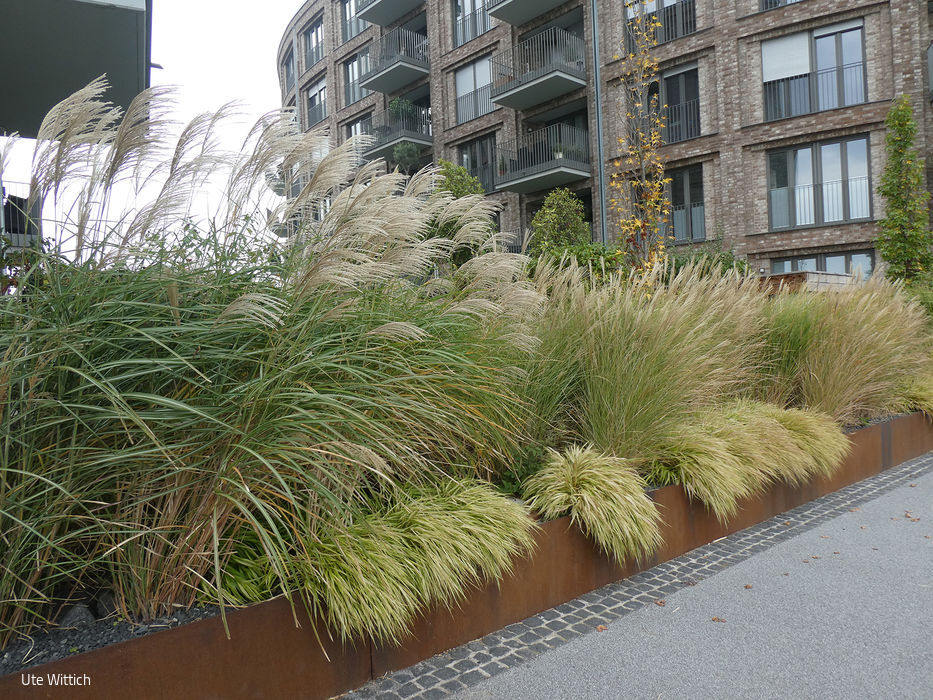


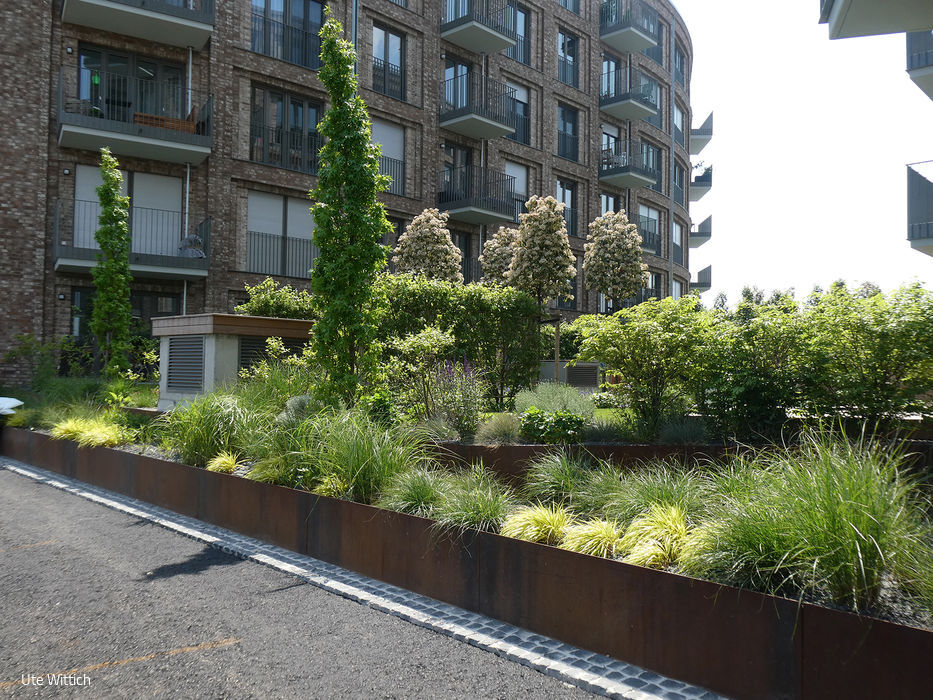

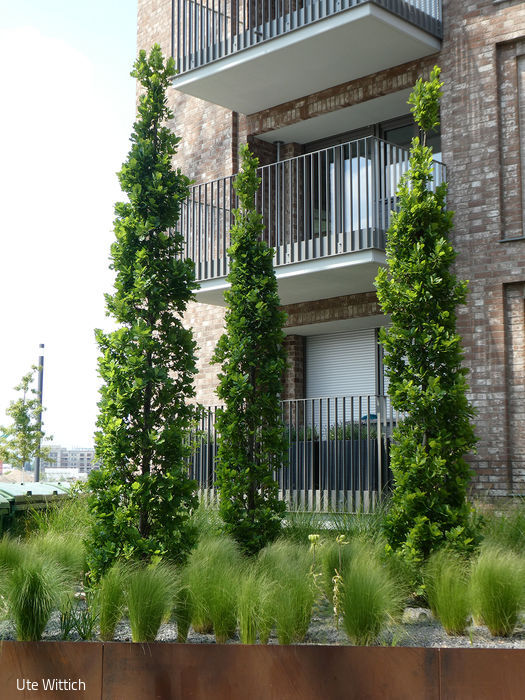


Where there used to be a harbour area, new living space has been created in Mainz in five buildings. The gardens surrounding the houses with ship-like floor plans on the south pier were designed by Ute Wittich. Her guiding principle for the location was that the harbour area, as a former industrial site, should be reflected in the outdoor facilities. A listed crane is not only a visible sign of the site's original use, it also influenced the planning idea to use Corten steel, as it is reminiscent of industrial sites. Since the entire complex had to be raised to a higher level for flood protection, the landscape architect designed most of the Corten steel edging in a staircase-like pattern. "This creates interesting accents that, in combination with the evergreen hedges, grasses and shrubs, provide variety," she explains.
When planting the outdoor areas, the port company's requirements had to be taken into account: no spreading trees were to be planted so that the nearby new harbour and the banks of the Rhine could still be seen between the houses. But also because of the industrial past, the landscape architect opted for different grasses of varying heights, stalks and colours. Particularly tall grasses were planted where privacy was needed, while others hang over the Corten steel like a wig.
When designing the inner courtyards, hedges with different shades of green and leaf shapes were chosen. As there are no fences on the entire site, an ornamental apple hedge was selected to separate the gardens from each other. "The dense plantings are complemented by hundreds of perennials in harmonious colour gradations, which I always chose to be insect-friendly and to bloom throughout the season." To ensure that residents could enjoy a harmonious garden atmosphere, the landscape architect had another important consideration: "When selecting the plants, I also took climate change and biodiversity into account." Plants that can tolerate heat and drought were therefore chosen: grasses, perennials and trees such as oak, hornbeam and sweetgum.
To prevent light pollution, only economical lighting is used. The paths in the inner courtyards are covered with water-permeable gravel, and plastic sofas and armchairs by Philippe Starck invite visitors to sit down and relax. Tall umbrella pines or evergreen trees mark the paths.
Photography Credits:
Ute Wittich
(Published in CUBE Frankfurt 01|21)
Differentiated & Unified
The goal was to create individual residential buildings unified by a cohesive façade language. By varying façade materials, the design articulates each...
Radically Reduced
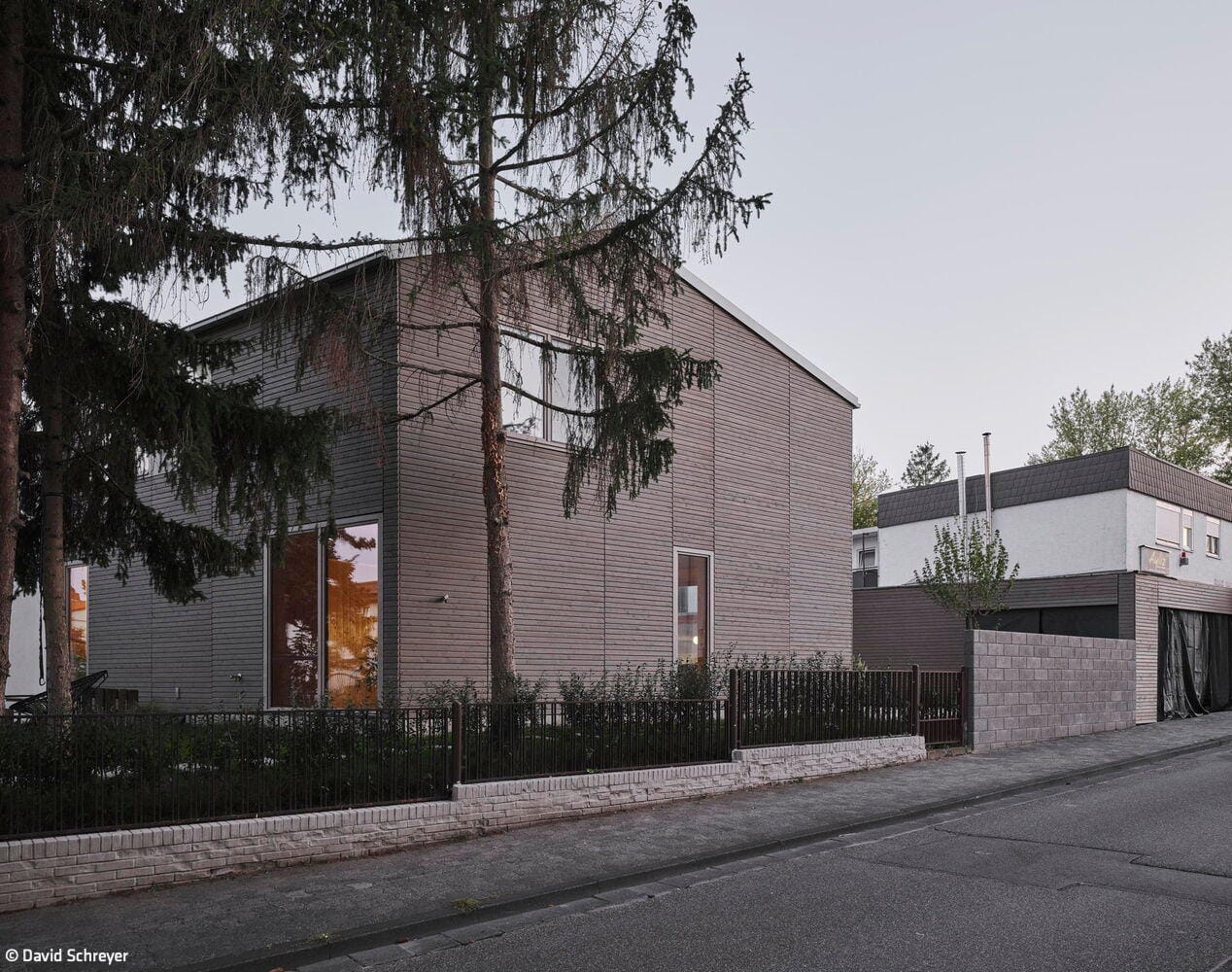
A new timber residence for a family that focuses on the essentials
Vibrant Hub
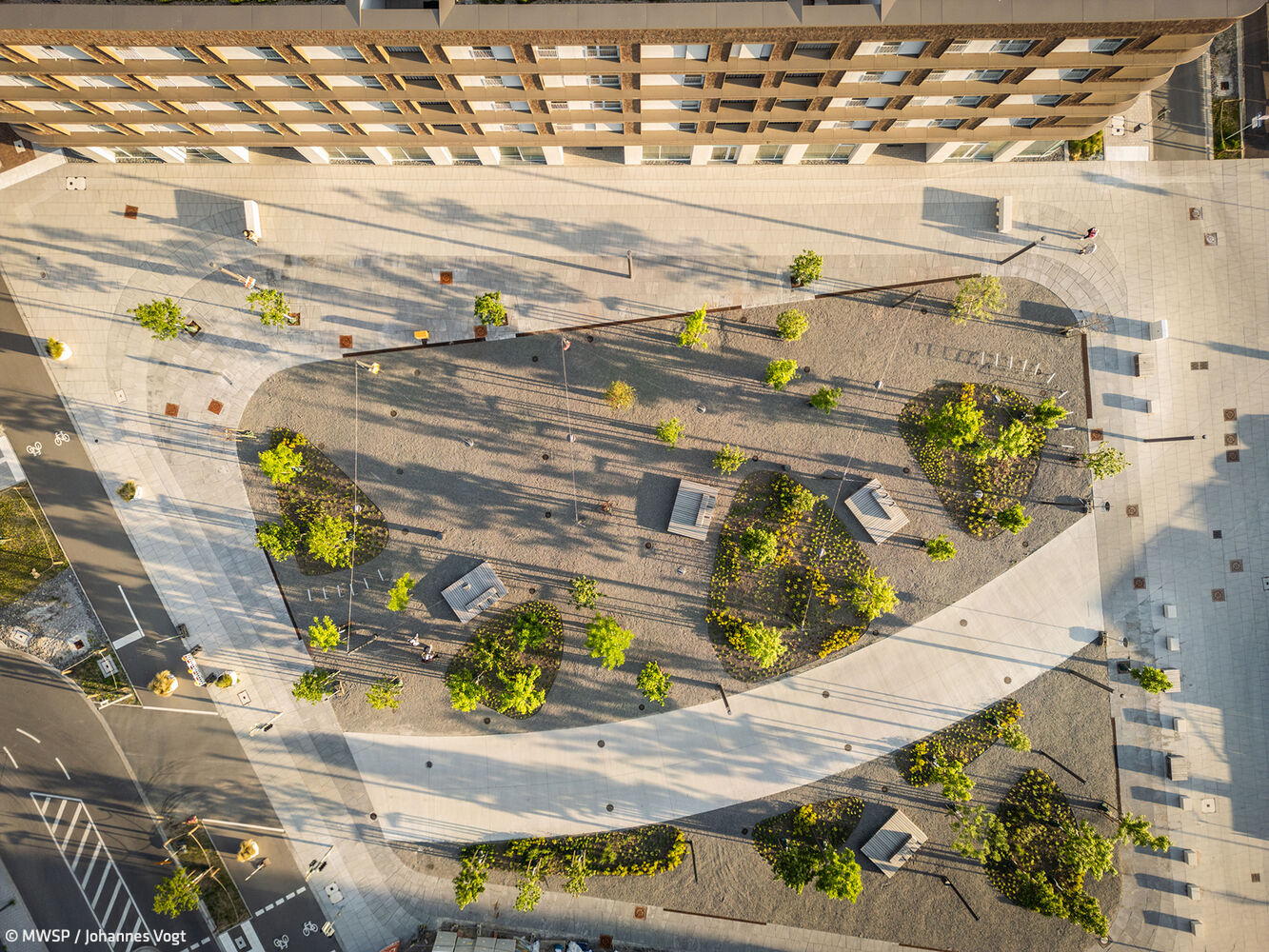
A Vision for Tomorrow: Reimagining Spinelli Quarter Square