


Architecture as Instrument
A timber extension that honors the existing ensemble without overshadowing it


Germany has never seen a chamber music hall quite like this one: a timber-built hall added to an existing ensemble represents a bold new direction in construction. The Walther & Sibylle Kalkhof-Rose Foundation, working with mamuth architects, championed this progressive approach. Through this method of building, they sought to underscore the Mainz Academy of Sciences and Literature's commitment to innovation and research.
The architects' vision was to enhance the academy's existing complex architecturally without overwhelming it—enriching its presence while establishing a harmonious dialogue with the historic structure and its surroundings. The expanded metal facade not only ensures longevity but also integrates seamlessly with the existing palette. Yet acoustic excellence remained paramount. The entire timber-frame extension was designed to minimize environmental impact, maximize prefabrication efficiency, and reduce structural load on the existing building. A prestressed concrete ceiling spans the ground-floor hall for fire safety. The primary challenge: timber construction's inherently lower structural mass runs counter to concert hall design principles. Here's where concert acoustics specialist Jochen Veith proved invaluable—by harnessing the building's "acoustic resonance" to generate a rich sound body. The hall itself becomes the instrument. Comprehensive simulations and full-scale prototypes confirmed the acoustic performance meets the highest standards.
Lighting proves equally vital to acoustics in performance spaces, and here it offers artists and lighting designers remarkable versatility—from functional illumination and artist spotlights to immersive concert atmospherics. The hall is fully equipped with state-of-the-art media systems, enabling live concert streaming worldwide. The Steinway Spirio grand piano captures performances from around the globe in real time while simultaneously recording each artist's touch and technique. As the late founder Sibylle Kalkhof-Rose reflected on the project: "This beautifully proportioned hall will give the academy a vibrant new home for concerts, readings, and cultural events—amplifying its presence in Mainz and beyond." It's a gift to the city itself. To identify the optimal location for this vision, the foundation first commissioned mamuth architects to develop four comprehensive feasibility studies.
Photography:
Seweryn Żelazny
www.sewerynzelazny.com
Jochen Veith
Astrid Garth
www.astrid-garth.de
(Published in CUBE Frankfurt 03|24)


Orientation & Identification
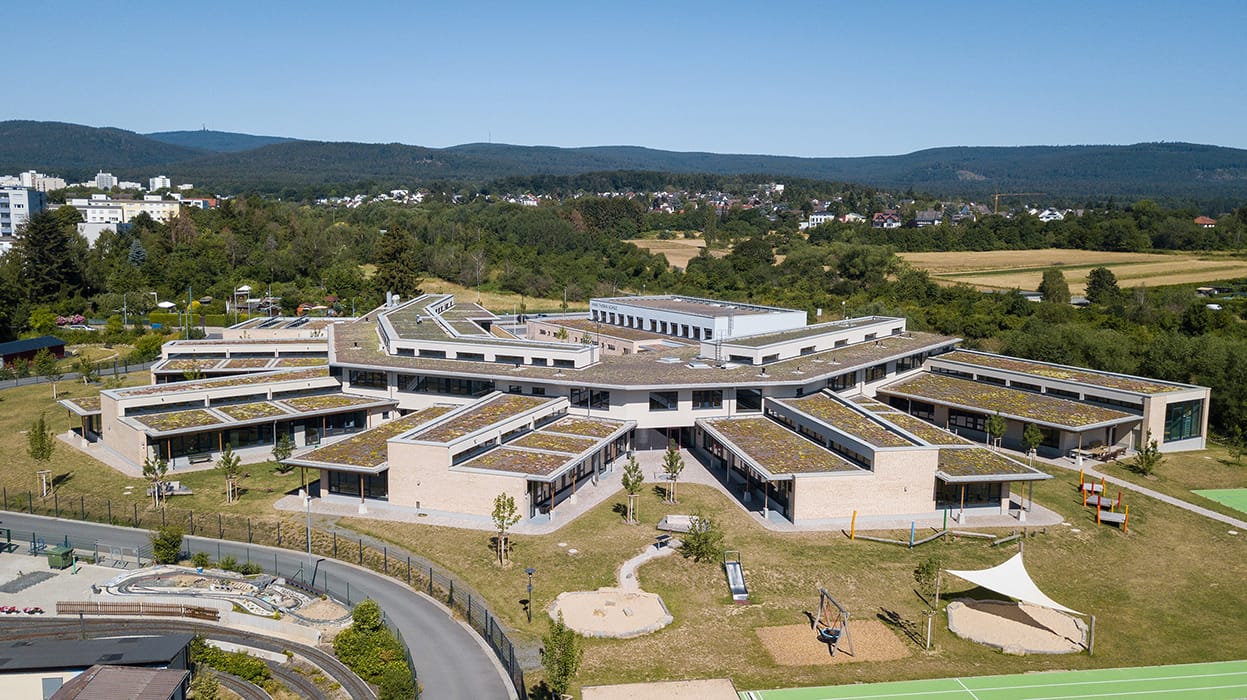
New School Building: Designed for Learning, Living, and Growth
Pure and Sensory
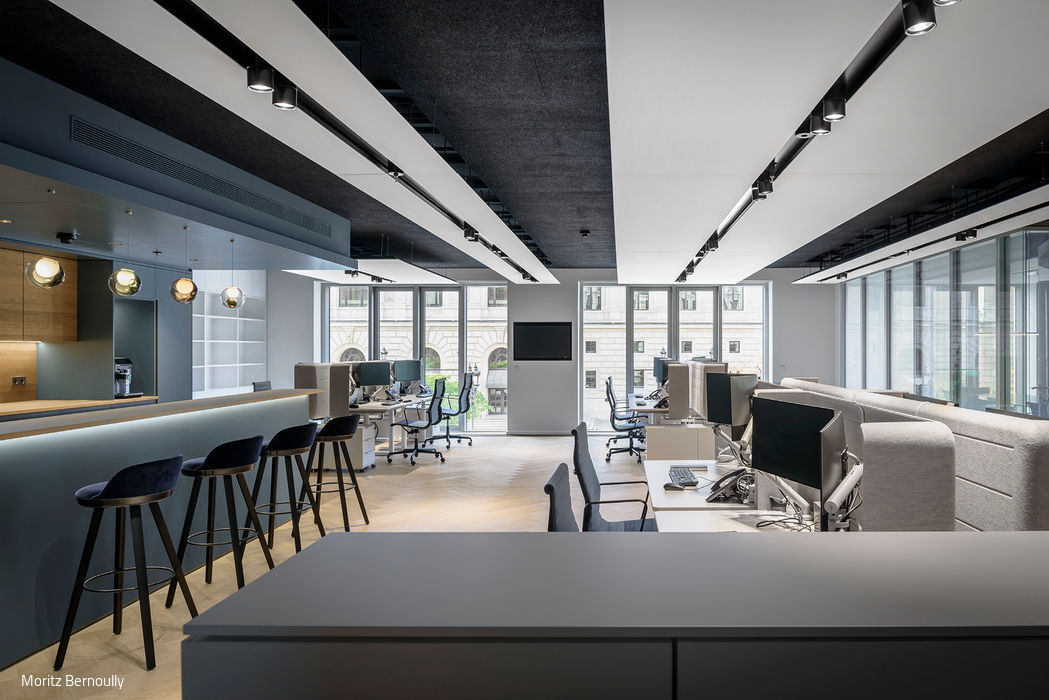
Open-plan design that balances elegance with sound control and privacy
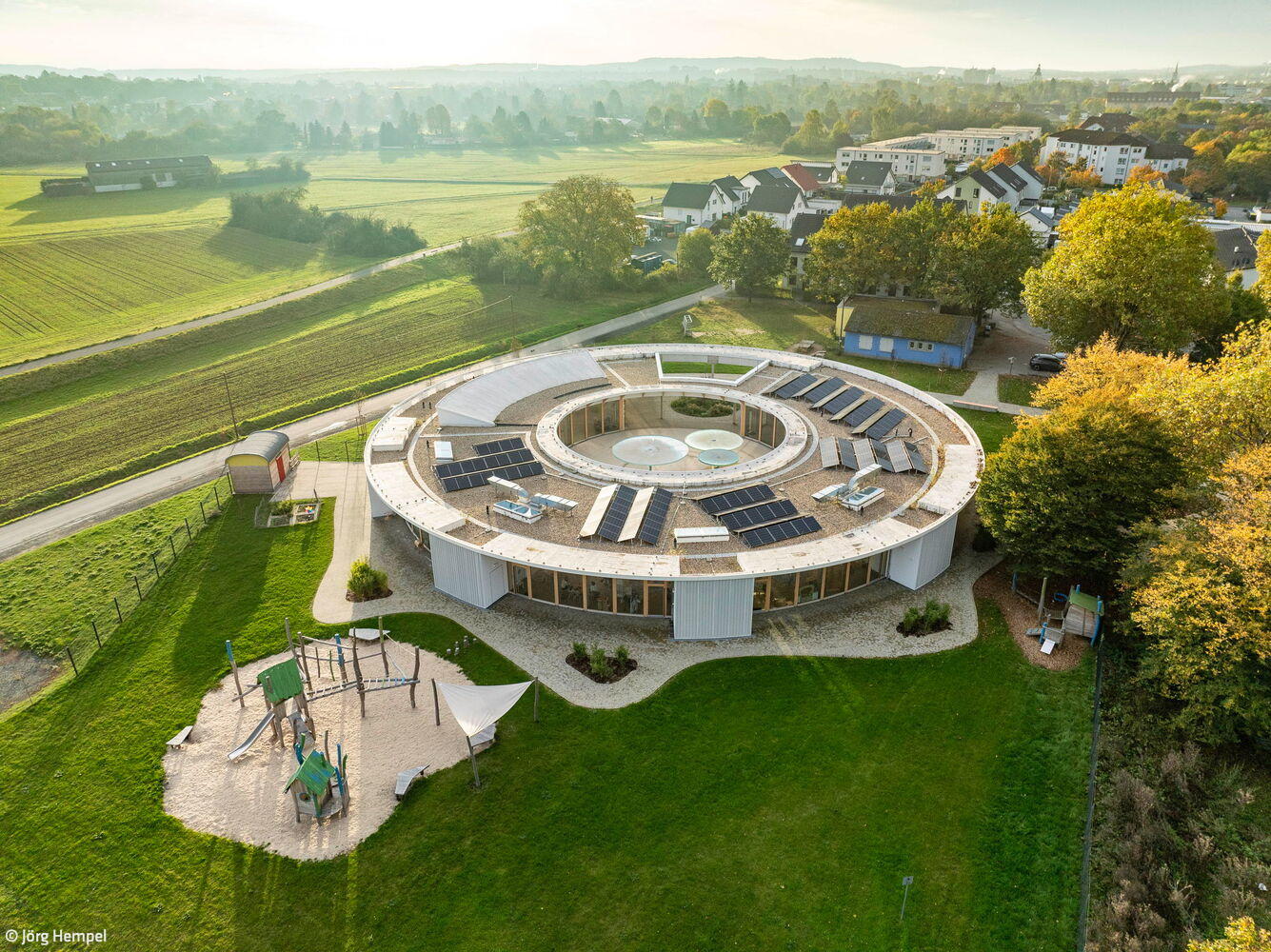
Openness as a Philosophy
Kindergarten with Family Center: Architecture Meets Educational Vision

Comfort in every space
This Offenbach furniture house specializes in beautiful pieces for indoor and outdoor living, backed by exceptional service.