


Sophistication Within
A historic barn in Essen becomes home to a remarkable "house within a house"
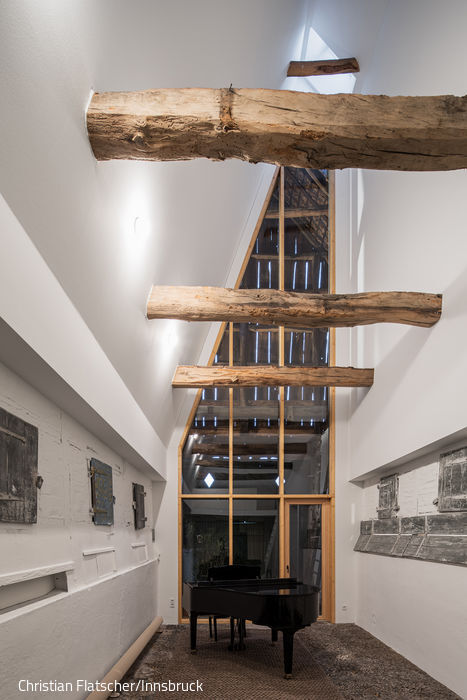


The Dortmannhof in Essen-Katernberg has a rich history stretching back to its first recorded mention in 1552. An 18th-century expansion added a hall house with stables and residential quarters. When the 270 m² half-timbered house underwent conversion in the 1980s, its historic fabric was carefully preserved. Listed as a protected monument since 1986, it remained largely unchanged until its current owners—a family of four musicians—commissioned a transformative interior intervention. Danish architect Sigurd Larsen, based in Berlin, rose to the challenge with an ingenious solution: a "house within a house" that fulfills the monument authority's mandate for additional space without altering the building's exterior. Two modest skylights discreetly pierce the funnel-shaped interior volumes, flooding the newly created music studio and guest quarters with natural light, while an additional bathroom has been seamlessly integrated into the former barn and stable areas.
Larsen's strategy was to insert custom-designed "room elements" into the three-part barn structure defined by its timber-frame supports. On the left, a two-story guest apartment; on the right, a bathroom; and commanding the center—a striking glazed music studio that mirrors the double barn doors and rises like a sculptural form into the roof cavity below. The barn's interior—its exposed timber framing and original roof structure—remains untouched. True to the owners' wishes, the authentic stone floor and lime-plastered walls have also been preserved. The guest apartment, clad in white insulation boards, features timber-frame walls throughout, all finished with fresh lime-based paint. The ground floor houses the bathroom and kitchenette, while a spiral staircase ascends to the bedroom and living areas above.
The music studio's acoustic performance surpassed even the owners' expectations—no small feat for musicians with exacting standards. By eliminating parallel walls, Larsen prevented the problematic sound reflections that could compromise audio quality. Remarkably, extensive testing revealed that no additional acoustic treatment was necessary, a testament to the elegance of the design solution.
(Published in CUBE Ruhrgebiet 03|20)

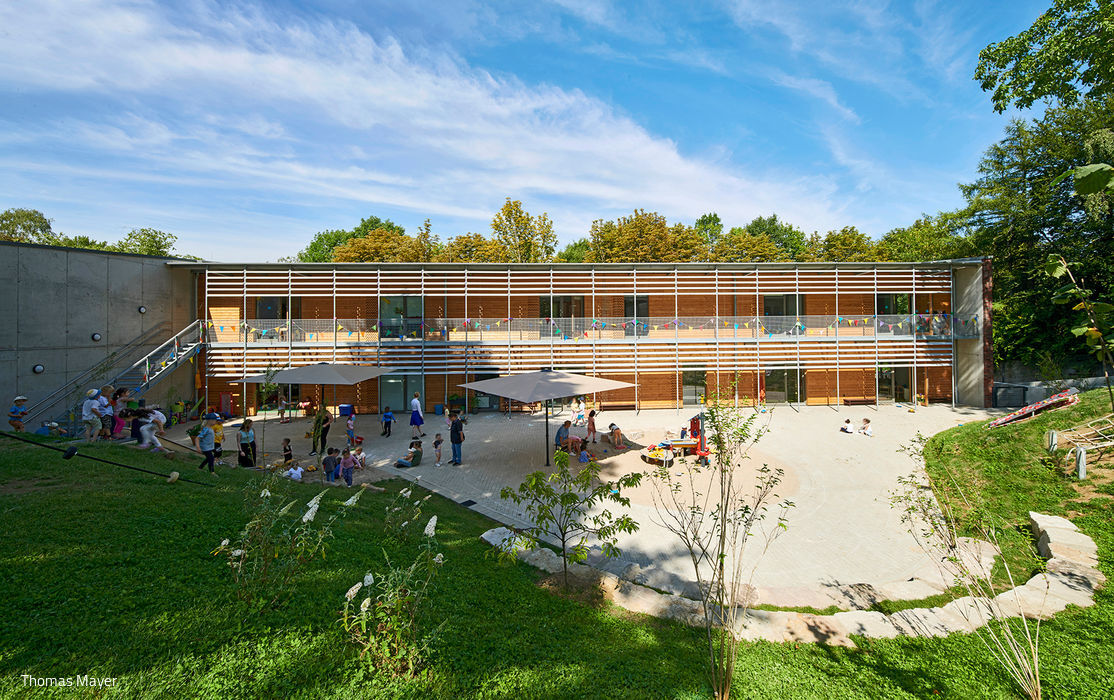
Space to Flourish
New daycare in Essen-Frillendorf: A building designed around children's needs
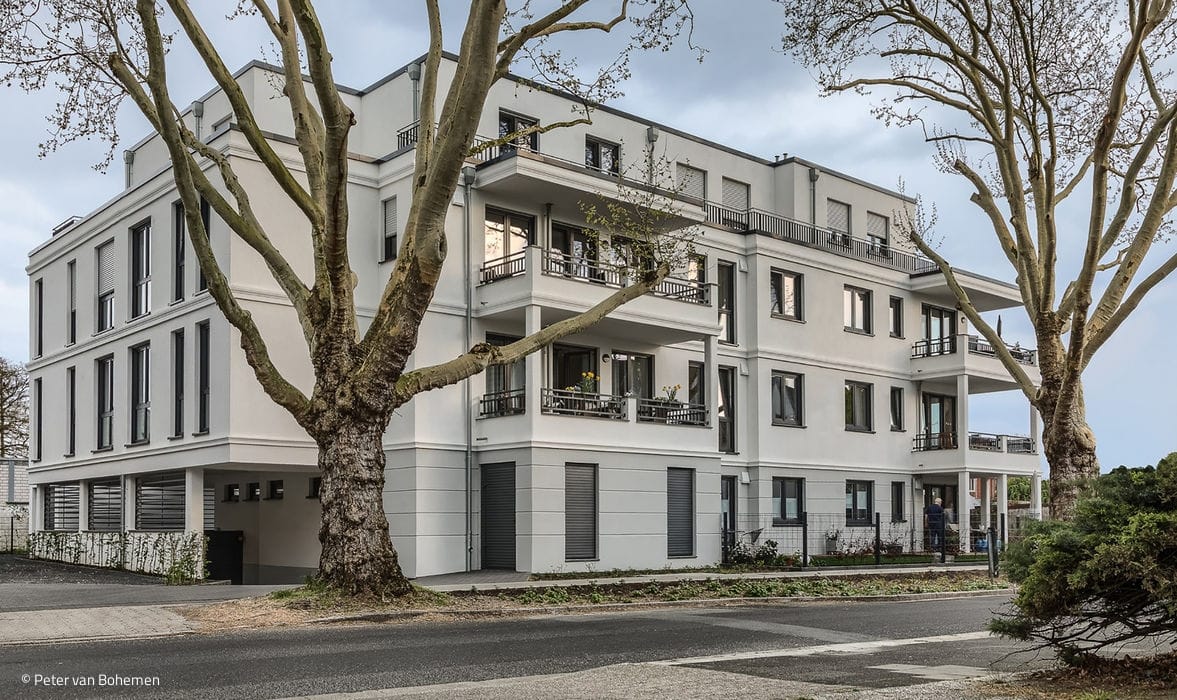
Nature as Partner
Designing around heritage: how plane trees shaped this Moers residential complex
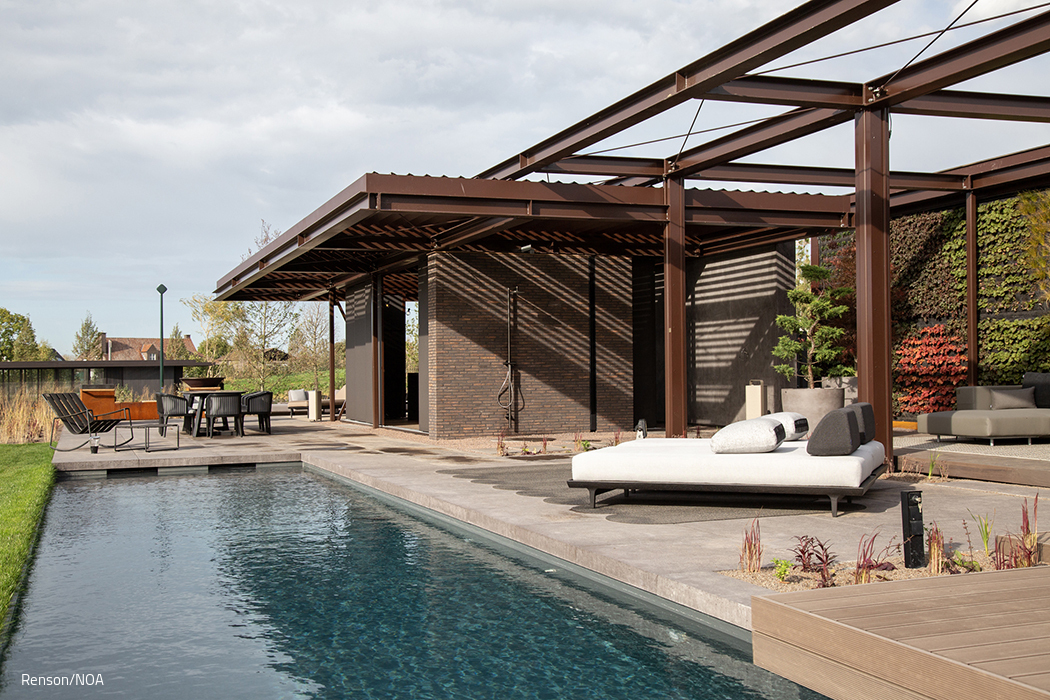
Premium Outdoor Living
The NOA Outdoor Living inspiration park unites 30 premium brands across 12 model gardens.
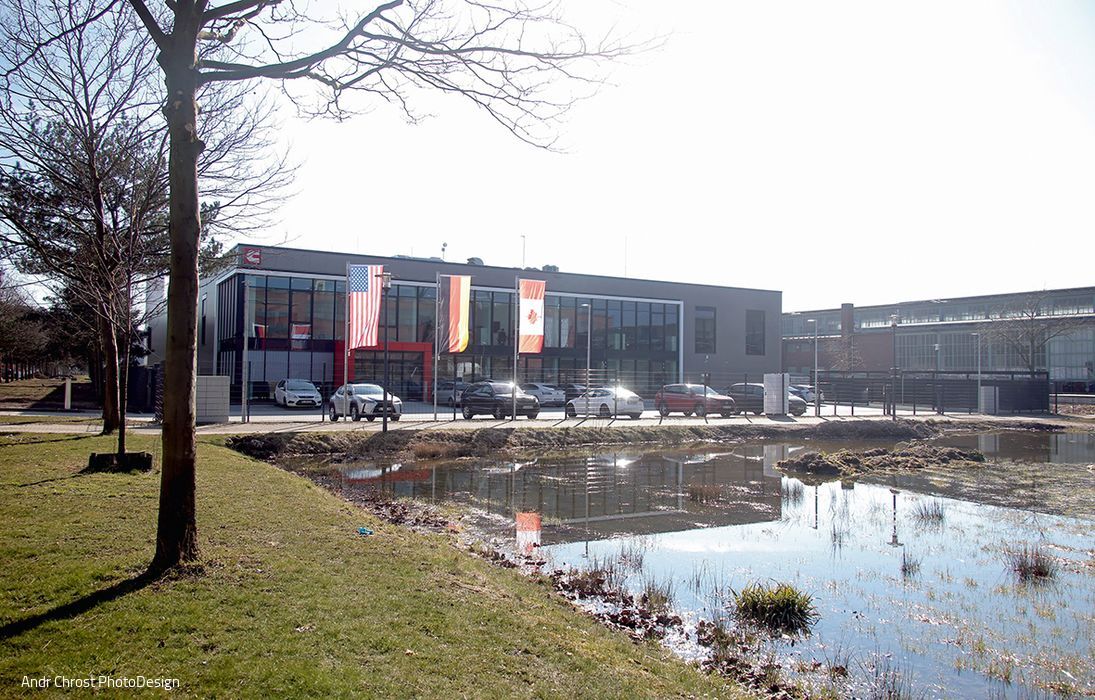
All Under One Roof
A distinguished and efficient corporate headquarters at Ewald colliery, Herten