


Learning and living space
New school building cleverly utilises topography and creates new space
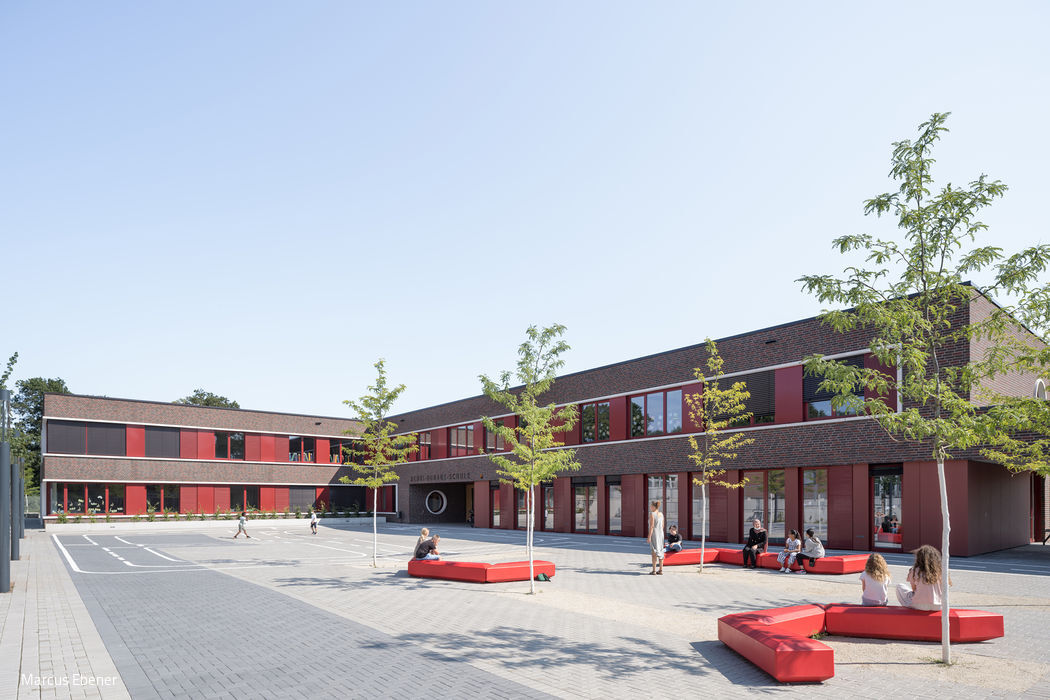


Where two dilapidated school buildings of the Edith Stein Secondary School once stood, a new building for the Henri Dunant School was constructed. This was possible because both schools share a campus. The Stuttgart-based architectural firm a+r had to implement the City of Frankfurt's standard room programme for a four-stream primary school with two additional classes and integrate rooms for afternoon care into the building. As it is an all-day school, the aim was also for the pupils to experience school as a living space.
"Our primary concept was to position the building along the natural slope and work with the existing topography," explains lead architect Steffen Poschik of a+r Architekten, describing the striking red brick structure that complements the surrounding buildings. The building's distinctive double-angled form and elongated footprint do more than meet program requirements—they actively shape the campus landscape. The design generates a generous playground equipped with native plantings, seating clusters, and traffic education markings, while the sloping terrain creates a garden level that flows seamlessly into a verdant park-like outdoor space with recreational and play areas. On the ground floor, floor-to-ceiling French doors framed in vibrant red open directly to the exterior, dissolving the boundary between inside and out. To support progressive pedagogical methods, the architects organized each grade level into connected clusters anchored by a flexible central space that serves both circulation and collaborative learning. The design had to balance educational innovation with Frankfurt's rigorous standards for economical and sustainable construction—prioritizing minimal maintenance, durability, and lifecycle impact. Given the intensive use typical of school facilities, the team selected proven, resilient materials: exposed concrete and a high-performance ventilated brick façade. Rather than a conventional auditorium, a generous ground-floor foyer with dramatic stepped seating accommodates assemblies, break activities, and presentations—a space-efficient, cost-conscious alternative that Frankfurt deemed more practical than an underutilized dedicated hall. The building envelope and mechanical systems meet the exacting Passive House Standard. The entire roof incorporates photovoltaic panels for on-site energy generation, and the design minimizes bonded assemblies to maximize future recyclability. The building connects to the campus's existing district heating network, which benefits from improved load balancing and operational efficiency as a result.
Photography:
Marcus Ebener
www.marcus-ebener.de
(Featured in CUBE Frankfurt 02|23)
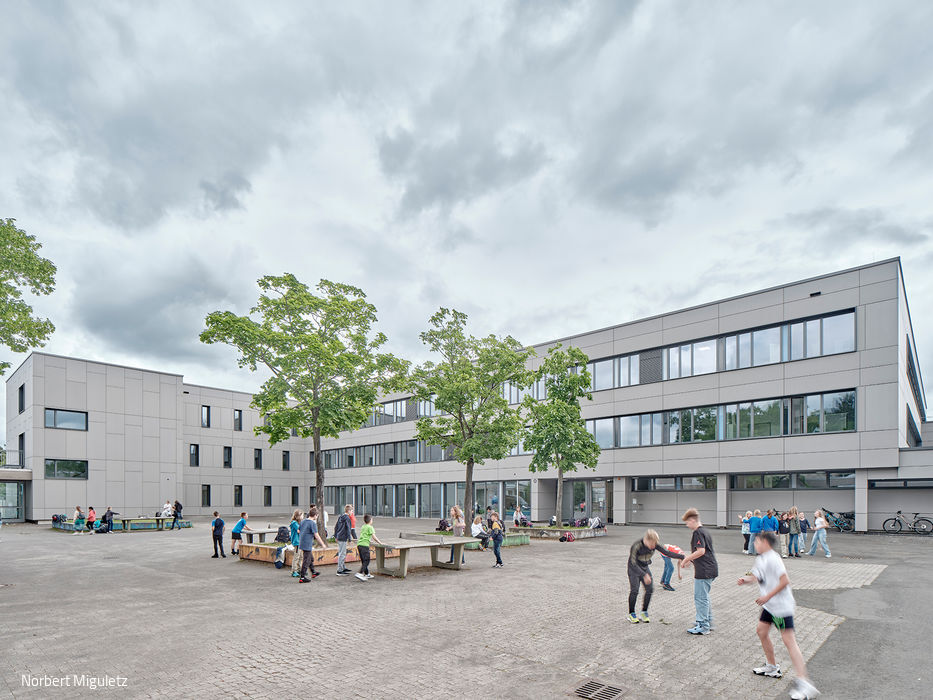
A Fresh Heart
Historic Giessen Grammar School Transformed: Comprehensive Renovation Brings School into the Modern Era
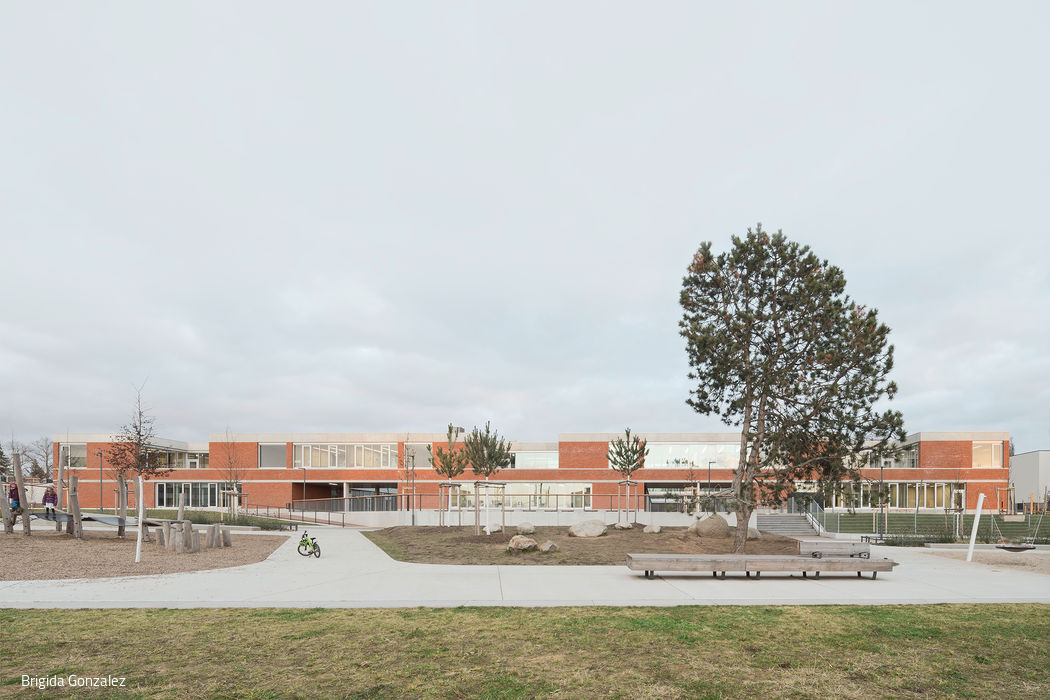
Luminous Sanctuary
New Primary School and Nursery: Where Order Meets Vitality
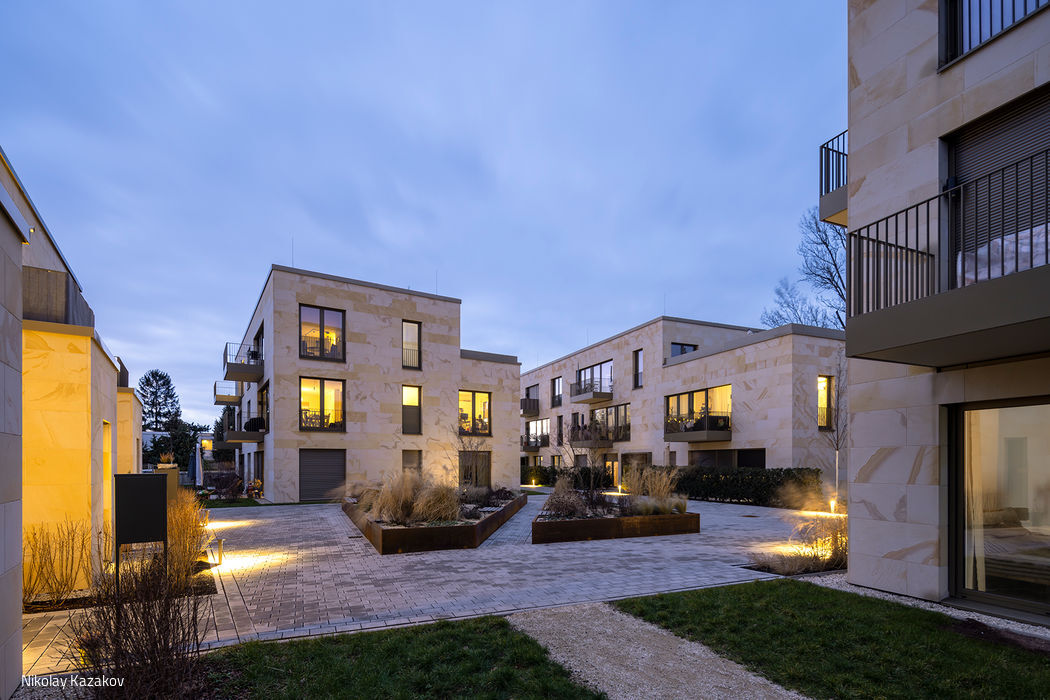
Living Well
A family-friendly, nature-focused residential neighbourhood designed for community.
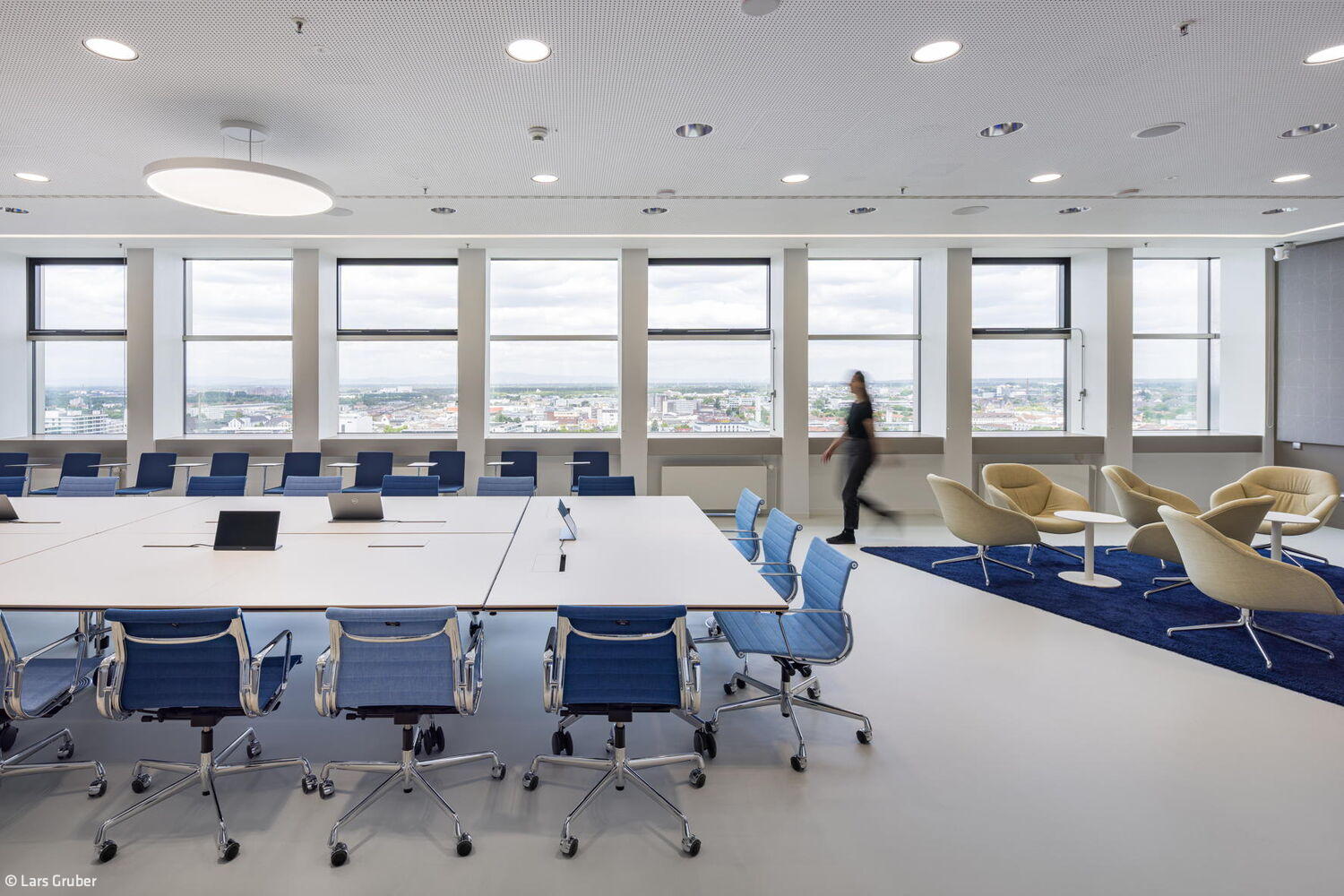
Clear Vision & Bold Horizons
A University Senate Hall That Strengthens Identity and Dialogue