


The sustainable villa
CUBE talks to Alexander Brenner about his architectural style, his construction methods and sustainable building
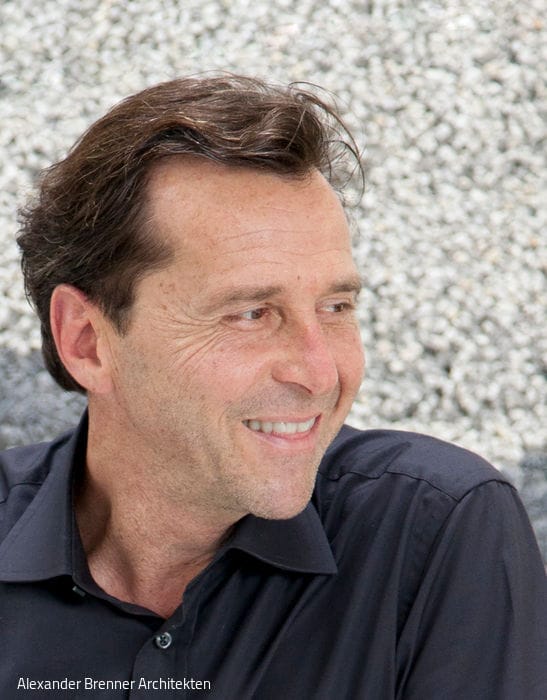
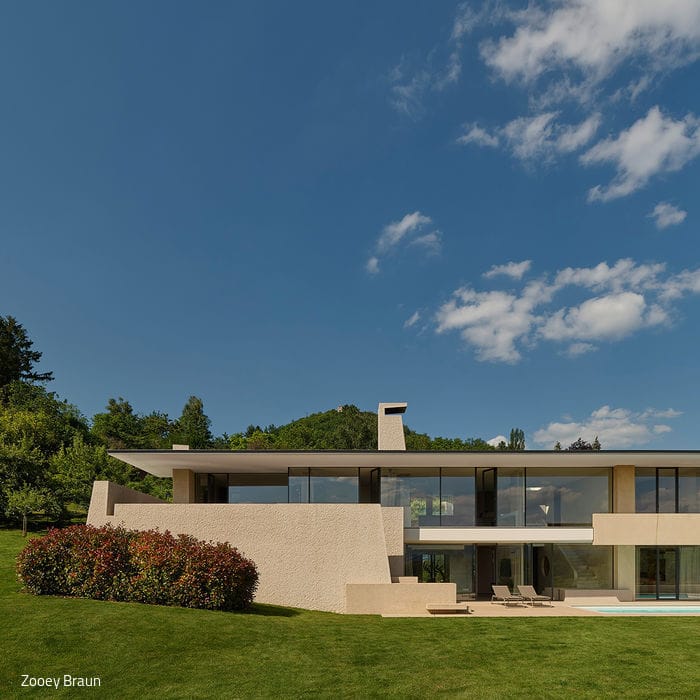
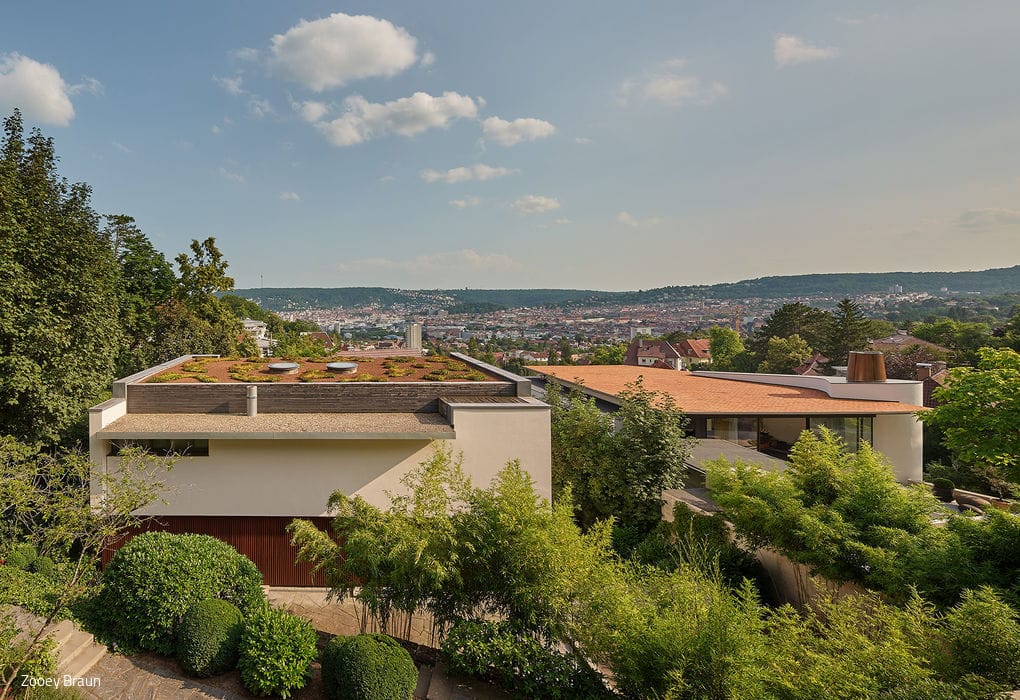
CUBE: Mr Brenner, your signature style in detached house design is unmistakable. It has something of the old Bauhaus masters about it. What appeals to you about this type of building in particular?
Alexander Brenner: When we started out thirty-two years ago, we took on everything architects do—urban planning, interiors, industrial buildings, commercial projects. But over time, we noticed something troubling: shops and restaurants we'd designed were being gutted or resold within two or three years. That conflicted with how I wanted to work. Gradually, residential design emerged as our true passion. Here, you have a genuine client relationship and projects built to last generations. For me, building isn't a business model. It's a commitment to craftsmanship, quality, and permanence.
What makes your designs still so exciting even after so many years?
I have actually spent a great deal of time studying classical modernism, but also traditional architecture, and a lot of that has found its way into our work. With this repertoire of forms, we can meet pretty much all structural and spatial requirements. I can't say whether that's still exciting for everyone today. But I'm not very interested in fashionable things, because architecture should have as little to do with fashion as possible.
Could you describe the typical Alexander Brenner characteristics of a house?
Overhanging roofs are strongly associated with us. They have a very long history of development, starting with 1.50 m, 2.50 m and 3.50 m wide roof overhangs, to today, where they are so technically advanced that anything is possible. The roof overhangs also ensure that mechanical sun protection is unnecessary.
What approaches do you take to address energy and environmental issues, and how do you explain to your private clients that these will involve additional costs?
We typically build larger, freestanding villas—so our clients are in a privileged position. There's little to justify. We've integrated renewable energy systems for decades, long before it became fashionable for residential homes. Twenty-five years ago, a client wanted to build with geothermal energy. He knew the technology wasn't flawless yet, but felt someone needed to push it forward. This forward-thinking attitude defines all our clients. We're fortunate to create beautiful homes, so we have a responsibility to build them durably and consciously.
In your architectural designs, you primarily use concrete for the building structure. Why, for example, is wood not yet an option for you?
Actually, we don't primarily use concrete. Only our ceilings are concrete; walls are brick or aerated concrete—we favor homogeneous construction systems. Concrete requires additional insulation, which we try to avoid. But it's essential for ceilings and load-bearing elements because of its performance. Wood, though—I genuinely love it. We built a wooden house in 1999–2003, and we're designing another now. Looking ahead, I see hybrid construction as promising.
For a detached house too?
Especially for them. While villas have certain programmatic similarities, they also offer extraordinary freedom. Building codes are less restrictive, fire safety regulations are more lenient—all of which gives us room to experiment. That's exactly where we love to innovate.
Have your clients' ideas and wishes changed over the years?
Not significantly. Our clients have traditionally favored solid construction. What we champion—and what defines us—is durability. Yes, a wooden house can be engineered to last centuries, but it demands more vigilance than solid construction. The villa endures because it's beautiful, maximizes its site, and adapts to new uses. Nearly all historic villas still stand; they're repurposed, reinvented. I love that things persist. And that's our ethos: regardless of material, true sustainability means building something once, so well, that it simply remains.
Every builder naturally wants their own individual house. You meet a person, see the plot of land and the area, but where does the spark come from?
What interests me so much about residential design is the interplay of so many factors. The client's wishes, their dreams, the possibilities offered by the location, the orientation, the situation, the desire for privacy and the desire for openness – bringing all of this together is what makes the task so appealing. Intensive discussions with the client over a long period of time reveal to me what would be right for these people in this particular location. Then there are things that have been universally valid for a very long time, such as the primary function of a house, which is to protect and welcome you. Take our front door, for example. It is 15 cm thick, but when I close it, I feel like I am at home and safe.
One last question: What inspires Alexander Brenner as a private individual?
Everything related to living fascinates me—design, art, nature, movement, cars, motorcycles. I genuinely can't think of something that doesn't interest me. I pursue these passions deeply and wholly, and they inevitably seep into my work. That's the joy: acquiring knowledge and weaving it into what we create. I don't compartmentalize professional and private life. It's all one life, and I shape it to be enriching—whether through building projects or personal pursuits. The inspiration flows.
Mr Brenner, thank you for talking to us.
Interview conducted by Gerrit Menke and Kelly Kelch.
Alexander Brenner
studied at the University of Stuttgart and founded his own studio in Stuttgart two years later. Today, his work focuses on villas and residential buildings. His work enjoys the highest international recognition and is published worldwide in trade journals and books. He has received numerous awards and prizes, and the Goethe Institute Germany ranks him among the "10 best architects in Germany". The common feature of all his projects is integrated planning, which combines building design, spatial design, furniture and lighting design, and outdoor facilities under one roof.
We recorded the full interview as a podcast. Click here to go directly to our CUBE podcast with Alexander Brenner.
Photography:
Zooey Braun
www.zooeybraun.de
(Published in CUBE Stuttgart 02|22)

Sculptural Staircase
Hybrid residence nestles gracefully into the hillside

Naturally Honest, Beautifully Green
Materials, colours, and textiles embody the café's plant-based philosophy.

A Distinctive Entrance
A family home that maximizes space, harnesses natural light, and blurs the line between indoor and outdoor living in an urban setting
Sustainability in Action
Modern workspaces with purposeful design emerge within a revitalized landmark.