


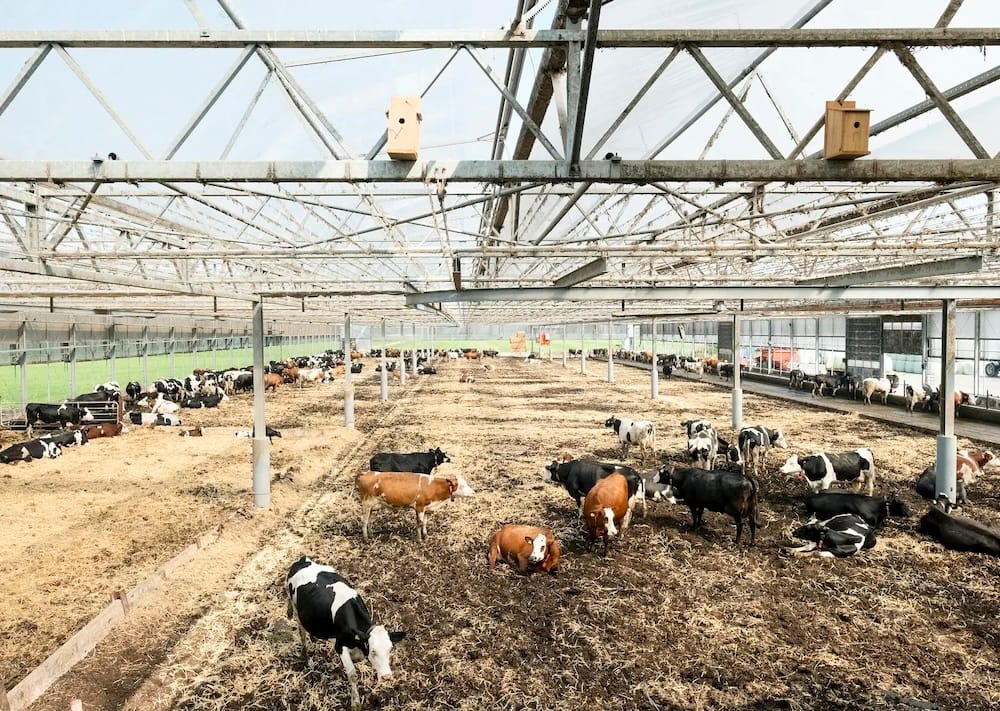
Dairy farm De kleverhof in Moerdijk, Netherlands, 2024 Photo: Johannes Schwartz
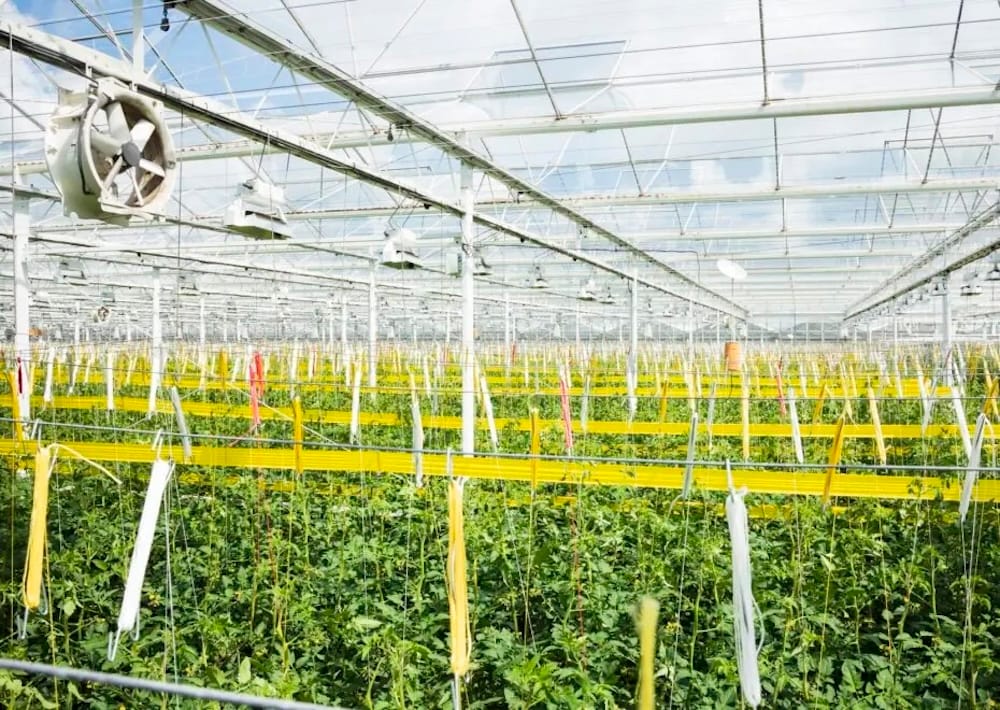
Cultivation area in the LEMA Tomatoes greenhouse Photo: Johannes Schwartz
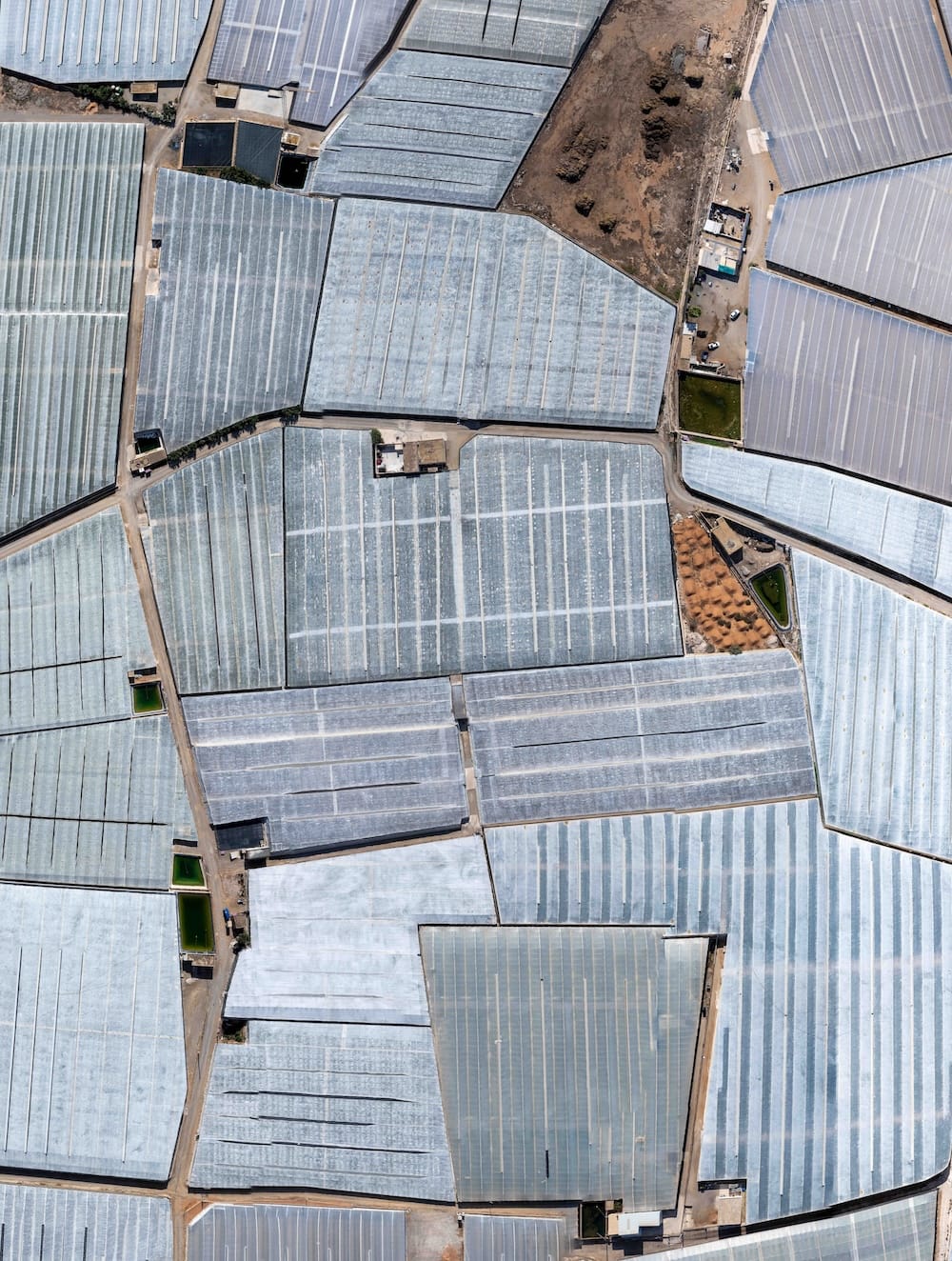
A section of the "sea of plastic" in Almería, 2024 Photo: Neal Haddawy
CONVIVIUM: Food Systems at Their Limit
Exhibition at the TUM Architecture Museum
Ensuring safe and equitable food supply for the global population depends on a system of interconnected global networks: farmers, fishers, breeders, traders, transport companies, markets, and industrial processing facilities produce and distribute not only what is necessary for human nutrition. Driven by capitalist growth logic, they are motivated to produce ever greater quantities of products that lead through overconsumption to poor nutrition and massive food waste. Yet this system is increasingly reaching its limits due to climate change, political and economic factors. Many fisheries are already overexploited, fertile agricultural soils are being developed over or eroding, and entire regions are becoming barren due to insufficient rainfall. Simultaneously, food production itself contributes significantly to climate change through growing CO₂ emissions—a vicious cycle that becomes increasingly visible. Hardly any country on Earth can still feed its population from its own resources.
The exhibition presents twelve chapters with concrete examples of how our food is produced and distributed today. The focus is primarily on Europe, though global connections are always considered. The exhibition aims to make visible to visitors the spatial and technical foundations underlying our food production—and what challenges and opportunities this presents for the future.
1. Climate as a Service. The Netherlands is regarded as a pioneer in developing high-tech greenhouses. In precisely controlled climates, vegetables, fruits, and herbs grow year-round, independent of weather and season. The sophisticated technology behind this has itself become a successful export product, yet simultaneously undermines conventional, natural cultivation methods.
2. The Strawberry and the Greenhouse. Like many other fruits, strawberries are now available in supermarkets almost year-round. A graphic essay illustrates what consequences this constant availability has for regional producers in the Munich area.
3. Salmon and Tomatoes. Salmon farming has evolved into a global industry. Yet this growth comes at a steep price: wild-caught fish is processed into fishmeal to feed farmed fish. Overfishing has devastated local small-scale fisheries in coastal regions of West Africa. Many people have lost their livelihoods and are driven to migrate to the Canary Islands. Those who survive the perilous crossing often end up as undocumented workers—illegal and under precarious conditions—in the greenhouses of Almería's tomato production.
4. Tropicalia. In Sicily, the effects of climate change are already dramatically apparent today. Heat, drought, and unpredictable weather extremes are putting severe pressure on agriculture. Through new wheat varieties and the cultivation of tropical fruits, farmers are seeking ways to adapt to the changing conditions.
5. The Animal is Present. The modern dairy barn exemplifies the growing contradictions and absurdities of today's food production. Digital control systems, genetic breeding, and reproductive technologies drive the race for ever-increasing milk and meat yields. Animals are engineered for maximum performance and have become mere (living) machines within this system—while the farmer has evolved into a manager of predefined programs and robotics.
6. Technominotaurus. An installation by Hungarian artist and researcher Daniel Szálai addresses the largely invisible role of breeding bulls as carriers of genetic information. This multimedia installation reveals the physicality and mythic dimensions of these male animals.
7. Octopus Choreographies. Using the small coastal community of Angeiras in northern Portugal as a case study, this section examines the work and production chain of local fishers. Along with cod, seabass, shrimp, and lobster, they catch large quantities of common octopus. Yet the growing demand for fish driven by tourism can no longer be met in the region—however, octopus fishing leaves distinct traces on the built environment.
8. Monks and Machines. Since the Middle Ages, carp farming has shaped portions of the cultural landscape in Bavaria. Today, modern indoor aquaculture is creating new forms of fish farming—even seafood like shrimp can now be raised inland. New technologies promise greater efficiency and shorter supply chains for products purchased by ever-growing numbers of consumers.
9. Hinterglobes. To feed the world's growing appetite for meat, vast territories must be dedicated to animal feed production—often far removed from where the enormous quantities of cattle, pigs, and other animals live or where meat is consumed. The concept of "Hinterglobes" makes visible the territorial dependencies underlying global food production.
10. Soyscapes. The worldwide rising demand for soy—primarily used as animal feed—remains the central driver of continued rainforest deforestation in Brazil. A graphic essay traces the often opaque production and supply chains extending to Europe.
11. The Ukrainian Grain Chain. By 2014, Ukraine had become a superpower in global grain production. This chapter analyzes how Russia's invasion deliberately destroys silos, irrigation systems, and fields, leaves soil contaminated with mines, and thereby threatens UN aid programs in crisis regions.
12. Living Soils. Soils are the fundamental foundation of nearly all food systems—a living network of microorganisms that recycles nutrients, filters water, and stores carbon. Yet through urban sprawl, over-fertilization, and erosion, this existentially vital yet limited layer of earth is inexorably declining—and with it, the very basis of our sustenance.
Opening: April 22, 2026, 7 PM | Run: April 23 – October 18, 2026
More News
Franki Raffles. Photography, Activism, Campaign Works
Exhibition at the Museum of Labor
Now It's Rolling – Circular Systems, Not Waste
Special exhibition at the Museum of Man and Nature
Too Hot – Hot Cities, New Paths
Exhibition at the German Architecture Museum (DAM)
Kengo Kuma – The Flow of Lines Through the Lens of Erieta Attali
Exhibition at the Museum of Architectural Drawing, Berlin