


A Different Approach to Integration
A Single-Family Home That Relates to—Yet Distinguishes Itself From—Its Surroundings
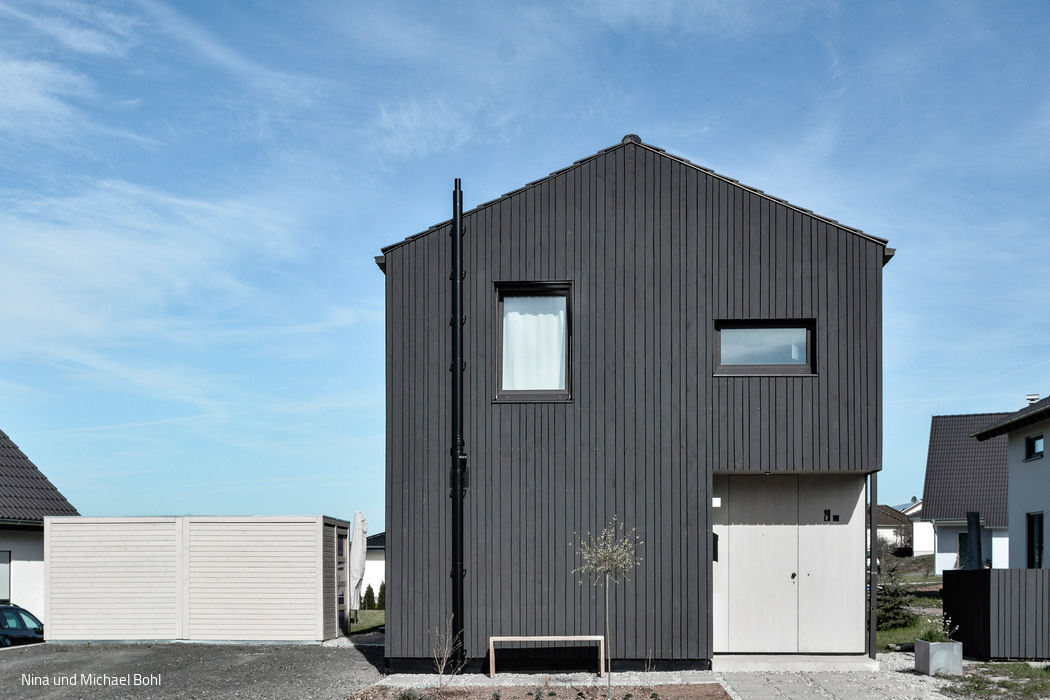
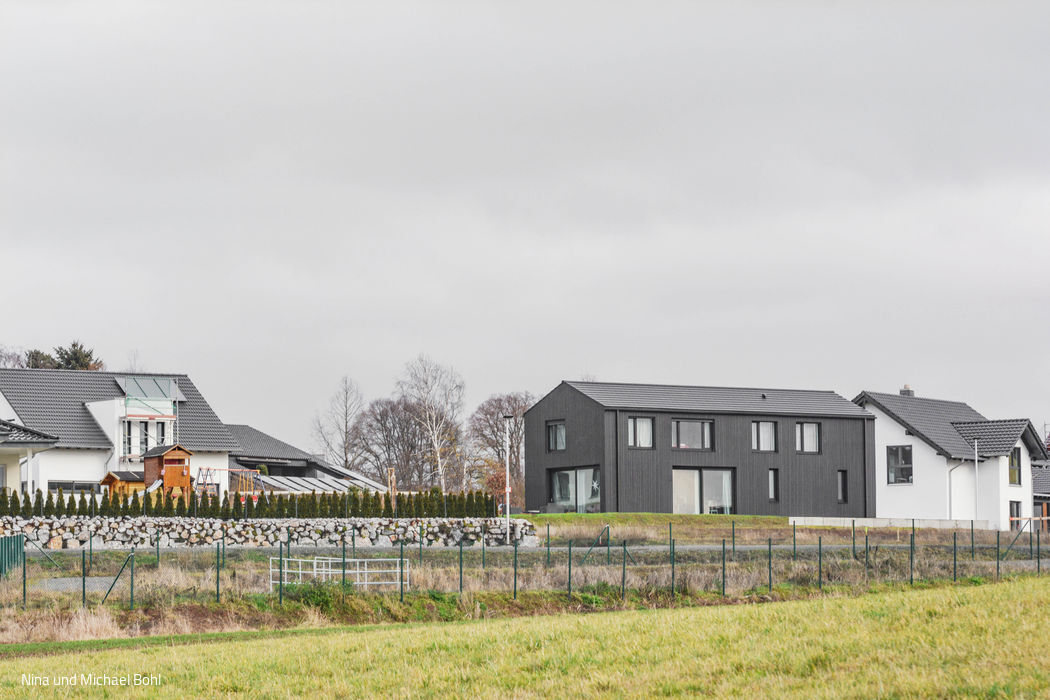
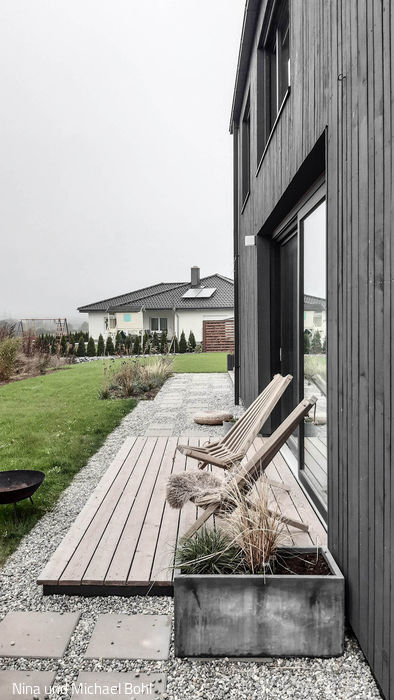
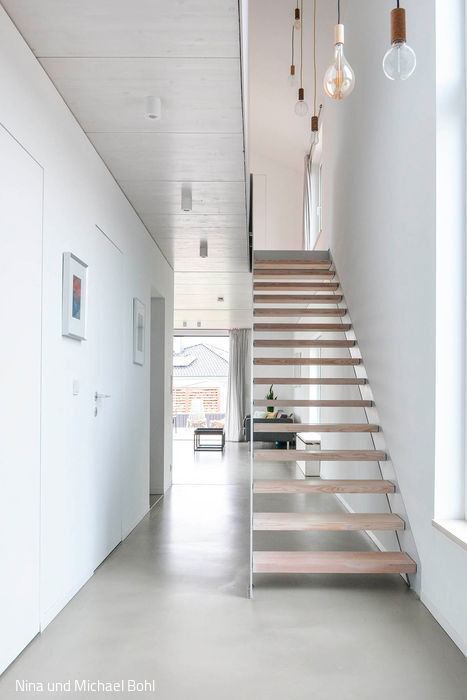
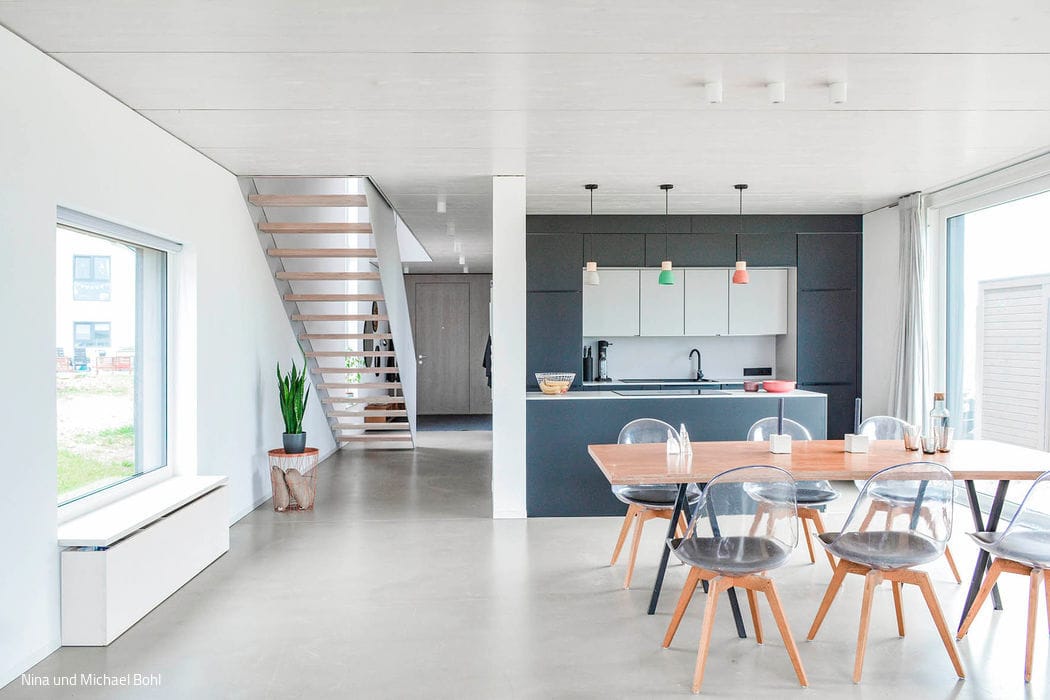
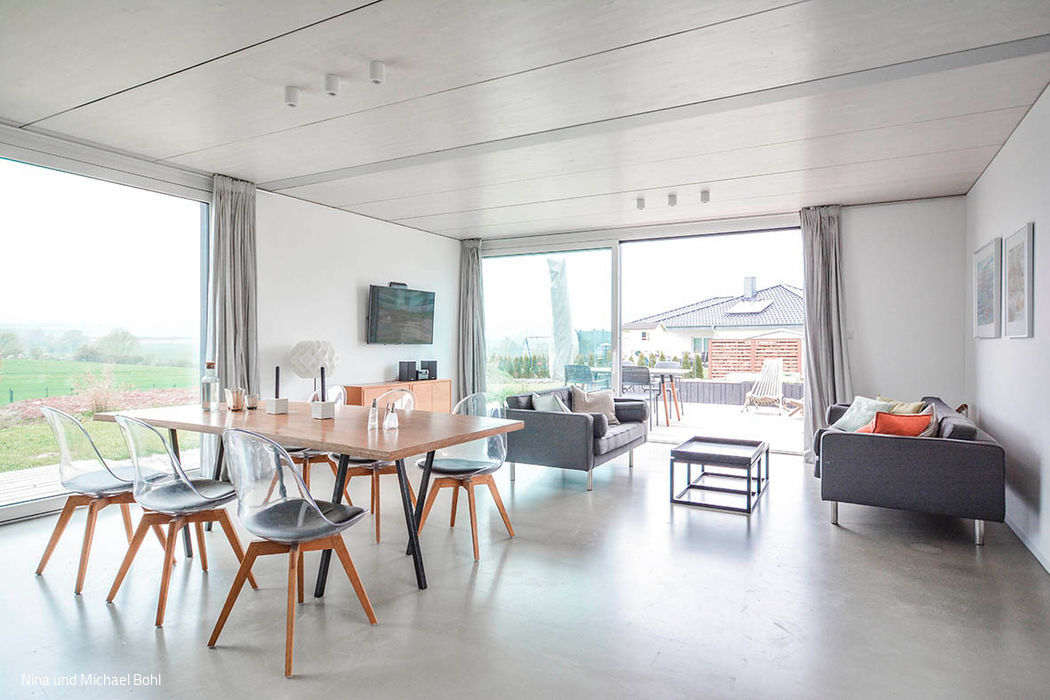
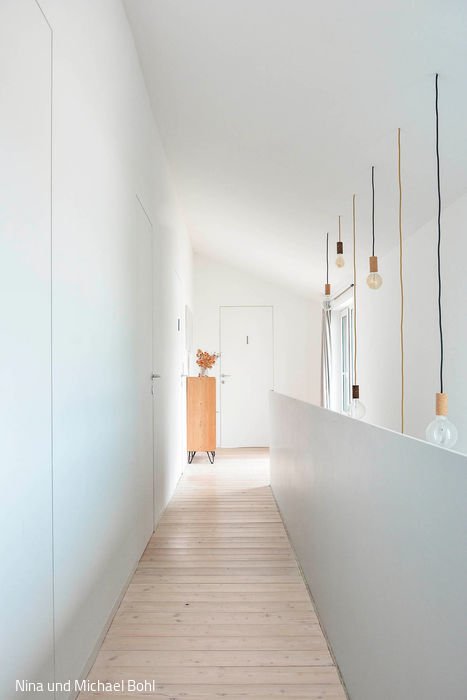
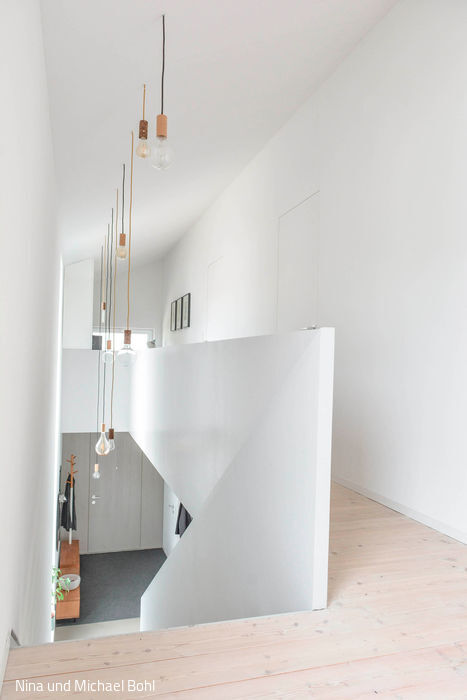
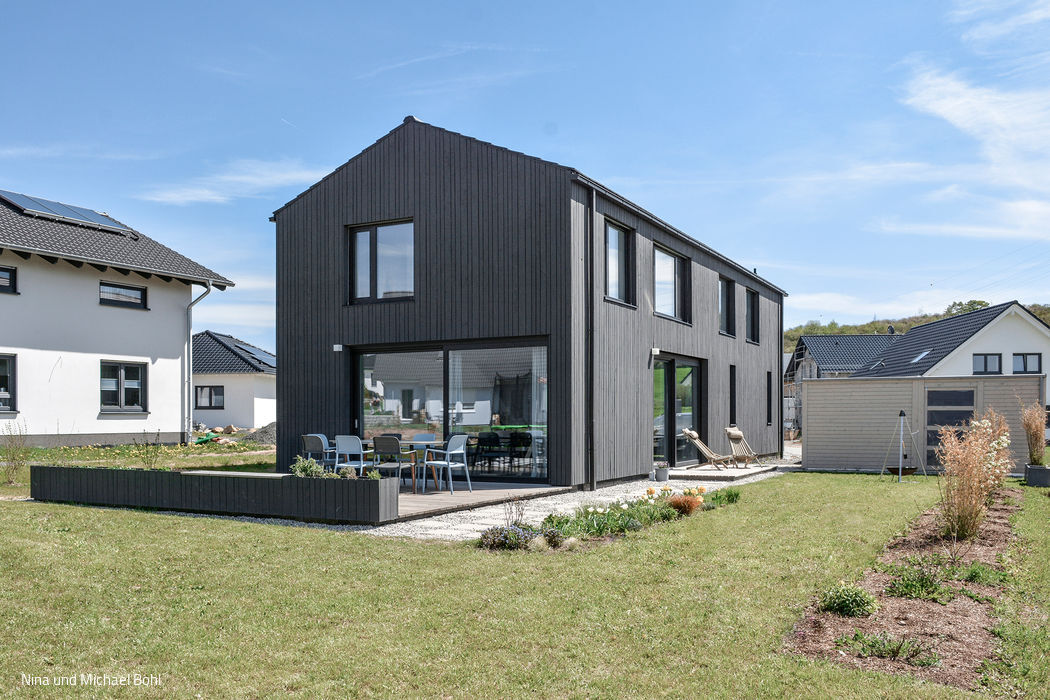
The dark grey house that architects Nina and Michael Bohl designed for themselves proves that typical new development areas don't have to follow convention. "We didn't set out to make a bold statement with our design," Michael Bohl explains, "but we did want to demonstrate that there are other ways to build—that architecture can be more daring without being provocative." Beyond that, they sought to create a thoughtfully designed home with visual impact and sculptural presence, yet one that remains restrained in its material details.
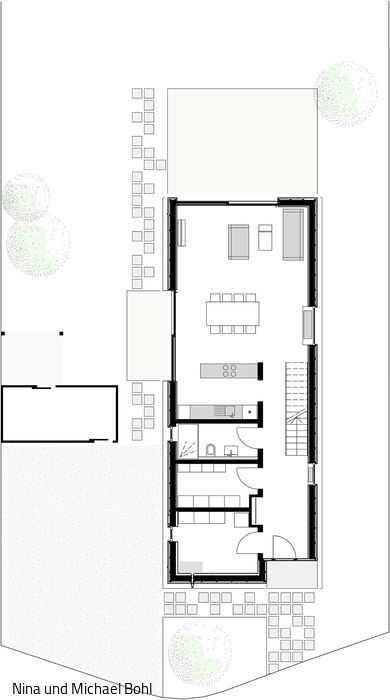
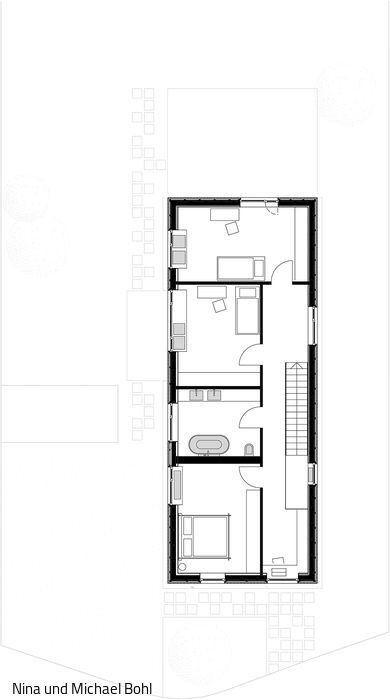
The dark grey façade—chosen for both aesthetic and contextual reasons—references the neighborhood's vernacular. "Every house around here has dark grey roofs," Bohl notes. "This allows our house to stand out, yet also to blend into that grey roofscape when viewed from above." Building height restrictions on the eaves side posed a challenge: fitting two full stories within the envelope required ingenuity. The solution was a compact floor plate with an exposed soffit and minimal floor build-up. The architects also imposed a constraint on themselves: they deliberately sought an unusual plot—narrow, elongated, or triangular. They found it. The elongated, slender site naturally generated an elongated floor plan, and the restrained material palette created a crisp, sharp-edged form.
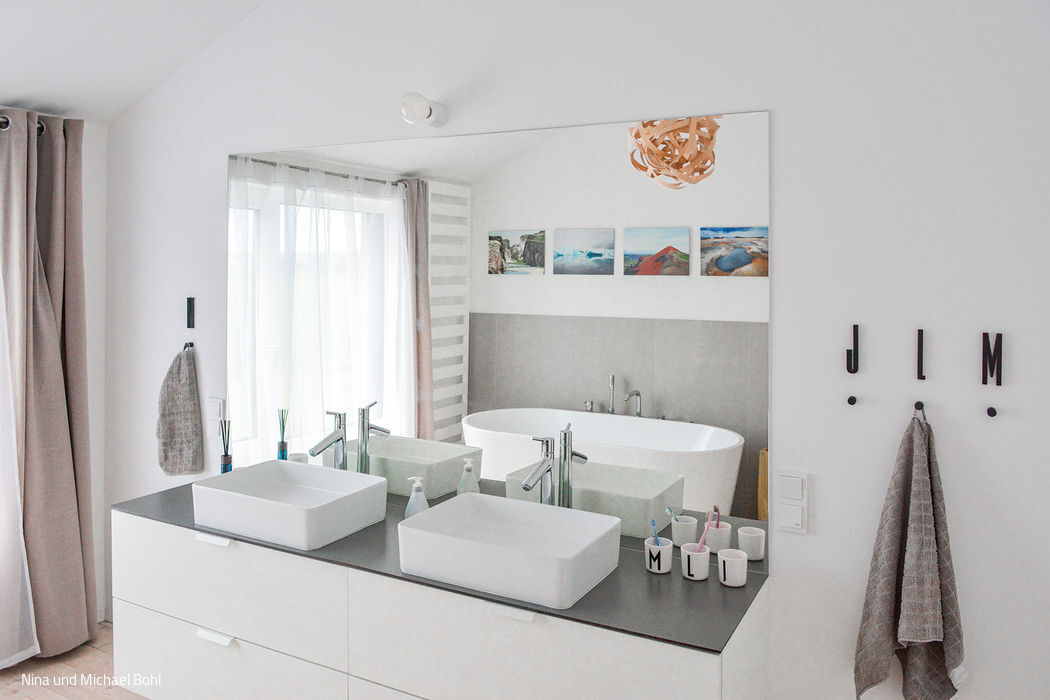
The interior spaces feel luminous and open. Both architects prioritized natural light over abundant artificial sources or smart home technology. The rooms function efficiently while maintaining a constant visual connection to the outdoors. Expansive windows and sliding glass doors flood the spaces with daylight and create a seamless flow between interior and exterior, amplified by the adjacent wooden terraces.
Sustainability drove the choice of timber frame construction throughout. The façade employs local larch—a natural complement to the structure. Mineral-based insulation envelops the entire building. On the ground floor, polished cement screed flooring brings an understated industrial aesthetic, while larch boards on the upper story add warmth and liveliness. "The house breathes and moves," architect Nina Bohl observes. "You can hear it living."
Living space: 140 m² + terraces 38 m²
Plot size: 650 m²
Construction period: December 2018 – October 2019
Construction method: Timber frame
Energy concept: Fuel cell with on-site electricity generation; EnEV requirements exceeded through optimized wall and roof assembly
Photography Credits:
Nina and Michael Bohl
(Published in CUBE Frankfurt 02|21)
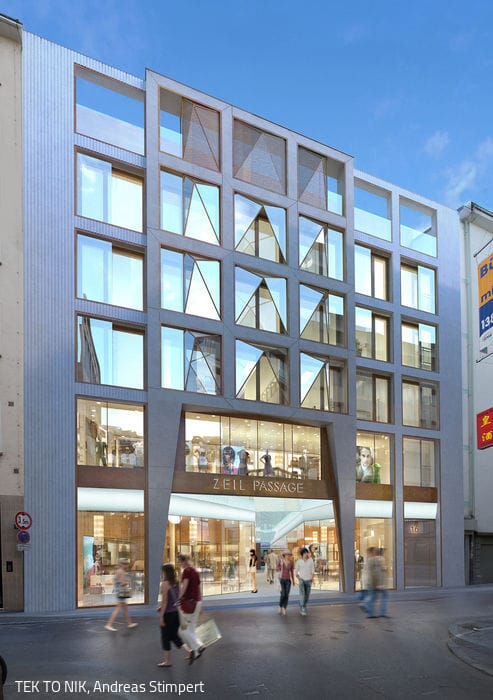
Inviting Entrance
Building Forward: A Mixed-Use Structure Honors the Zeil's Legacy
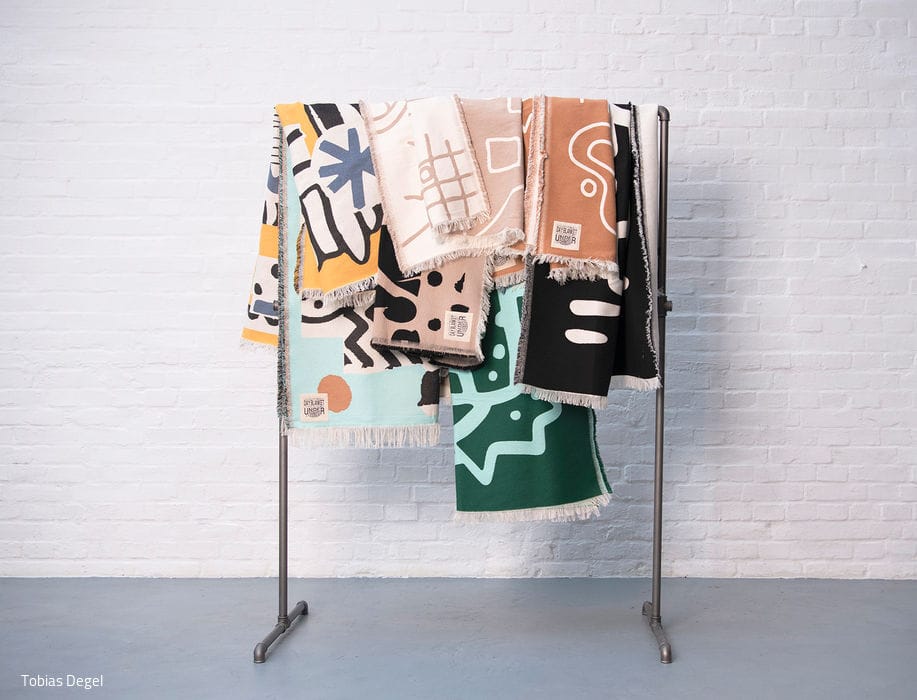
Sustainable and Vibrant
Wiesbaden graphic designer Tobias Degel explores diverse formats and applications
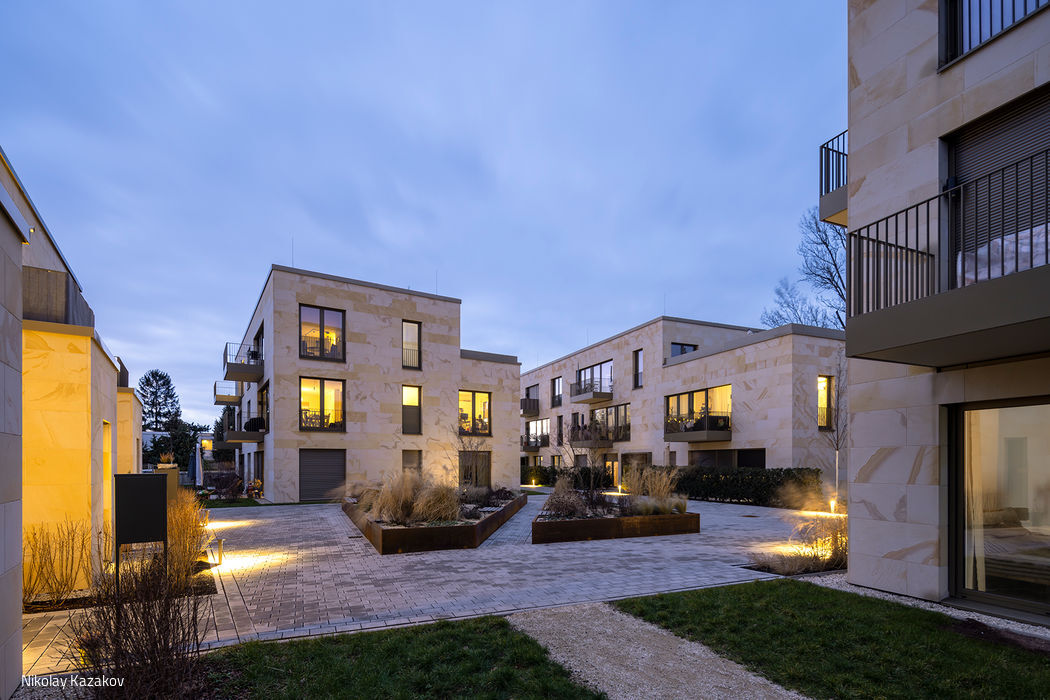
Living Well
A family-friendly, nature-focused residential neighbourhood designed for community.