


Awakening
Adaptive reuse in Königstein revives the nostalgic charm of a historic hotel


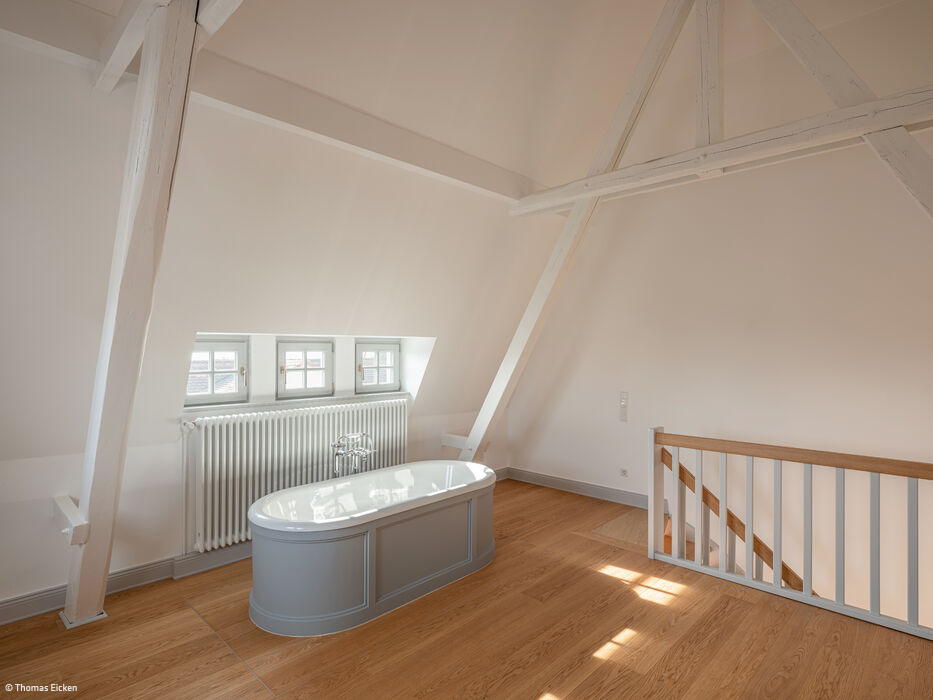


Through the renovation and conversion of the former Parkhotel Bender in Königstein, Bezzenberger Architects have breathed new life into a cherished landmark of this idyllic Taunus town. The Hotel Bender had already undergone significant transformations—first in 1891 and 1909, then again with an expansion in 1928, and finally a redesign in 1963.
Converting the building into rental apartments presented a complex challenge: the architects had to balance competing demands—historic preservation, structural integrity, fire safety, acoustics, and thermal performance—across multiple construction periods. The result: modern living spaces infused with nostalgic character.
To honor the building's distinctive character across its varied structures, the three heritage-protected elements received individually tailored façade colors inspired by their historical context. One component was further restored with a new roof matching the original design precisely. Since external insulation wasn't feasible for the listed structure, silicate-based internal insulation now reduces energy consumption while allowing the walls to breathe through diffusion-open plaster systems, maintaining optimal indoor air quality. Restored ceiling frescoes reawaken the building's former elegance, while thoughtfully designed lighting balances historical character with contemporary function—lanterns and wall sconces illuminate stairwells and corridors, while strategically placed spotlights ensure adequate lighting throughout the residential passages.
Generously proportioned floor plans filled with natural light now replace the cramped layout typical of historic hotels. Drawing on the building's cultural heritage, the ten apartments—ranging from approximately 52 to 194 m²—incorporate period details including parquet flooring, natural stone, slate shingles, timber windows and doors, vintage-style tile work, and bathroom fixtures modeled after historical designs that authentically reflect the property's distinguished past.
Photography:
Thomas Eicken
(Published in CUBE Frankfurt 02|24)
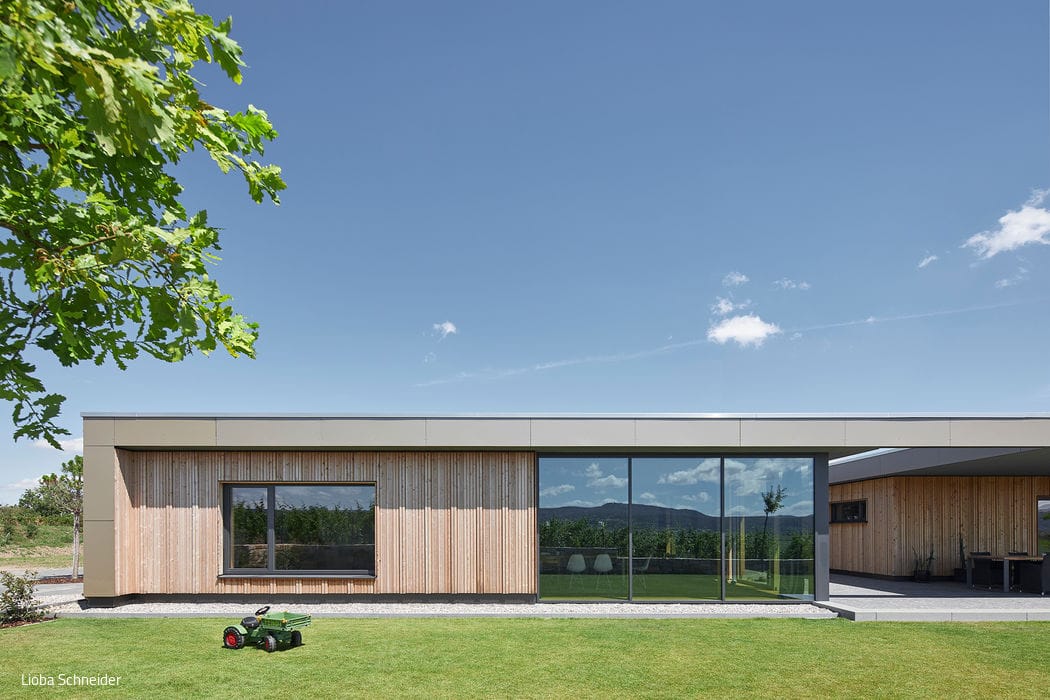
Exceptional Setting
Generous New Residence Atop the Freinsheim Winery
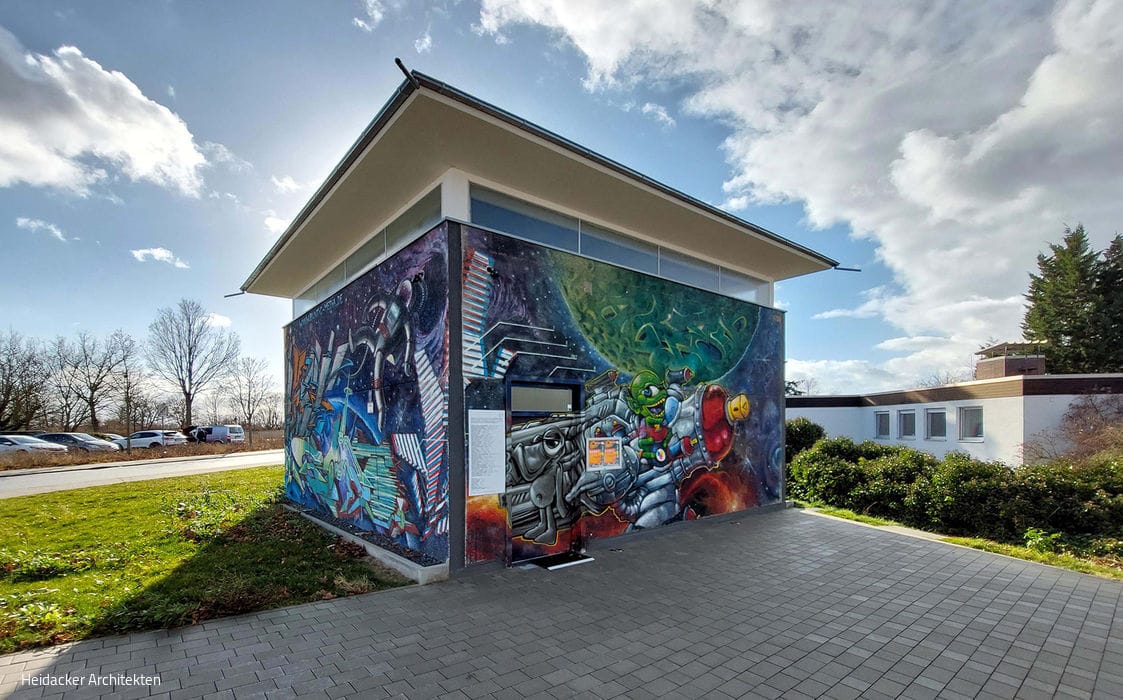
Culture & Celebration in Graffiti
The art cube sustains the story of its own creation.
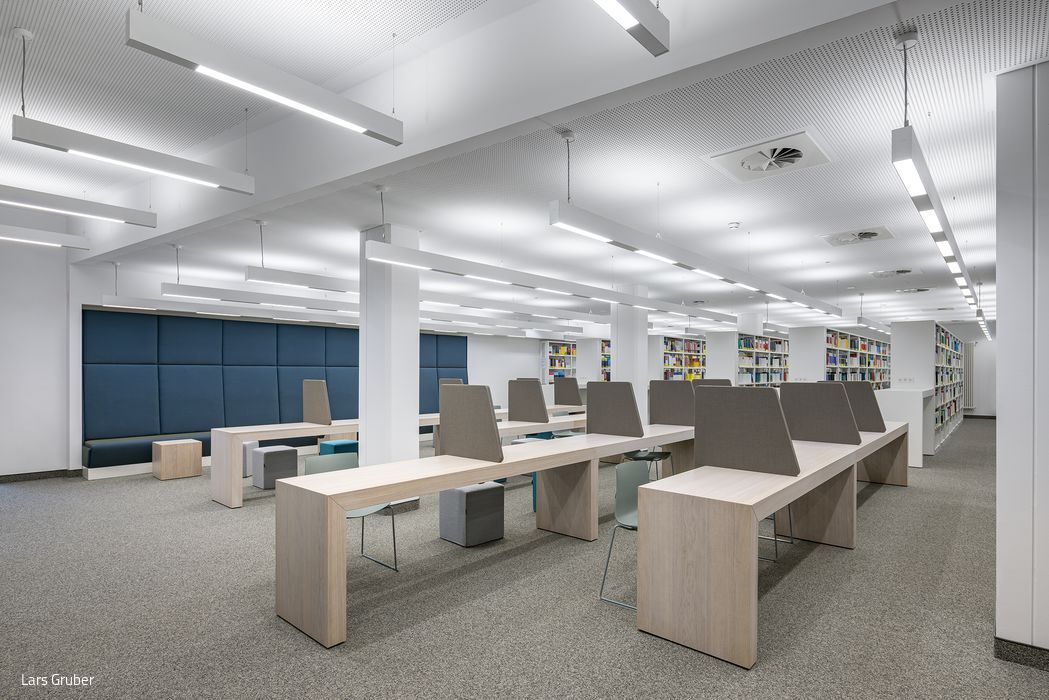
Contemporary Learning Spaces
Demand Builds: Expanding Success at Mainz University

More Porsche in Frankfurt
A New Standard: Forward-Thinking Architecture Meets Immersive Experience