


Talent, Intuition, Calling
Gisbert Pöppler is sought after for creating distinctive interiors


CUBE: Mr Pöppler, your studio and showroom occupy a historically significant, landmark-protected building – the former Karl Marx bookshop. How did that come about?
Gisbert Pöppler: A major renovation forced us to leave our old office in Kreuzberg. While searching for a new studio, we realized we wanted more than just workspace – we needed a showroom for our furniture collection too. We'd been developing most of these designs over the past decade, and the time felt right to present them properly. I found the bookshop in these striking Zuckerbäcker buildings on Karl-Marx-Allee quite by chance – through an ad on Immoscout, actually. But it soon became clear that working with these listed rooms and their imposing wooden bookshelves wouldn't be straightforward. They're remarkably dominant features. It took us nearly eighteen months to truly make the space our own.
You transformed a restored 1930s villa into a vibrant palette of colour. What role does colour play in your work?
Working with colour is far more than an aesthetic exercise – it's a layered process. For us, it's about animating spaces and accentuating their depth through colour. Every choice serves a purpose, one that emerges from the room itself and what our clients need. We study the fundamentals: orientation, light, architecture. We ask how the space will actually be lived in. And crucially, we never ignore our clients' personal preferences. A colour concept should enhance their lives, not dictate them.
You're also known for setting exceptionally high standards when it comes to material quality.
We're constantly hunting for new materials suited to each specific project. In the Hagen villa I mentioned, for instance, we installed a stunning custom terrazzo floor we developed with a specialist terrazzo craftsman. But the material selection was driven by practicality as much as aesthetics: the clients have two energetic dogs and a pond on the property. Marble and carpet were out of the question – even parquet felt too fragile. With bathrooms, we typically steer clear of delicate, open-pored natural stone. Marble, though, we adore. For certain projects, we travel to the major quarries in Italy and purchase entire stone blocks, which we then fashion into basins, wall cladding, and flooring. We commission our finest cashmere bedspreads from a workshop on the edge of Kathmandu, Nepal, where they're hand-woven. A custom loom was even built there to accommodate our oversized specifications. We care deeply about material quality, but equally about its execution. That's where true craftsmanship matters – not everyone possesses the skill to extract the finest results from superior materials.
You trained as an architect originally, but then pivoted to interior design. What drew you in that direction?
It happened through a practice where I freelanced about thirty years ago. They were doing both architecture and interior design – and doing it at a remarkably high level. That fascinated me.
You've also ventured into product design, often creating your own furniture pieces.
We started by designing the occasional table, sideboard, or cabinet whenever we couldn't find exactly what we needed in the market. Before we knew it, our portfolio had expanded organically. A crucial influence was Norbert Schien, a dear friend working with the acclaimed Studio Putman in Paris. Norbert connected me with Europe's finest manufacturers. That's how we discovered Alexandre Phelippeau, the Paris upholsterer – I call him a haute couture upholsterer. We source glazed lava stone tables from a manufactory in Sicily, and the intricately veneered wooden table we're sitting at now was crafted by a master carpenter in Würzburg.
What are the essential elements of your craft? Taste, intuition, stylistic conviction, expertise – how do they all combine?
I'd emphasize "intuition" – it's often underestimated. But intuition isn't mere feeling; it's something deeper. It's analytical ability. When I first walk through a project with a client, I'm not just absorbing the space – I'm reading the client, sensing what they truly need. I prefer bringing a colleague along to these initial visits, sometimes two. It helps us have richer conversations afterward about what we've discovered.
You operate in the premium segment today, but that wasn't always the case. How long has your practice existed?
Since 2004. Before that, during the dot-com boom, we were expanding offices left and right. When the bubble burst, we recalibrated and increasingly focused on private residential projects. That's where I discovered my passion for craftsmanship, for meticulous detail, and for working with genuinely discerning clients.
Quite a trajectory, wouldn't you say.
I'm not sure I'd call it dramatic. Steady, perhaps – but steady.
One of the standout projects in your career was likely "Between Time" in 2013. Tell us about that.
The vision was to demonstrate what interior design truly can be in Germany – beyond the usual cast of familiar names. We partnered with Azucena in Italy (sadly now defunct), the fabric house Dedar, and a dealer specializing in antique Chinese carpets, among others. Everything we showed was distinctive. Even the space itself – on Wallstraße in an 1870s building that once housed a hardware merchant – became part of the story. We deliberately wove the architecture, especially those striking cast-iron supports and railings, into the concept. That's what gave the exhibition its singular character.
What's been your most challenging project to date?
The renovation of the Graphic Arts Collection at the Städel Museum in Frankfurt was probably the most demanding. The collection preserves over 100,000 drawings and prints from the late Middle Ages to today – Dürer, Raphael, Rembrandt, Max Beckmann, German Expressionism. It operates like a library: visitors request works from the archives and study them in calm. We had to create the perfect environment for that. Simultaneously, the space needed to accommodate thousands of reference books. Given the soaring ceiling height, we proposed installing a gallery level and suspended shelving – custom-fabricated by metalworker Christoph Münks from Meerbusch – to store the collection efficiently.
What's next for you – any upcoming plans or projects?
Exciting commissions keep arriving – often out of nowhere. We're fortunate that way. Clients discover us through press coverage, find our project photos inspiring, or friends refer us and our distinctive approach.
Thank you for your time and insights, Mr Pöppler – we wish you continued success.
Gisbert Pöppler
Gisbert Pöppler studied architecture at California College of Arts and Crafts in San Francisco and at the Technical University of Berlin, graduating with an engineering diploma in 1996. After his studies, he worked for various Berlin firms, designing new architectural projects in the post-reunification era. In 1999, he co-founded Prinz–Pöppler with architect Ilona Prinz, creating office environments for Berlin start-ups. Since 2004, he has worked independently, offering comprehensive design solutions for both commercial and residential clients. His Berlin studio and showroom unite architecture, interior design, and bespoke furniture. He's committed to bridging tradition and modernity, creating harmonious hybrids of unexpected elegance or vibrant, colour-rich interiors.
(Published in CUBE Berlin 03|24)

Flexibility Meets Design
Malte Grieb's philosophy: maximum function in minimum space.
Ideas for Sustainable Change
Design Concept and Interior Architecture, Flawlessly Realized

Following the fire wall
Interior design brings warmth, unexpected alcoves, and even a water feature to this historic apartment
A stroke of luck
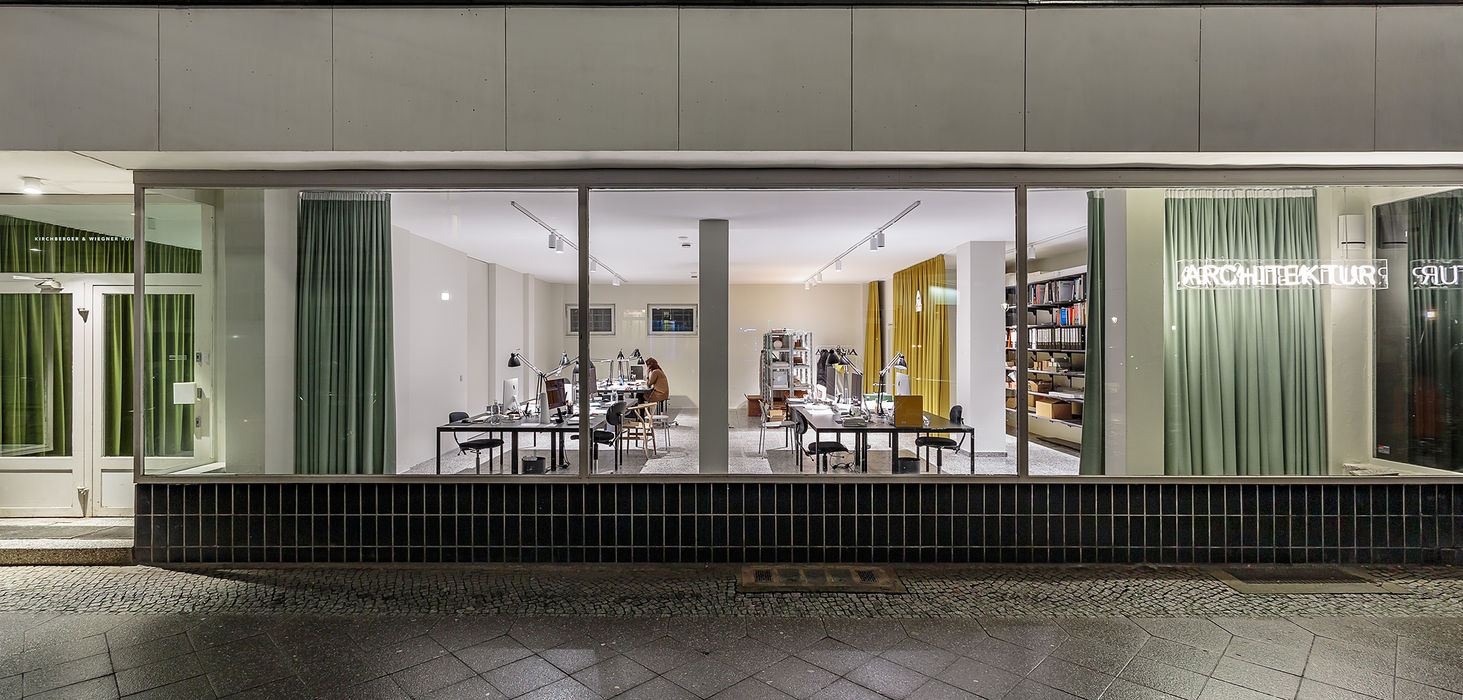
A former chemist's shop is transformed into an architectural office