


It exists: timeless modernity
A 1960s villa offers comfort for a young family
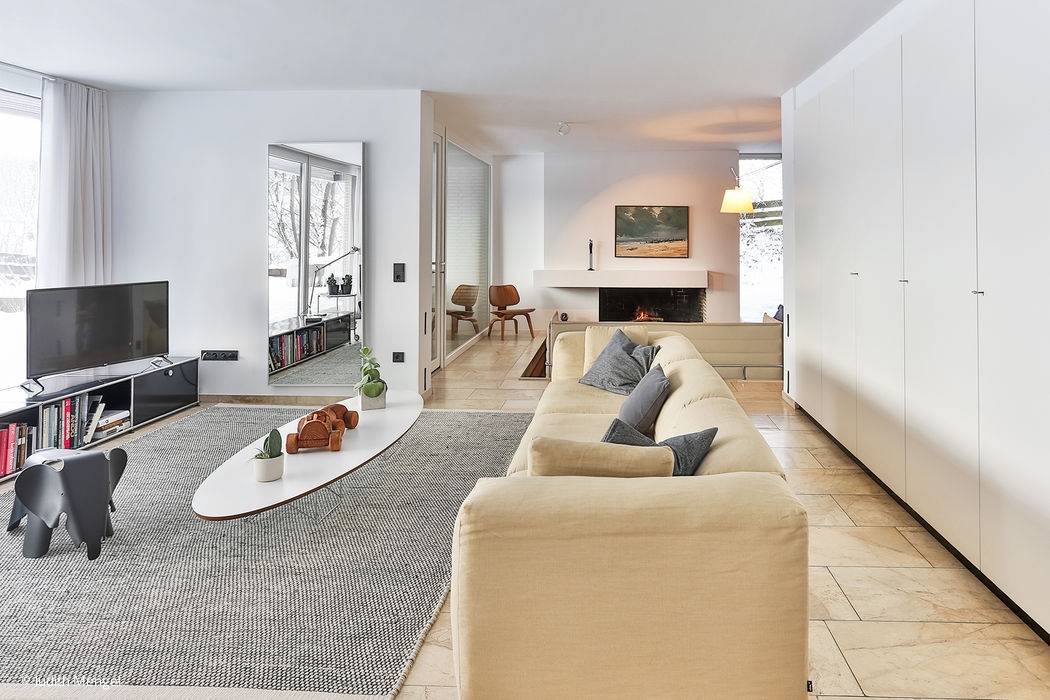
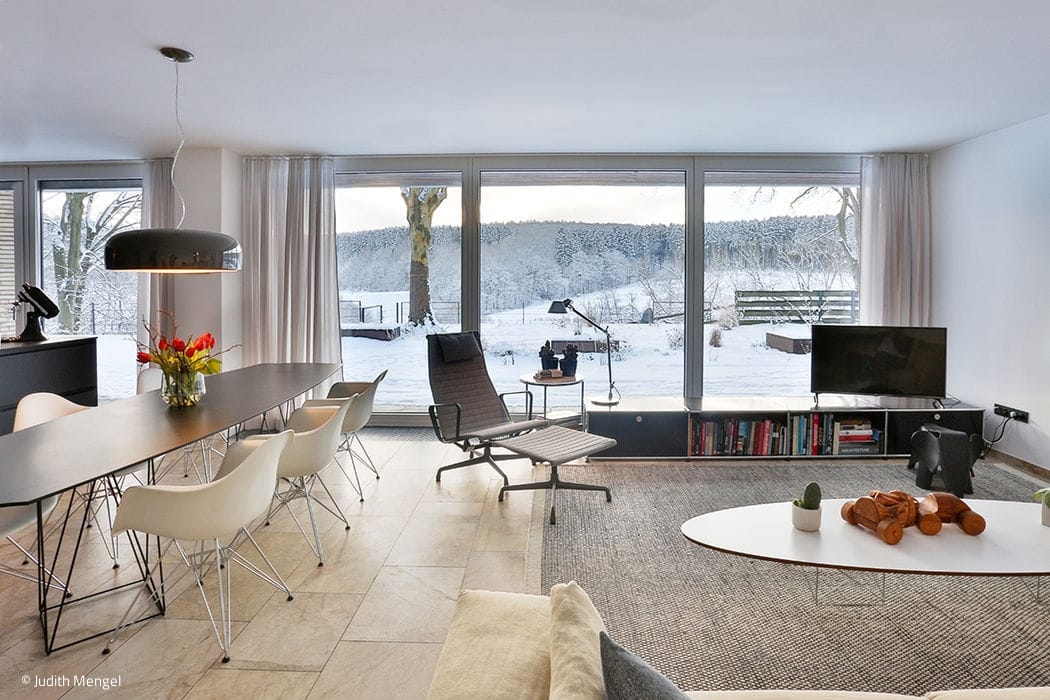
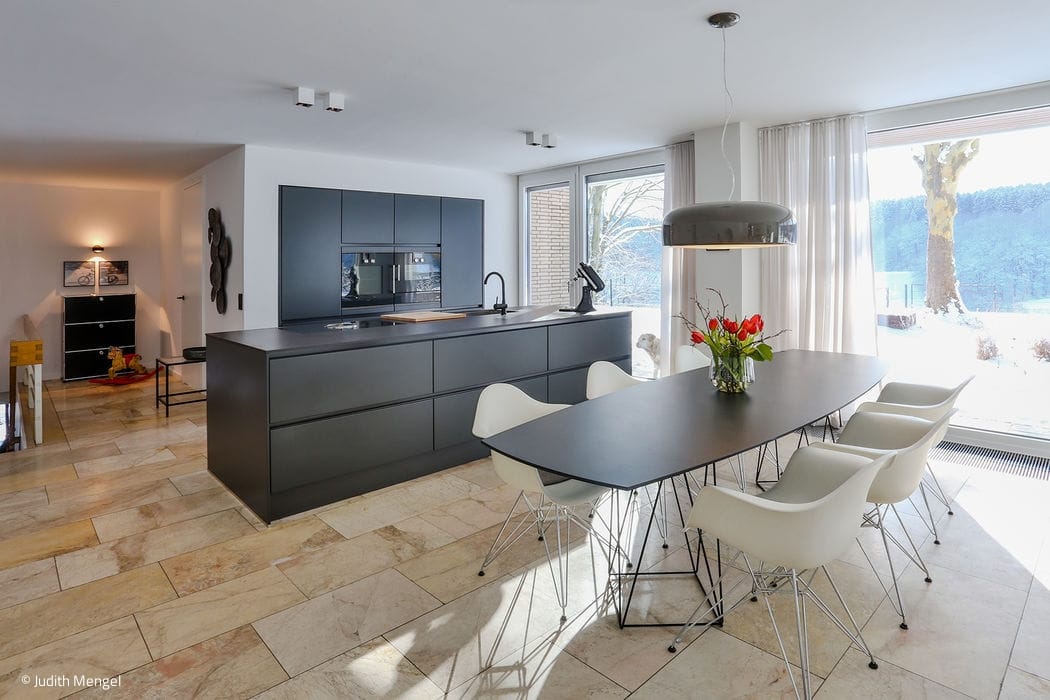
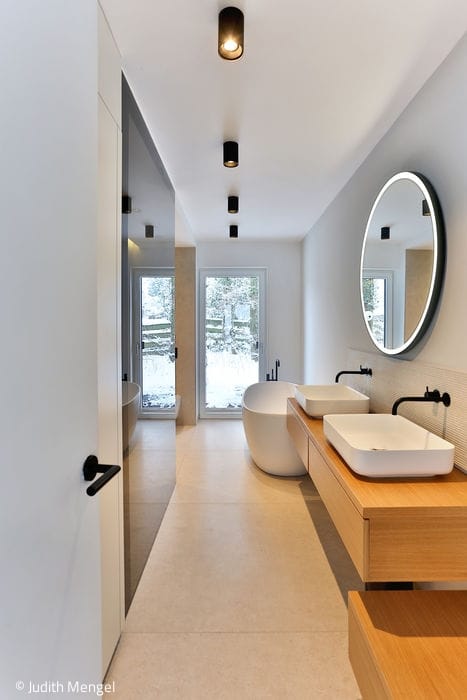
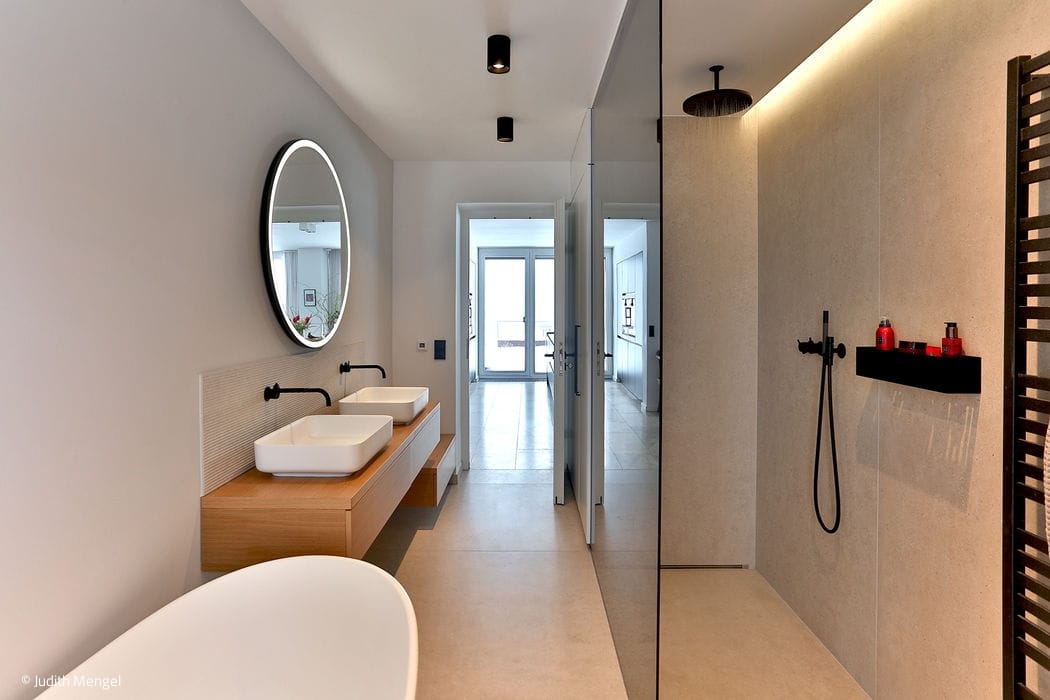
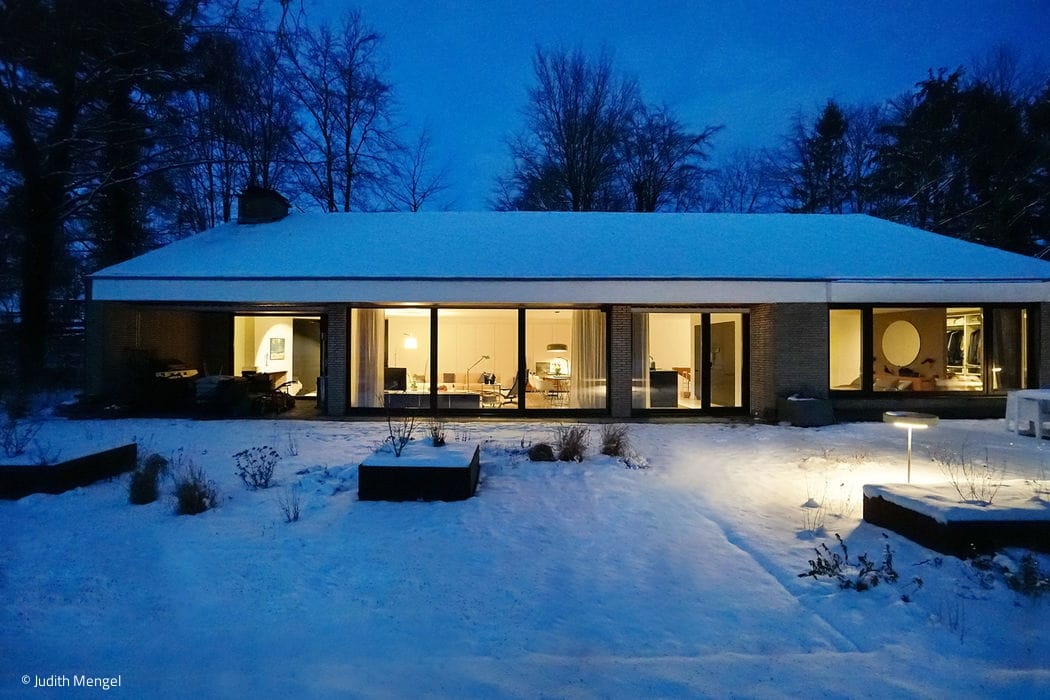
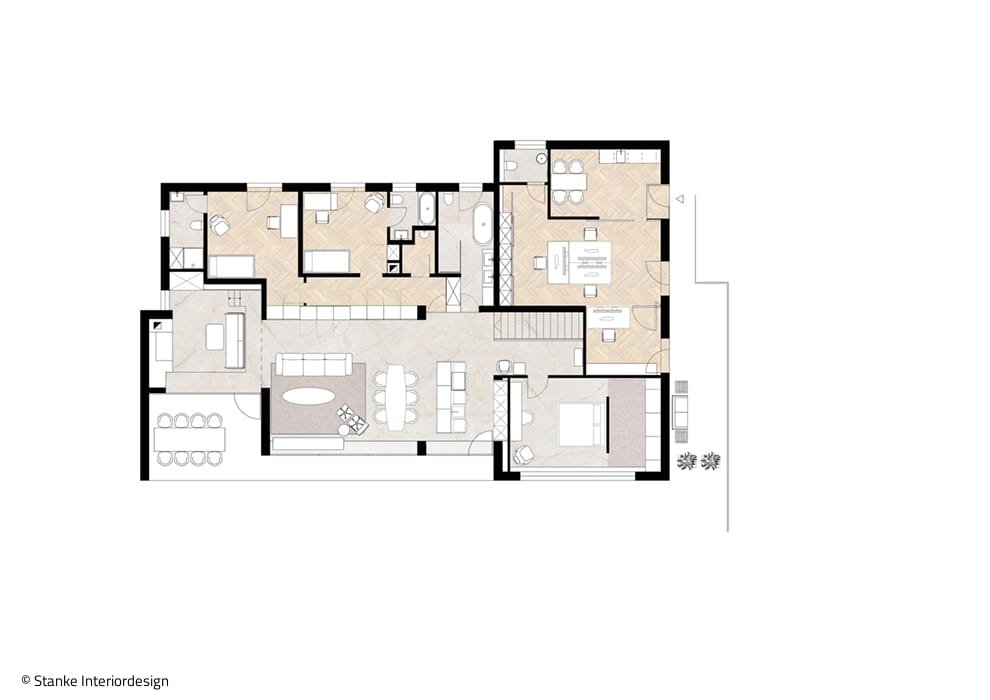
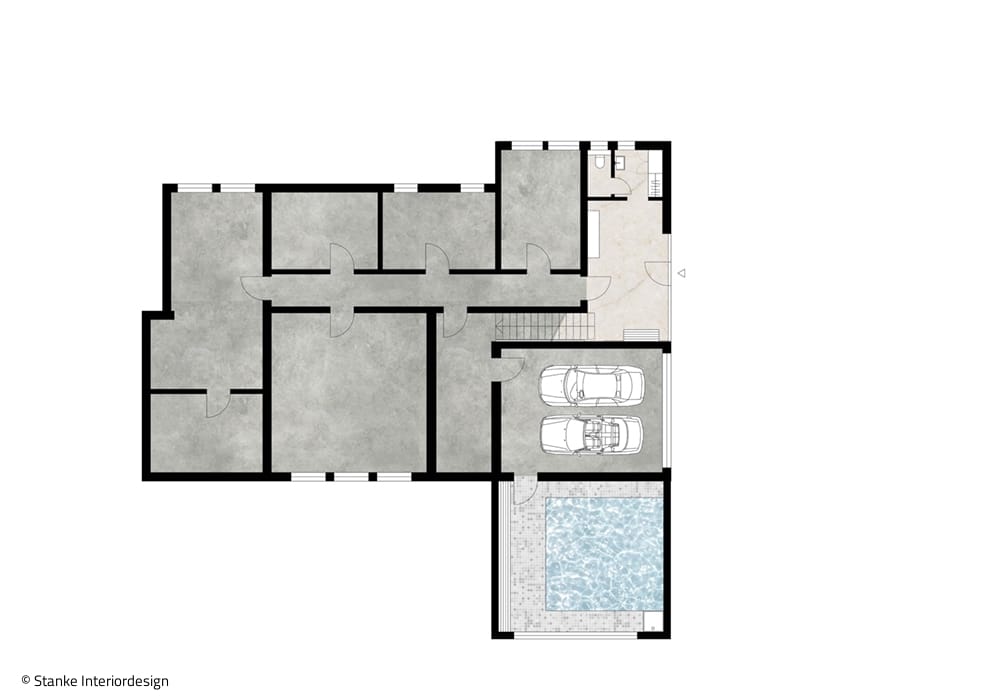
If the villa hadn't already won you over with its modern style, the absolute tranquillity of the approximately 4,000 m² property would be reason enough to want to live here. Located in a landscape conservation area, the south-facing house is protected from prying eyes by its hillside location. The view stretches far across the hills of the Eifel, and a nearby reservoir invites you to take a dip in the summer. In the 1960s, a factory owner and his wife built their dream home on this idyllic piece of land, incorporating many special details, such as the bar in the lower-level fireplace room, which is built into the wall and tiled with antique, hand-painted Delft tiles. No expense was spared on the quality of the building materials, which was not always the case at that time. As a result, the house is still in very good condition even after decades. This provided the ideal starting point for interior designer and builder Nadia Stanke to combine work and family life under one roof.
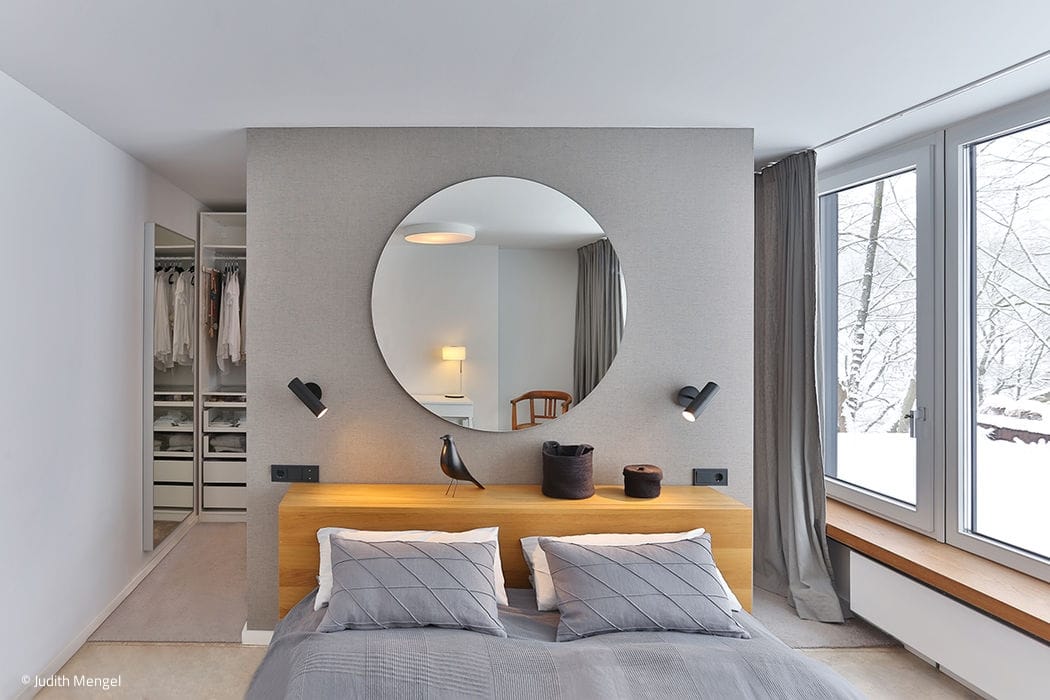
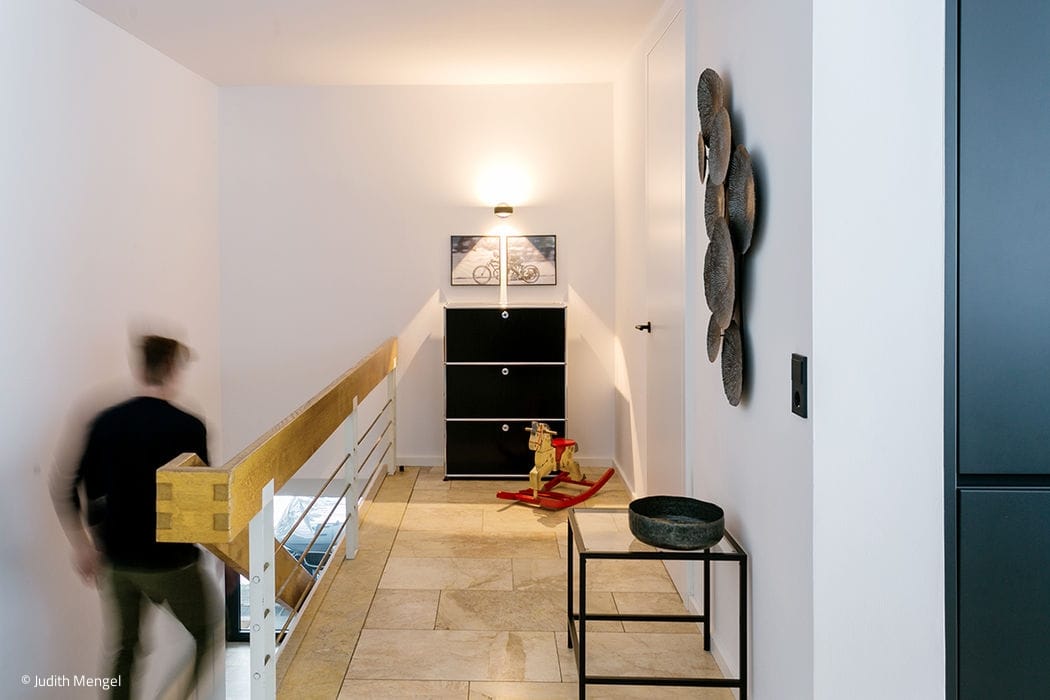
The house is linear, open and flooded with light. The rooms, which were previously designed for two residents, now had to be redesigned for a family of four and the interior design office. "We had to restructure the rooms and create a division between work and living areas. This had to be well thought out," recalls Stanke, who also attached great importance to preserving the architect's signature style during the renovation. The interior designer divided the 280 m² floor space into 60 m² of office space with separate access and 220 m² of living space for the family. She complemented the light stone floors with equally light wooden floors in the bedrooms. The biggest challenge, however, was redesigning the bathroom. "A bathroom is rarely changed afterwards and simply has to be right from the start. And our bathroom is right," says Stanke happily.
Although the architecture was based on classic modernism, the interior design and furnishings were in quite dark colours. The high quality of the fittings argued in favour of preserving them. However, in order to realise his own ideas of a purist, linear design language, Stanke had the wood varnished in a light colour. But the solution was not always so simple. "After much hesitation, we finally decided to remove the ceiling panelling made of the finest saddle leather," says Stanke. The previous owners had been leather manufacturers. The hand-hammered copper front door also had to go, as it was no longer up to modern energy standards. However, it will find a new home as a wall hanging among the timeless design classics with which Stanke has furnished the living space.
(Published in CUBE Cologne Bonn 04|19)


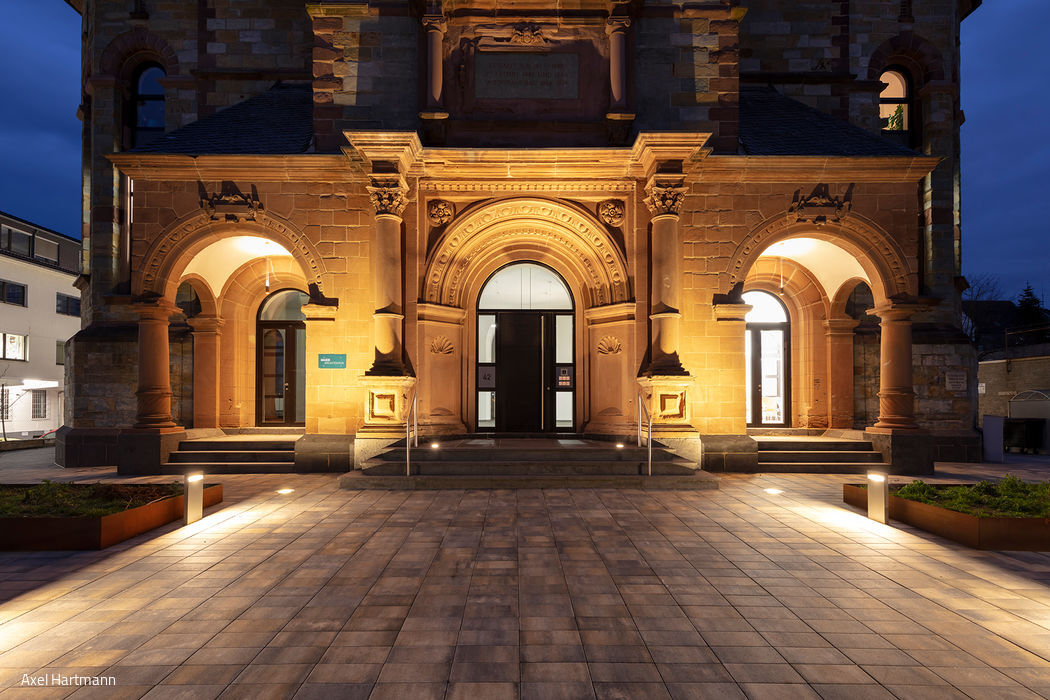
Heritage Reimagined
The Luther Tower in Mülheim: Expanding a Heritage into Mixed-Use Purpose
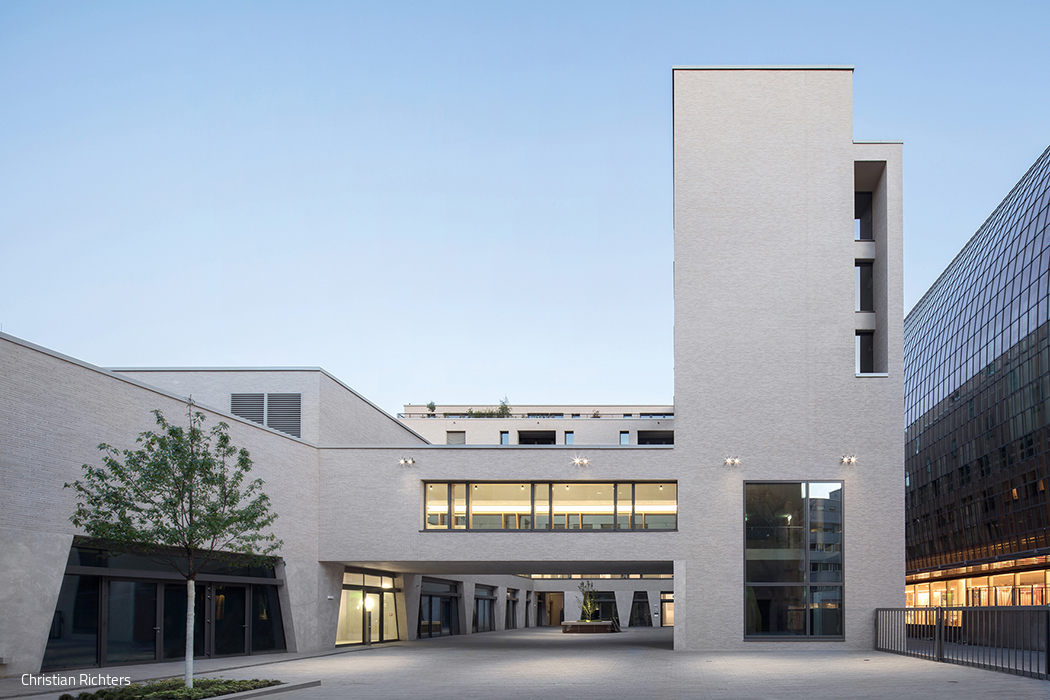
An oasis of spatial variety
The Antoniterquartier stands out for its thoughtful urban infill between two busy shopping streets.
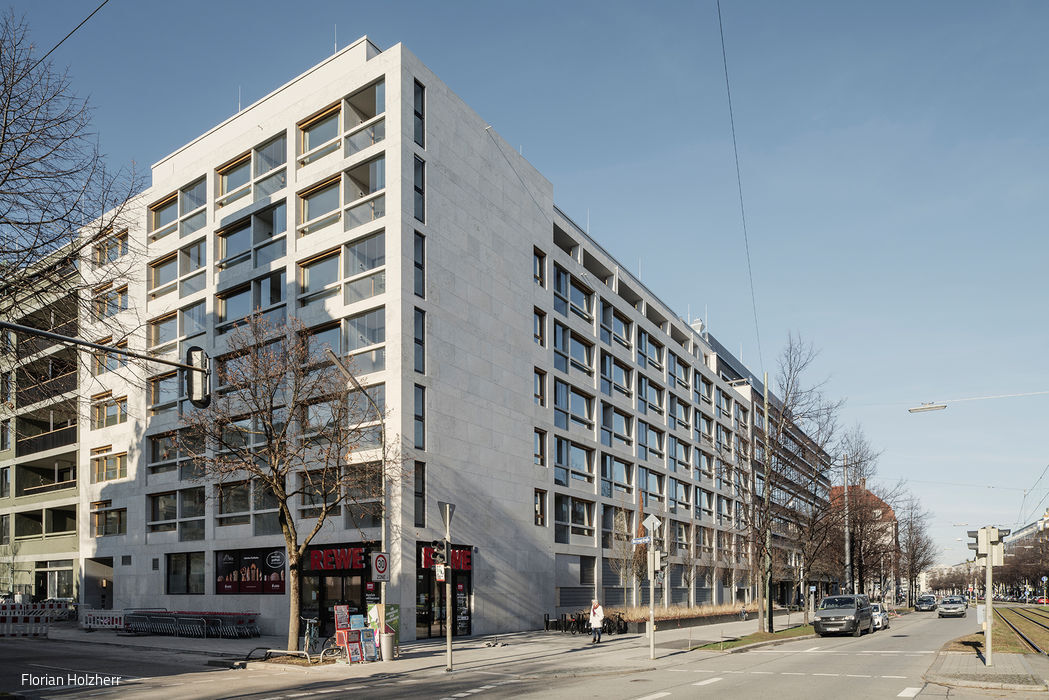
Excellent Material Selection
A Residential Landmark in Natural Stone
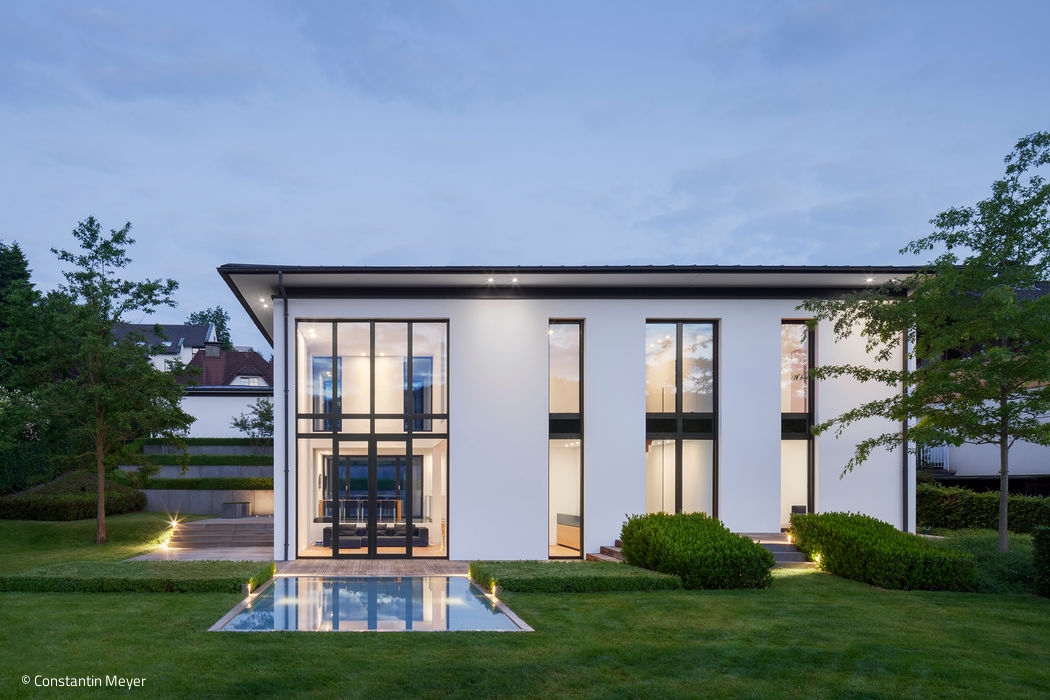
Flowing Clarity
The floor plan merges exterior and interior as one unified space.