


A real gem
Revitalizing a 1960s bungalow: uncovering architectural potential
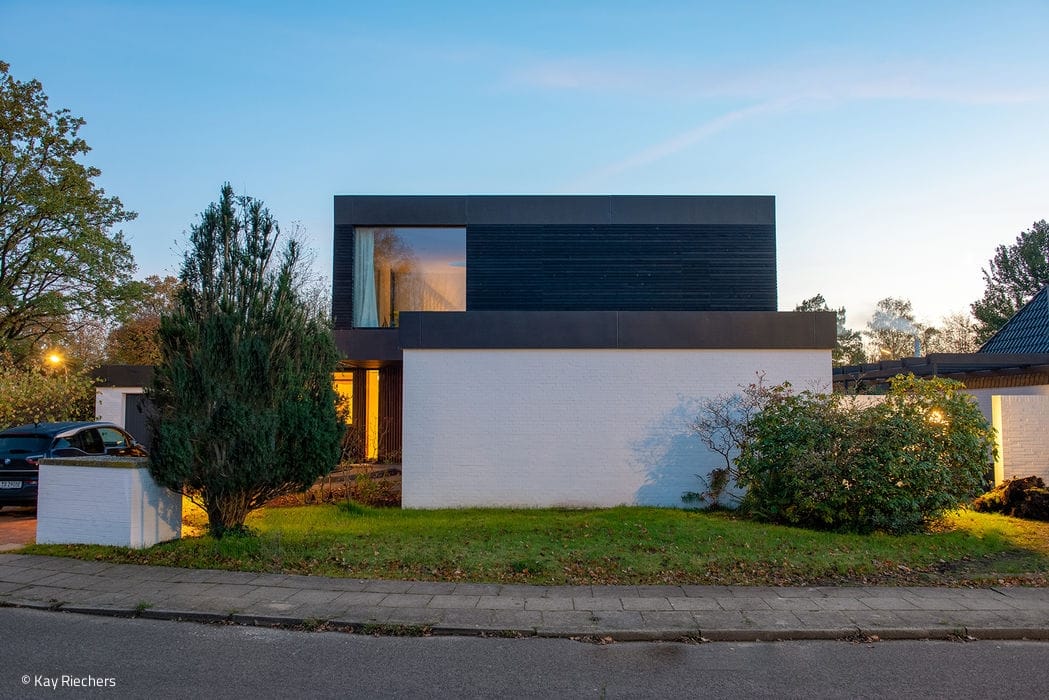
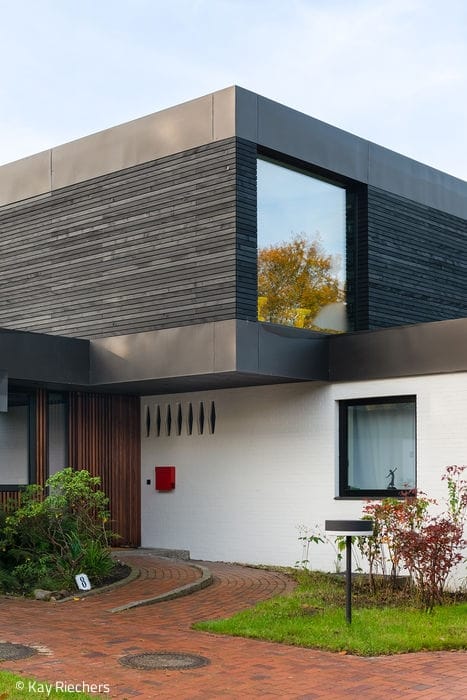
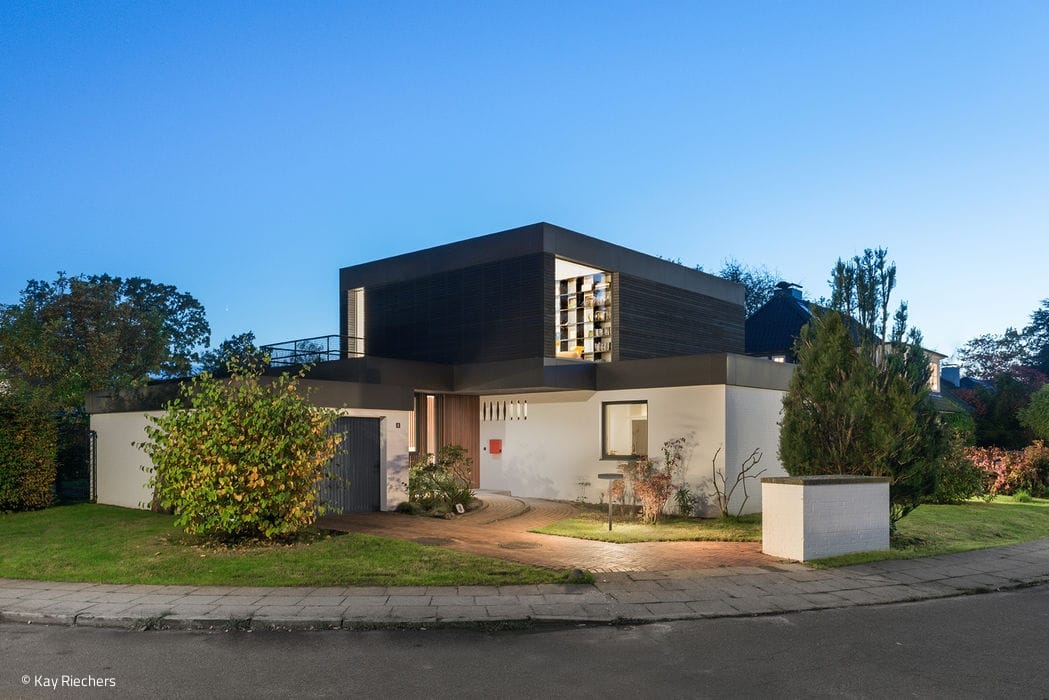
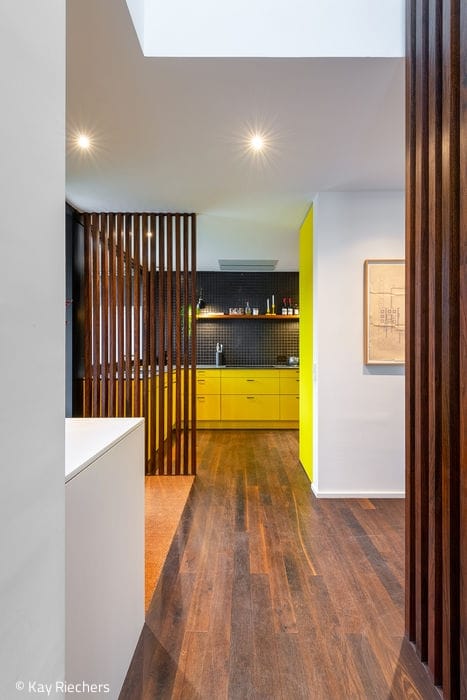
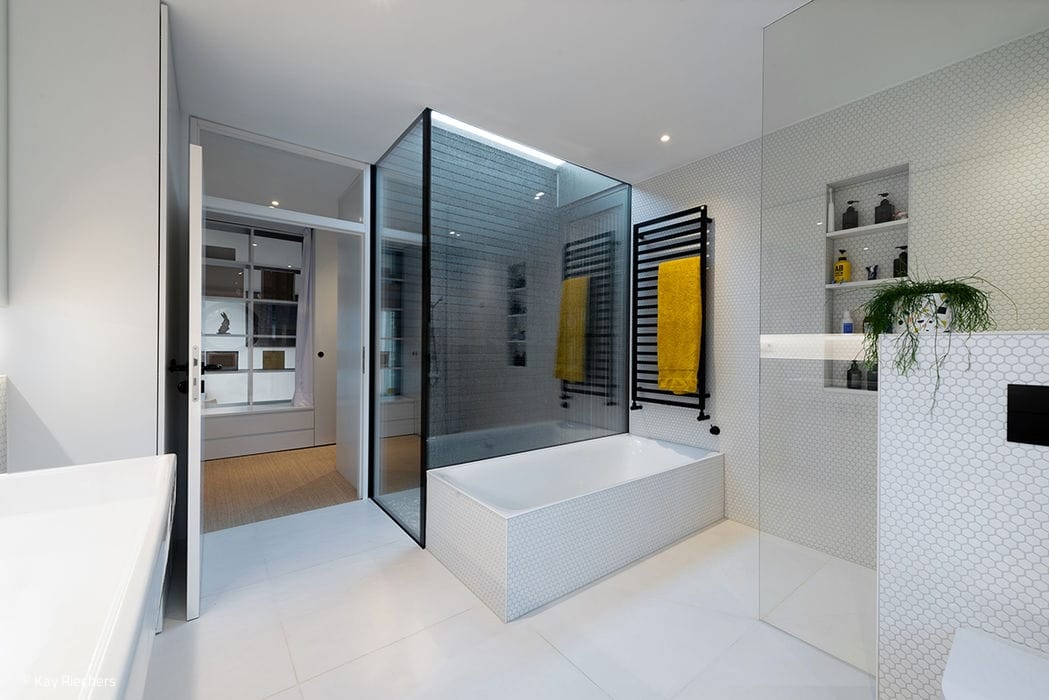
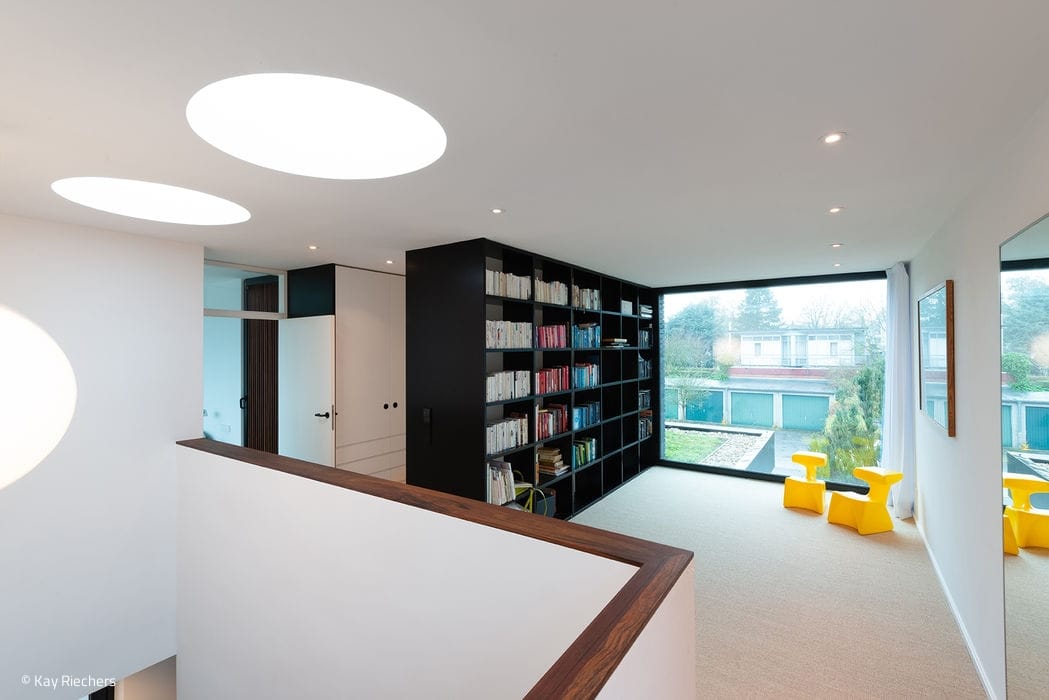
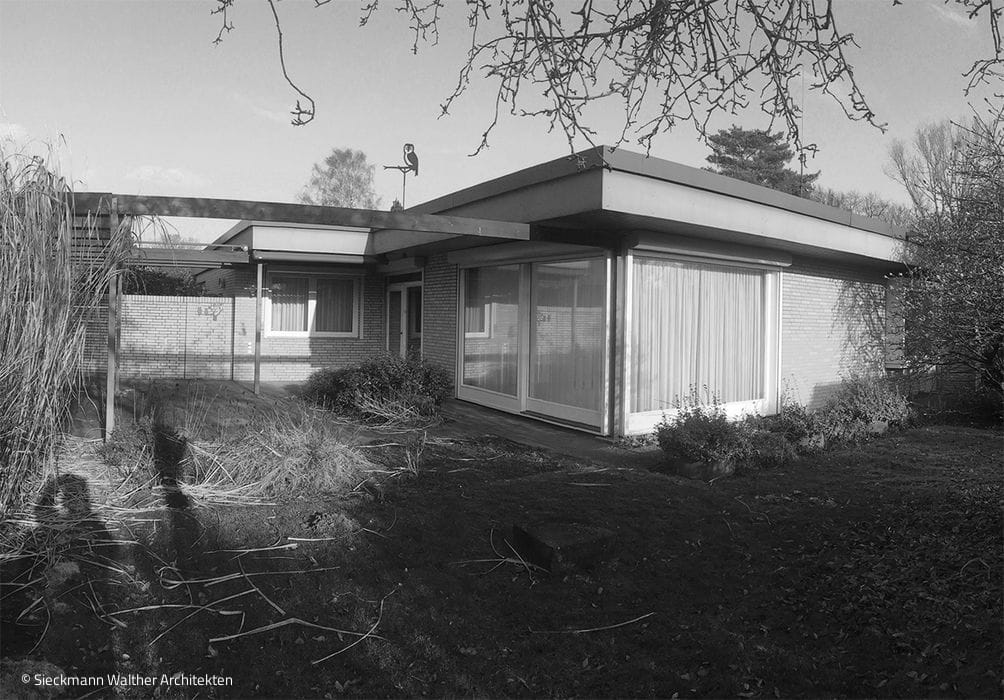
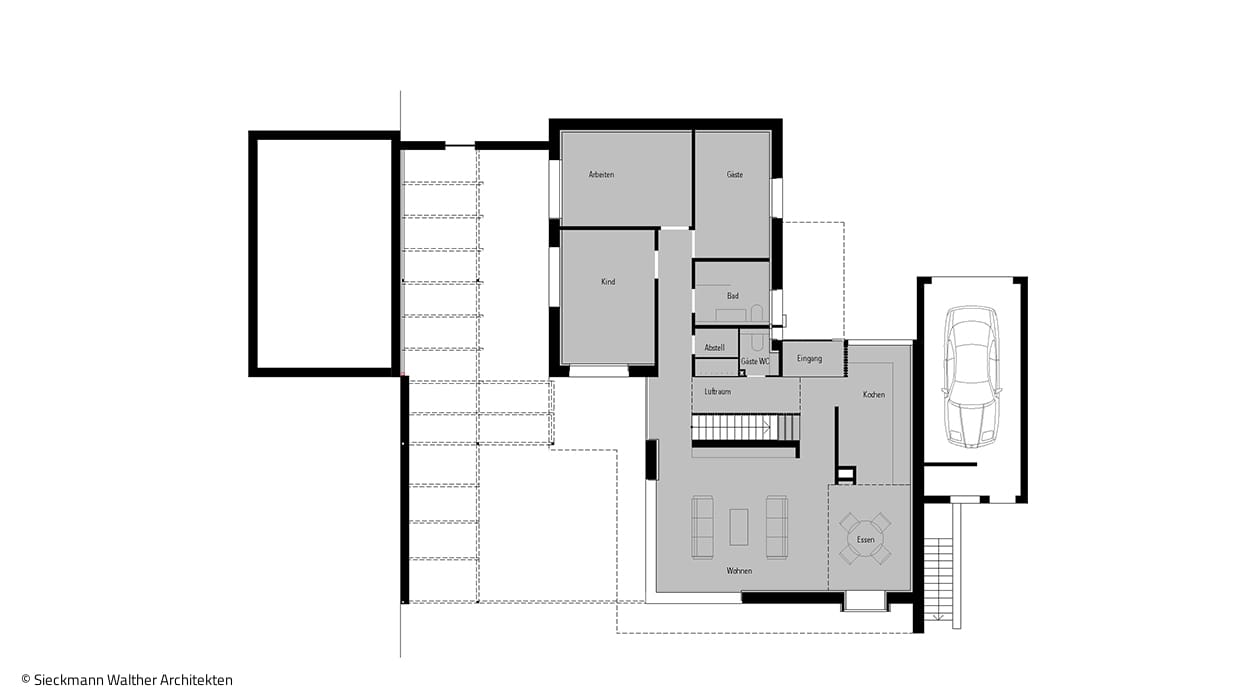
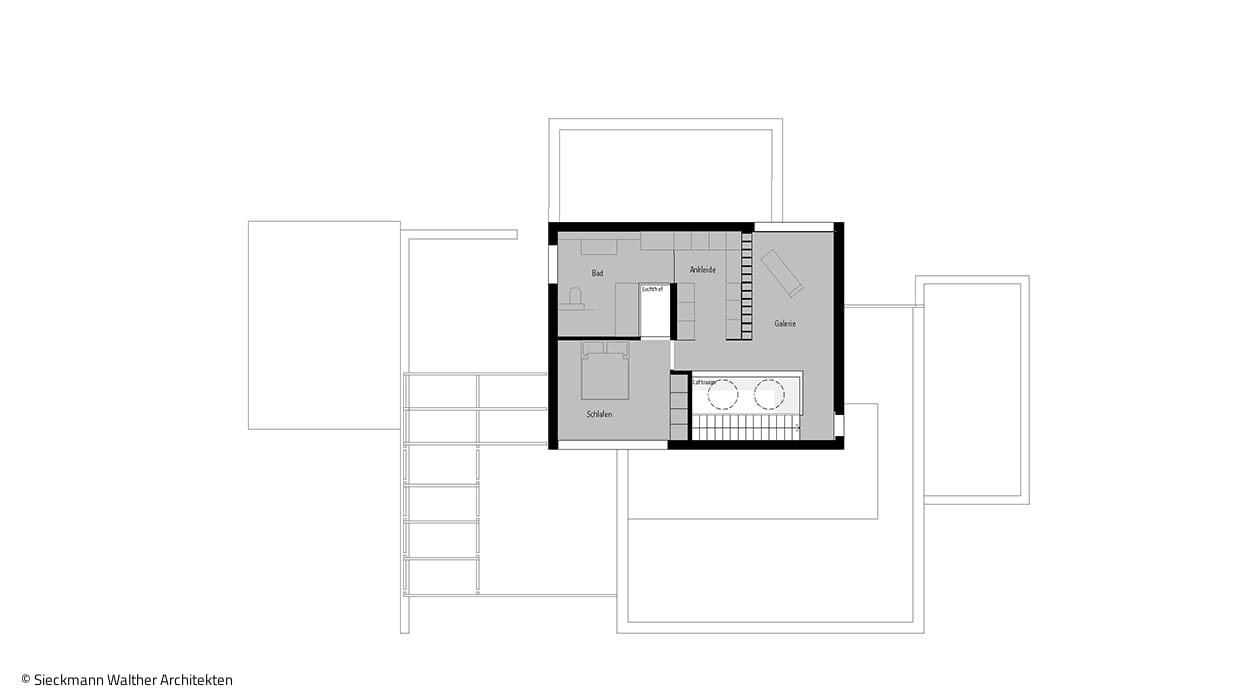
Ein Grundstück im Hamburger Westen wurde mit einem zum Abbruch ausgewiesenen Bestandsgebäude – ein Flachdachbungalow aus den 1960er-Jahren – verkauft. Jedoch stellte sich nach eingehender Prüfung der Immobilie heraus, dass sowohl die bauliche Substanz als auch die architektonische Ausgestaltung des Hauses von hoher Qualität waren. Derartige Bungalows erlebten in den 1960er-Jahren ihre Blütezeit. Nachdem die größte Wohnungsnot nach dem Zweiten Weltkrieg behoben war und das Wirtschaftswunder die finanziellen Möglichkeiten schuf, orientierten sich zahlreiche Einfamilienhäuser wie dieses Bestandsgebäude am Stil der amerikanischen Bungalows mit neuer Grundrissgestaltung und bewusst gestalteter Verknüpfung von innen und außen. Daher folgten die Bauherren der Empfehlung von Sieckmann Walther Architekten, das Haus nicht abzureißen, sondern es vollständig zu sanieren und durch eine Aufstockung räumlich zu erweitern.
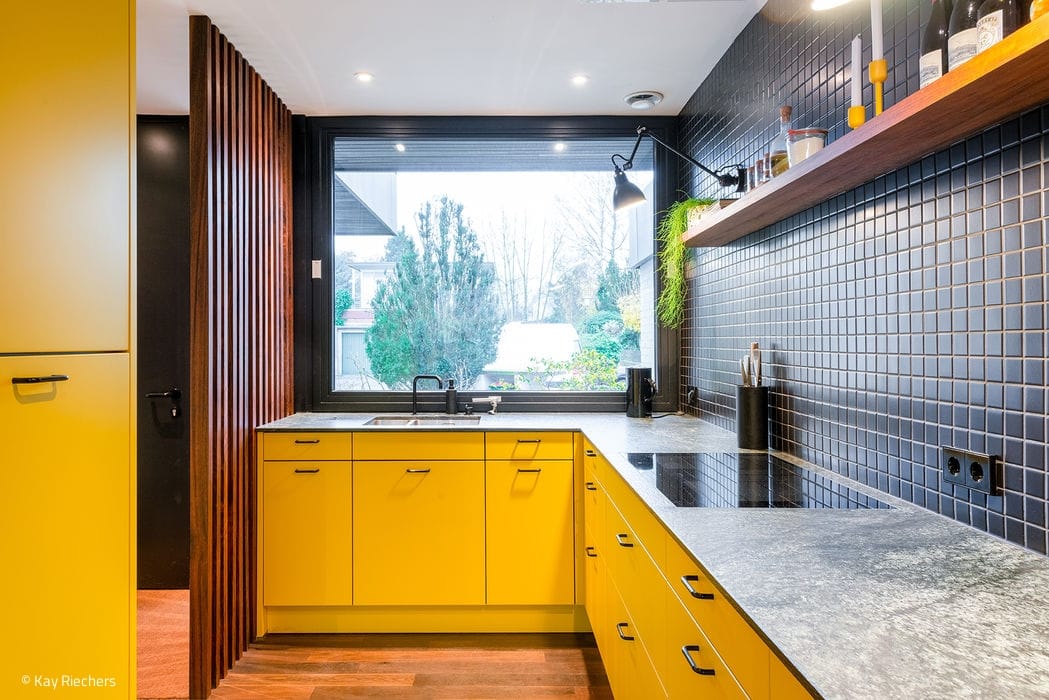
Hierbei wurde das vorgefundene Motiv der betonten Attika, der umlaufenden Dachrandverkleidung, aufgenommen und auf die Aufstockung übertragen. Eingefasst von den anthrazitfarbenen Zinkblechabdeckungen erhielt die Aufstockung eine schwarze Holzlamellenfassade mit rahmenlos integrierten, geschosshohen Fensterflächen analog zu den Öffnungen im Erdgeschoss. Der Bestand wurde mittels einer Holzfaser-Innendämmung energetisch ertüchtigt, mit dreifach verglasten Holz-Aluminium-Fenstern versehen und die Putzfassade erhielt einen weißen Anstrich. Die Aufstockung wurde vor Ort in Holzrahmenbauweise gefertigt und mit Zellulosefasern gedämmt. Aufgrund der sehr leichten Konstruktion konnte auf eine Ertüchtigung der Fundamente verzichtet werden. Der Kontrast von Schwarz und Weiß betont die kubische Wirkung des neu entstandenen Baukörpers und setzt auch innen Akzente.
Als graue Energie bezeichnet man die Energiemenge, die für Herstellung, Transport, Lagerung, Verkauf und Entsorgung eines Produktes inklusive aller Vorprodukte und Produktionsprozesse benötigt wird. Hier konnte durch die Erhaltung des Bestandsgebäudes im Vergleich zum Neubau etwa 120.000 kWh graue Energie eingespart werden, das entspricht in etwa dem Heizenergiebedarf des Hauses für die kommenden 35–40 Jahre. Die ressourcenschonende Holzrahmenbauweise der Aufstockung trug zusätzlich zur Minimierung bei. Die nicht überbauten Teile des Bestandsdaches wurden mittels einer Aufsparrendämmung energetisch ertüchtigt. Dies gilt als die bauphysikalisch beste Dämmmethode. Dabei wird über der Dachfläche eine geschlossene Haube aus Dämmelementen verlegt, die die Innenräume wie auch die Dachkonstruktion schützt.
(From CUBE Hamburg 02|20)
Urban Living Reimagined
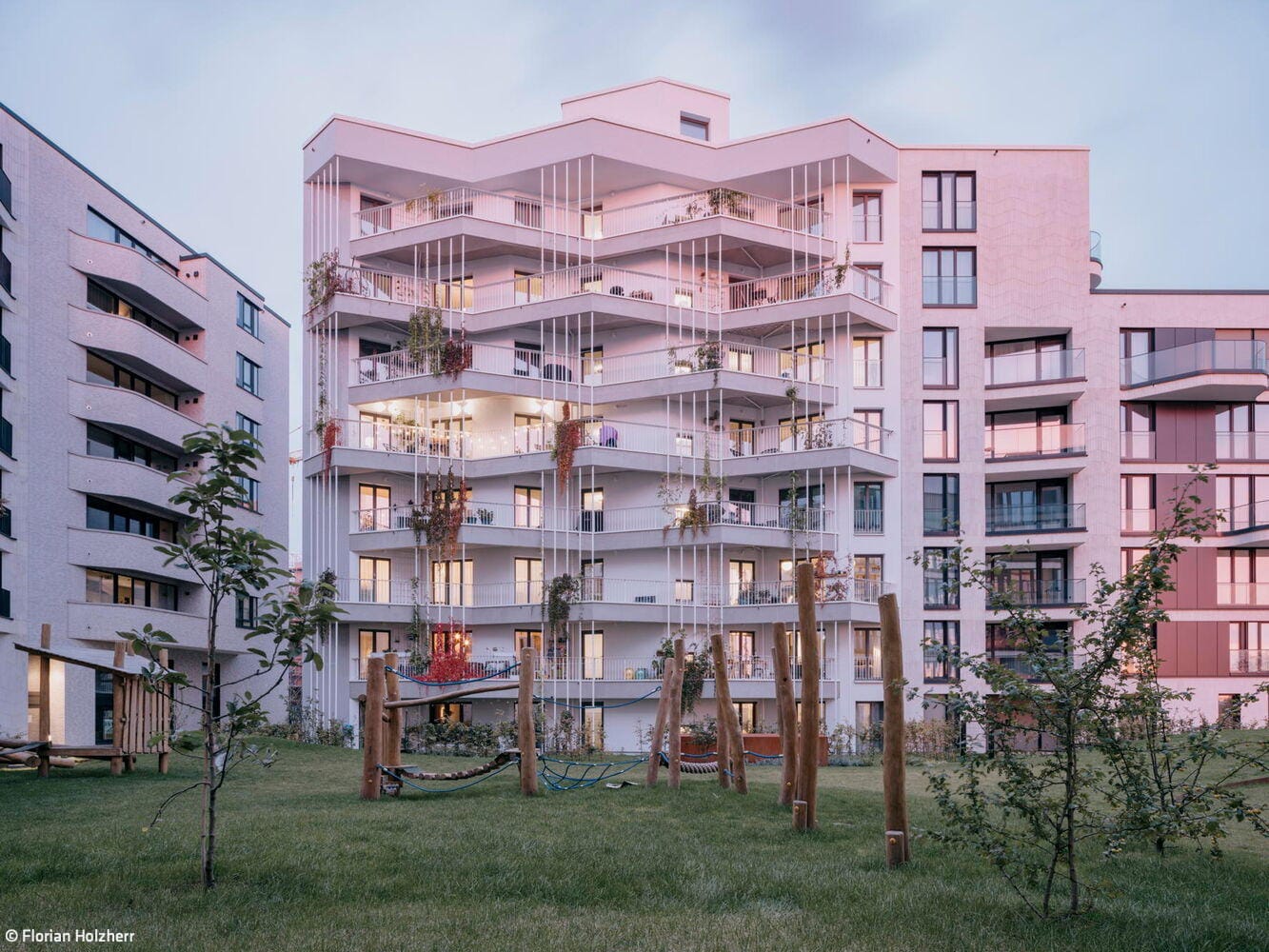
How the "Heimatmole" Architecture Fosters Community Connection
Seamlessly Connected
Fresh Design for a Contemporary Take on the Classic Steakhouse
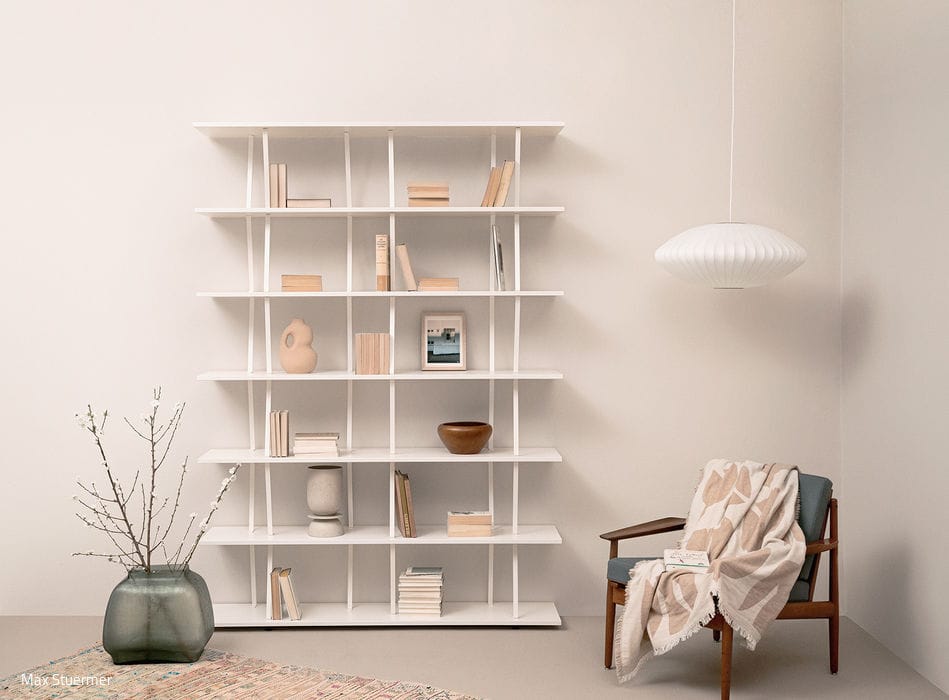
Understated elegance
Vin: the shelving series that endures, designed with sustainability in mind.
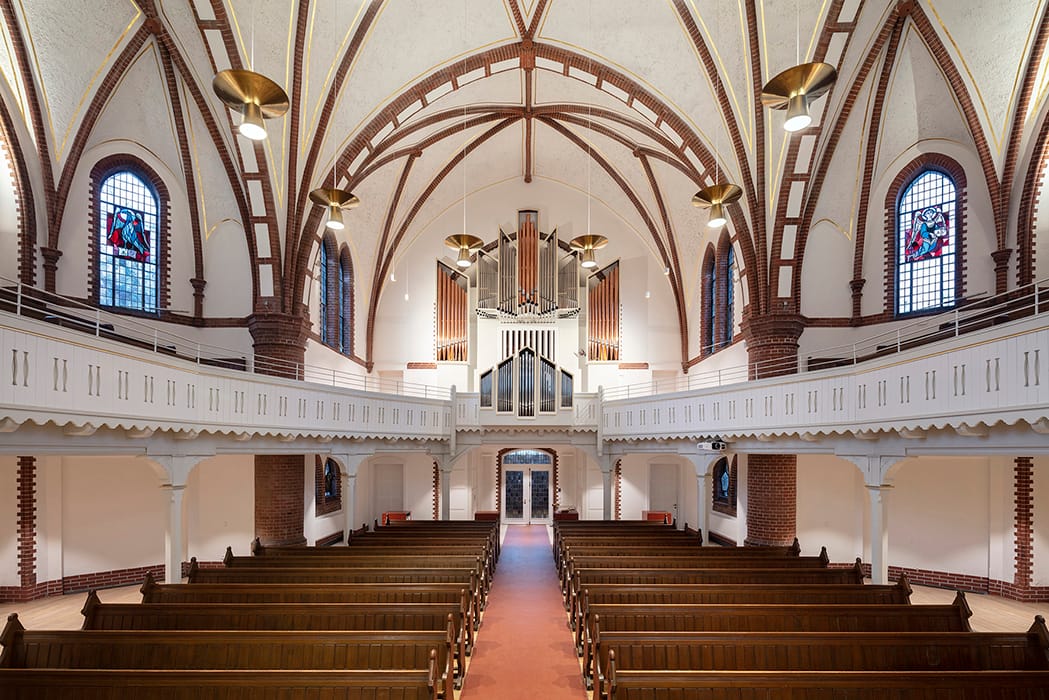
A Distinctive Challenge
The Kreuzkirche in Wandsbek: Sensitively restored to radiant beauty