


Dialogue with the landscape
Flowing spaces on a narrow hillside site
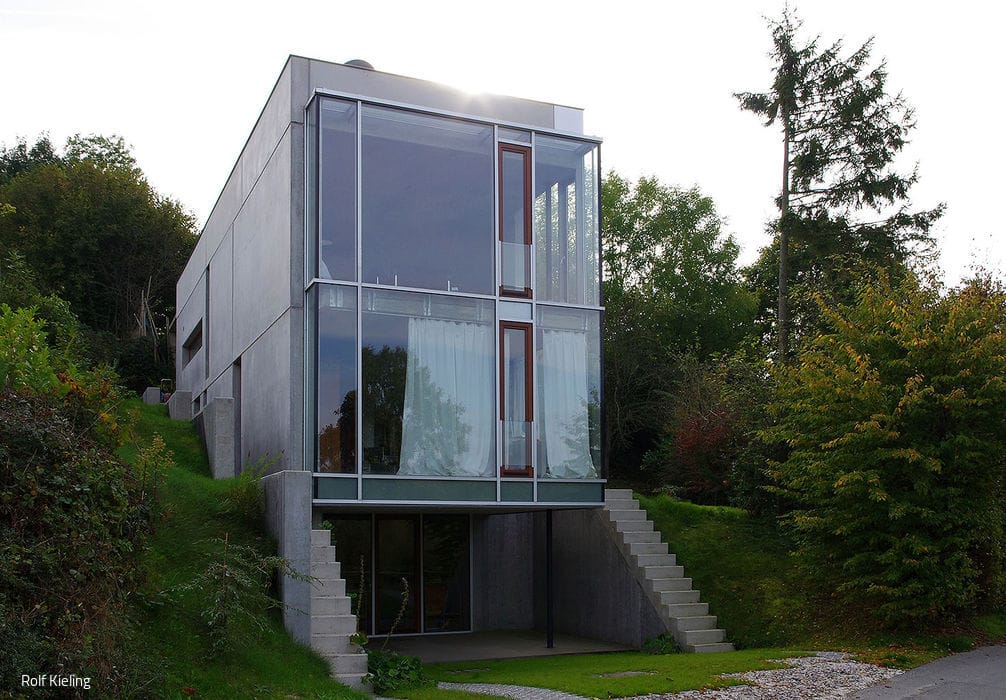
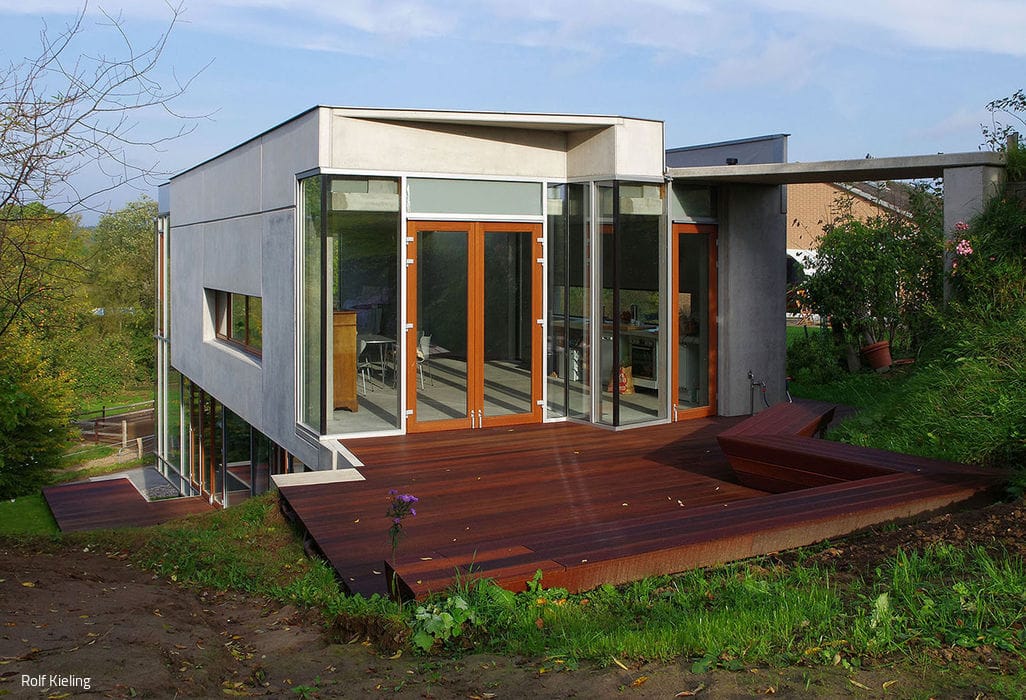
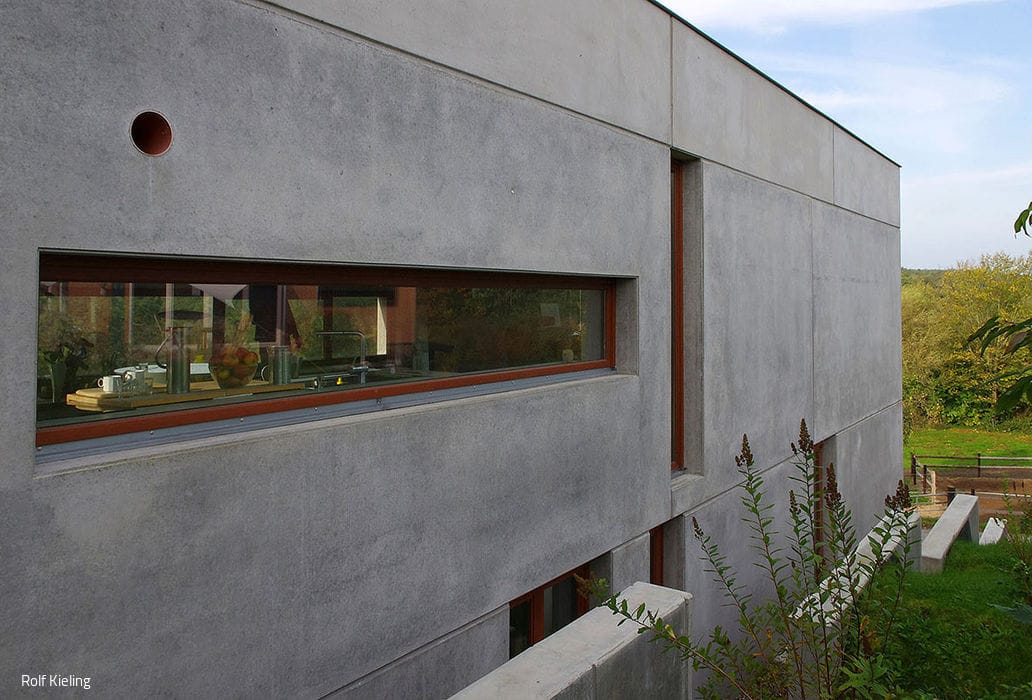
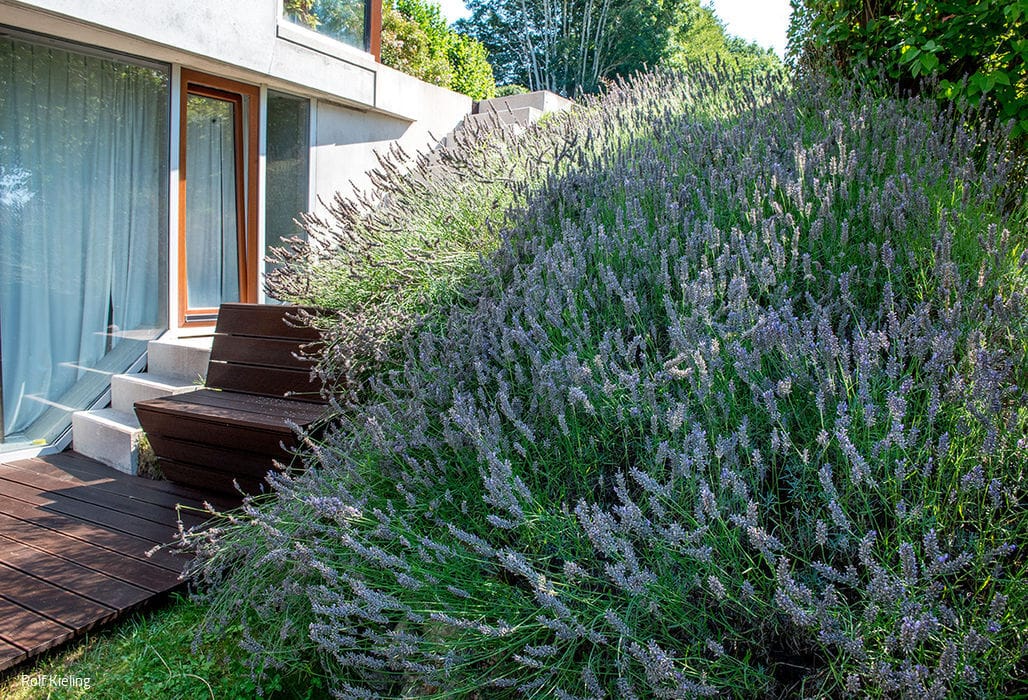
North of Hamburg, a small village is home to a remarkable house—nestled harmoniously in Holstein's characteristically undulating landscape. Architect Prof. Dagmar Schork designed and built it for herself. Through thoughtful manipulation of the site's topography, she created a three-storey structure on a narrow sloping plot, with each level seamlessly connecting to the surrounding ground plane. Terraces on all three levels blur the boundary between interior and exterior, creating generous visual continuity. Even the roof deck sits virtually at ground level. Structurally, the building comprises prefabricated double-shell concrete elements assembled on-site.
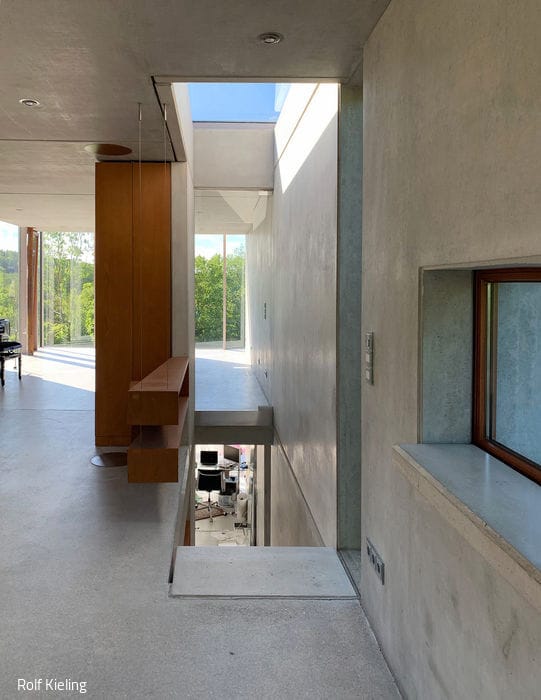
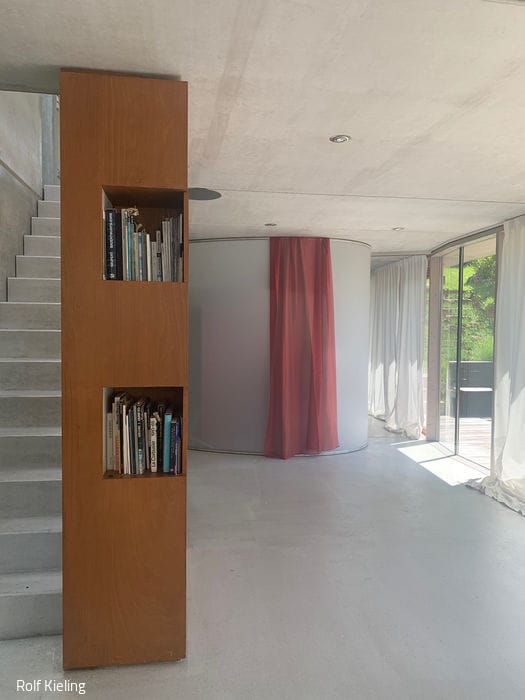
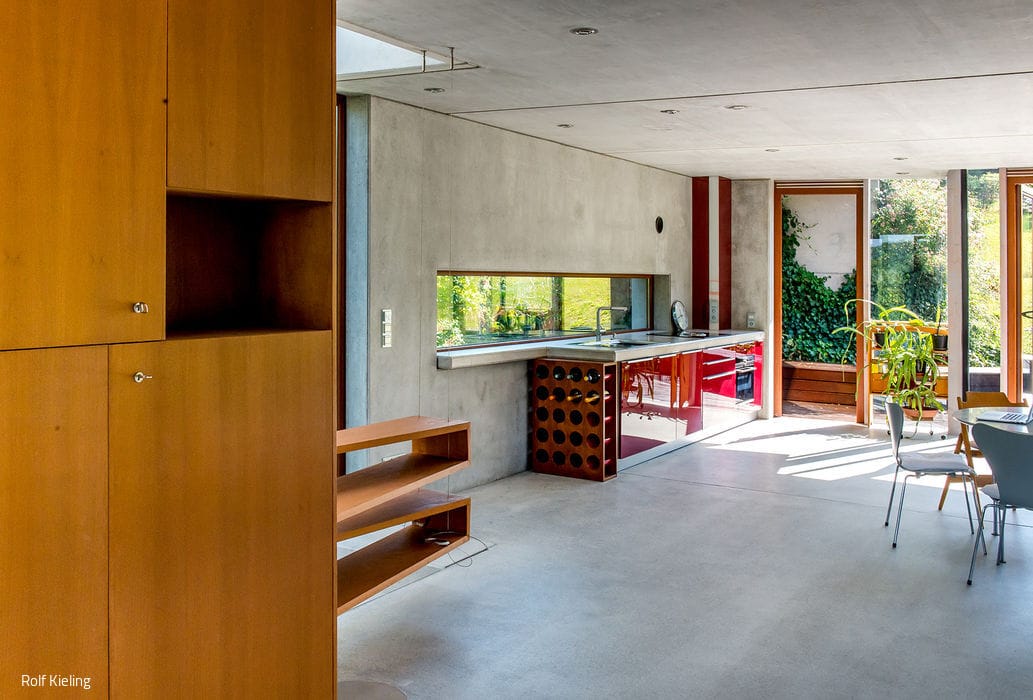
The textured presence of exposed concrete—both inside and out—establishes a genuine conversation with the surrounding landscape. Floor-to-ceiling glazing amplifies this connection, flooding interiors with light while framing sweeping views of the natural terrain. Inside, concrete transcends its role as mere structural material: it appears in walls, ceilings, floors, and stairs, then extends into custom furniture pieces—kitchen counter, window shelves and seating—creating a unified, expansive spatial experience.
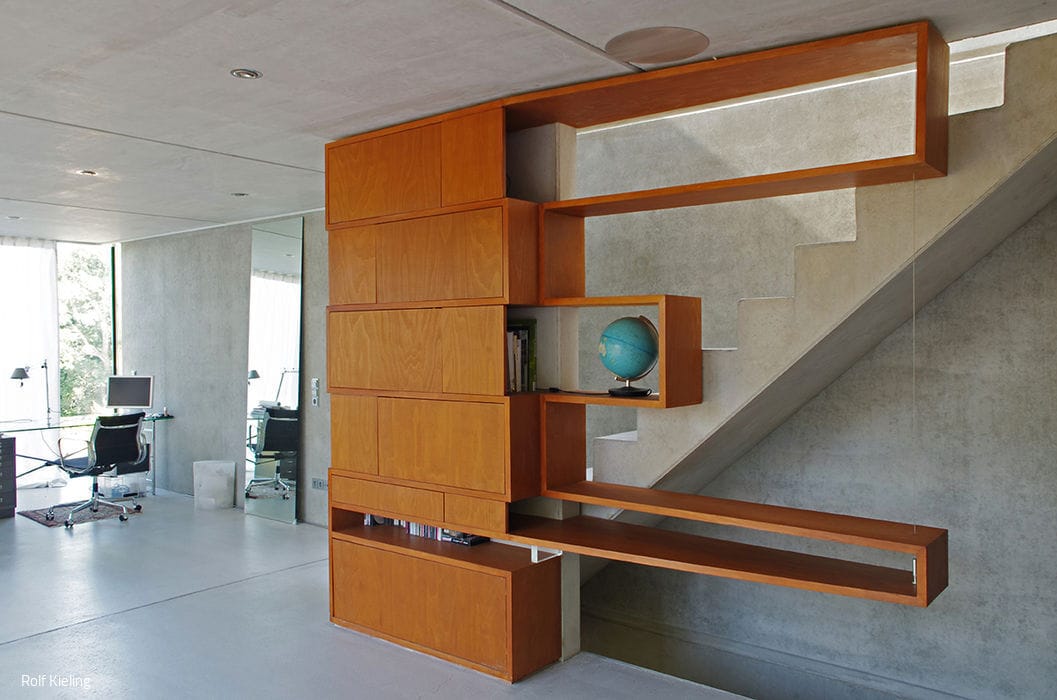
Carefully orchestrated sight lines across floors and toward the landscape, transparency as a guiding principle, and restrained material choices transform the plot's inherent constraints into gracious, flowing sequences of space. This minimalist vision demanded equally considered furniture design. Using a single material—wood—throughout (mirroring the concrete exterior), these pieces introduce warmth that complements rather than competes with the concrete, completing the composition with quiet harmony. Multifunctionality defines every element: the sliding wall doubles as storage, the cabinet serves as shelving, the shelf becomes a stair rail.
A combination of geothermal heating, heat pumps, and photovoltaic panels ensures the home operates sustainably and largely off-grid—a genuine commitment to climate-conscious design.
(Published in CUBE Hamburg 04|20)
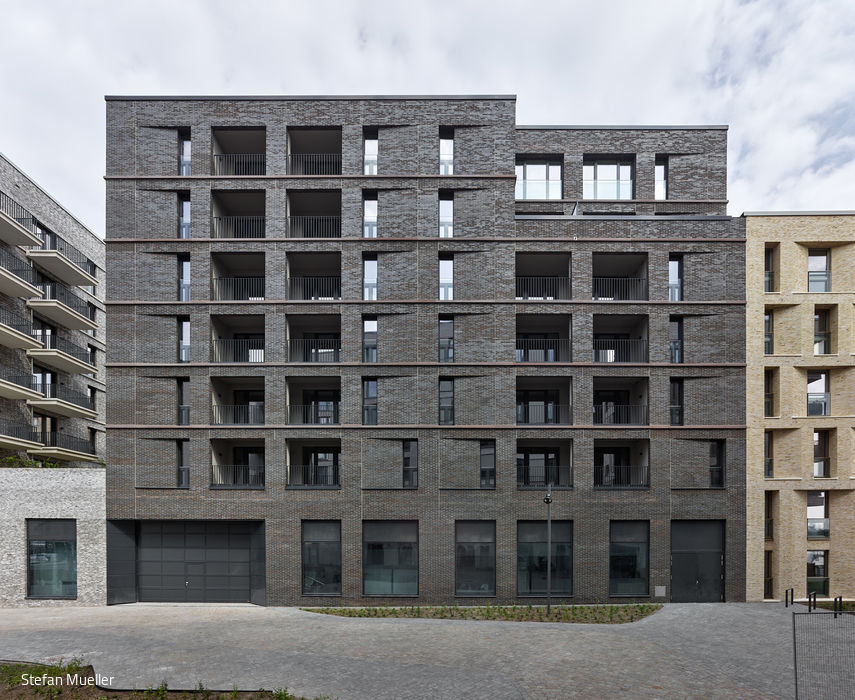
In the Heart of It All
Vibrant Diversity and Public Housing in the Multigenerational Quarter
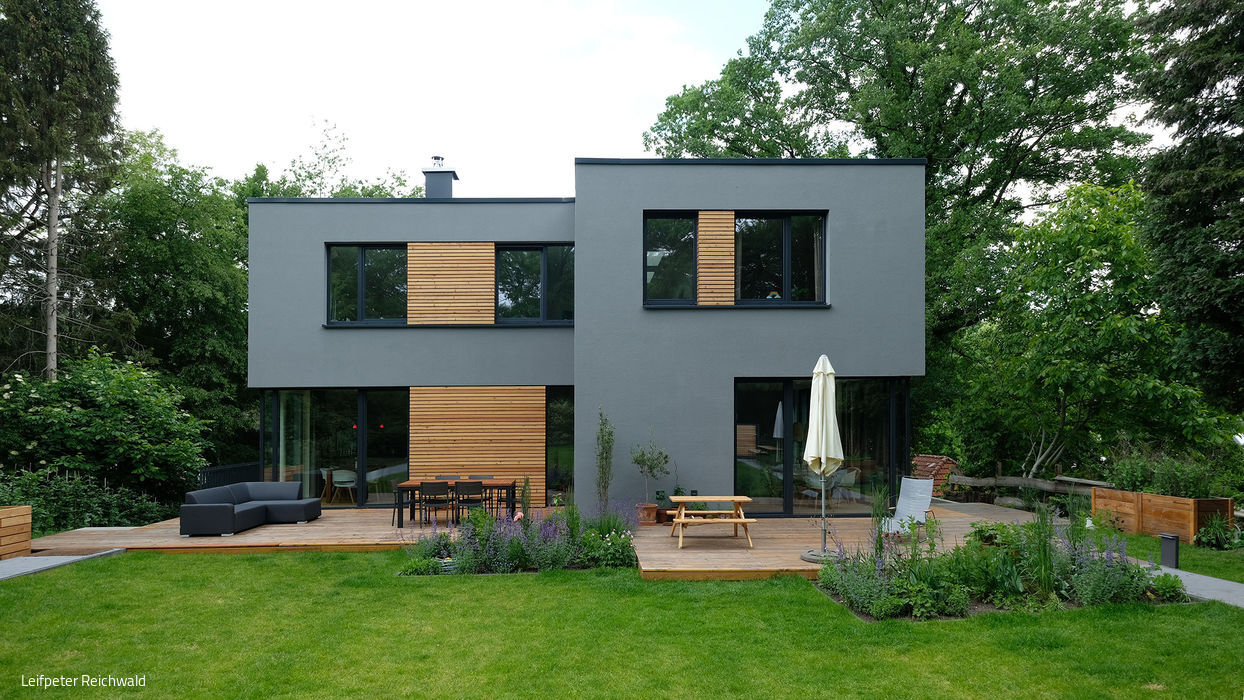
One house – two families
Personalized Design That Speaks to Its Inhabitants

Tropical Grove at Gänsemarkt
The New Deutschlandhaus: Hamburg's Kontorhaus Reimagined for the Future
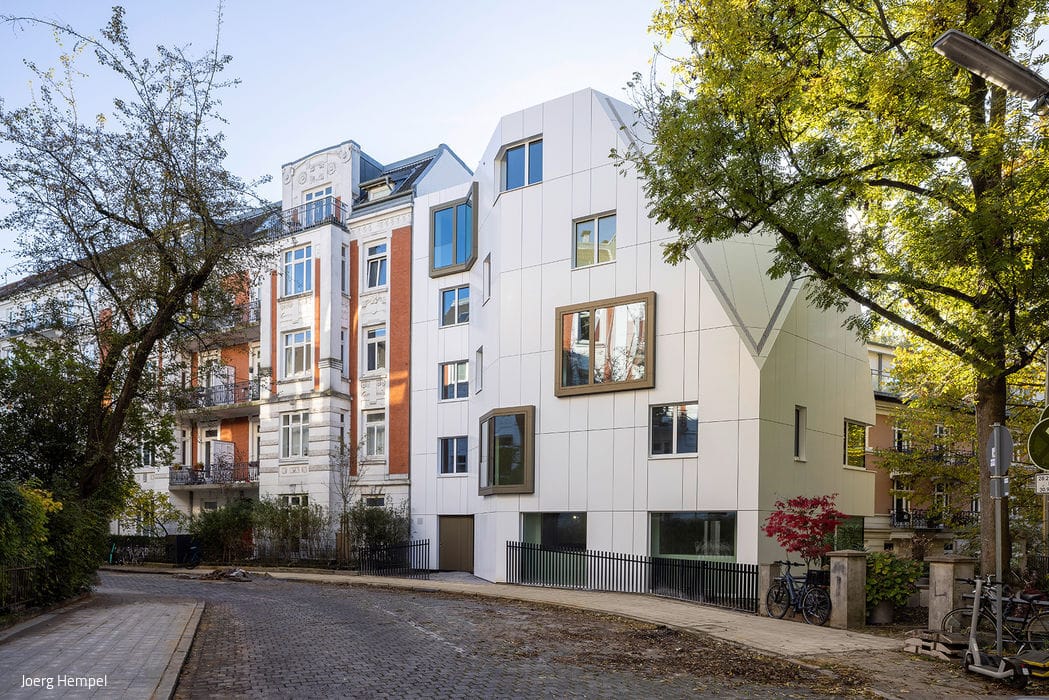
Sculptural elegance in white
A striking landmark that honors the historic fabric of the Grindelviertel.