


Intelligent solution
More housing and vibrant retail – transforming Randstraße
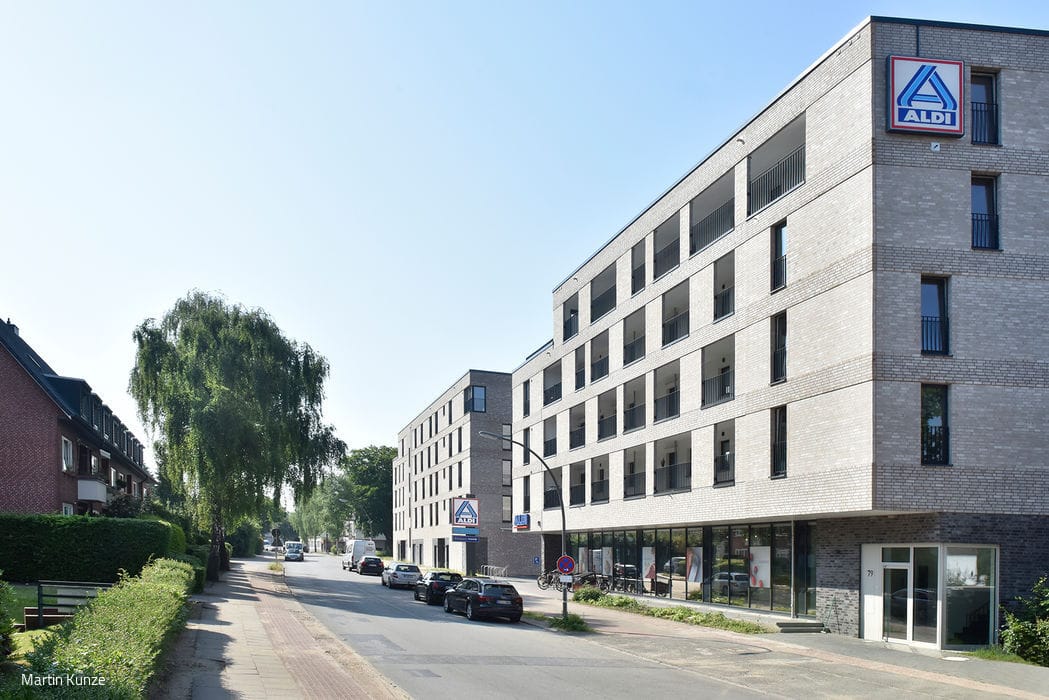
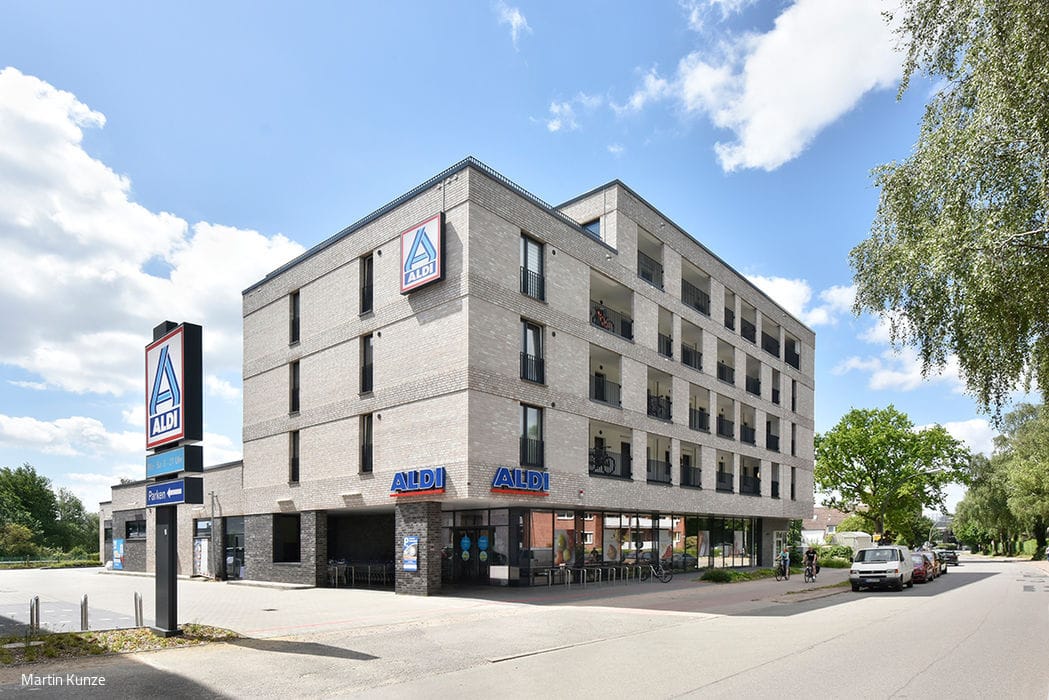
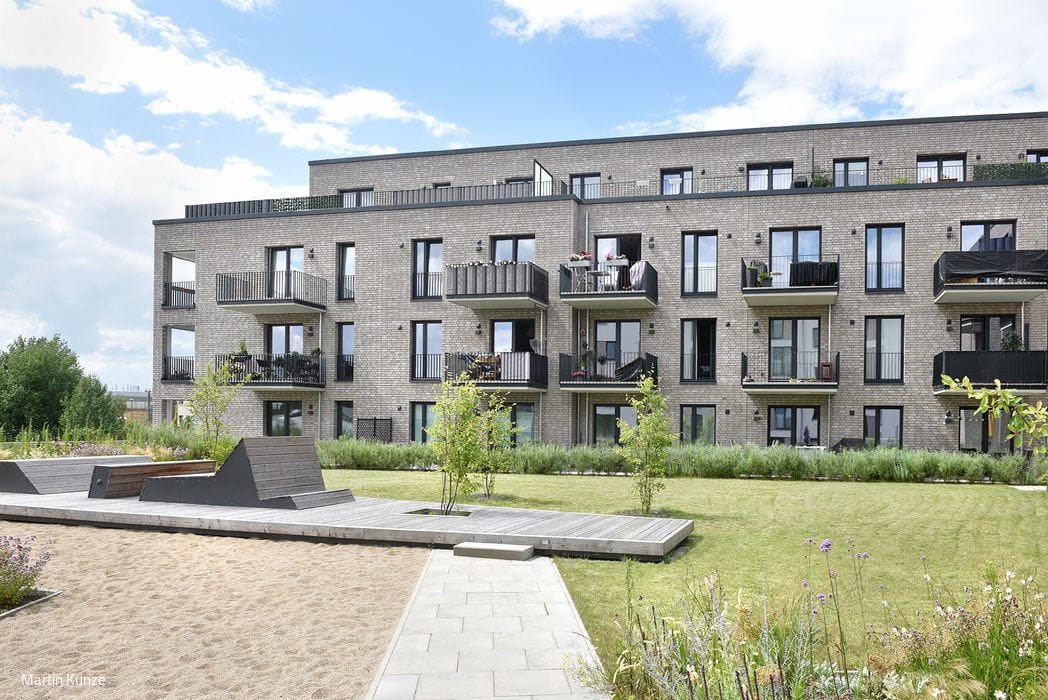
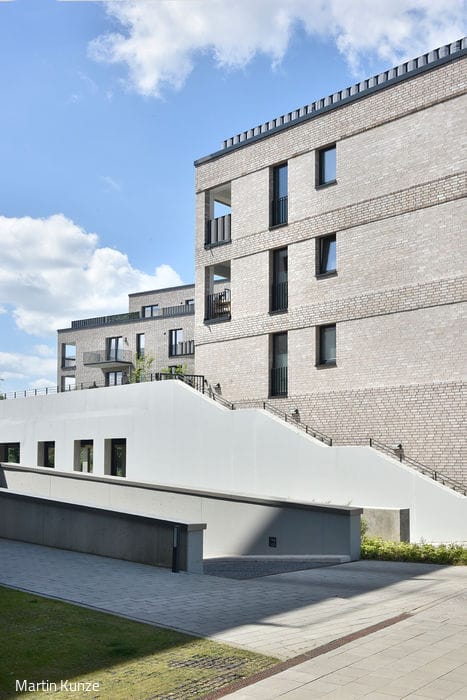
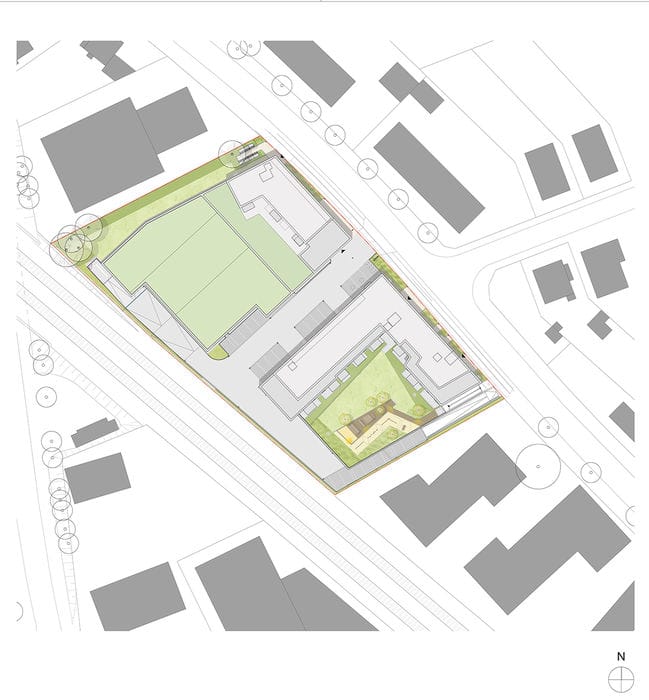
Schenk Fleischhaker Architects' two-building residential complex on Randstraße marks the first phase of a major housing development extending from Stellingen S-Bahn station. One building integrates a new 1,200 m² retail space for an existing discount grocery chain – a smart approach to space constraints. Throughout Hamburg's densification efforts, single-storey retail facilities in residential neighbourhoods have increasingly been replaced by multi-storey residential buildings, a strategy that maximises land use without compromising community character.
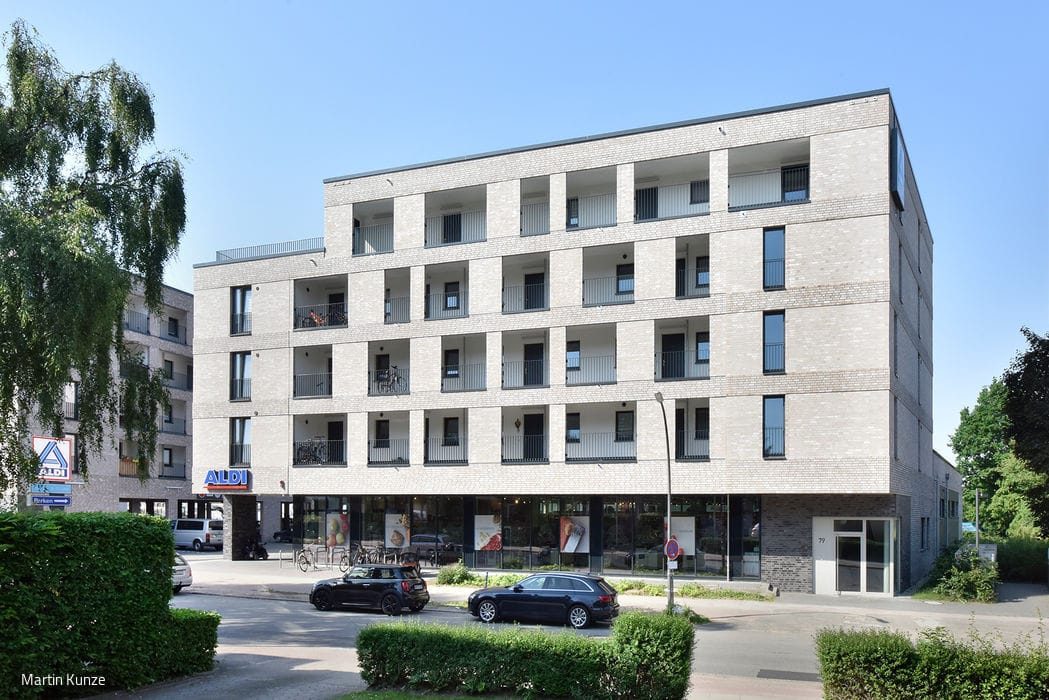
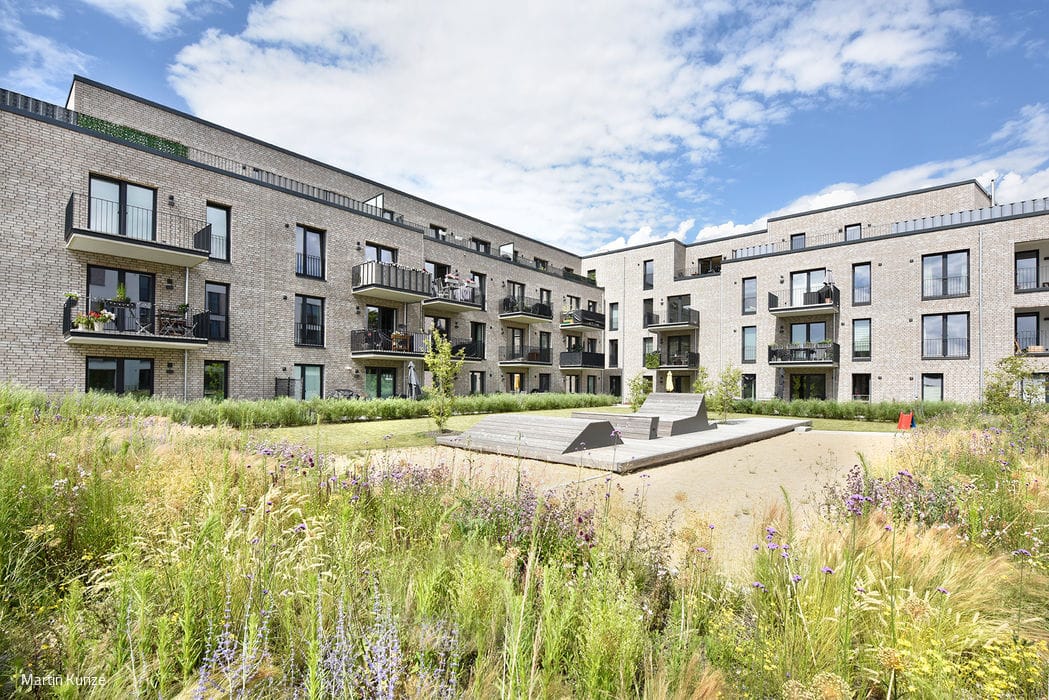
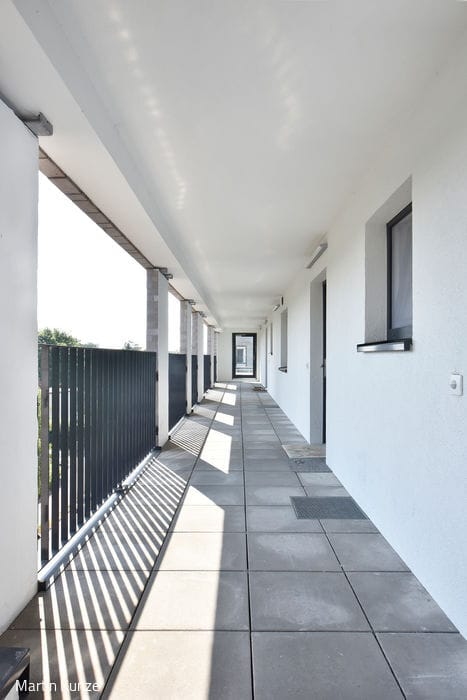
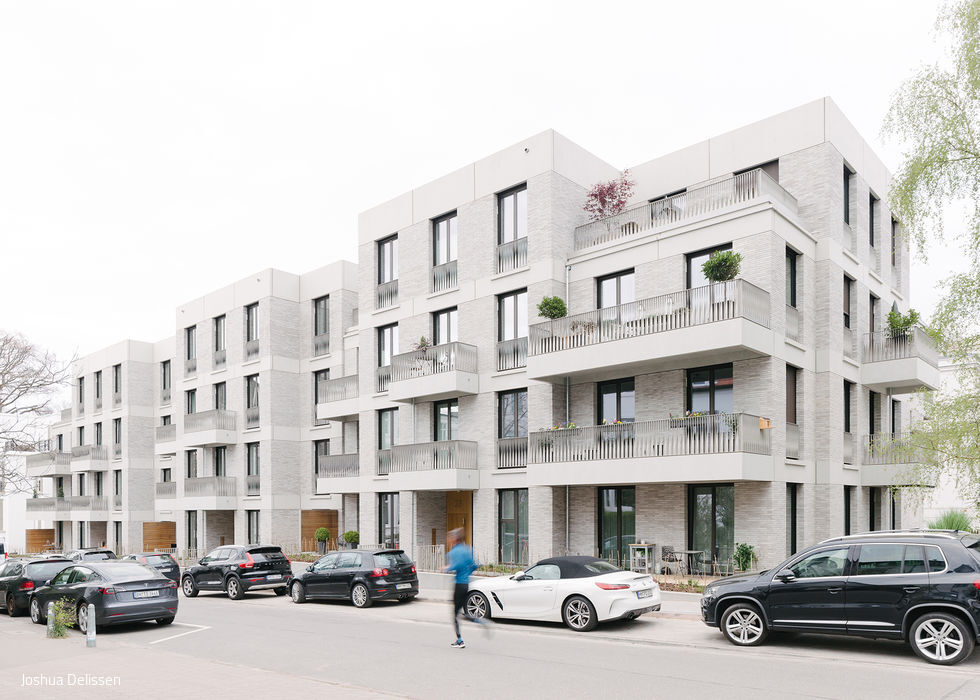
The market presents itself to the street through expansive glazing and a refined post-and-beam façade, with its entrance positioned at the building's south-eastern corner. Dark stone – a signature element across all new locations of the discount chain – distinguishes the ground floor zone while complementing the cantilevered residential storeys above. The upper residential floors feature light-coloured facing brick articulated by horizontal masonry bands. This thoughtful material palette and refined detailing of the loggia openings lend the building a distinctive presence. Three full storeys plus a setback level house 18 publicly subsidised flats (50–90 m² each), secured through an urban development agreement with the retailer's property management. Residents enjoy south-west-facing outdoor spaces overlooking the quiet rear façade. A second building contains 33 market-rate rental units and a 30-space underground car park. Both buildings share access to a generous green inner courtyard via external stairs – a landscaped roof garden built atop the market's ground-level parking, designed to foster play and community connection among residents.
The construction sequence presented considerable logistical complexity. The existing market initially remained operational with a scaled-down customer car park, while separate access routes kept customer and construction traffic apart during the shell phase. Only after the new market opened could the original building be demolished and the second residential building completed. The coordination paid off: the continuous facing brickwork across both structures creates visual cohesion and reinforces their impact as a unified urban ensemble.
Photography:
Martin Kunze
(Published in CUBE Hamburg 03|21)
The architecture of tables
Sustainable Furniture as Spatial Design
Living Under One Roof
Custom Design, Exclusive Living Across Three Levels
The entire universe
Comprehensive Lighting Design: Supporting Patients and Practice
Residential diversity that enriches
An Innovative Climate Strategy Defines the Jenfelder Au District