


Sacred Spaces
A renovation in Lindenthal that thoughtfully honors the post-war character


The residential building in Cologne-Lindenthal, designed and built in the 1950s by the renowned Cologne architect Hans Schilling (1921–2009), is an impressive and noteworthy example of Cologne's post-war architecture. The detached two-storey apartment building has one residential unit on each floor, whose spatial proportions and materiality create a sacred atmosphere reminiscent of Hans Schilling's important church buildings. The Cologne-based architectural firm Catalanoquiel has respectfully renovated the existing ground floor apartment, reducing it to its essentials.
The homeowner, who grew up in this house, shares a profound connection to its spaces, history, and architectural treasures. Of particular significance are the bespoke glass paintings created by Kürten-based artist Friedrich Hans "Fritz" Lauten (1935–1989), who crafted a remarkable series of artworks during his time living here. For both client and architect, one principle was paramount: any intervention had to respect and preserve the home's distinctive character. By reducing the structure to its essential framework, the team achieved a generous, flowing floor plan that offers complete freedom and flexibility. The result is a sweeping, elongated room punctuated by strategically placed furniture islands. Upon entry, visitors find themselves at the intersection of the home's longitudinal and lateral axes—the perfect vantage point to grasp the house's full spatial presence. While private quarters (bedroom, bathroom) occupy the rear, the front welcomes you with a soaring six-meter-high living space crowned by a mezzanine gallery. This spiritually evocative room comes alive through Lauten's stained glass, its colors and light constantly shifting with the sun's movement. The gallery is accessed via a delicate stainless steel staircase that doubles as a sculptural element, its polished surface gently catching the daylight. The choice of flooring—ecological, recycled cast terrazzo—reinforces the open flow throughout the entire living area, including the shower zones. This material succeeds the original natural stone floor, which had to yield to the new underfloor heating system and the expansive open-plan layout. On the street-facing balcony, renovation preserved a section of the original flooring, allowing a direct dialogue between old and new—demonstrating how the contemporary terrazzo interprets its predecessor through color, materiality, and presence.
Photography:
Eugenio D Catalano
Timo Stürmer
(Featured in CUBE Cologne Bonn 03|24)
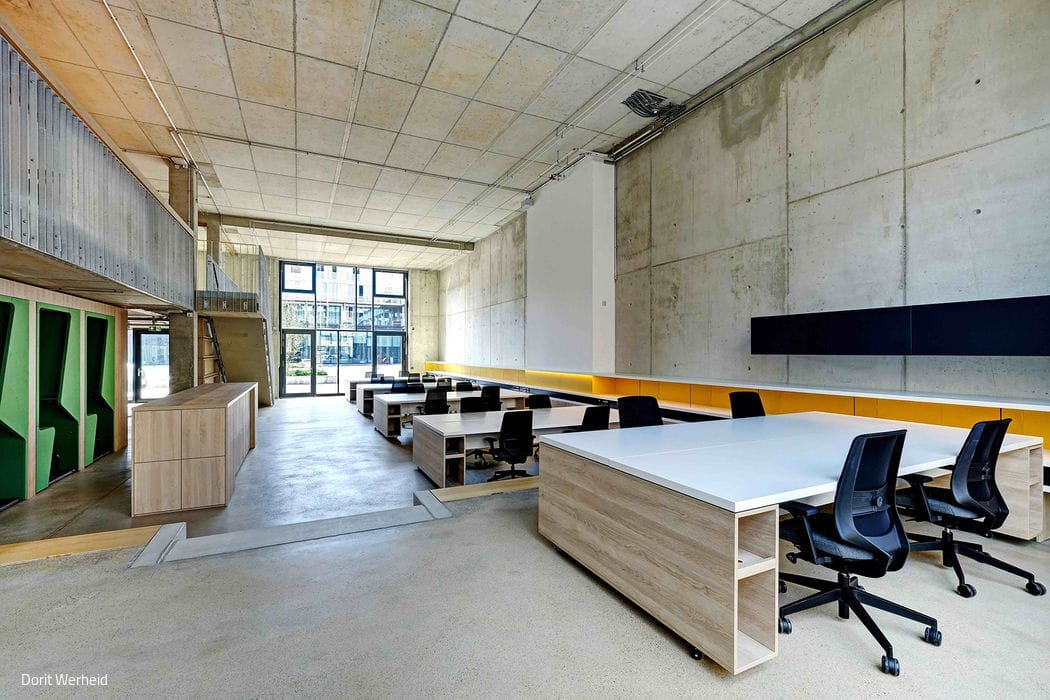
Agile Coworking
A coworking space accommodates diverse usage patterns
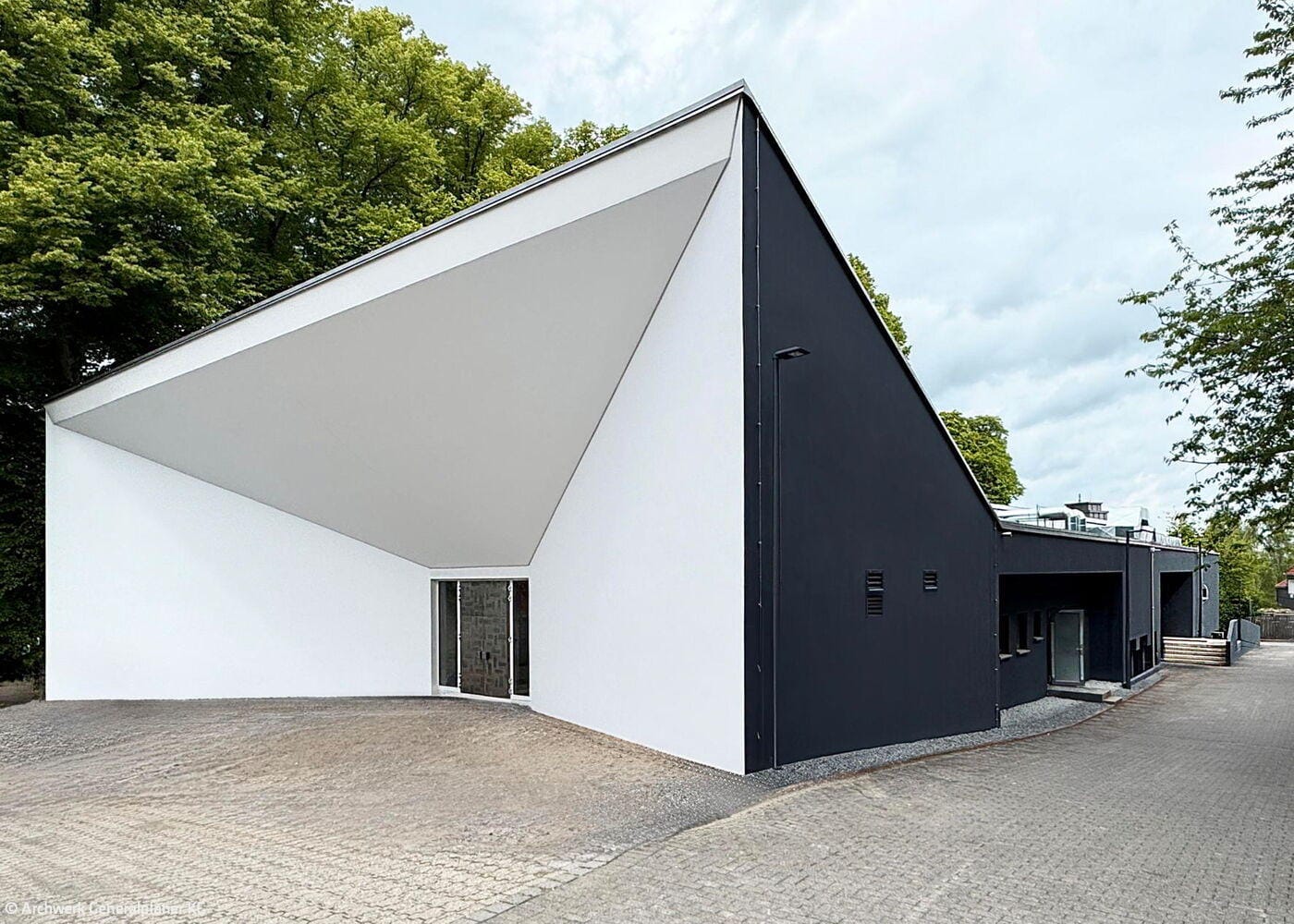
Space Reimagined
A music hall transformed into a dynamic "House of Culture(s)"

Everything Under One Roof
The new comprehensive school at Severinswall makes a bold architectural statement through its sculptural, generous forms.
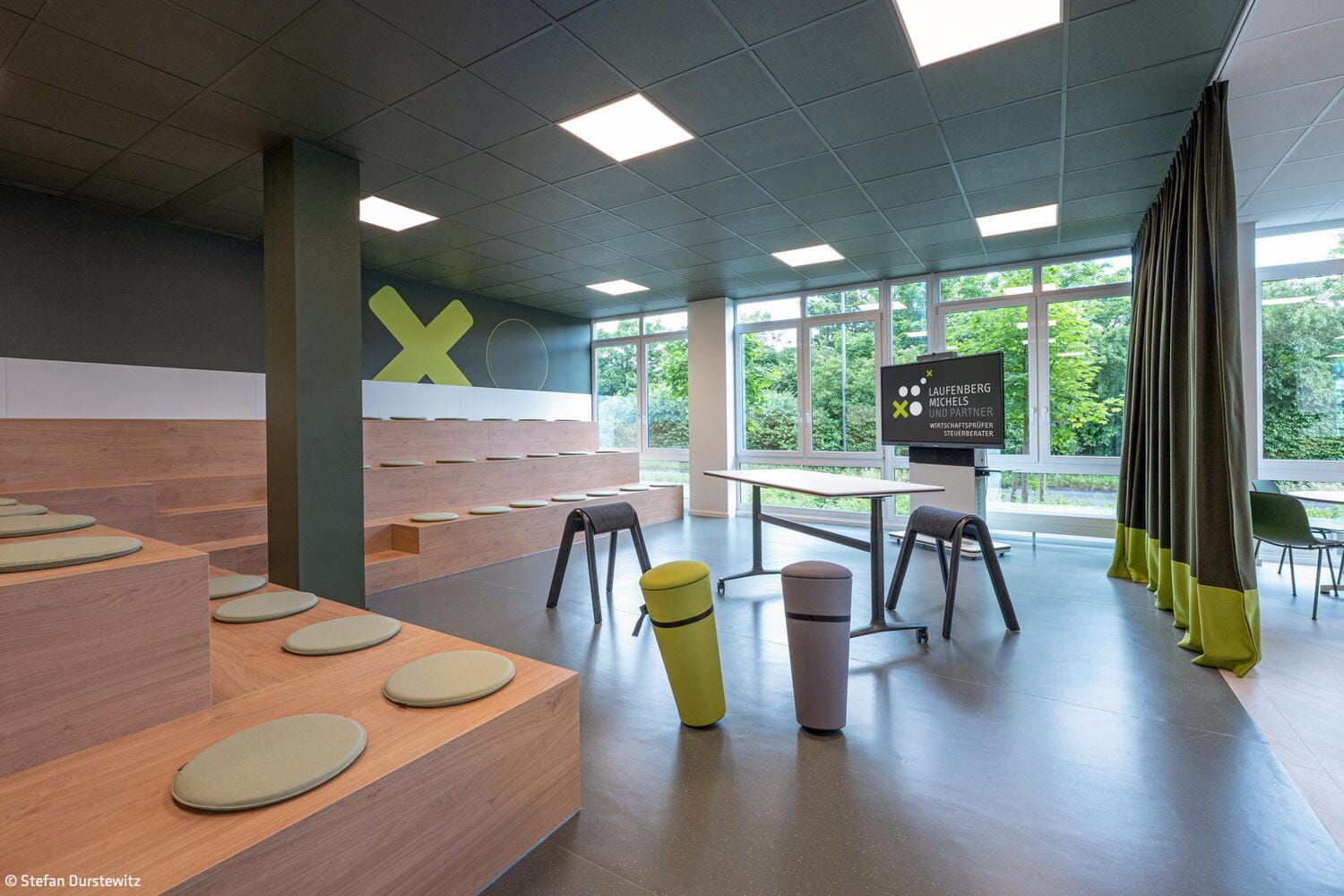
Representative & Communal
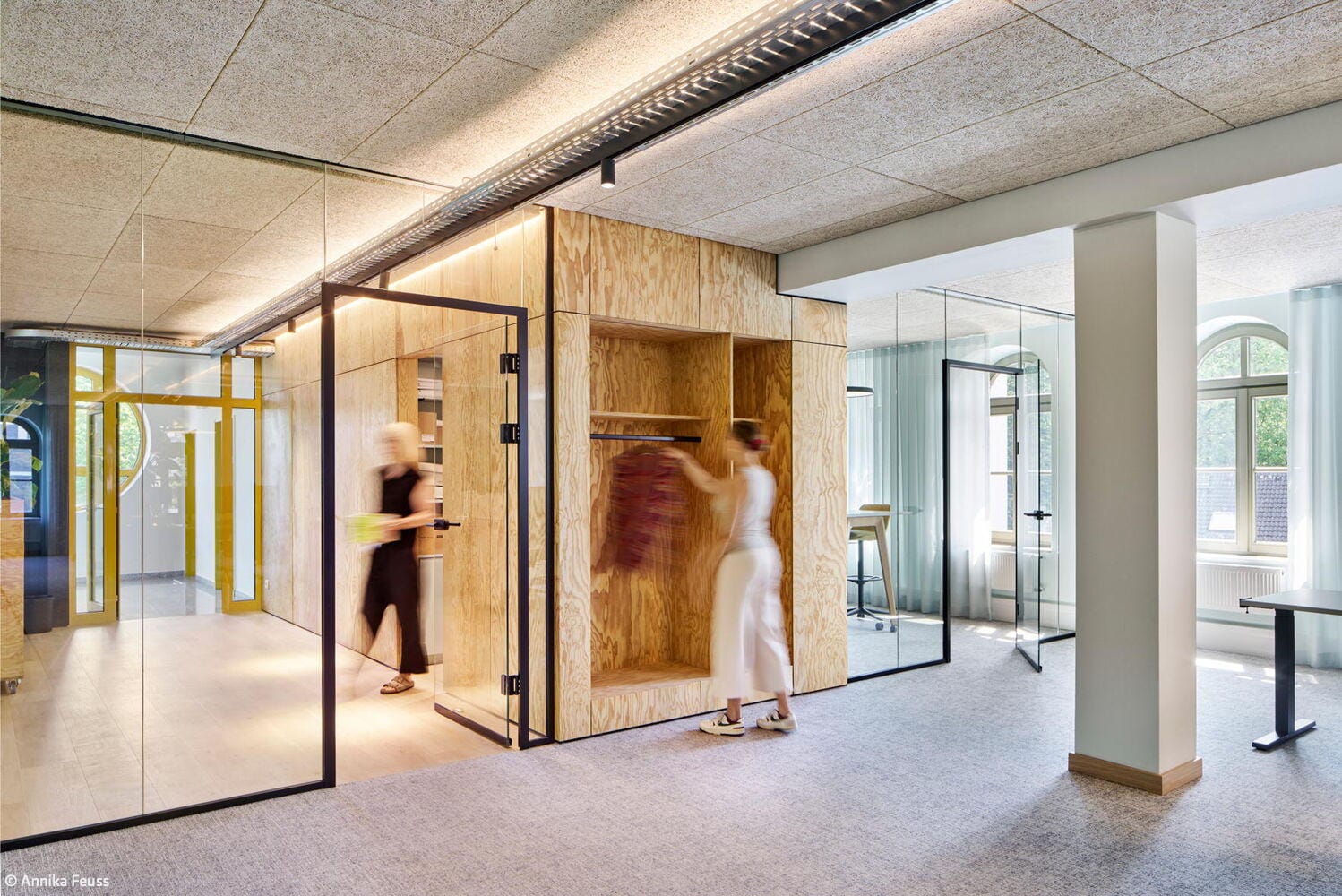
How a Longerich consultancy embraces teamwork and networking through office design