


Sharply Refined
A residential building in northern Cologne rediscovers itself through thoughtful renovation


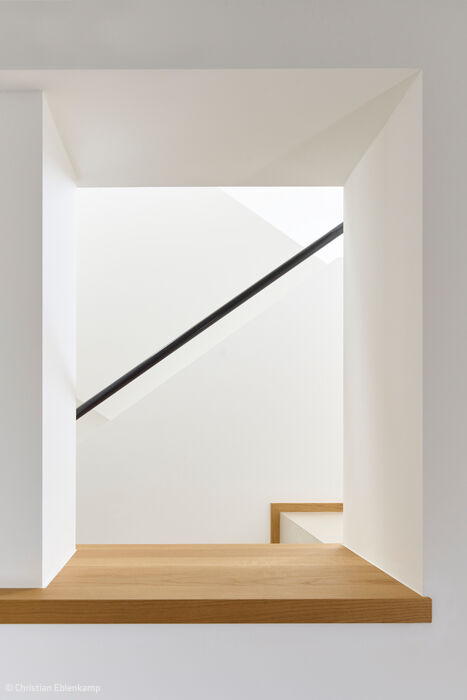

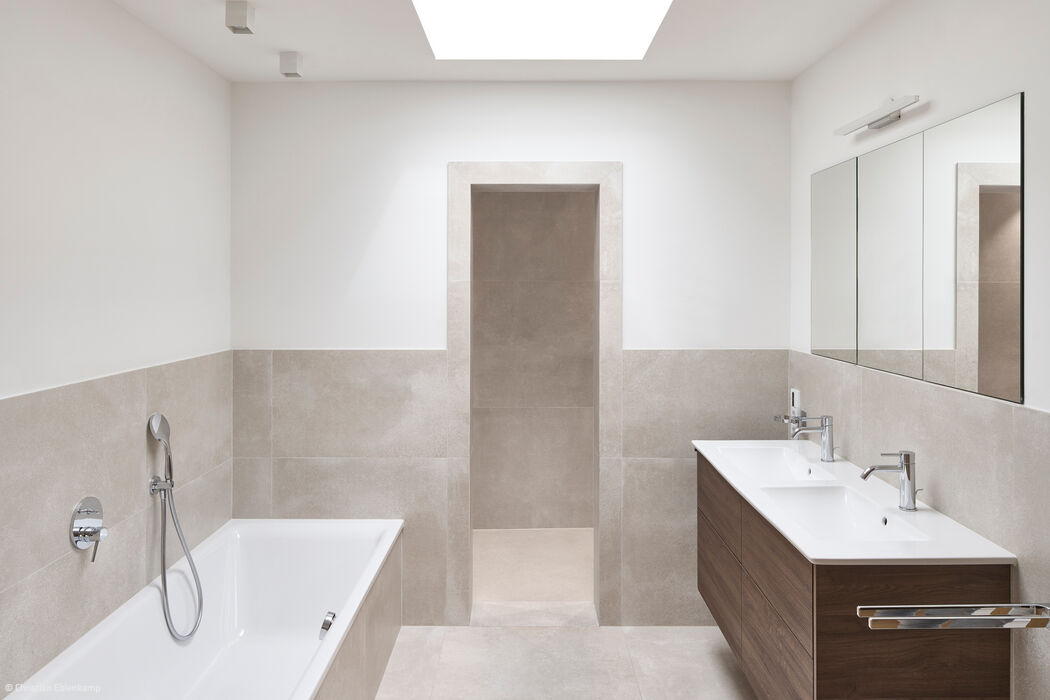


A young family purchased a single-family home from the 1960s and wanted to enhance its energy efficiency while redesigning it to create more spacious, open-plan living areas. Extensive structural changes to the building were to be avoided, however. The renovation, planned by the Cologne-based firm Axel Steudel Architekten, strategically leverages the building's inherent strengths, giving it greater character and visual presence both inside and out.
The two-story residential building is situated in what was once a homogeneous neighborhood of similar one- or two-story dwellings. Over the decades, successive renovations in the surrounding area created a rather mixed streetscape of cubic structures. The renovation was designed to strengthen community cohesion while establishing the house's own architectural identity through understated quality. The rather fragmented original floor plan was opened up and made more generous through relatively minor structural interventions, preserving the building's fundamental structure. Building on this approach, the existing facade openings were carefully reconsidered: the street-facing facade, oriented toward the side street, was kept relatively closed due to school bus traffic in the vicinity, while the garden facade now partially opens toward the landscape with full-height windows. Particularly the street-facing rooms now benefit from carefully positioned openings that create dramatic daylighting—as do the master bath and entry hall on the upper floor, which are now additionally illuminated by skylights. Several facade details accentuate the building's cubic formal language. Most striking on the street side is the facade recess at ground level, which was redesigned during the renovation with a undulating profile. Curved cornices were added along the roof edges—both measures give the house a softer yet more pronounced cubic presence. The exterior masonry received insulation with durable mineral wool and a thick mineral-based plaster finish. The broom-finish plaster, applied without a base course, emphasizes the layered character of the building's stacked cubic volumes. Complementing this aesthetic, shell limestone was selected for the terrace surfacing. The wooden windows are painted gray on the exterior to protect against weather, while the interior side retains the natural wood finish, creating a visual connection to the interior doors. All materials were selected to sustainably strengthen the structure for decades to come.
Photography:
Christian Eblenkamp
www.christian-eblenkamp.de
(Published in CUBE Cologne Bonn 02|24)

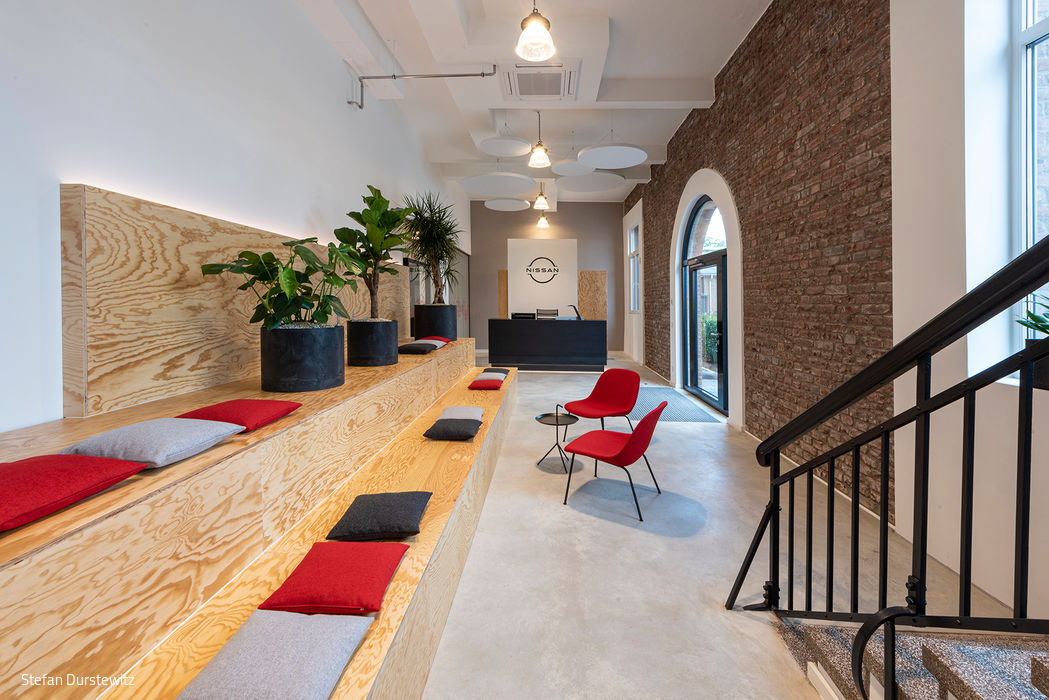
New Working in Historic Halls
German Automotive Leader Embraces Flexible Workplaces
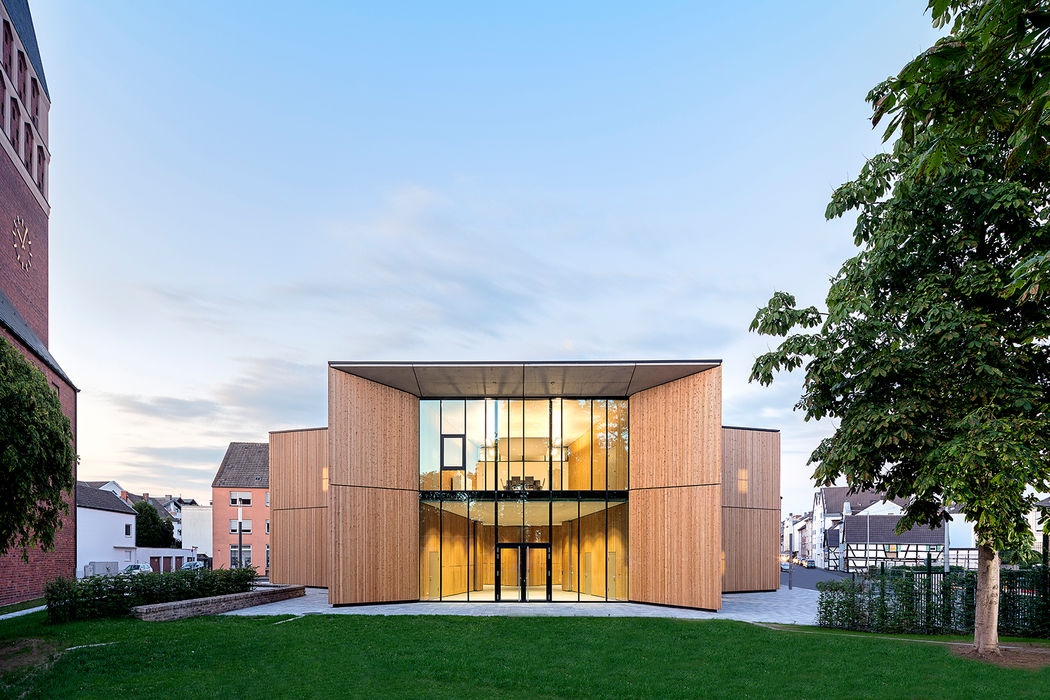
Dynamic Urban Gateway
A new parish residence completes the St. Hippolytus ensemble in Troisdorf.
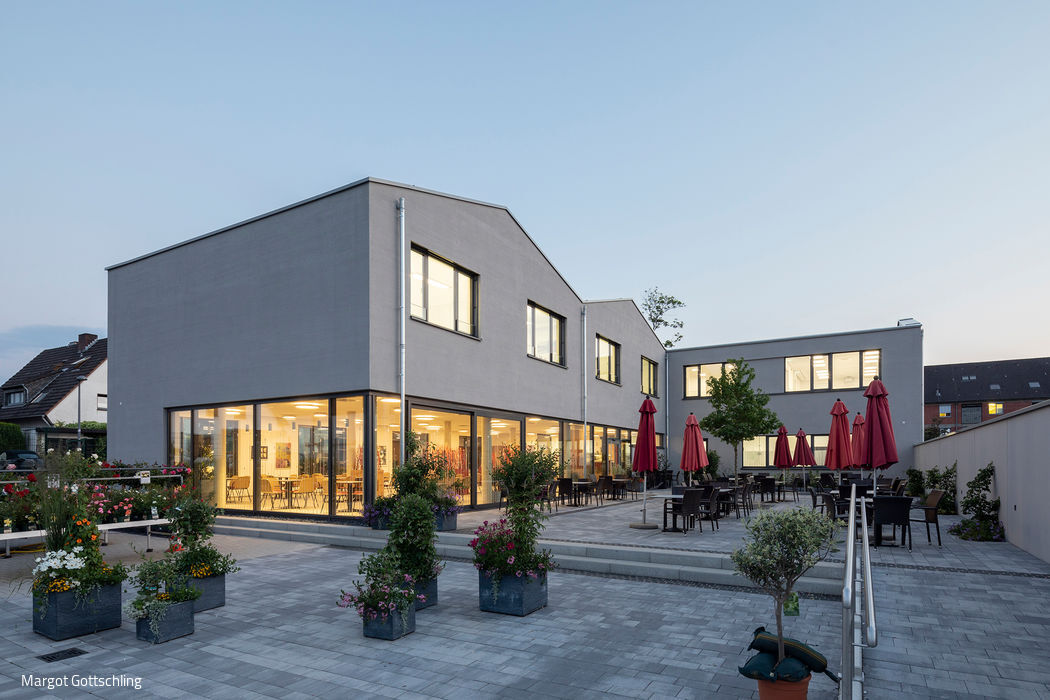
Protected Open Spaces
A new monastery café—where meaningful work and genuine hospitality flourish
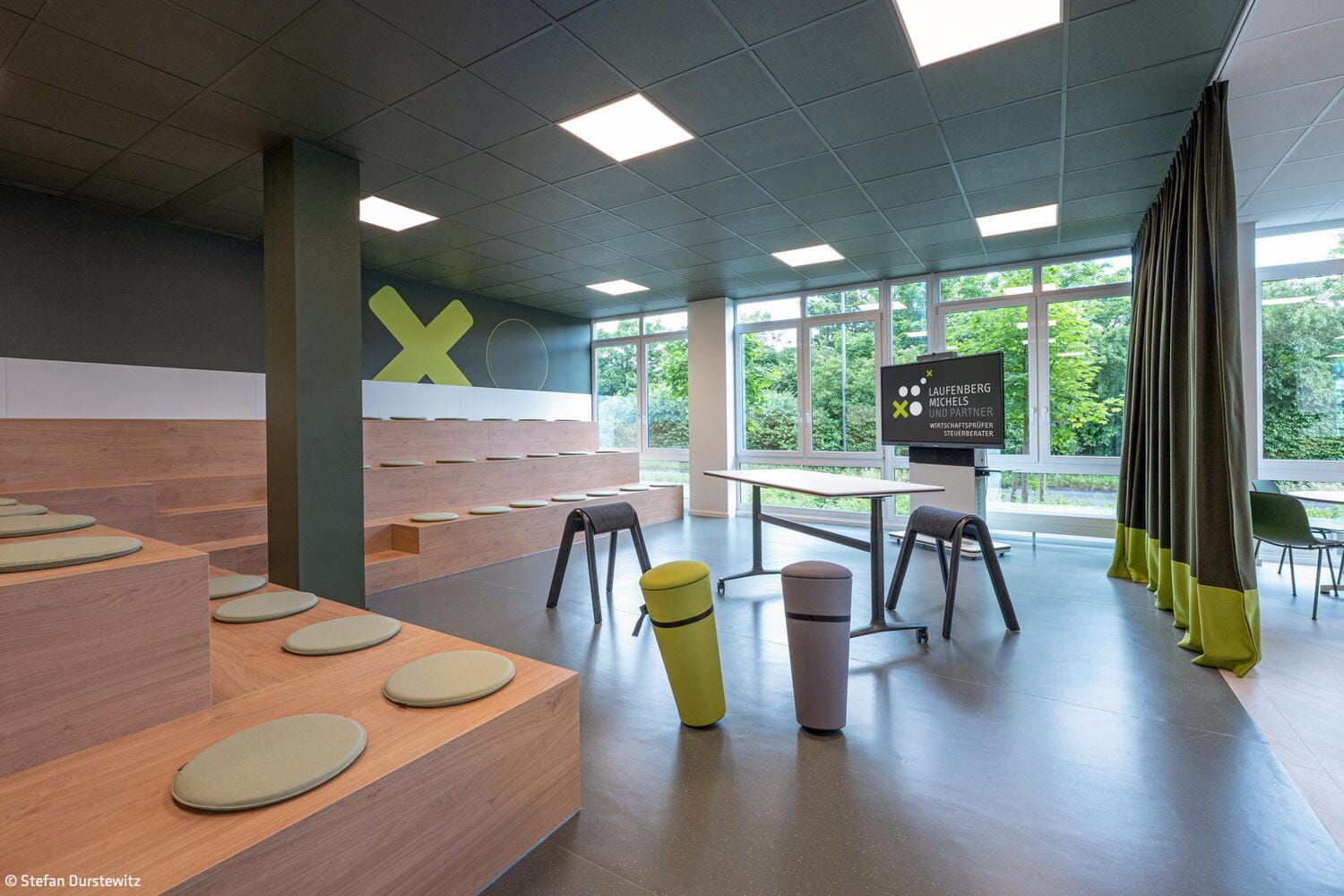
Representative & Communal
How a Longerich consultancy embraces teamwork and networking through office design