


Variable, Flexible, Transformable
Primary School Extension in Zepernick
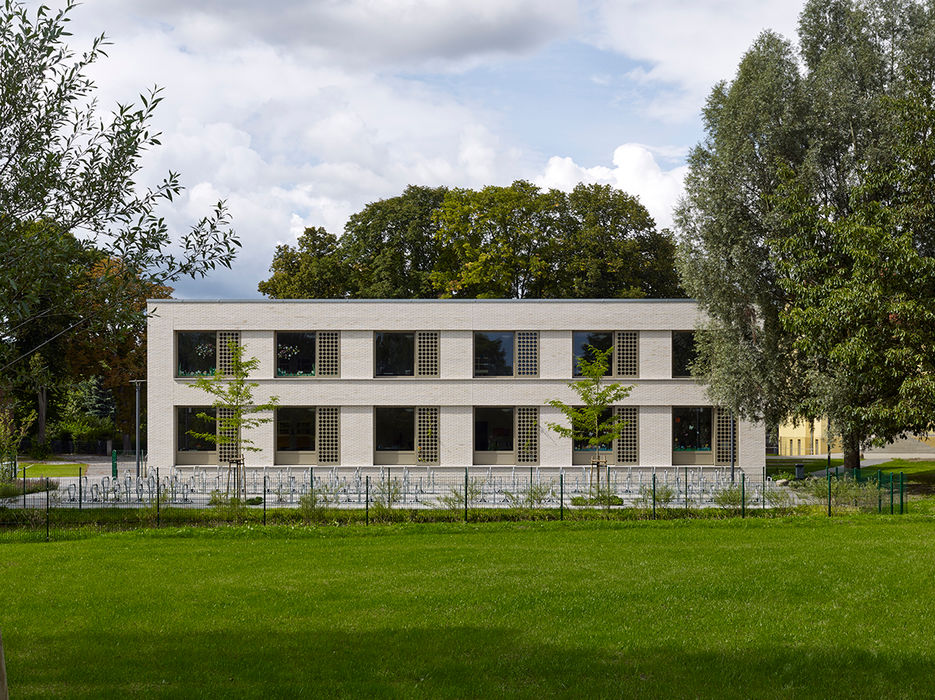
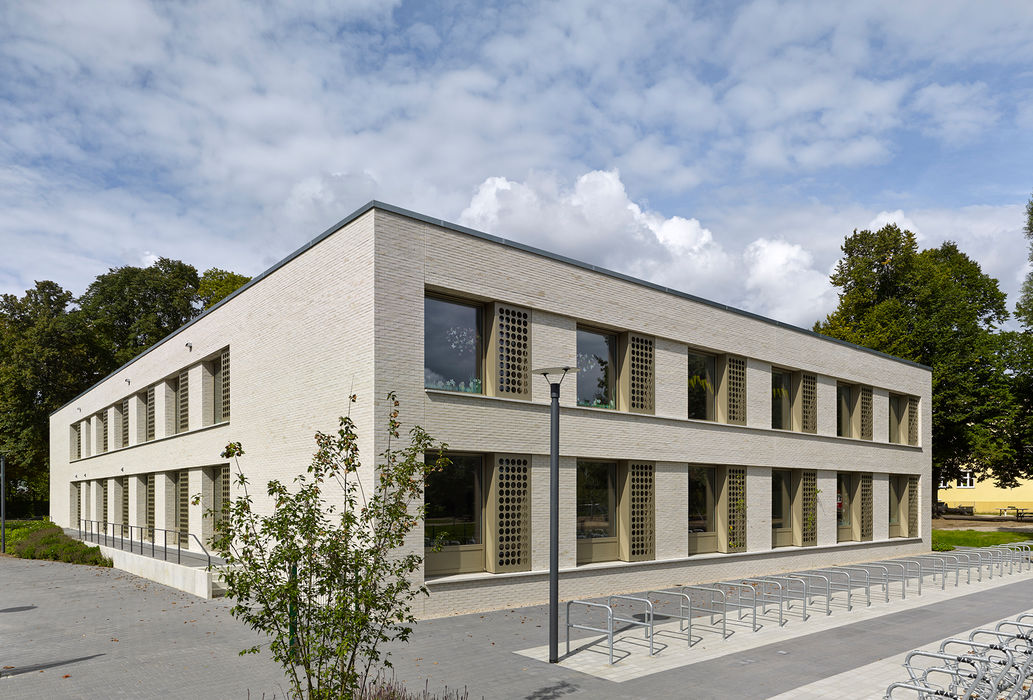
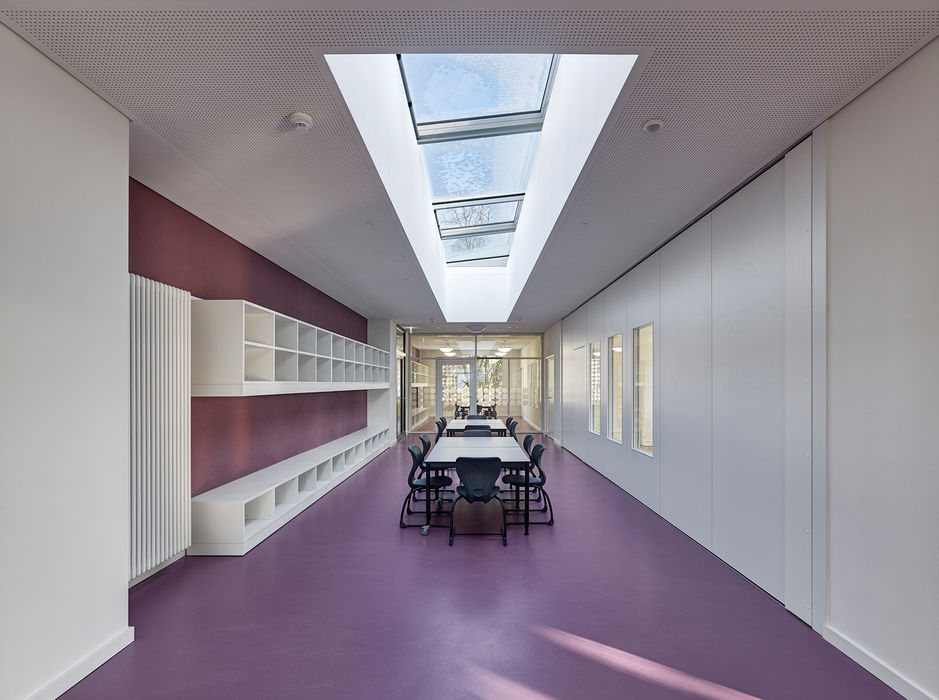
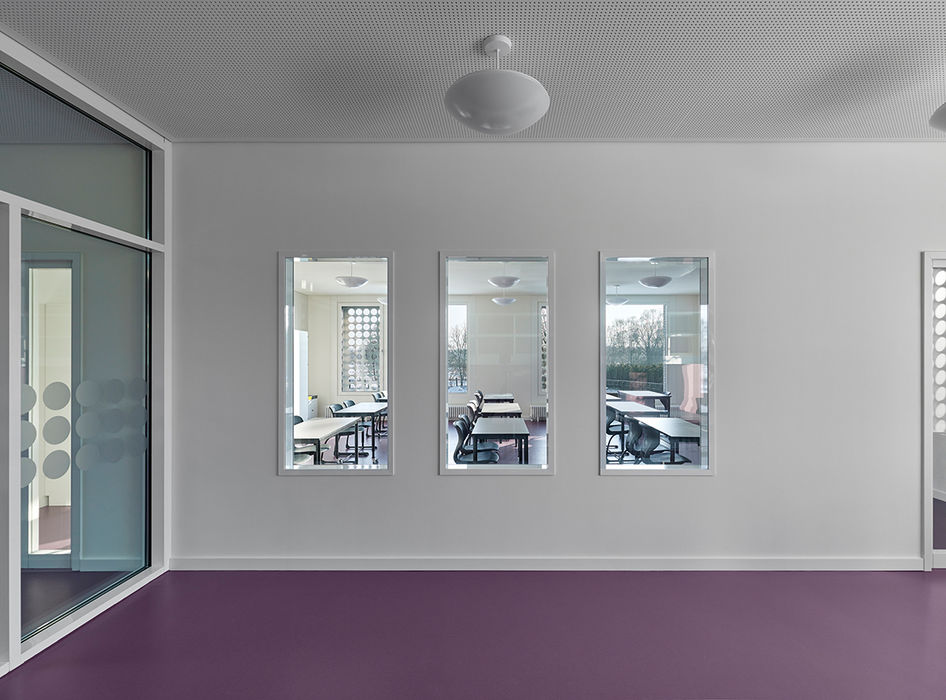
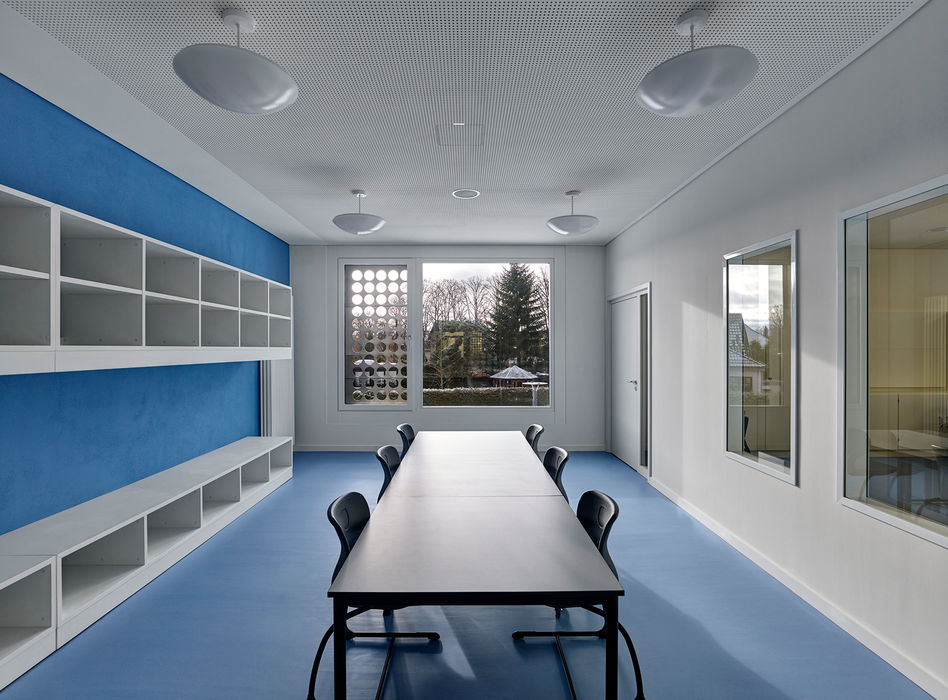
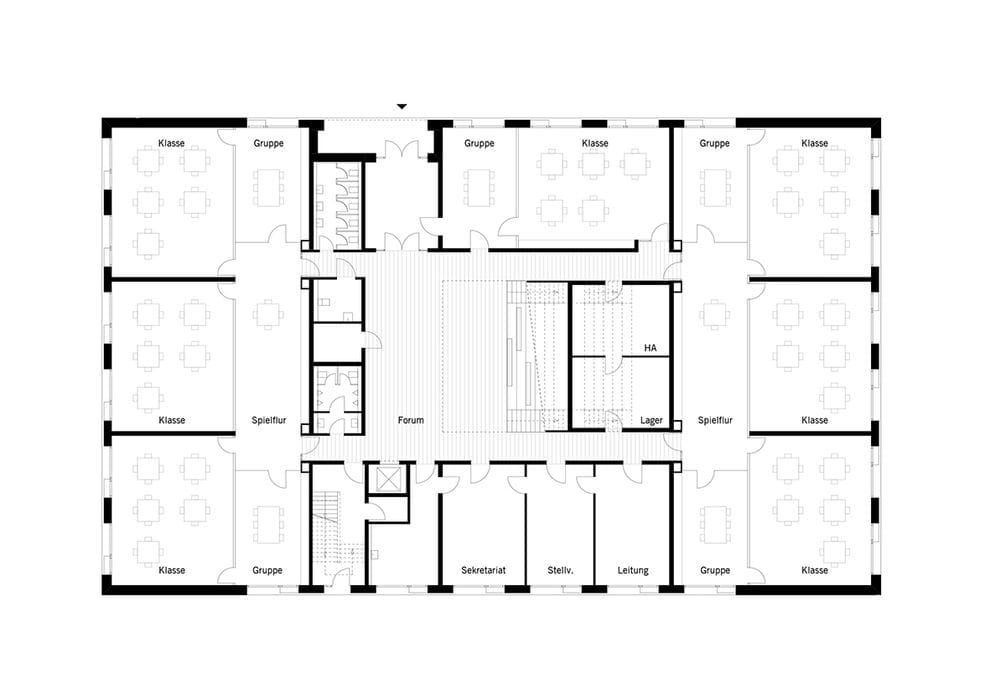
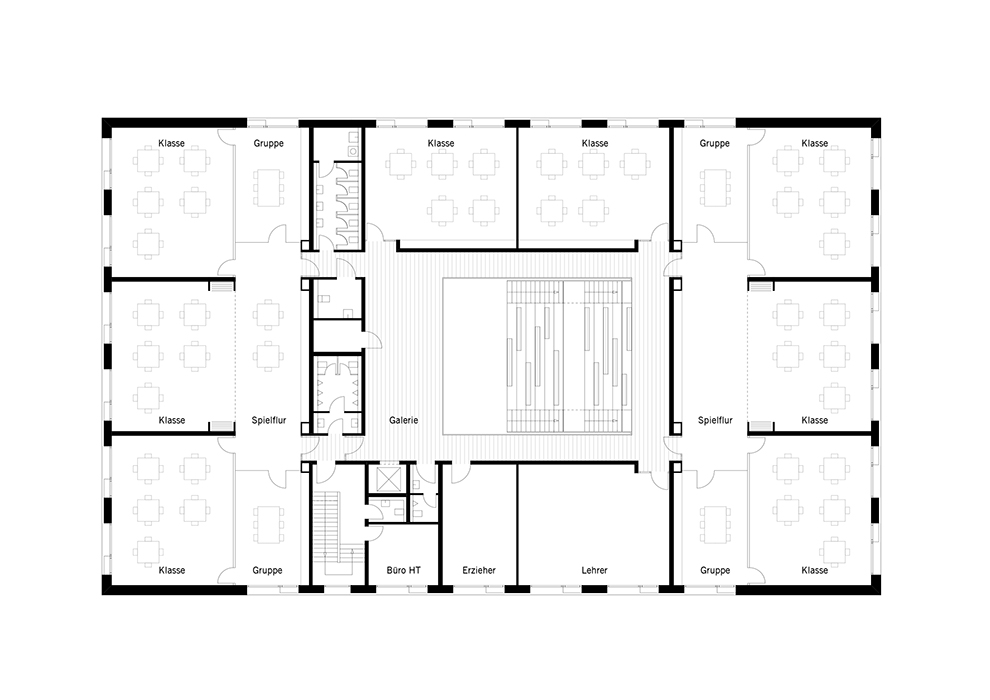
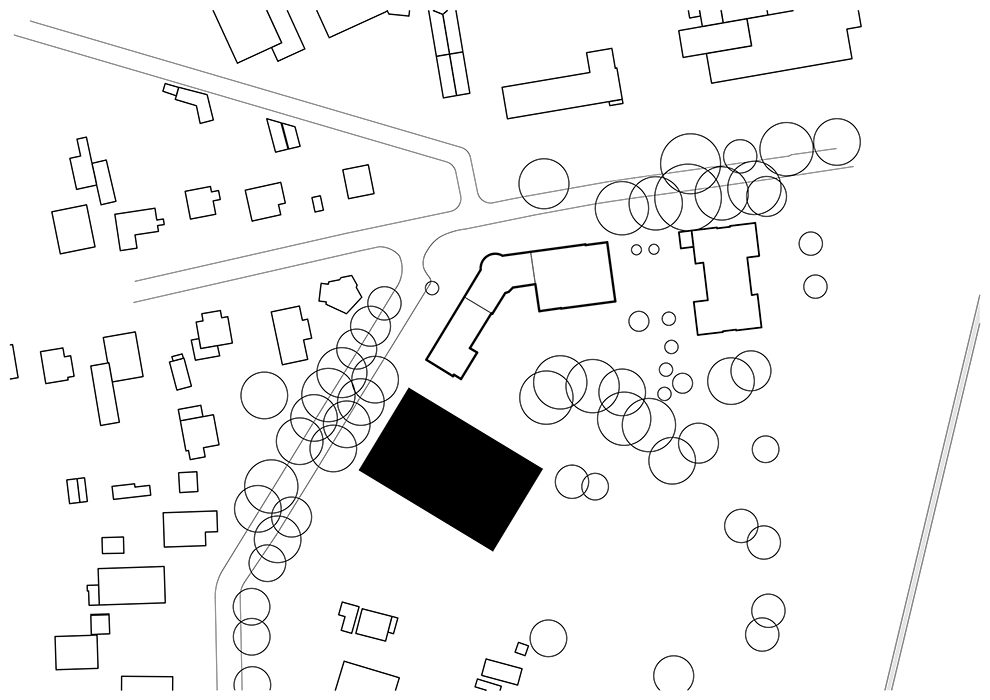
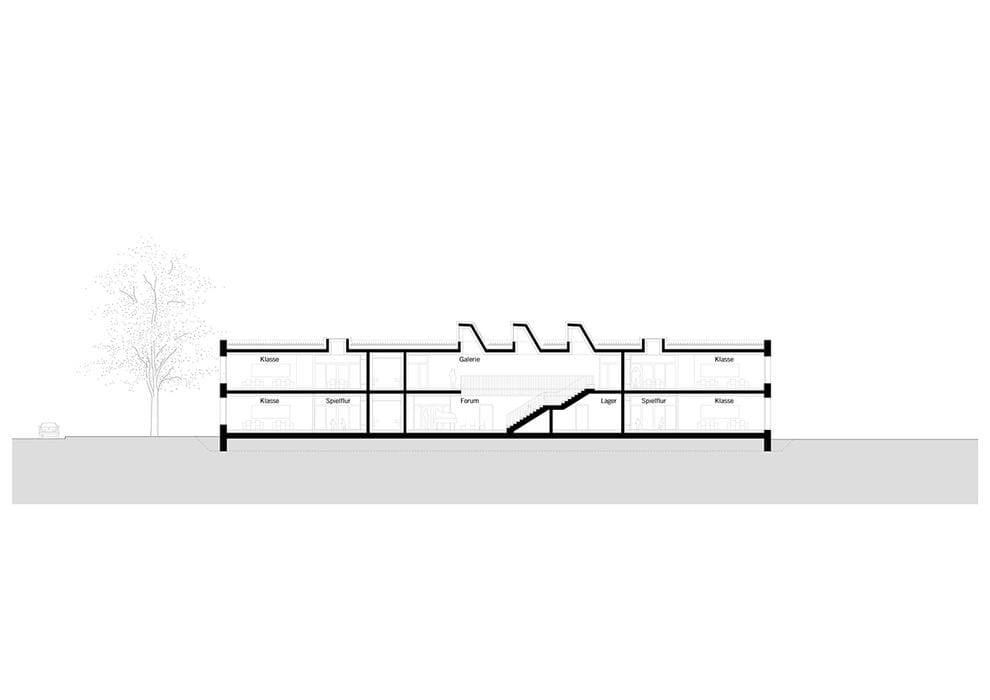
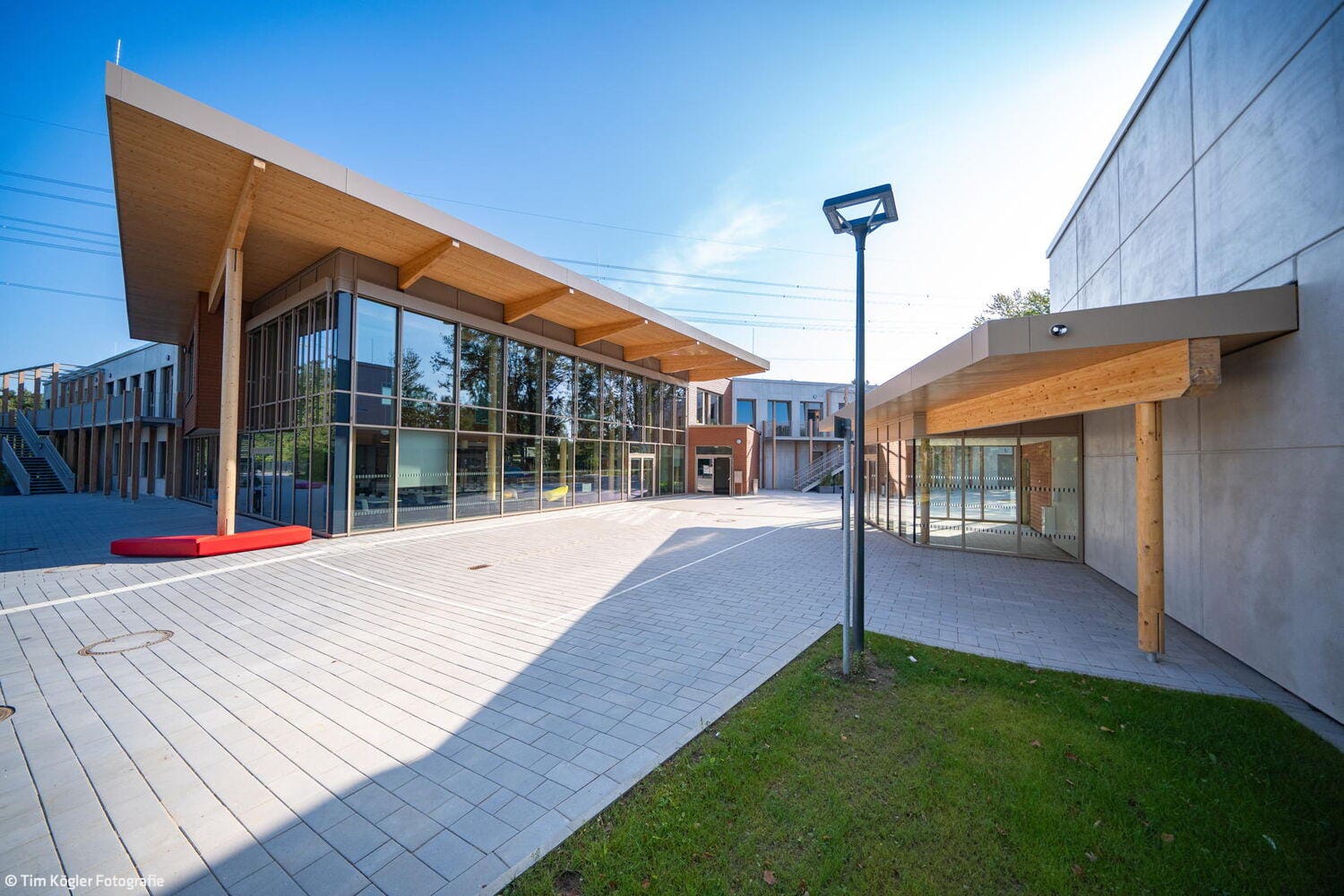
Nestled just 20 km northeast of Berlin, Zepernick is home to a landmark primary school dating to the early 20th century. When it became clear that expansion was needed, architects Renner Architekten in collaboration with Bollinger + Fehlig Architekten stepped in with a thoughtful solution, completed in 2018. Their two-storey extension now forms an open semicircle alongside the historic buildings, creating a cohesive campus. The design is notably intelligent: rectangular windows wrap uniformly around the façade, each fitted with ventilation panels for natural cross-airflow. A verdant roof does double duty—retaining rainwater and regulating the site's microclimate—while generous shed roofs and skylights flood the interior with daylight, significantly reducing the need for artificial lighting. The solid construction blends yellow brick exteriors with warm timber interiors, punctuated by pearl beige metal bands and precisely articulated projections that establish visual rhythm. Material selection prioritized sustainability, as did the energy-efficient building systems. Housing 15 classrooms, nine flexible teaching spaces, a foyer, and supporting areas across 2,700 m², the building is designed for tomorrow's schools.
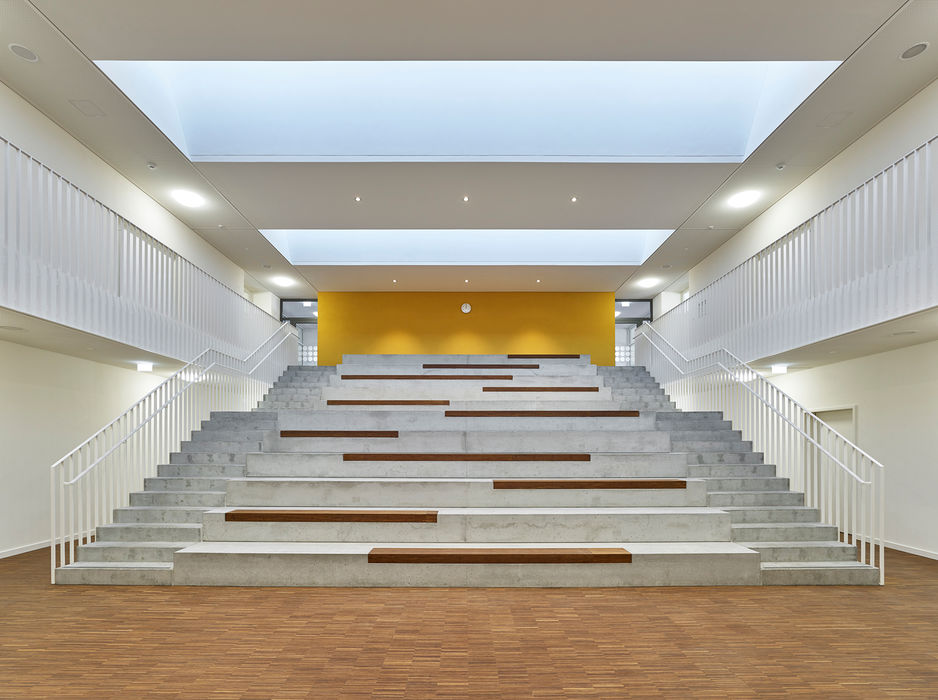
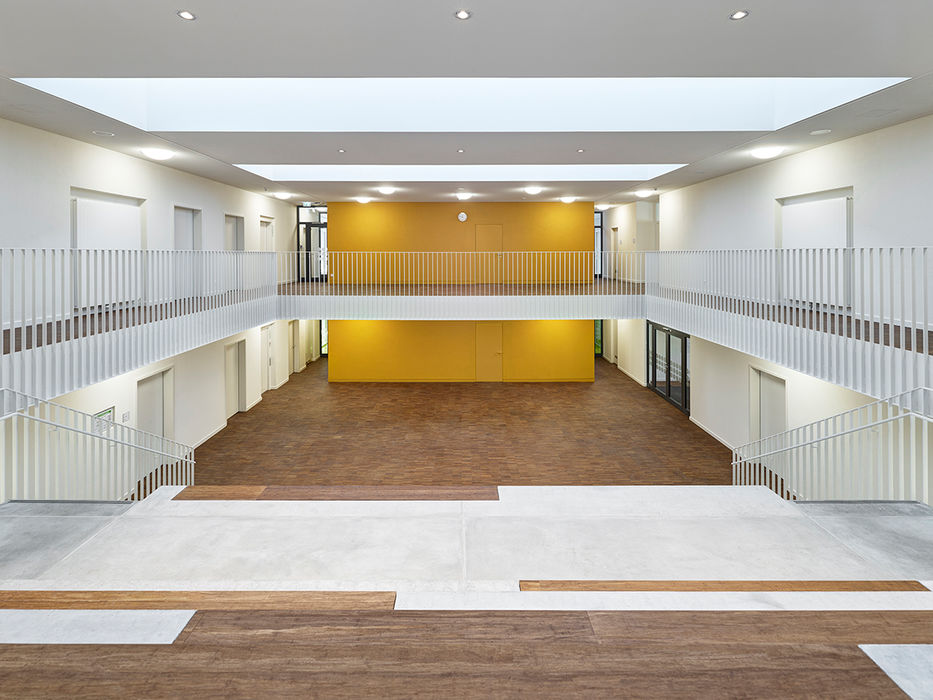
The main entrance opens to a generous foyer anchored by an oversized staircase with shallow steps that double as informal seating—a detail that sets the tone for the entire space. Above, a wraparound gallery transforms the central void into a true forum for gathering. Whether hosting performances, exhibitions, or simply serving as an open plaza for daily interaction, this multipurpose core adapts effortlessly. For theatre and music events, the hall becomes an auditorium with an integrated stage. Classrooms radiate outward from this flexible heart, a spatial strategy that defines the building's greatest achievement: pure adaptability. Movable walls enable rooms to cluster for collaborative learning or separate into quiet zones for focused study—a design philosophy that anticipates evolving pedagogies. The three-winged facility comfortably accommodates 450 students across multiple age groups. A thoughtful colour palette unifies the individual zones, providing wayfinding cues while fostering a sense of place.
Photography Credits:
Stefan Müller
www.stefanjosefmueller.de
(Featured in CUBE Berlin 04|22)

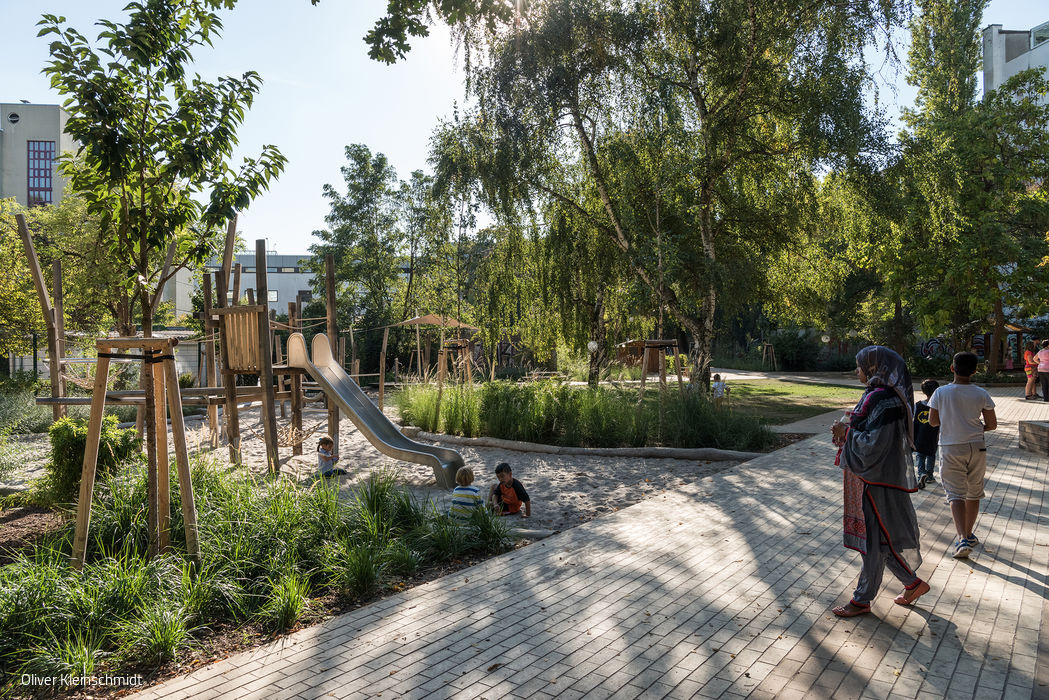
Play, Explore, Create & Learn
A Holistic Garden Design for Children of Every Age
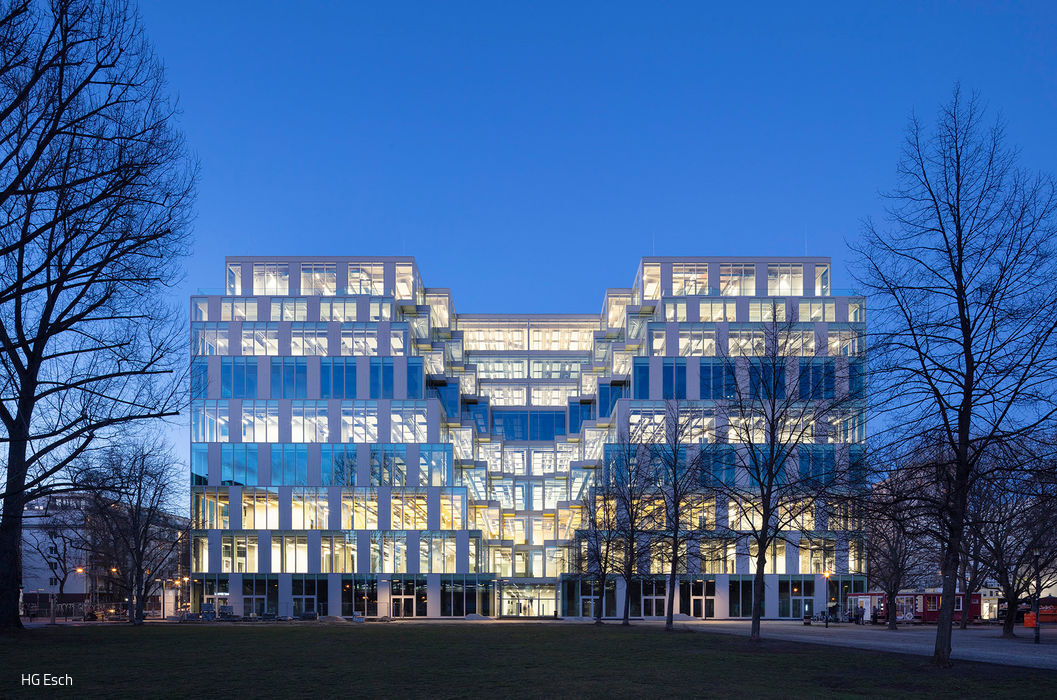
From Warehouse to Workspace
UP! Berlin stands as a striking office building distinguished by its inventive approach to lighting design.
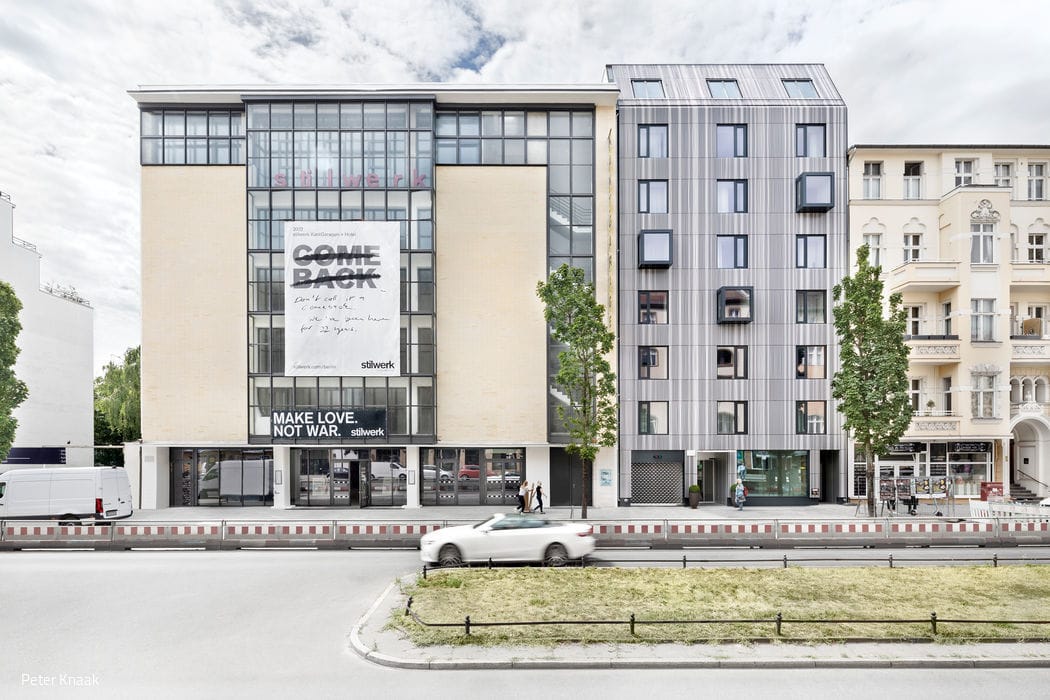
A Monument to Mobility: Now with Hotel
The former garage is now being "spruced up" with designer furniture.
Gold Silver Bronze
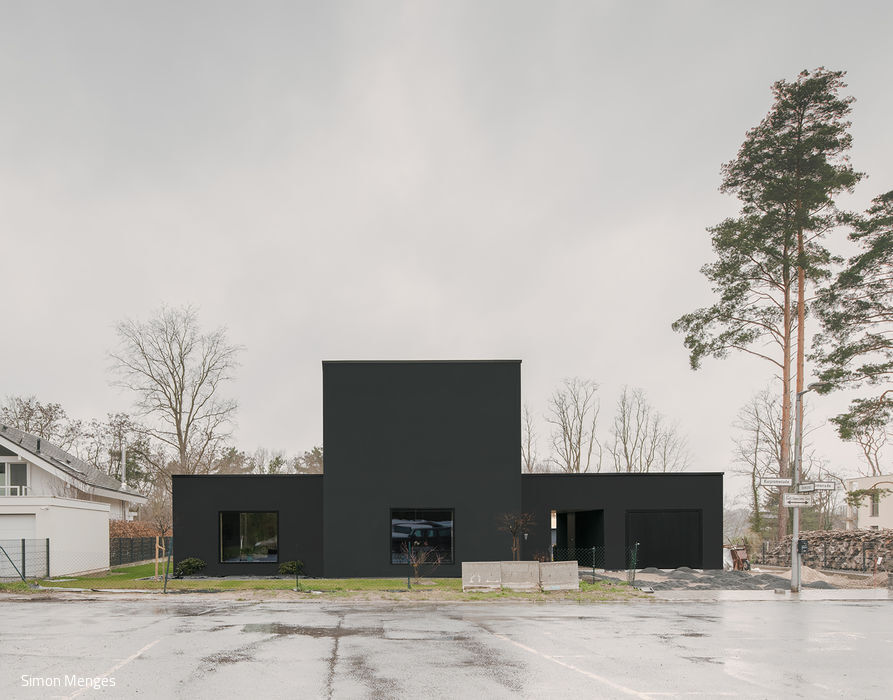
A single-family home in Kladow that rises like a winner's podium.