


The Vibrant "Bear School"
Primary School Extension in Friedrichshain
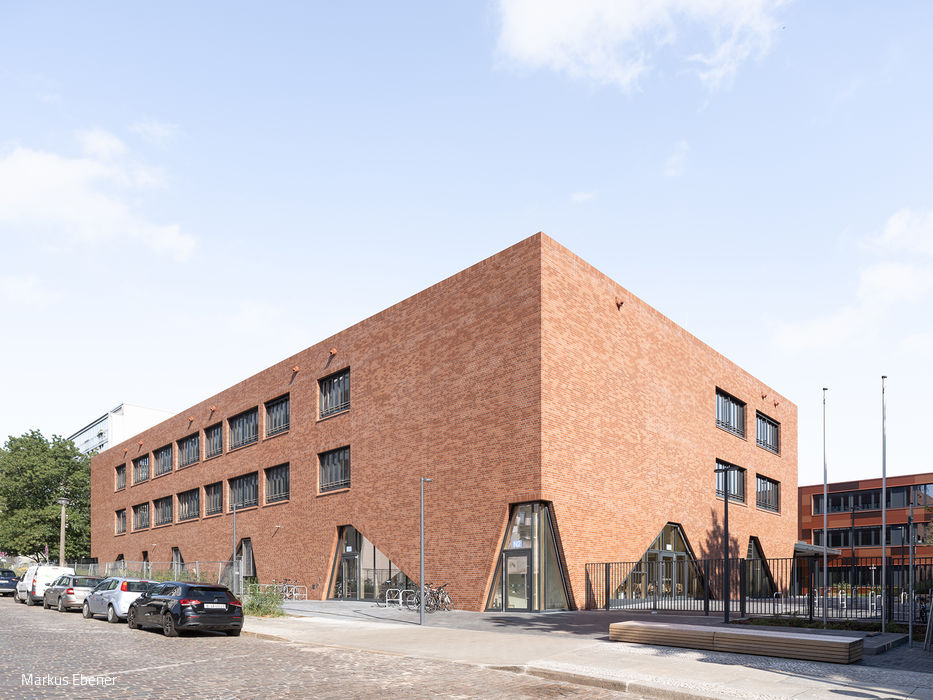
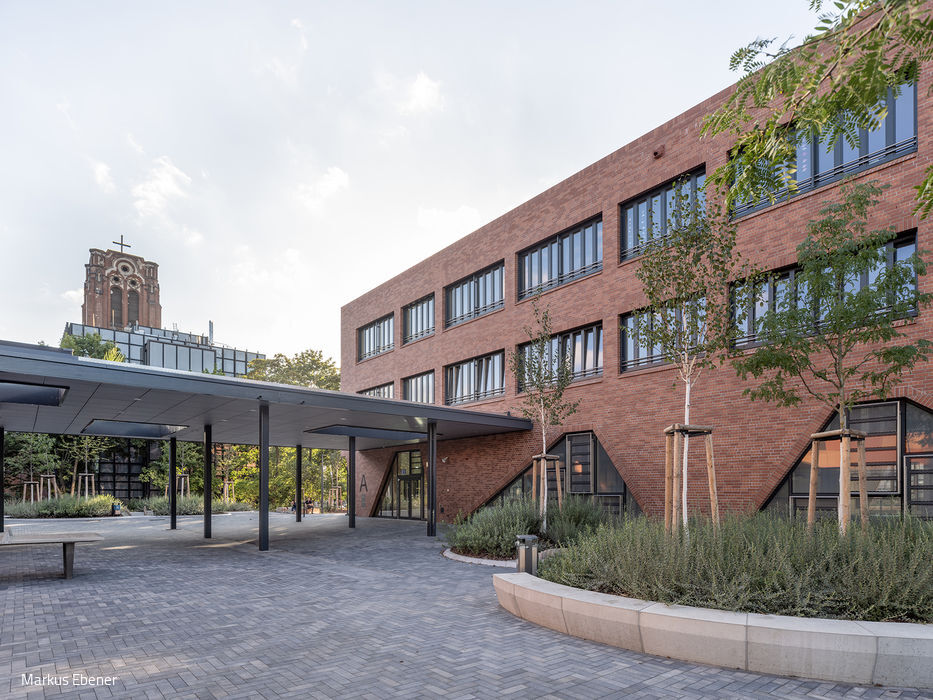
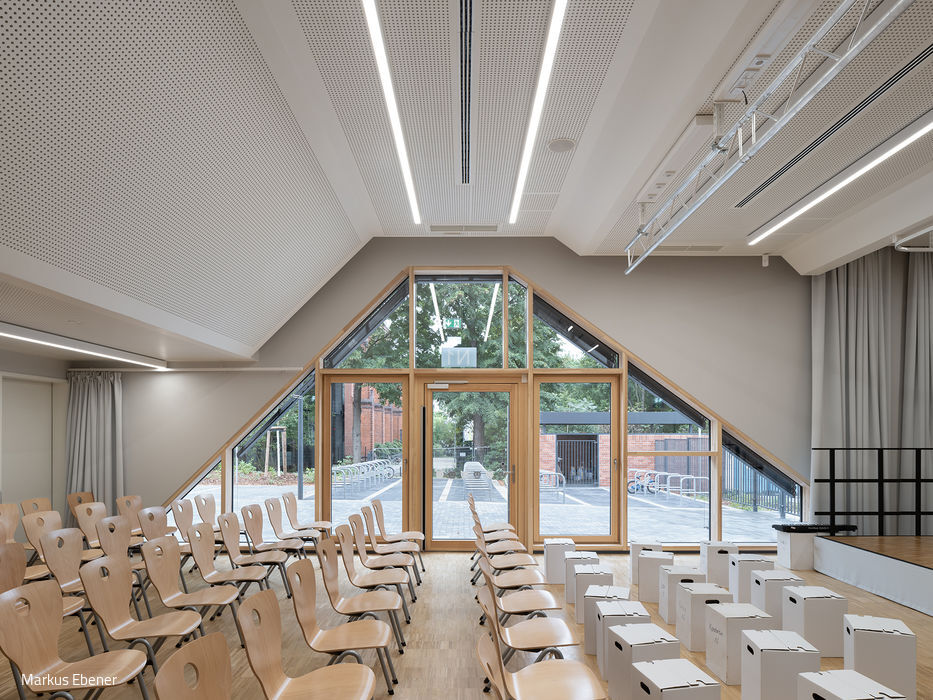
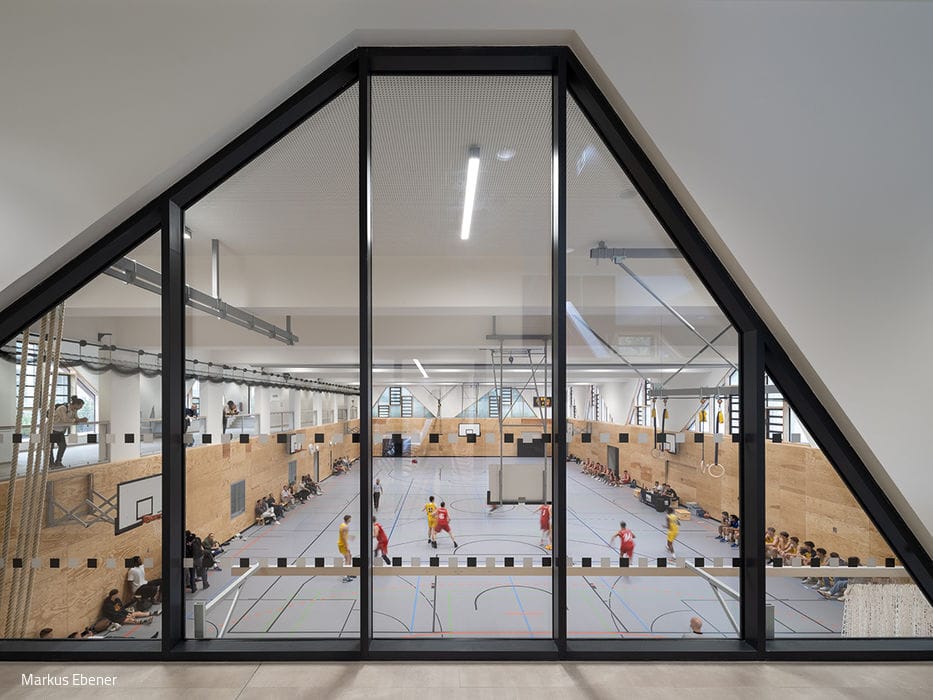
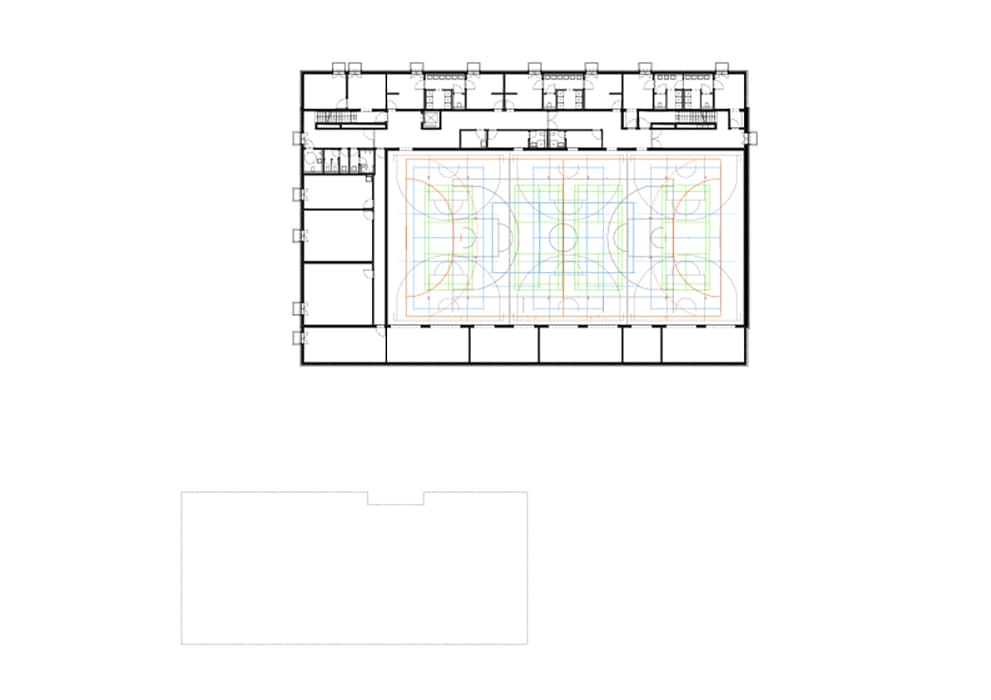
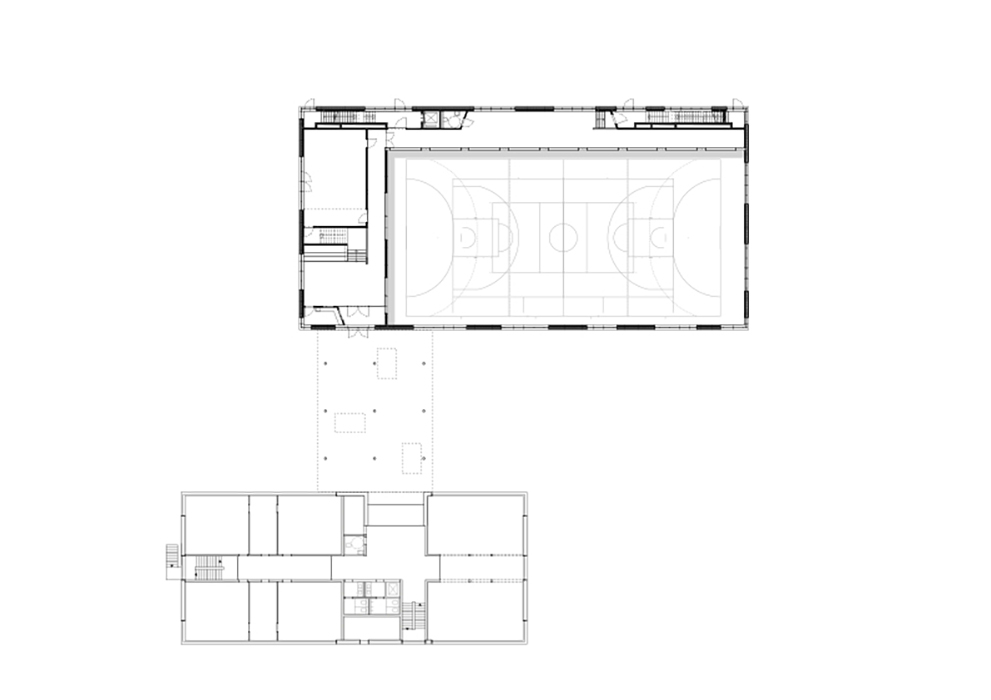
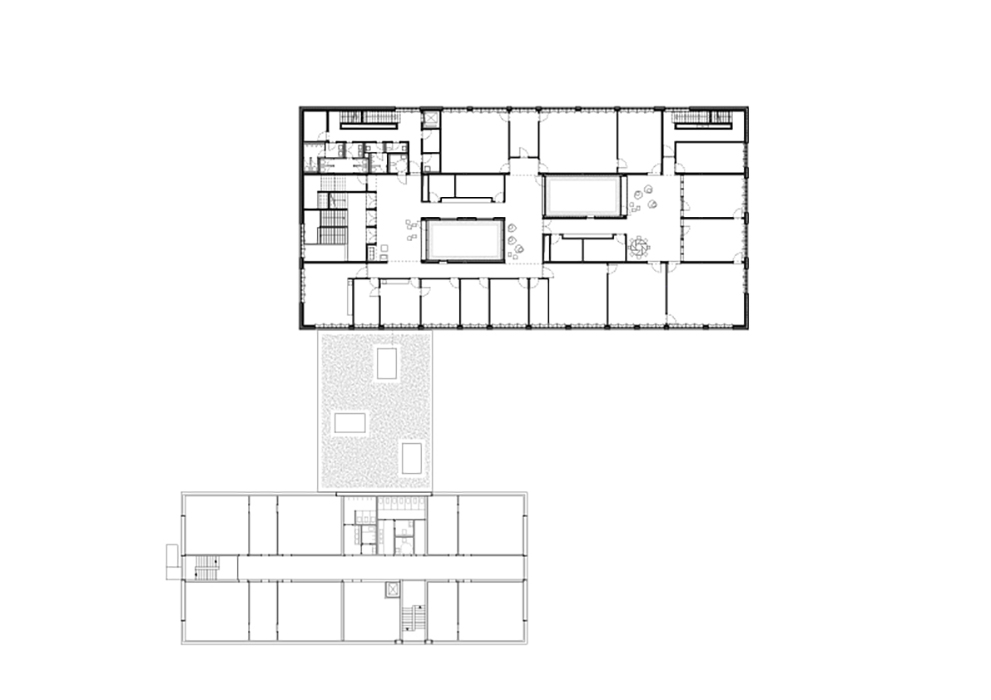
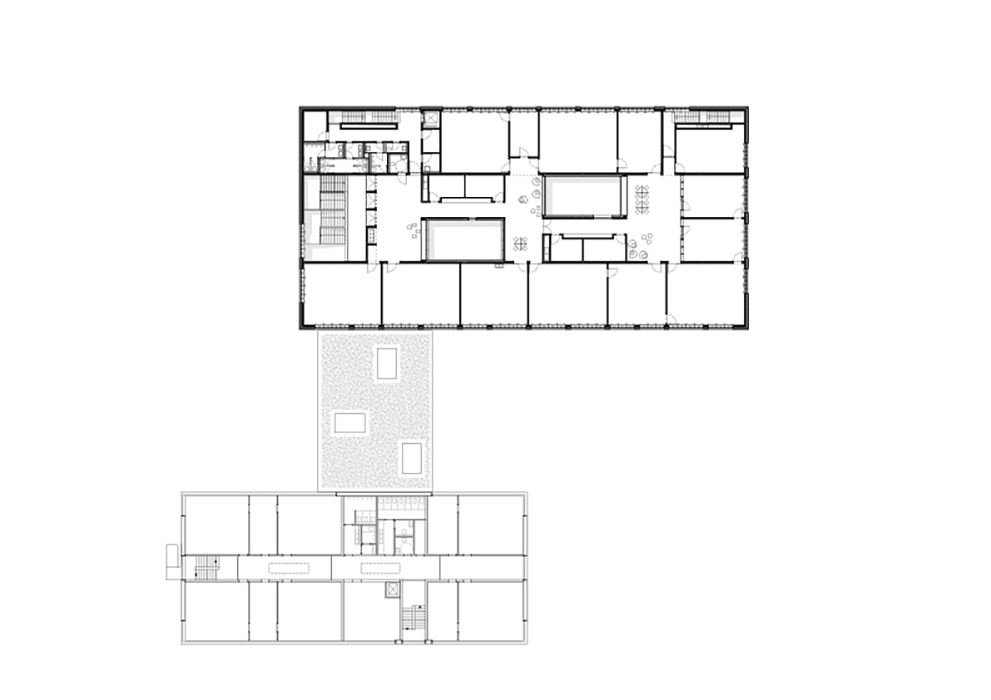
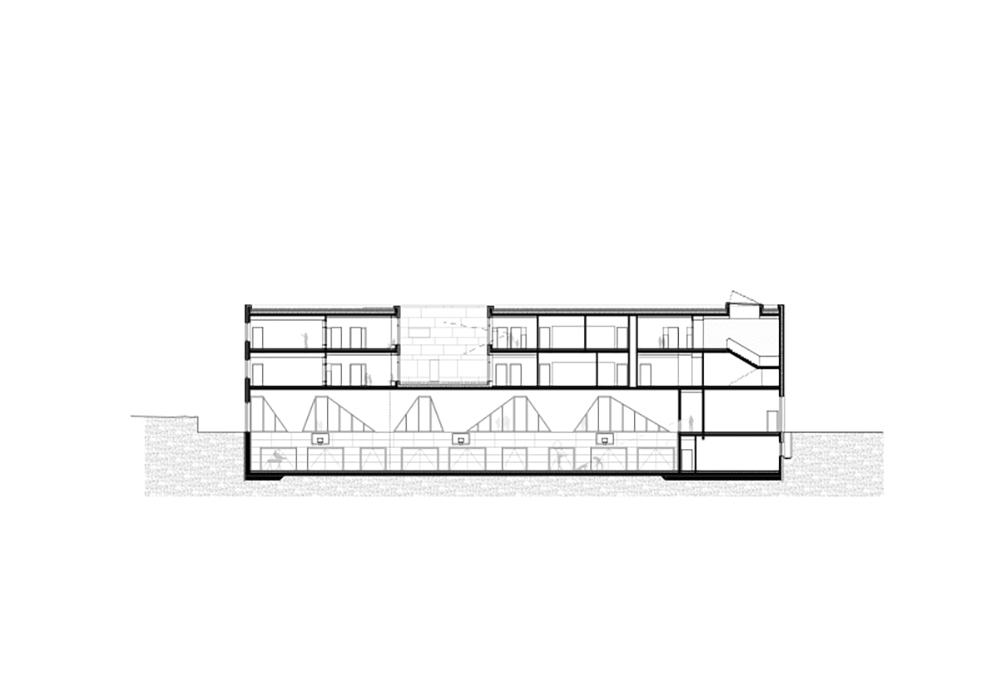
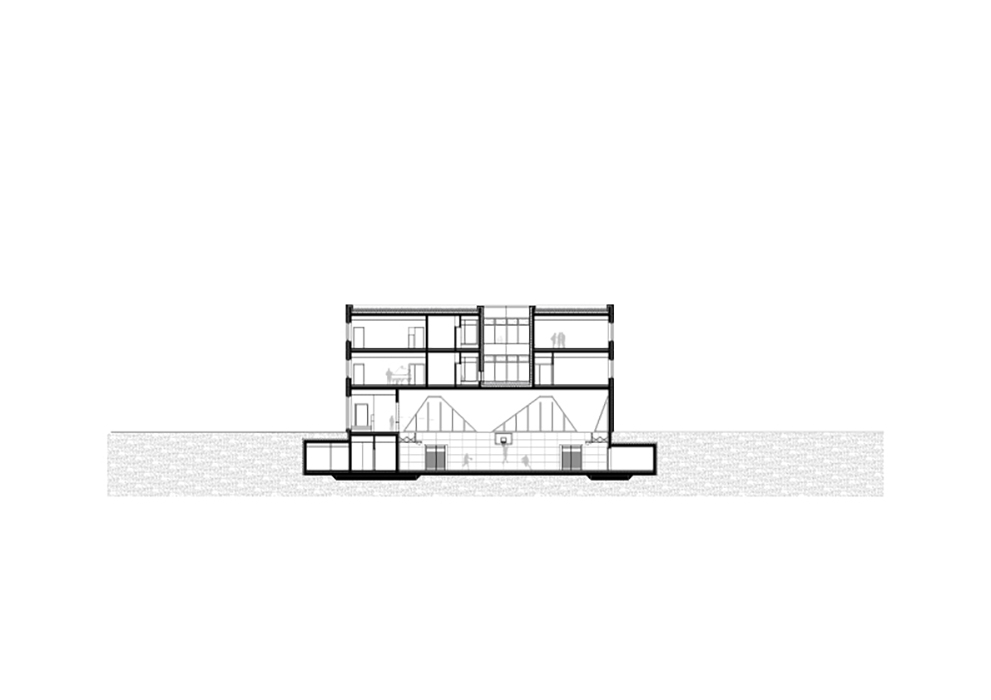
The primary school on Pufendorfstraße in Friedrichshain was originally built as an extension to a modular expansion building (MEB), which had been added years earlier under Berlin State regulations to address the school's growing needs. However, even this proved inadequate as the school continued to outgrow its space. The architectural firm NAK – Numrich Albrecht Klumpp – specialists in educational building design – was commissioned to create a new extension. The project required substantial additional space: additional classrooms, administrative offices, specialized teaching rooms, and a dual sports hall. Spanning three stories, the new building houses the sports hall in the first basement level, extending up to the ground floor. The completed ensemble comprises three distinct architectural elements: the decommissioned Church of the Resurrection, the original school building, and this new addition – all connected by a covered passageway that links the two school structures.
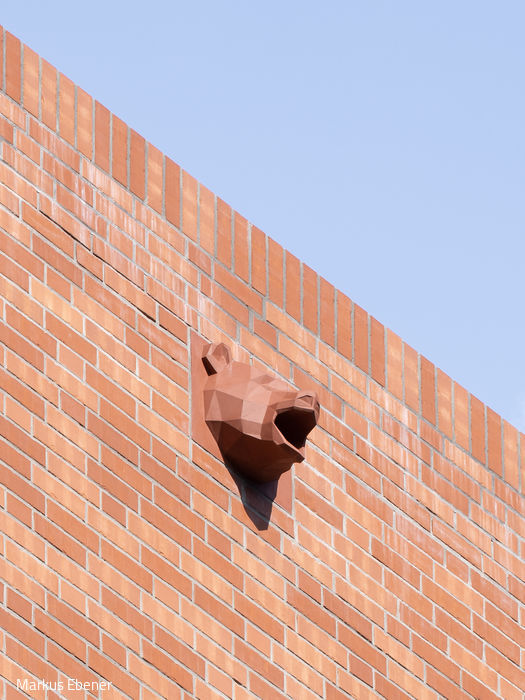
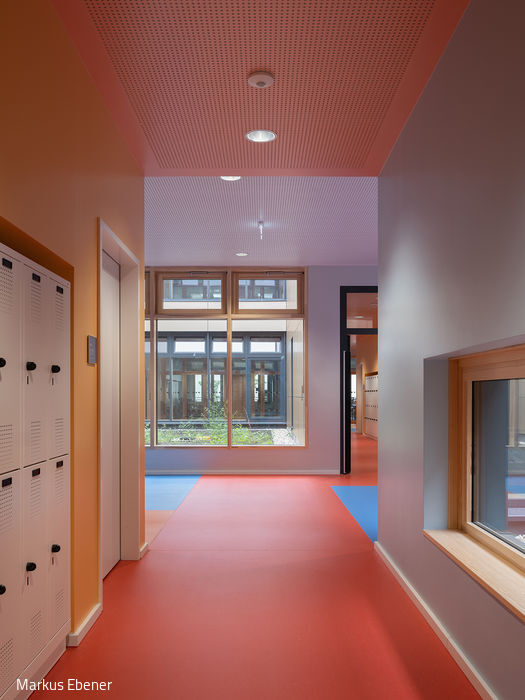
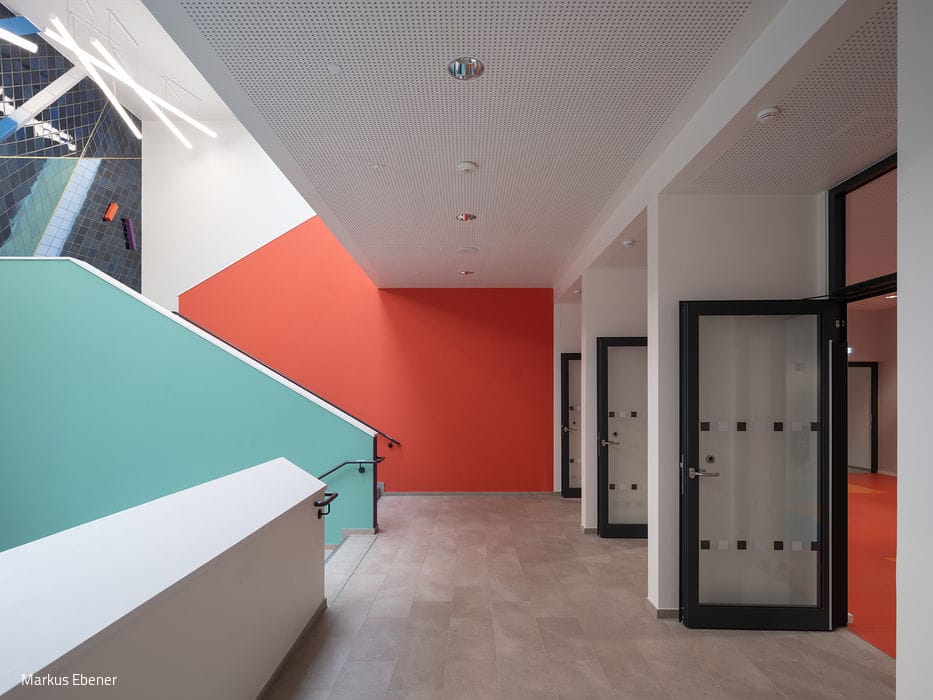
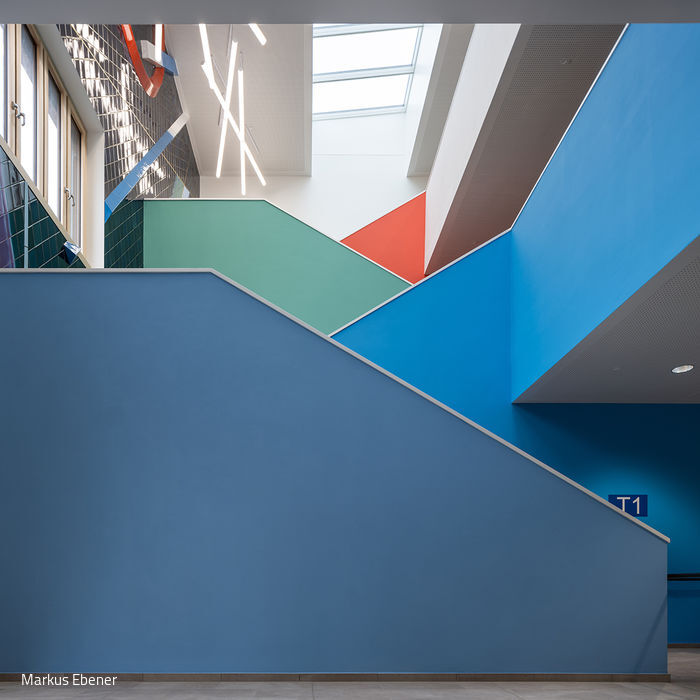
The complex is framed by parkland—a former cemetery to the southeast—and residential neighborhoods to the northwest. The new building's clinker brick façade pays homage to the industrial heritage of this historic district, evoking the aesthetics of the Old Slaughterhouse and the nearby former brewery. Polygonal, arch-like openings at ground level flood the interior with natural light and frame views into the sports hall and foyer. But the building's most distinctive feature crowns the three floors just below the flat roof: a series of stylized bear-head gargoyles, spaced rhythmically along the façade. Designed using 3D modeling and crafted by specialized ceramicists, these playful sculptural elements inspired the building's affectionate nickname, the "Bear School." The interior design proves equally thoughtful. The color scheme is striking yet purposeful—functional art that guides users through space. Colored linoleum floor coverings serve as both visual signposts and safety tools. The palette follows strict fire code requirements: red marks escape routes (kept clear at all times), orange designates access to secondary spaces, while blue areas allow flexible furnishing. The cascading stairwell echoes this coordinated palette, with stringer panels painted in the same restrained tones as the floors below. The result is an environment where children don't just learn—they thrive, naturally guided and inspired by thoughtful design.
Photography Credits:
Markus Ebener
www.marcus-ebener.de
(Published in CUBE Berlin 02|23)
Wonderfully Versatile
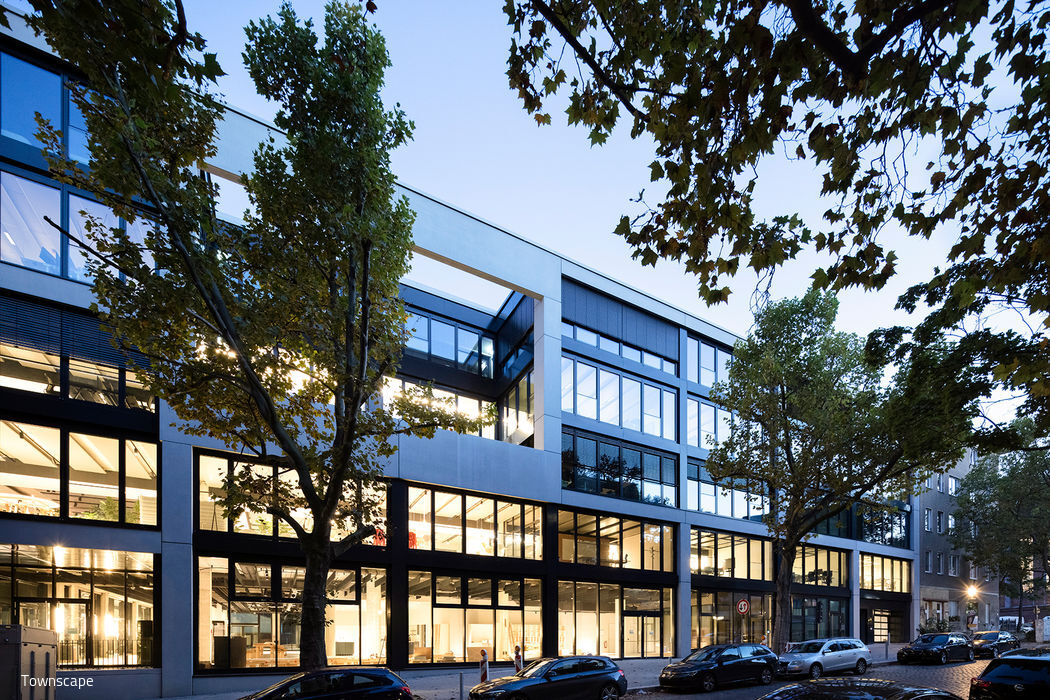
New Office Building Designed for Flexible Work
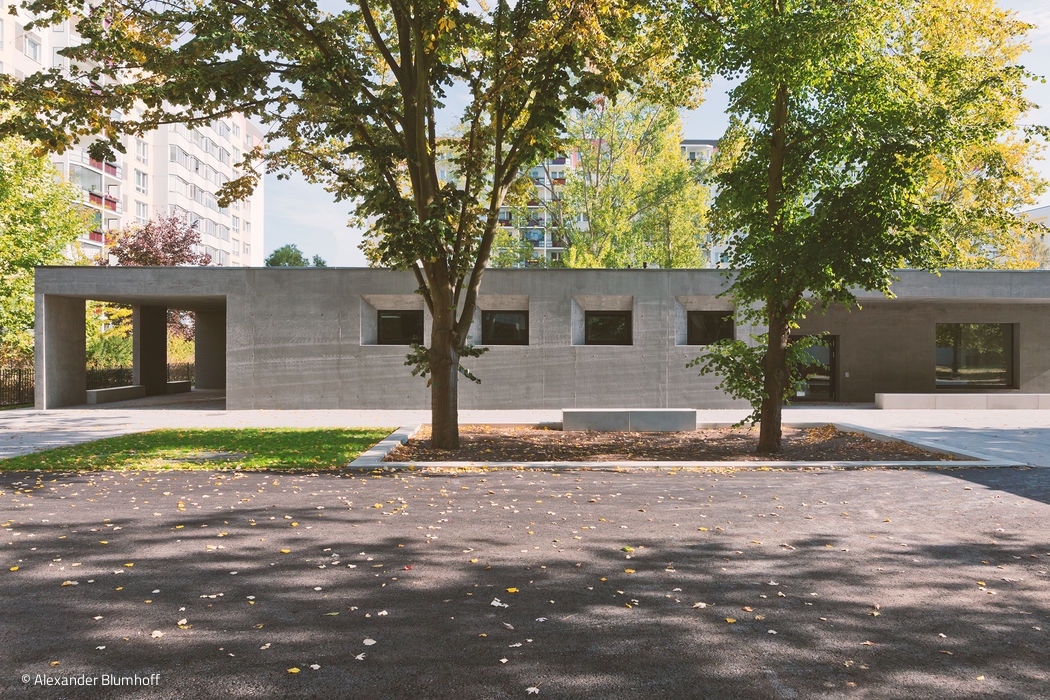
Concrete Worth Touching
Expansive panoramic windows and deep roof overhangs combine to establish a transparent, open aesthetic that infuses the...
Carrying coals to Newcastle
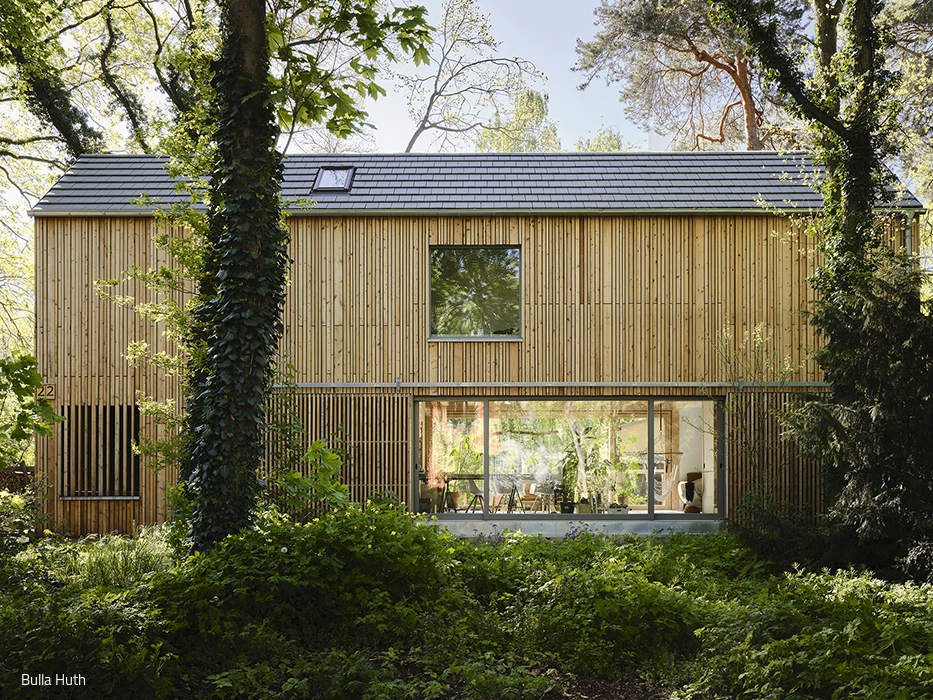
Two timber homes emerge from a wooded landscape in Potsdam.
Living on the Peninsula
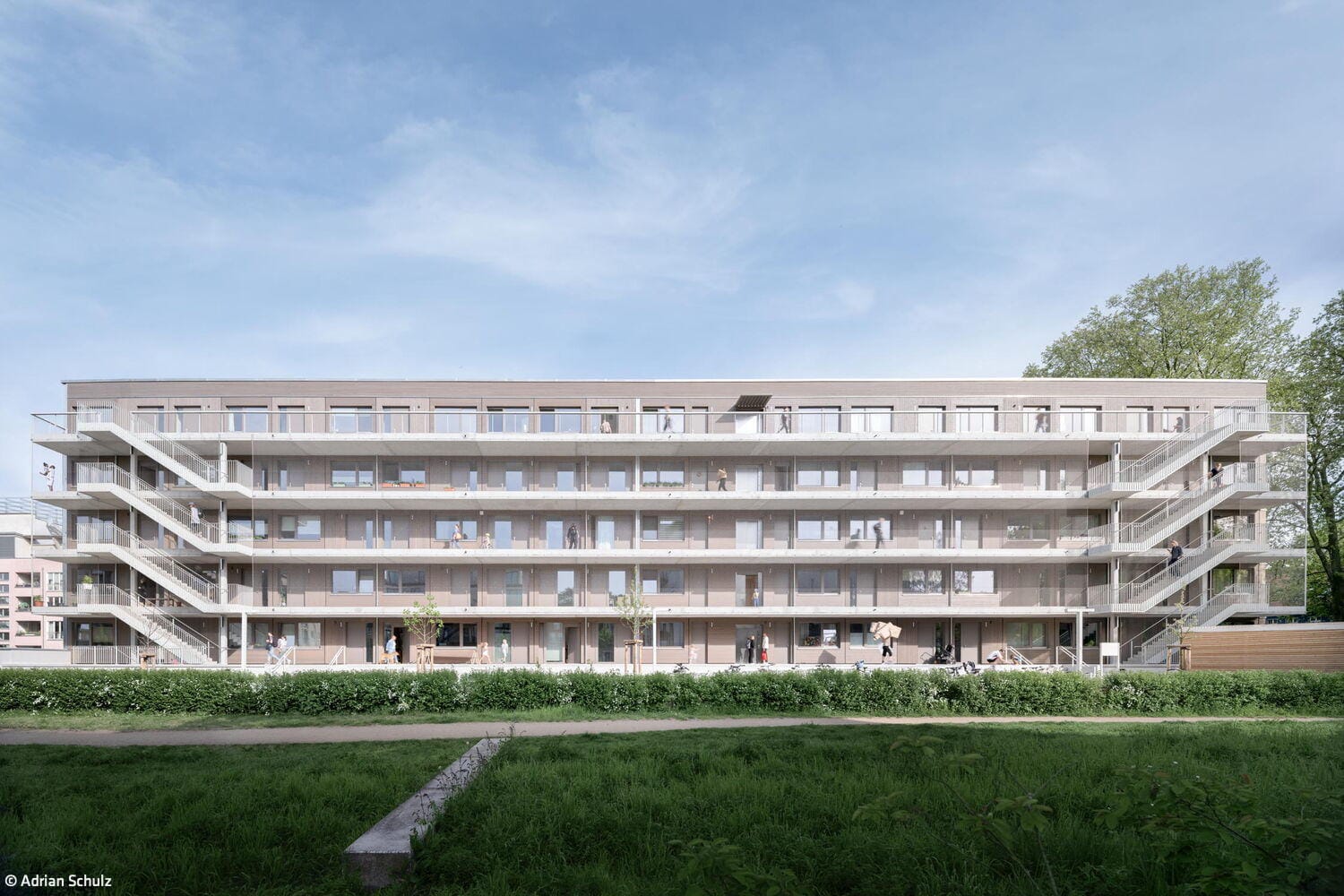
Sustainable Architecture Reimagines Community