


Pinstripe Precision
A longhouse-style residence with gabled roof designed for maximum recyclability
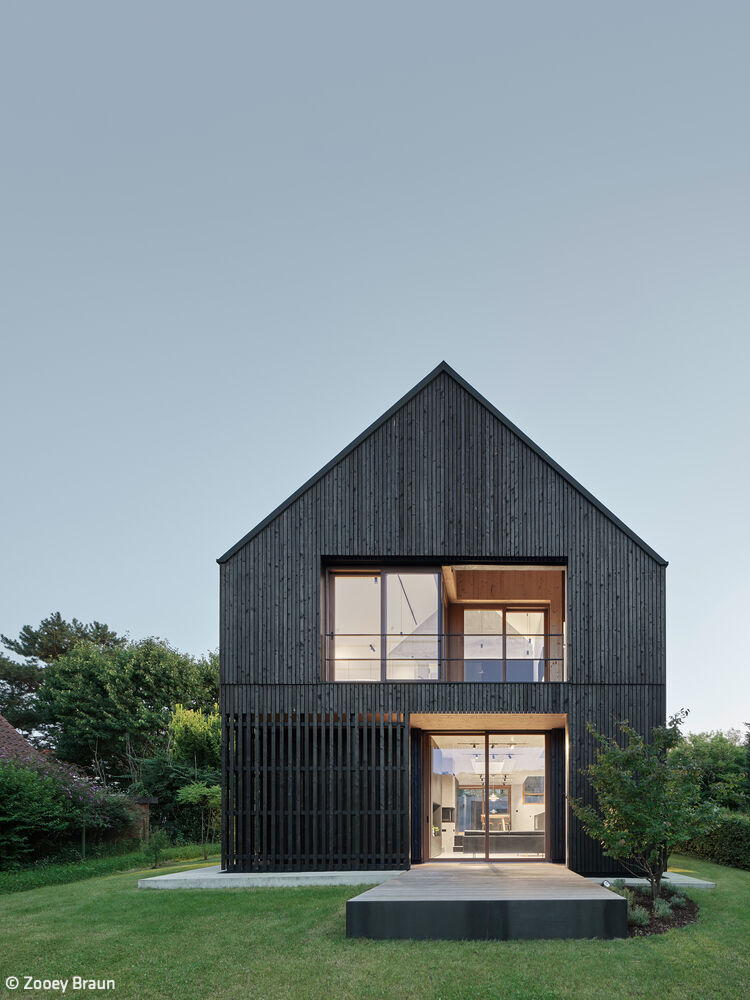
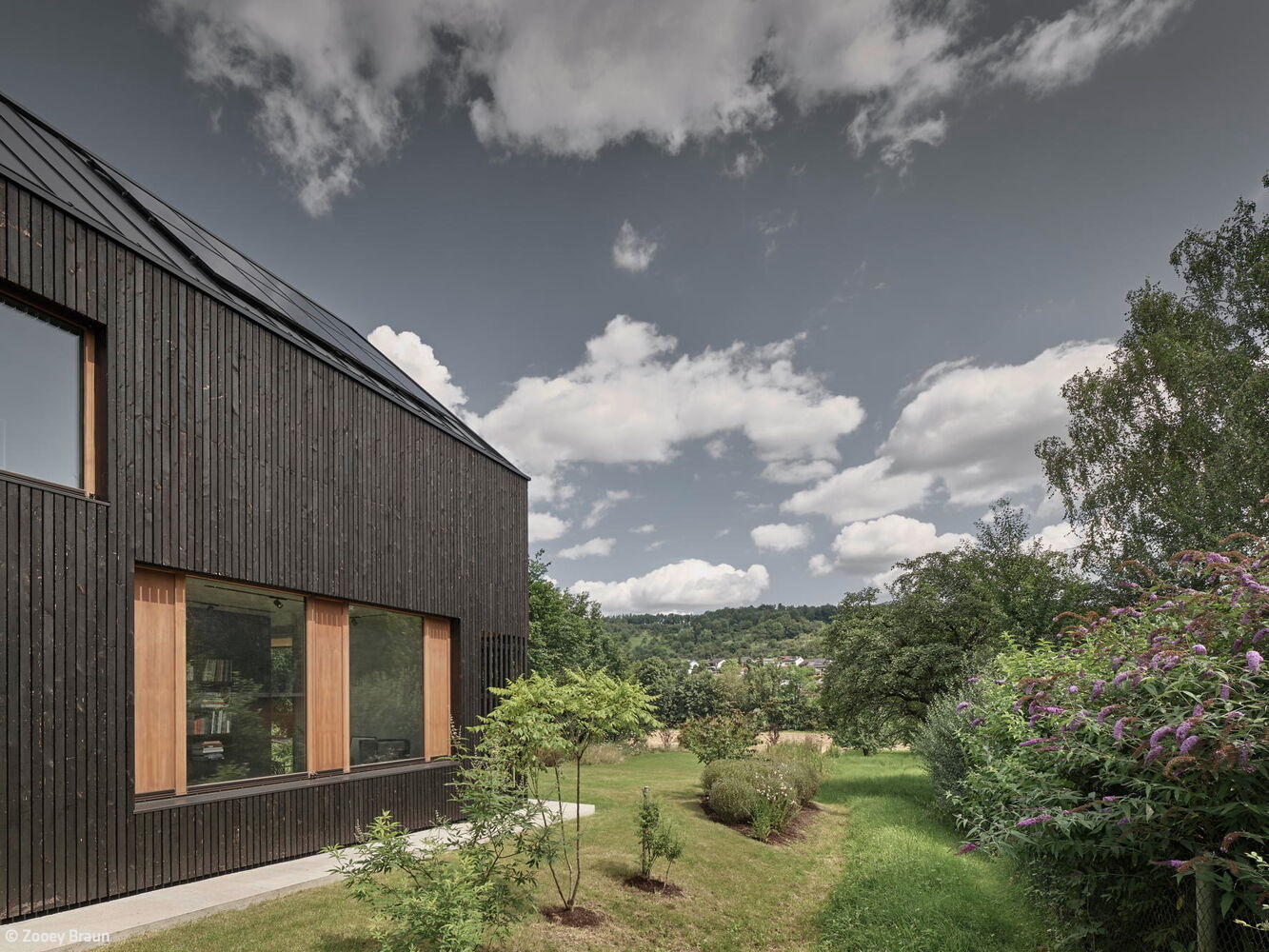
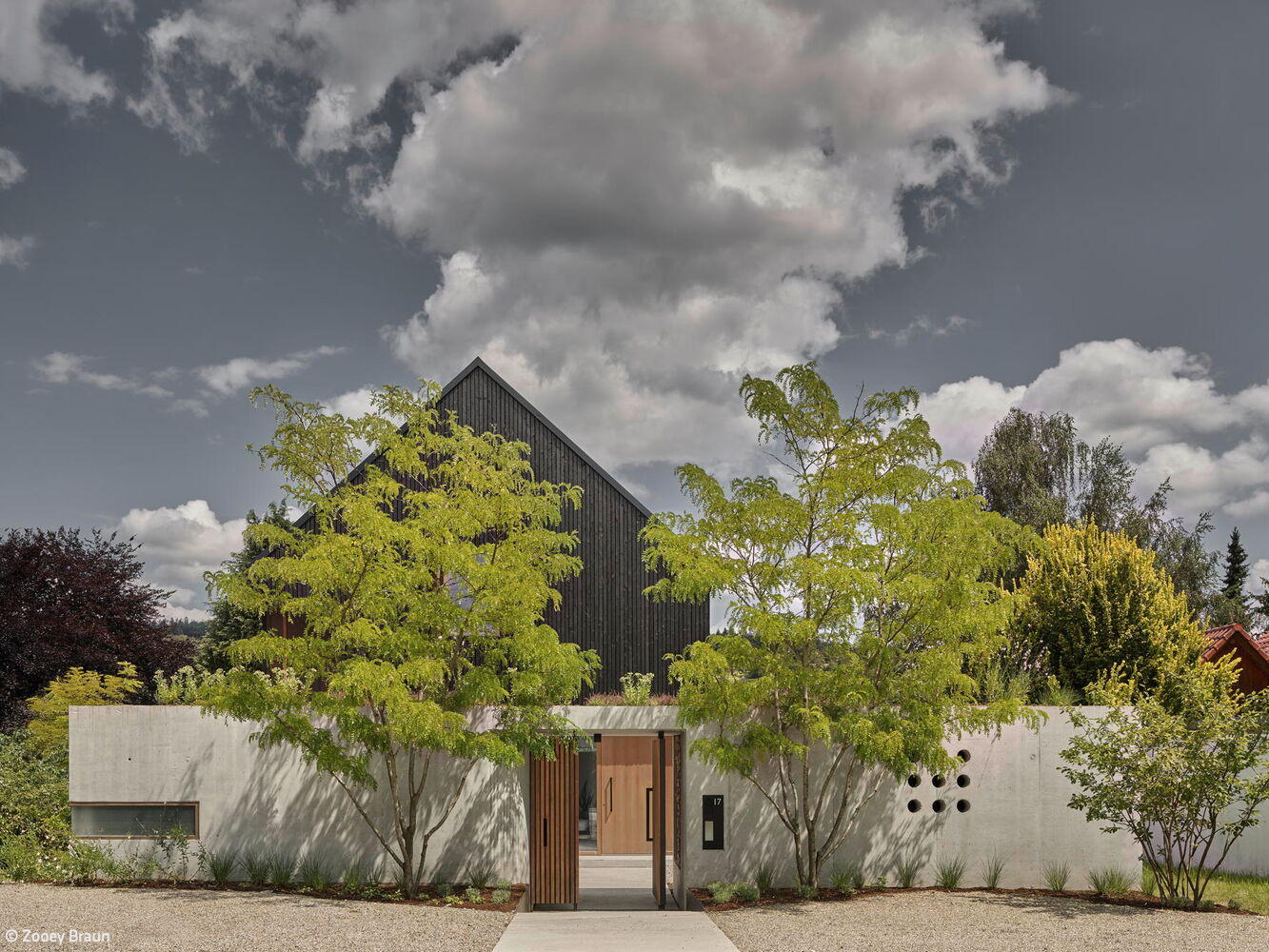
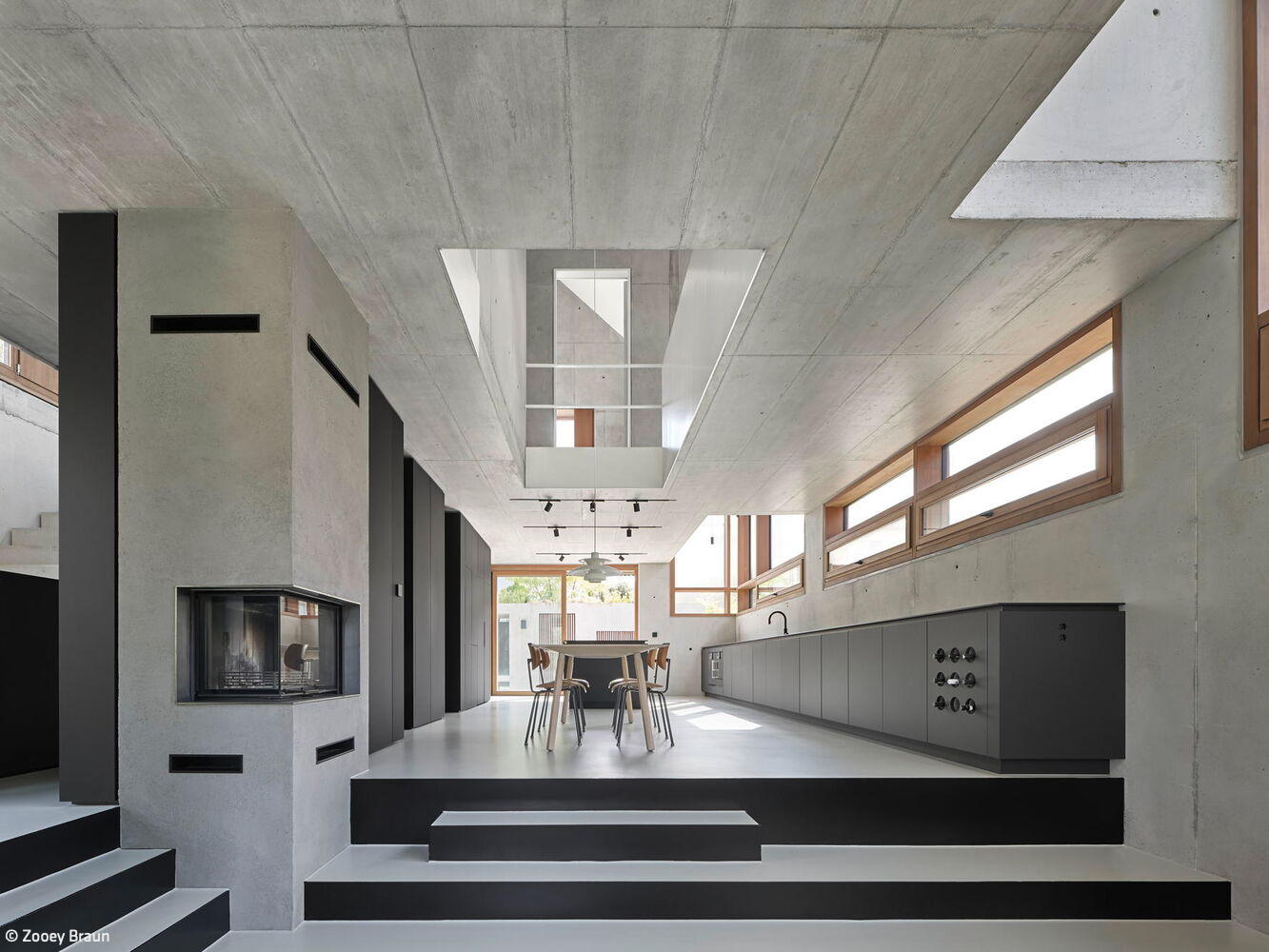
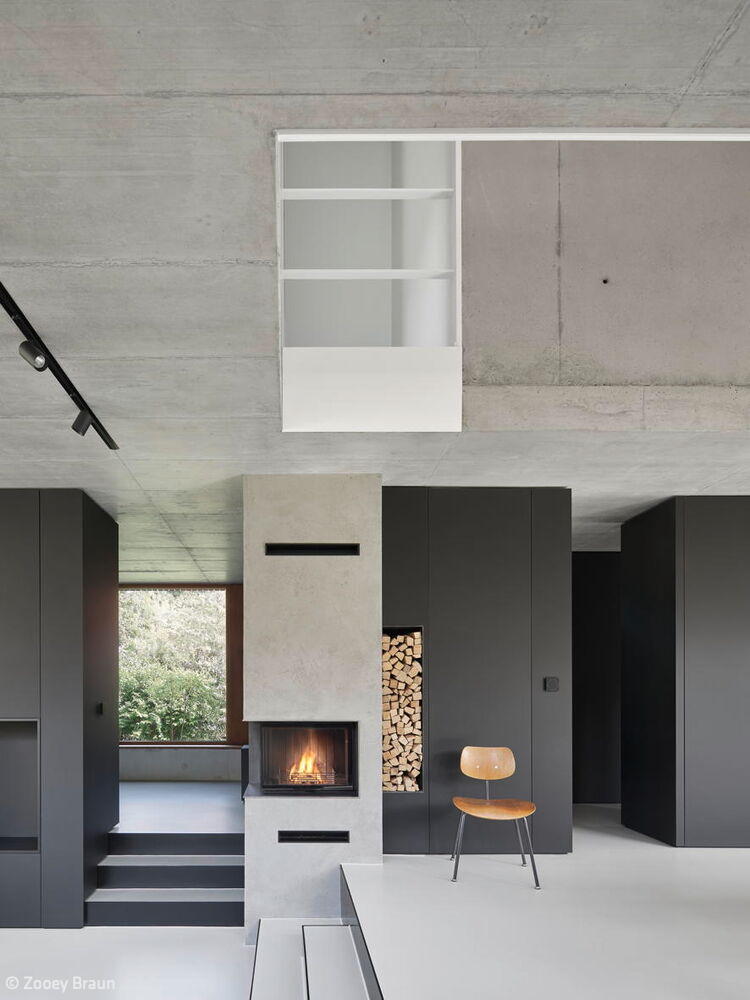
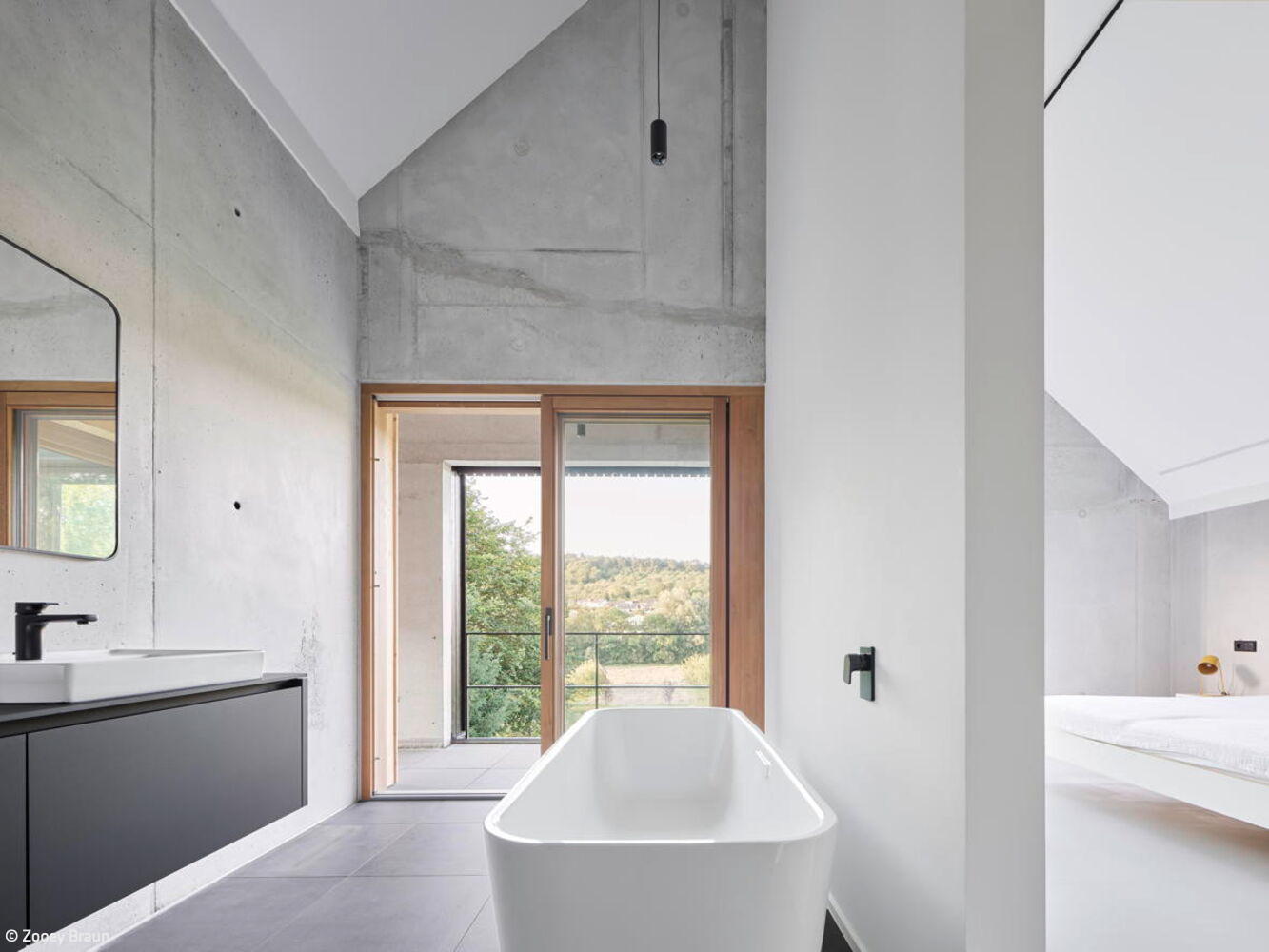
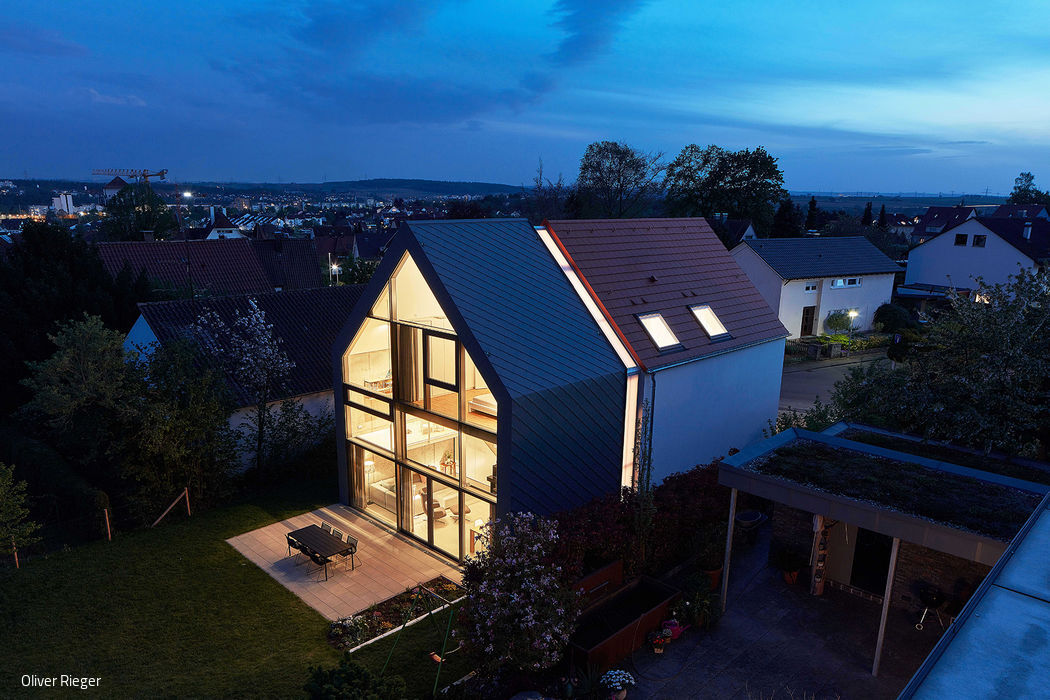
Nestled thoughtfully into a gap between existing structures, a gabled-roof residence marries contemporary sustainability with regional character. The owners seized the opportunity to build a combined home and workspace within an established neighborhood fabric. In creating their dream home, they prioritized natural materials and recyclability: raw concrete surfaces, natural rubber flooring, and naturally finished wooden windows define the aesthetic. Drawing inspiration from the surrounding orchards and pastoral landscape, Rommel Wagenpfeil Architects crafted a design that settles into the green surroundings like a traditional field barn—one that engages respectfully with nature.
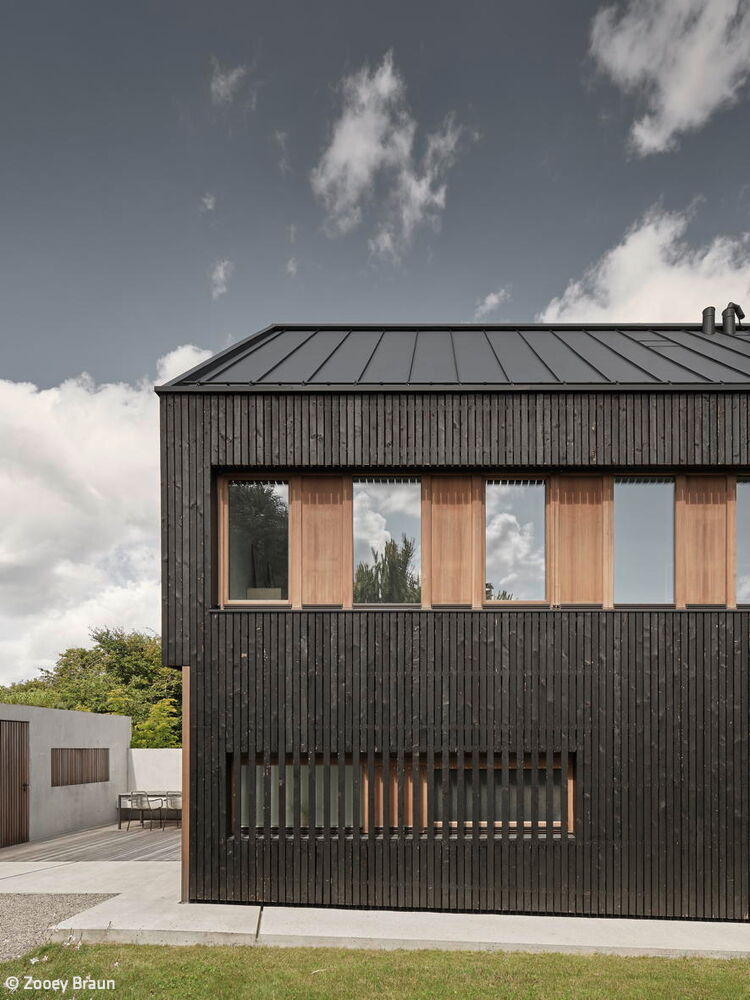
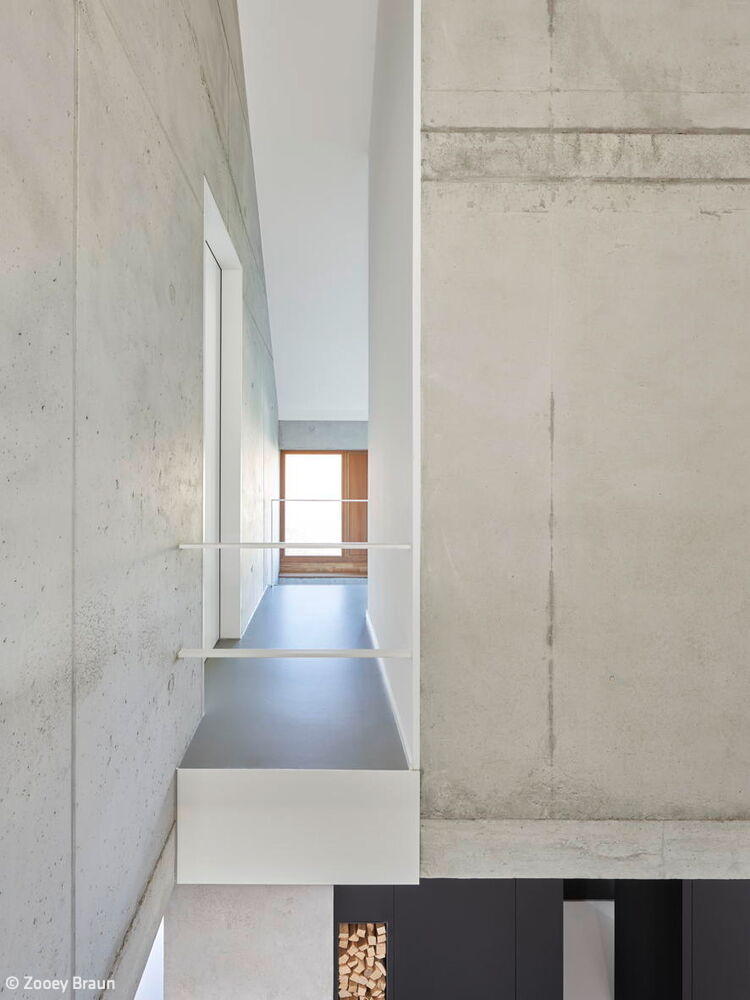
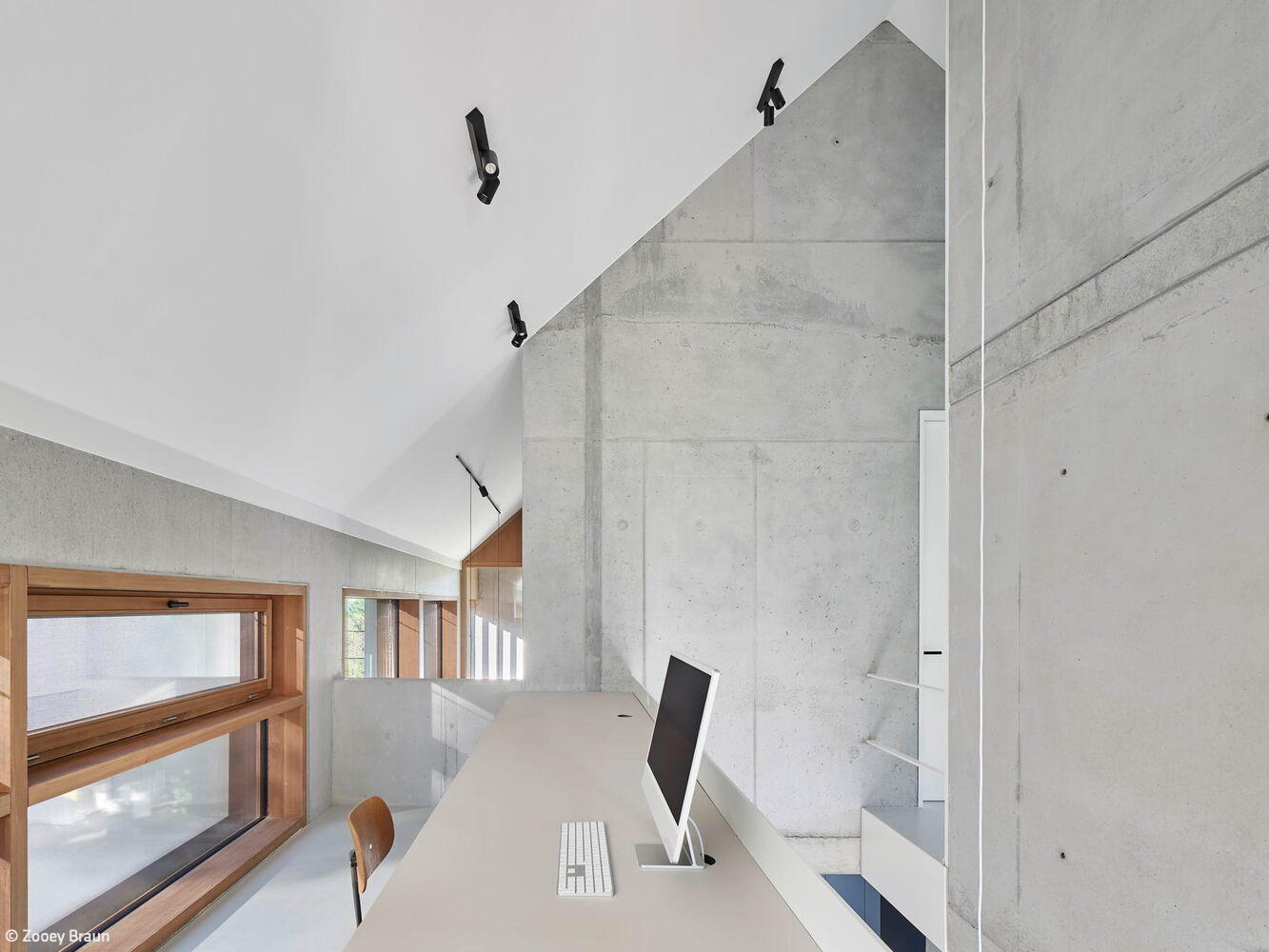
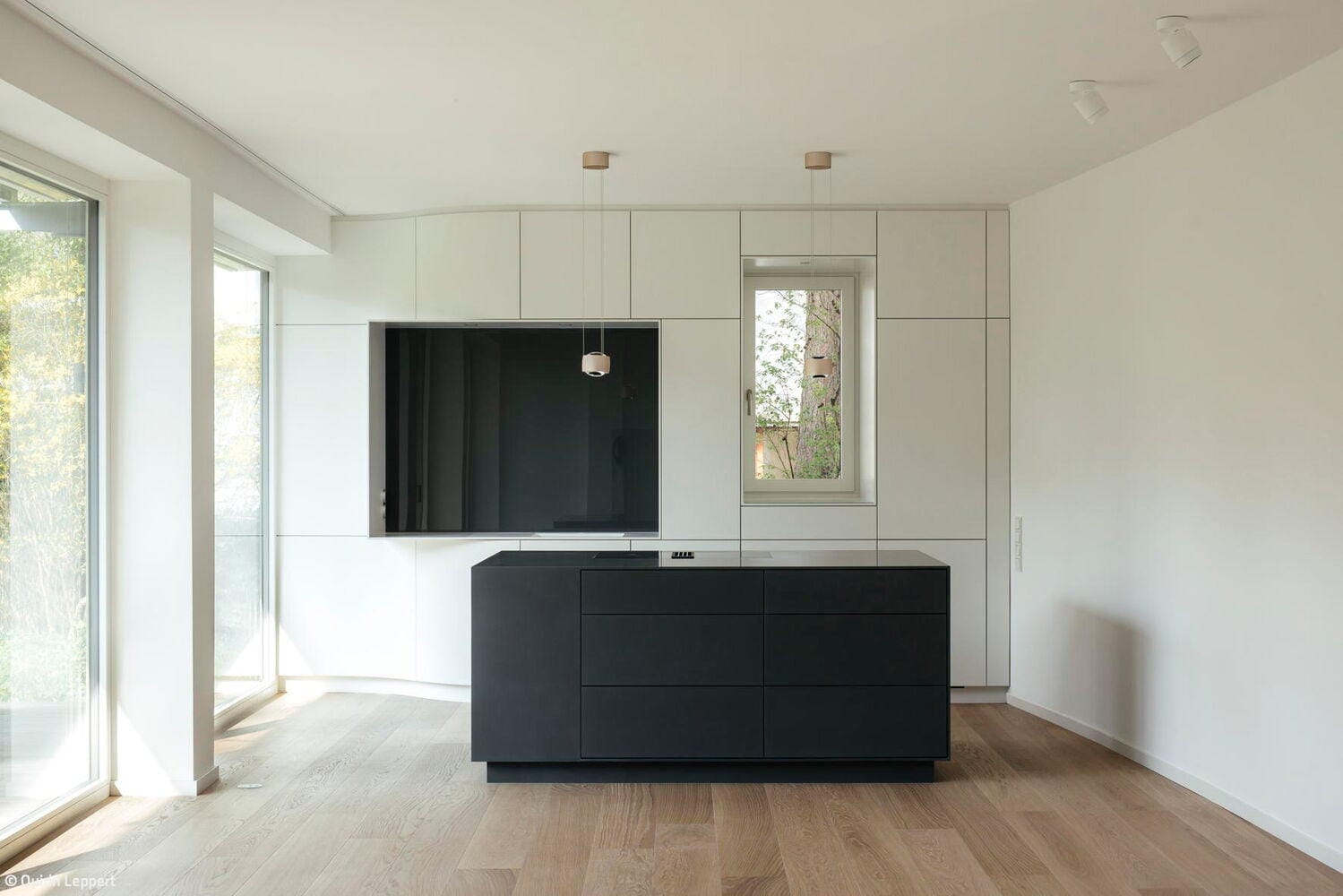
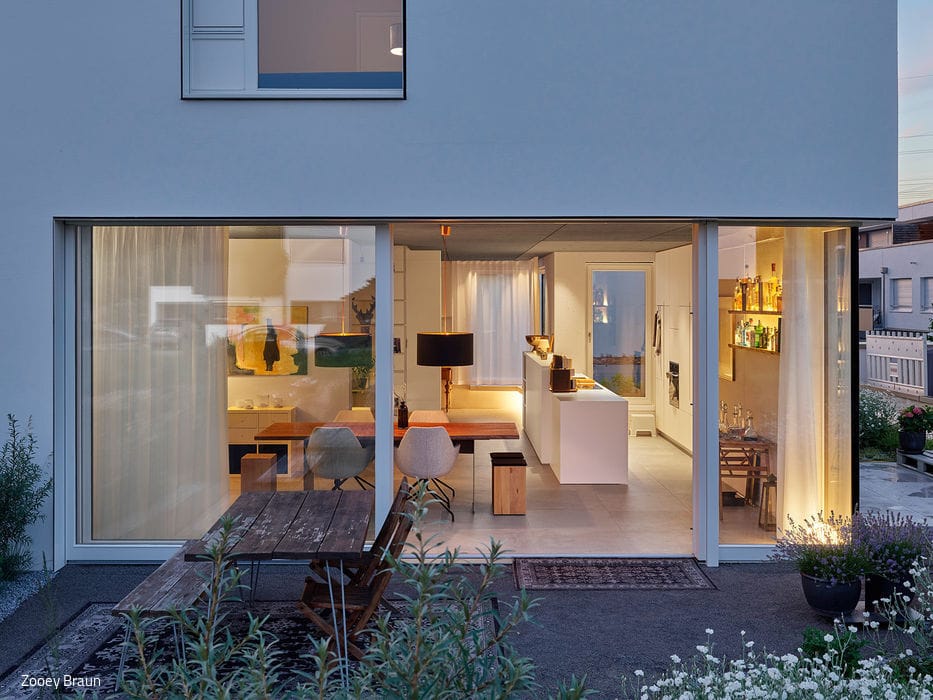
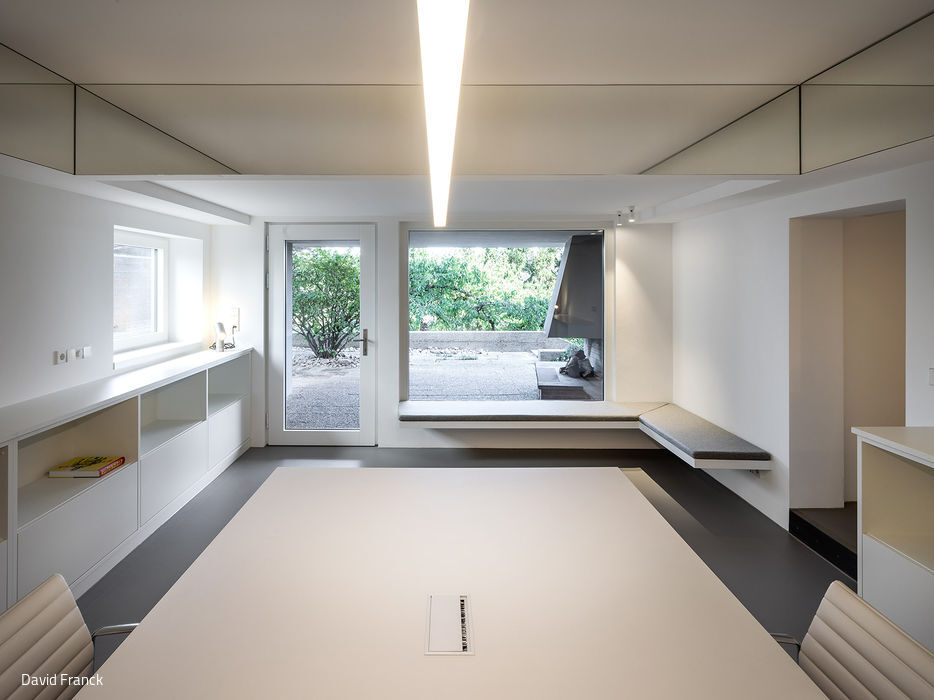
The narrow but lengthy plot called for a classic, slender longhouse form crowned with a gabled roof. With the south side facing the street, an additional outbuilding was positioned along the property line, creating an access courtyard to the south. Inspired by Italian and Spanish patio designs, this courtyard adds a generous outdoor living space. The refined structure reads like a finely tailored pinstripe suit—restrained and focused on essentials. The two-story longhouse reinterprets the regional field barn typology for contemporary living. Its façade features locally sourced wood, with horizontal slats carbonized and refined using the Japanese yakisugi technique. A single-story transverse volume serves as the entrance, utility zone, and summer kitchen, opening views toward the patio courtyard. The ground floor unites the generous kitchen, dining, and living areas with the orchards beyond, reinforced by expansive glazing and open gallery spaces above. The upper floor contains bedrooms, bathrooms, and a work gallery. Throughout, the design commits to cradle-to-cradle principles: no composite materials, chemical adhesives, or synthetic finishes; natural materials only; exposed concrete for CO₂ sequestration; and permeable outdoor surfaces. All wood—both façade and fenestration—comes from sustainably managed forests. The landscape strategy prioritizes pollinator-friendly, climate-adaptive trees selected for their resilience to heat stress and drought.
Photography:
Zooey Braun
www.zooeybraun.de
(Published in CUBE Stuttgart 03|25)
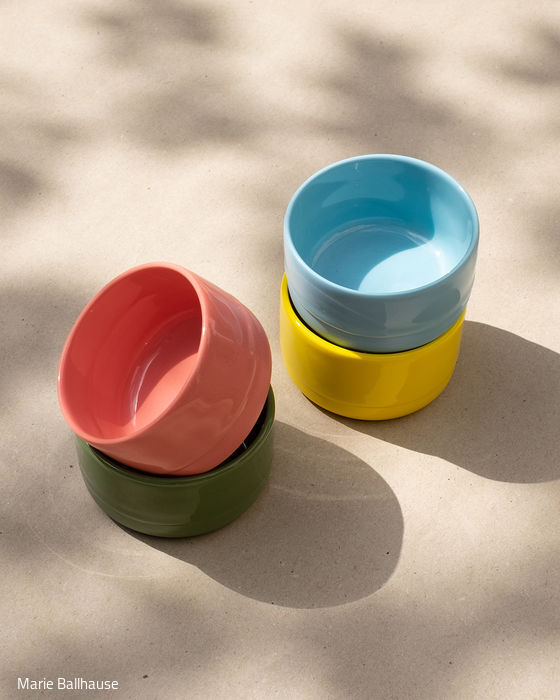
A Passion for Porcelain
Marie Ballhause pairs striking colors with restrained forms
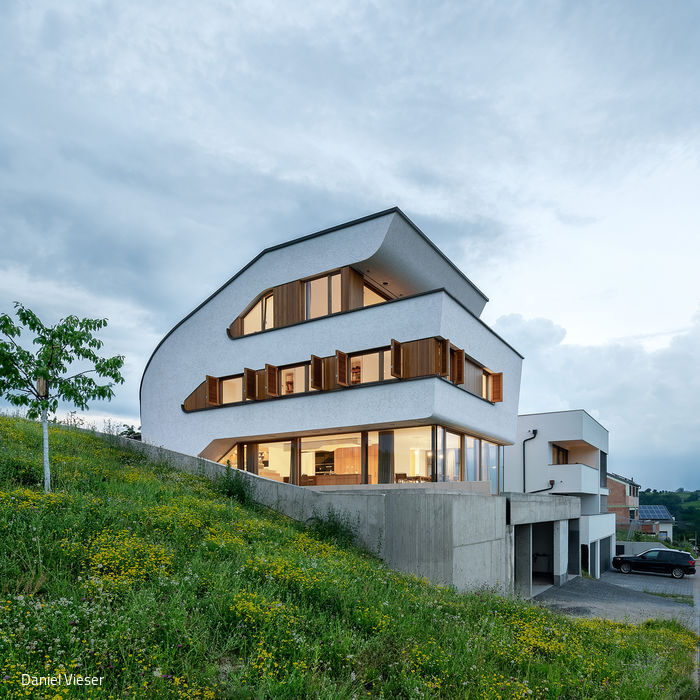
Space for People and Nature
This sculptural home engages in a quiet dialogue with the gently undulating landscape.
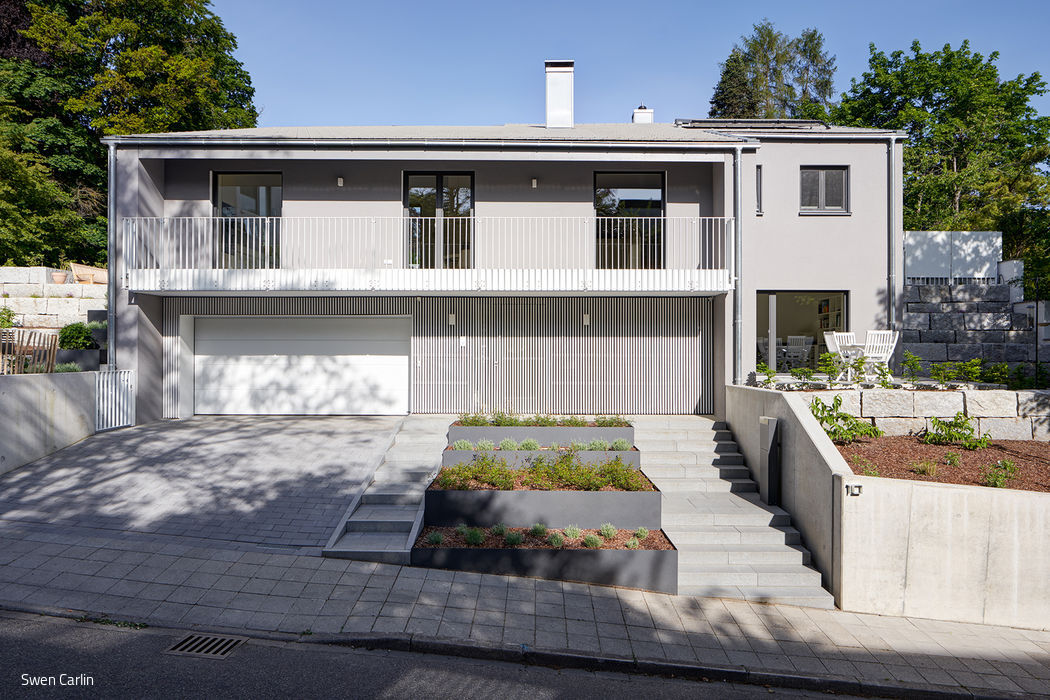
Small Becomes Sophisticated
A reimagined 1960s hillside home reveals its true potential
Forever Beautiful, Forever Green
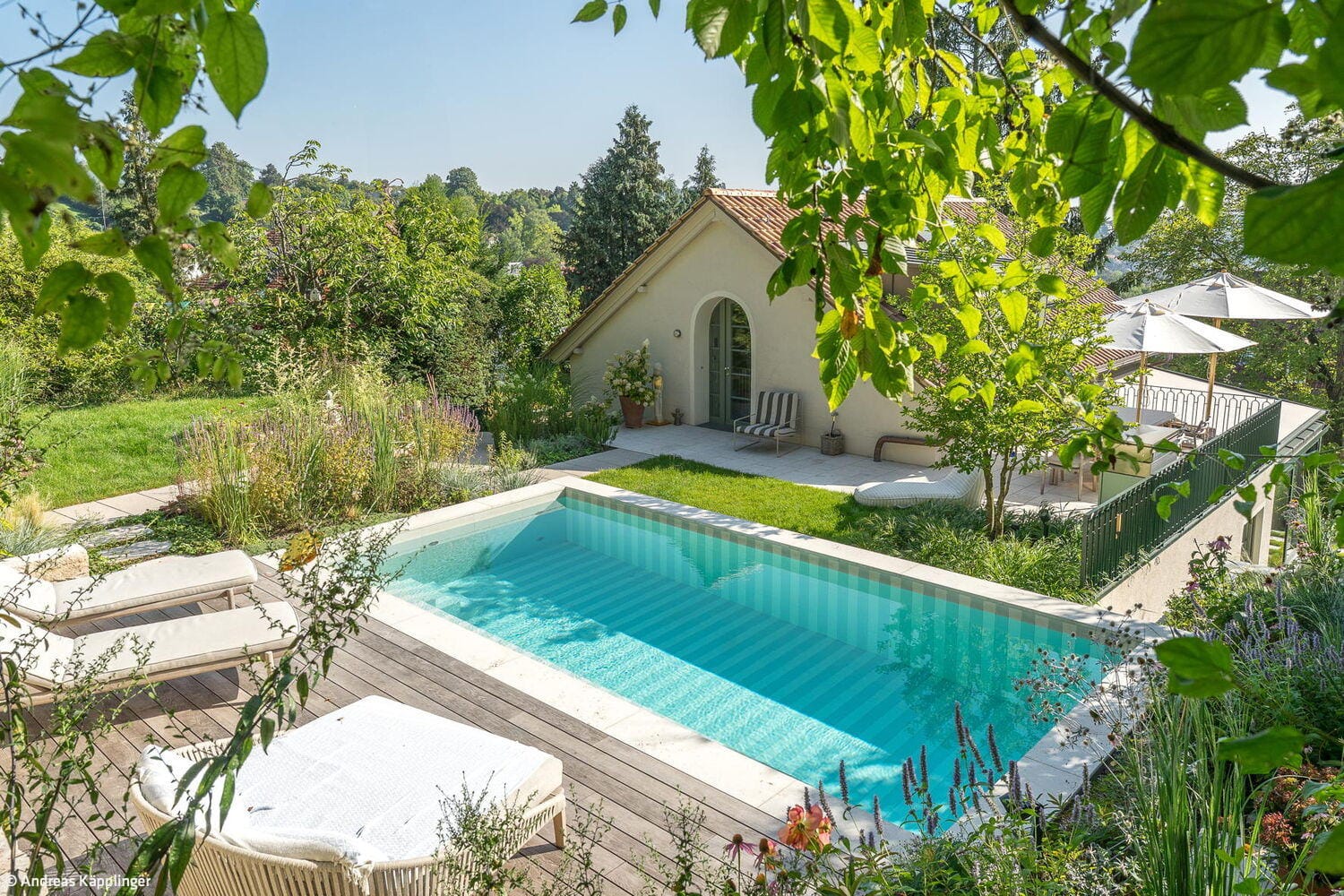
A unique terraced garden with a pool