


Timber Takes Center Stage
A groundbreaking timber housing estate on the former Prinz Eugen site
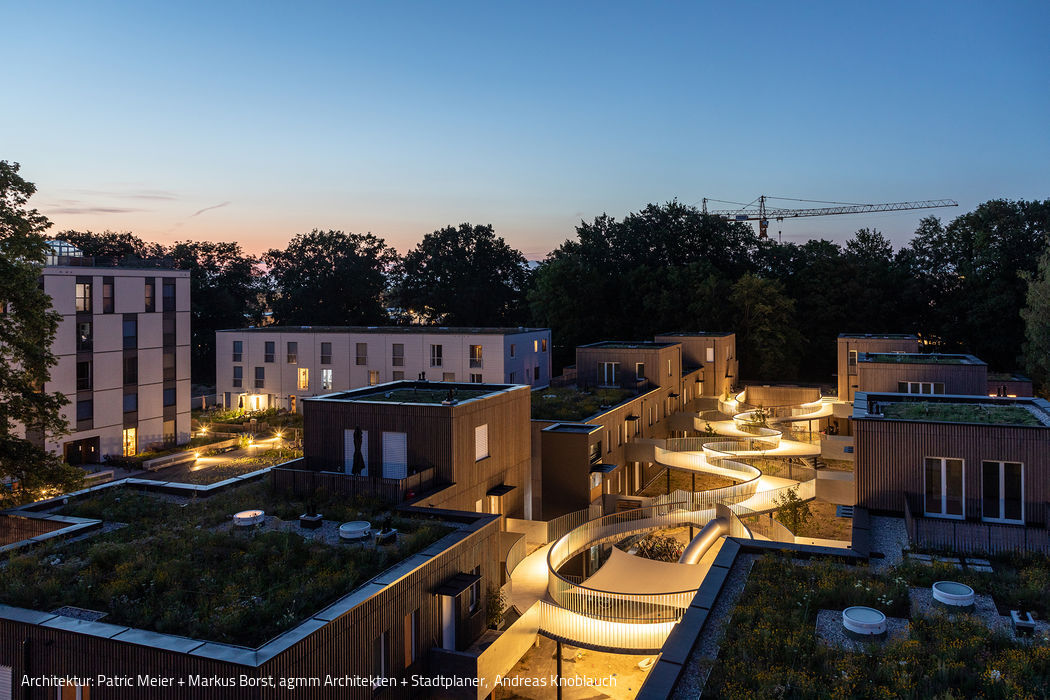


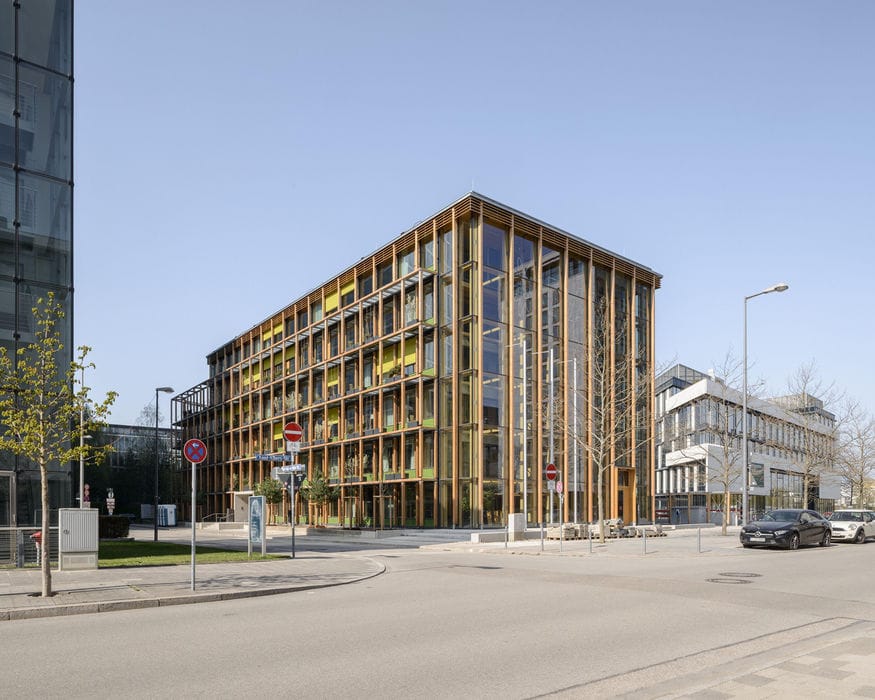
Munich took bold action: on the grounds of the former Prinz-Eugen-Park in northeastern Munich, it realized a landmark project—the largest timber-frame housing estate in Europe and a unique pilot for sustainable building. This ecological model settlement established a new precedent by linking plot allocation to ecological and social criteria rather than price alone. Instead of awarding municipal building land to the highest bidder, eight exemplary housing projects were developed by building collectives, cooperatives, and municipal housing associations to serve diverse needs. This model offers a powerful antidote to rising rents and displacement from city centers. Beyond its social impact, the settlement embodies ecological principles: efficiency (optimal climate control with minimal energy use), consistency (utilizing ecosystem resources without depleting them), and sufficiency (reducing overall resource consumption through scaled residential and infrastructure needs). Together, these three pillars demonstrate how sustainable architecture can address today's pressing urban challenges.
The southern third of the former barracks provided the setting for this ambitious development. Rather than traditional bidding, a concept competition with a weighted evaluation matrix determined the winners. All eight building plots had to incorporate a minimum amount of renewable materials per square meter of living space. The results speak for themselves: a diverse mix of building types emerged—from privately financed condominiums to row houses to multi-story residential complexes, each with distinct designs, construction methods, and energy performance. Most buildings proudly display their timber on the façade, with only a few finished in plaster. Construction used up to 280 kg of wood per square meter
—measured in the unit "nawaros" (renewable raw materials), calculated as kg per square meter. This approach proved financially compelling: the city provided two euros in subsidies per kilogram, effectively covering approximately eight percent of construction costs.
Years of groundbreaking research by the German Federal Environmental Foundation, conducted in partnership with the Technical University of Munich and Ruhr University Bochum, paved the way for the model settlement. Beyond its social and economic dimensions, timber brings something intangible: warmth and authenticity that few materials can match. The architects ensured that communal spaces complemented the residential buildings, thoughtfully designed around the needs of future residents.
The eight projects at a glance:
– 1. WA11 East: atelier 5, Bern and a+p, Munich/WOGENO: 82 flats + 5 commercial units serving as the neighborhood hub
– 2. WA13: Pakula&Fischer, Stuttgart/GEWOFAG: 181 flats, 1–5 rooms
– 3. WA14 West: Kaden+Lager, Berlin/GWG, 3 residential buildings with 3, 5, and 7 stories, 87 units; Rapp, Ulm, children's facility, 57 flats plus 60 additional units
– 4. WA14 East: Vallentin, Munich and Johannes Kaufmann, Reuthe/Team3: 2 townhouses, 1 atrium-style residence, 8 garden courtyard units
– 5. WA15 West: H2R and Plan-Z, Munich/Planungsgemeinschaft München GbR, 37 flats, 8 row houses; agmm with Habele, 24 flats and maisonettes, 15 additional flats
– 6. WA15 East: agmm Architects, Patric F.C.; Meier, Marcus Borst with Hable Arch./Building Community "gemeinsamgrößer," 2 point towers + 12 atrium buildings
– 7. WA16 West: Kaden+Lager, Berlin + Ernst Stuttgart/Bürgerbauverein Munich, 86 units across 4, 5, and 7 stories
– 8. WA16 East: dressler, mayerhofer, rössler, Munich, building association Der kleine Prinz: 24 atrium houses, 15 flats
www.forum-holzbau.com
www.muenchen.de/rathaus/Stadtverwaltung/Referat-fuer-Stadtplanung-und-Bauordnung/Projekte/Prinz-Eugen-Kaserne/Holzbau.html
(Published in CUBE Munich 04|20)
Sculptures in Glass and Light
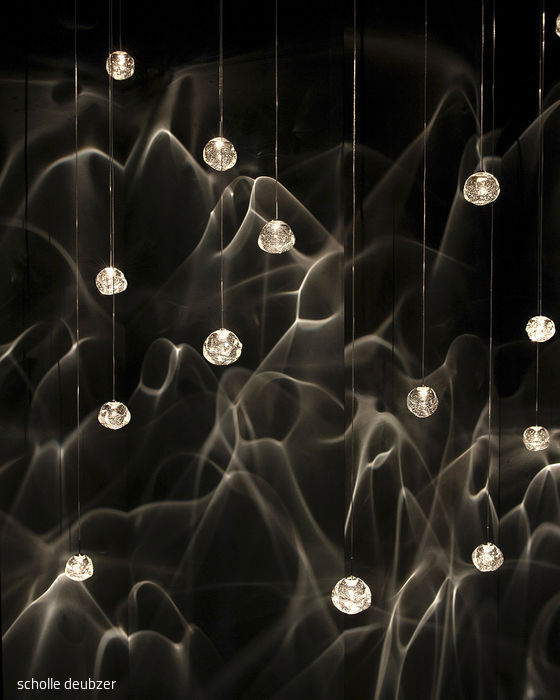
Handcrafted creations with great charisma
House with Two Faces
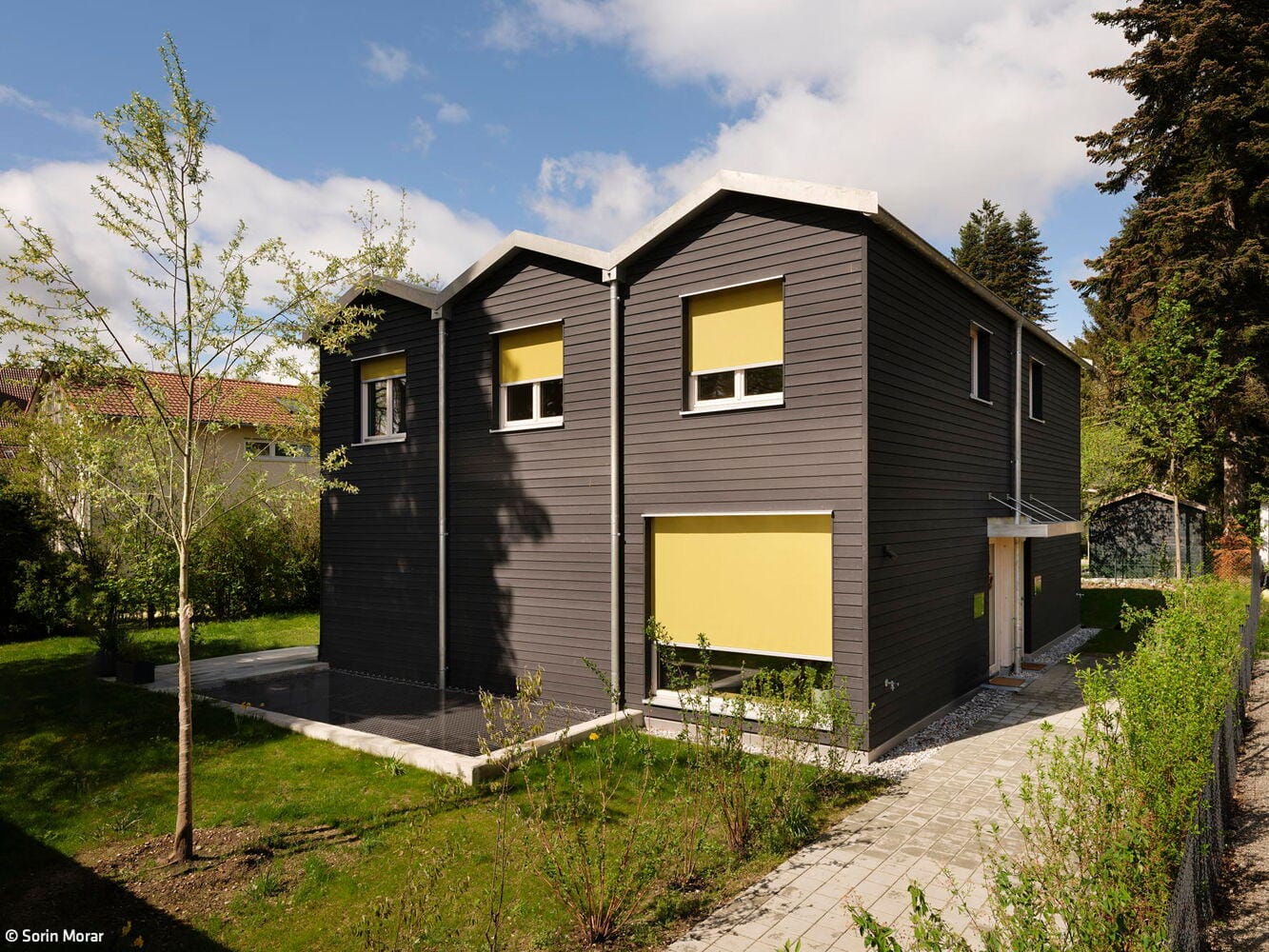
Three narrow gable roofs characterise a semi-detached house for two households
The Little Black Dress
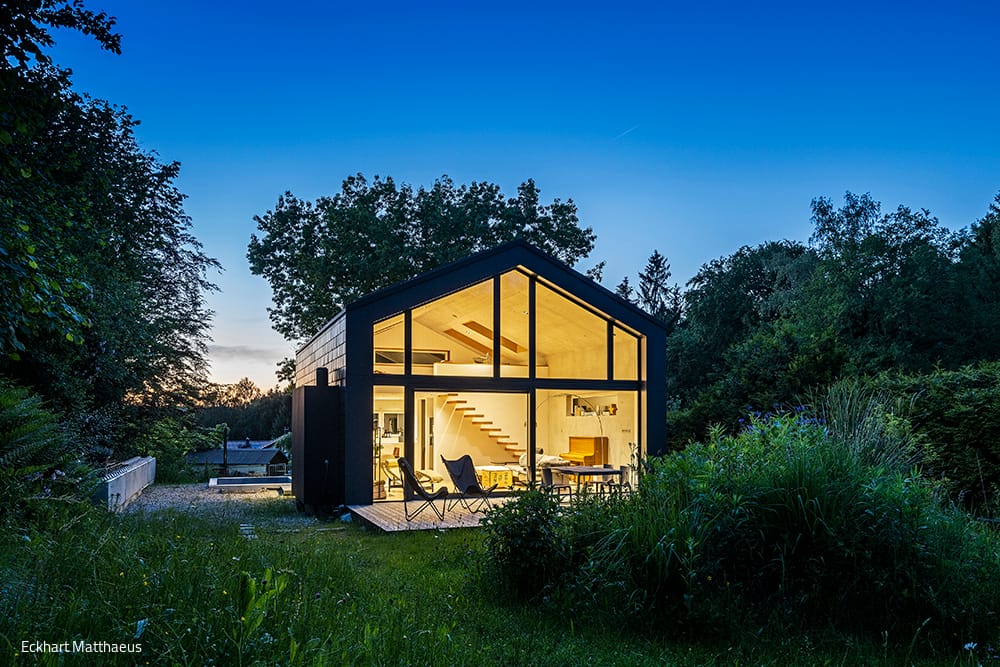
A retreat at the forest's edge, surrounded by abundant garden
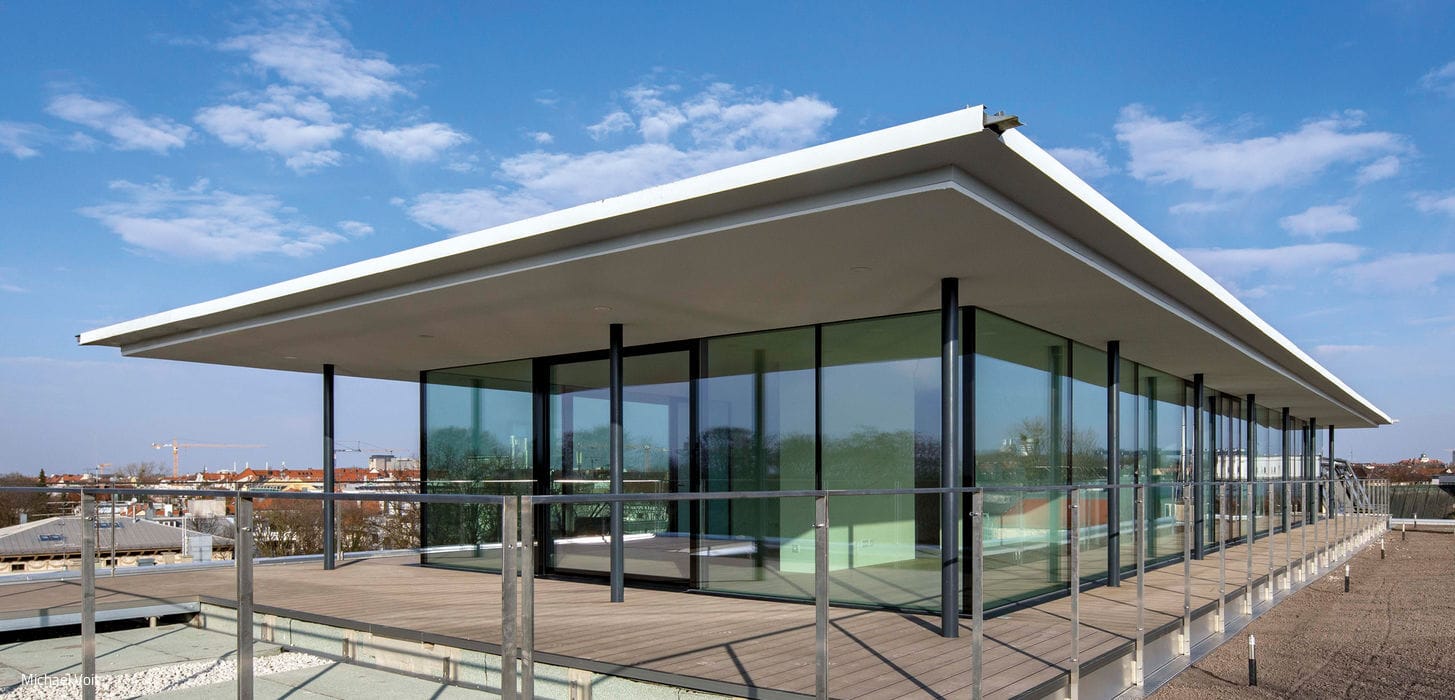
As Close as the Munich Sky
A Masterful Penthouse Addition to a 1950s Building