


Distinctive and Detail-Oriented
In Conversation with Düsseldorf Architect Georg Döring on Single-Family Homes, Teachers, and Fathers
CUBE: A defining thread runs through your designs – the sculptural interplay of cubic volumes. Would you accept the label "champion of the right angle"?
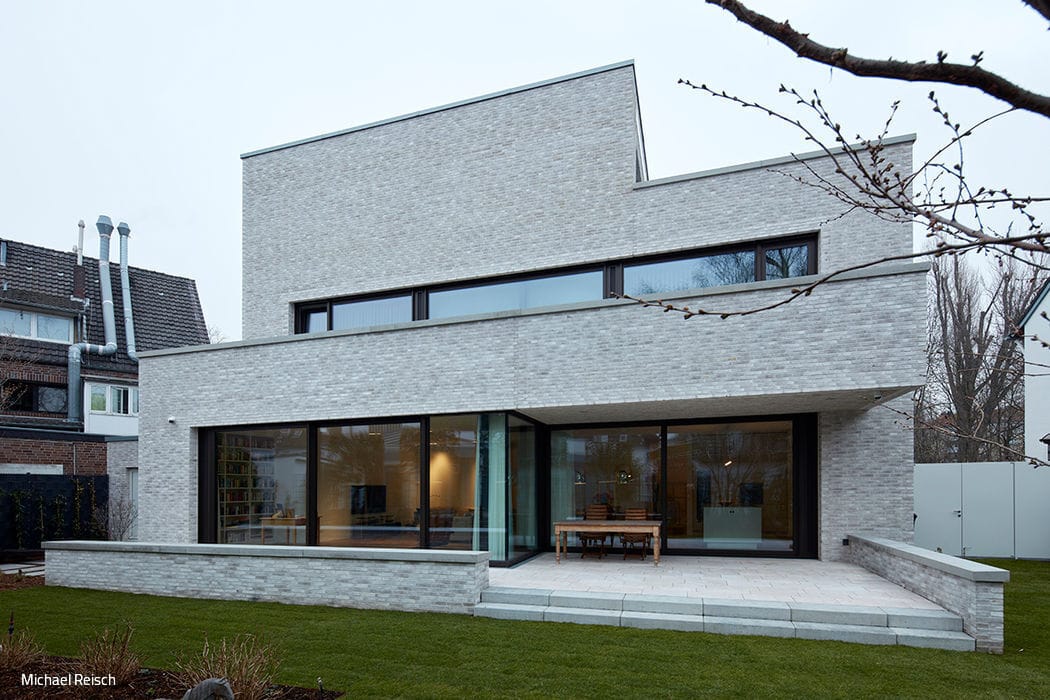
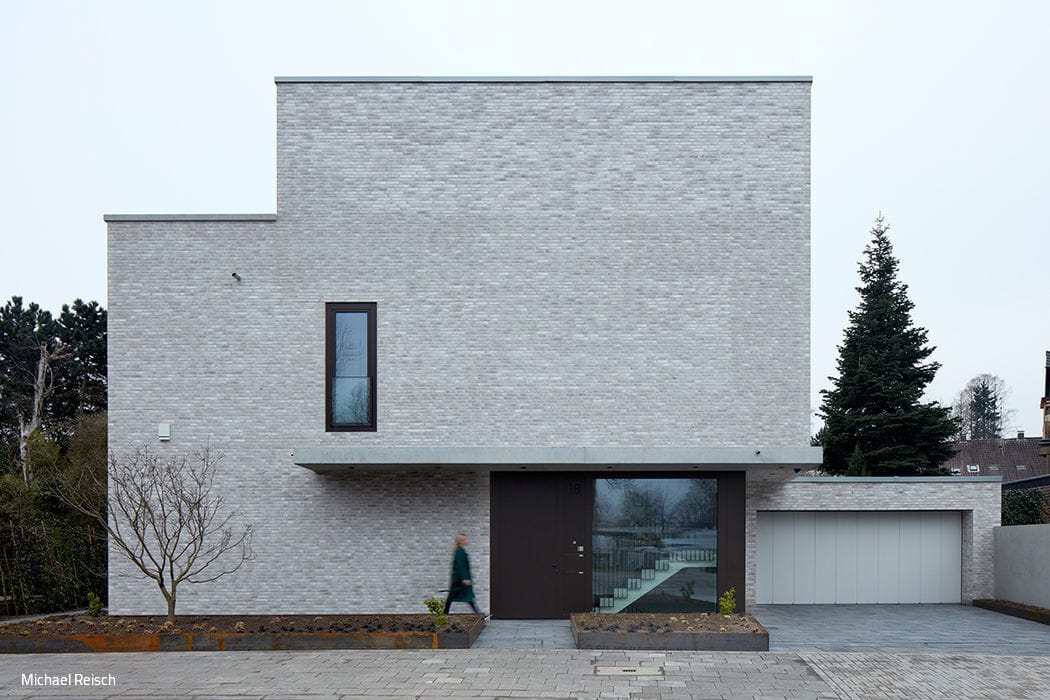
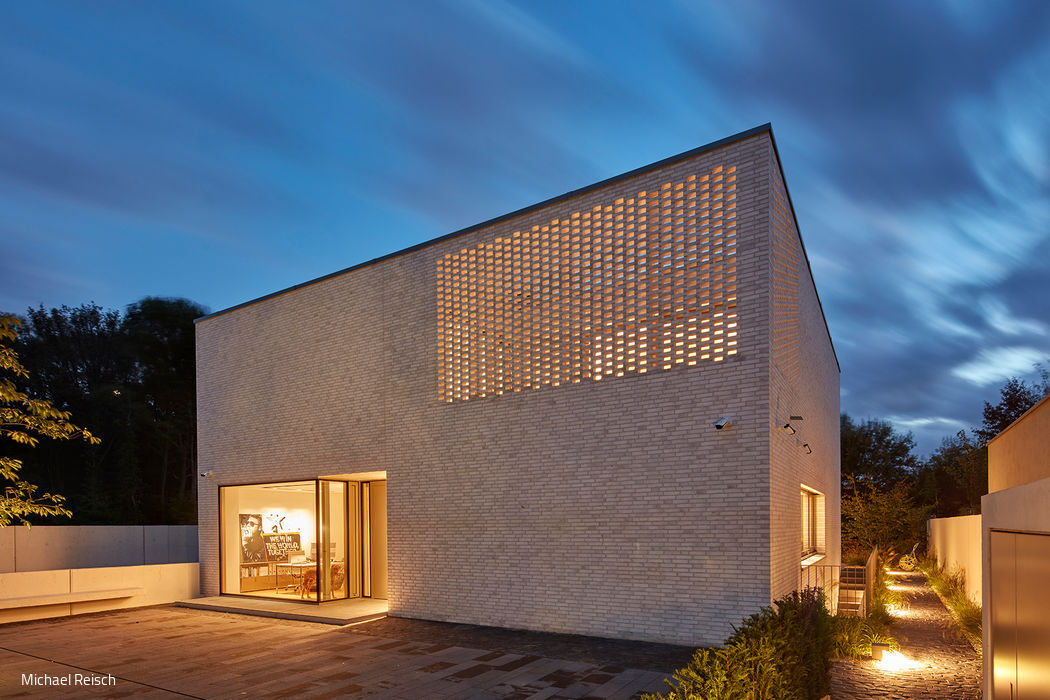
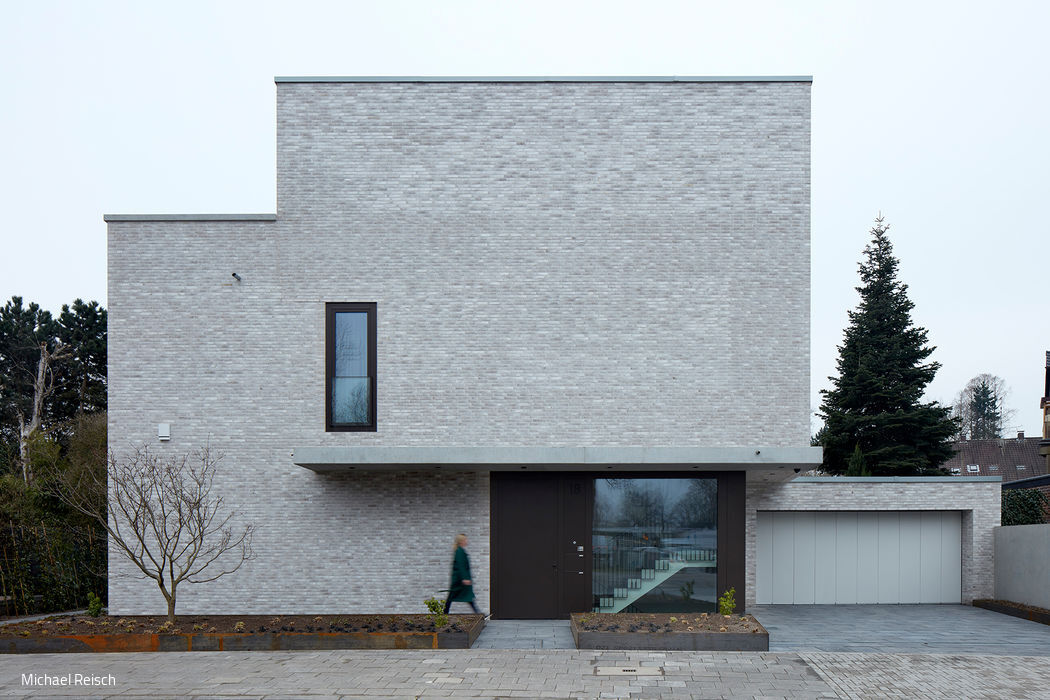
Georg Döring: Absolutely. As the saying goes, the right angle is almost always right! Especially since furniture is built at right angles, flexible living spaces only work in rectangular rooms. Slanted or amoeba-like shapes might look spectacular, but they're difficult to actually live in—they're largely residual spaces. That said, there are certainly sites where context or layout justifies polyhedral forms. But if used merely as window dressing, architecture becomes arbitrary and superficial.
How much creative freedom do you have when building codes mandate a classic pitched roof?
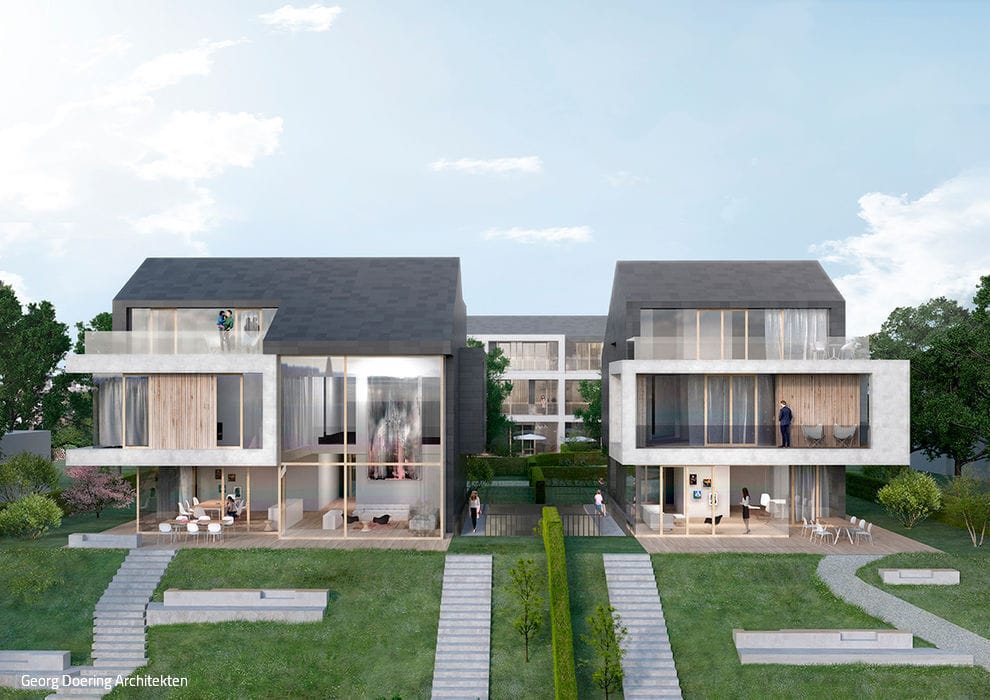
(laughs) We happily take on gabled roof projects—we currently have three in development. A gabled roof can be wonderfully reinterpreted in contemporary terms, offering plenty of design possibilities.
Yet despite your evident devotion to right angles, your buildings avoid the sterile white Bauhaus aesthetic that dominates so many German residential developments.
There never really was a "Bauhaus style"—that's a common misunderstanding! But if you're referring to the uniformity plaguing detached house construction over the past 20 years—those white boxes everywhere—then yes, it's deeply troubling. And it spans every region in Germany. Budget isn't even the issue. We've built modest, small homes that still feel individual, say, through a distinctive plaster façade. The real problem is that homeowners fear architects will inflate costs, so they turn to prefab manufacturers instead. These companies offer them four models at a fixed price—often that's their only choice! People vastly underestimate architects' ability to create distinctive living spaces at any budget.
The prominence of colour and materiality in your work – does that stem partly from your studies in Switzerland?
After studying at Braunschweig and Darmstadt technical universities, I spent two years at ETH Zurich. In the 1980s, I worked at an experimental studio led by Berlin architect Hans Kollhoff. We wrestled with deconstructivism—hotly debated in architecture circles then—focusing especially on spatial concepts. Material integrity played a key role: the classical modernist principle that materials should retain their inherent character and structure, not be disguised beyond recognition in construction. Kollhoff, who later became an ETH professor, wasn't yet thinking in the classicist terms he favors now—it was an intellectually exciting time.
Your father, Wolfgang Döring, was instrumental in shaping West German architecture during the 1960s and '70s and mentored an influential generation of architects through his position at RWTH Aachen. Did you ever consider joining his practice?
I worked in his office on and off as a student. After my time in America, that became an 18-month stint. One project was a detached house I designed and was meant to oversee during construction. I never finished it, though—my father and I had fundamentally different views on execution details. We were two strong personalities with very different sensibilities. He passed away last year, but I've come to be grateful it didn't work out between us. (laughs) I prefer being responsible for myself and my own practice. I don't envy any architect stuck in that awkward junior partner role.
Your projects are predominantly concentrated in the Rhineland – is that simply a function of your office's size, or is there something deeper at play?
Office size naturally fluctuates with project volume. Here's the key: you can only achieve genuine quality in a detached house if you build it yourself and oversee construction. That limits us geographically. We've done the occasional Frankfurt project, but we typically work within 50 kilometers of Düsseldorf. Beyond that, it becomes economically unfeasible. My standard is that buildings are durable and flawless in every detail. We don't reuse details—we design them fresh for each project. It's not the most economical approach, but I only live once, I genuinely enjoy the work, and ultimately quality speaks for itself.
Recently, the single-family home became a political flashpoint, increasingly framed as competing with denser housing models. Is the detached house still a viable solution for tomorrow?
There's no simple answer. But these sprawling new single-family subdivisions that carpet around towns and villages? I find them genuinely problematic. Land consumption is enormous, construction devours energy, and infrastructure must be constantly rebuilt. Given climate change, carbon emissions, and rising energy costs, that's clearly the wrong path. We need far more conversion and adaptive reuse of existing buildings—avoiding embodied carbon waste and building within established, serviced settlement areas.
Recent surveys – including one by Handelsblatt – confirm what Germans overwhelmingly prefer: detached homes top the list, followed by terraced houses, while multi-family dwellings lag far behind at just 13 percent. Can the single-family home, problematic as it is for land consumption, be reimagined in a different form?
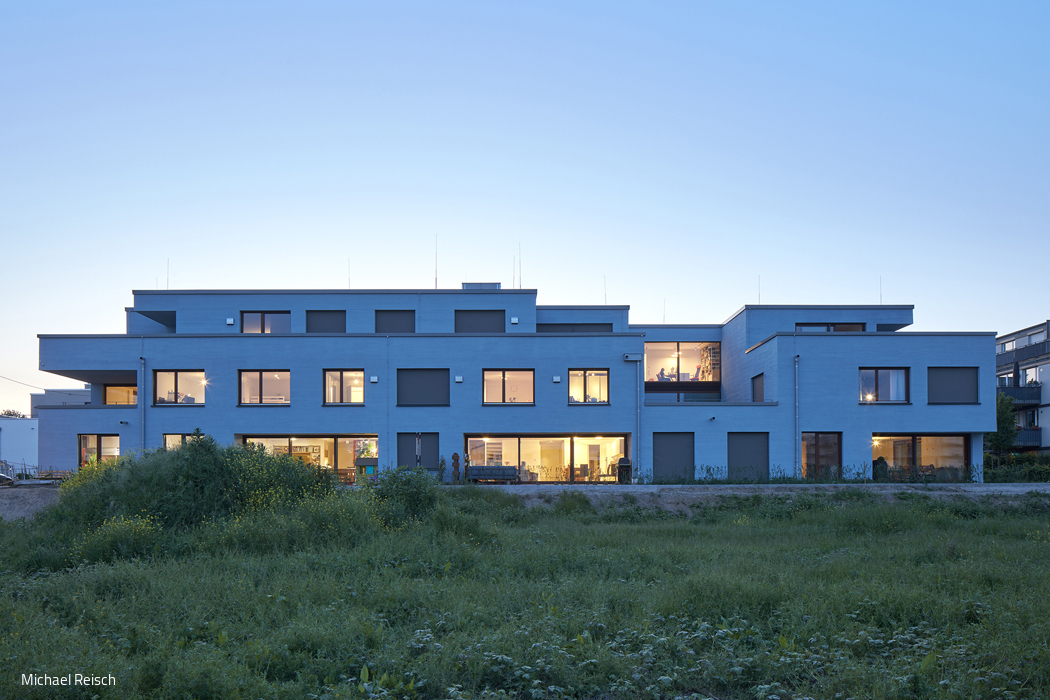
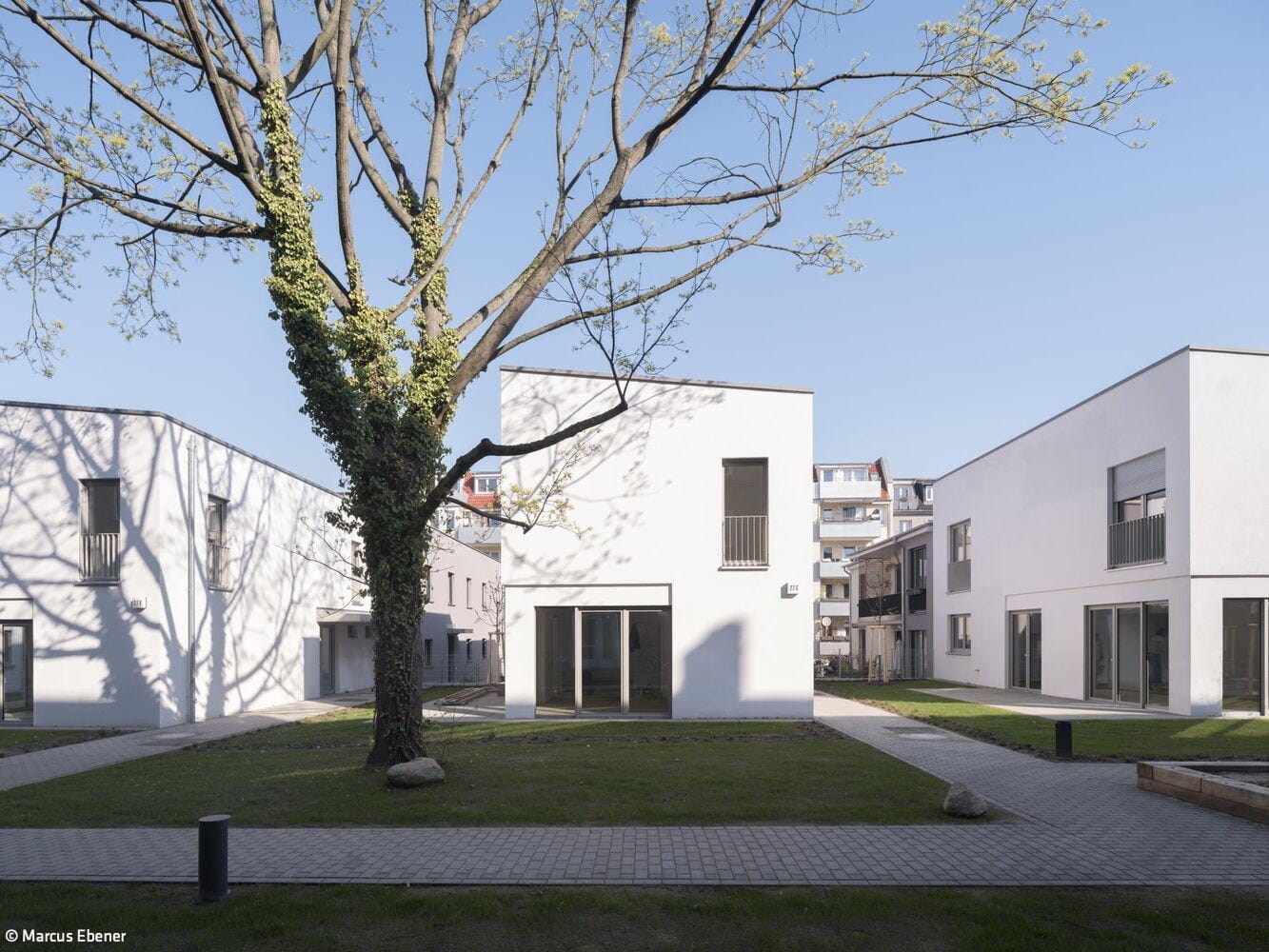
I support single-family homes because they provide families with freedom and space, both interior and exterior—especially vital now during the pandemic. It's a privilege, undoubtedly. Precisely because it is, we need multi-family housing reimagined with a new vision that allows residents more individuality. More and larger outdoor spaces, yes, but also genuinely flexible floor plans. Even in contemporary projects, these seem frozen in an earlier era.
Mr. Döring, thank you for your time today.
Interview by Paul Andreas.
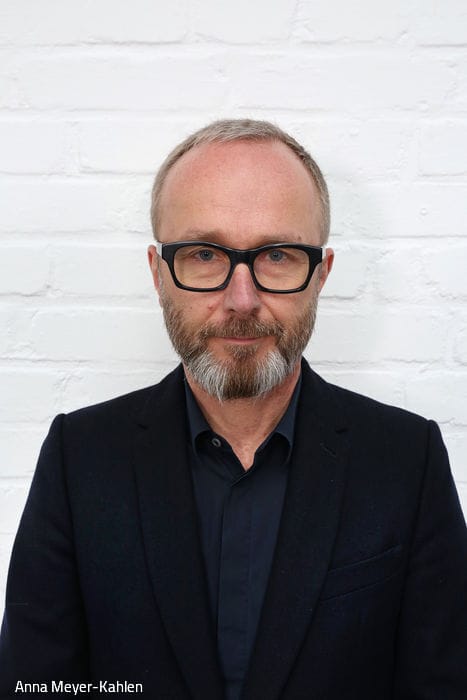
Georg Döring
Born in Düsseldorf in 1962; studied architecture at Braunschweig Technical University, Darmstadt Technical University, and ETH Zurich; received his architecture degree in 1992.
1992–93 Architect at Murphy/Jahn in Chicago; 1993–95 Worked at Wolfgang Döring's practice and subsequently at HPP; 1995–99 Junior partner at Kiemle Kreidt architectural firm in Düsseldorf; 1999 Founded Georg Döring Architects.
2012 Appointed to BDA Düsseldorf; 2015 Appointed Deputy Chairman of BDA Düsseldorf; 2017–present Chairman of BDA Düsseldorf.
Georg Döring established his Bilk-based practice with multi-family housing projects before shifting his focus toward single-family residences over the past decade.
www.doering-architekten.de
Photography Credits:
Michael Reisch
Anna Meyer-Kahlen
Georg Döring Architekten
(Published in CUBE Düsseldorf 02|21)


Built Identity
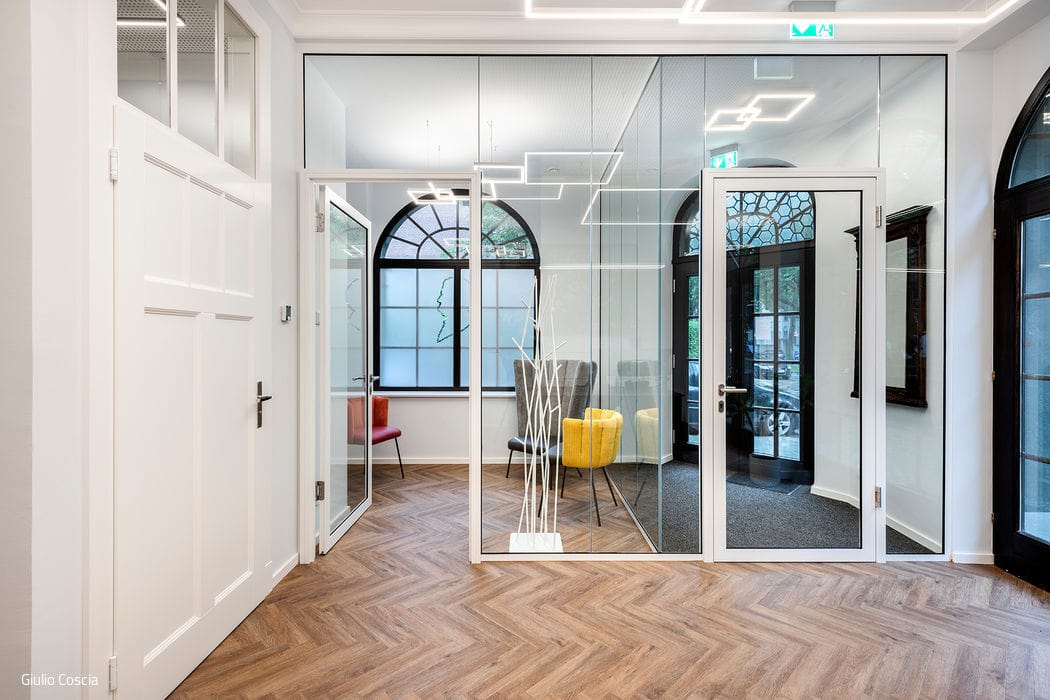
A Derendorf media agency's cultural hub demonstrates the enduring power of blending heritage and innovation.
Minimalist with a view
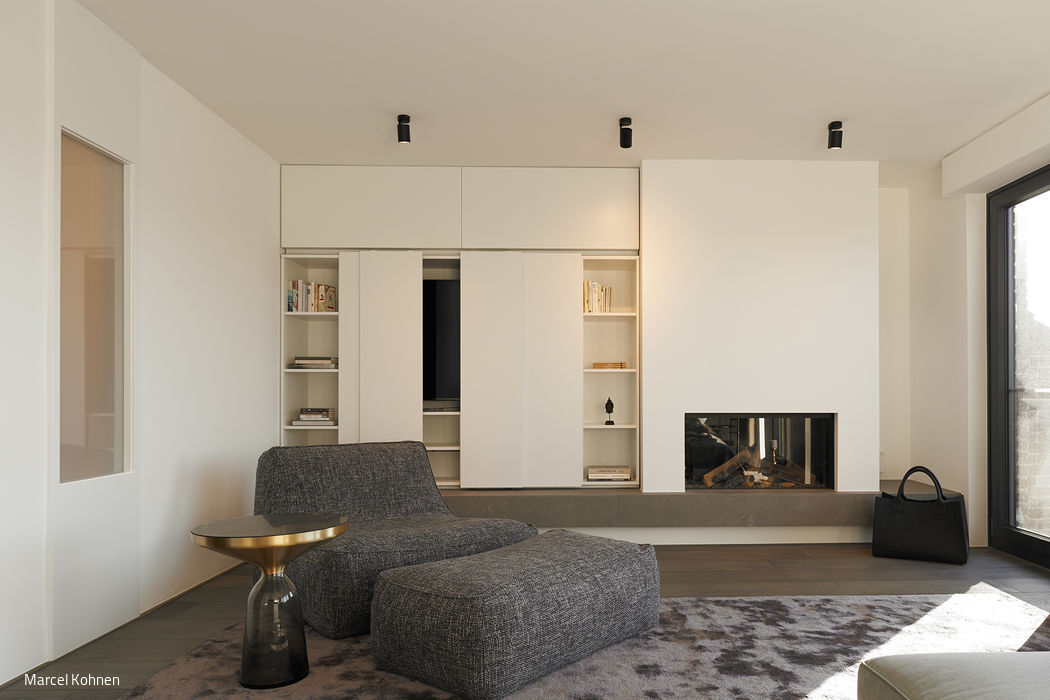
High-quality materials and timeless design—expressed through restrained colour palettes with carefully placed accents—shaped every decision.
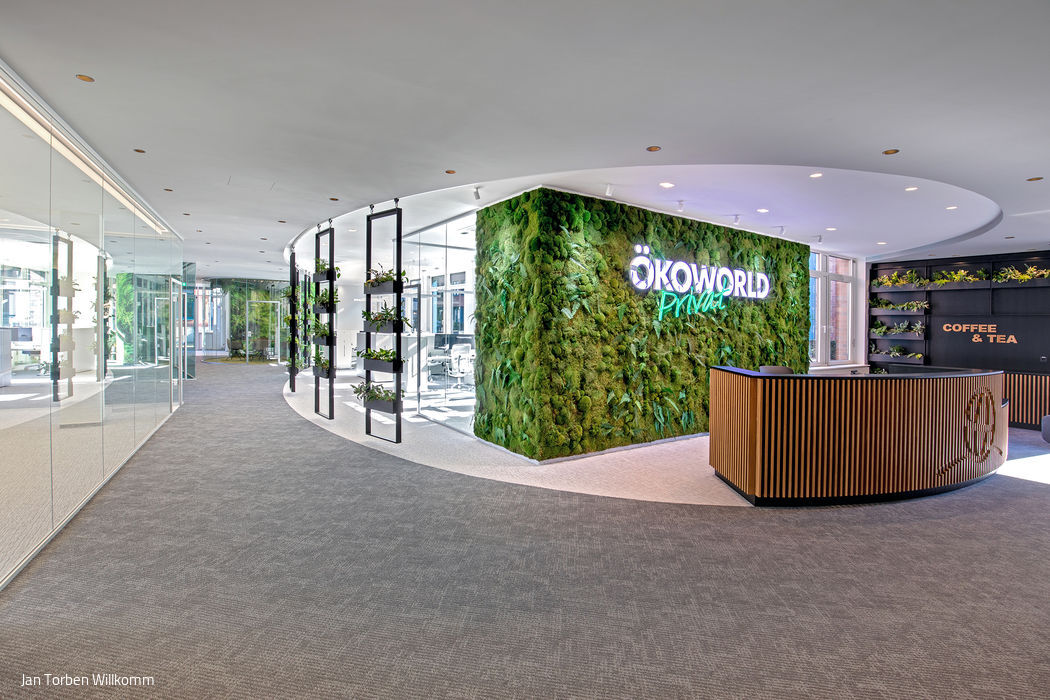
The Sustainability Experience
An office designed to embody nature – for a fund company guided by ecological and ethical principles.
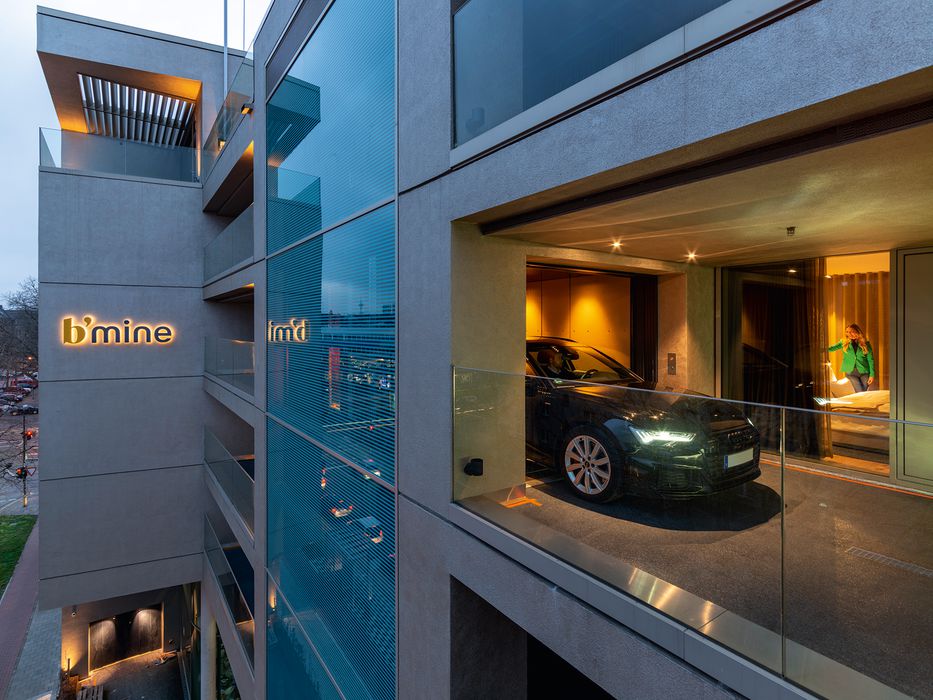
Room with Park Loggia
The b'mine Hotel in Flingern offers dedicated charging facilities for electric vehicles.