


Good on Multiple Fronts
Renovation and expansion creating a vibrant hub for sport, movement, and community
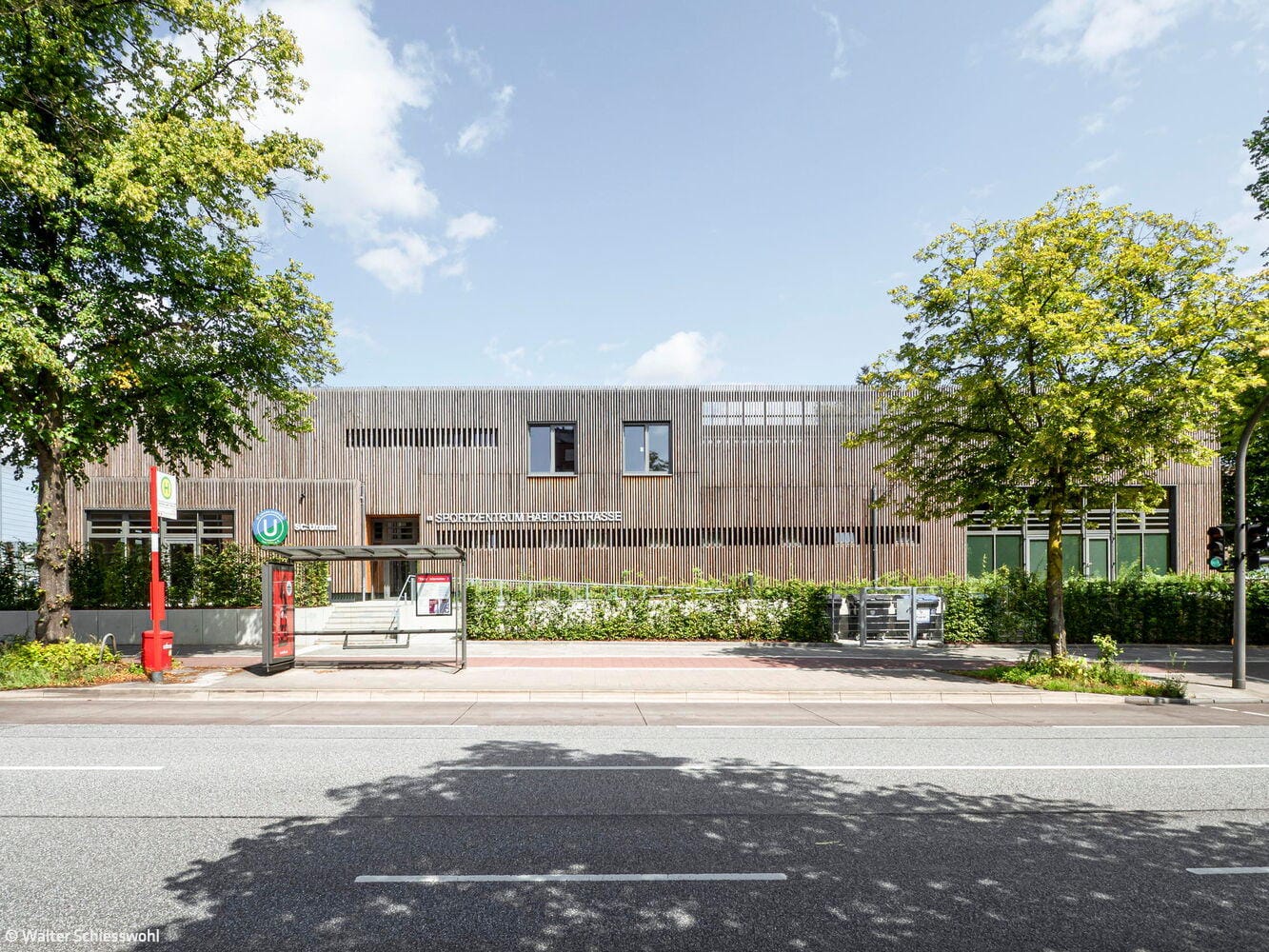
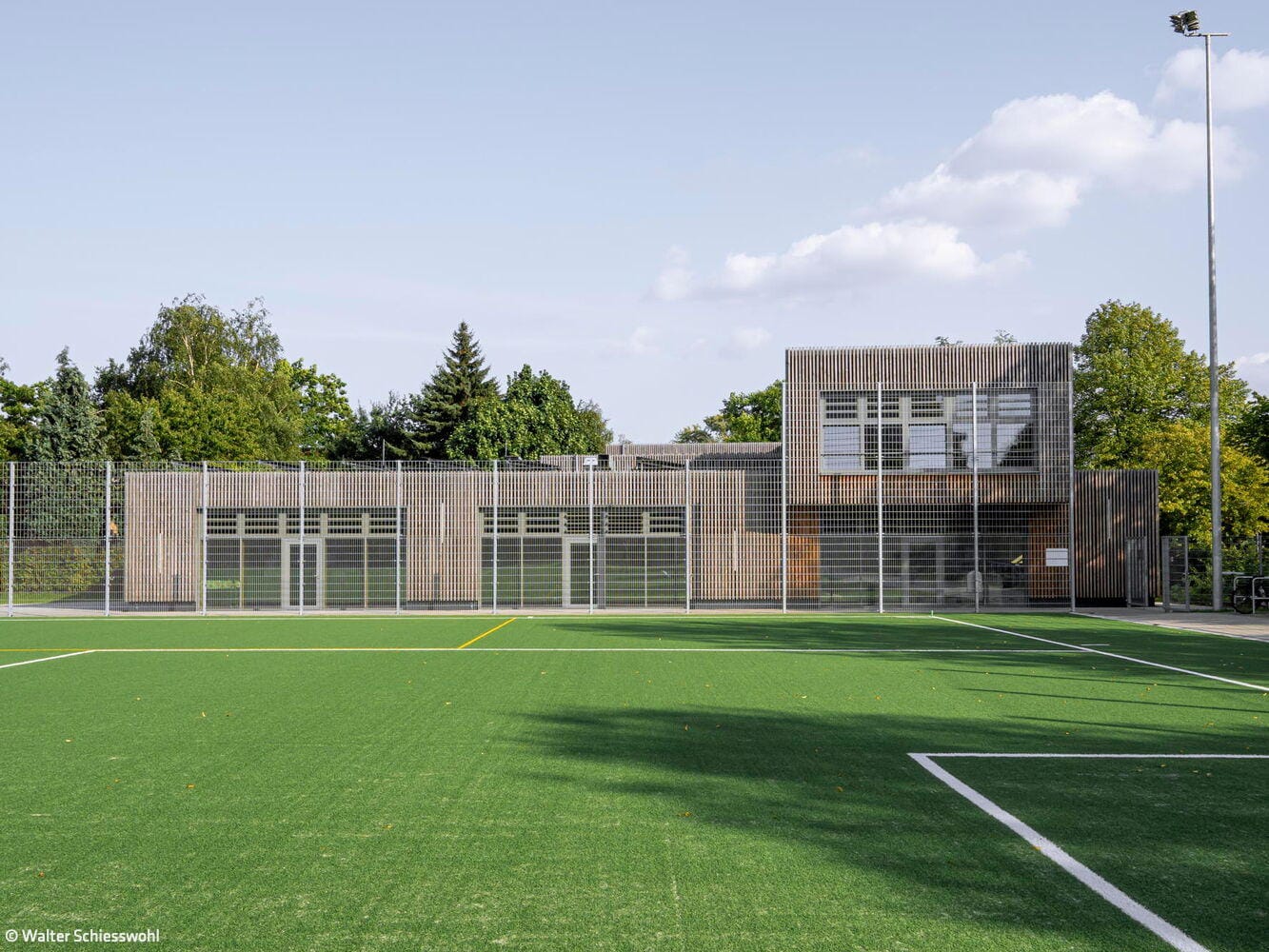
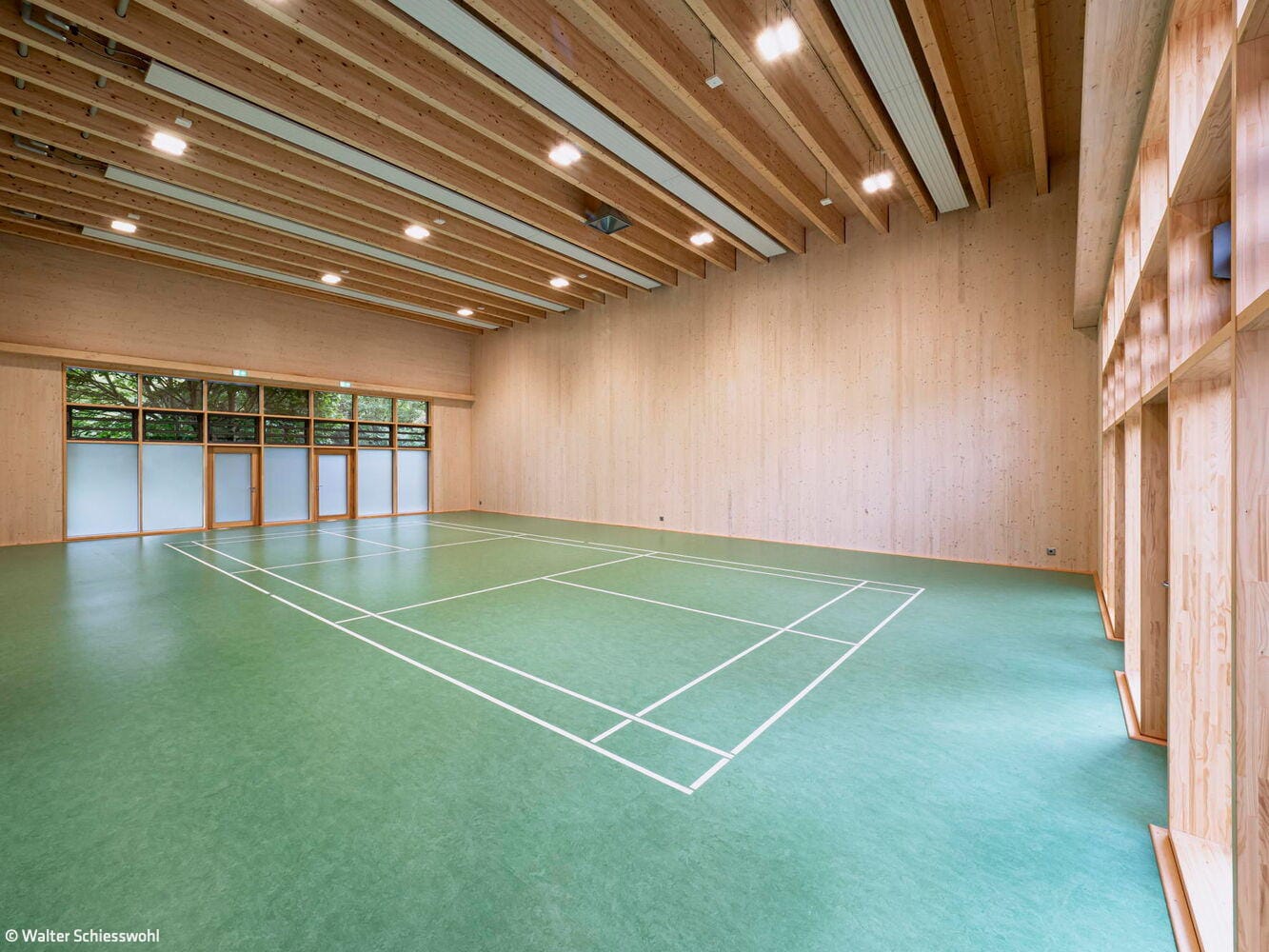
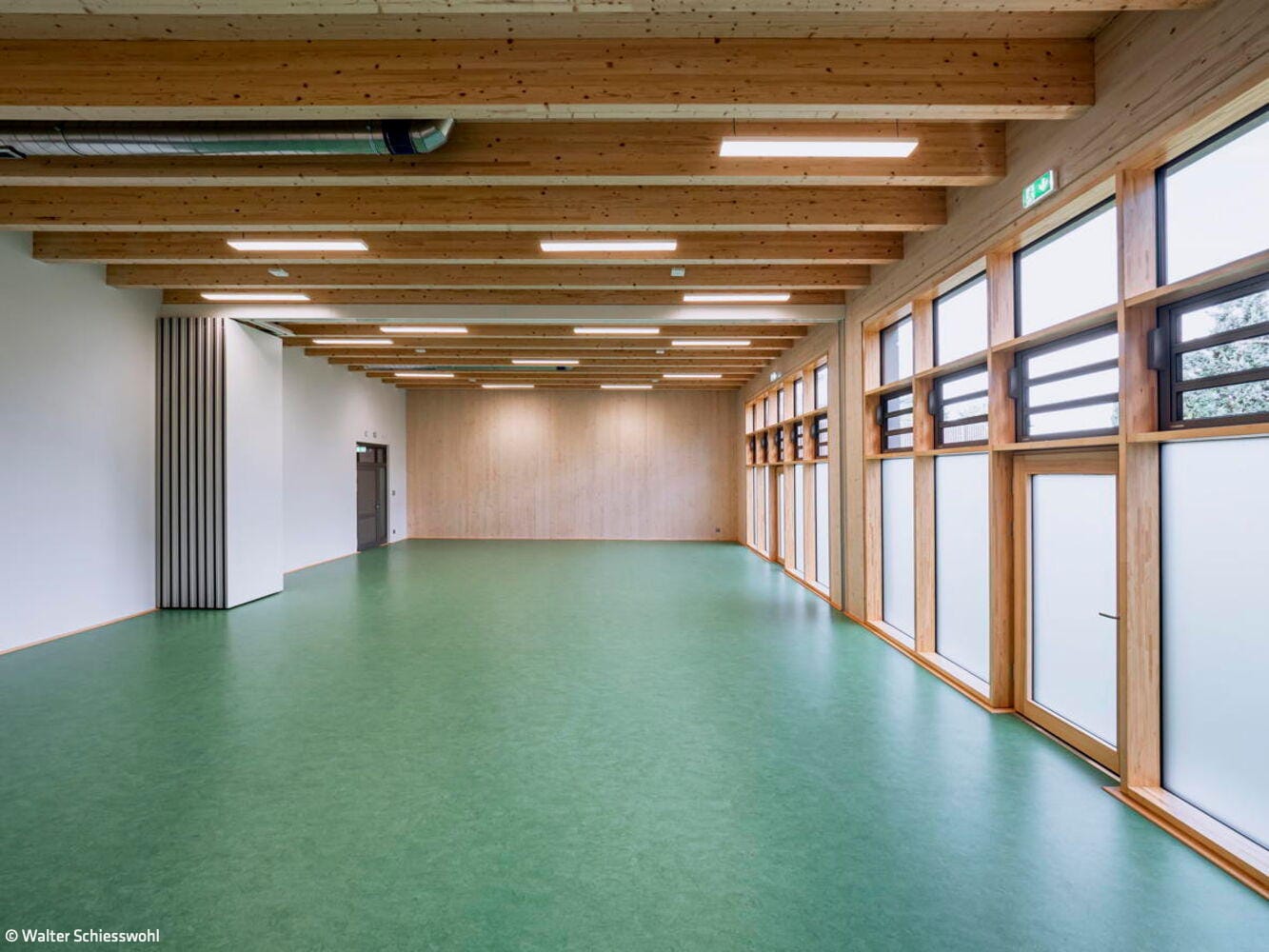
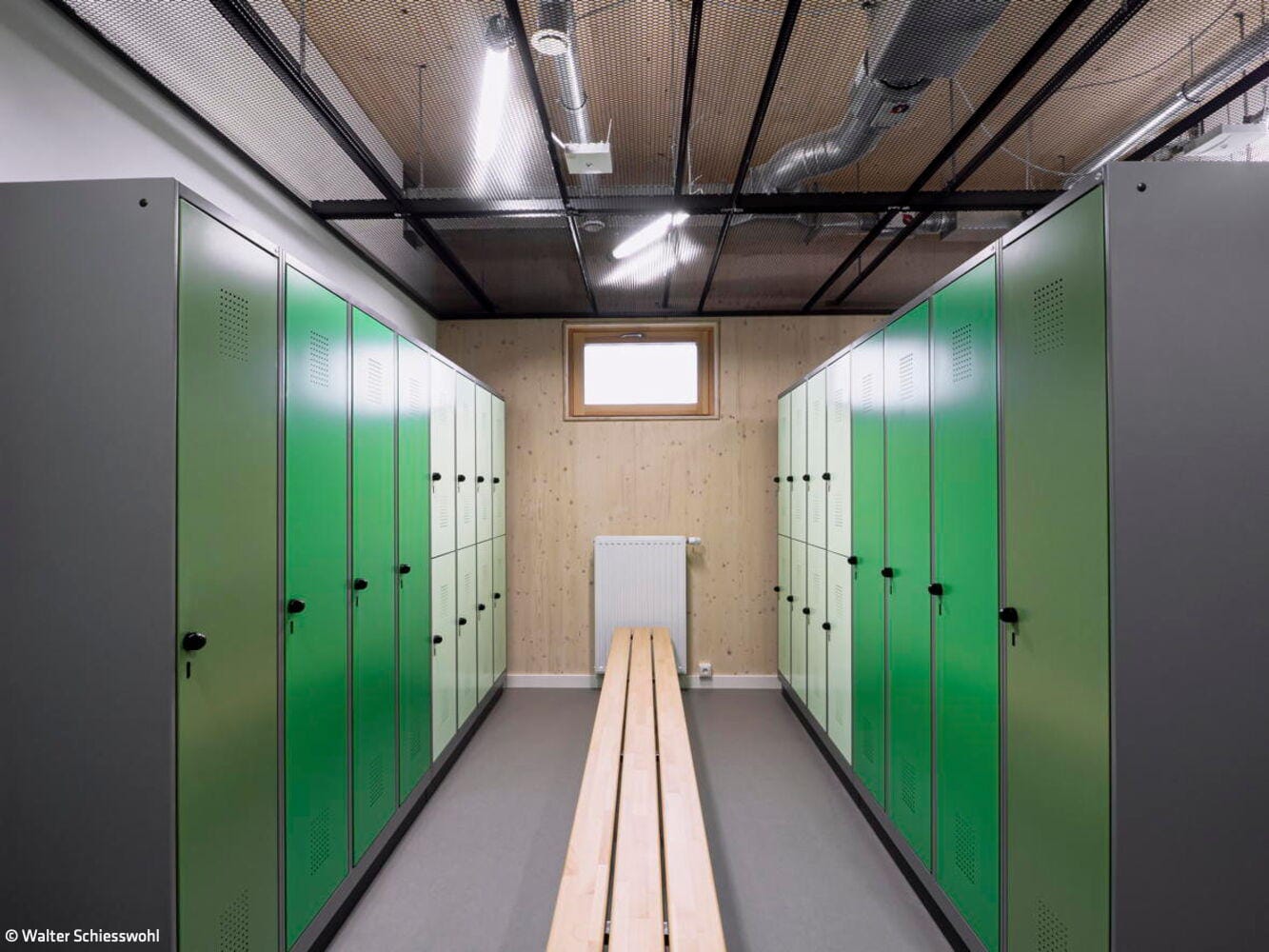
The Habichtstraße sports centre in Barmbek-Nord, home to SC Urania, has undergone a comprehensive renovation and reopened in May. Supported by the Hamburg-Nord district office and federal funding, the project introduced a new football pitch, changing facilities, and a clubhouse featuring indoor sports spaces — all designed by Reichardt+Partner Architekten. The vision: foster social integration through community sports, create a sustainable facility with long-term viability and accessible offerings, and establish the site as a true neighbourhood gathering place.
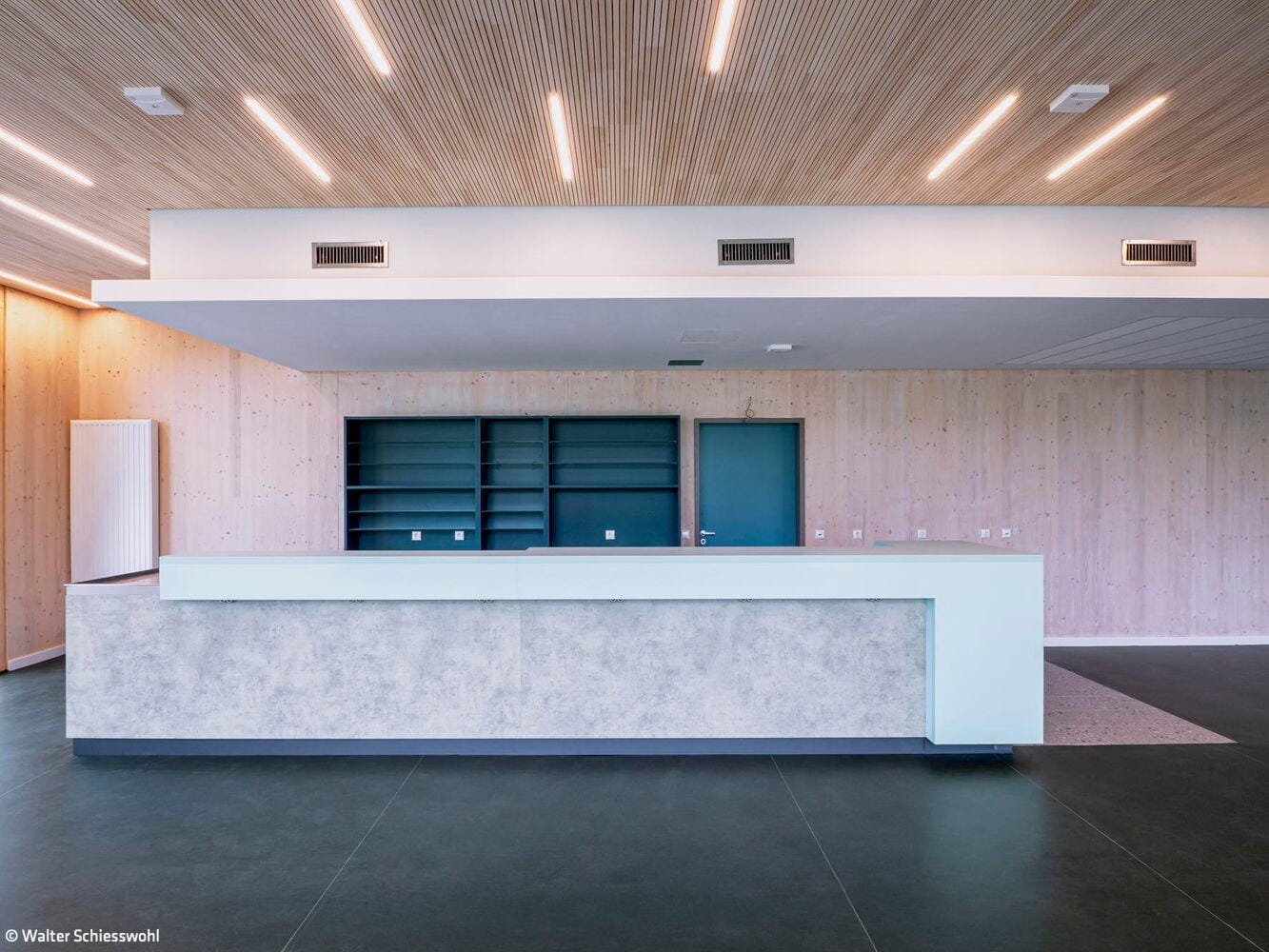
Protected trees and hedges along the eastern boundary presented a design challenge, making the available building area tight. The solution: reduce the football pitch footprint and arrange the building volume across two storeys facing the street. The grand playing field was reimagined as an artificial turf pitch with quartz sand infill. Two distinct structures emerged—a single-storey changing facility and a two-storey sports centre housing gymnastics studios, club offices, dining, a multipurpose room, and sanitary facilities. The sports centre connects openly to the neighbourhood, with its main entrance on Habichtstraße. From the foyer, visitors access dining, sanitary areas, changing rooms, and sports spaces. A staircase leads upward to club offices and a conference room, and downward to the technical areas. Every room is thoughtfully flexible, serving both regular sports programming and community events. Mobile partition walls amplify this versatility. The standalone changing facility sits directly adjacent to the pitch, reserved exclusively for the football club.
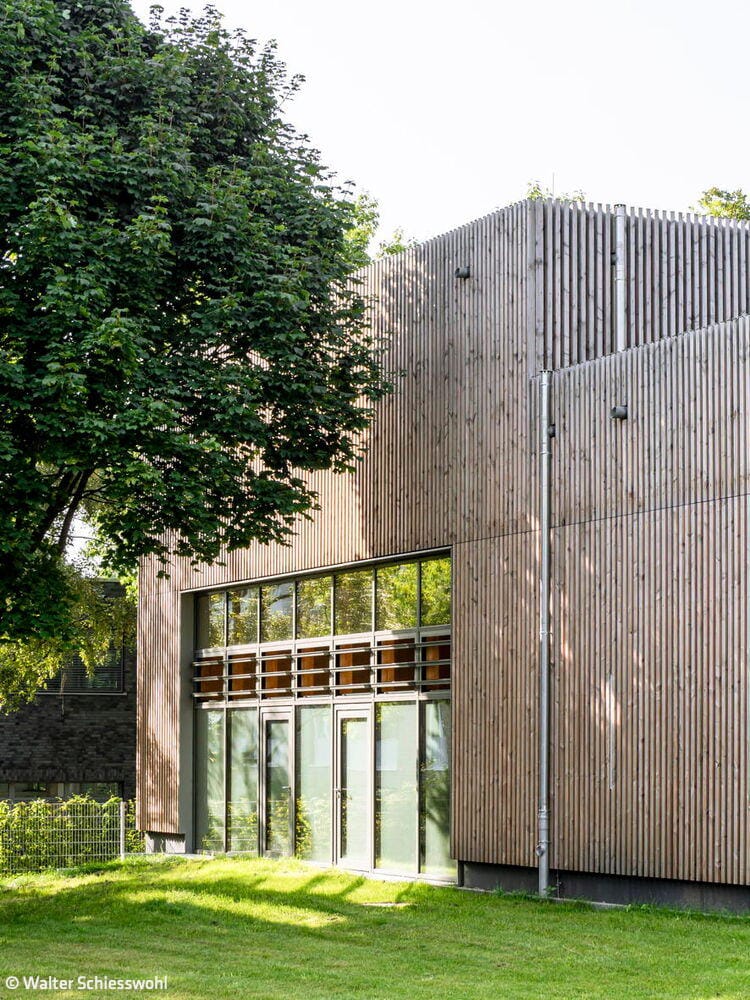
Both structures are built entirely in timber. Load-bearing walls and ceilings are crafted from solid timber elements, with ceiling panels either self-supporting or braced by timber beams. Only the foundation, strip footings, and stairwell employ reinforced concrete. Insulated solid timber walls wear a striking exterior of vertical timber boards, while wood surfaces the interior walls, ceilings, and exposed beams throughout. Green roofs, photovoltaic arrays, and district heating integration round out the ecological strategy—one that actually surpasses the rigorous EH-40 energy standard.
Photos:
Walter Schiesswohl
www.schiesswohl.com
(Published in CUBE Hamburg 04|25)


Back to the Office with Purpose
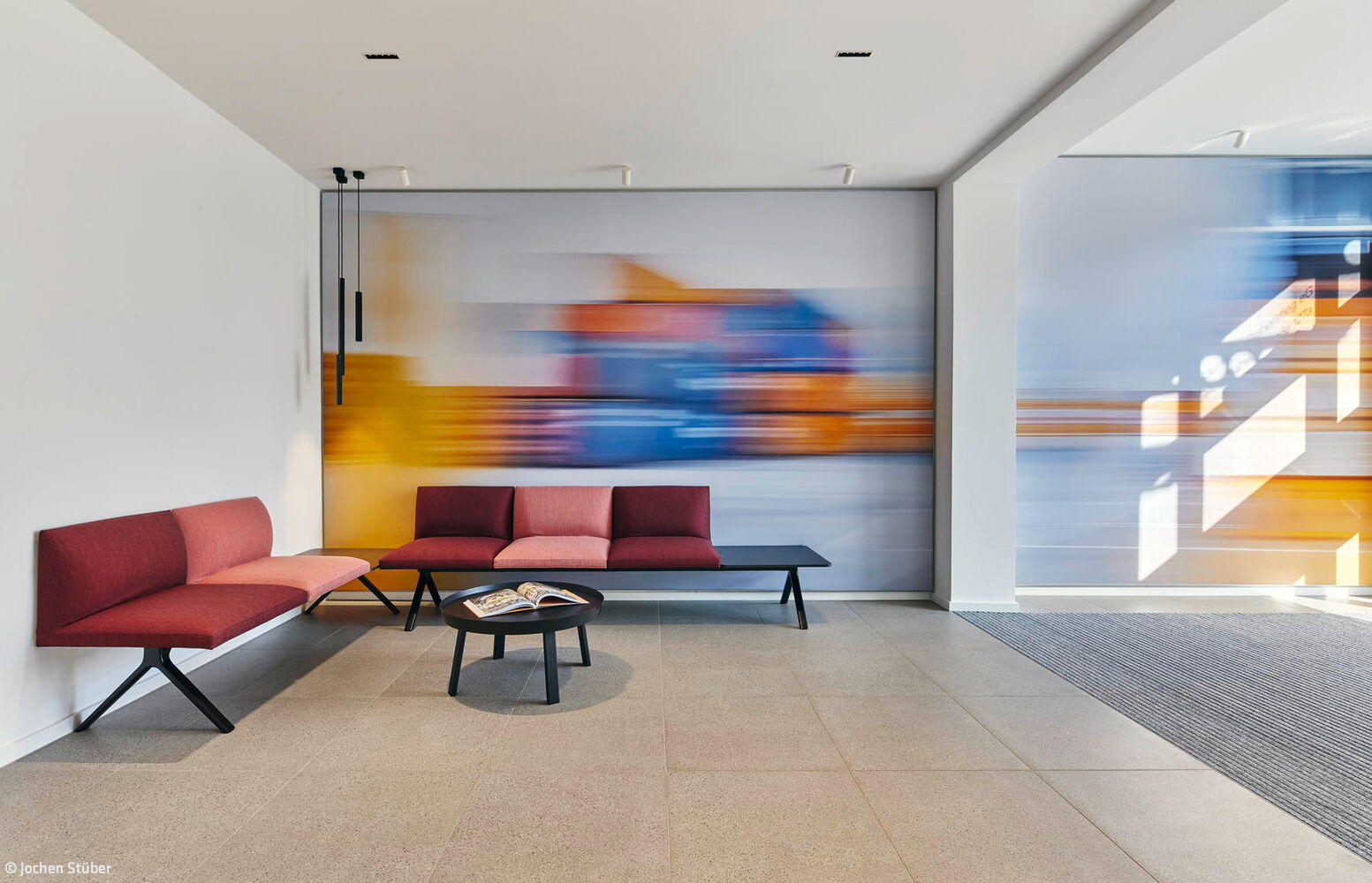
Reimagining the Workspace: How One Cooperative Transformed a Dated Office into a Modern Hub
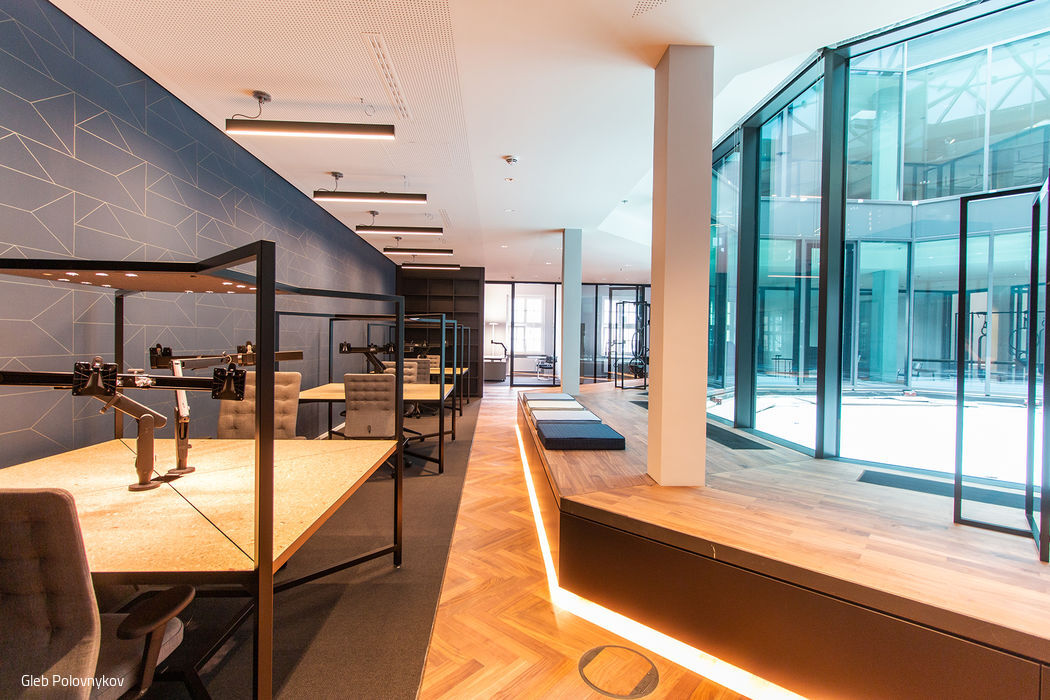
Innovative Work Environments
Modern Office Design Meets Historic Architecture

Relaxed Atmosphere
A family discovers the art of living in their custom-designed home
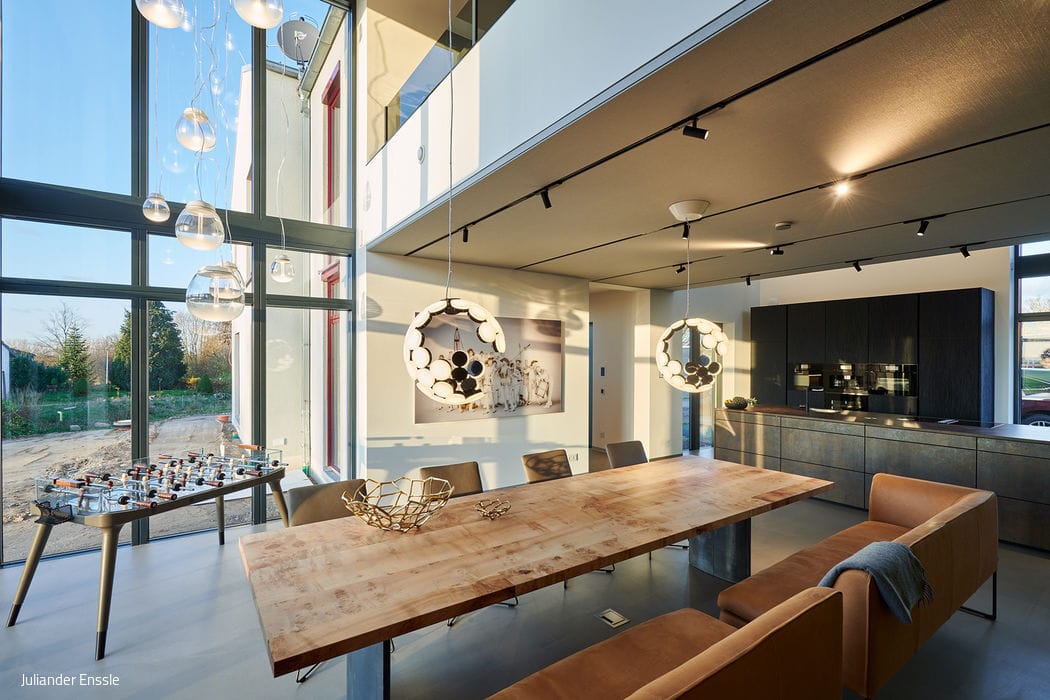
Dream home realized
Complete Peace of Mind: A Package That Delighted the Client