


Where Railway Meets Bell Tower
Building Over the Tracks: A Vibrant New Neighbourhood Emerges in Lindenthal
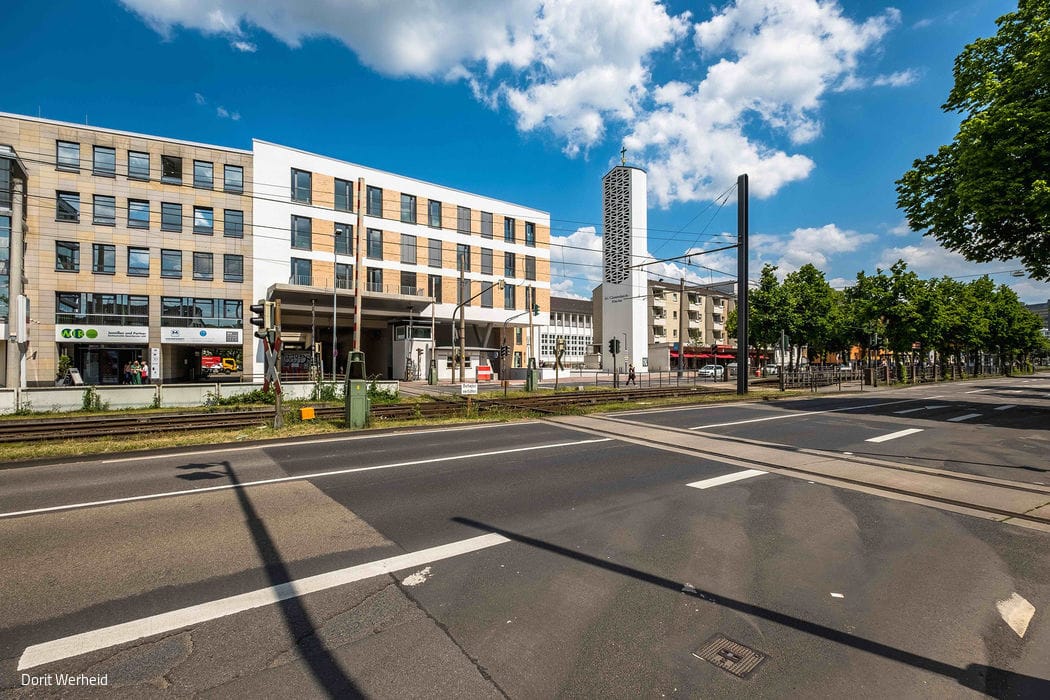
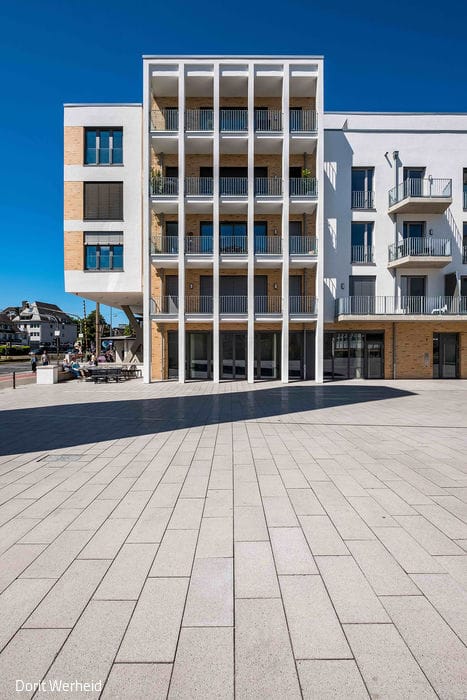
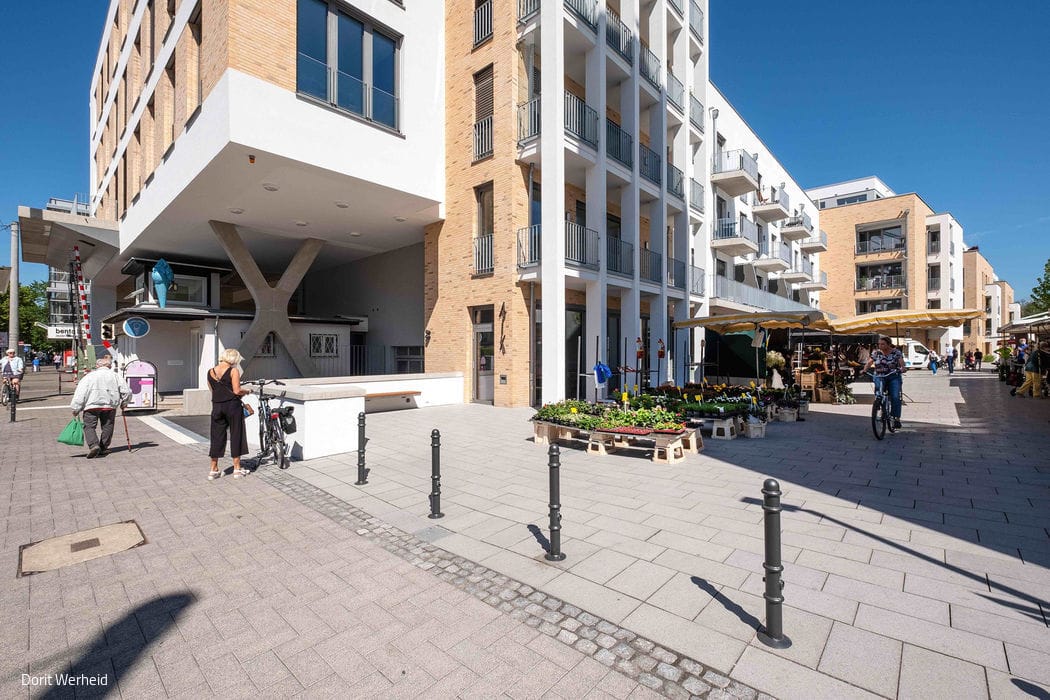
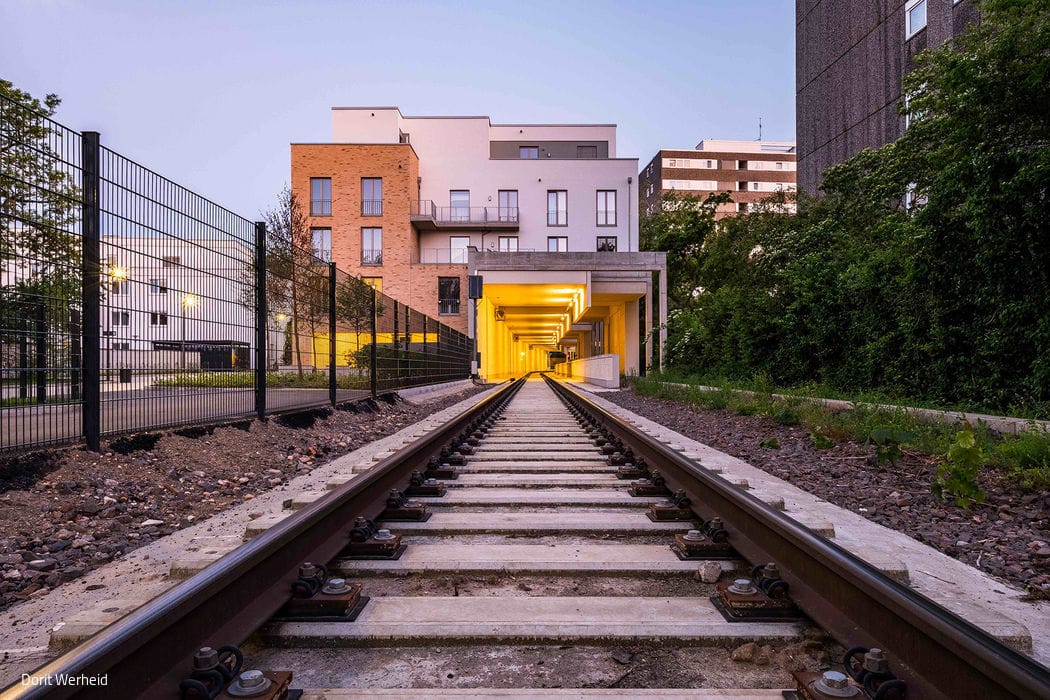
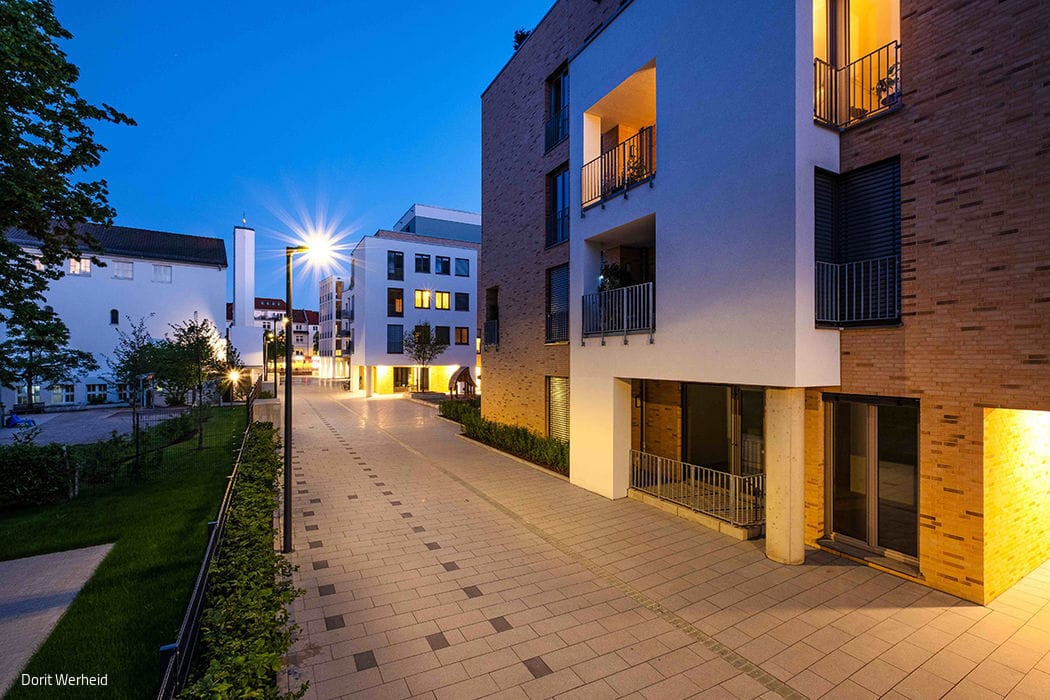
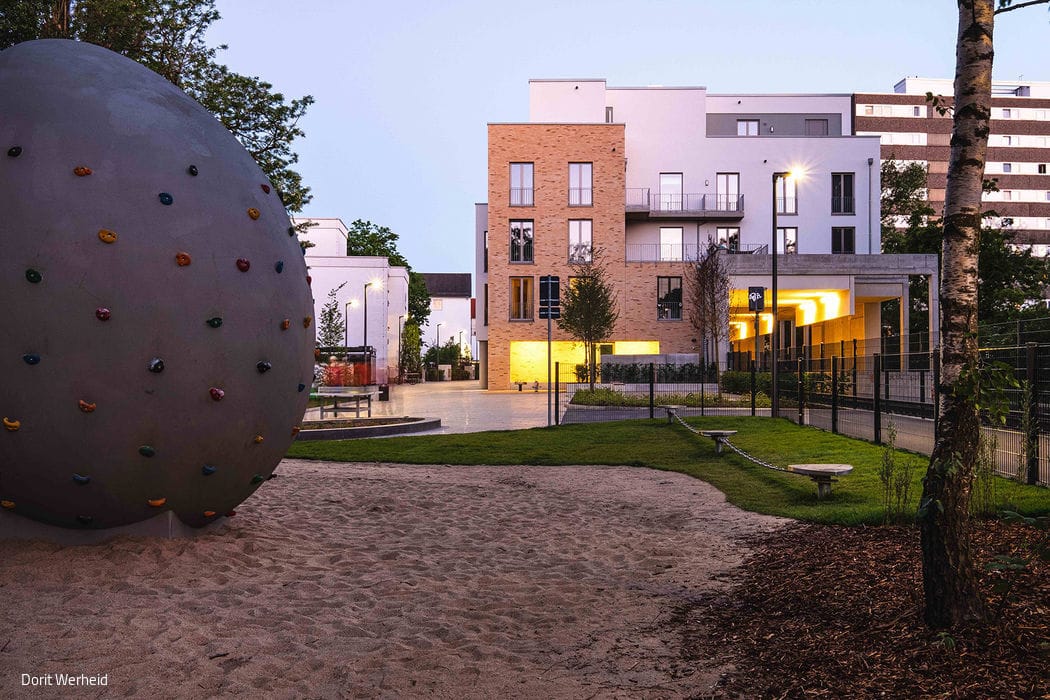
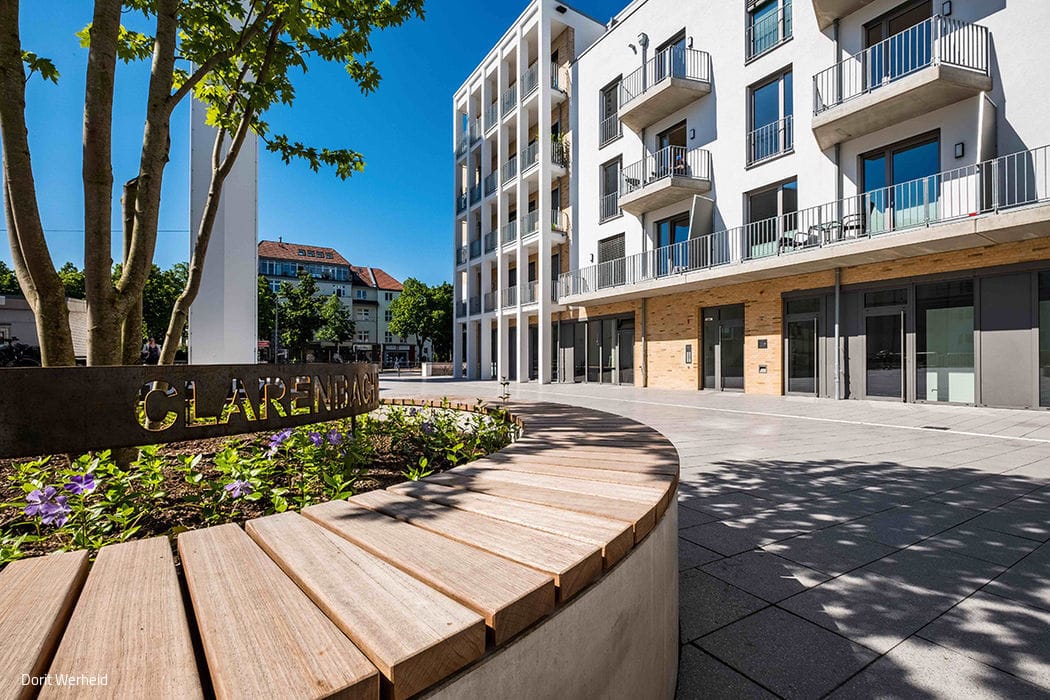
Since 1893, the Cologne-Frechen-Benzelrath railway has cut through western Cologne, connecting Frechen to Niehl. Once a vital coal transport artery—earning it the nickname "Klüttenbahn"—the line passes the now-defunct Braunsfeld freight yard. Architect Matthias Dittmann from Cologne's md3+ seized the opportunity to transform this brownfield into a thriving urban district. Working for Friedrich Wassermann and WvM Immobilien + Projektentwicklung, he crafted a mixed-use neighbourhood featuring four residential buildings that seamlessly blend retail, dining, public squares, and green spaces—all strikingly designed to coexist with the railway itself.
The railway's route and operations had to remain untouched. Running roughly twenty times daily between Niehl and Hürth ports, the connection serves freight transport with diesel vehicles and occasionally functions as a heritage railway. The design challenge was considerable: integrate the site between Aachener and Stolberger Streets while respecting existing neighbours and, where possible, strengthen connections between them. Dittmann's solution centres on an urban plaza that anchors itself to surrounding context, with building masses thoughtfully distributed along a north-south axis. On Aachener Straße, a five-storey stepped block sets the tone—three residential structures with ground-level retail, cafés, and a cultural hub that open generously onto the new Clarenbachplatz. Opposite, the beautifully preserved bell tower of Clarenbachkirche and its parish hall define the square's character. The public space flows seamlessly past two additional four-storey residences and a small playground, inviting pedestrians and cyclists through the district. Crucially, the Clarenbachplatz preserves the beloved Braunsfeld weekly market, anchored here for over fifty years. On the west side, the railway makes a dramatic entrance through a tunnel, passing beneath the new block in a symbolic nod to traditional rail signage. The heritage railway keeper's lodge survives too, ingeniously elevated to let trains pass beneath. This coexistence required ingenious engineering: a reinforced concrete barrier shields residents from fire and emissions. A protective covering along the tunnel ceiling combined with ventilation fans rapidly disperses diesel exhaust. Vibration-decoupling rubber buffers on renewed tracks, alongside sound-absorbing wall treatments, ensure adequate noise control—a benefit that extends to the surrounding community as well.
Photography Credits:
Dorit Werheid
www.picsandplan.de
(Published in CUBE Cologne Bonn, 04|21)
In a Color Frenzy
A vibrant colour strategy defines the new workspaces of this IT innovator
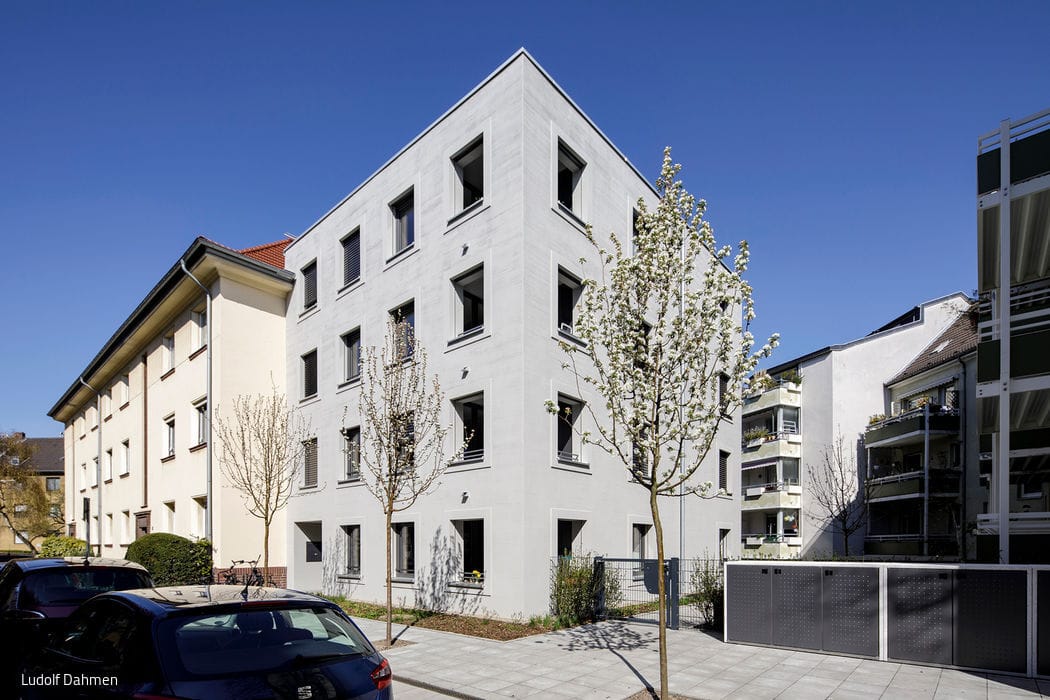
Mediating Cube
A residential building in Neuehrenfeld that establishes new relationships between urban space and design
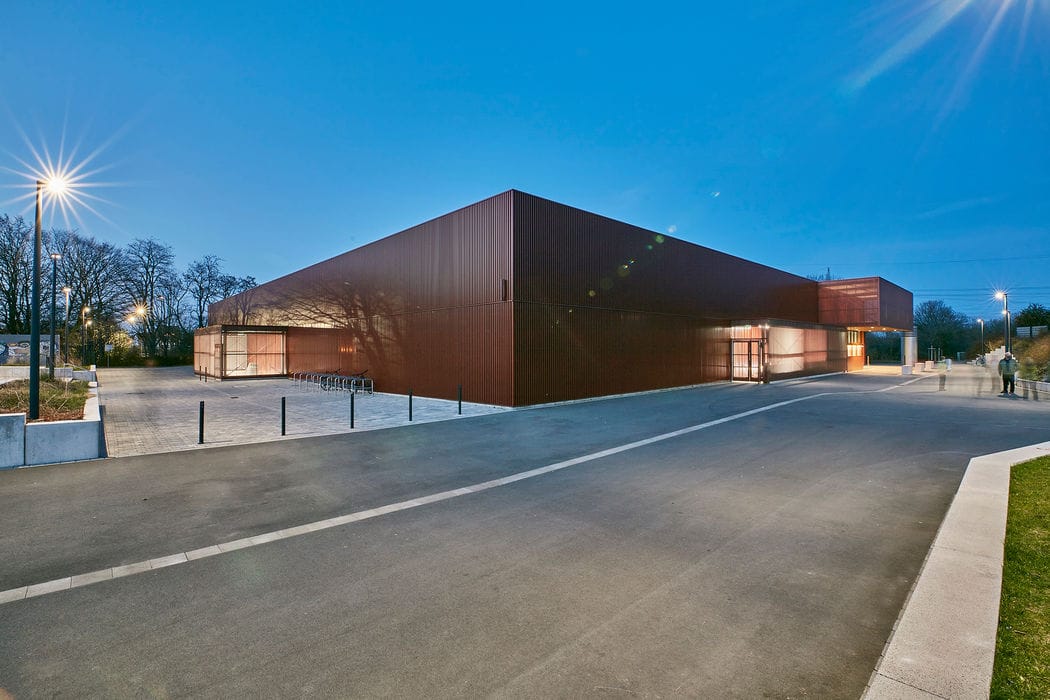
Open and Inclusive
A complete sports hall renovation addresses far more than functional requirements.
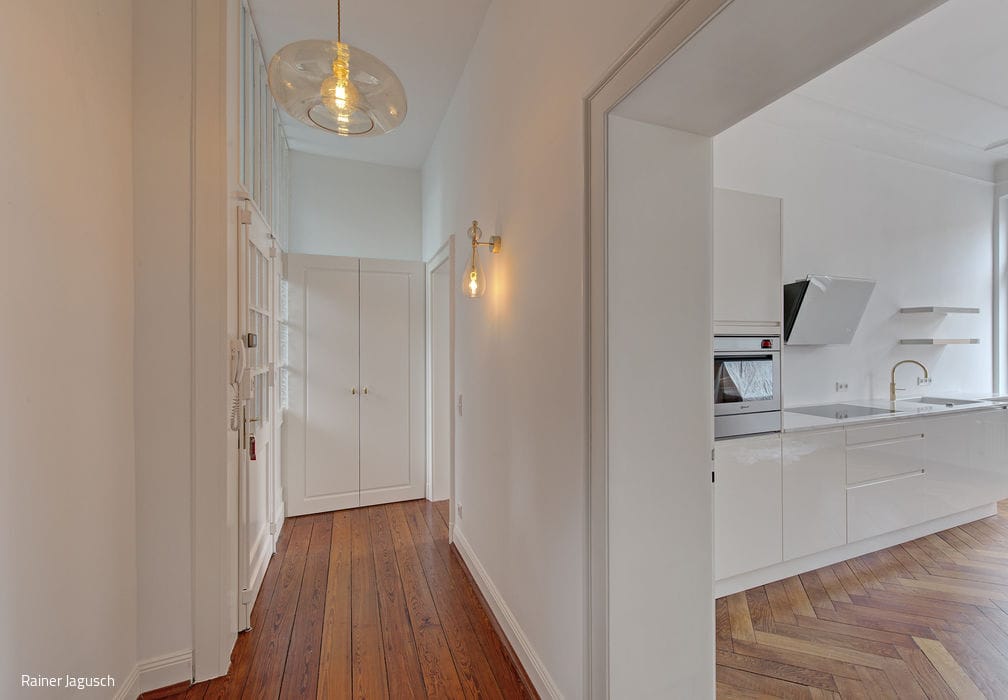
Timeless Charm of Historic Architecture
Reimagining a Belgian Quarter Apartment