


600 new parking spaces
Hamburg's first bicycle parking facility is located at the Kellinghusenstraße transport hub.
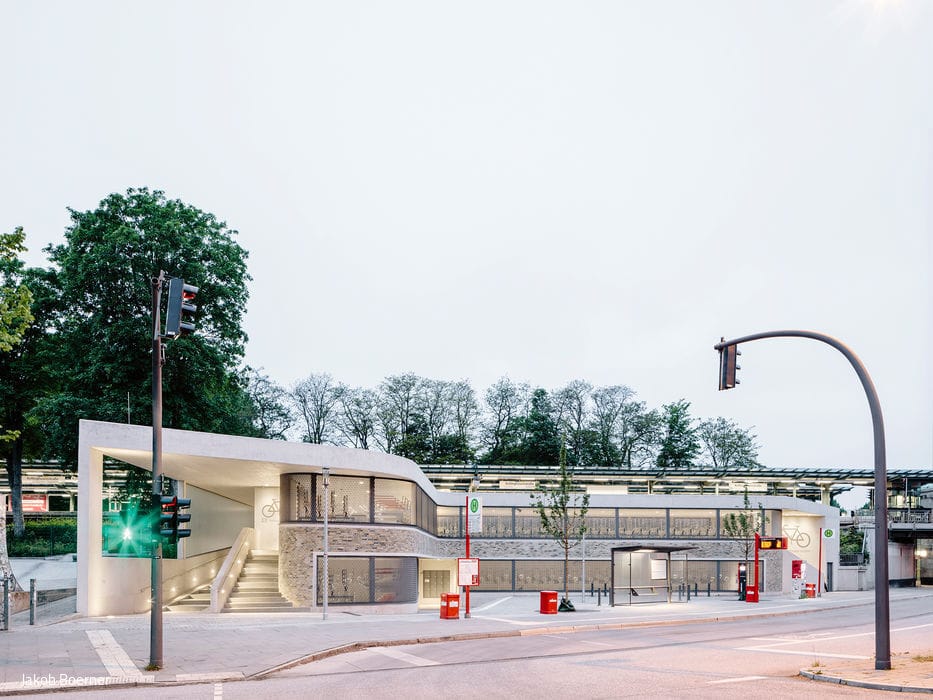
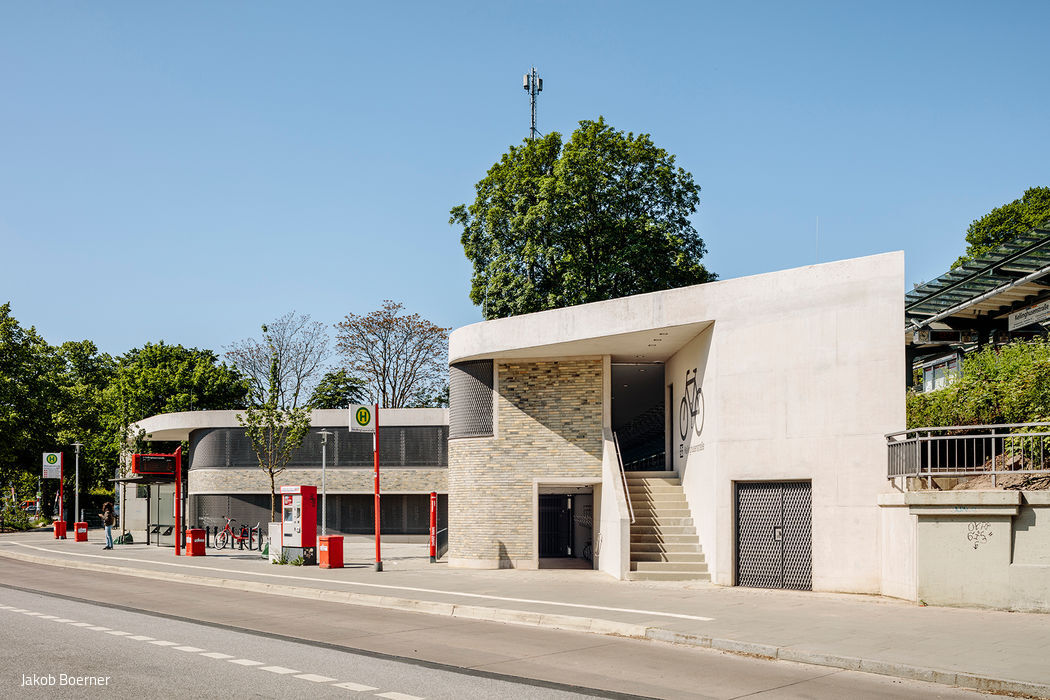
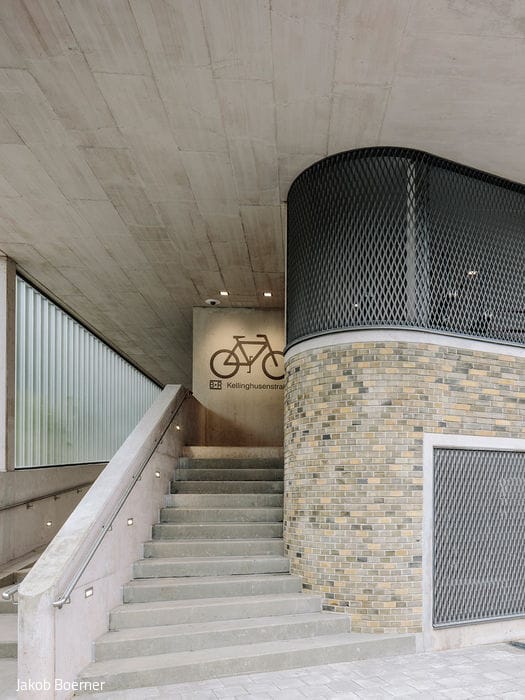
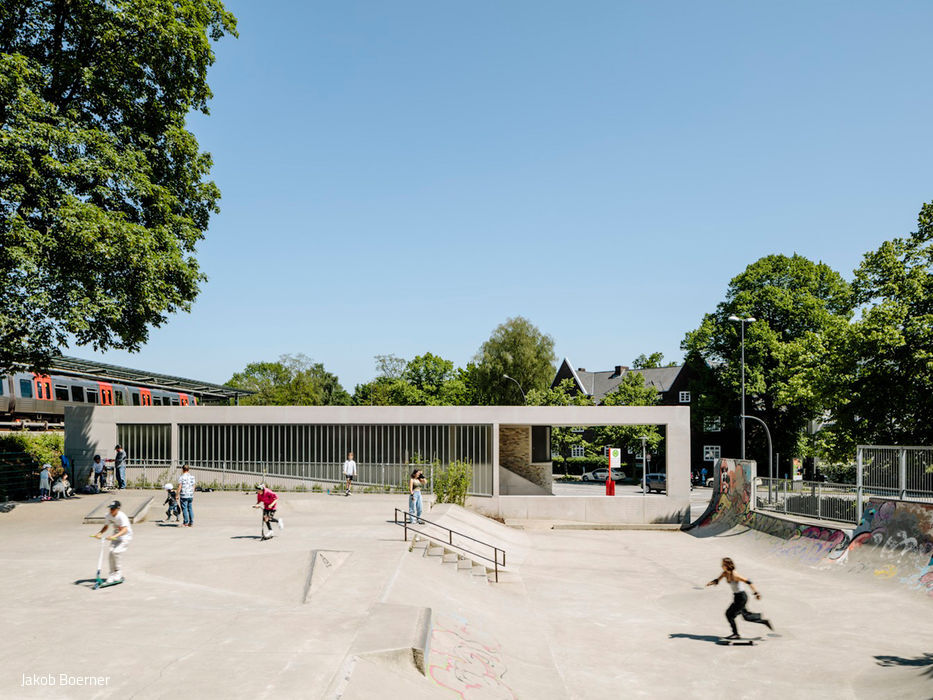
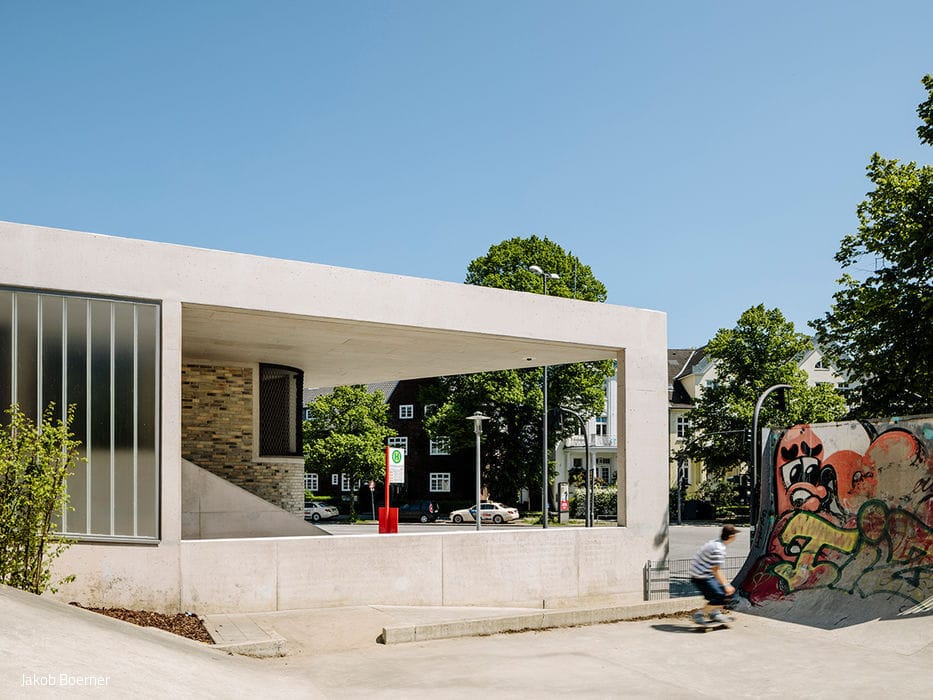
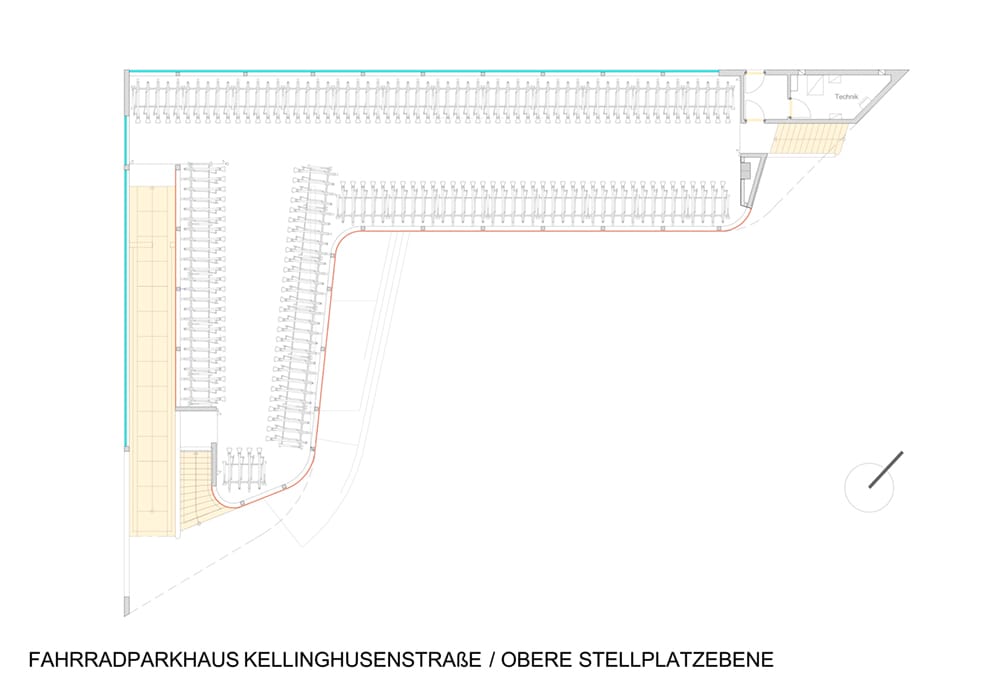
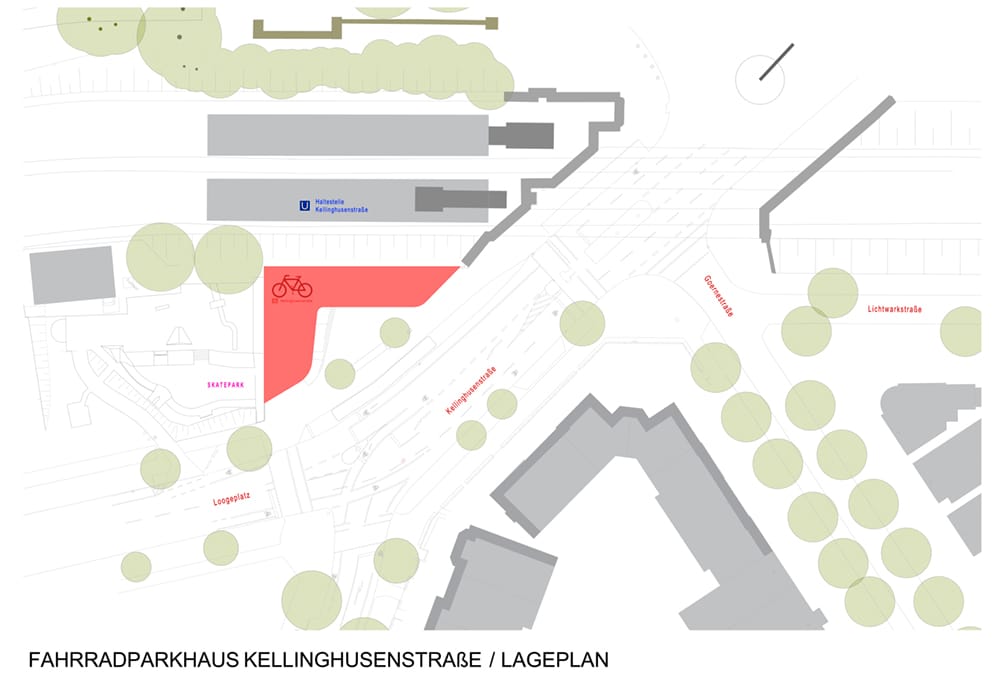
All people who cycle in this city repeatedly ask themselves the same question in many places: Where can I park my bike? The Kellinghusenstraße bicycle parking facility designed by Mathias Hein Architects for P+R Betriebsgesellschaft provides the answer. It also contributes to the Senate's concept of Hamburg as a bicycle-friendly city. Located at the Kellinghusenstraße transport hub, it makes it easier to switch from bike to public transport and eliminates the long-standing nuisance in Eppendorf of large numbers of bikes parked haphazardly around the underground station. The sculpturally shaped, two-winged structure and the outdoor facilities complement and organise the urban environment on the south side of the listed Ring Line stop.
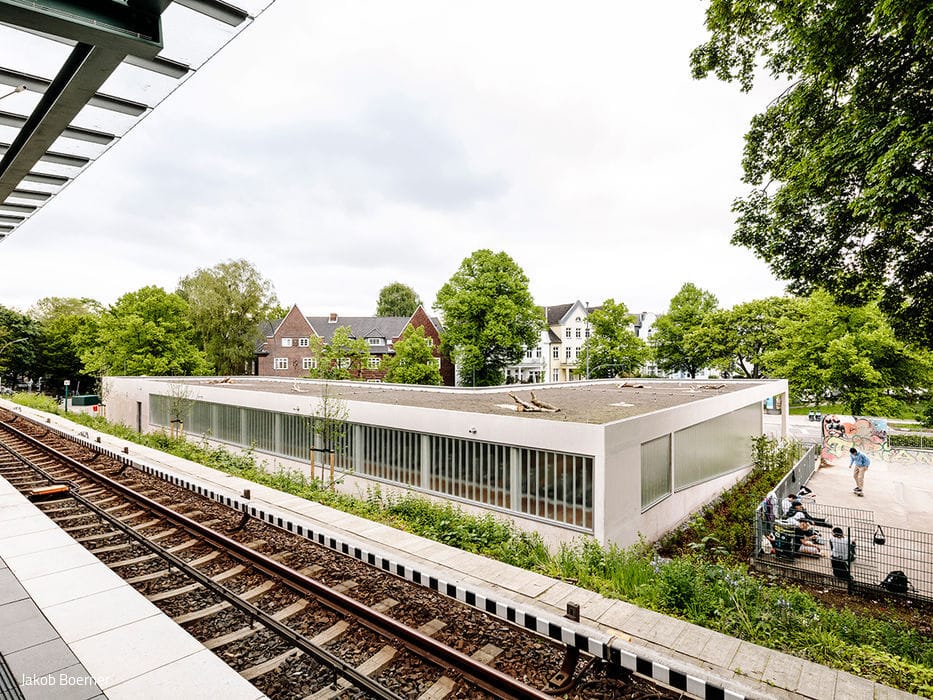
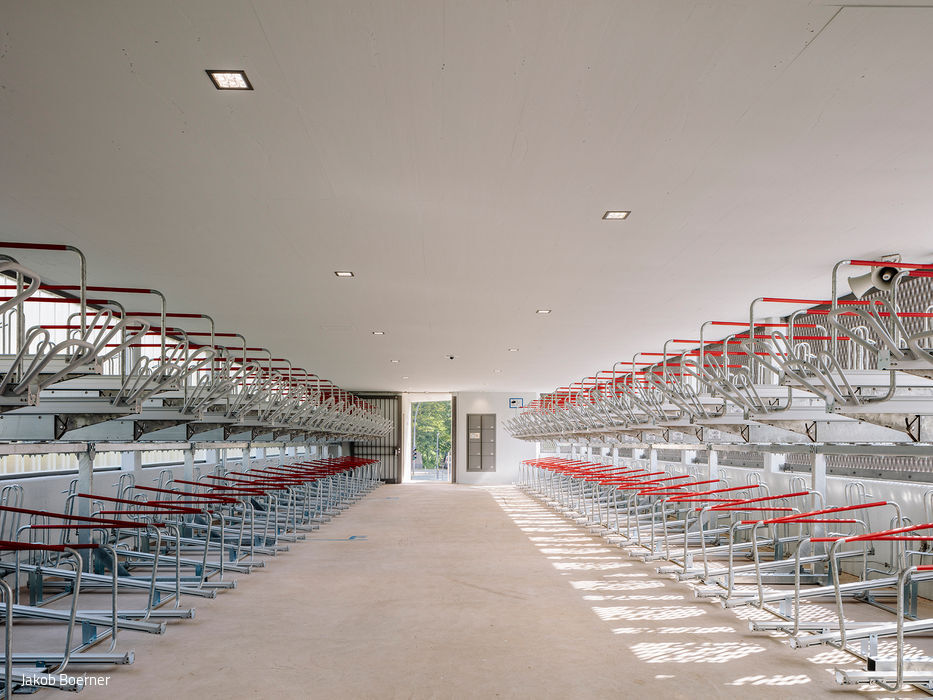
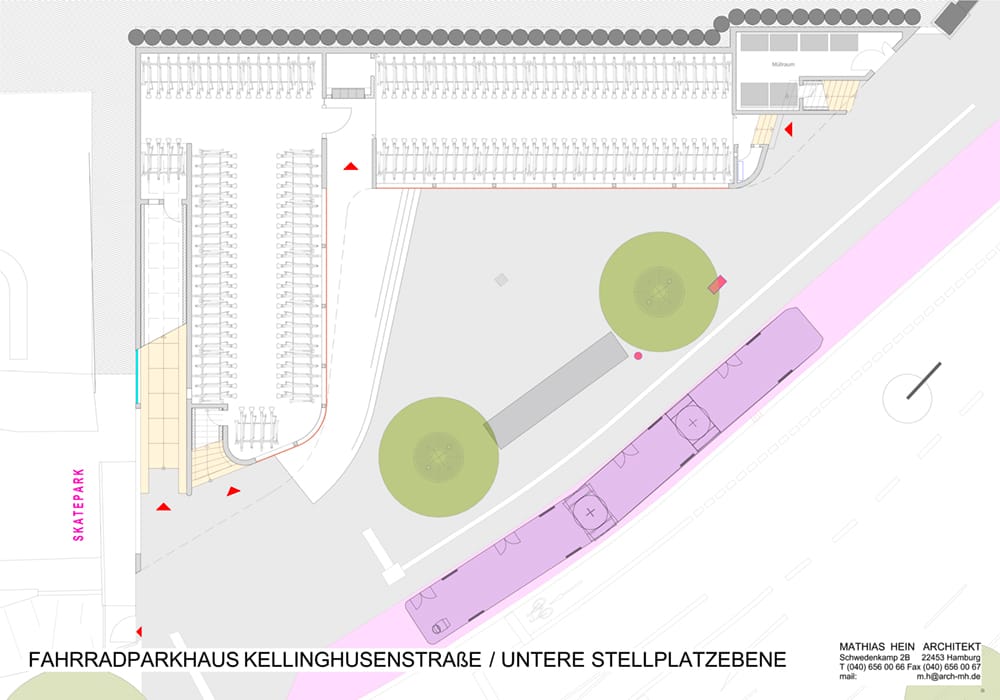
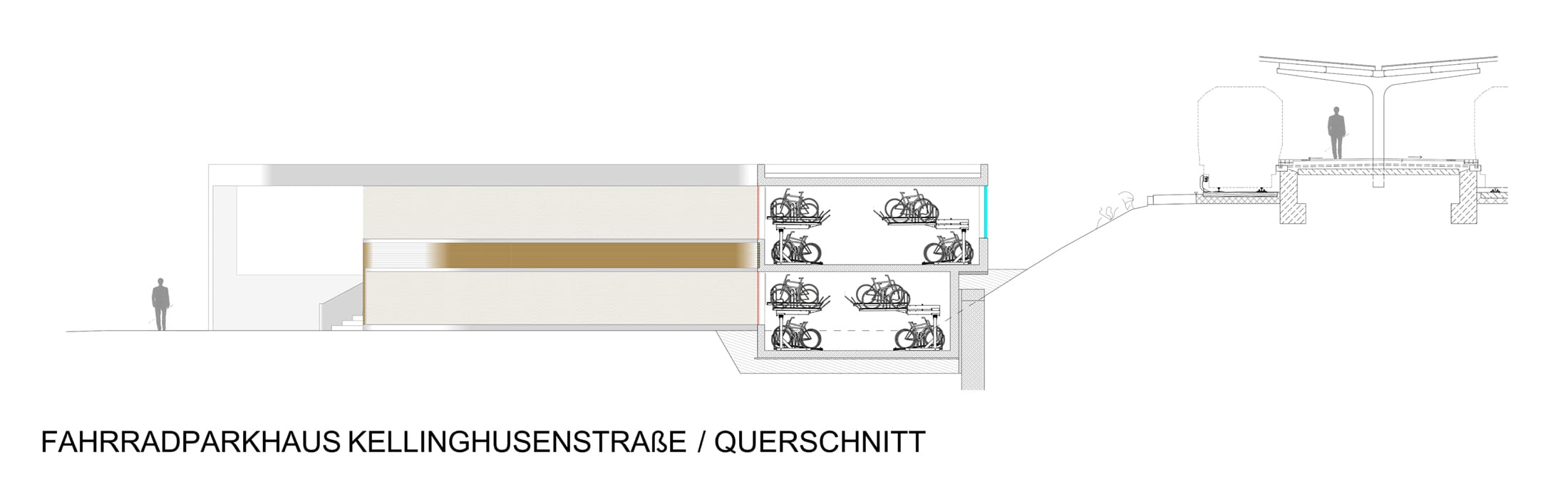
Right-angled wall surfaces facing the railway embankment and the skate park form a "back". The outer wall facing the skate park opens up over a large area, forming a frame for the upward ramp and maintaining the visual connection between the viewing platform and the bridge structure. In keeping with their use, the façades are structured with horizontal bands of sand-coloured facing brickwork, exposed concrete surfaces and grid-patterned expanded metal grilles. They echo the colours and flowing curves of the historic station building. The flat roof visible from the platform is greened. In order to accommodate the required number of bicycle parking spaces on two parking levels, the structure cuts into the railway embankment at the Kellinghusenstraße stop. 300 bicycle parking spaces have been accommodated in a two-row arrangement with 150 double parking stands per level. This means that a total of 600 covered, secure parking spaces are available. Lowering the lower parking level into the square reduces the length of the upward ramp and reduces the height of the structure. As a result, the upper edge of the parapet is only slightly above the platform height of the underground station on the railway embankment.
Cyclists coming from Görnestraße are guided along a cycle lane on Kellinghusenstraße past the bus stop to the traffic lights at Loogeplatz, where they can easily access the facility via the kerb ramp to park their bicycles. The ramps leading up and down to the two parking levels end at the southern end of the facility, directly opposite these traffic lights. After parking their bikes, underground passengers can easily leave the bike park via stairs near the station entrance.
Photography Credits:
Jakob Boerner
www.jakobboerner.com
(Published in CUBE Hamburg 03|21)


Renewed with Purpose
The structure underwent complete renovation—new foundations were installed and the interior completely reorganized.
Living and Learning
An award-winning neighbourhood on the Schanze—a case study in intelligent infill development
Rethinking Work Spaces
Spaces That Grow With You: Designing for Tomorrow's Culture
Living Spaces in the Sky
Attic Spaces Transformed into Desirable Homes