


From Homestead to Village
When extending a 1930s residence, LHVH Architects deliberately revived this historical settlement pattern, creating a fully enclosed courtyard structure.
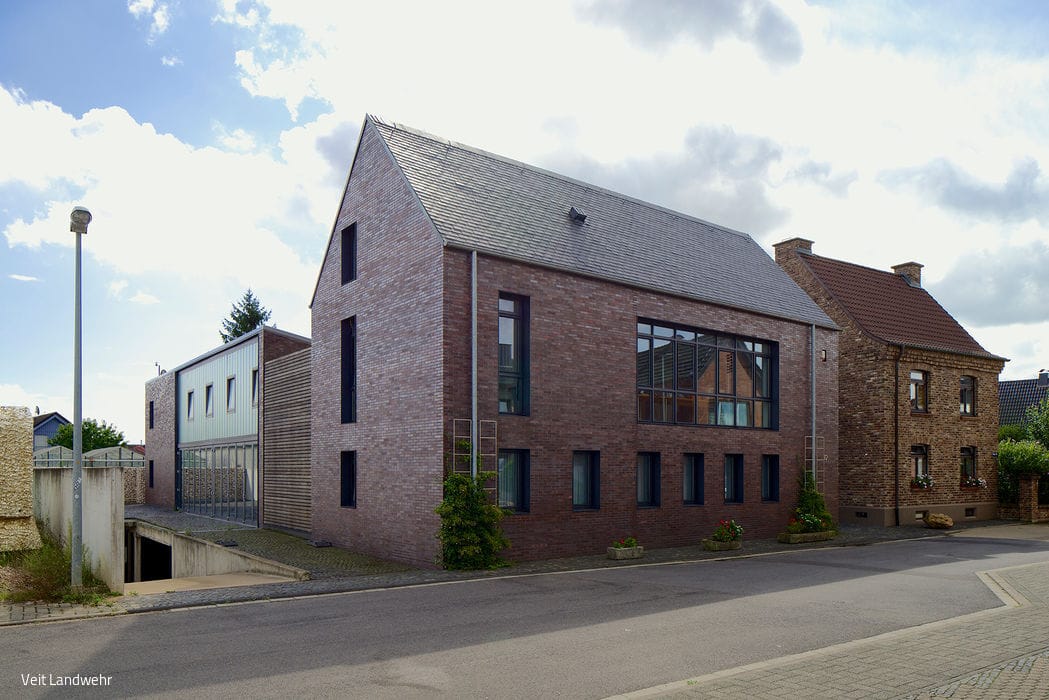
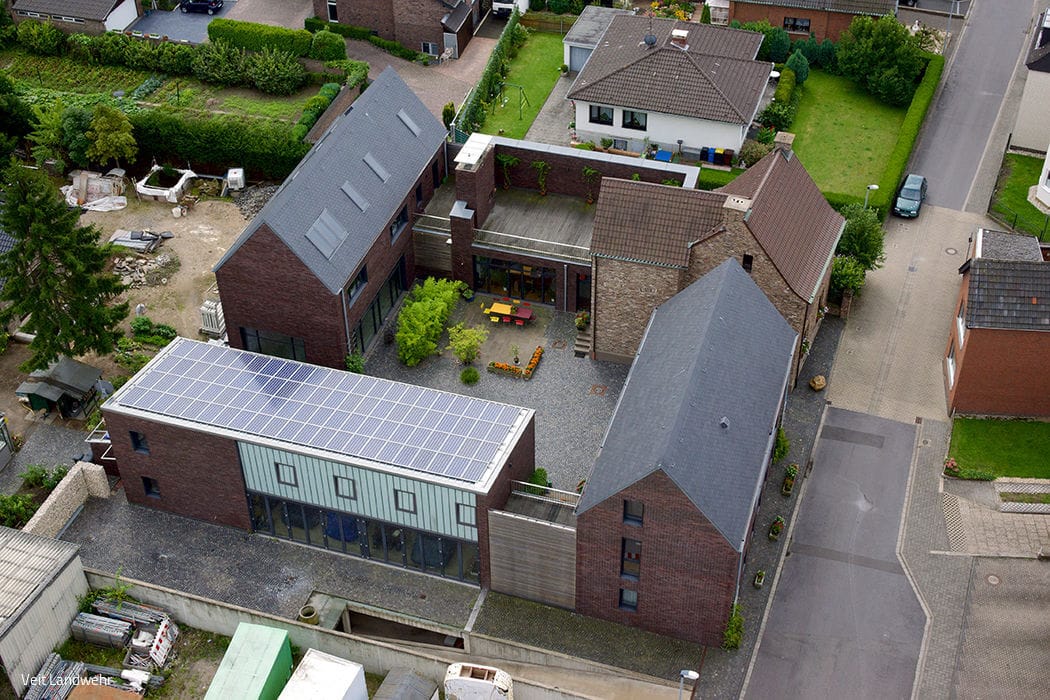
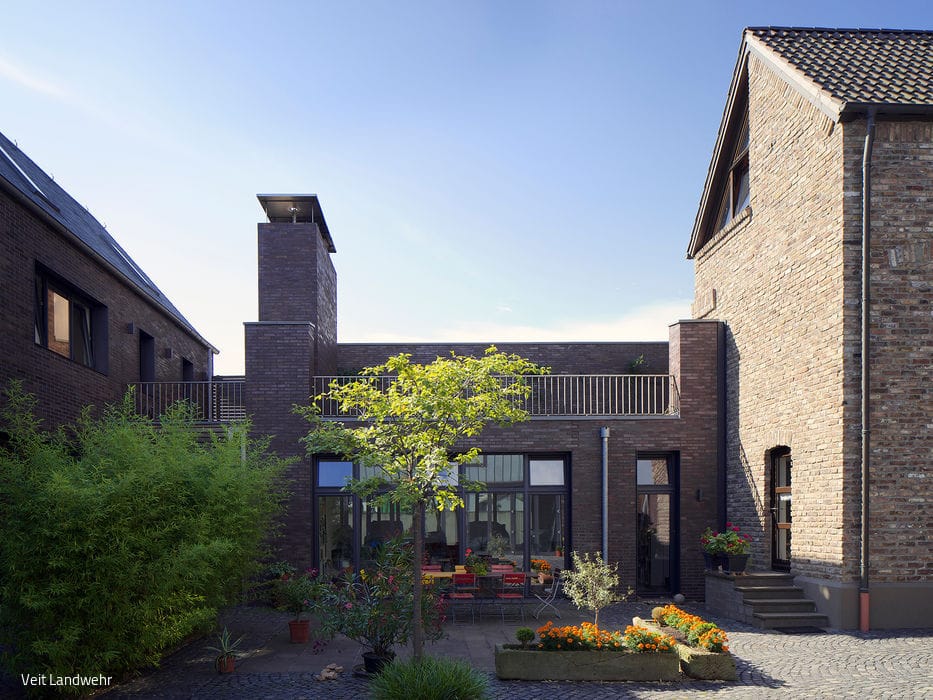
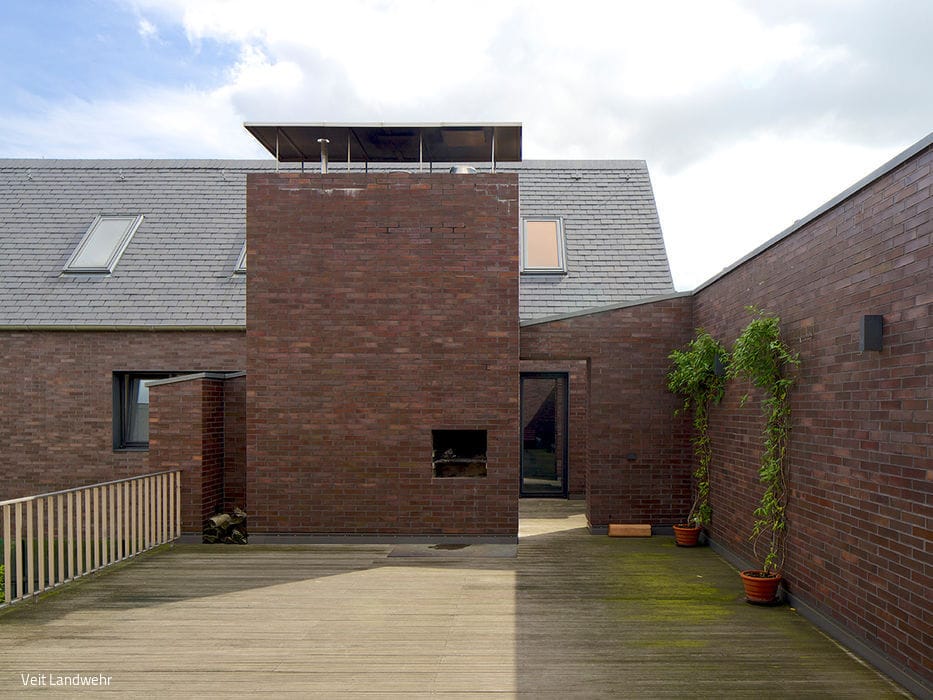
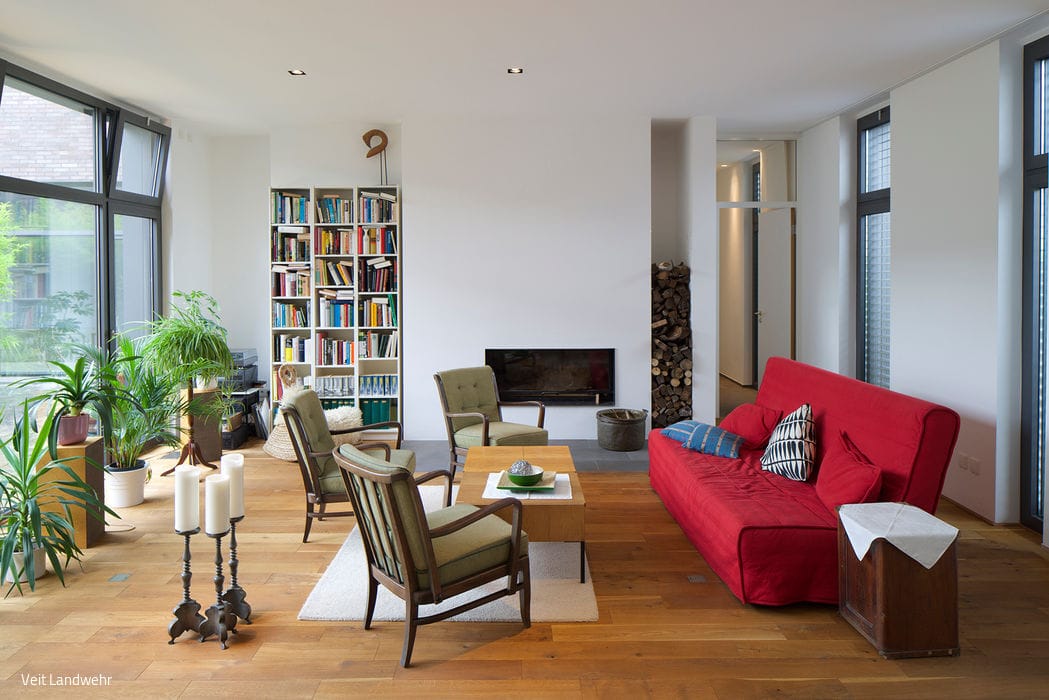

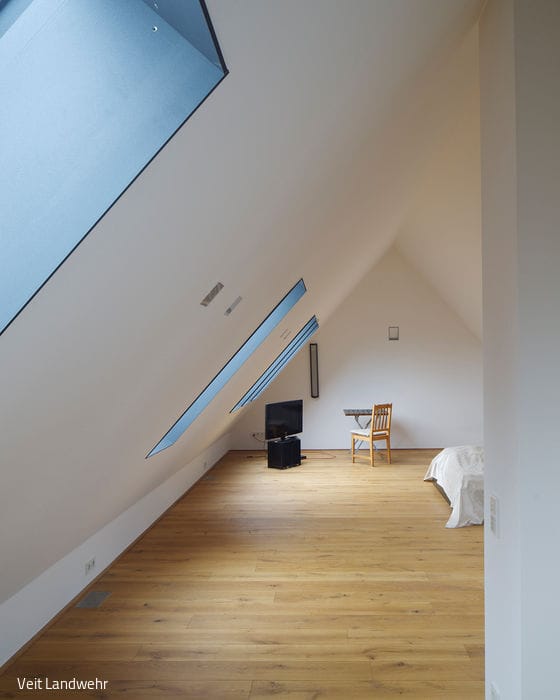
Die Geschichte des Straßendorfes Wesseling-Urfeld reicht bis in die Römerzeit zurück. Die typische Bauweise für den idyllisch am Rhein gelegenen Ort waren Vierkant-Hofanlagen mit angrenzend bewirtschafteten Feldern, die in ihrer Ziegelbauweise ein einheitlich charakteristisches Ortsbild prägten. Bei der Ergänzung eines bestehenden Wohnhauses aus den 1930er-Jahren haben LHVH Architekten aus Köln bewusst diese historische Bebauungsstruktur aufgegriffen und eine umseitig geschlossene Hofstruktur realisiert. Umwidmung von Acker und Bauland sowie eine um sich greifende Zersiedelung haben vor allem in den letzten Jahrzehnten zu einer Zerstörung der tradierten Bau- und Flurstrukturen des Ortes geführt. Die wachsenden Gemeinden und die erschwerte wirtschaftliche Situation der lokalen Landwirtschaft zogen den sukzessiven Verkauf der Ackerflächen und eine ohne übergeordnete Planvorstellungen vollzogene Neubebauung nach sich. Das Bestandsgebäude befindet sich in „zweiter Reihe“ zum Rhein, westlich der alten Rheinstraße, entlang derer sich das Dorf entwickelt hat. Es ist eines der wenigen verbliebenen Gebäude, das eine klare Bauflucht vorgibt.
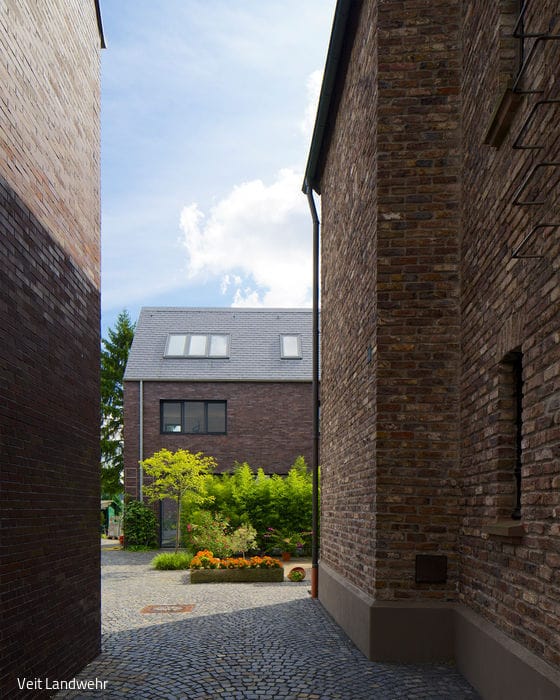
Die vier auf dem Grundstück entstandenen Neubauten erweitern den Wohnraum und schaffen zusätzlich eine weitere Wohneinheit. Außerdem beherbergen sie ein kleines Schwimmbad mit Sauna, ein Büro sowie eine Fahrzeughalle mit einer Werkstatt für die Oldtimersammlung des Bauherrn. Die entstehende Hofstruktur verweist auf die historischen Vierkanthöfe, führt zugleich aber auch die vorhandene Struktur der Bauflucht weiter: So definieren die Neubauten speziell zur benachbarten Kirchstraße im Zusammenspiel mit dem gegenüberliegenden Bestand einen neuen Straßenraum, der die Dichte der alten Rheinstraße in die „zweite Reihe“ der Bebauung hineinträgt. Die vier Häuser sind dabei als einfache, kubische Baukörper mit Sattel- und Pultdächern ausgeführt. Je nach Nutzung orientieren sich die in die Fassaden eingeschnittenen Öffnungen in den öffentlichen Straßenraum oder in den privaten Bereich des Hofes. Nachhaltige und regionale Materialien wie Ziegel, Schiefer, Grauwacke und Holz prägen dabei die Architektur. Der maßstäbliche, ruhige Innenhof schafft ein ausgewogenes Verhältnis zwischen Nähe und Distanz der Wohneinheiten und Nutzungen. Nischen zwischen den Häusern gewährleisten Privatheit. Begrünung und Wasserbecken wirken durch Verschattung und Kühlung positiv auf das Klima ein. Nachhaltigkeit und Autarkie prägen das energetische Konzept der Anlage – auch bedingt durch die berufliche Tätigkeit des Bauherrn in der Branche regenerativer Windkraftanlagentechnologien. Durch Brunnen gewonnenes Grundwasser versorgt über Wärmepumpen die Gebäude mit Heizenergie. Eine kontrollierte Lüftung wird mittels Erdwärmetauscher gewährleistet, die unter der Hoffläche verlegt sind. Ausreichend Strom erhält die Hausgemeinschaft schließlich von einer Photovoltaikanlage, die auf dem Dach der Fahrzeughalle montiert wurde.
Photography Credits:
Veit Landwehr
www.bildpark.net
(Published in CUBE Cologne Bonn 01|21)
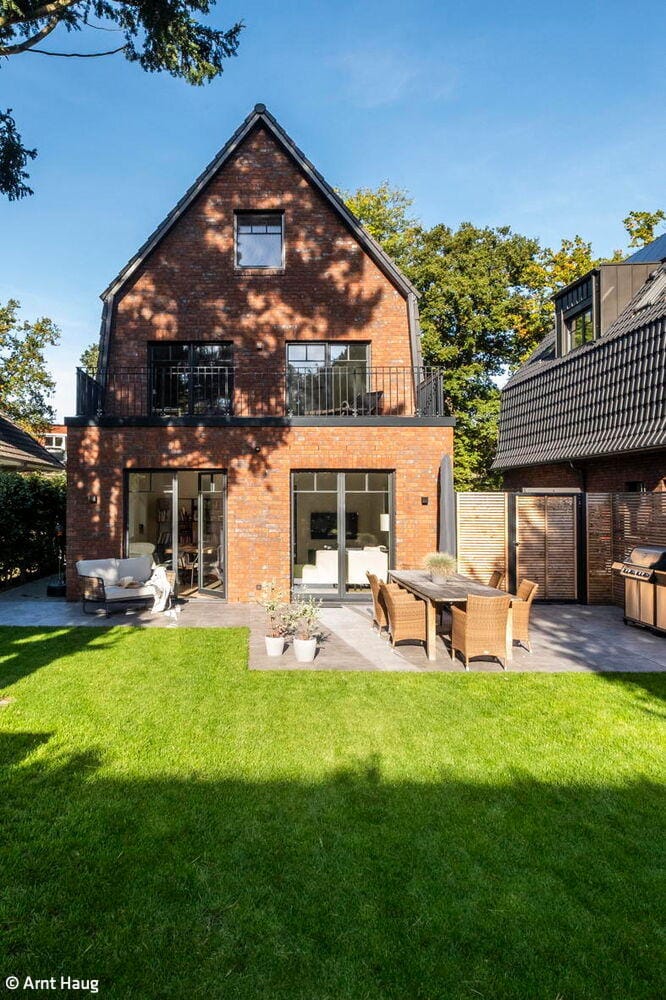

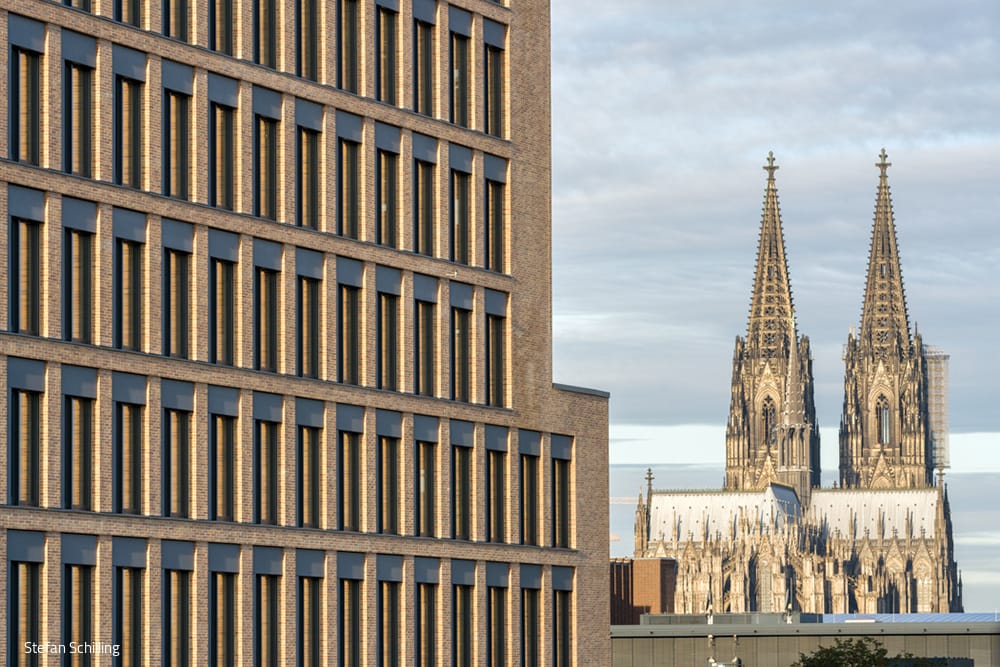
Zurich Campus in MesseCity Cologne
Brick architecture, Backstein-Kontor, Zurich Campus, MesseCity Cologne, custom brick
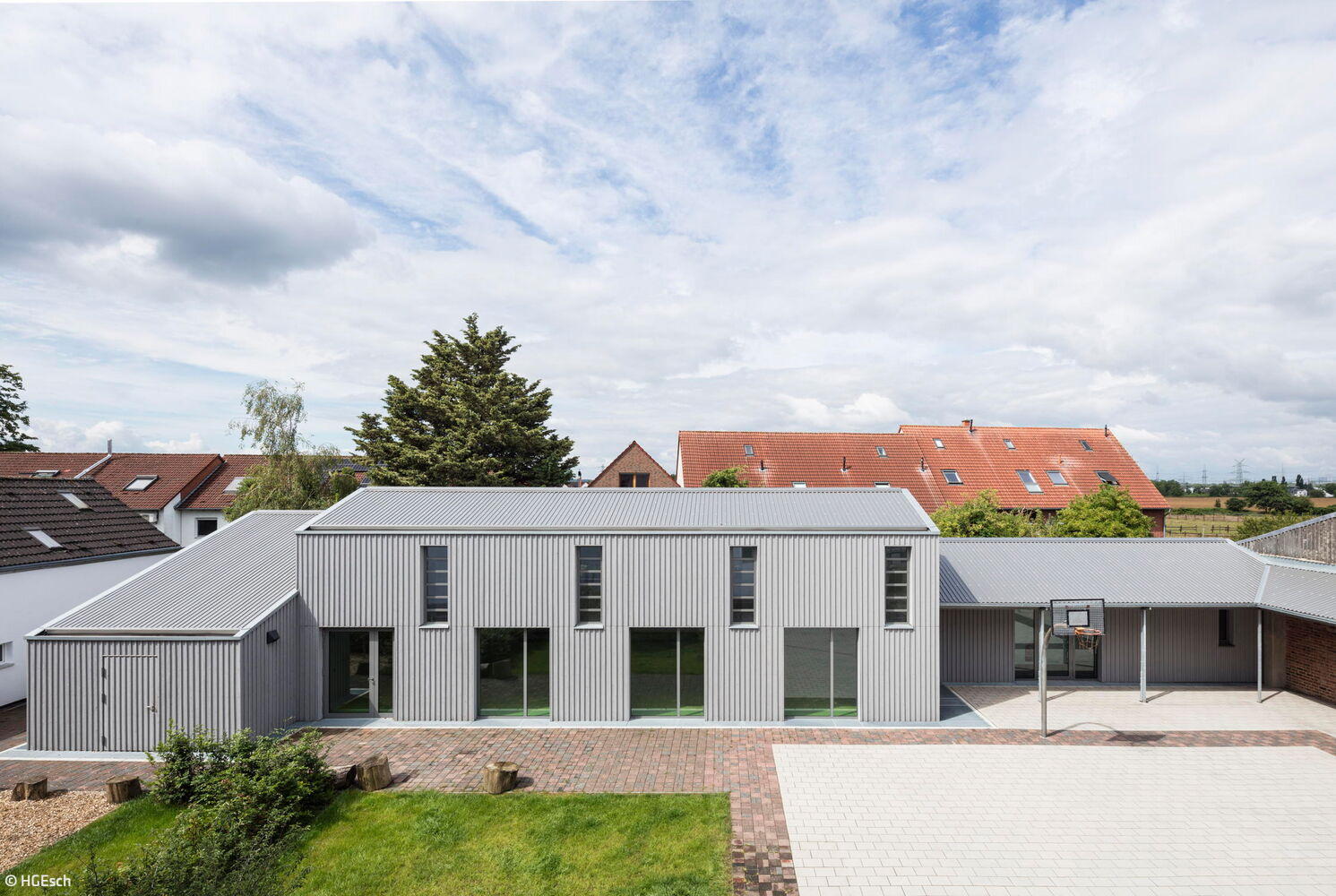
Simple and Thoughtful
A play and movement pavilion in Alt-Widdersdorf demonstrates the lasting potential of timber construction
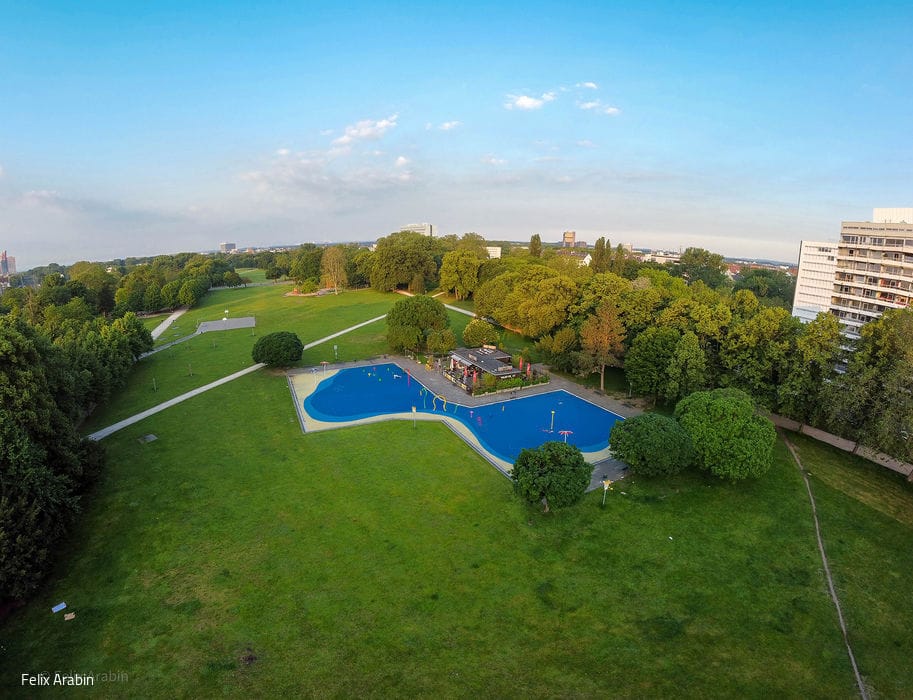
Water Fun at the TV Tower
The new water playground in the Inner Green Belt: sustainable design, multiple purposes.
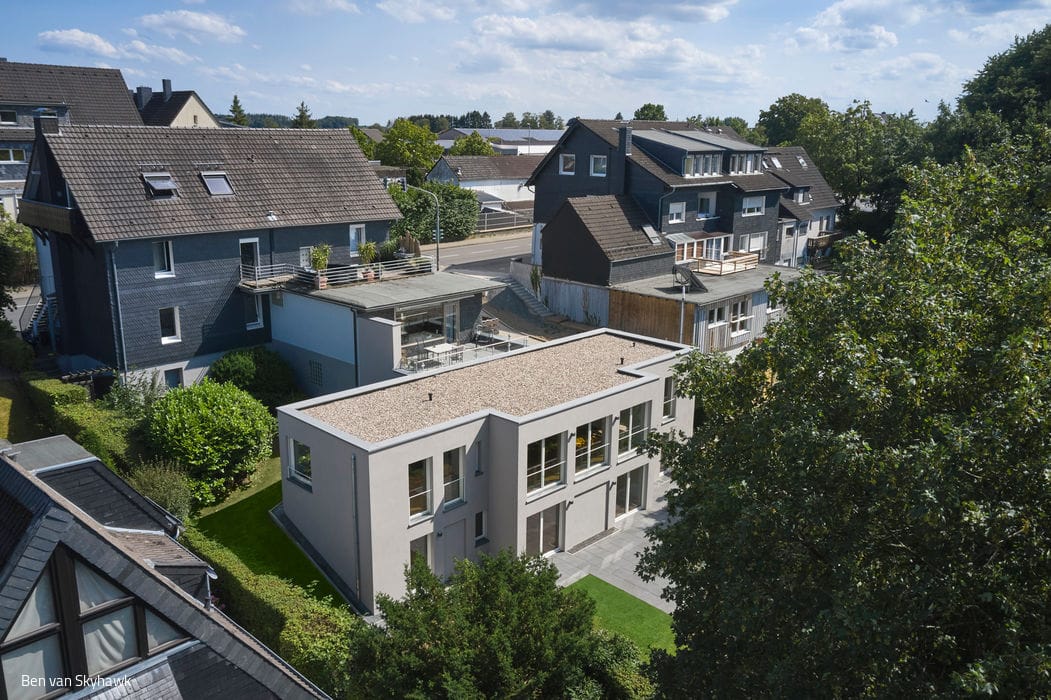
Downslope Extension
Infill development preserves views for all