


Trapeze Act
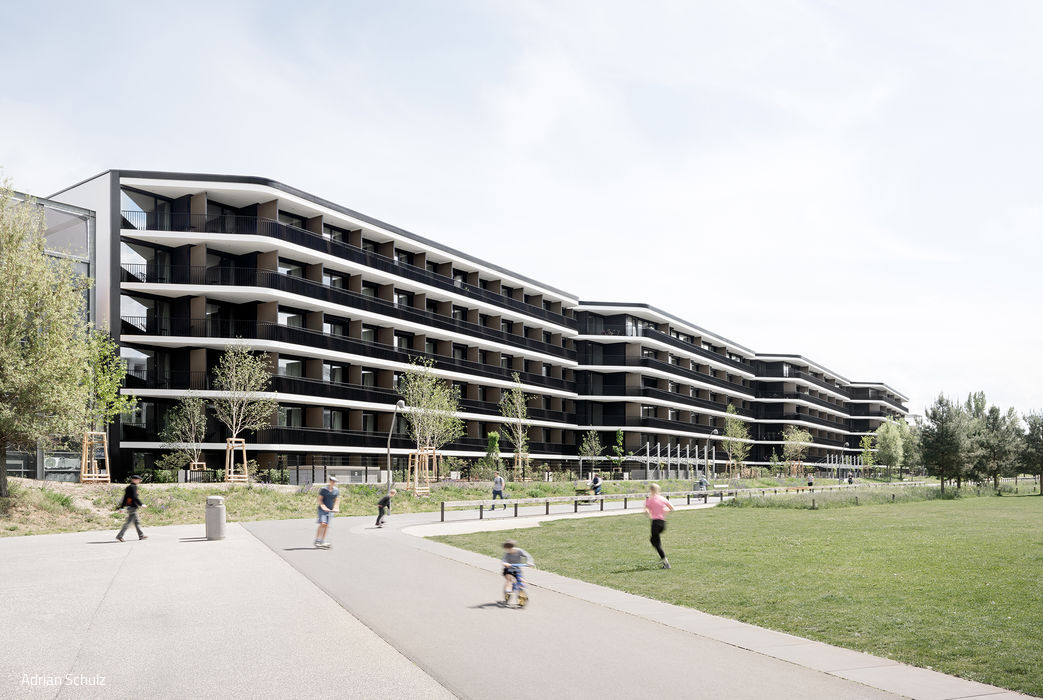
The seven-storey building's contemporary design is defined by layered, faceted surfaces that create visual depth and movement.
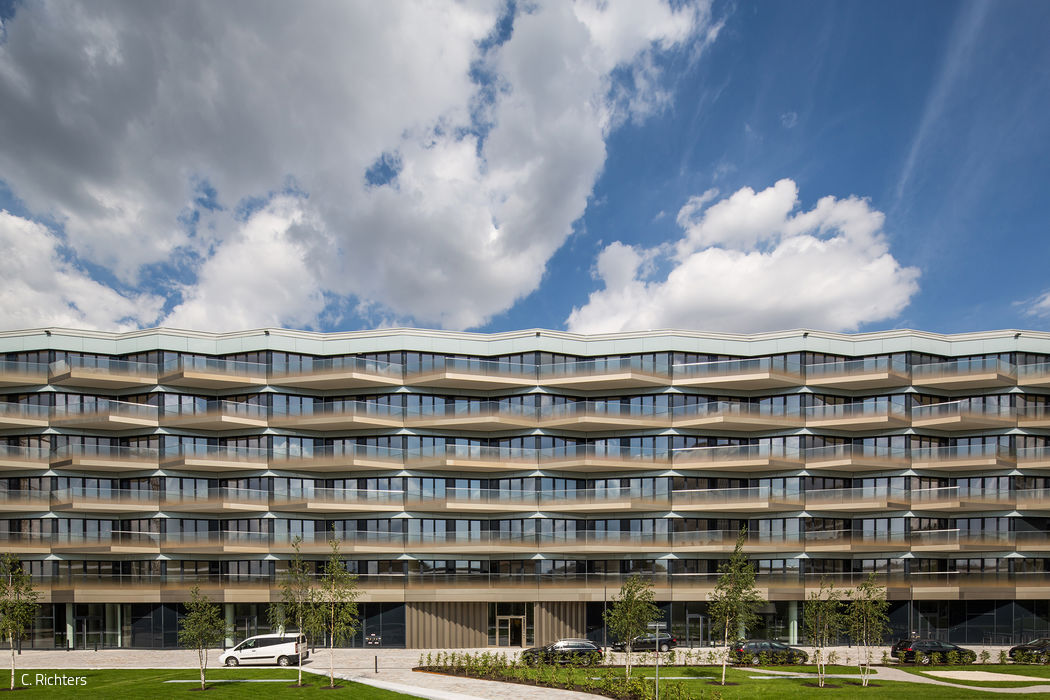
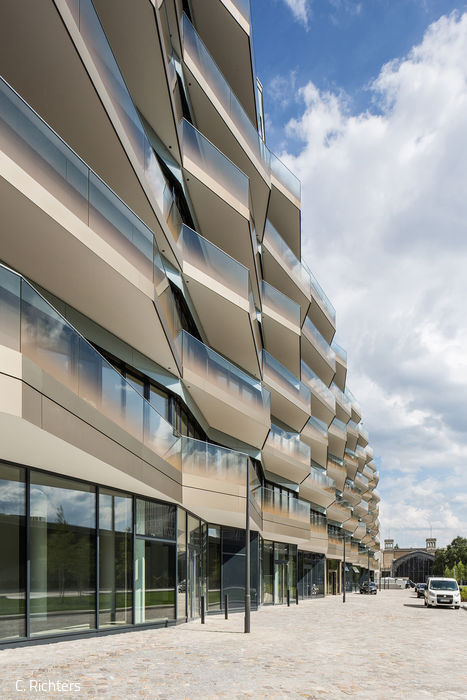
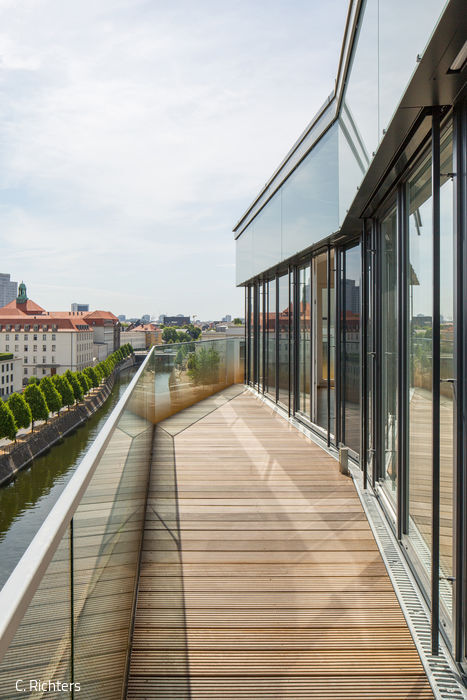
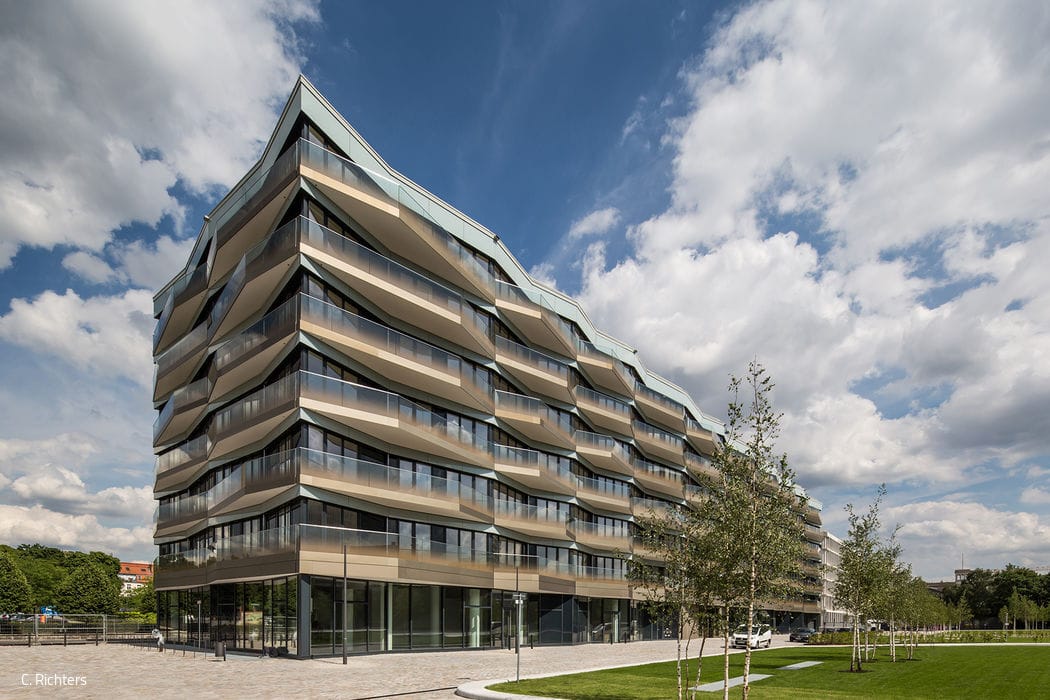
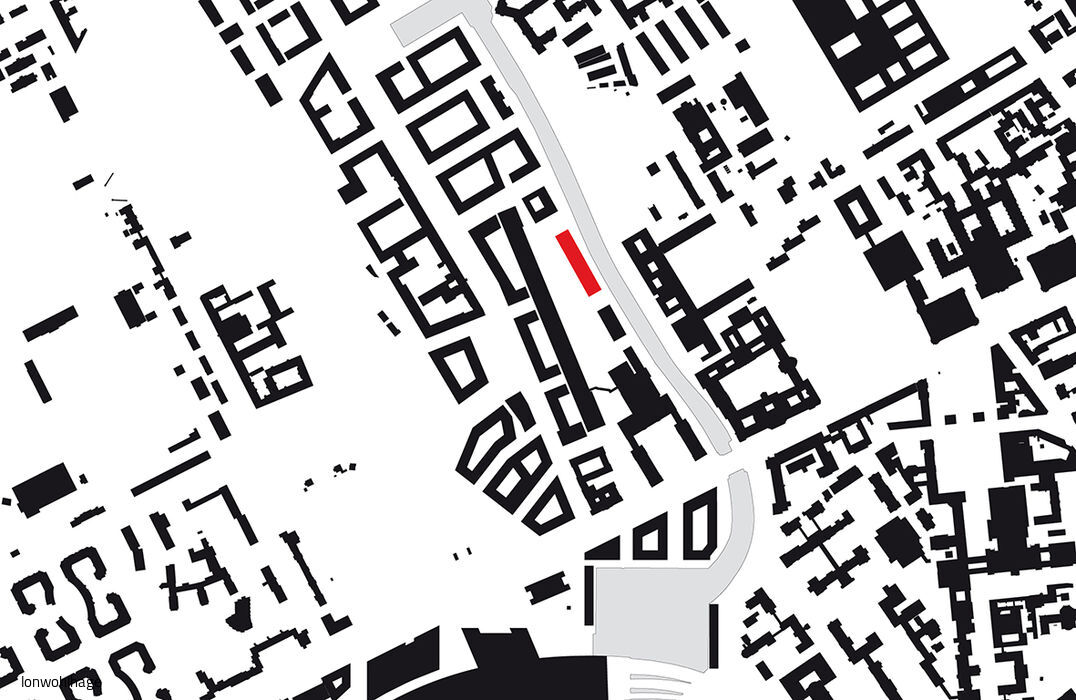
Berlin is growing. Europacity – arguably the largest construction project of the past decade – is gradually coming to life. At the southern edge of this 40-hectare development, just behind the Hamburger Bahnhof museum, stands a striking seven-storey residential building whose façade catches the sunlight. Named "Wohnen am Kunstcampus" (Living on the Art Campus), the project references earlier visions that, unfortunately, remain in limbo – though this does little to diminish the building's undeniable beauty. Designed by Berlin-based firm léonwohlhage under the direction of Hilde Léon, the project exemplifies the studio's signature excellence. The result: 120 luxury residences. The location is undeniably prime – Berlin-Mitte, immediate proximity to the main railway station, and waterfront access all add to its appeal. The building's east façade overlooks the Berlin-Spandau shipping canal, while its western side currently faces the Rieckhallen. These historic halls were meticulously restored to house the Flick Collection loan, and are scheduled for demolition after the contract concludes in autumn 2021 – though for now, they remain standing, vibrant with colour as part of Katharina Grosse's current installation. When the residential building was completed in 2017, demolition seemed distant. The Kunstcampus vision was meant to materialize through this building alongside additional new construction and the rear of the Hamburger Bahnhof, with galleries occupying the base level and showcasing contemporary art. Whether that vision will ultimately materialize remains an open question.
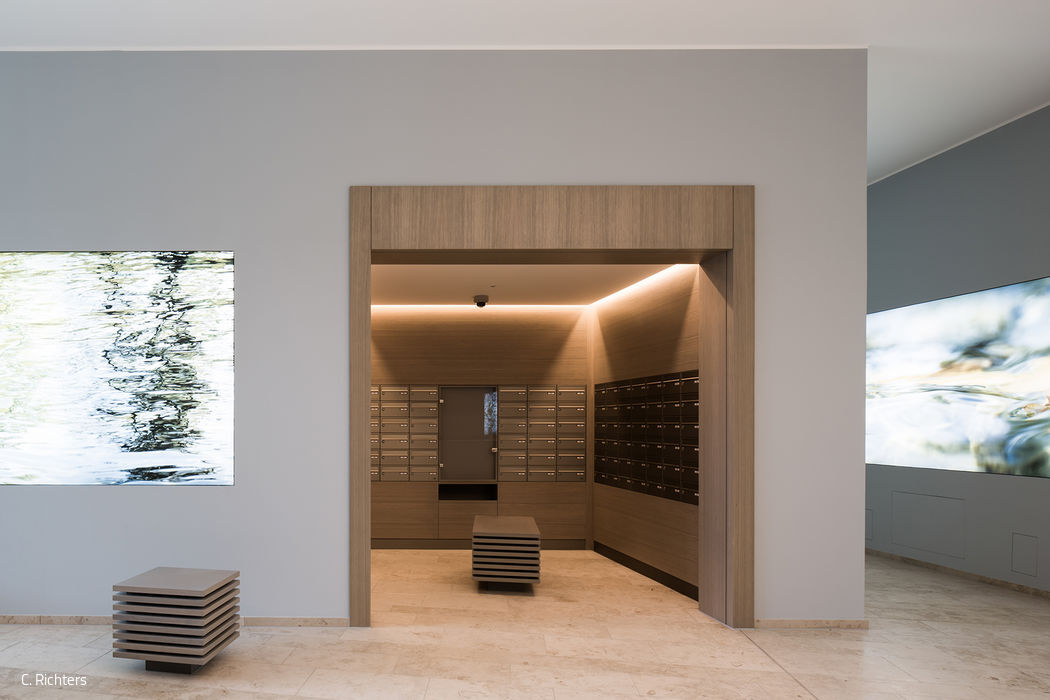
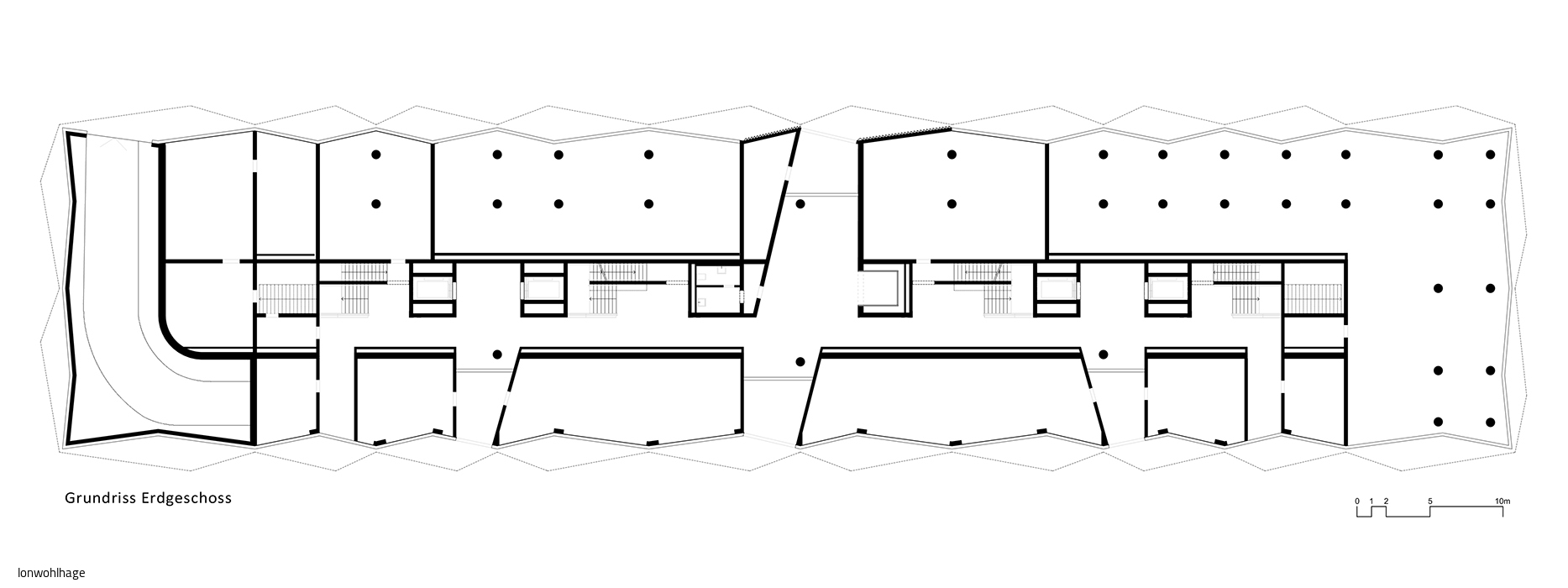
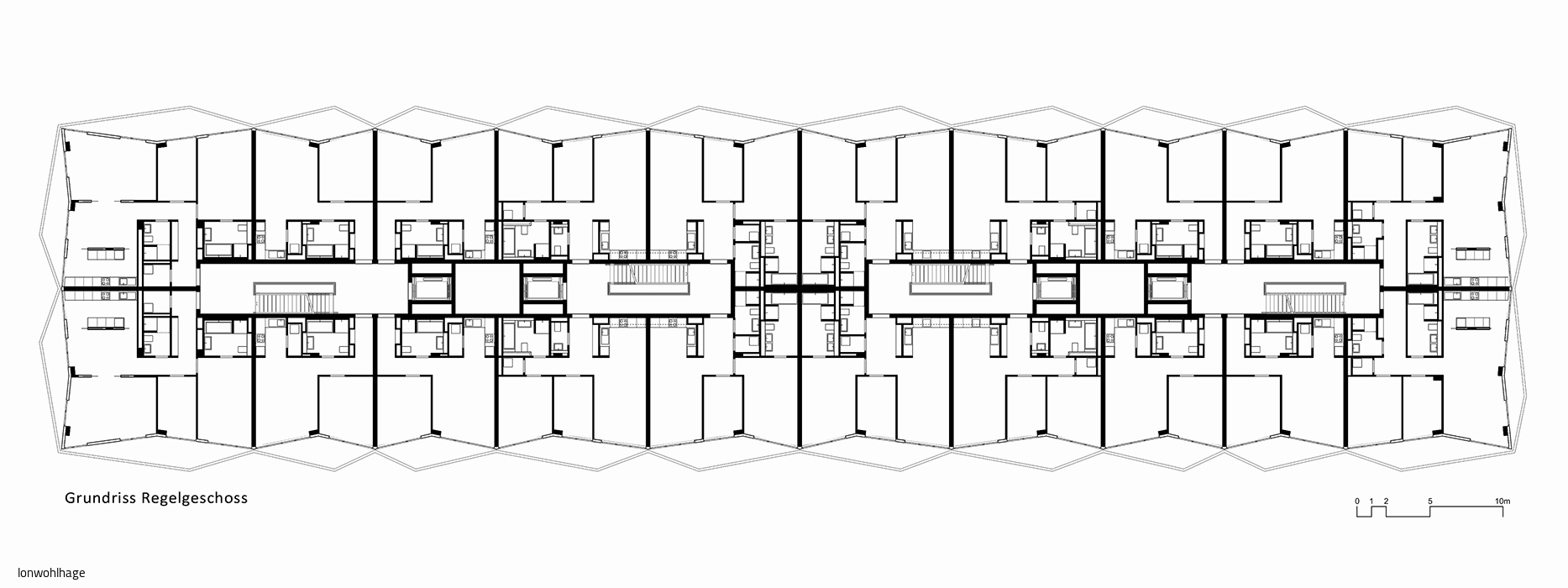
A self-contained statement. The seven-storey building's contemporary design emerges from layered, faceted surfaces in dialogue with its context. The outermost layer comprises irregularly projecting trapezoidal balconies. Beneath this sits the grid of residential units, each opening toward the exterior through two glass façades in a V-shaped configuration. Screen-printed glass railings on the balconies reflect the surrounding environment like a visual puzzle, amplifying the interplay of light and shadow while lending the structure a crystalline quality. The generous central entrance with its spacious lobby and concierge service leads residents to four internal stairwells. Ranging from two to four rooms and sizing between 67 to 123 m², the apartments run deep and are accessed via a central service corridor. Larger units occupy both ends of the building, opening onto two cardinal directions with dual balconies. Full-height glazing ensures consistent natural light, while the asymmetrical projecting balconies double as verdant outdoor living spaces. Flooring selections include either oak or doussie parquet; bathrooms feature expansive tilework in varied palettes.
Photography Credits:
C. Richters
(Featured in CUBE Berlin 03|20)

A Private Retreat
Renovation and reimagining of a period apartment to create a serene sanctuary

A Safe Haven for Children
A luxury hotel reimagined for a new purpose.

A Welcoming Sanctuary
Restoration, Redesign, Expansion, and Reopening of the Museum of Medical History
Living Over Parking
Halving a parking garage to make room for four residential buildings at Gleispark