


Diversity in unity
Offenbach's new gateway—blending urban diversity with vibrant, quality living spaces
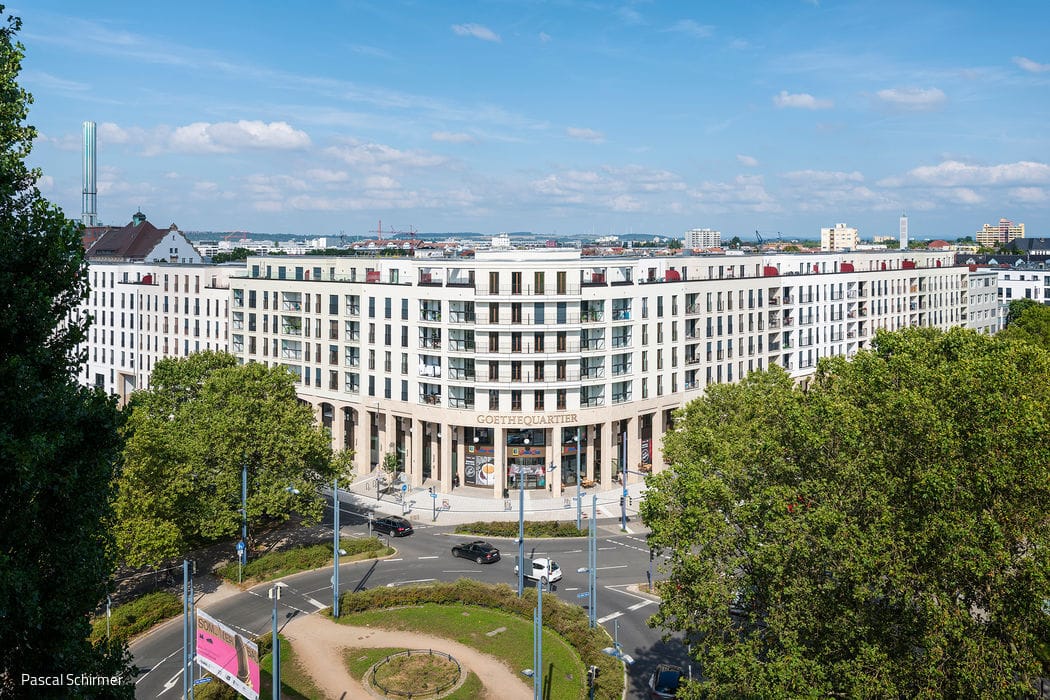
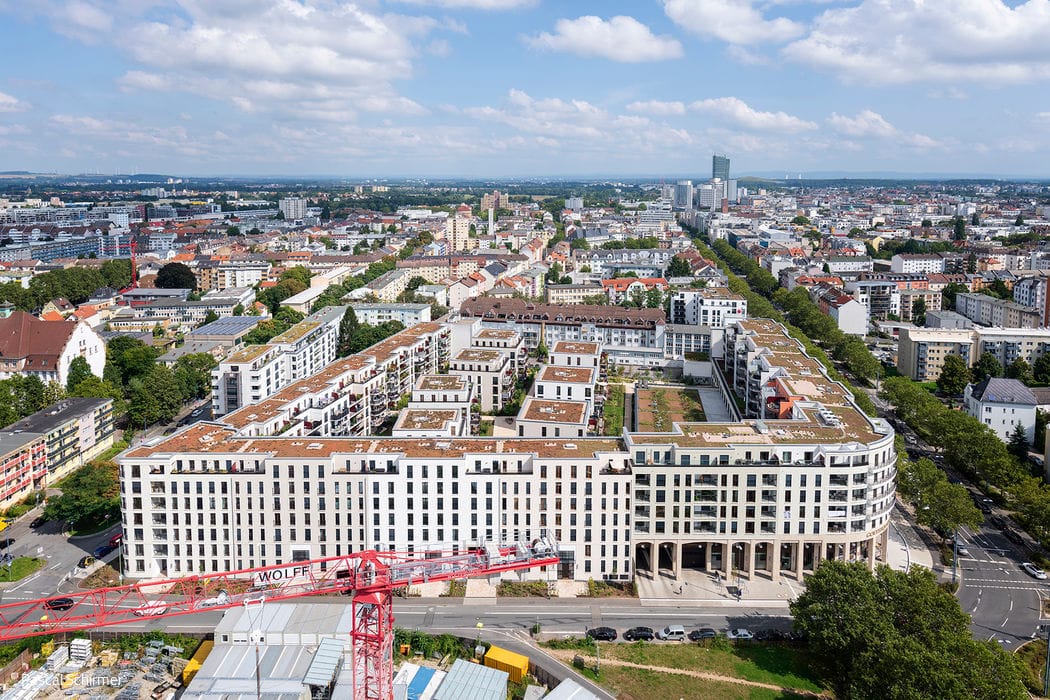
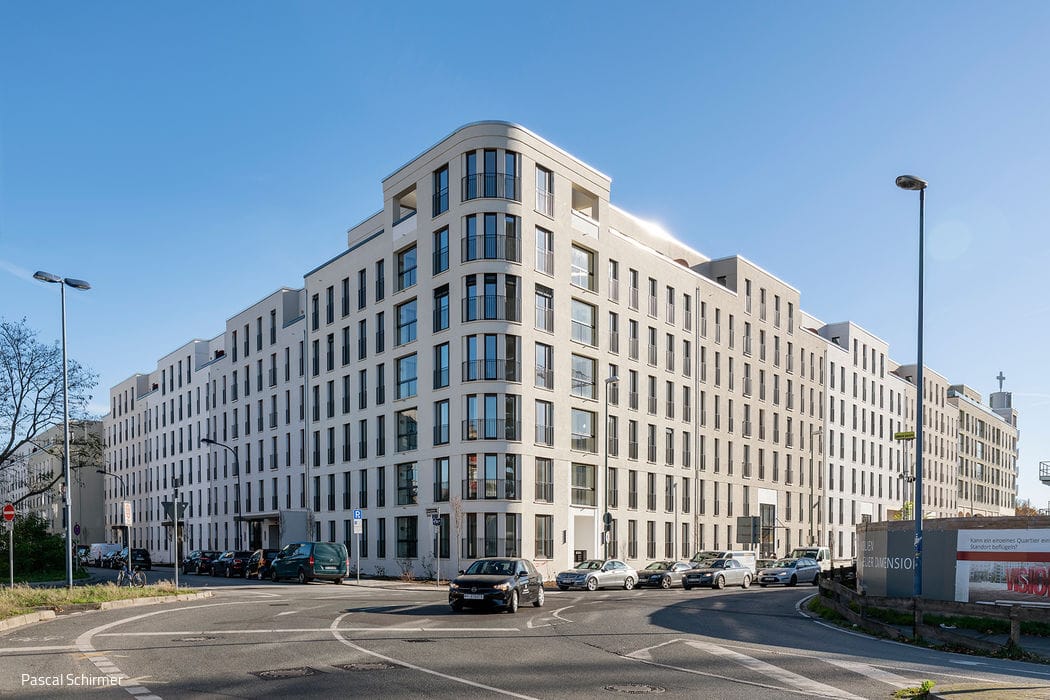
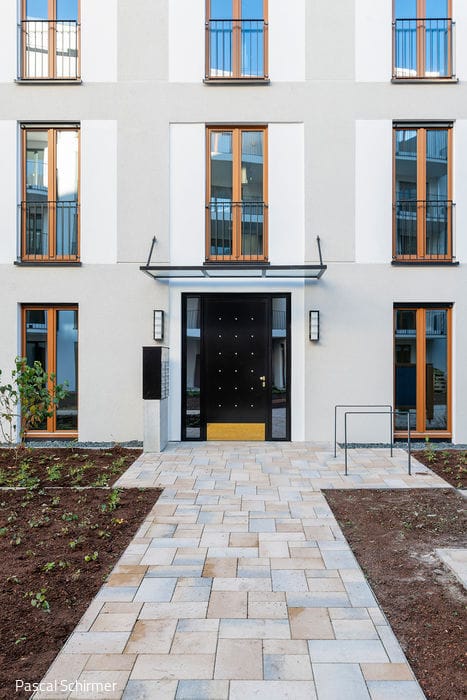
The site where the Collet and Engelhard machine tool factory once stood lay dormant for years, leaving Offenbach's western entrance looking distinctly uninviting. That has changed dramatically. The Goethequartier—one of the city's most significant residential developments—now transforms the 1.8-hectare area between Bernardstraße and Berliner Straße. By early 2021, this ambitious project delivered 327 rental apartments (roughly 25 percent subsidized), a daycare center, supermarket, retail and office space, and parking—creating a vibrant urban district. This thoughtful mix breathes new life into the city's edge, redefining how residents experience living spaces while reshaping the urban landscape near Frankfurt, Kaiserlei, and Offenbach's harbor.
Designed by Frankfurt architects Landes & Partner, the project masterfully extends the historic perimeter block architecture of Offenbach's Nordend through to Goethering, respecting the city's existing urban grain and proportions. "The residential buildings are carefully orchestrated to express 'diversity within unity,'" explains Landes. "The result is a metropolitan ensemble that reads as a unified composition, yet each building maintains its own architectural identity. By weaving individual structures together, we create a cohesive urban block." The concept draws inspiration from 19th-century Paris—specifically Baron Haussmann's distinctive apartment blocks with their refined color palettes and facade proportions. Yet the architects have boldly reinterpreted these classical principles for today, achieving something radically contemporary.
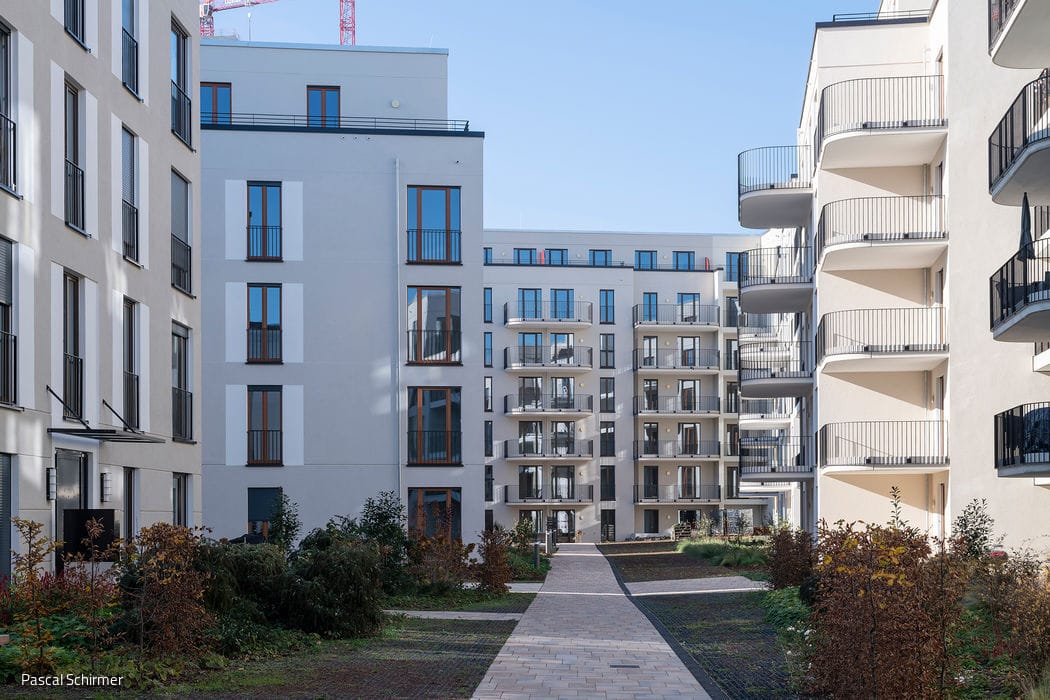
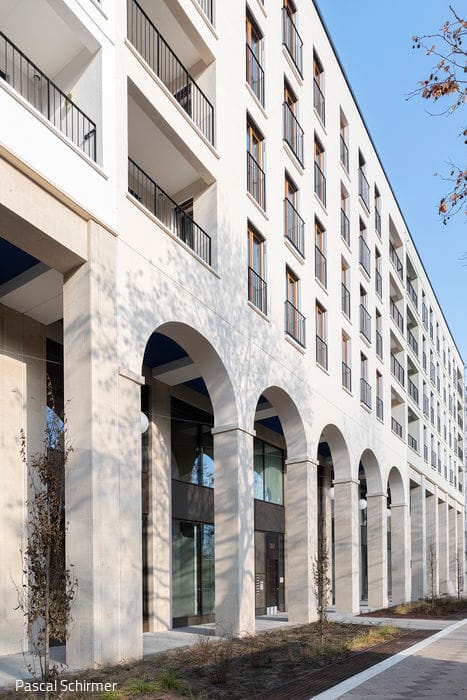
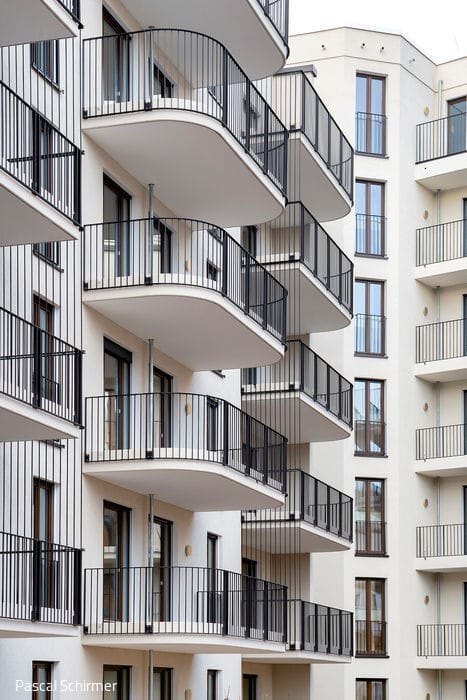
Every building features a rendered facade with natural stone accents and a carefully calibrated color palette that articulates the facades. Windows of varying colors and differentiating frames, surrounds, and sills—complemented by balconies, loggias, and facade rhythms—establish each structure's individual character. Material and textural variation further reinforces this identity. Each entrance is distinctly marked and independently accessible, creating its own legible address through the interplay of facade composition and the building's color scheme.
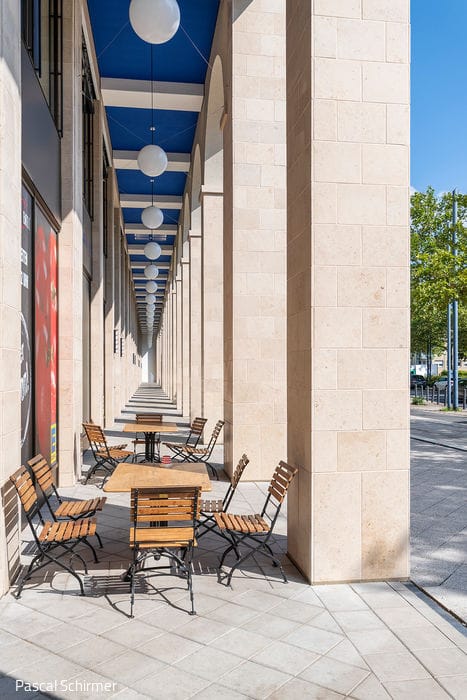
The building heights gradually step down toward the northeast, approaching Bernardstraße. Corner buildings anchor the composition as focal points, with softened rounded edges. The corner building at Berliner Straße, for instance, is crowned by a raised cornice and roof pergola. Six buildings along Berliner Straße feature two-story arched arcades that evoke a cosmopolitan, Mediterranean character, extending into the Goethering transition. Here, retail space spans two floors, with the arcades creating a visual transition between commerce and the apartments above. The courtyard harbors seven five-story residential buildings—densely configured yet distinguished by refined detailing and generous entrances that emphasize their villa-like presence.
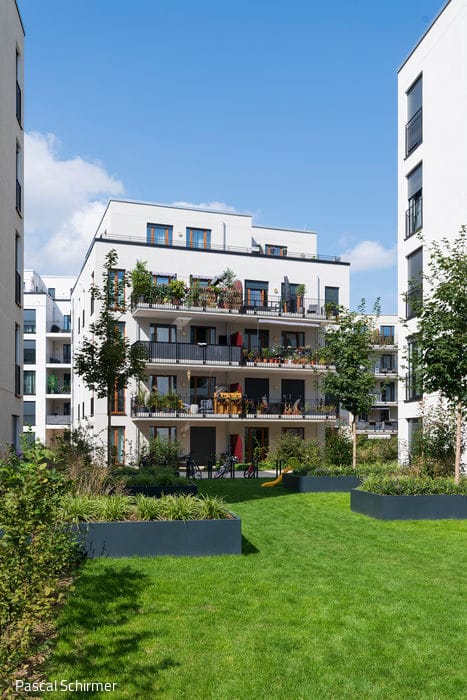
Every apartment opens onto generous outdoor space—balconies, front gardens, terraces, or rooftop terraces on upper floors. The central courtyard, accessible from multiple sides, unfolds as a lush green oasis with generous landscaping and play areas. Rather than mere separation, the courtyard becomes a vibrant communal zone where ground-floor terraces and garden areas blur the boundary between private and shared life. Deep balconies and loggias reach generously into the common space, creating a sense of openness and connection. This permeable relationship between inside and outside, private and collective, resonates strongly with residents.
Photography Credits:
Pascal Schirmer
www.pascalschirmer.de
(Published in CUBE Frankfurt 04|21)


In Love with Frankfurt
Photographer Alex Habermehl offers his distinctive perspective on the Main metropolis

Shift in Atmosphere
A 1970s villa transformed into a warm, intimate home in record time.
Less is More
An office atmosphere shaped by essential organization, clean surfaces, and exposed structure.
Understated Elegance
A compact new building that elevates the learning experience for future physicians