


Diverse Living Spaces
Pioneering Climate Protection: The Jenfelder Au District
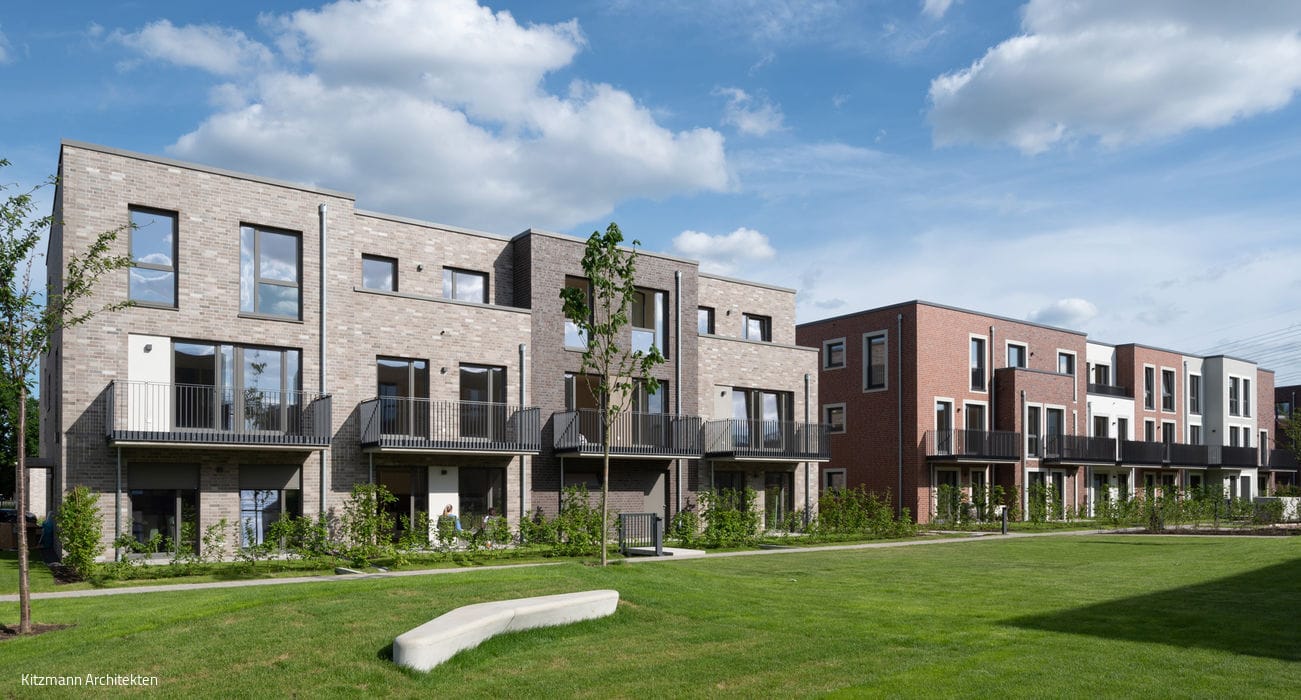
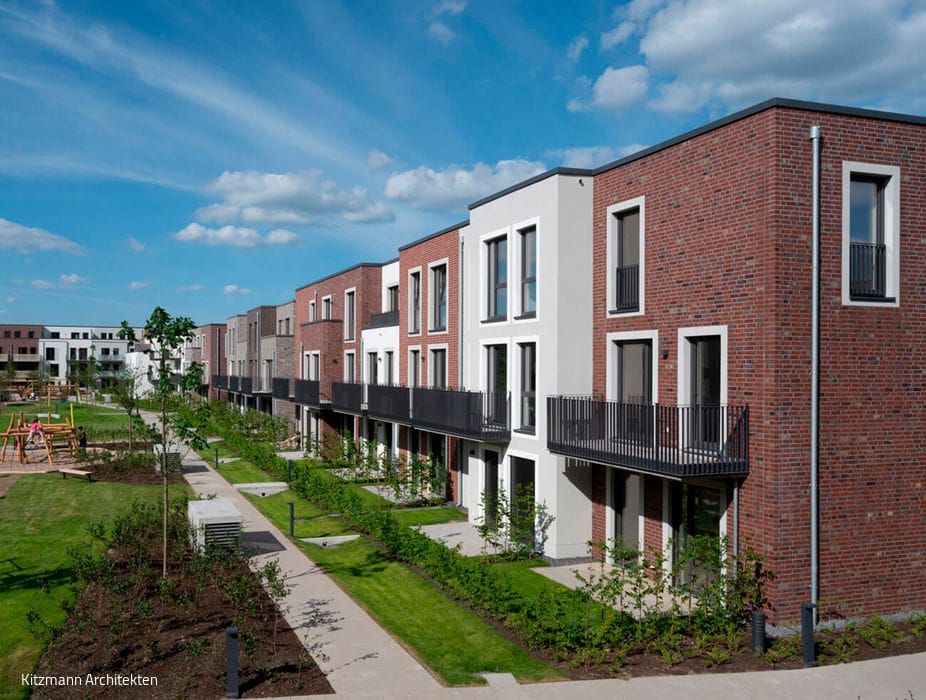
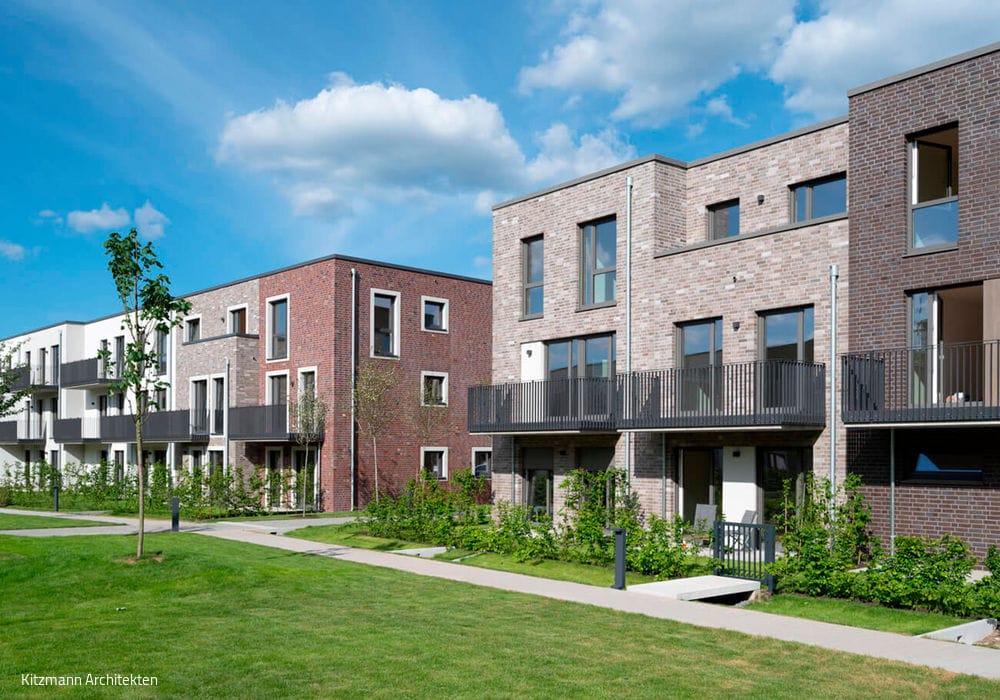
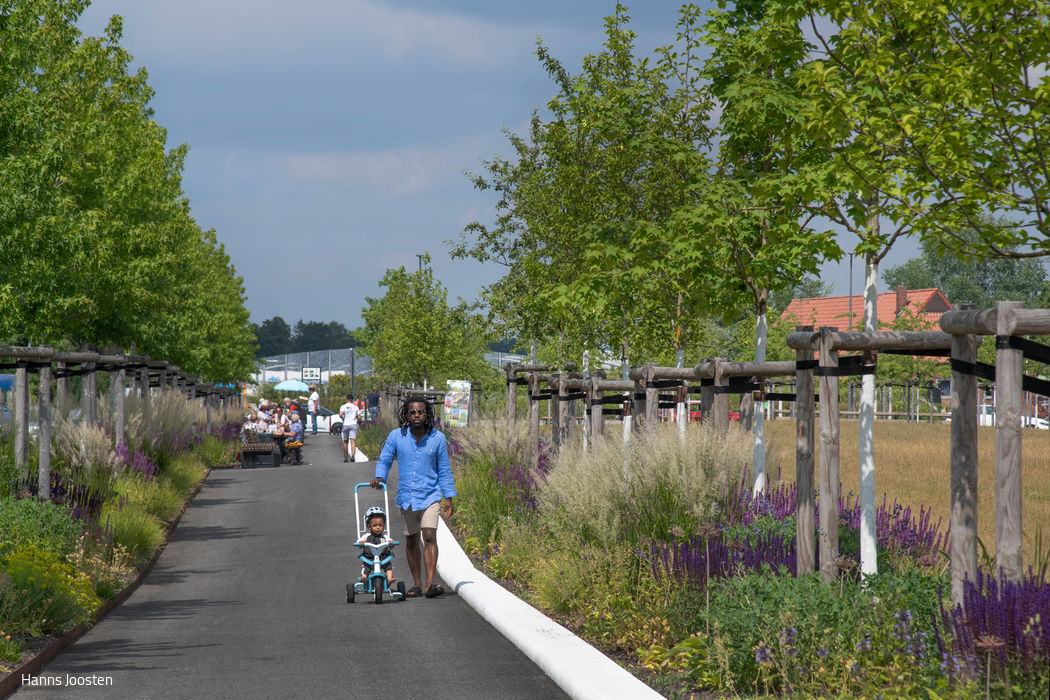
Rising in Jenfeld on the 35-hectare site of the former Lettow-Vorbeck barracks, the new Jenfelder Au district marks a turning point in urban development. Designed by Rotterdam-based West 8 following their 2006 competition win, this neighbourhood for 2,000 residents serves as both a municipal model district and a pilot project for Germany's "National Urban Development Policy". Here, the innovative "Hamburg Water Cycle®" drainage concept makes its large-scale debut, treating water as a resource rather than waste. Rainwater, black water (from toilets), and grey water (other wastewater) are collected and managed separately. Vacuum toilets in every household feed collected black water into a biogas facility, which powers the neighbourhood's own combined heat and power plant to generate climate-neutral energy for all residents.
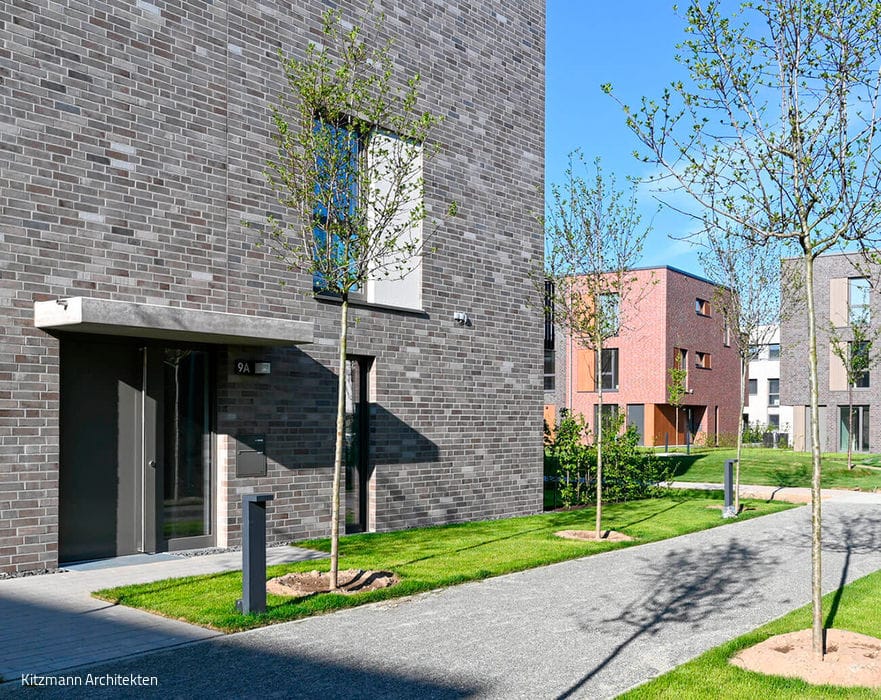
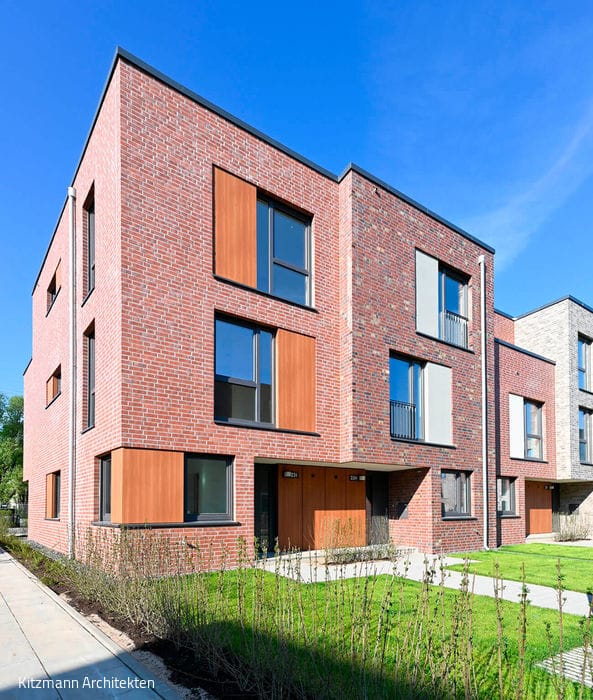
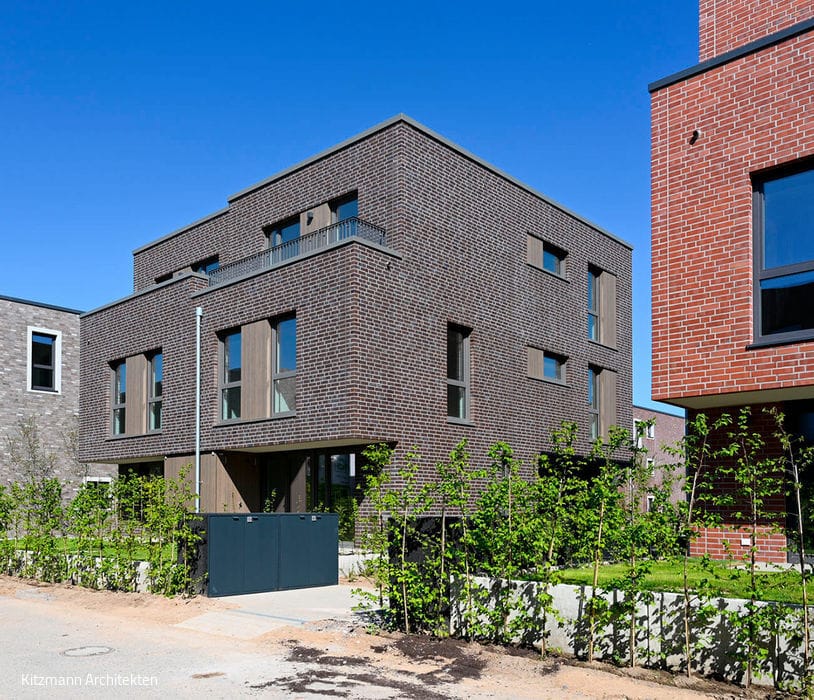
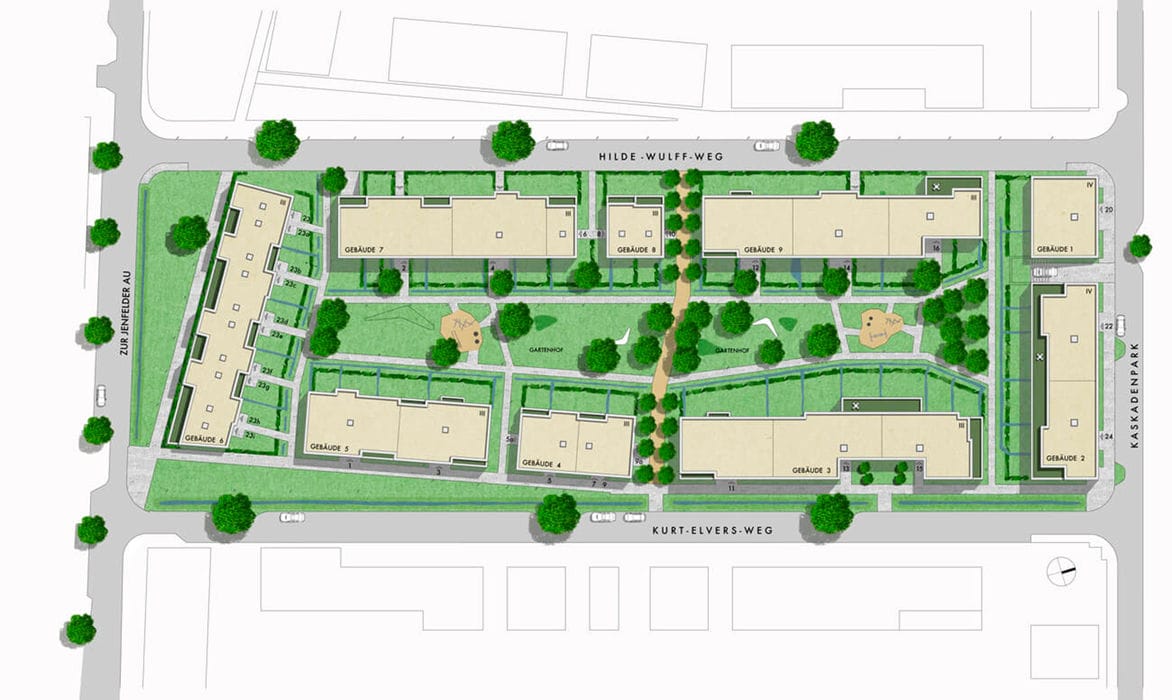
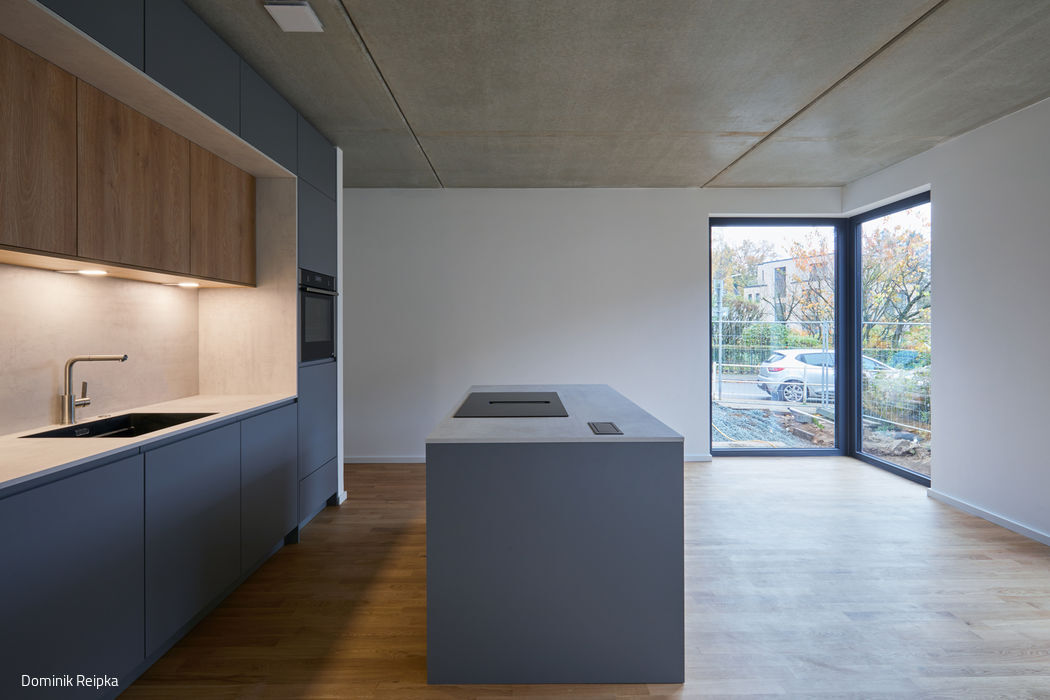
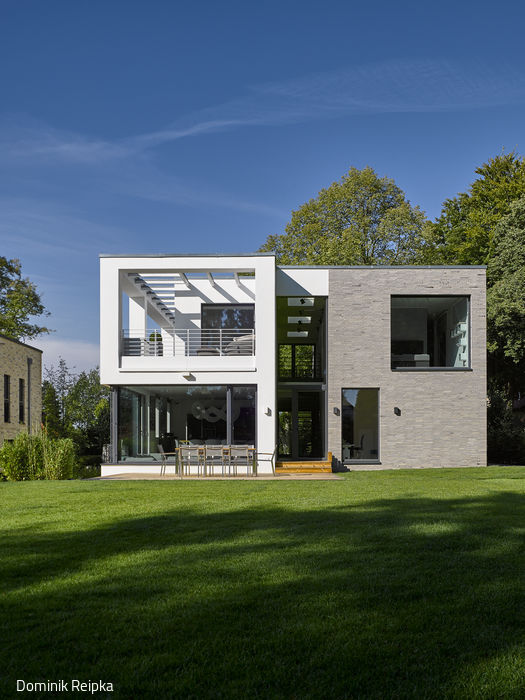
This residential development by Kitzmann Architects for Meravis Bauträger GmbH stretches southward from the central, publicly accessible cascade park. Nine buildings loosely frame a verdant inner courtyard, housing 120 residential units across 2–4 rooms. The staggered composition—13 townhouses, 26 stacked maisonettes, and 81 apartment flats—creates a rich architectural tapestry, each building distinguished by clinker bricks in different colour families that coalesce into a cohesive mosaic. Facing brick alternates with wood-effect elements to add visual depth. Three-storey structures ingeniously combine ground-floor flats with maisonettes above, while roof terraces alternate between east and west exposures. Recessed entries and staggered upper floors unify the material language throughout. Saddle-back maisonettes connect via gallery staircases, while terraced townhouses open to the park on their south facades and are accessed from the north through the courtyard. The site's seamless transition to public space means ground-floor terraces are set back and screened with hedging. Stormwater flows above ground through ditches and channels, feeding the cascade park before reaching the retention basin—the water itself becomes part of the landscape design, naturally delineating public and private green zones. Shared basement parking connects all staircases, with integrated tenant storage, bicycle facilities, pram storage, and laundry and drying rooms.
(Published in CUBE Hamburg 04|20)


Where Timber Meets Steel
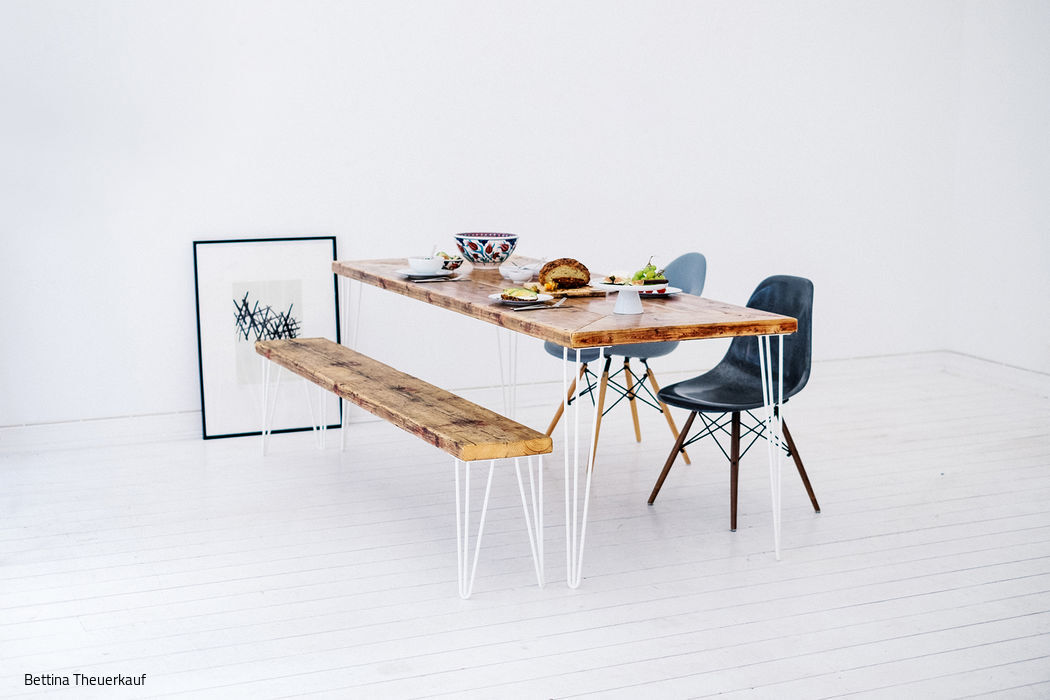
Since 2016, he has been creating durable, understated furniture from wood, concrete, marble, and steel.
A Vibrant Civic Hub
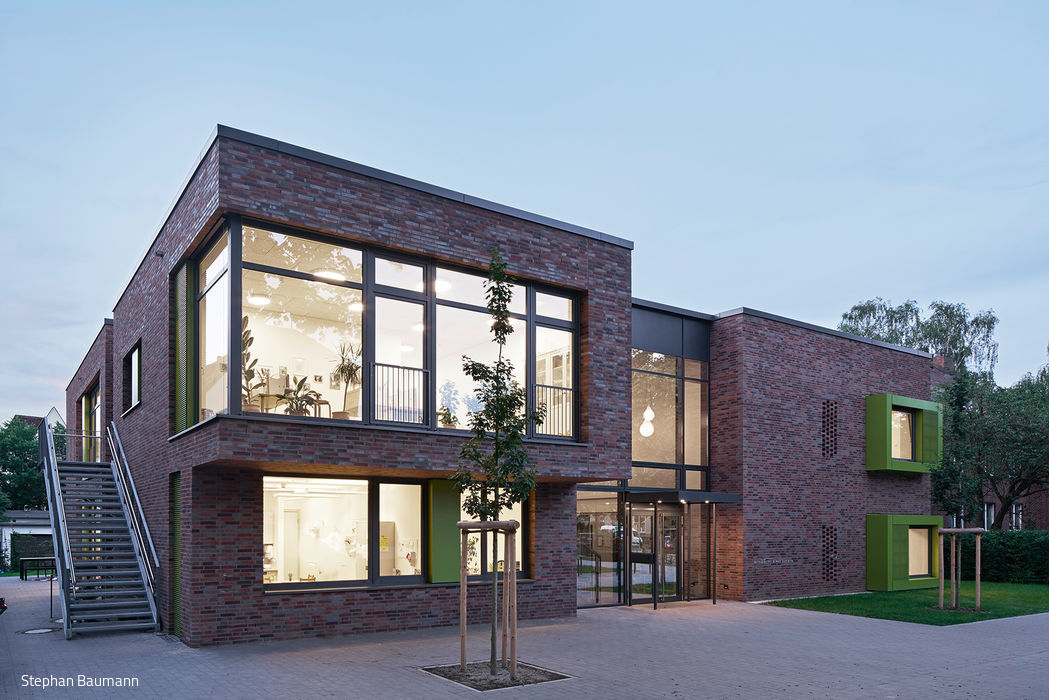
The reimagined Emmaus Church precinct in Wilhelmsburg secures the community's future
The Green Centre Connects
From roaring traffic to thriving green space – the remarkable reinvention of a fractured city

The good life
House and pool pavilion—designed precisely for family life.