


Less is more
A cabin hotel in St. Georg that brings together privacy and community spirit—without breaking the bank.
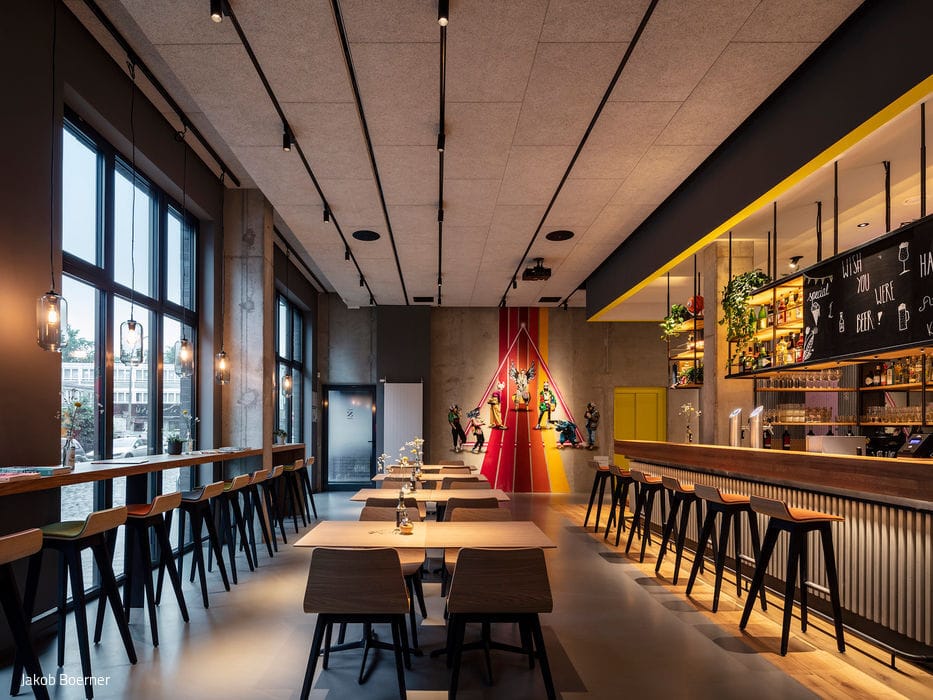
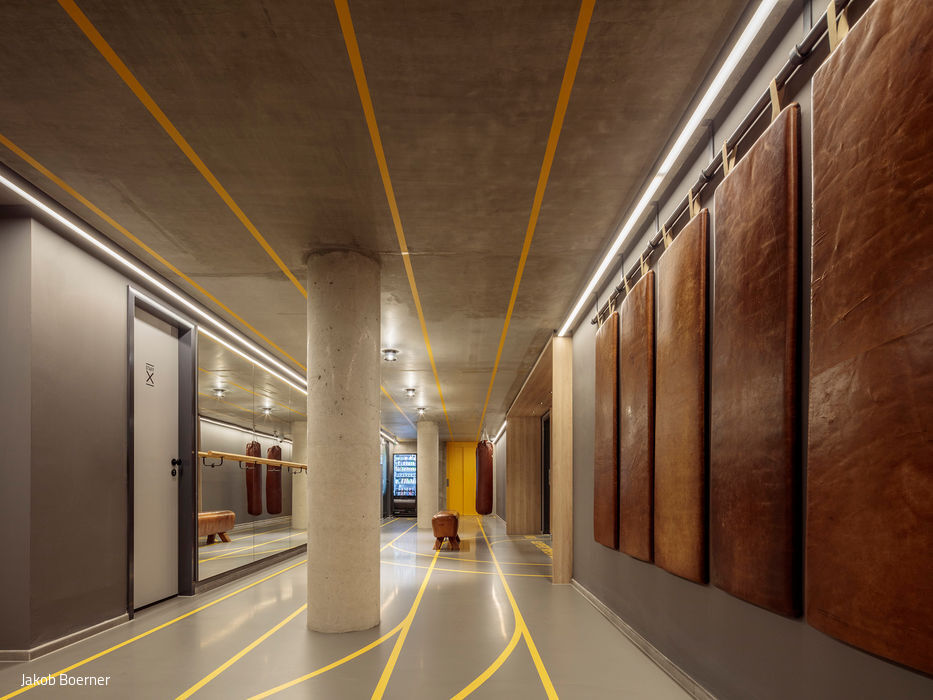
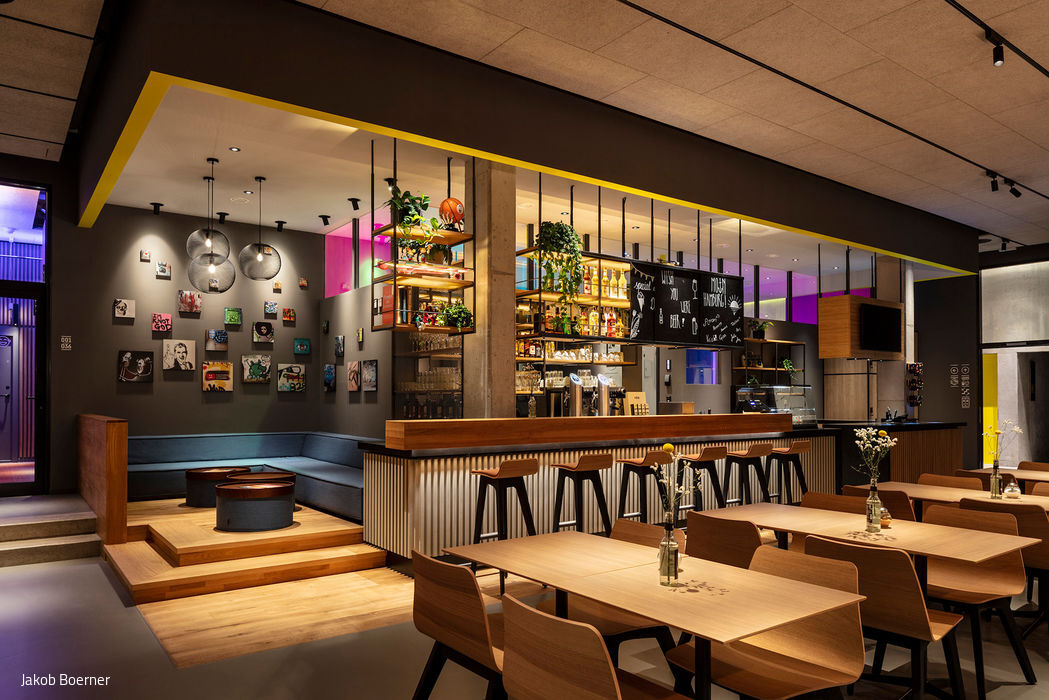
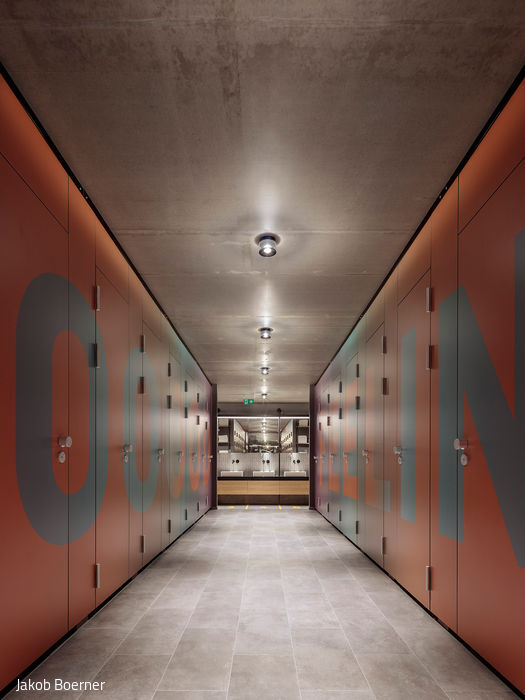
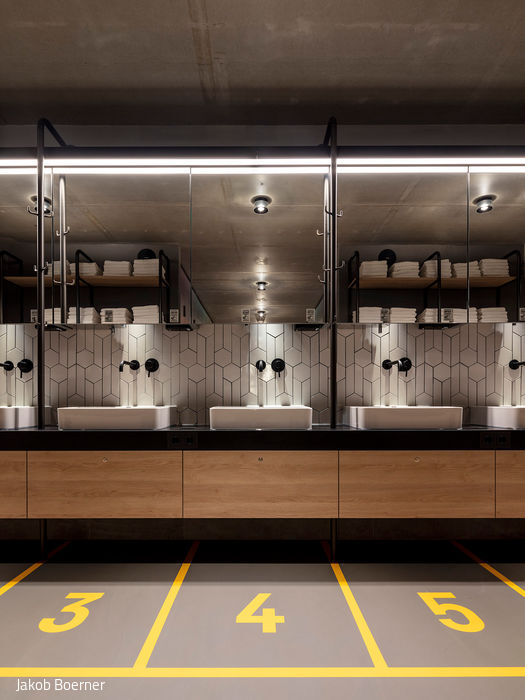
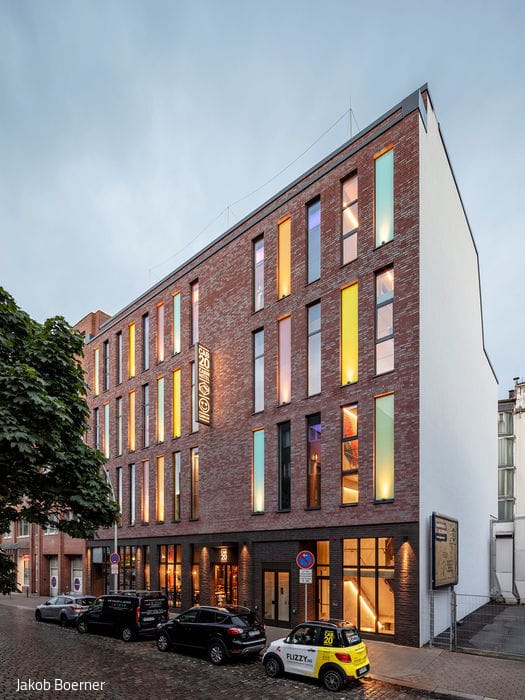

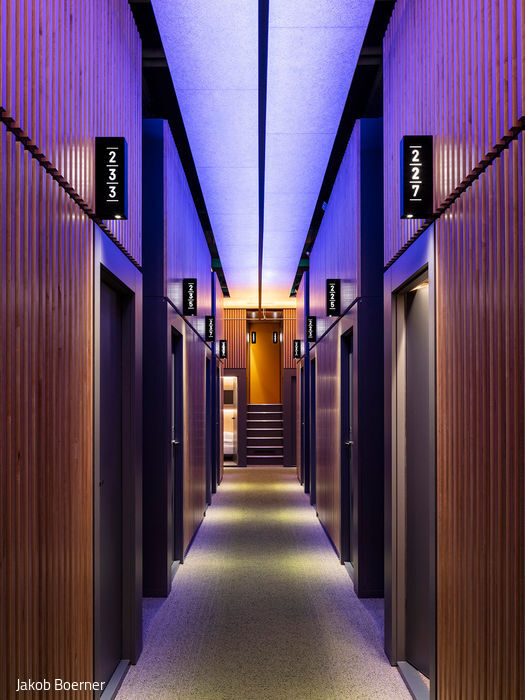
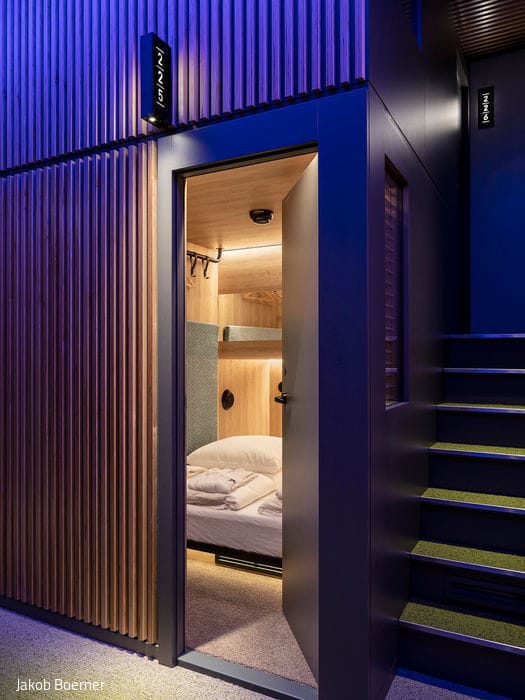
Germany's first capsule hotel, Cab20, opened this summer on Brennerstraße in St. Georg, just a stone's throw from the main railway station. Capsule hotels—also called pod hotels—originated in Japan, where the first opened in 1979 with "rooms" consisting of small plastic pods stacked vertically. These compact units, measuring around 2 m² with a height of 1.20 m, came furnished with a mattress, TV, and radio, accessible by ladder with only a curtain for privacy. Shared facilities housed toilets, sinks, and showers. While these hotels thrive in Japan, they've gained limited traction in the West—though Switzerland, Austria, and England have recently seen a few authentic Japanese-style capsule hotels emerge.The Fährhaus Investment Group taps into the cross-industry microliving trend with Cab20's innovative approach. Janiesch Architektur has reimagined the concept for European sensibilities, particularly appealing to 20- to 35-year-old travelers and tech enthusiasts. The result: 176 ingeniously designed cabins by Clic—arranged in pairs, stacked vertically across three floors. Single cabins span 3.7 m², doubles 6 m², each guaranteeing maximum privacy. Guests enjoy a bed they can stand upright in, clothing hooks, bathrobes, towels, luggage space, electronic key access, and full digital amenities: high-speed internet, wireless charging, and integrated Bluetooth speakers. Everything else exists beyond the cabin. Bathrooms occupy each floor; the basement houses lockable shower stalls in bold, contemporary design accented with floor markings, a punching bag, pommel horse, and ballet barre—evoking the aesthetic of modern fitness spaces. A rooftop common room invites guests to relax, socialize, and soak in the views. The lobby, wrapped in expansive glazing, serves food and drinks in a vibrant urban setting. Local street artists have contributed the hotel's murals and artwork throughout.
www.christophjaniesch.de
www.cab20.de
Photography Credits:
Jakob Börner
www.jakobboerner.com
(Published in CUBE Hamburg 04|21)

Restrained Confidence
The new school building and its heritage counterpart create a harmonious architectural whole.

Tropical Grove at Gänsemarkt
The New Deutschlandhaus: Hamburg's Kontorhaus Reimagined for the Future
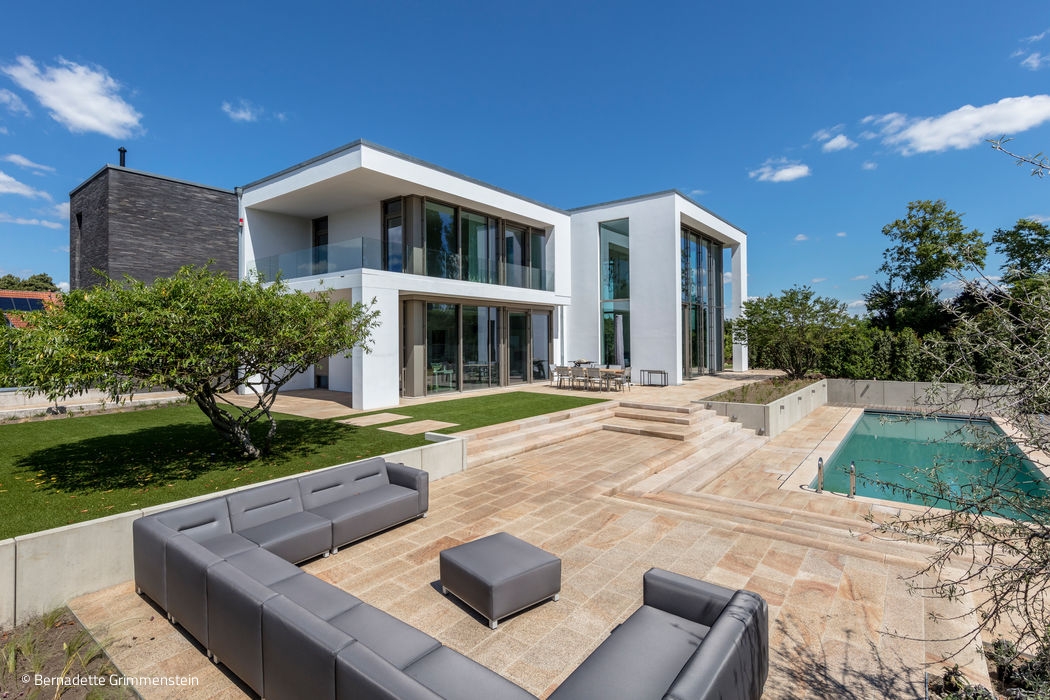
Moorland, Not the Mediterranean
The architects' two cube-shaped house modules create distinct zones—one serving the need for tranquility...
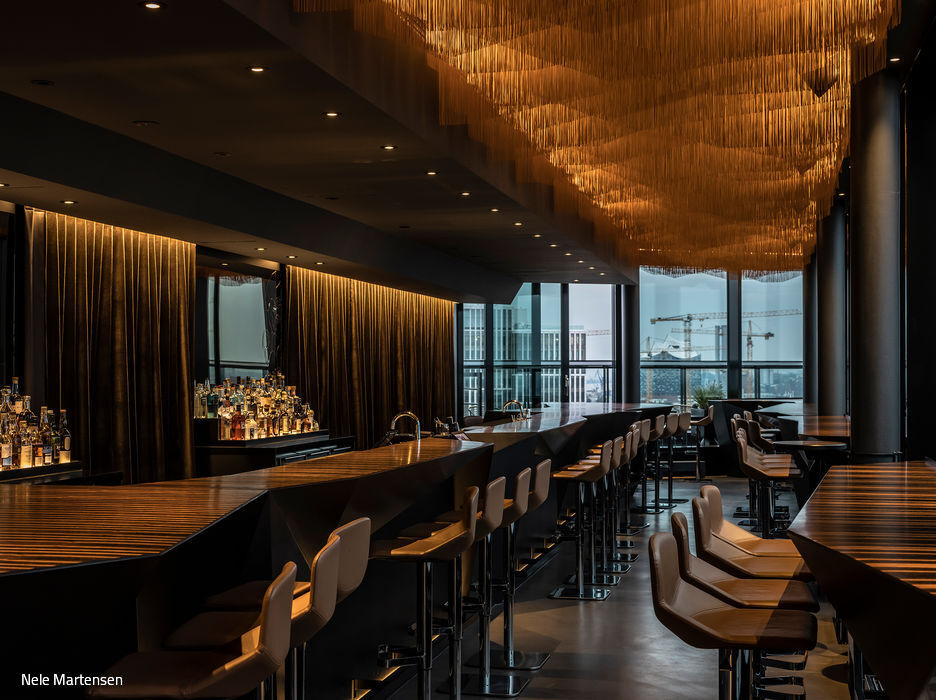
Light Defines Atmosphere
In the Puzzle Bar, cocktails become theater.