


Living in the Moment
Where Space Shapes Itself Through Use
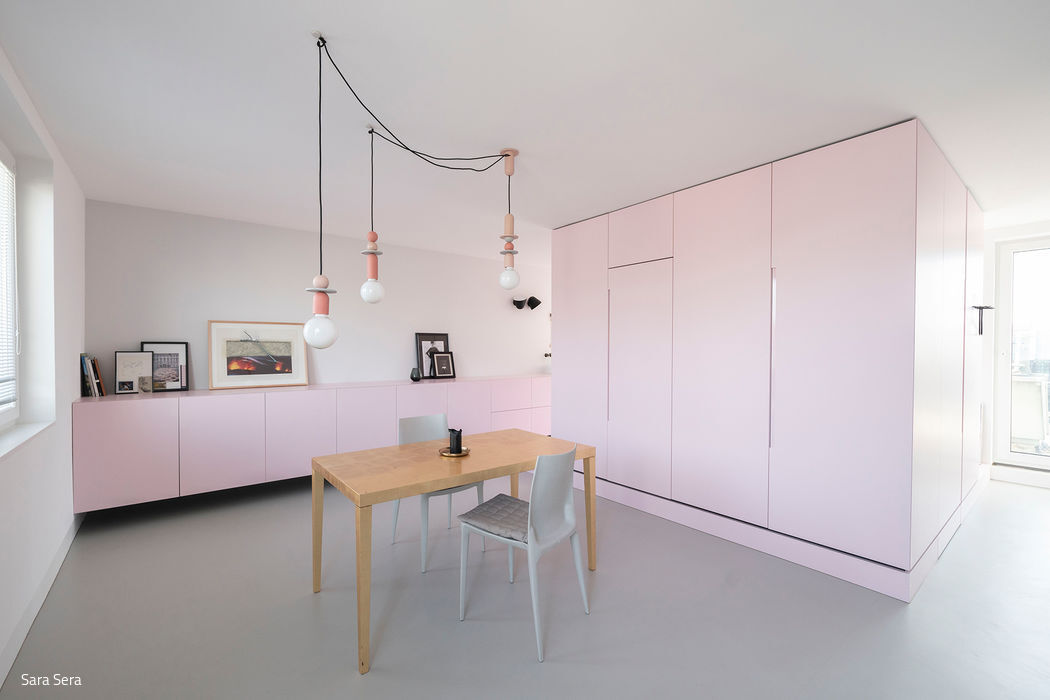


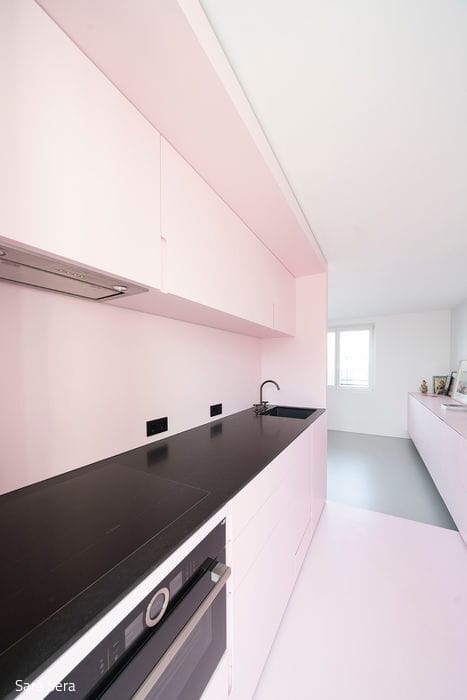

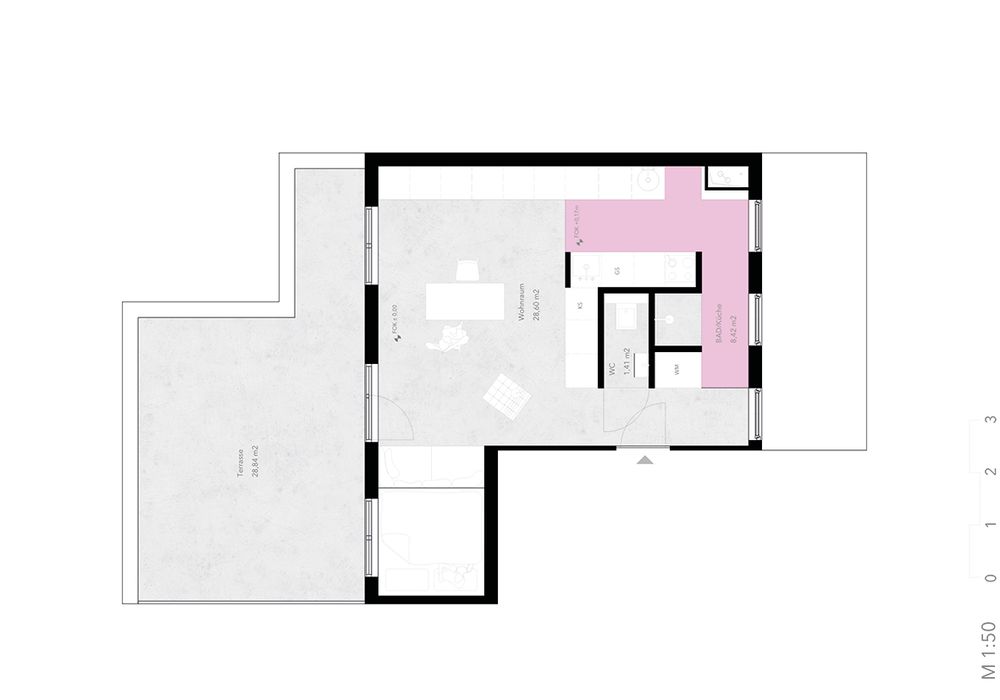
How we'll live in the future—and how we want to—is an increasingly pressing question in architecture today. The challenges are everywhere: from sprawling urban development to the construction industry's enormous carbon footprint. But where there's a problem, there's an opportunity. That's the philosophy driving smartvoll architects. On just 45 square meters across the fifth floor of a typical 1970s building, the firm partnered with its client to demonstrate what forward-thinking residential design can achieve.
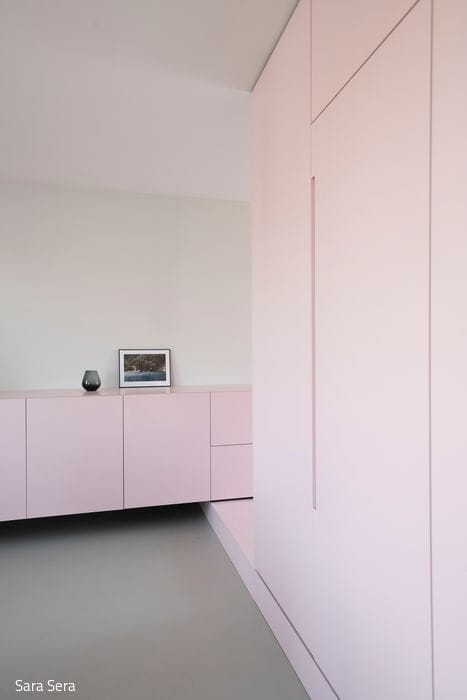
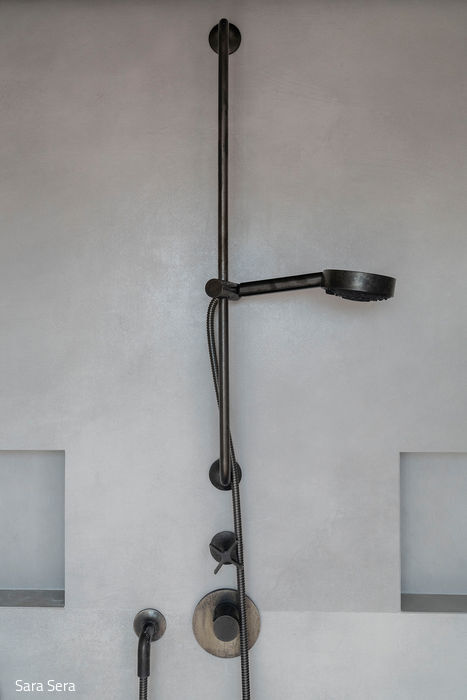
The former compartmentalized layout is gone—walls have been stripped away entirely. Where the kitchen once stood, a bed now nestles into an alcove. A sofa fronts it, serving as both spatial divider and extension depending on how the space is used. Beneath runs a pair of deep drawers, each stretching 2.20 meters beneath the bed. Storage hides seamlessly behind clean surfaces throughout: a wall-mounted sideboard opposite serves multiple duties as buffet, shelf, and display ledge. But the real marvel is the cube anchoring the rear half of the open space—it conceals every utility. One side holds the kitchenette; the fridge tucks around the corner beside the wardrobe. Opposite the entry sits the toilet, with the washing machine nearby. The bathroom spreads organically around this functional core: a countertop sink faces the stove, while mirrored cabinet doors in the narrow bathroom space open outward to shield the shower from view when in use. When closed off this way, the room opens to vistas beyond—rooftops of Rudolfsheim-Fünfhaus stretching to the horizon.
"There's no fixed room," explains architect Philipp Buxbaum. "Everything is fluid. You don't see it all at once." This flowing approach fulfills the client's vision—a living experiment where nothing stays static. What emerges is a space that feels dramatically larger than its modest square footage suggests. "I live here as if on a rotating stage," reflects owner Manuela Hötzl, "where each space reveals another. As I move and shift things—opening this or closing that—the apartment itself comes alive, or settles into quiet. It's completely responsive to how I inhabit it."
Photography Credits:
Sara Sera
(Published in CUBE Vienna, 01|22)


Old School, New Village Centre
One Building, One Identity: Revitalizing the Village Center
Old Meets New: A Study in Reuse
A 1970s House Gets a New Lease on Life
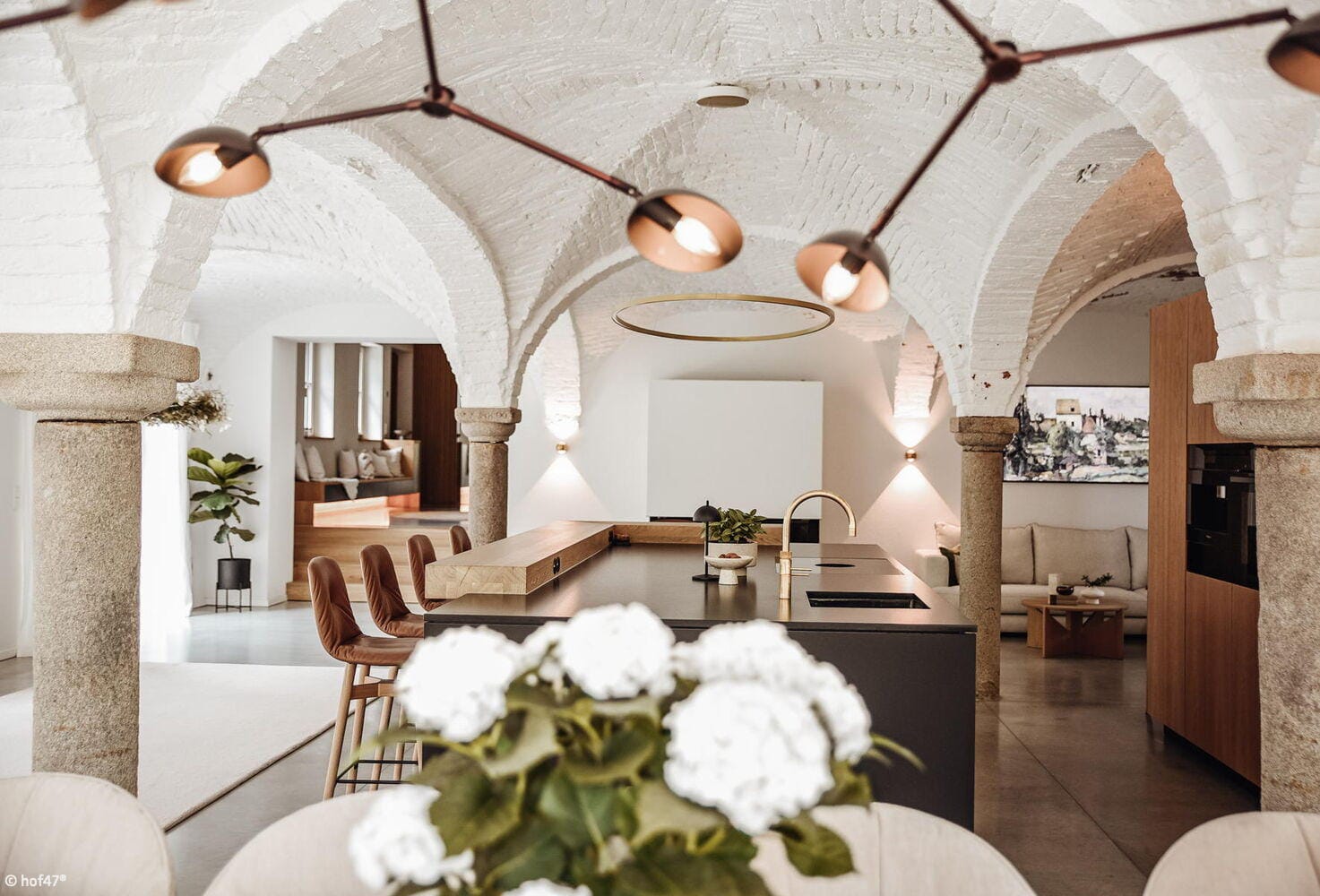
Farmhouse Reloaded
A farmstead on the outskirts of Munich has become a place steeped in history and looking to the future
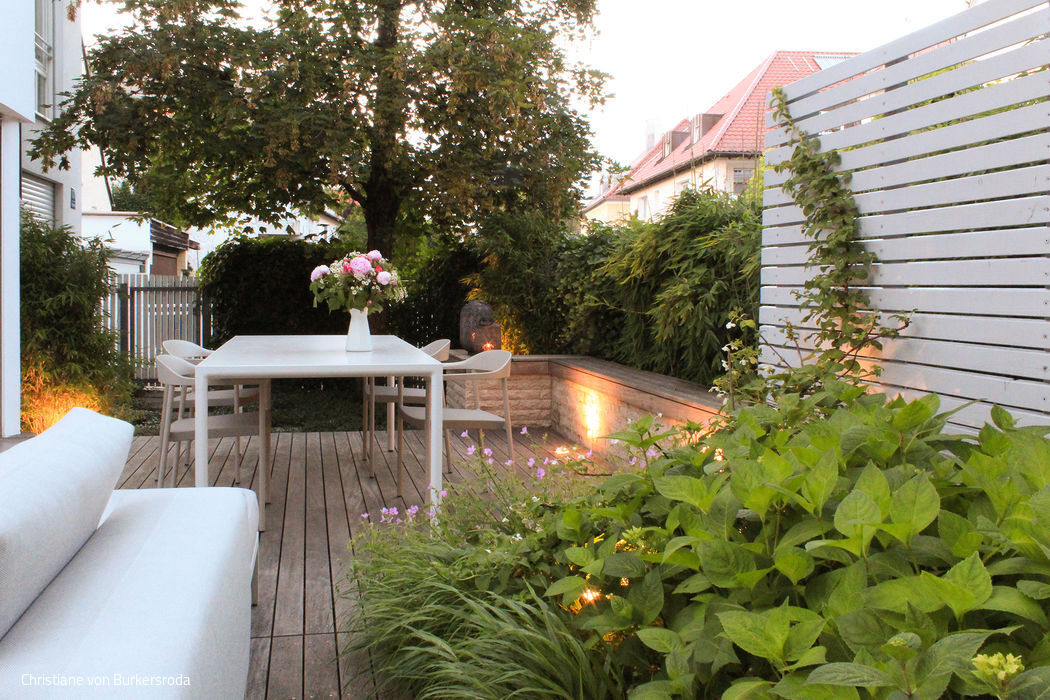
Hamptons Elegance
A half-shaded urban garden sanctuary with compelling maritime character