


Eight kilometres of hornbeam green
The façade of Kö-Bogen II offers innovative solutions for maintaining the microclimate of European cities
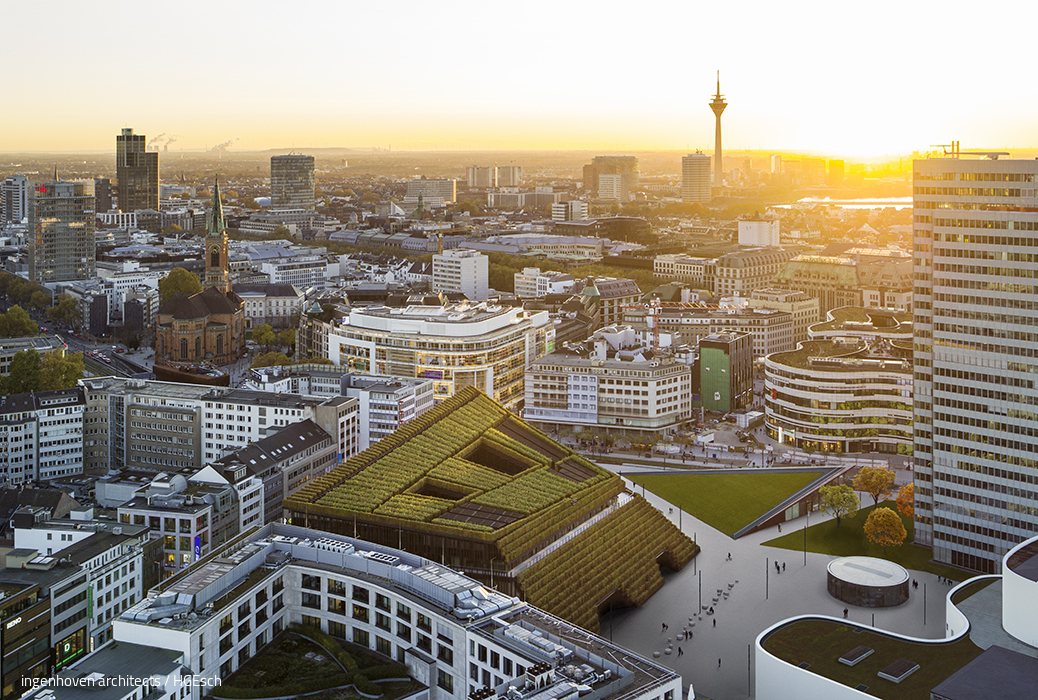
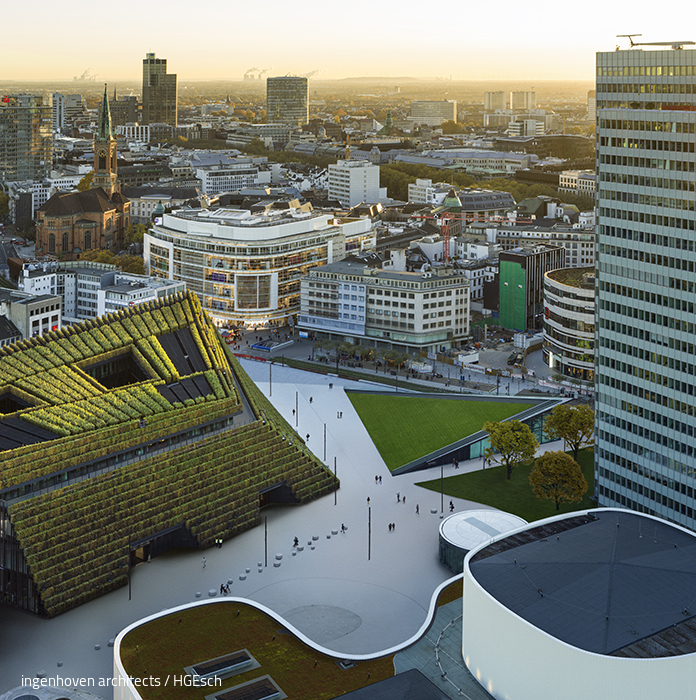
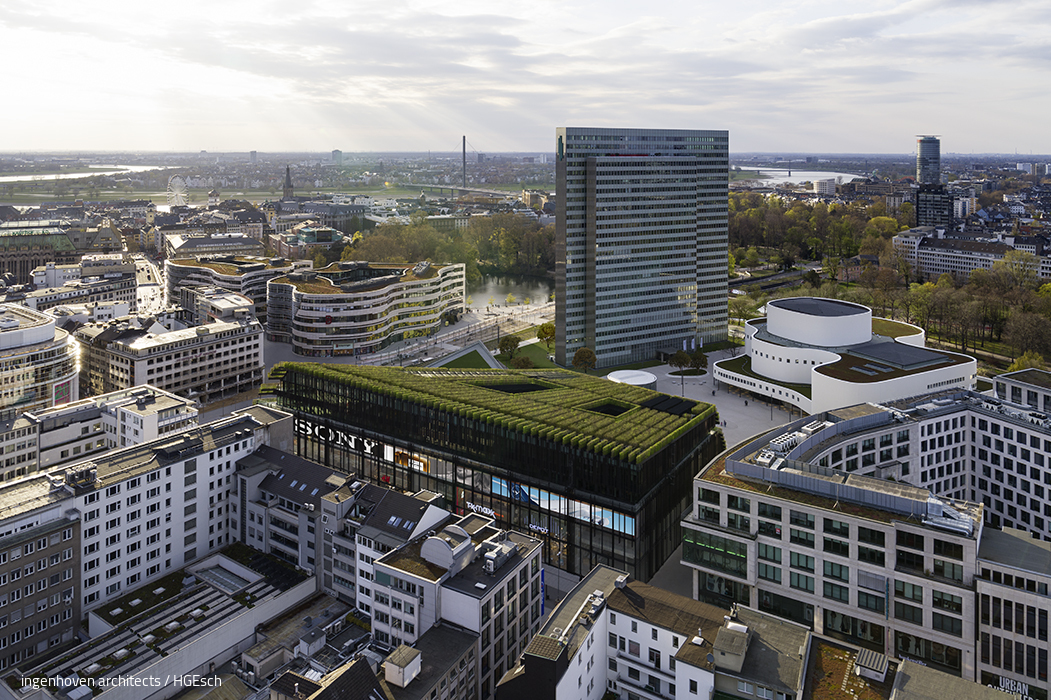
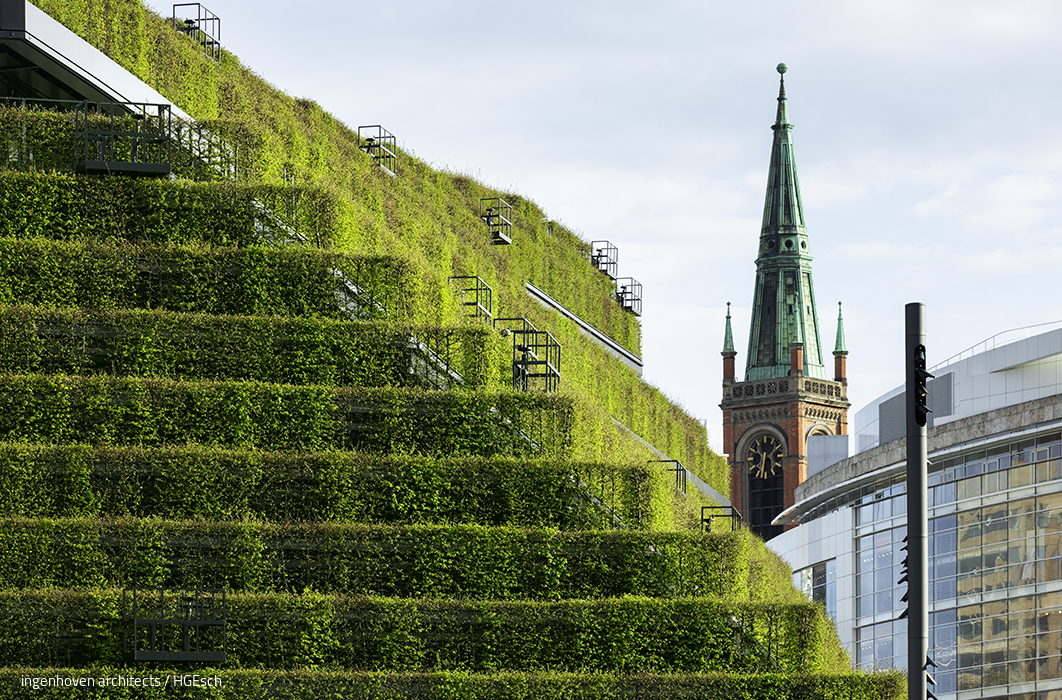
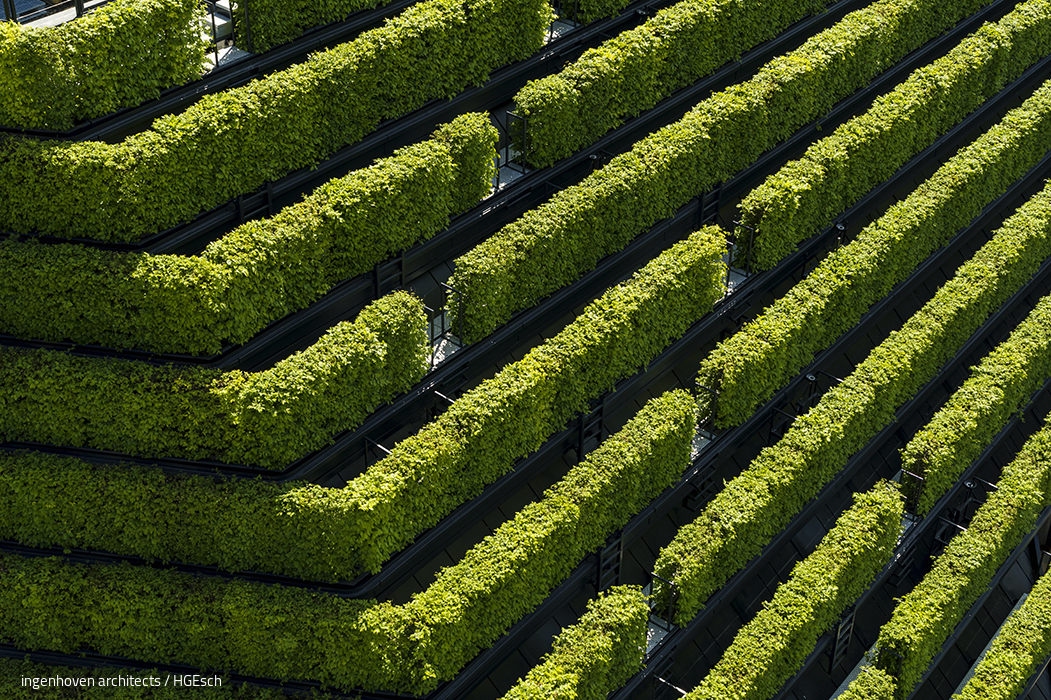
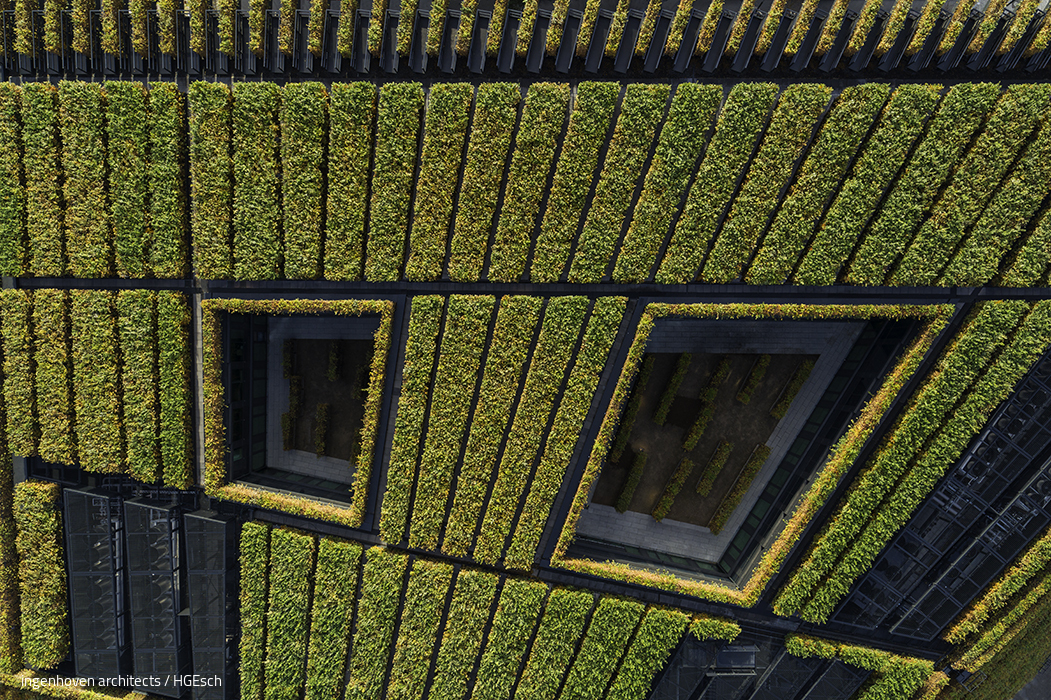
Over 30,000 individual plants cloak the exterior of Kö-Bogen II, the ambitious mixed-use development by Düsseldorf-based ingenhoven architects. This commercial and office building serves as a crucial urban connector linking Schadowstraße, the Schauspielhaus theatre, and the Hofgarten—and boasts Europe's largest living façade. Where the Tausendfüßler elevated highway once dominated the streetscape until 2013, the Hofgarten now reclaims its place at the city's heart.
The green, steeply angled façades of Kö-Bogen draw inspiration from Land Art, allowing the topographically conceived building complex to exist in deliberate dialogue between city and park. They create a dynamic threshold to Gustaf-Gründgens-Platz, framing an unobstructed view of post-war modernism's defining icons—the austere geometry of HPP's Dreischeibenhaus and the graceful lightness of Bernhard Pfau's theatre, recently renovated by ingenhoven architects. Kö-Bogen II responds with contemporary confidence, engaging rather than competing with its architectural neighbours.
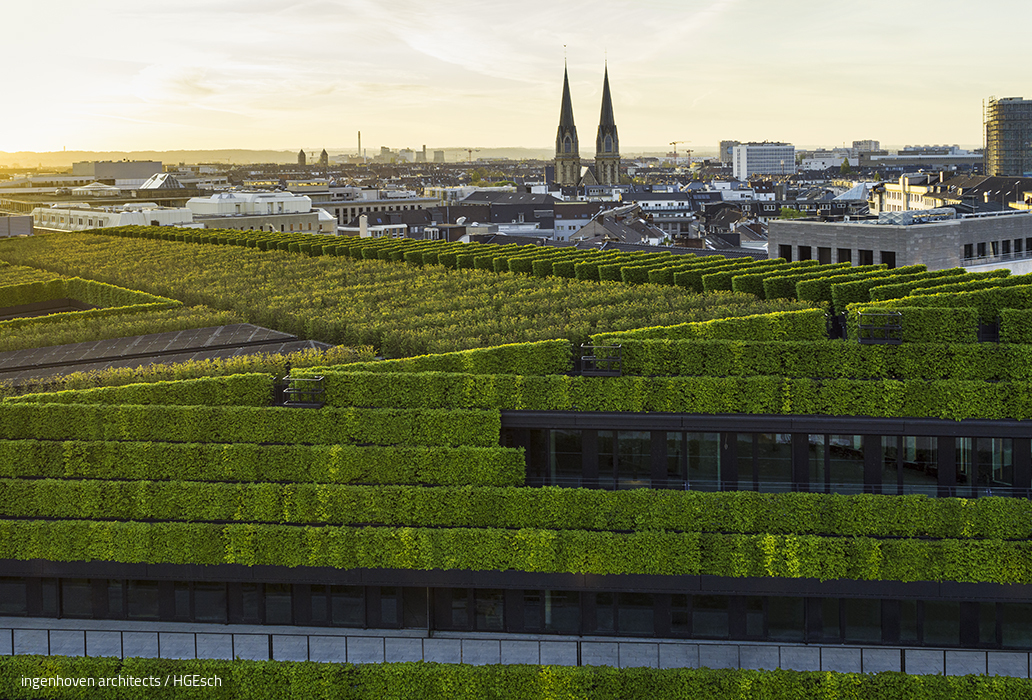
The choice of hornbeam—a native species that retains its foliage year-round—was deliberate. Working with Prof. Dr. Strauch from Berlin's Beuth University of Applied Sciences, a comprehensive phytotechnological framework was developed to integrate vegetation into the building's performance. The plants, densely layered across façade and roof like a contemporary labyrinth, transcend mere aesthetics—they function as an active building system that actively improves urban microclimate. In summer, the green filters solar radiation and mitigates urban heat; it simultaneously absorbs CO₂, retains moisture, reduces noise and airborne pollutants, and strengthens local biodiversity. Ecologically, the hornbeam installation equals the impact of roughly 80 mature deciduous trees. This ambitious living façade represents cities' forward-thinking response to climate resilience in northern latitudes.
Photography Credits:
HGEsch
www.hgesch.de
(Published in CUBE Düsseldorf 02|20)

Courtyard House With Pool
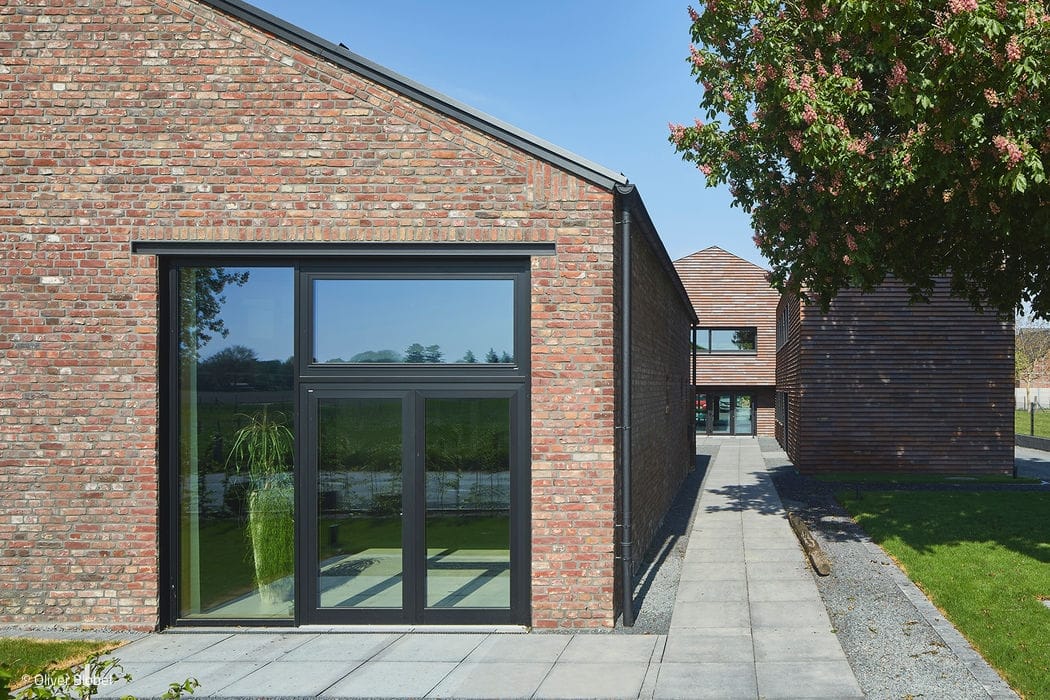
A generous solid-wood residence that mirrors the aesthetic of a classic brick building
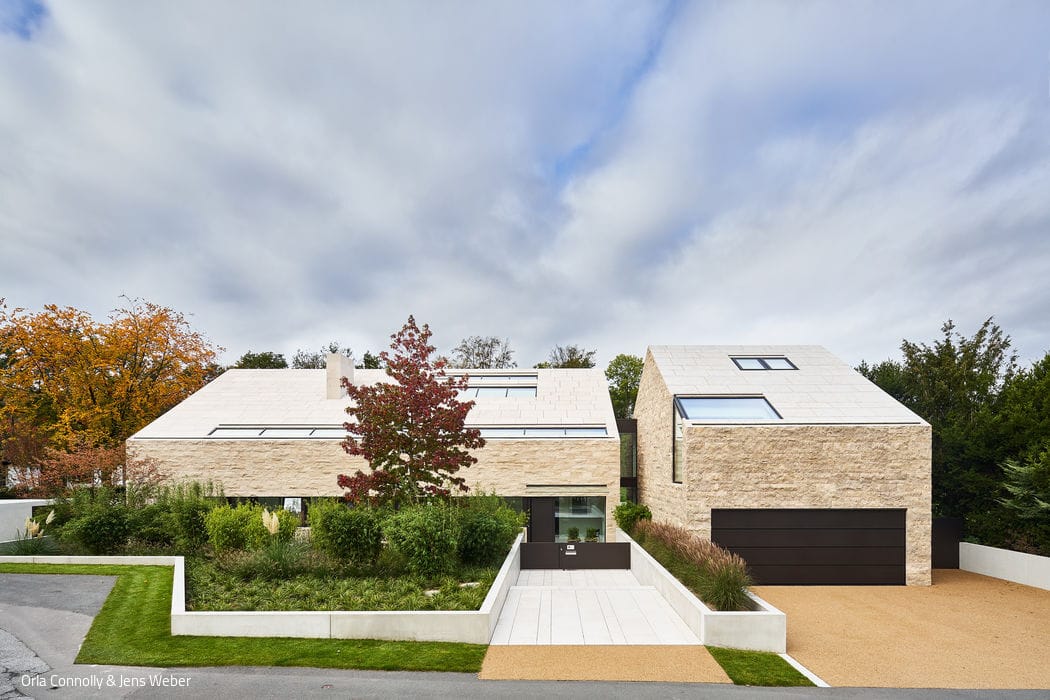
Wrapped in Stone
Contrasts in Dialogue: A Study in Perfect Symbiosis
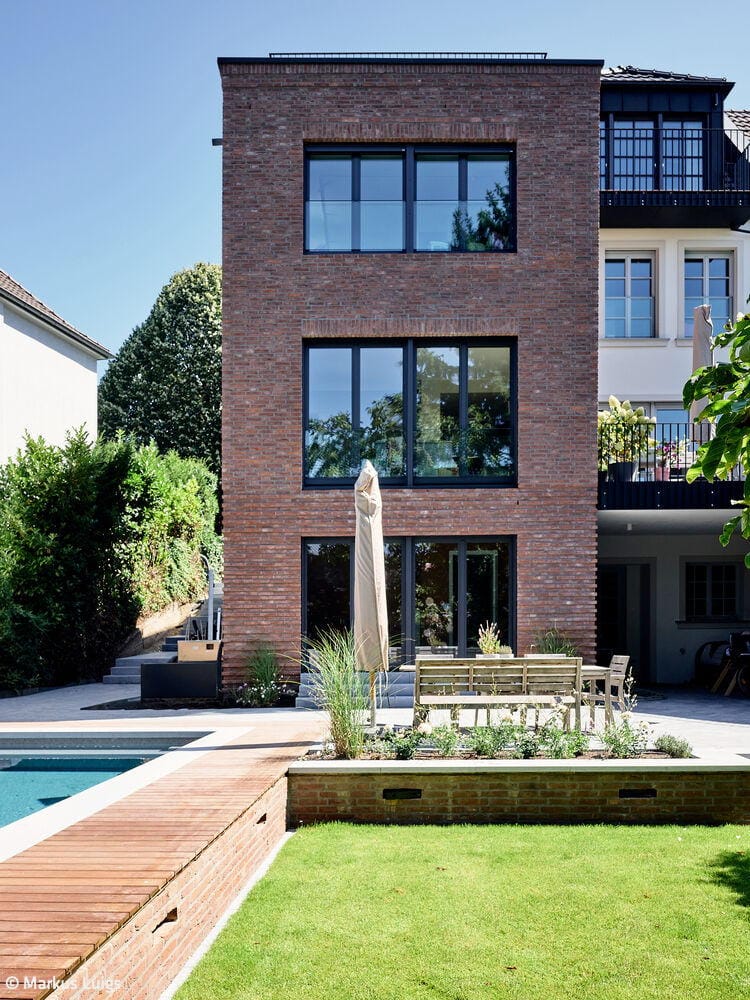
Old and New in Balance
A Town House in Bilk Sensitively Renovated and Expanded
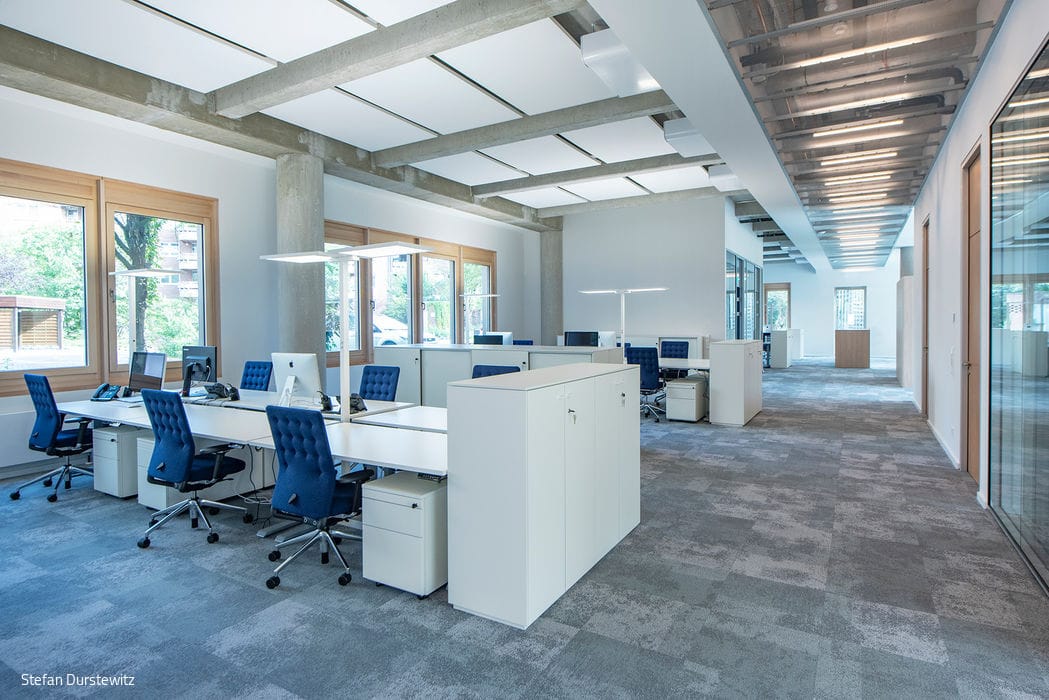
Ready for Any Challenge
An Advertising Agency Embraces Exposed Concrete and Warm Wood