


A new name – fresh purpose
The office building at Ballindamm 17 has undergone comprehensive restoration that honors its heritage status.
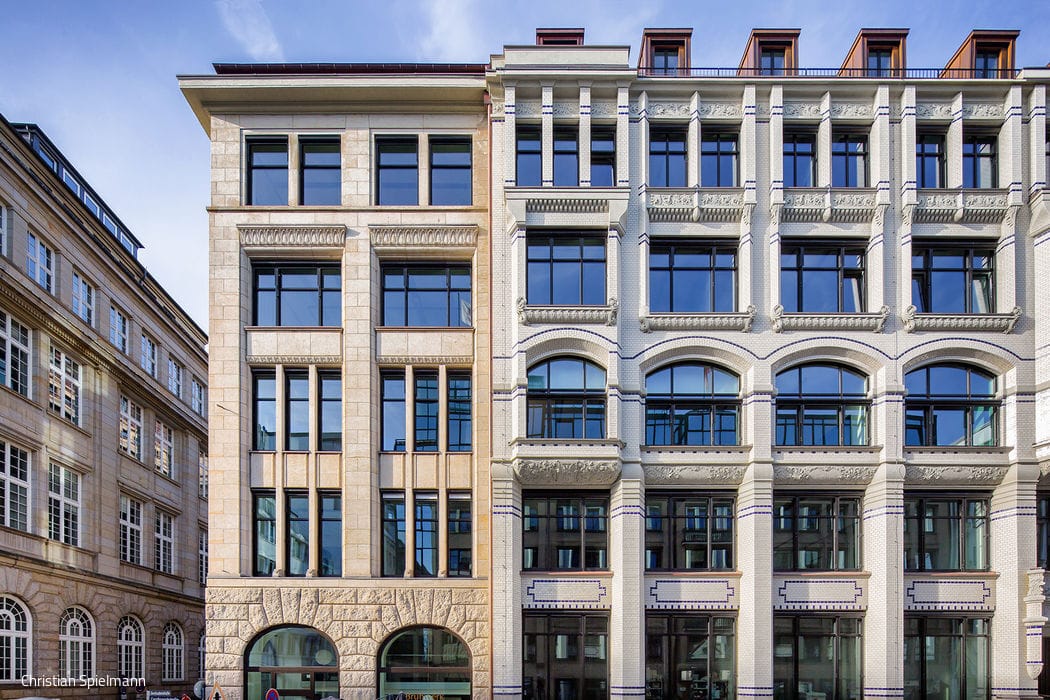
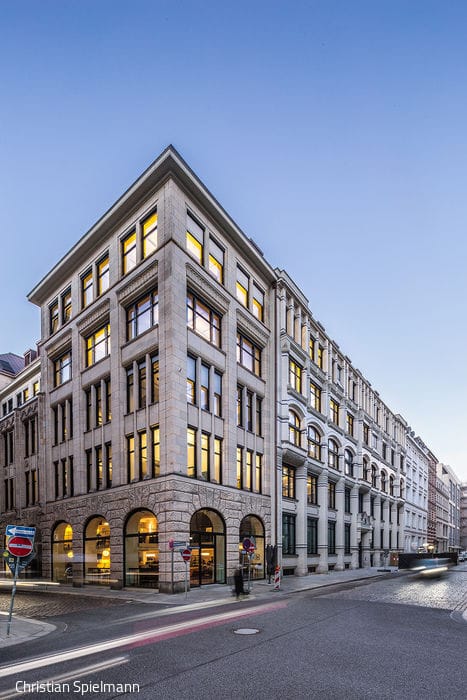
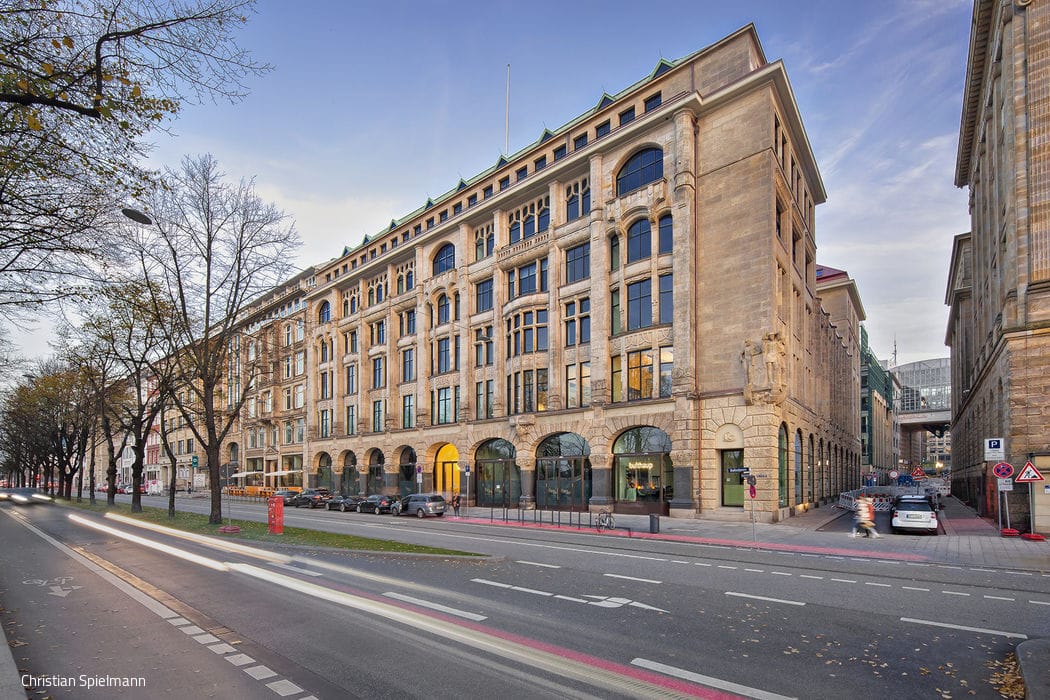
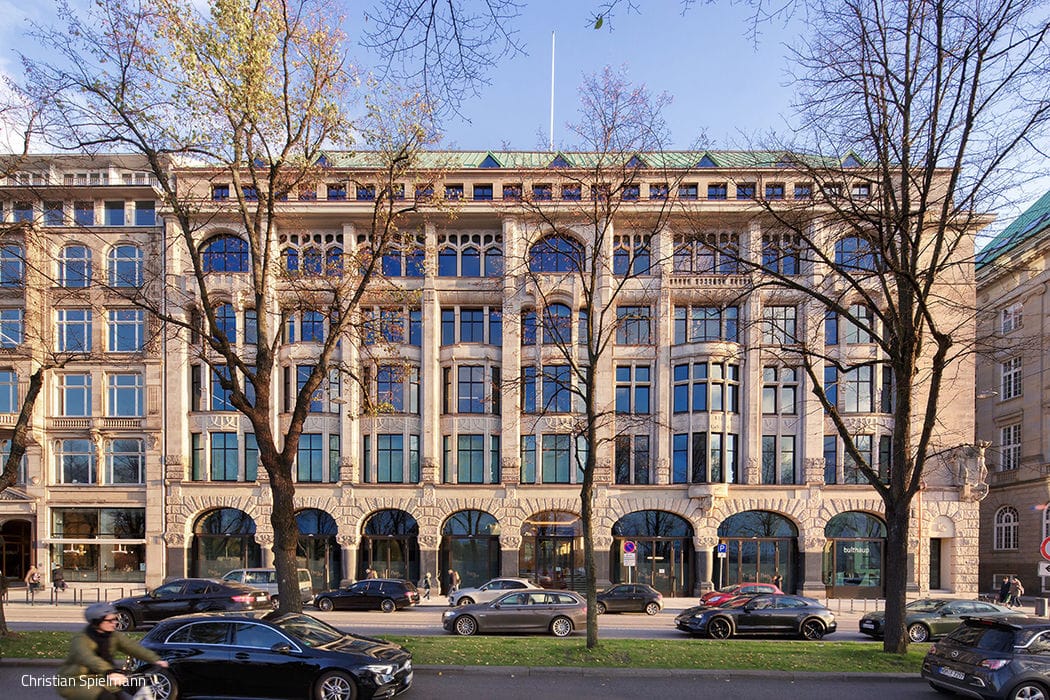
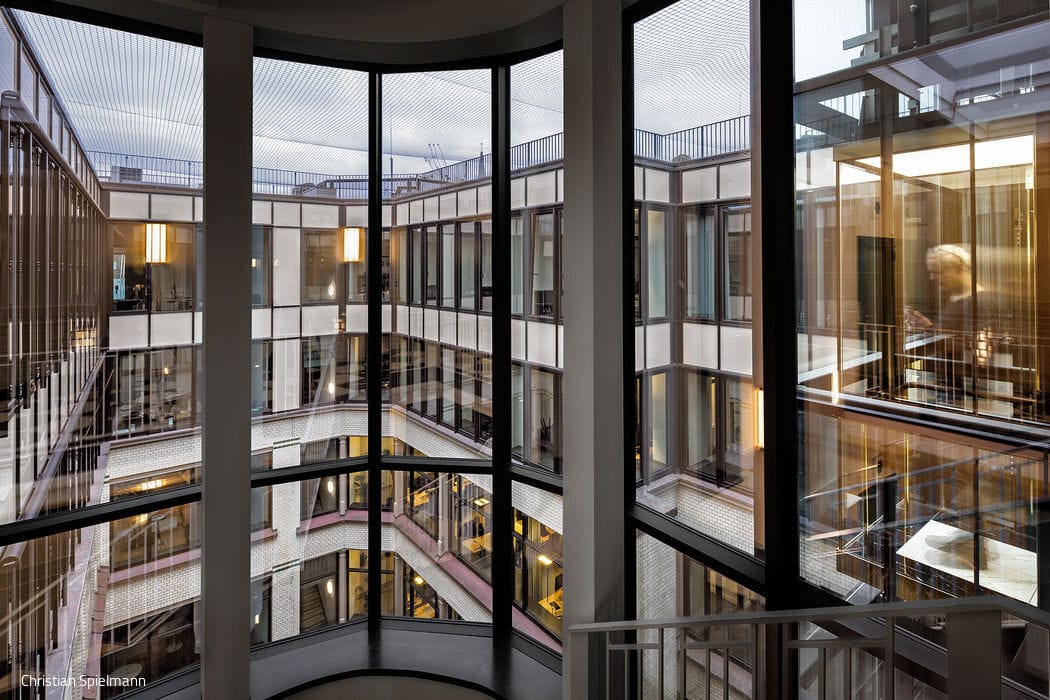
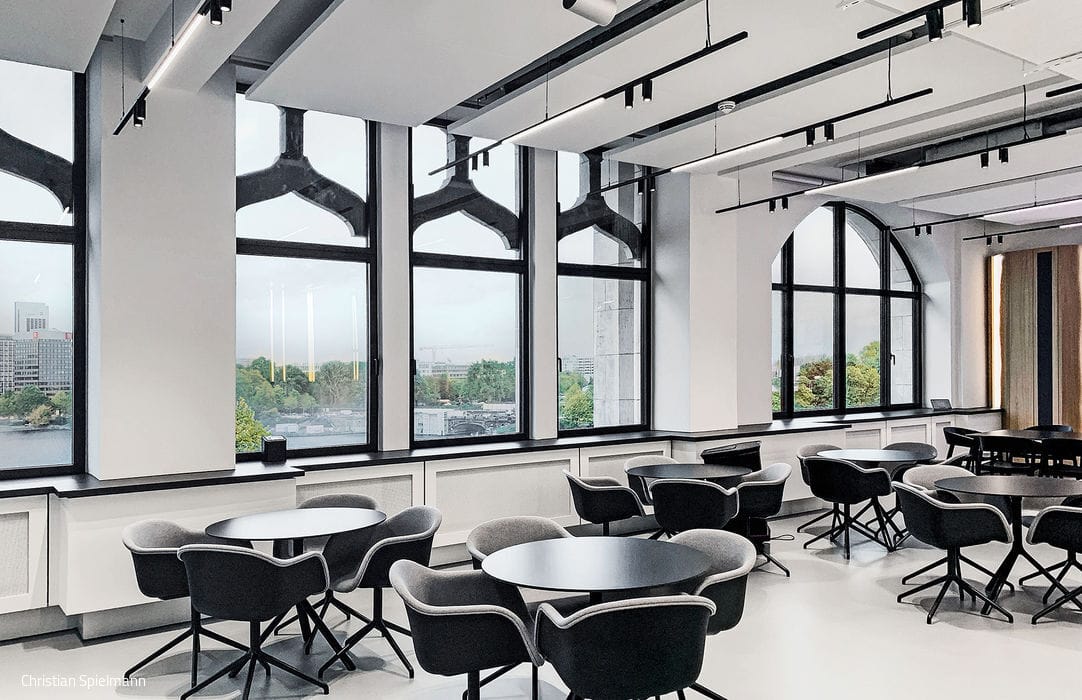
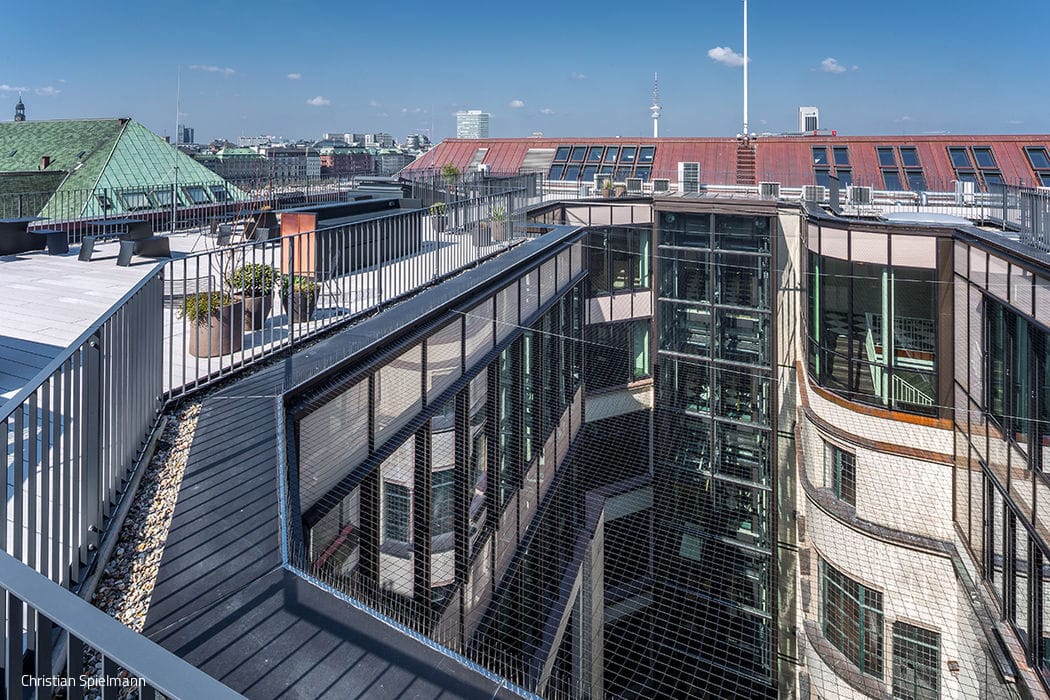
Today's Ballindamm emerged as a waterfront promenade—originally called Alsterdamm—built on the Binnenalster in the aftermath of the 1842 Great Fire, rising from the ruins of what once stood there. Following World War II's devastation, the promenade was widened and renamed Ballindamm, honoring shipowner Albert Ballin. Behind it stretches the grid of streets laid out after the Great Fire, a pattern still visible today. Of the residential character that once defined this quarter, little remains; by 1900, office buildings had rapidly claimed the space as Hamburg's business district took shape. Ballindamm 17 itself was constructed in phases between 1901 and 1906 by Lundt & Kallmorgen, with additions in 1921 by Eduard Theil, commissioned by the Rheinisch-Westfälische Kohlensyndikat (Rhenish-Westphalian Coal Syndicate). Named after its co-founder Emil Kirdorf—a significant NSDAP financier from the 1920s onward—the building has now been reborn with a new identity. The comprehensive renovation spanning 2019 to 2021, overseen by HS-Architekten, transformed and expanded the heritage-protected structure, culminating in its renaming to Ballinhof. The seven-story building stretches from the Alster to Ferdinandstraße across a fifty-by-fifty-meter footprint. Particular care was devoted to preserving the building's signature "green" copper roof, typical of Binnenalster office buildings—the original badly weathered copper was carefully dismantled, trimmed, refolded, and supplemented with period-appropriate materials. The Oberkirchner sandstone façades and sculptures underwent meticulous restoration. The distinctive shop windows that once projected from the Ballindamm façade were reimagined for contemporary use. The ceramic and stucco work on Ferdinandstraße, heavily damaged over time, was painstakingly reconstructed using newly fired ceramics matching the original aesthetic. Original ceramic elements were strategically incorporated into a reconstructed façade section, while the courtyard's ceramic façade was sensitively restored as well.
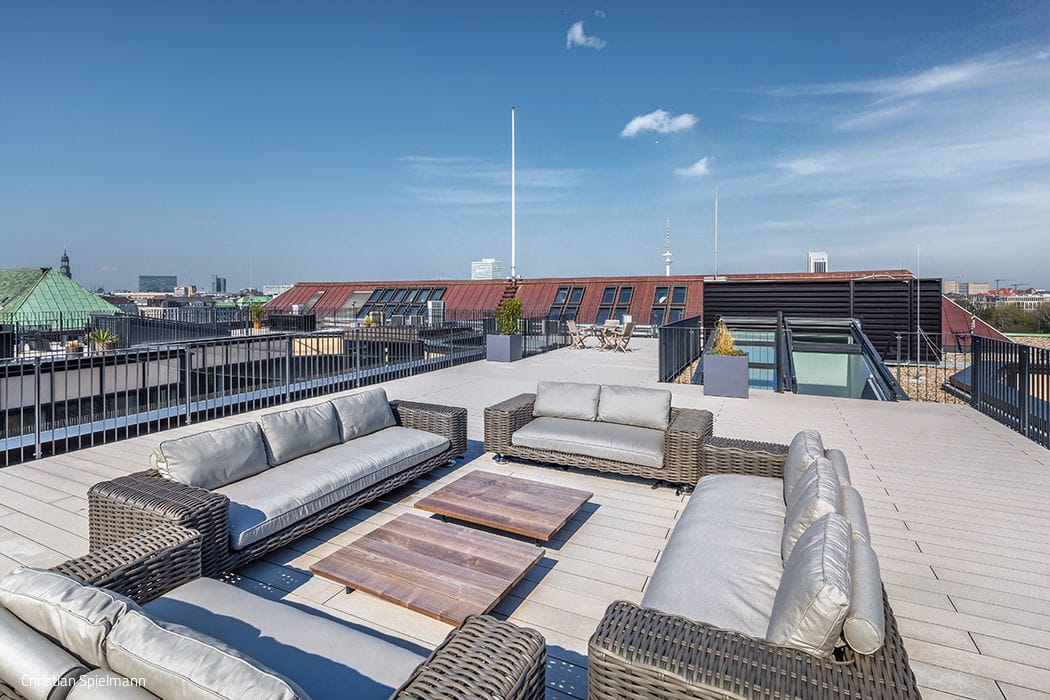
The enclosed offices lining Ballindamm have been reimagined as generous restaurant and dining spaces with Alster views and outdoor seating areas. By lowering the ground floor level to meet the Ballindamm pavement, the building now welcomes visitors with an open, inviting threshold. The addition—two floors oriented toward the inner courtyard plus roof terraces offering remarkable vistas—is accessed via a new double-glazed lift from the central courtyard. True to heritage preservation standards, the addition remains invisible from the Alster side. In total, Ballinhof now offers 13,000 m² of distinctive, high-quality office, retail, and hospitality spaces.
Photography Credits:
Christian Spielmann
www.spielmann-foto.de
(Published in CUBE Hamburg 02|23)

Innovative Work Environments
Modern Office Design Meets Historic Architecture
A Place for Recovery
When architecture serves healing

L'art pour l'art
A staircase transforms an attic into another world
Green Does Good
Sustainability and a reimagined workplace grounded in openness and genuine collaboration