


Hufeisensiedlung Garden Monument
Green Spaces Now Protected as an Ensemble
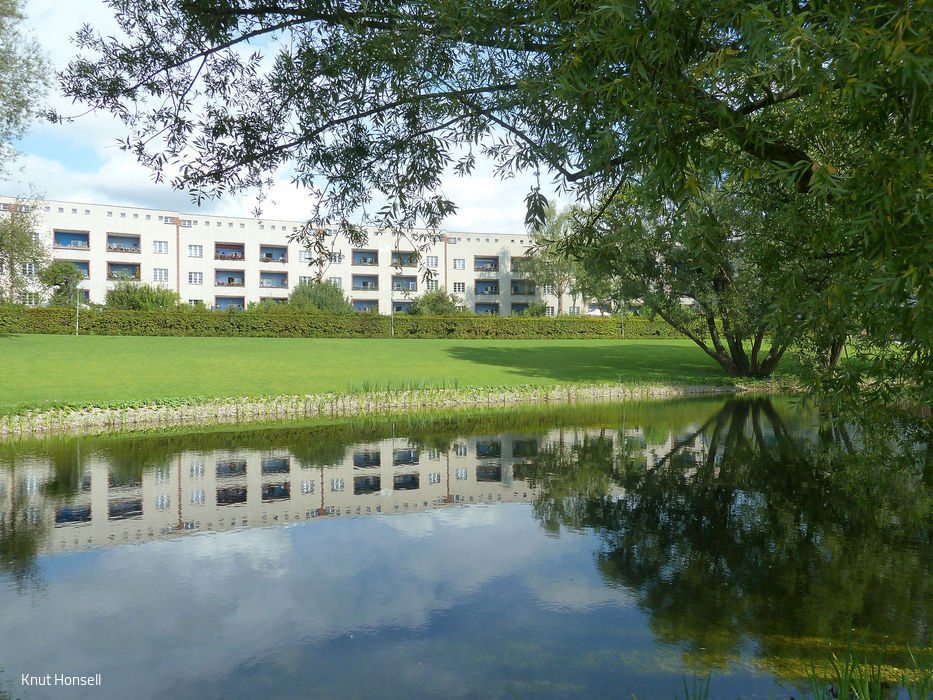


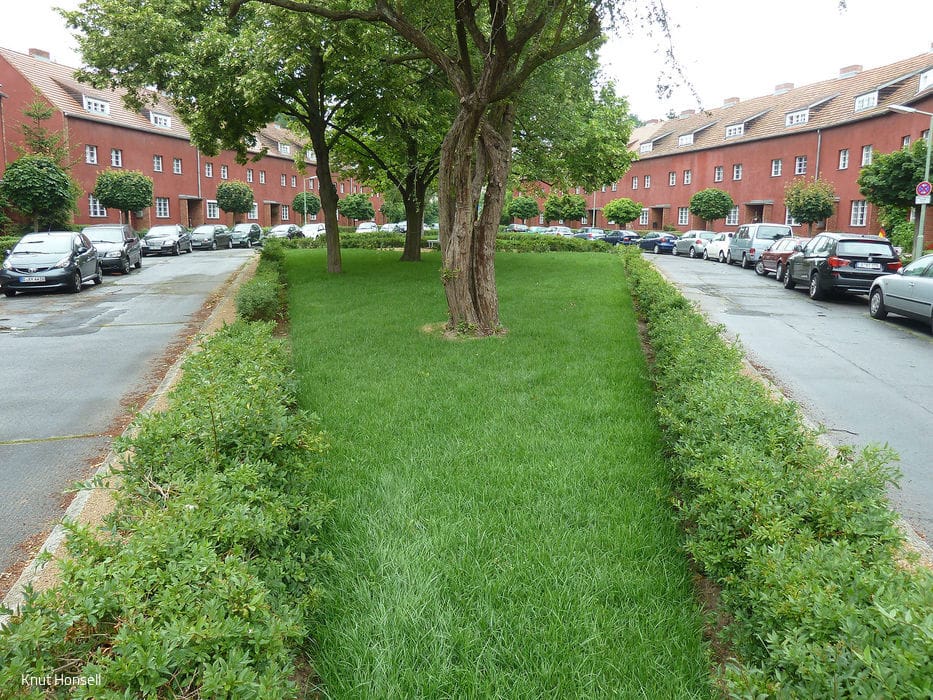
Built between 1925 and 1933 in phases, the Hufeisensiedlung in Berlin's Britz neighborhood represents a landmark collaboration between architect Bruno Taut, city councillor Martin Wagner, and landscape architect Leberecht Migge. Since 2008, it has held UNESCO World Heritage status alongside other Berlin modernist estates. Both the architecture and green spaces enjoy ensemble protection, with the central grounds designated as a garden monument—despite undergoing numerous transformations and recent decline. Today, the entire complex and its landscape design have been beautifully restored. While it doesn't perfectly mirror the original vision, the restoration achieves a thoughtful and faithful approximation.
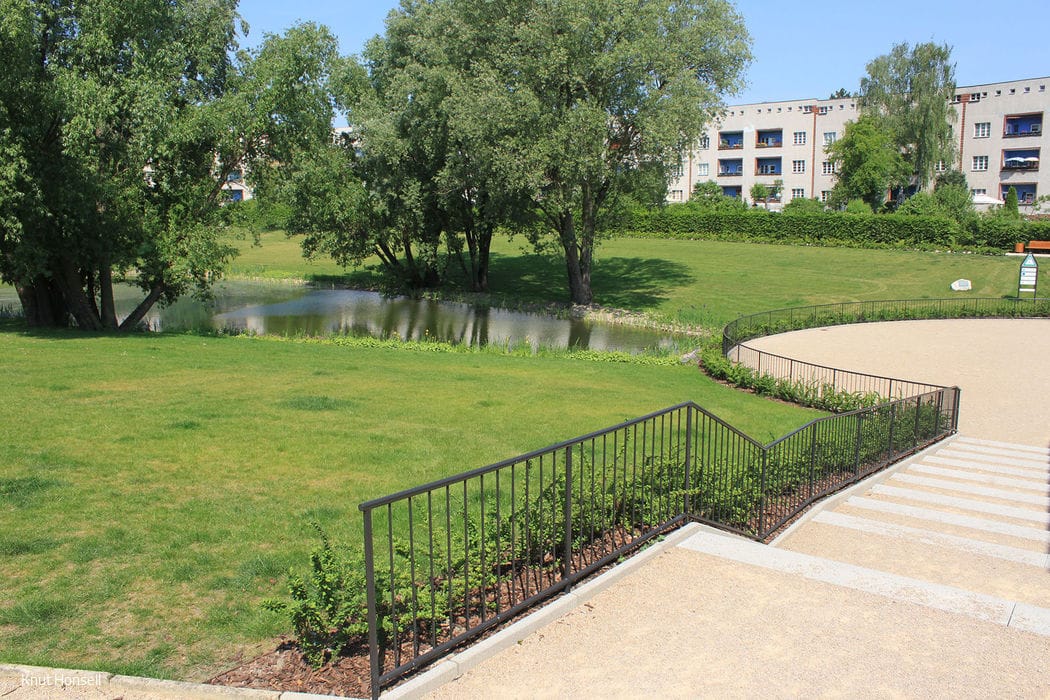
Henningsen Landscape Architects spearheaded the restoration and replanting efforts. The park's defining feature is its teardrop-shaped pond, believed to originate from an Ice Age groundwater depression. Its pointed end directs views toward the main entry staircase and forecourt. Gentle, funnel-like lawn slopes toward the pond, crossed by pathways that emphasize its public character. Each building has an adjacent private garden maintained by residents. Migge originally envisioned a larger pond for summer swimming and winter ice skating.
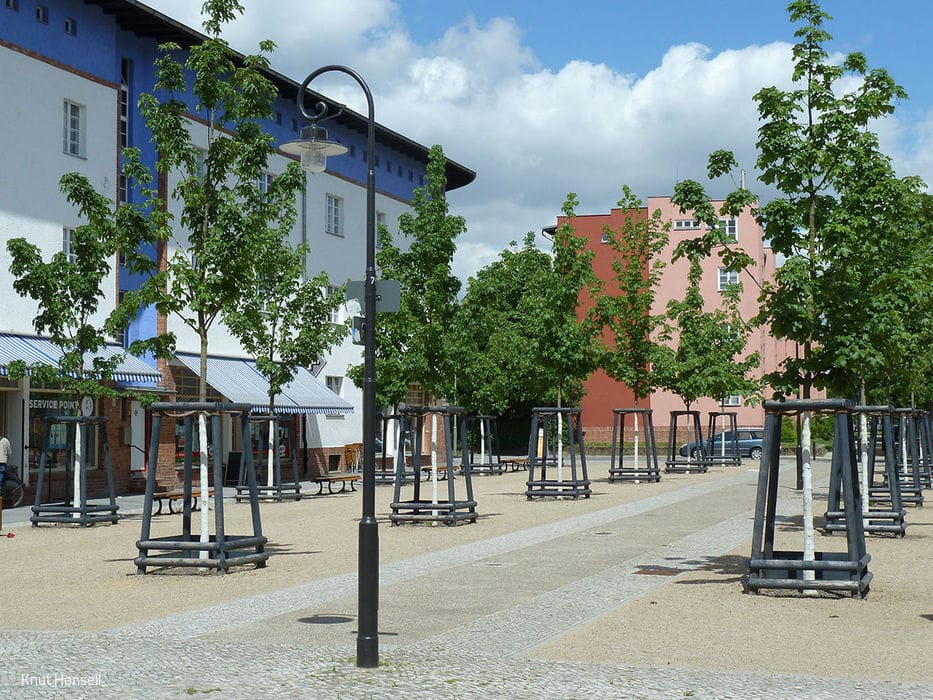
The landscape architects' comprehensive work included installing modern water-management systems to control pond levels, while a perennial hedge emphasizes the water's distinctive form. The central forecourt at Fritz-Reuter-Allee was completely redesigned, with aged trees removed and replaced by new plantings. The severely deteriorated entry staircase—nearly unusable—was fully rebuilt, reestablishing the vital connection between forecourt and pond. The overgrown banks, choked with wild shrubs and willows, and the trampled path have been transformed. The completely renovated pond now features its original border of irises and cranesbill, while refreshed pathways are separated from the lawn by low hedges. The mature willows were thoughtfully preserved. New seating and waste receptacles encourage lingering. Today, the Hufeisensiedlung stands as a genuine landmark, its carefully maintained parks and gardens complementing the architectural excellence that defines the estate.
Photography Credits:
Knut Honsell
(Published in CUBE Berlin 02|21)

Density and distance
Two apartment buildings disguised as detached houses
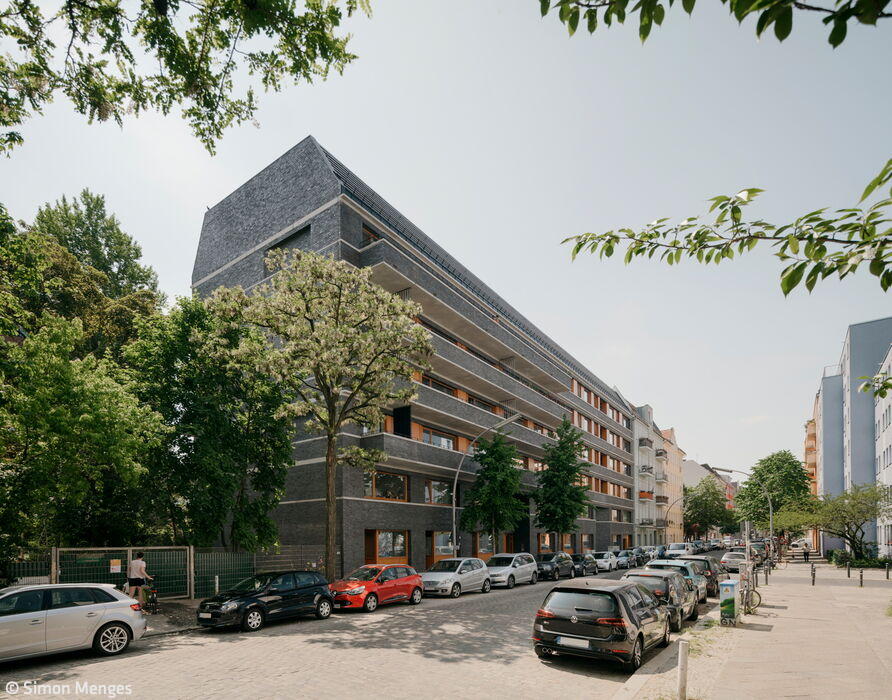
Black brick at the gasometer
A residential building unconventional in both concept and expression

Perfectly Squared
Berliner Sparkasse's new home has arrived

Open-Plan Living
Residential Complex: A New Interpretation of the Berlin Block