


Bright Calm
A semi-detached house nestled thoughtfully within the property's lush landscape
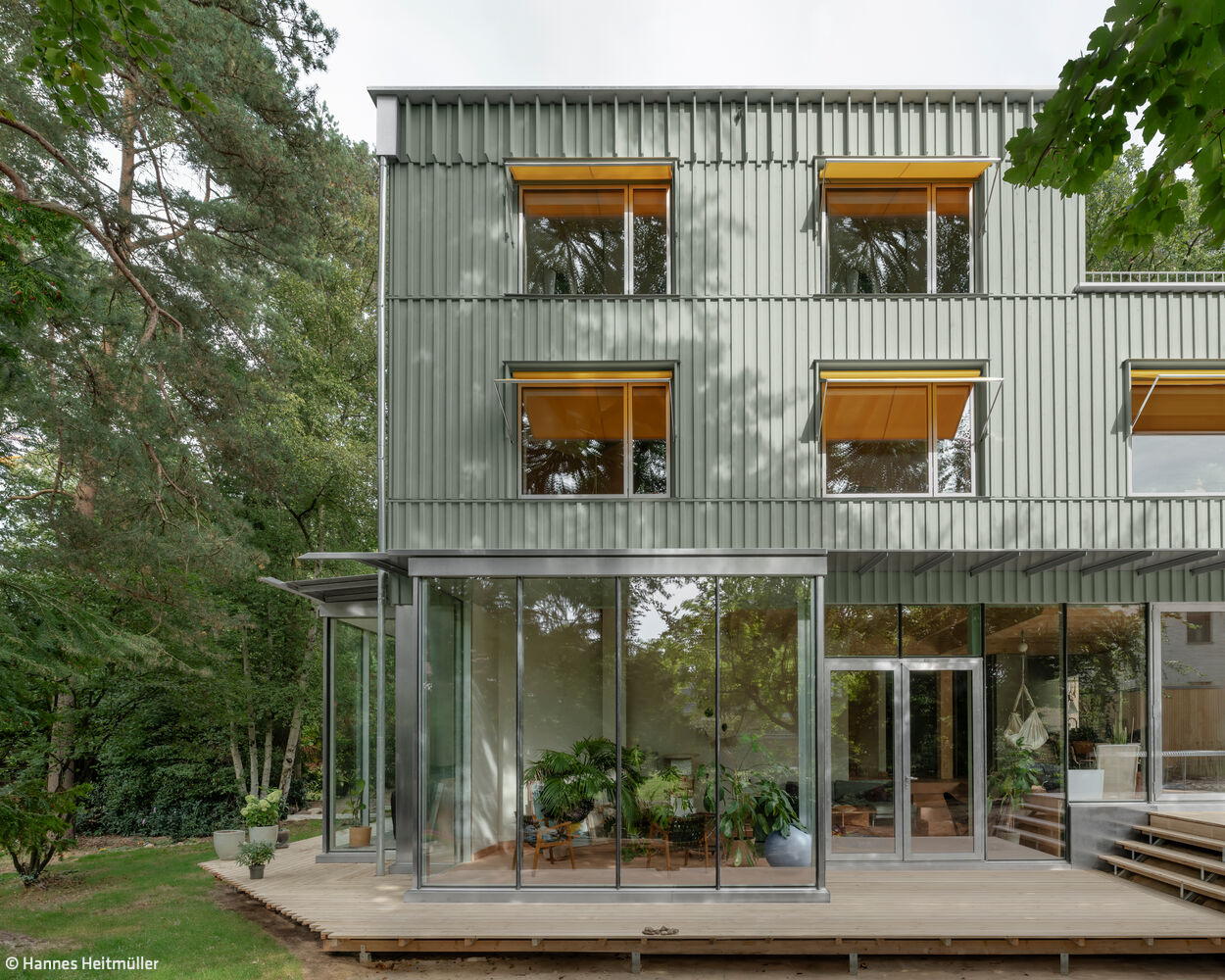
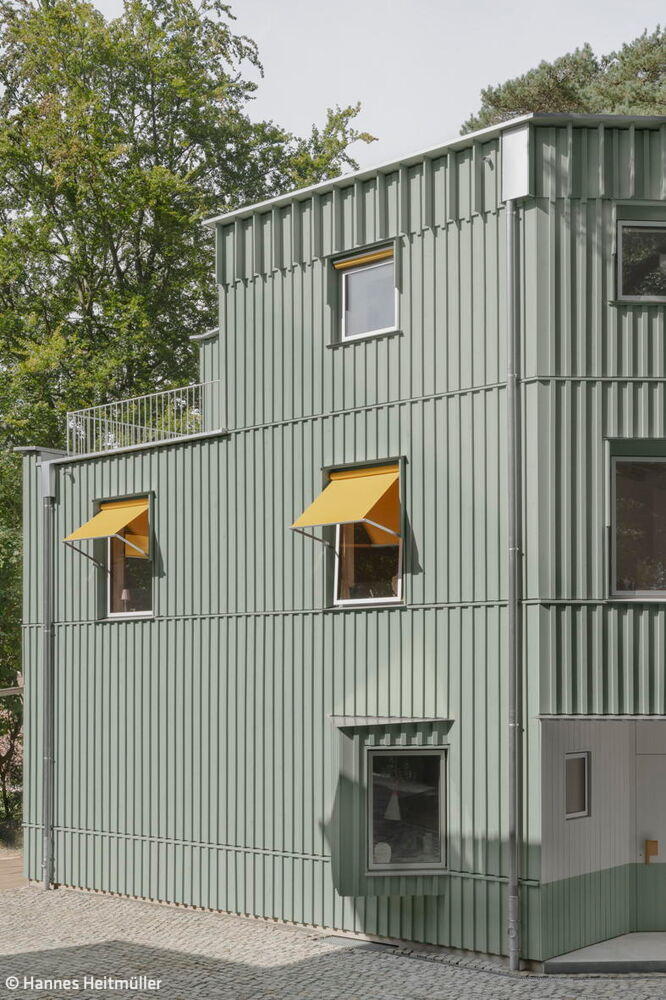
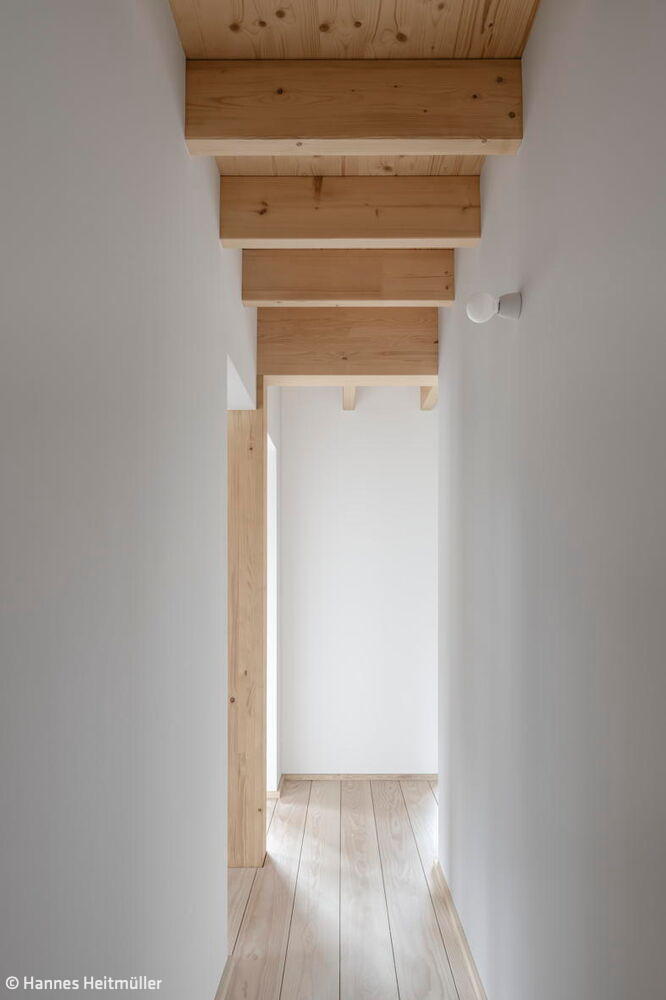
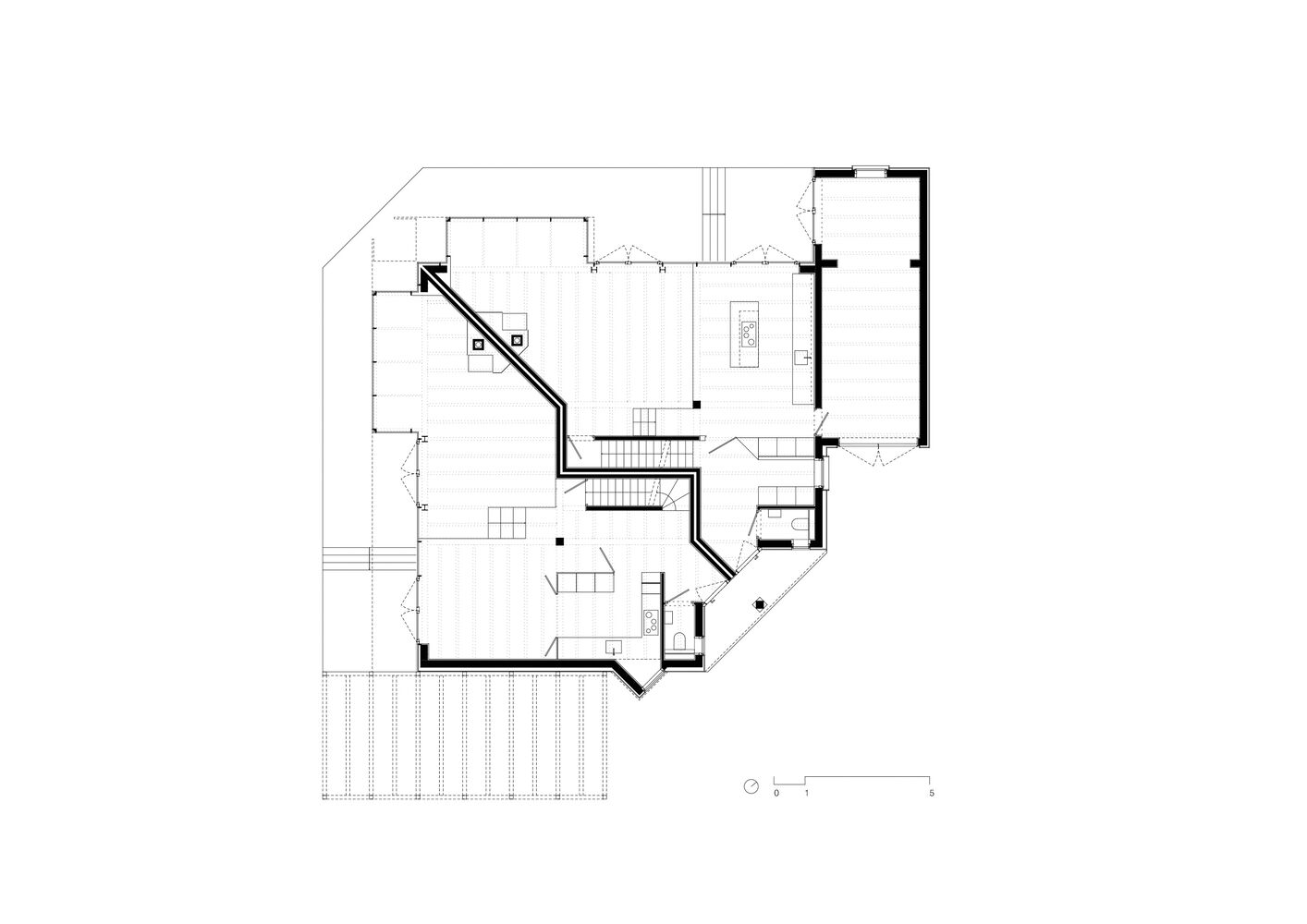
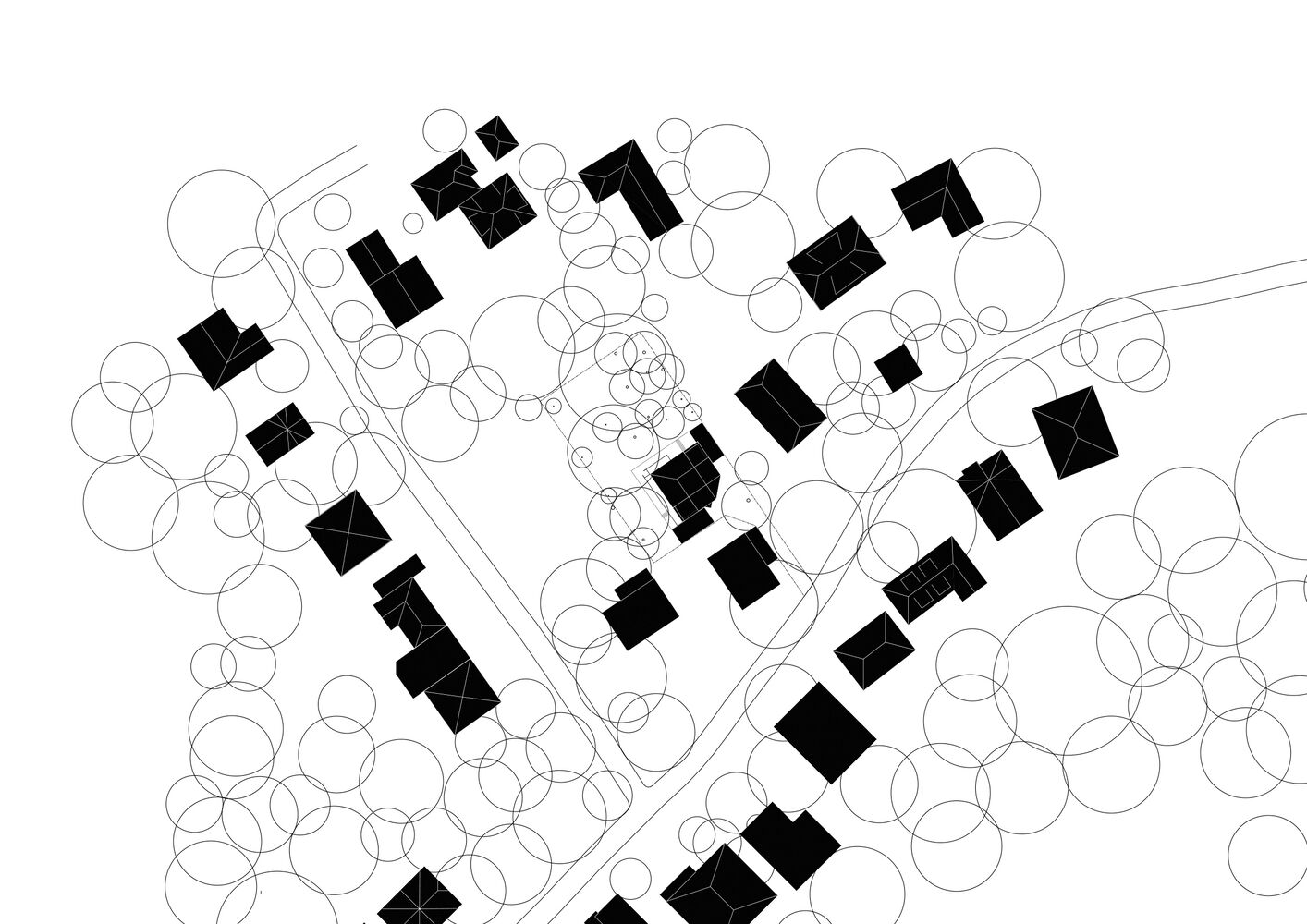
In northern Blankenese, architect Noto created a generously proportioned semi-detached house on a densely wooded plot. The original site was subdivided into four parcels to make this vision possible. Every design choice reflects a careful dialogue with the surrounding landscape and neighbourhood. The building's footprint follows a 13-by-13-metre square, with one corner deliberately carved away to honour the plot's most magnificent tree.
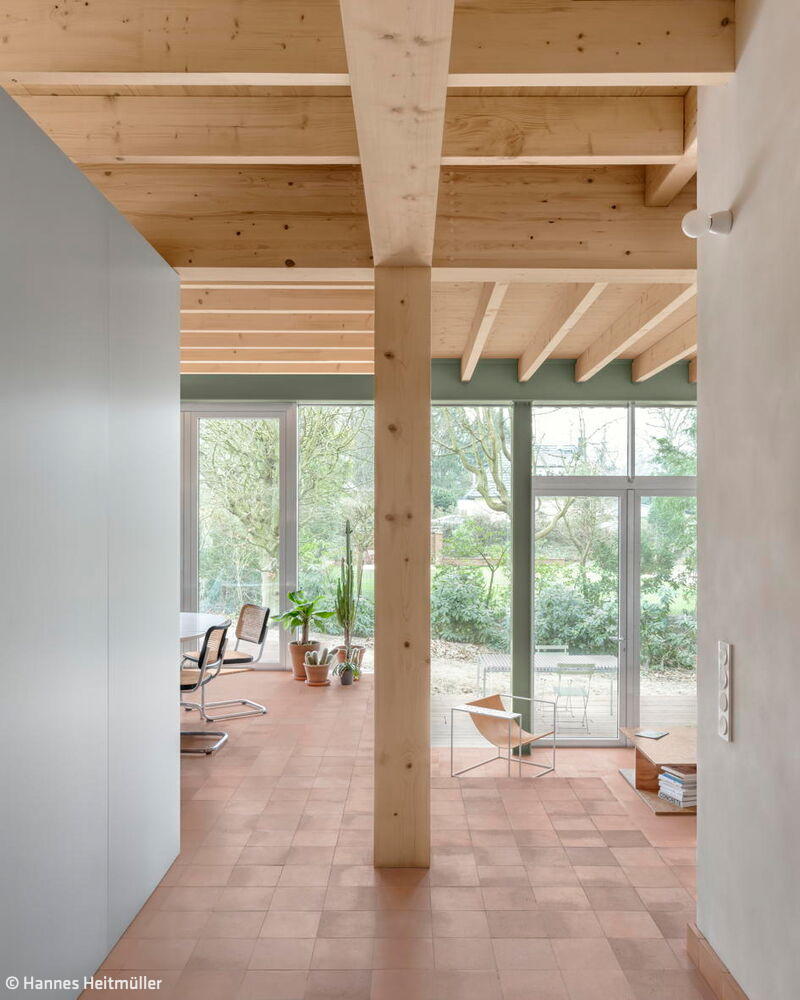
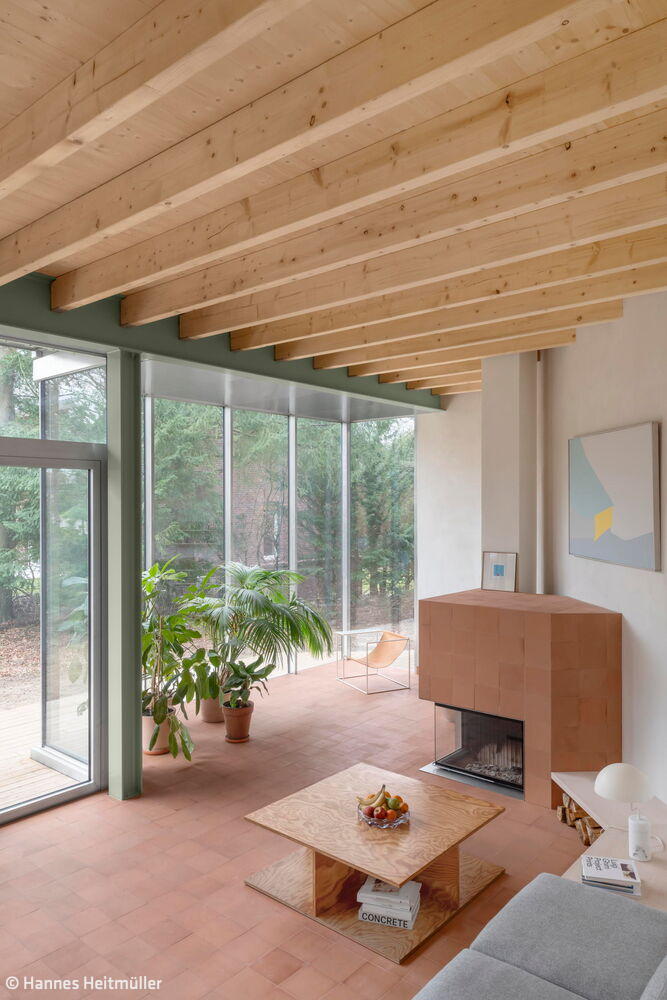
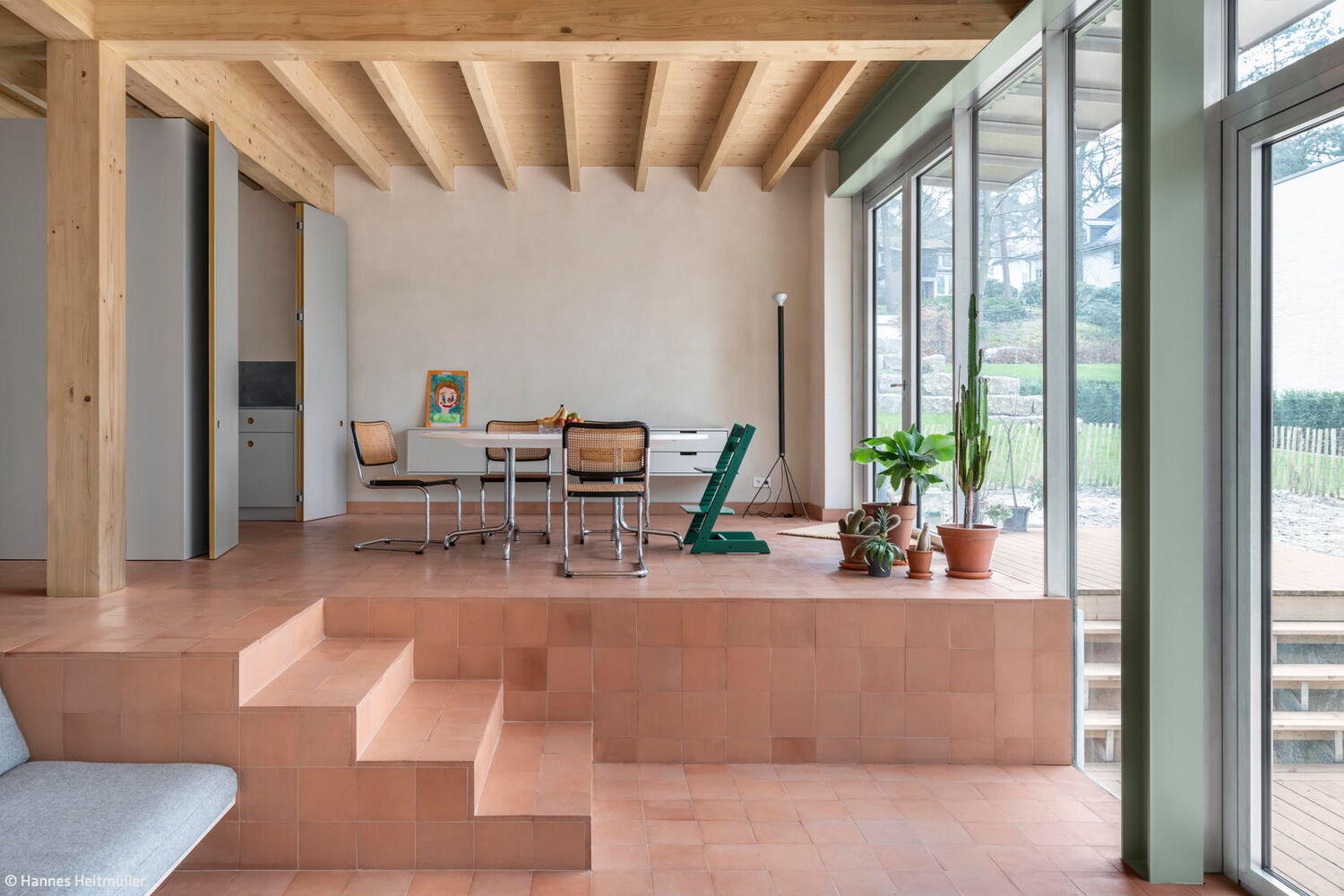
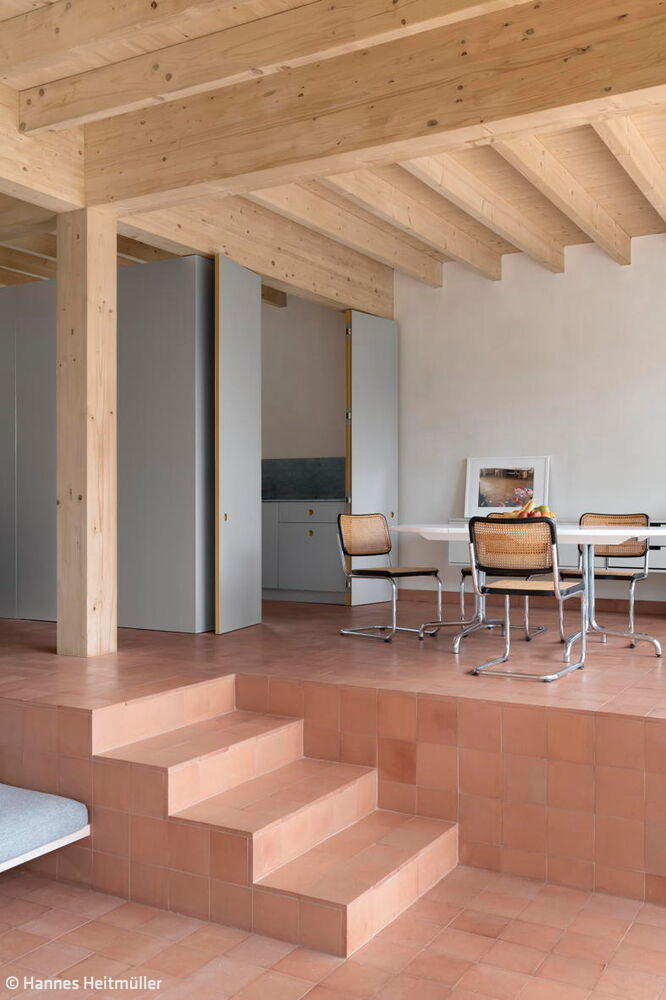
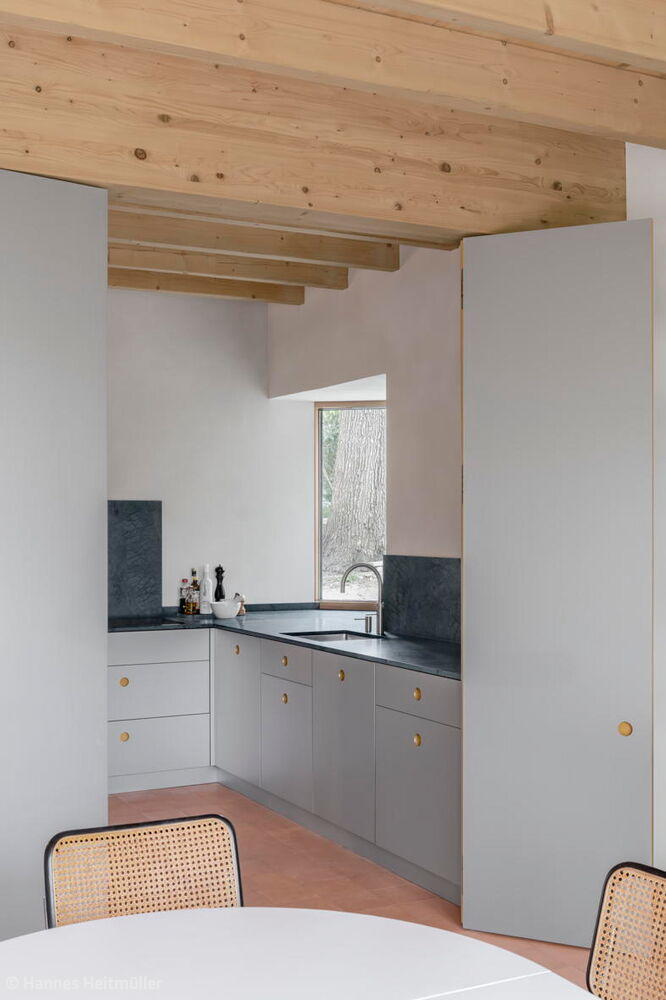
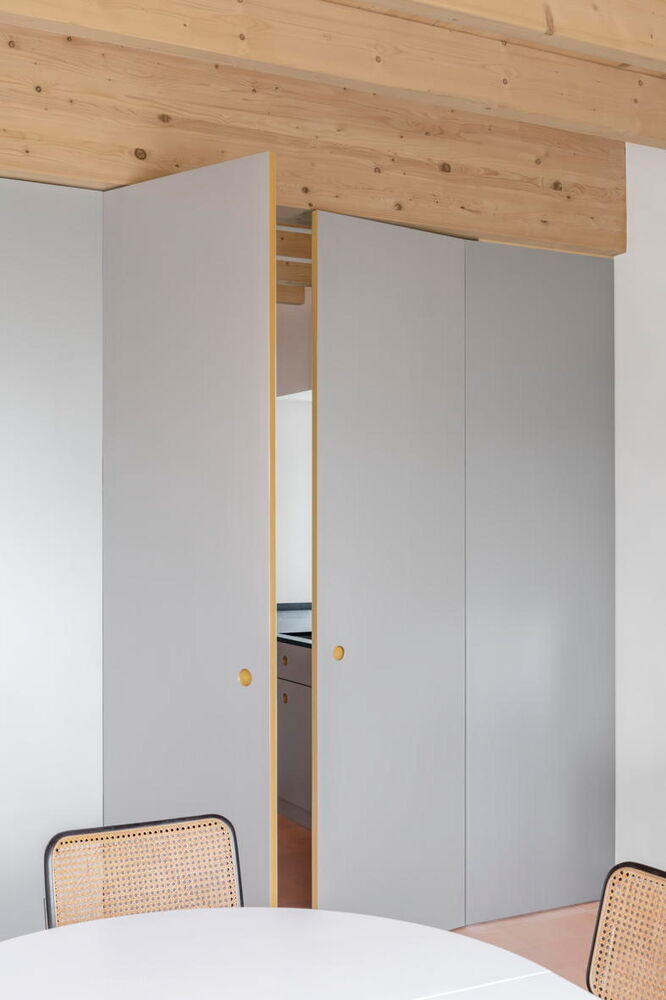
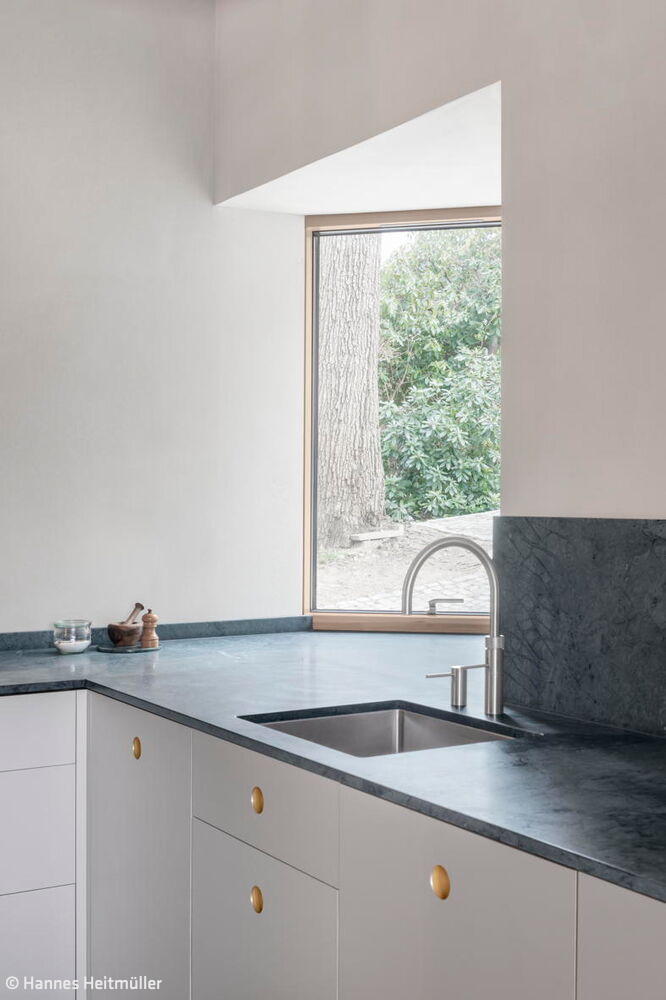
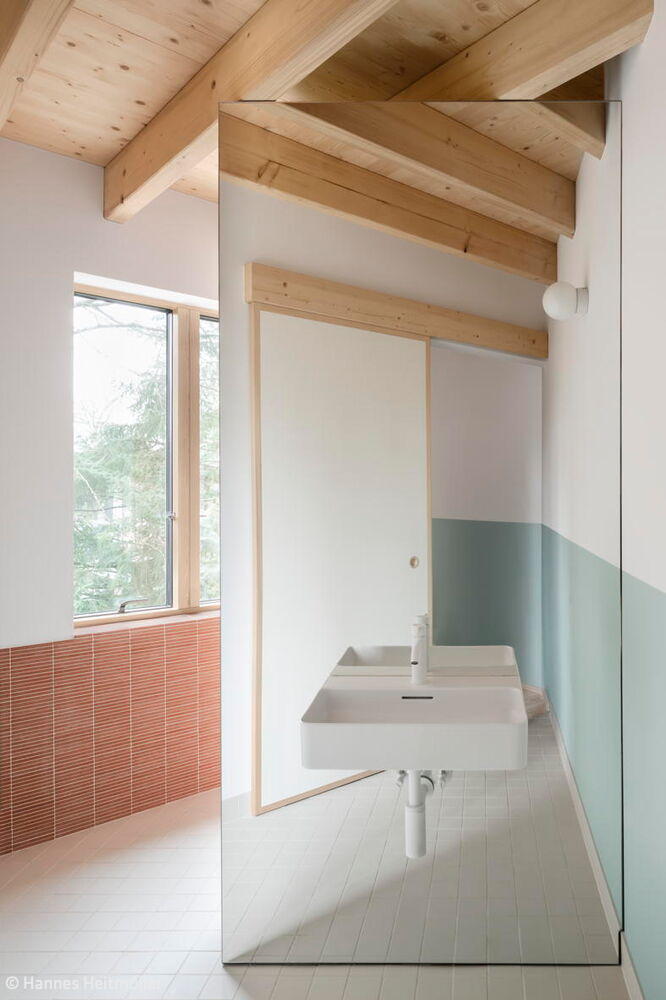
The ground floor showcases an open-plan design that embraces the natural slope of the land, unfolding across two distinct levels. The kitchen-dining zone sits elevated while the living area nestles below—both spaces flow seamlessly toward the garden through expansive glazing, forging an intimate dialogue with nature. Built-in cabinetry punctuates and defines the open expanse. The fireplace—positioned at an oblique angle to the diagonal wall—radiates warmth into both the living room and conservatory, while its projection from the façade creates a compelling sightline deep into the garden. A triangular, cantilevered bay window in the kitchen frames views of the entrance's venerable oak and connects to the dining area via frameless glass doors. Upstairs, the two residential storeys feature varied room volumes. In the southwest, the diagonal wall meets the exterior envelope, creating a triangular service zone for bathrooms and utility spaces. Across the eastern facade, a generous children's bedroom overlooks the historic oak. The attic floors culminate in roof terraces at two building corners, where bedrooms and baths take advantage of these open-air retreats. With the exception of its robust basement, the entire structure employs timber-frame construction.
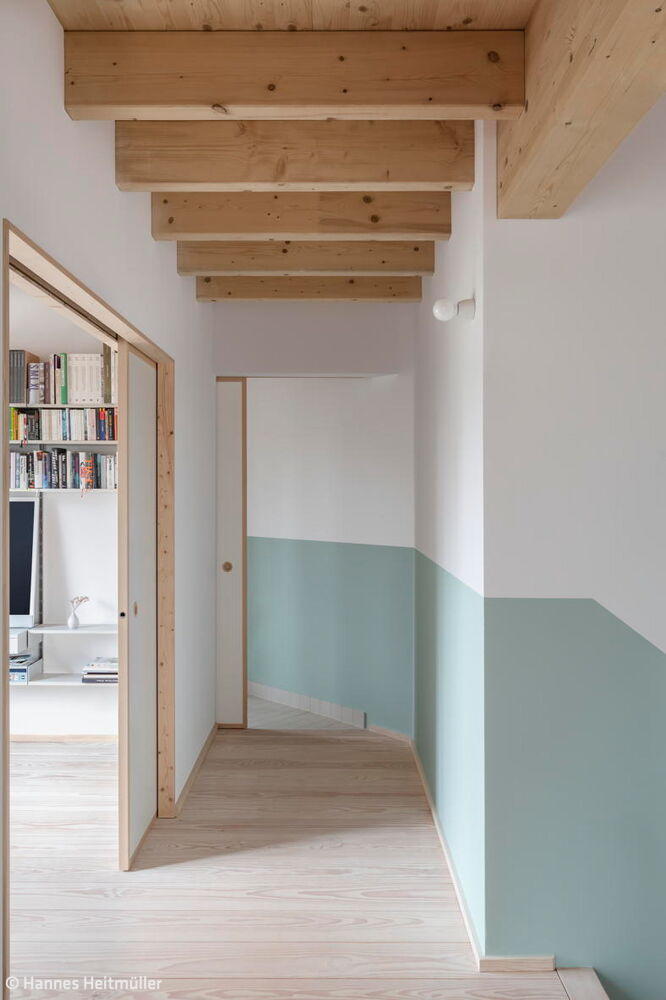
The semi-detached house stands apart from its brick-built neighbours—the prefabrication of its timber frame construction dramatically accelerated the building timeline. The exposed wooden beam ceilings and timber columns radiate unmistakable authenticity, their warm materiality speaking to honest construction. Sustainability shaped material choices throughout: the primary structure and exterior walls are entirely timber-based, save for the interior room-enclosing layer. The wood exterior wears a silicate finish while interior walls showcase earthy clay plaster. The roof greens the building while a photovoltaic array tops it; two air-source heat pumps provide climate control. Design leads Maike Basista, Henrik Becker, and Jacob Jansen devoted particular attention to the façade, where serene presence meets subtle strength.
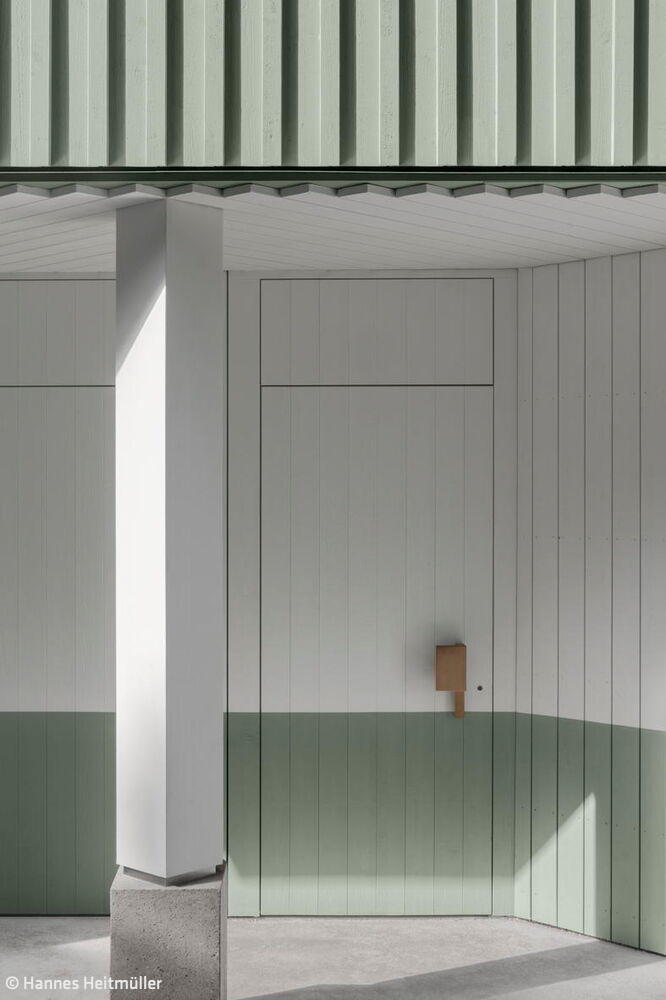
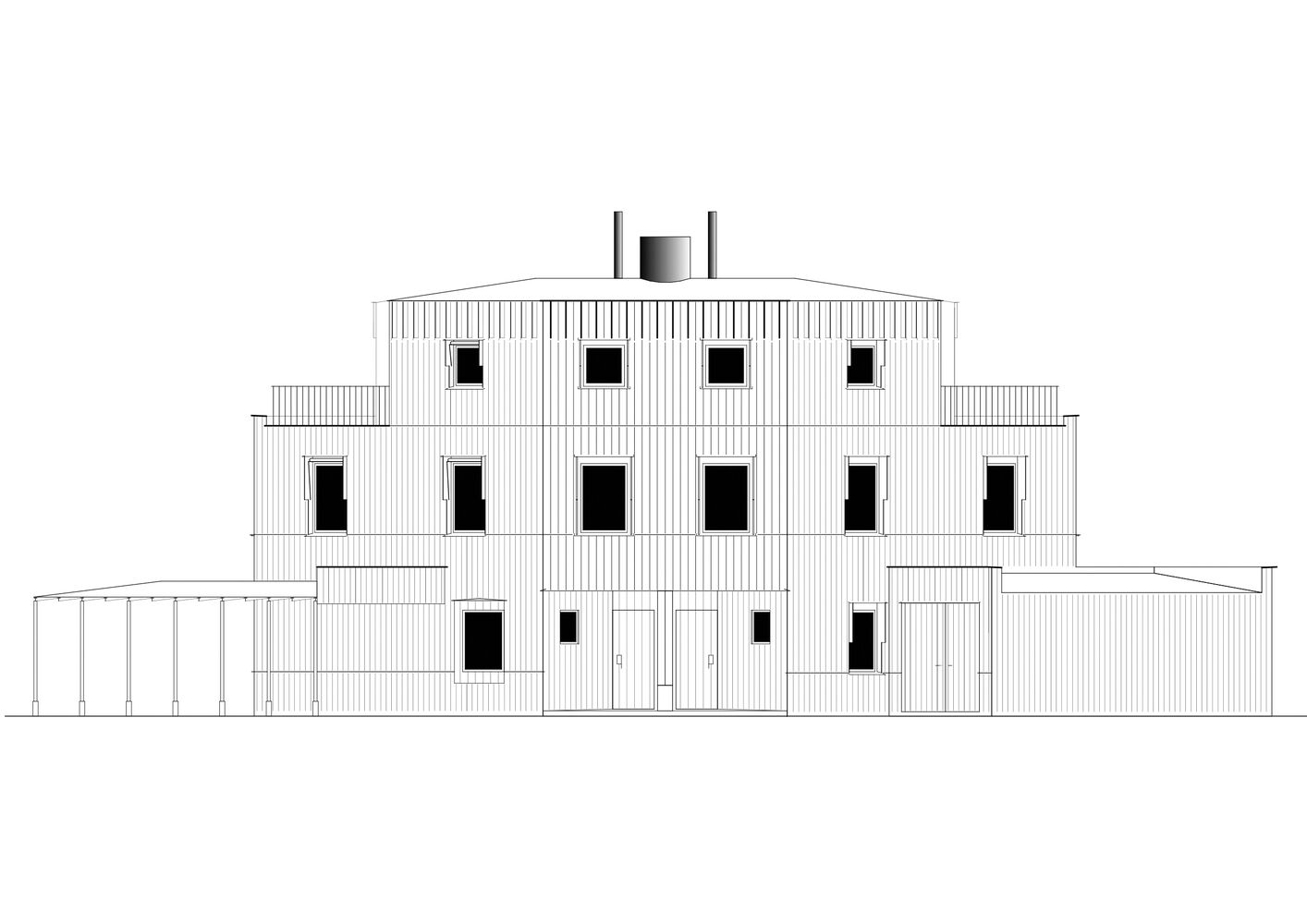
The vertical timber cladding, layered with a wider base board and refined cap, choreographs a structured play of lines. Light and shadow dance across the surface, shifting hue with the sun's arc. A soft sage-green hue anchors the house within its verdant context. The diagonal geometry extends into the upper storeys through a more restrained facade punctuated by apertures on the street side and extensive glazing opening to the garden. Upper-floor window surrounds project modestly from the plane, topped with canopy-like shelters. Sun-yellow retractable awnings introduce a splash of cheerful colour, framing both indoor and outdoor spaces.
Living space: 185 m² per unit
Plot size: 660 m² per unit
Construction period: 2022–2023
Construction method: Timber frame with partial solid basement
Energy concept: Air-source heat pump + photovoltaic system
Photos:
Hannes Heitmüller
www.hannesheitmueller.de
(Published in CUBE Hamburg 03|25)


Inspiration Across All the Senses
Martin von Freeden on his vision at V-Zug and his minimalist aesthetic approach
Function and Aesthetics
Custom Lighting Design for Collaborative Science in Distinctive Architecture

Everything Extraordinary
The "Holzrotonda" Demonstrates Innovative Approaches to Future Single-Family Home Design
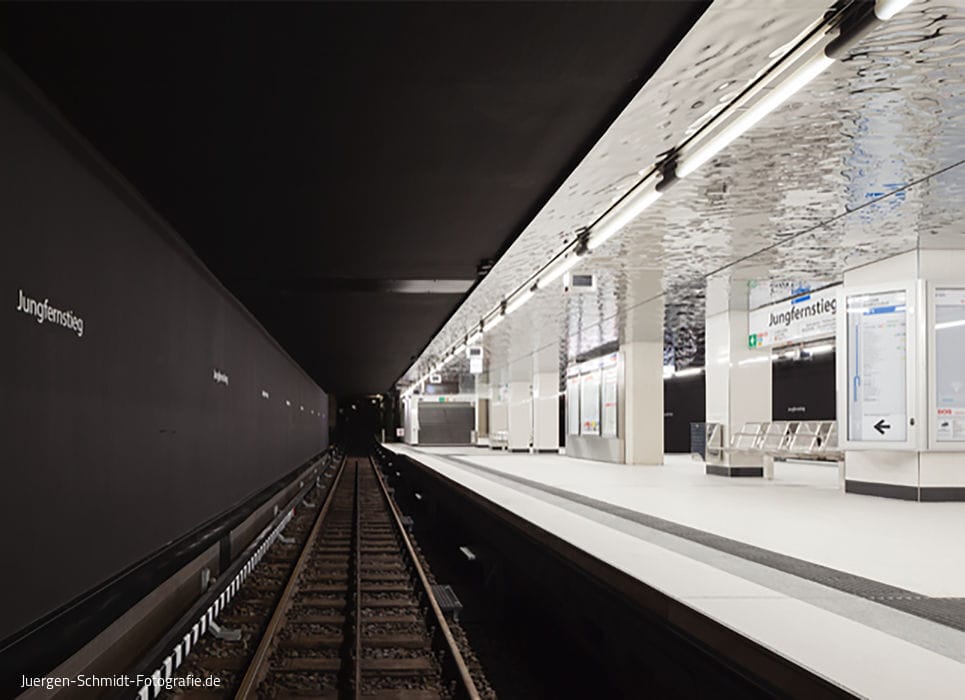
Accessible and Beautiful
The redesigned Jungfernstieg U1 station makes getting on and off a pleasure.