


Learning in Clusters
The new Willy Brandt Comprehensive School in Cologne-Höhenhaus combines length with intimate, human-scaled design
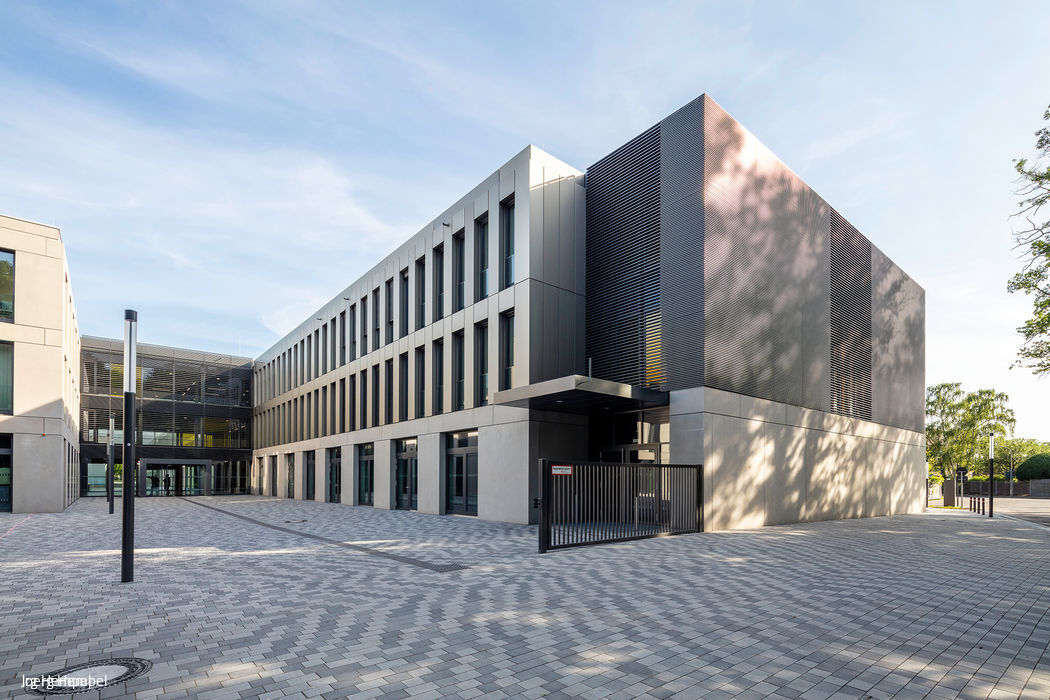
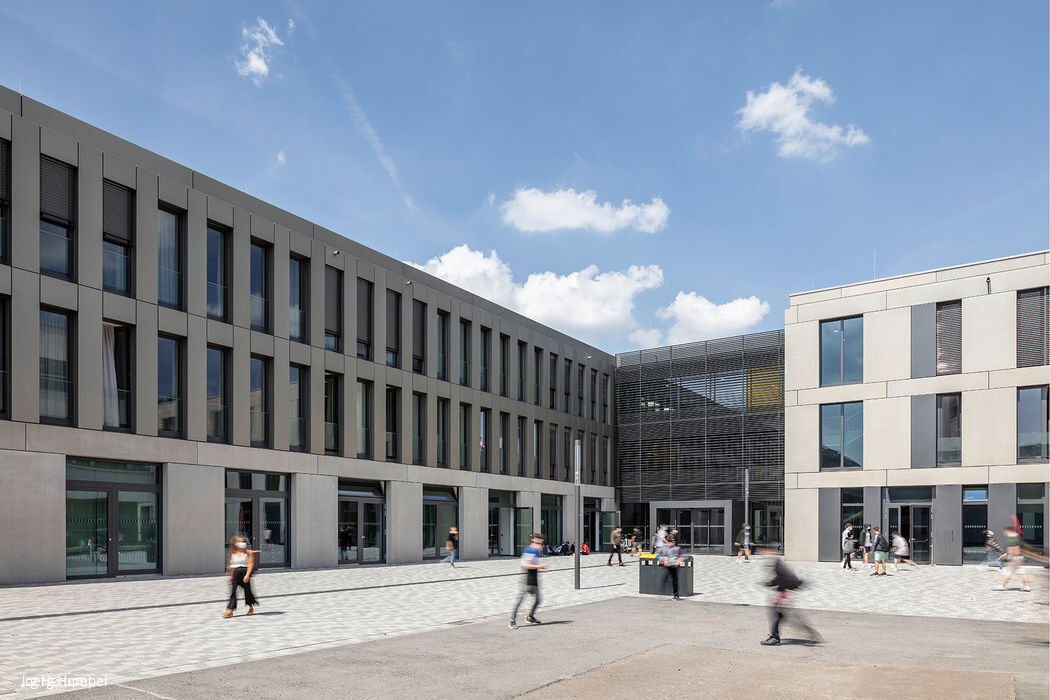
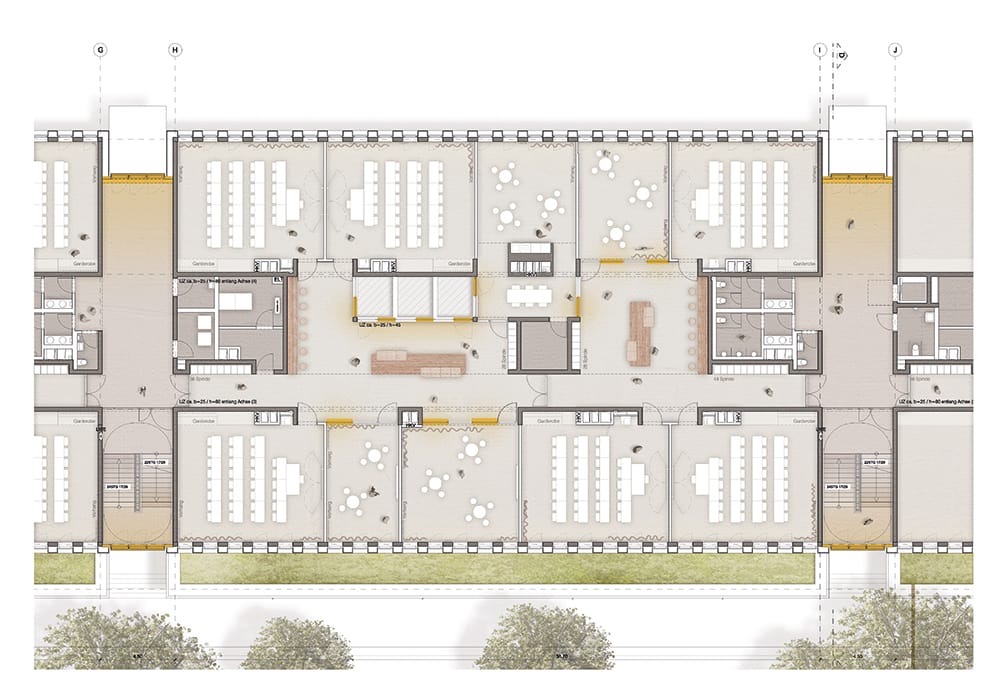
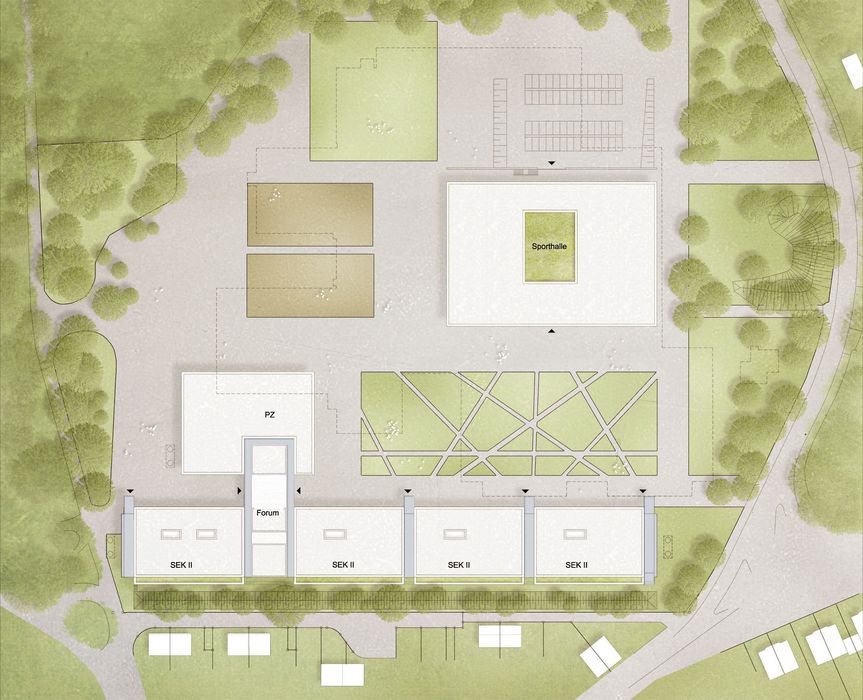
The original Willy Brandt Comprehensive School building had reached the end of its life: constructed in 1975, it suffered from critical fire safety issues, functional deficiencies, and technical problems that made it economically impractical to maintain as student enrollment declined. Hahn Helten Architektur, based in Aachen, was commissioned to design a new facility for approximately 1,400 students and 110 teachers, which would be built directly adjacent to the existing structure while the school continued its operations.
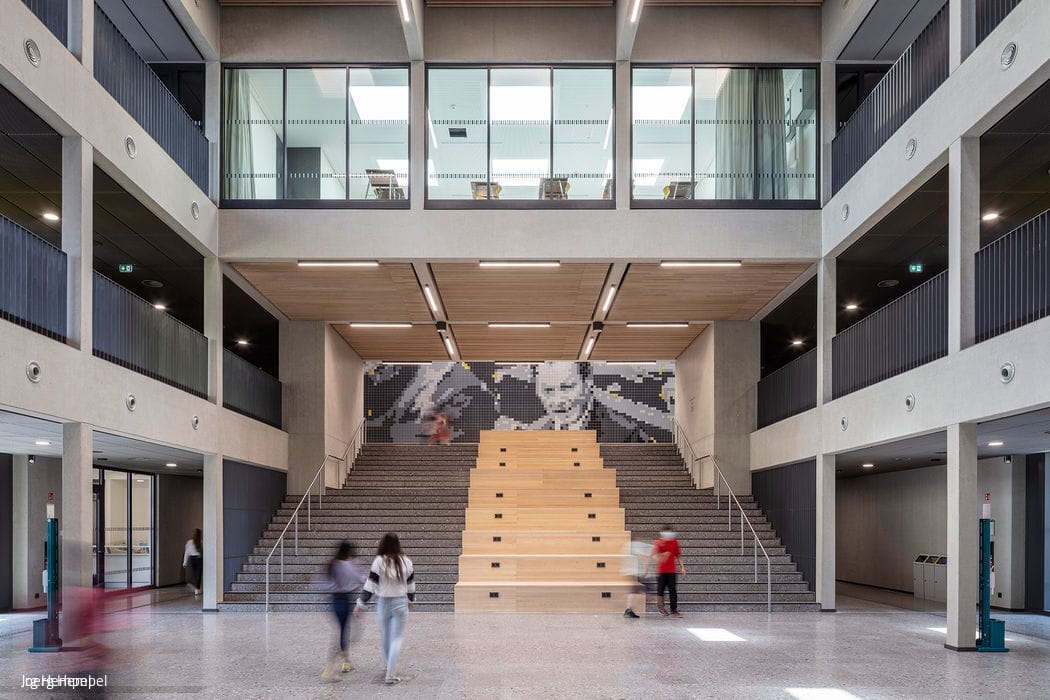
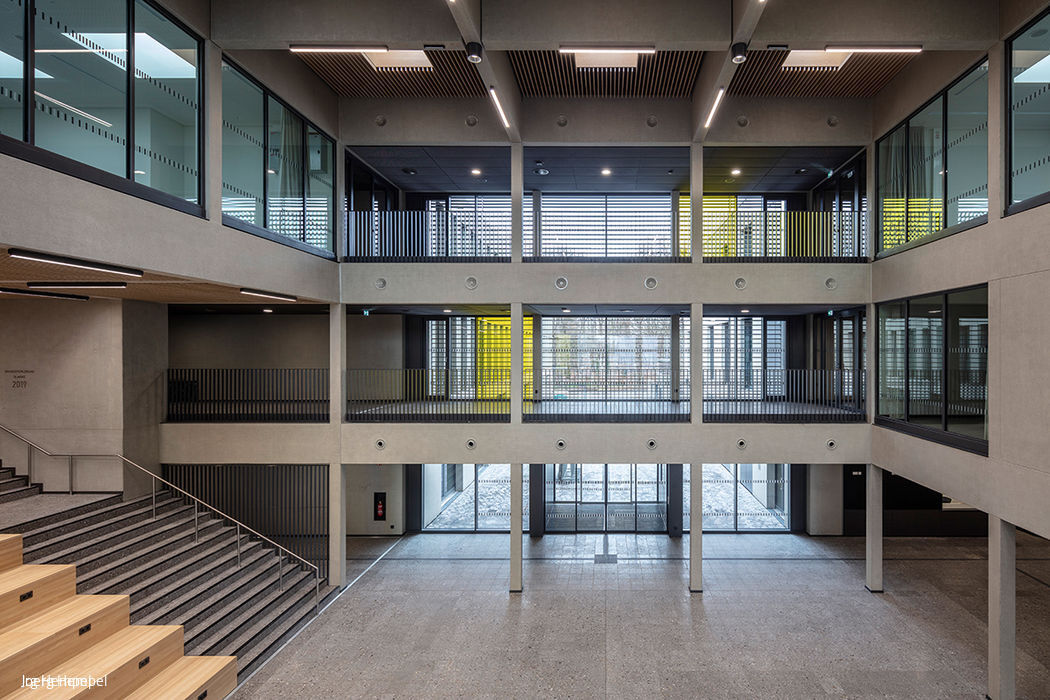
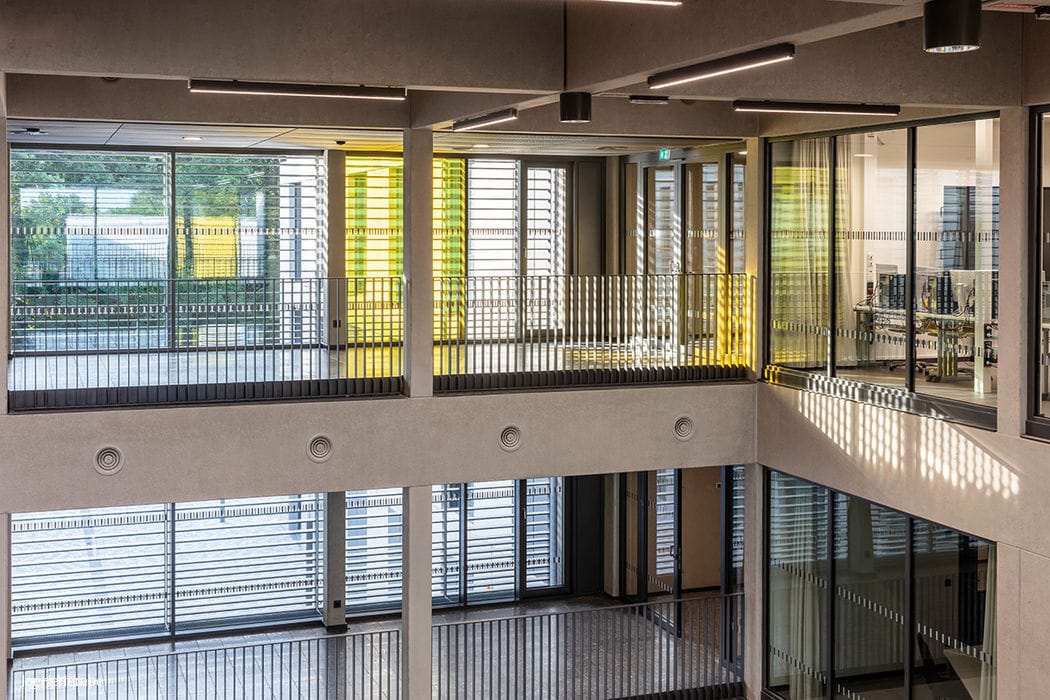
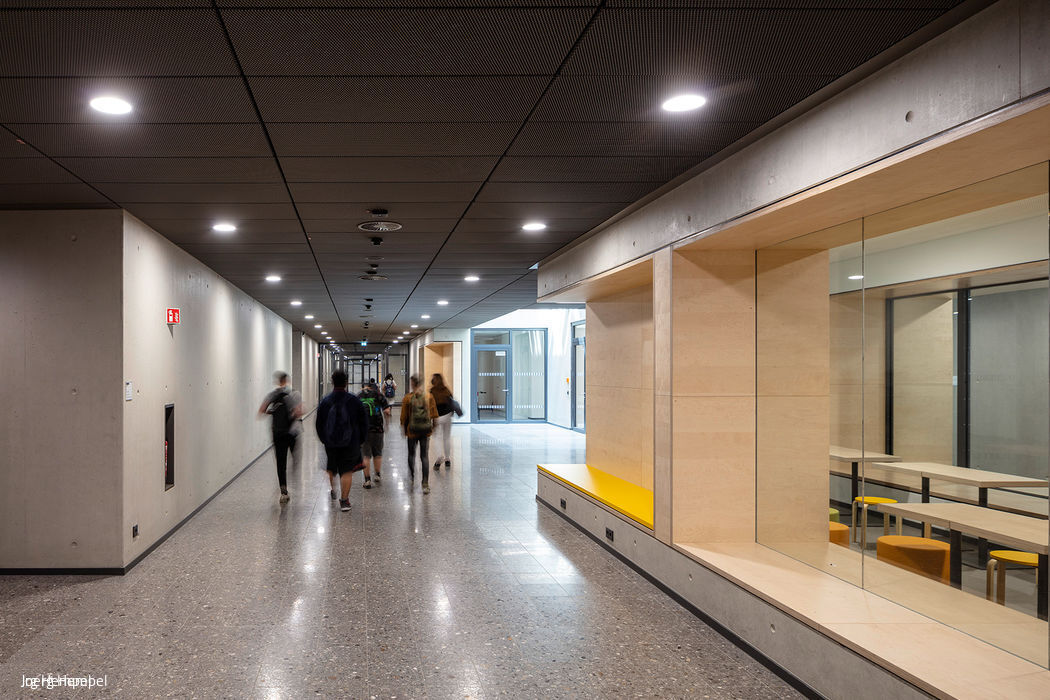
Positioned 10 metres from both the building slated for demolition and the adjacent residential street, the new structure serves as acoustic screening for neighbouring properties from the school yard beyond. Connected by a glazed walkway, the main 200-metre-long school building links to a free-standing pavilion across all levels. Together they house the cafeteria, educational centre, administrative and faculty offices, as well as the primary entrance and communal foyer. A six-court sports facility, planned for the final phase, will complete the complex at the playground's far edge. Since its inception, the school has championed the year-cluster model—an increasingly recognized approach to education. The new "learning house" spatializes this concept across secondary levels by organizing the top two floors into manageable, grade-based clusters. Each cluster orbits around a communal "cluster forum," with four to six glass-walled classrooms and group spaces, a staff room for the ten to fifteen teachers assigned there, plus restrooms and ancillary facilities. Direct access via dedicated entrances and staircases to each cluster fosters a sense of security, belonging, and community. The ground floor opens up to shared specialist classrooms, all-day programmes, library, and self-study centre, all arranged along a more publicly accessible learning boulevard. This organizational split is echoed in the façade: the base is robust exposed-concrete prefabrication, while the upper two storeys feature a ventilated metal cladding system. The foyer's defining feature is an expansive, sociable tiered staircase, anchored by a tile mosaic portrait of Willy Brandt. The space remains flexible, connecting seamlessly to a square event hall seating roughly 800 guests—home to the school's nationally renowned circus programme, complete with full performance rigging. The dual-aspect orientation enables the space to function either as a traditional stage setting or as a circus ring in the round.
Photography Credits:
Jörg Hempel
www.joerg-hempel.com
(Published in CUBE Cologne Bonn, 04|21)
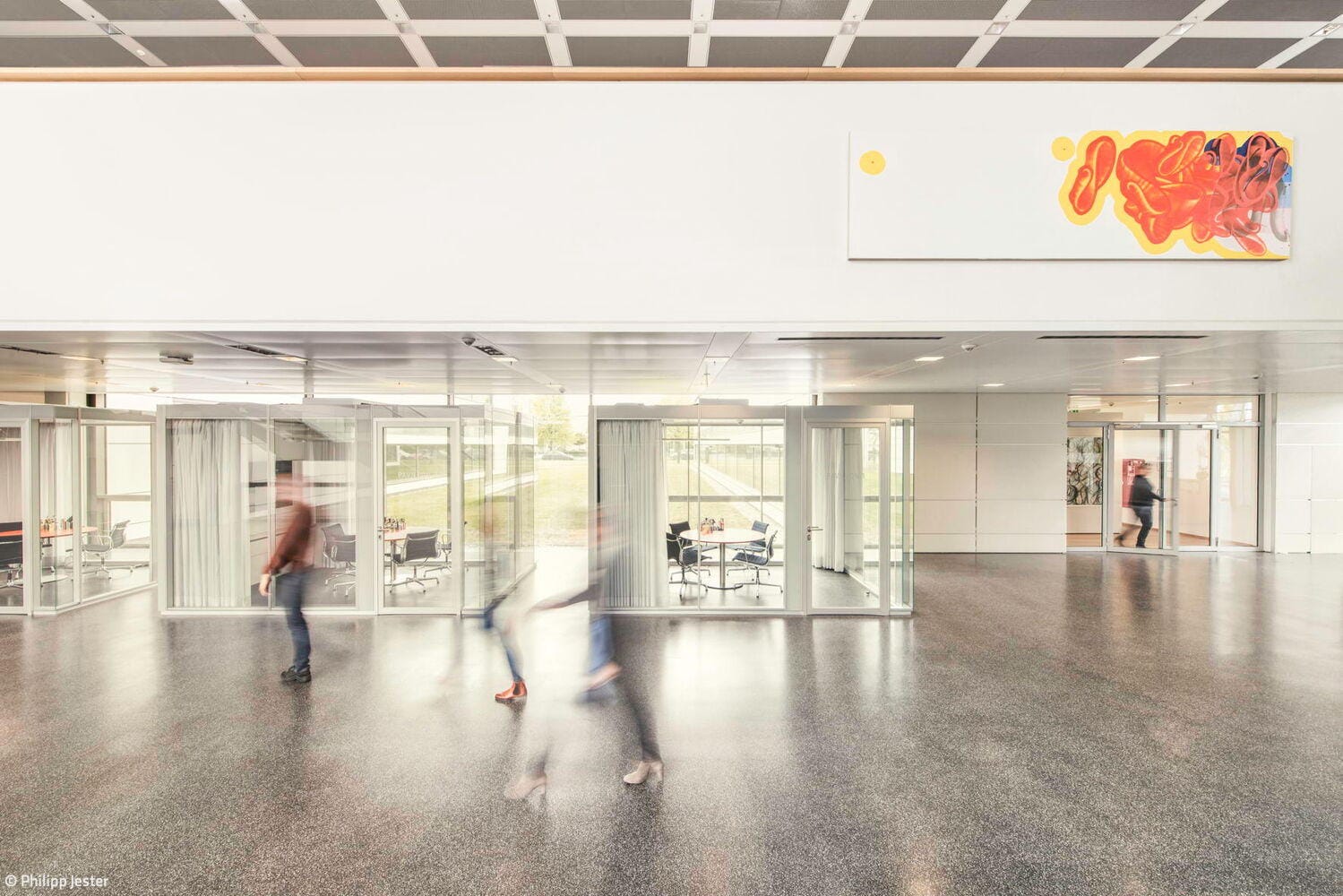
Modular and Provocative
How a consulting firm in Gremberghoven is redefining the workplace through art
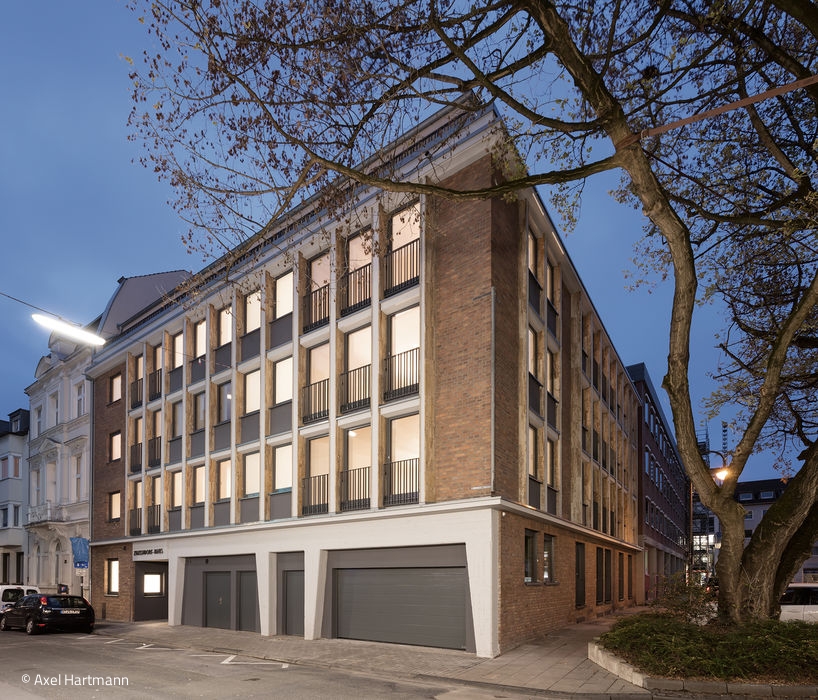
Clarity through restraint
Honoring Architectural Heritage: How a Multi-Story Building Defines Its Identity
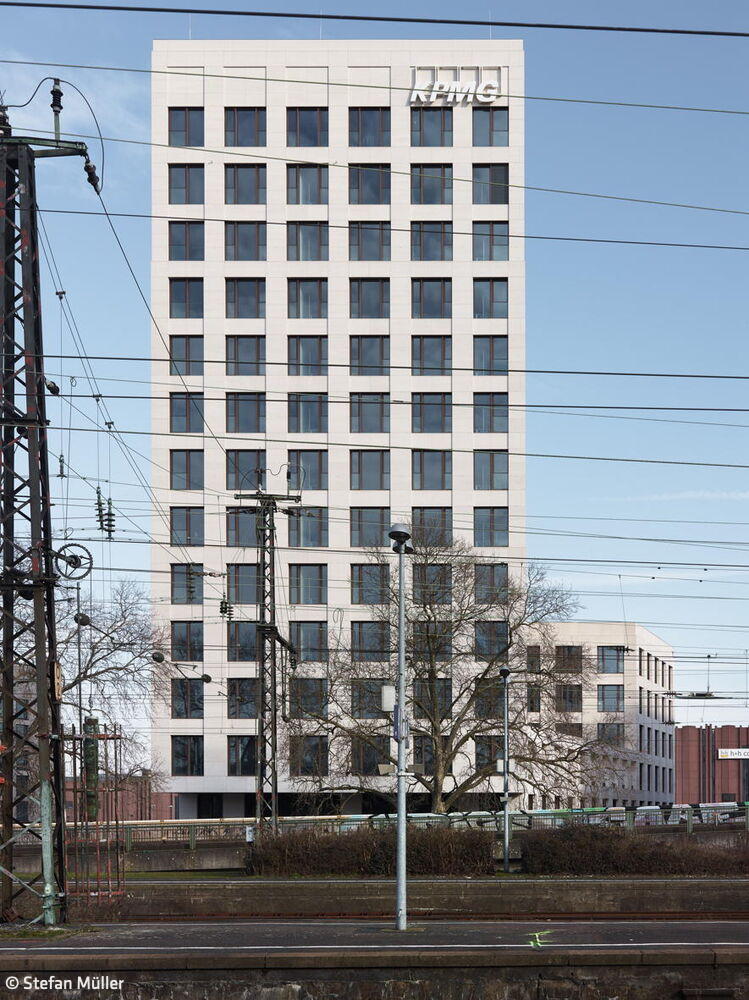
Luminous Landmark
The Centraal: a sculptural icon defining MesseCity's skyline
