


A Clever Twist
The Taunus Villa integrates seamlessly into its surroundings, belying its considerable size.
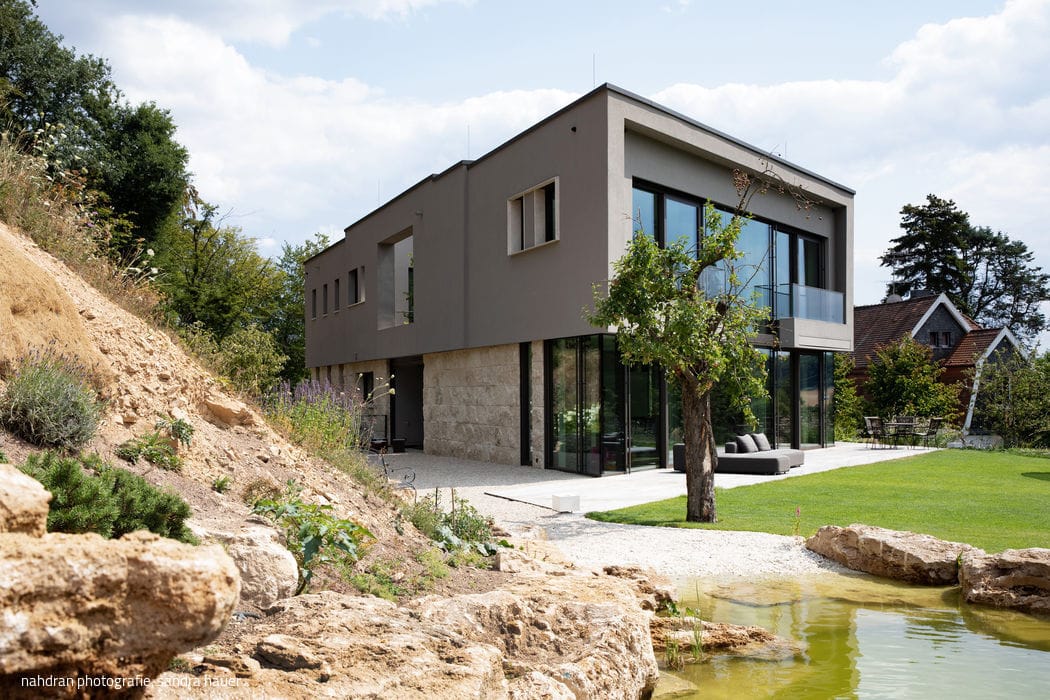
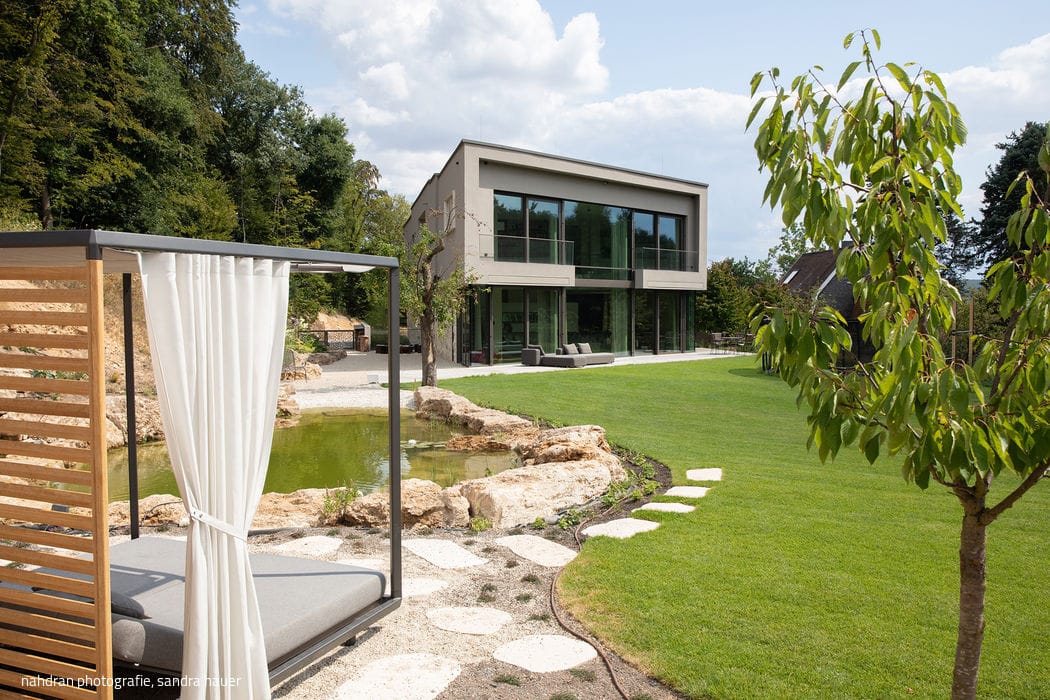
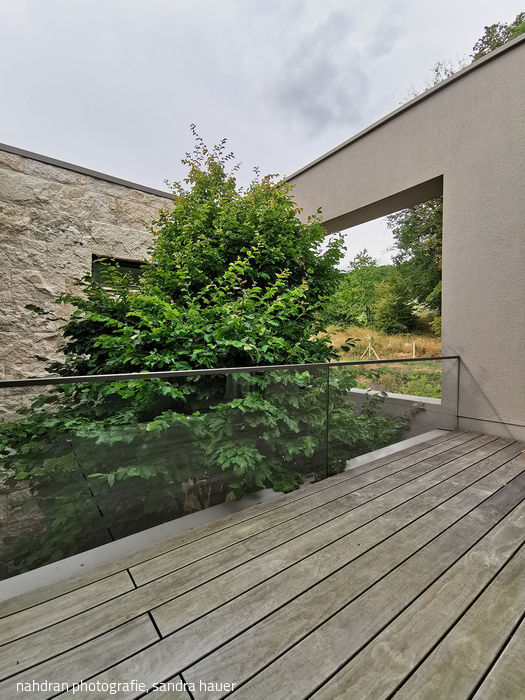
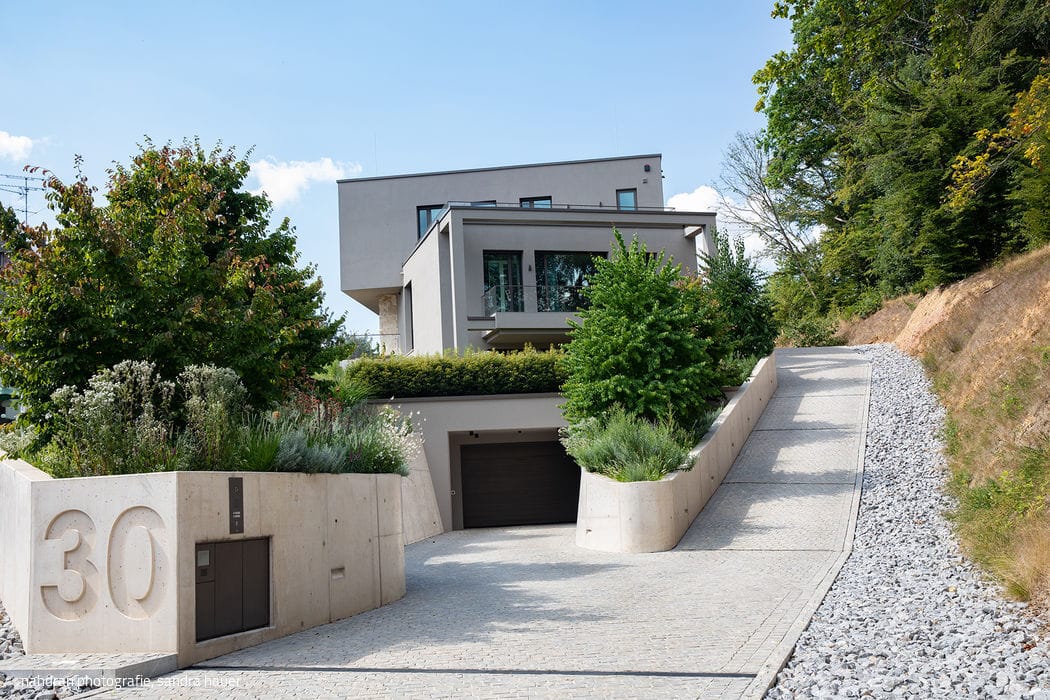
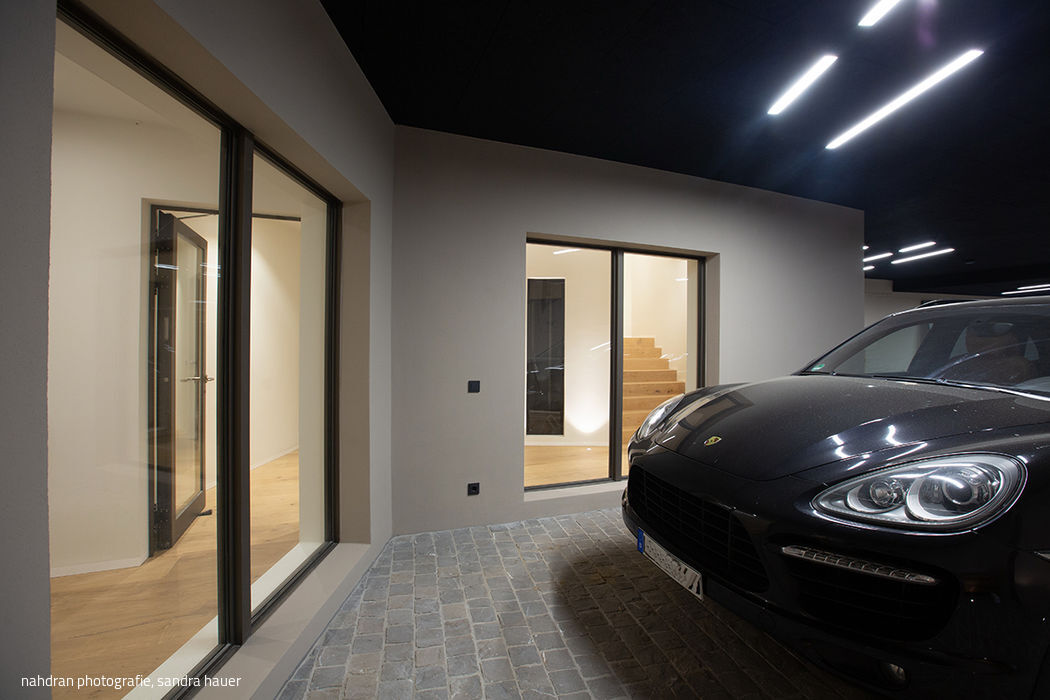
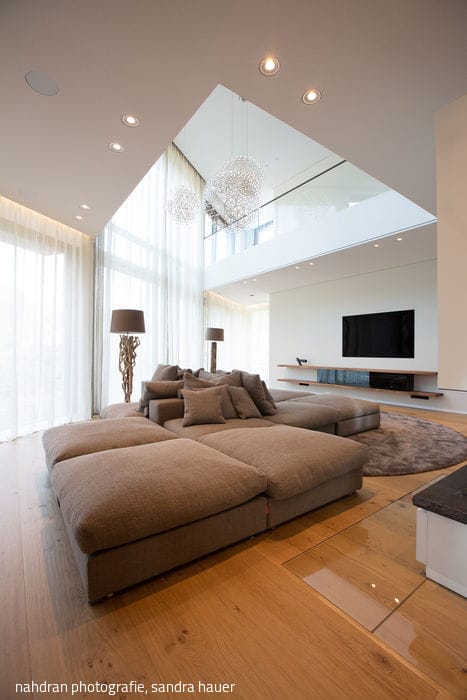
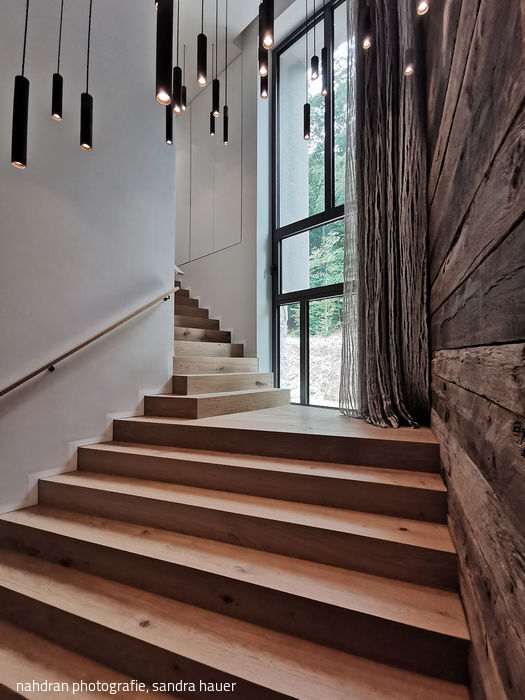
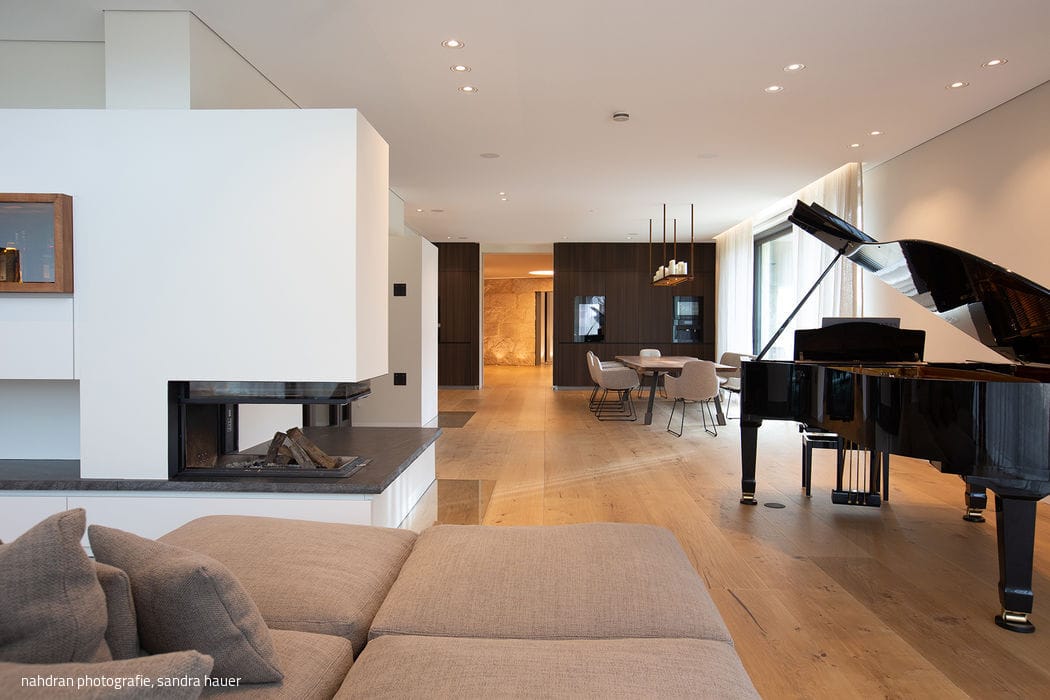
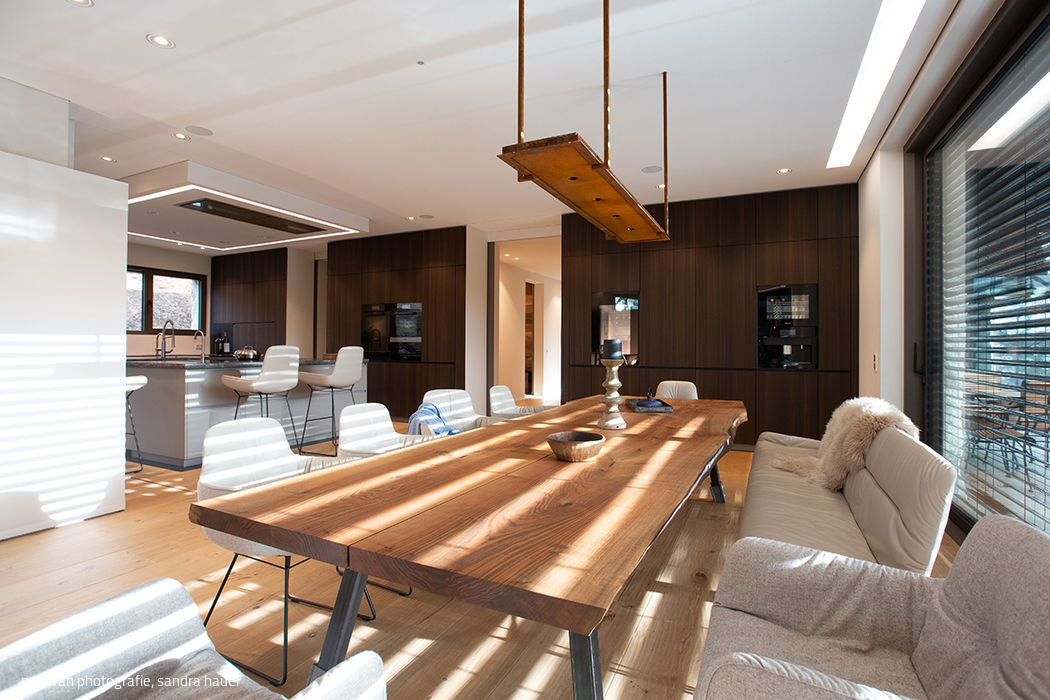
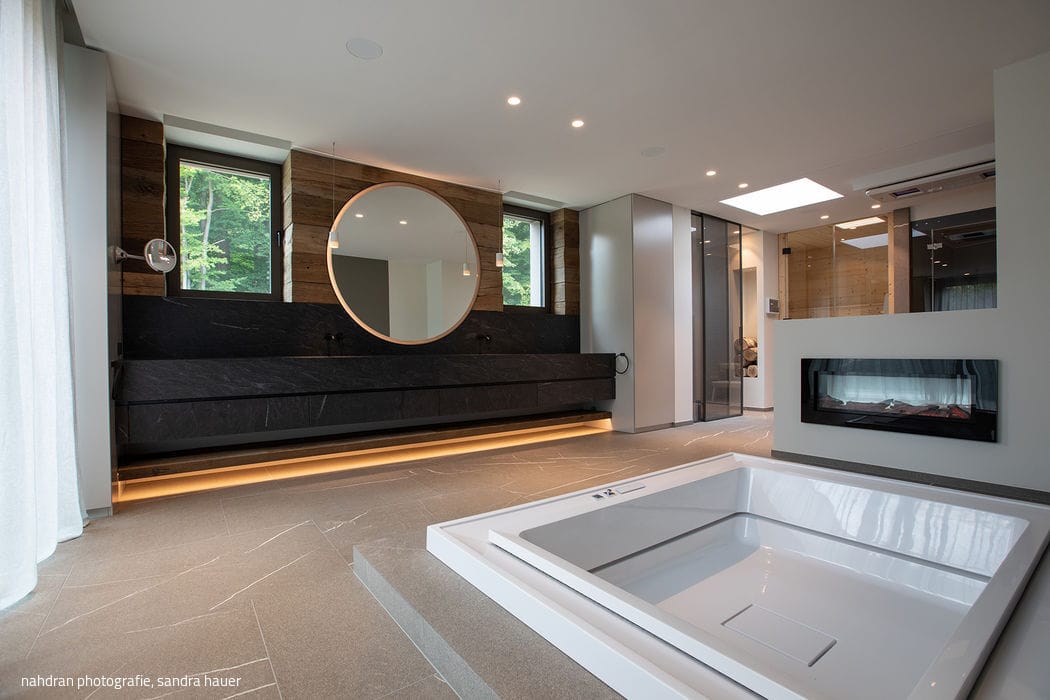
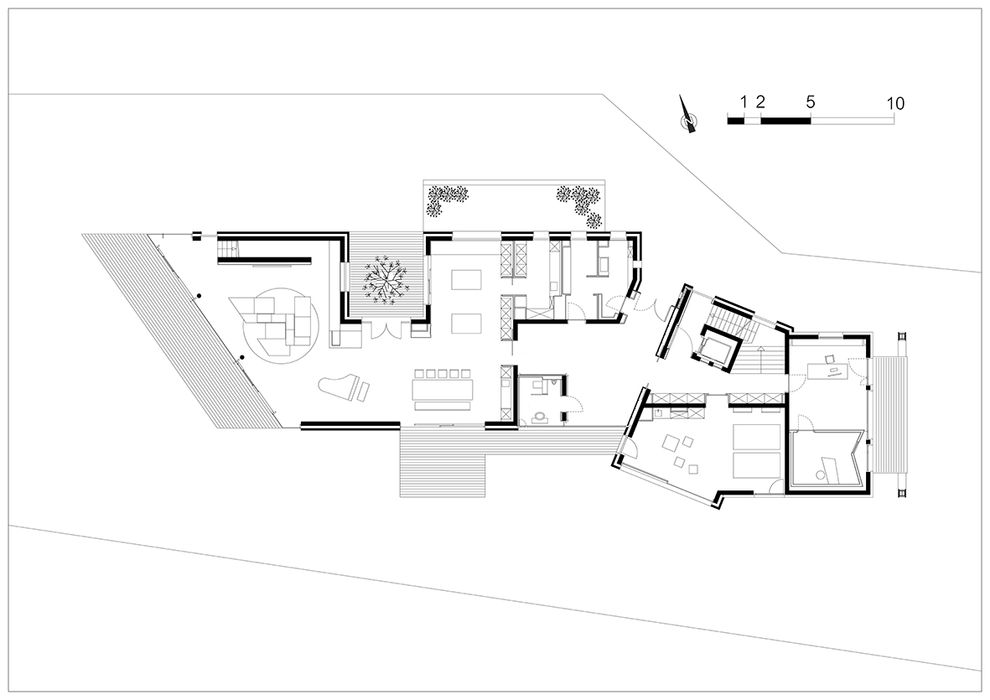
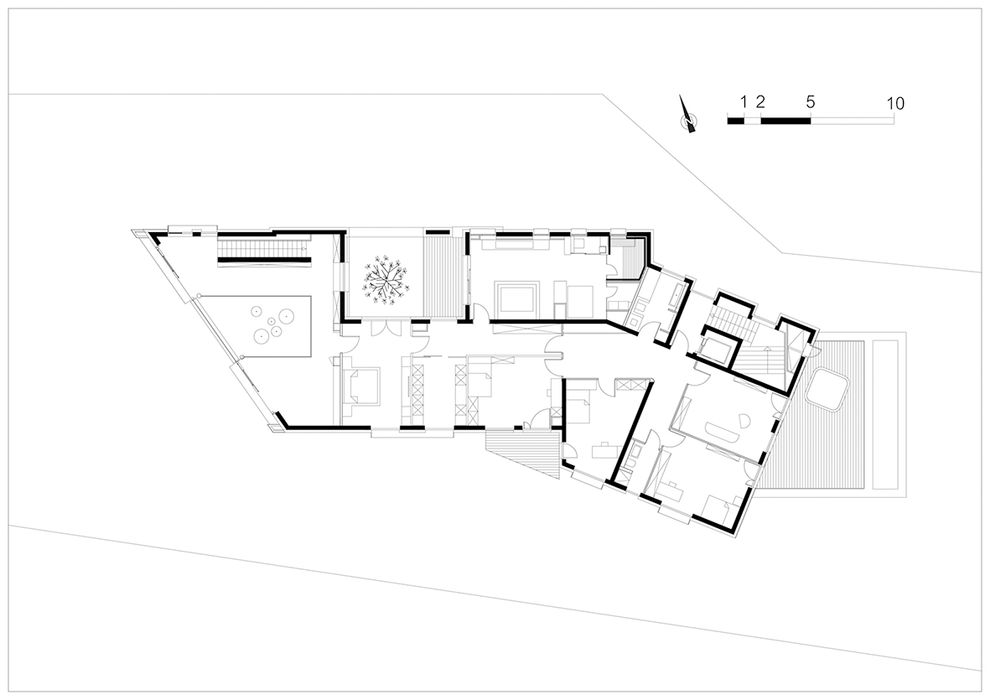
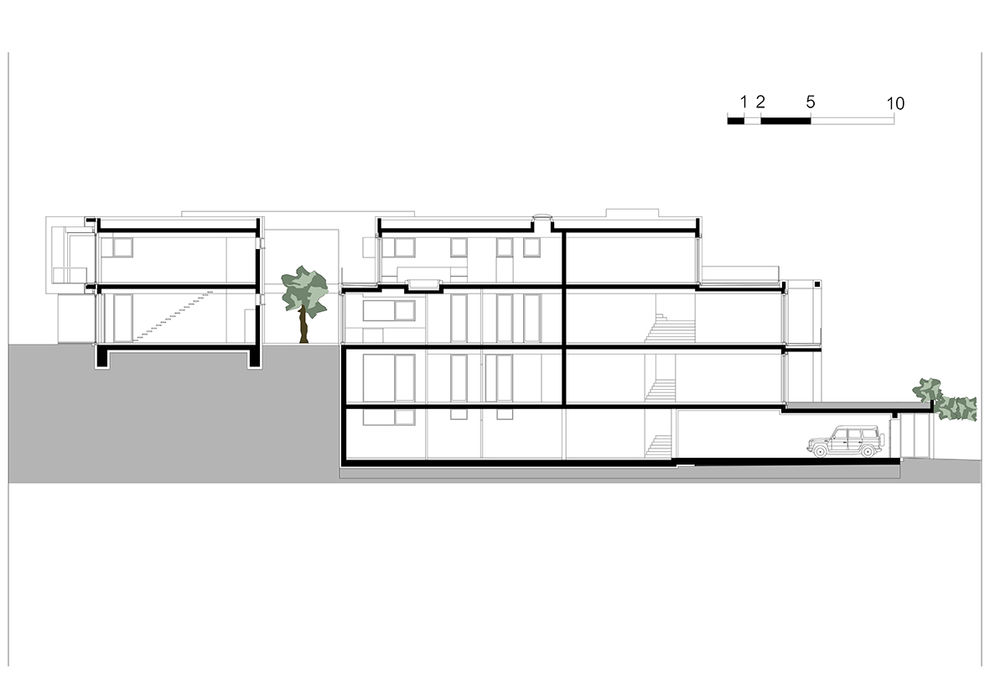
How do you create a large residence that disappears discreetly into its natural surroundings? How do you achieve warmth and comfort within 1,000 m² of living space? These were the questions Grosshauser Architects tackled when designing a villa in the Taunus region. The answer lay in embracing a key constraint: the sloping terrain. While the natural bedrock required careful planning—including clever strategies for managing rainwater and meltwater—it also presented an opportunity. The architects used this slope to their advantage, designing and orienting the four-storey villa so masterfully that its true scale is invisible from every angle. Remarkably, this includes a column-free 215 m² underground garage.
"Much of the house sits below grade, with the underground garage entrance winding organically through slightly curved, planted exposed concrete walls," explains Tobias Grosshauser. "This approach allowed us to realize the client's vision of a chalet-style residence," he continues. "Equally important were the sightlines toward both the mountain ridge and the valley beyond. The house needed to engage in dialogue with nature, creating seamless transitions between interior and landscape." Nature is brought indoors throughout: a planted patio anchors the living spaces, kitchen, bedroom, and bath. The lower level, carved into the hillside at the rear, features a generous bamboo-planted atrium with exposed concrete walls—a light-filled void that brings natural daylight deep into the home's lower zones.
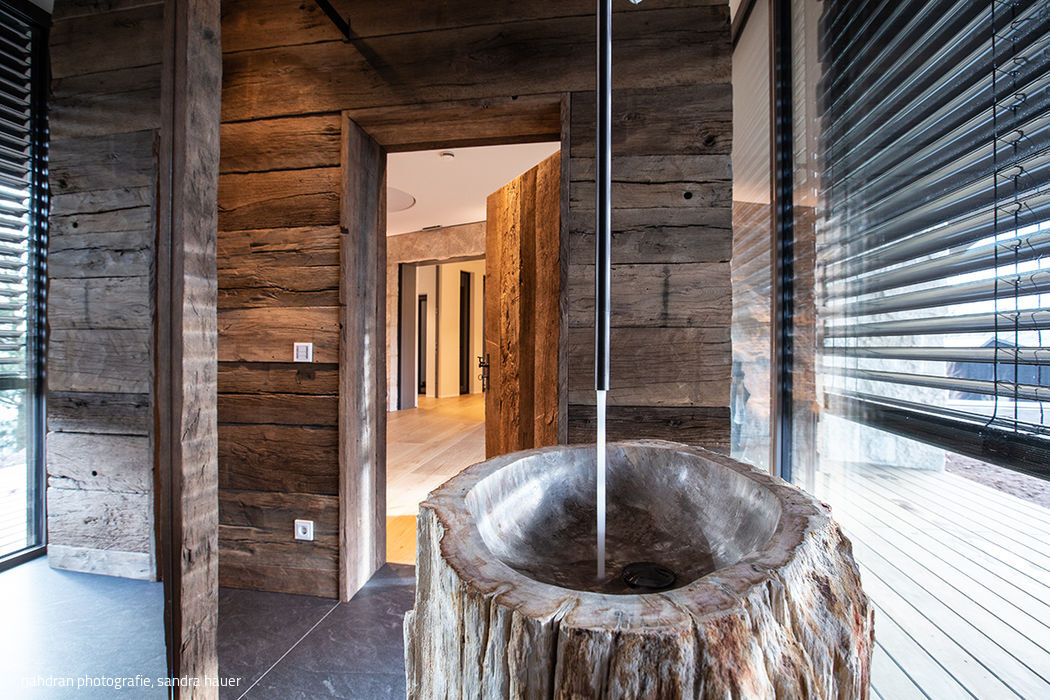
The structure appears to emerge from the stone foundation as if carved from the living rock beneath it. The architect chose rough-hewn travertine to echo the site's natural geology, with each stone shaped on-site by local craftspeople. Stone becomes a visual thread, guiding the eye inward through the building while evening illumination—cast by floor and ceiling lights—plays across its surface, creating dramatic shadows. Reclaimed wood softens the living spaces, chosen for its acoustic properties, aesthetic warmth, and unmistakable sense of home. The rooms feel serene, their carefully composed materials and light creating only a subtle boundary to the world outside. The material palette resonates naturally with the rural landscape that surrounds it.
The architect has exceeded the clients' expectations entirely. Their words speak volumes: "This is more than a dream—it's an oasis of strength and peace nestled in nature. A stunning interplay of colour, form, and texture. Despite its scale, the house radiates pure comfort and represents the most beautiful home we could ever imagine."
www.grosshauser-architekten.de
Living area: 1,021 m²
Plot size: 4,292 m²
Construction period: 3/2016–12/2018
Construction method: Solid reinforced concrete
Energy systems: Geothermal heat pump, photovoltaics, and grey water recycling
(Published in CUBE Frankfurt 03|20)

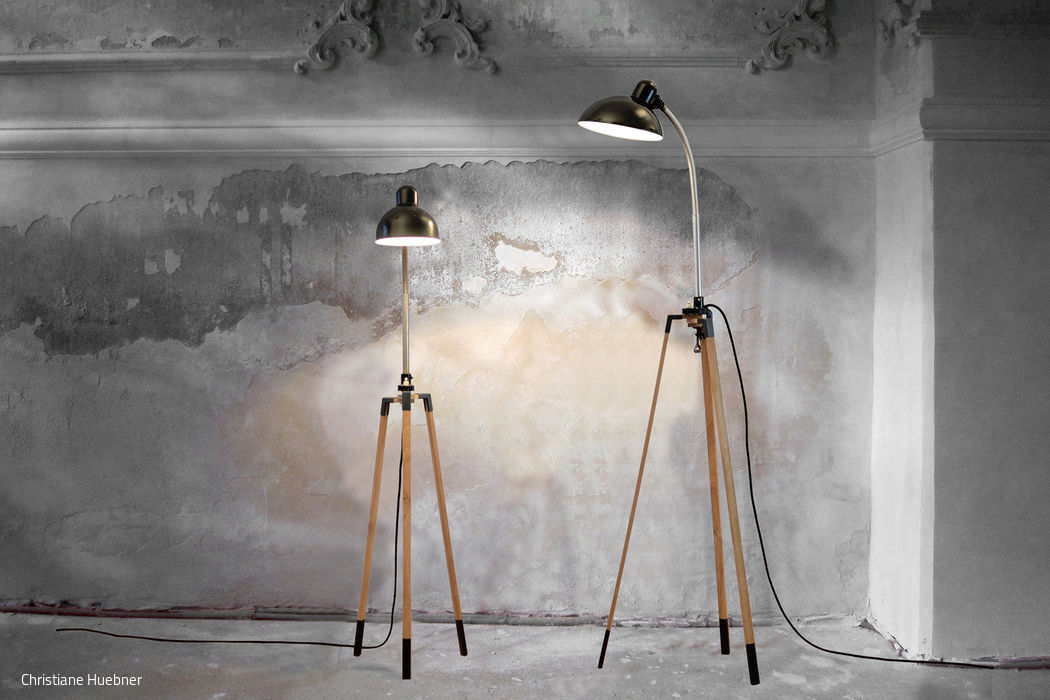
Light: A Matter of Quality Living
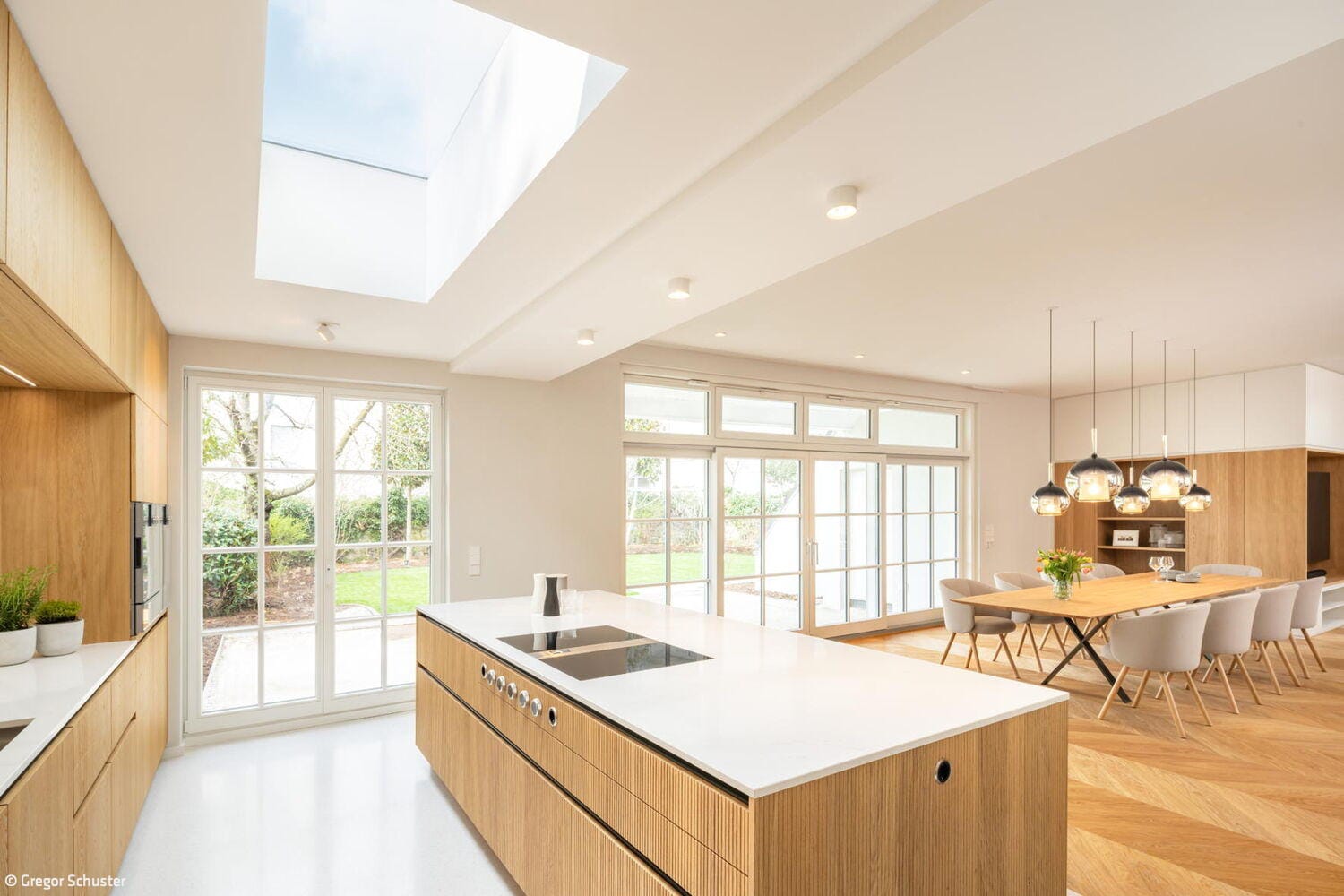
Renovation Breathes New Life into Home: Light, Openness, and Energy Efficiency

Tension and Contrast
Elongated residence creates a powerful interplay between dark exterior and luminous interior
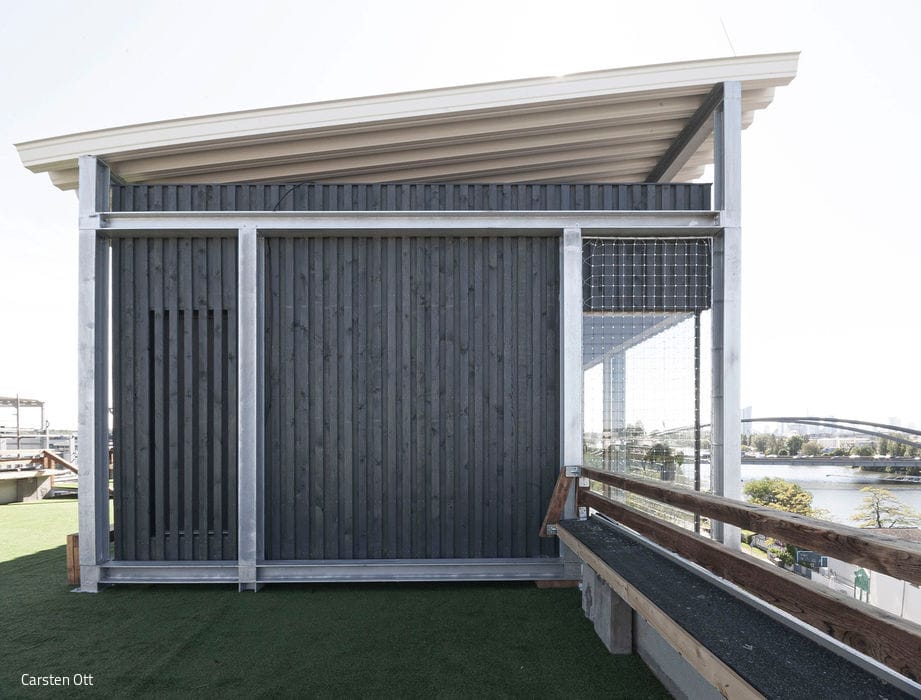
Mobile & Multifunctional
Clever concept gives a construction container a sustainable and varied life
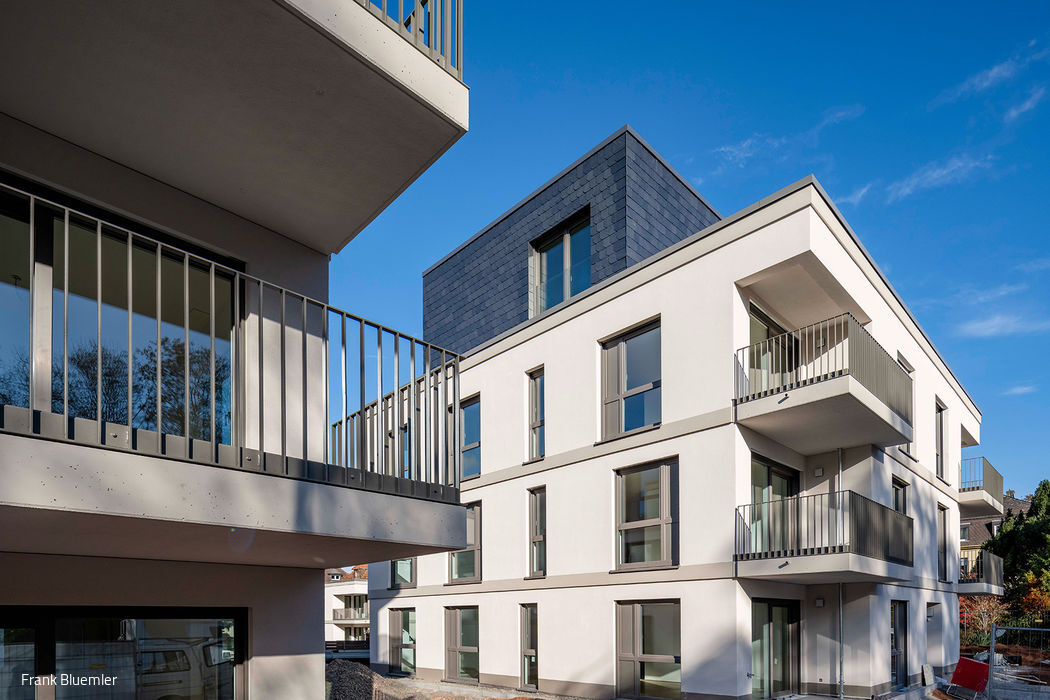
Dwelling in the Forest Park
A new neighborhood in dialogue with Frankfurt's city forest