


Corresponding Polygons
A Five-Sided Vision: New Hotel at Cologne-Bonn Airport
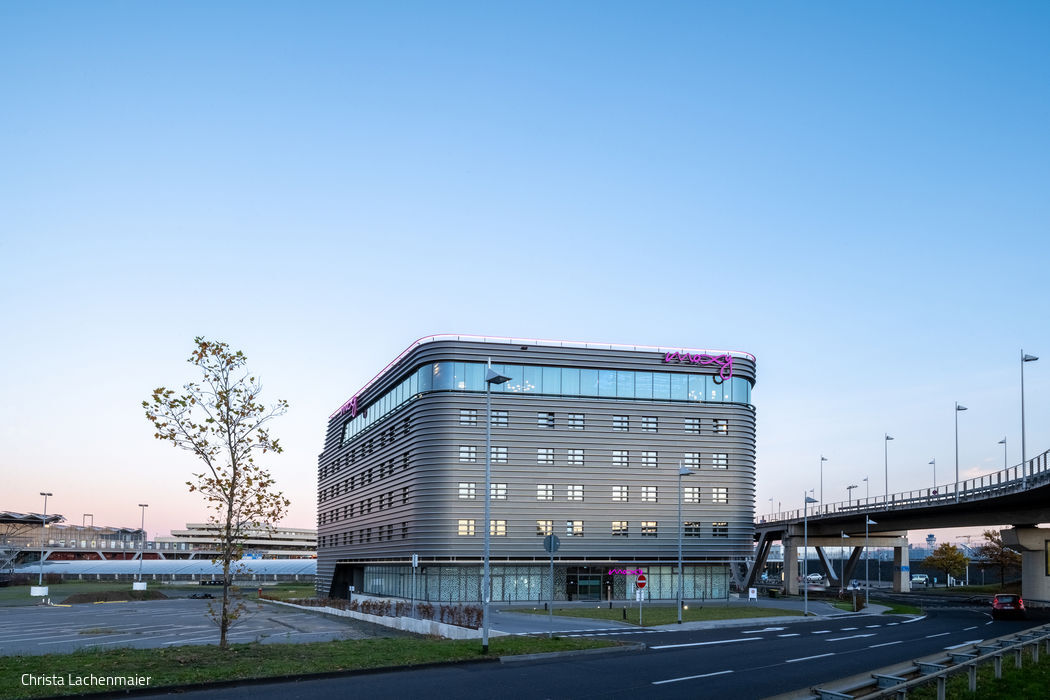


When Terminal 1 opened at Cologne-Bonn Airport in 1970, it was unlike anything else in Europe—a visionary "drive-in airport" designed by Paul Schneider-Esleben. That pioneering spirit lives on, continuing to inspire architects today. The new hotel by JSWD echoes the terminal's distinctive pentagonal floor plan, while its ribbon-like aluminium façade references its award-winning neighbor. Wing-shaped horizontal slats gracefully wrap around the building's rounded edges. Even the interiors (conceived by Brumann Innenraumkonzepte) celebrate the airport experience—travel, movement, and this unique setting. Art-Invest Real Estate developed the project, with a company fund retaining ownership. Today, the Ghotel Group operates it as Moxy, Marriott's lifestyle brand.
Guests check in not at ground level, but rather on the top floor—a refreshing departure from convention. This public space, complete with a viewing terrace and restaurant, invites travelers and visitors to linger. A 24-hour bar doubles as the check-in desk and expands the lobby experience. Anyone who ascends here enjoys sweeping views across the airport grounds and out toward Wahner Heide. The 250 guest rooms span the first through fourth floors, while the ground floor houses the mechanical systems typically tucked away on hotel roofs. Here you'll also find the delivery zone, hotel administration offices, and a fitness room. "At an airport, the fifth façade—the roof—matters enormously," explains Christian Mammel, Associate Partner at JSWD. "It's visible from the aircraft above." There's no underground parking; guests can use surrounding multi-story facilities instead. Only a handful of accessible and staff spaces occupy the hotel grounds directly.
This unconventional layout creates a planted roof terrace on the fifth floor, fed by rainwater collection for irrigation. Solar panels atop the penthouse generate electricity. That same sustainability mindset runs throughout: water-efficient fixtures, motion-triggered LED lighting, occupancy sensors, and intelligent building management all minimize resource consumption. Stay here, and you're immersed in airport culture. Hallway carpets mimic runway markings; pictograms speak the visual language of terminals. In essence, the experience feels like being in a real airport—only far more comfortable. Just remember: the actual gate is definitely next door.
Photography Credits:
Christa Lachenmaier
www.christalachenmaier.com
(Featured in CUBE Cologne Bonn 02|22)


Luminous and Minimal
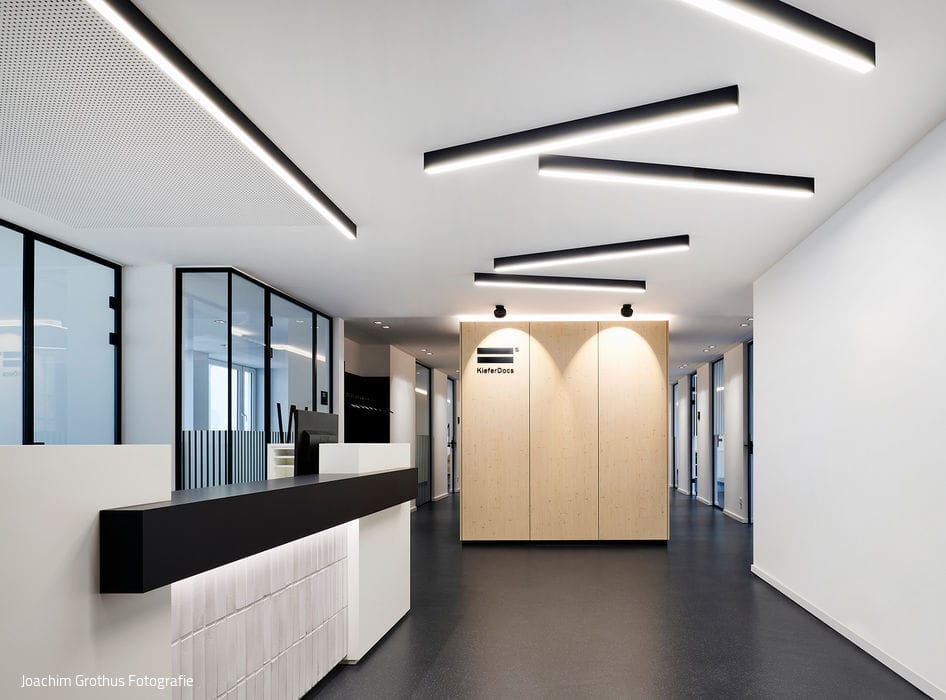
Modern Orthodontic Practice Blends Bauhaus Rigor with Nordic Simplicity
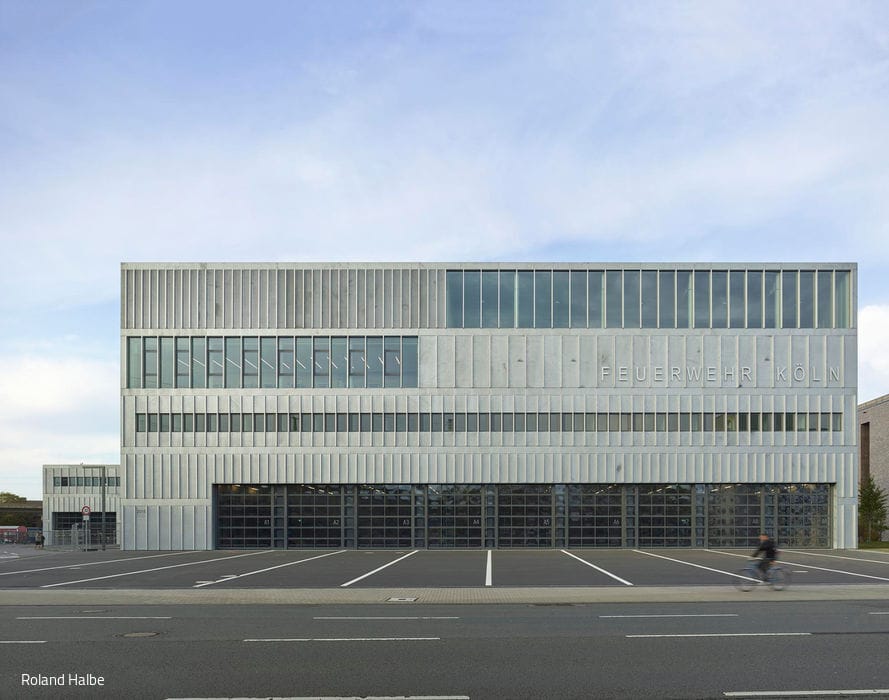
Clean Lines, Ready for Anything
Hot-dip galvanized façade wraps Cologne's new main fire station
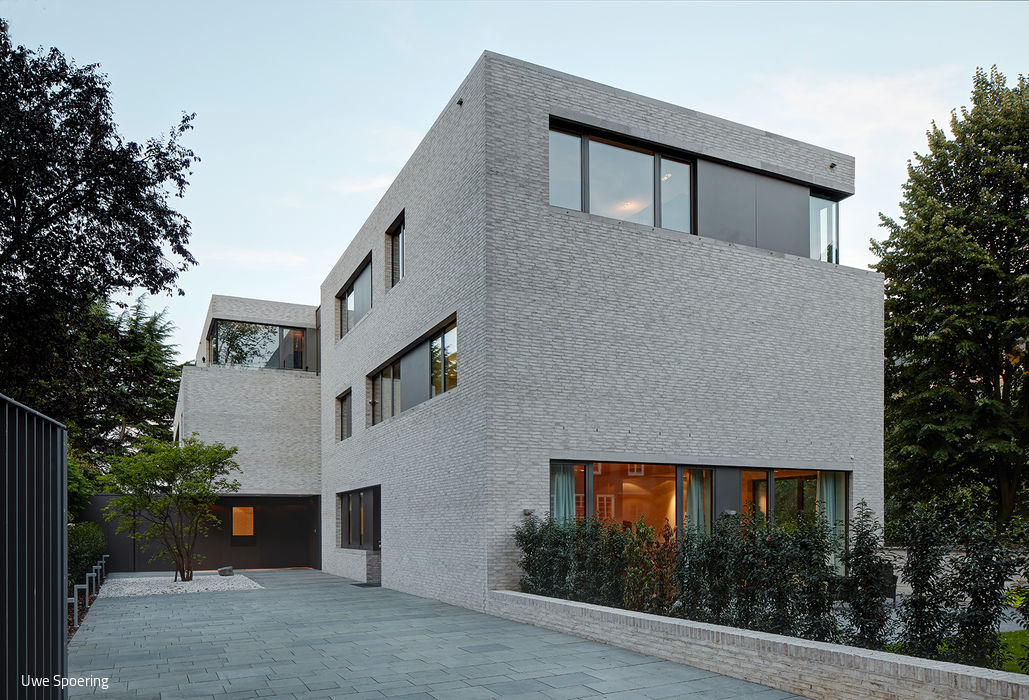
A Monolith on the Rhine
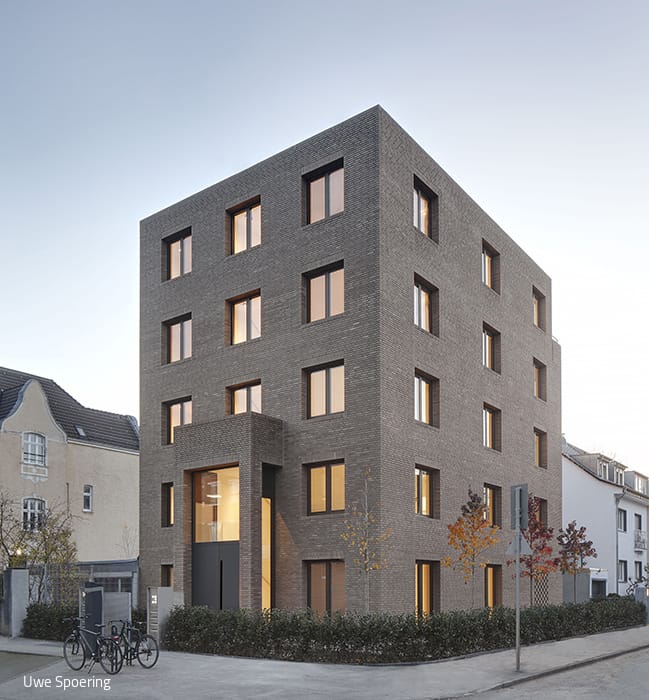
A Rodenkirchen apartment building that captures minimalism in built form
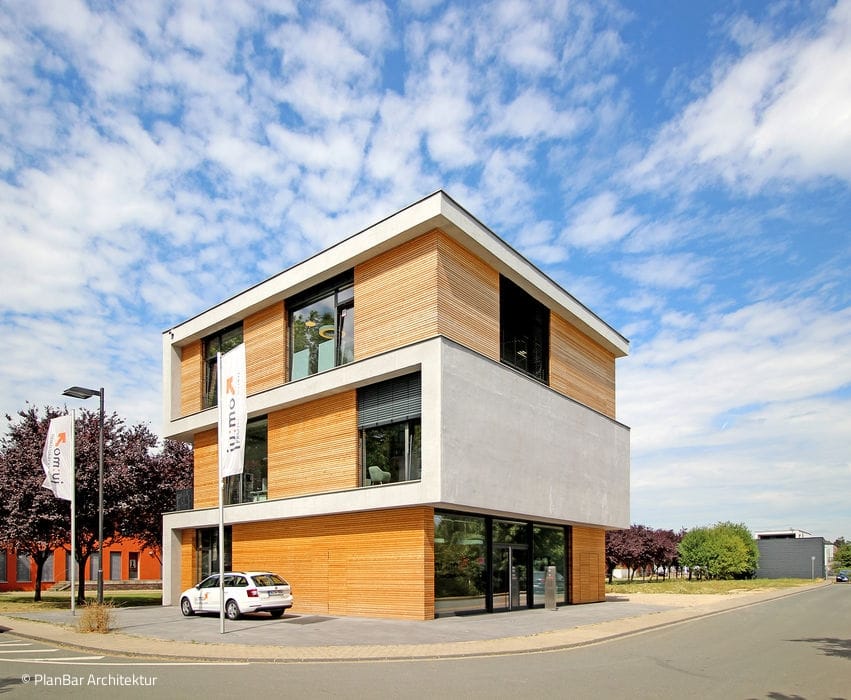
A Vision for Tomorrow
A defining feature is the continuous band in exposed concrete, running as a wall and ceiling element from ground level to roof…