


Working in the Old Town
Modern Office Building Completed in Historic Center
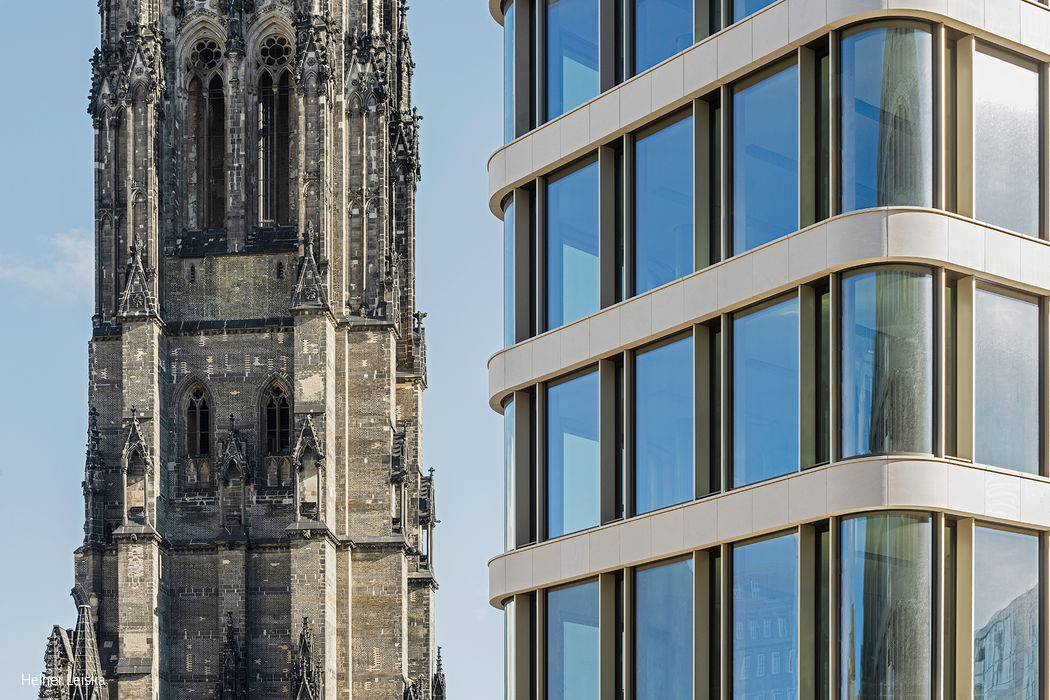
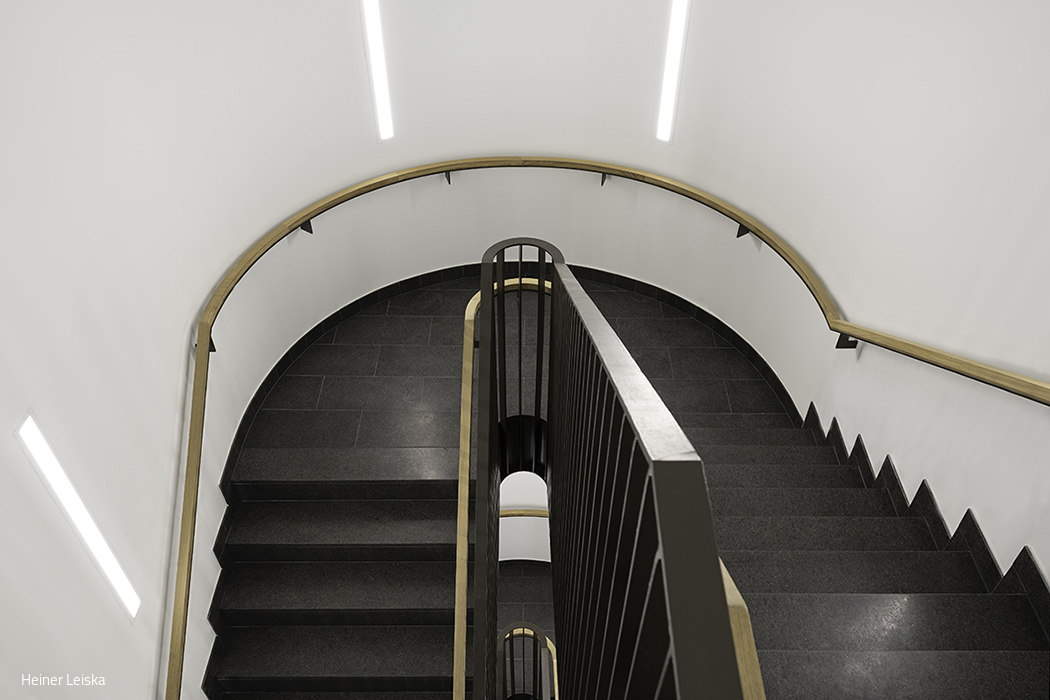
Just a stone's throw from the historic St. Nicholas Church, a new office building stands at the corner of Hahntrapp and Großer Burstah, designed by the architecture firm von Gerkan Marg and Partners. Before construction began at this historically significant location, archaeological excavations uncovered thousand-year-old timber logs. The Hamburg Archaeological Museum is currently analyzing these findings and examining whether the early medieval origins of Hamburg's merchant city district need to be rewritten.
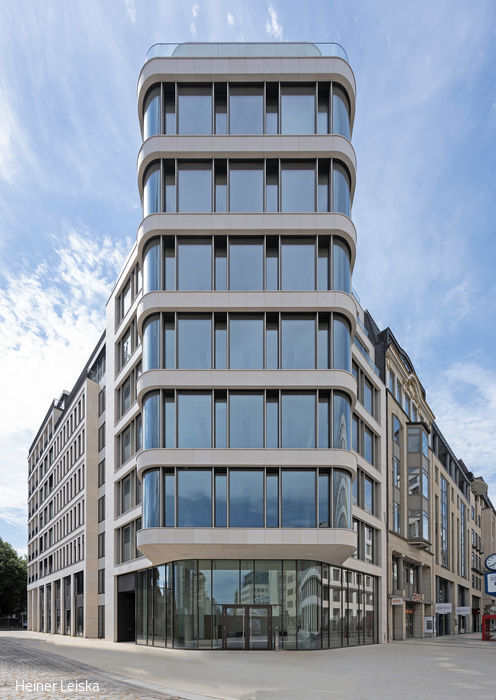
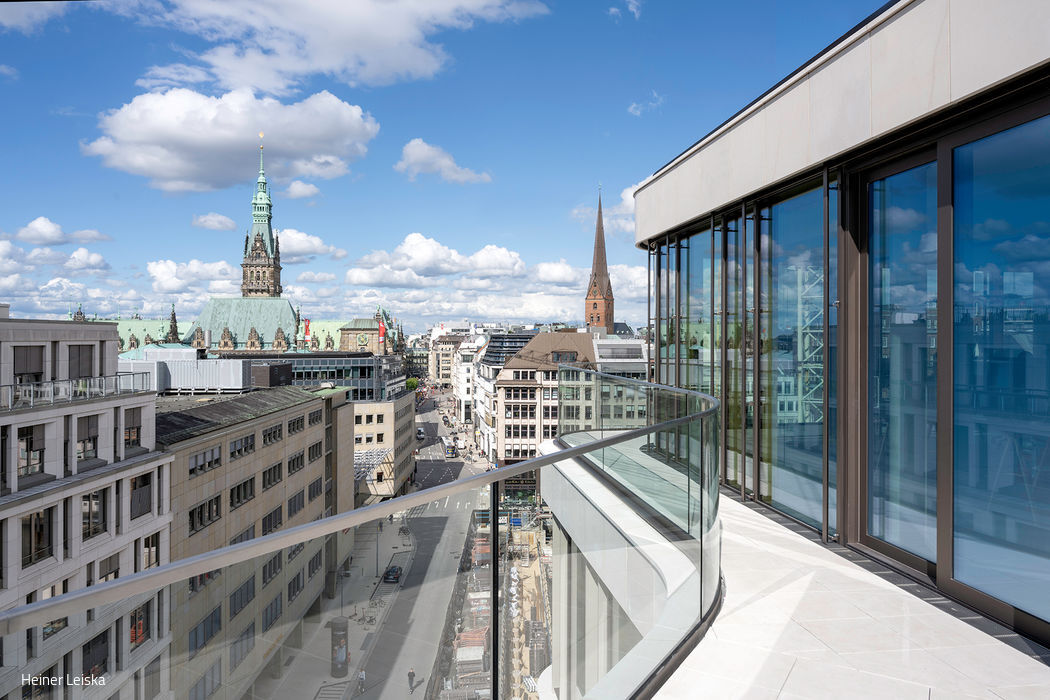
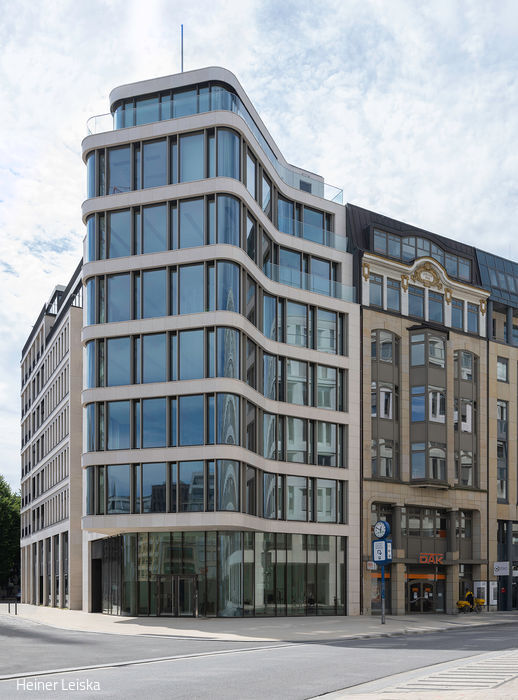
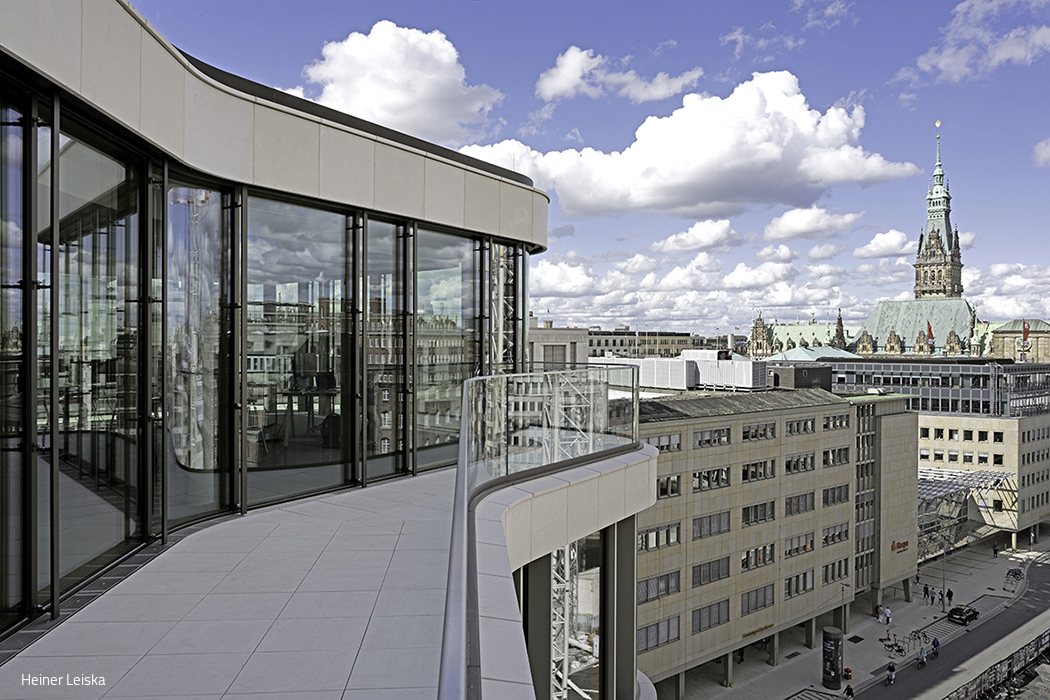
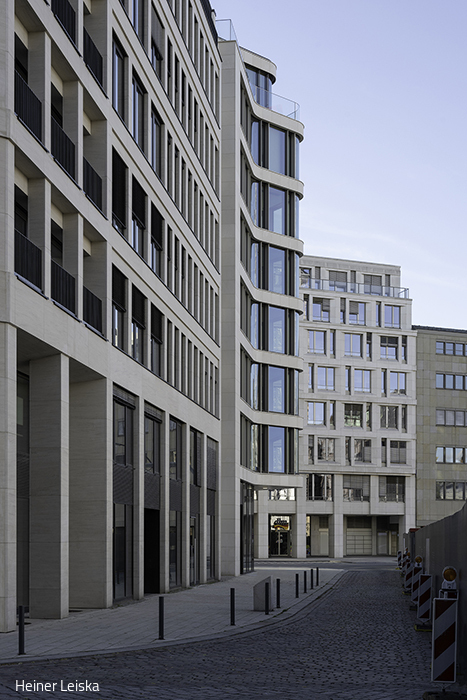
The new office building marks the endpoint of an axis visible from the Town Hall. Its façade features a prominently cantilevered bay window that gives the building a distinctive identity recognizable from afar. At the same time, the structure integrates seamlessly into the existing streetscape through bands of light-colored sandstone that echo the materials and lines of neighboring buildings. Light natural stone also characterizes the streetscape around Rathausmarkt.
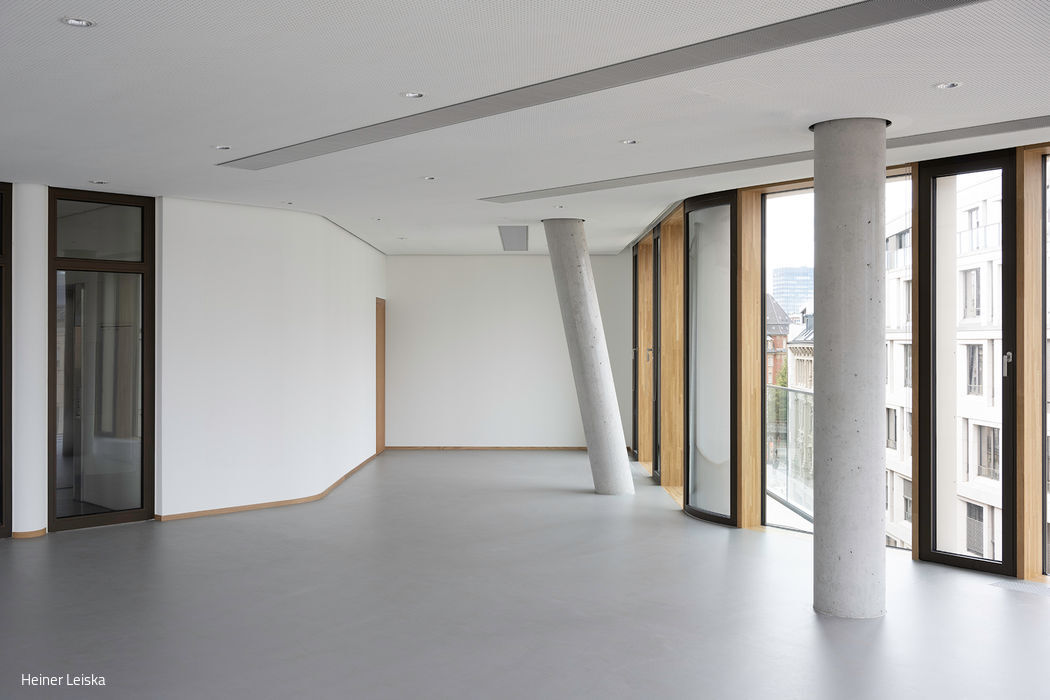
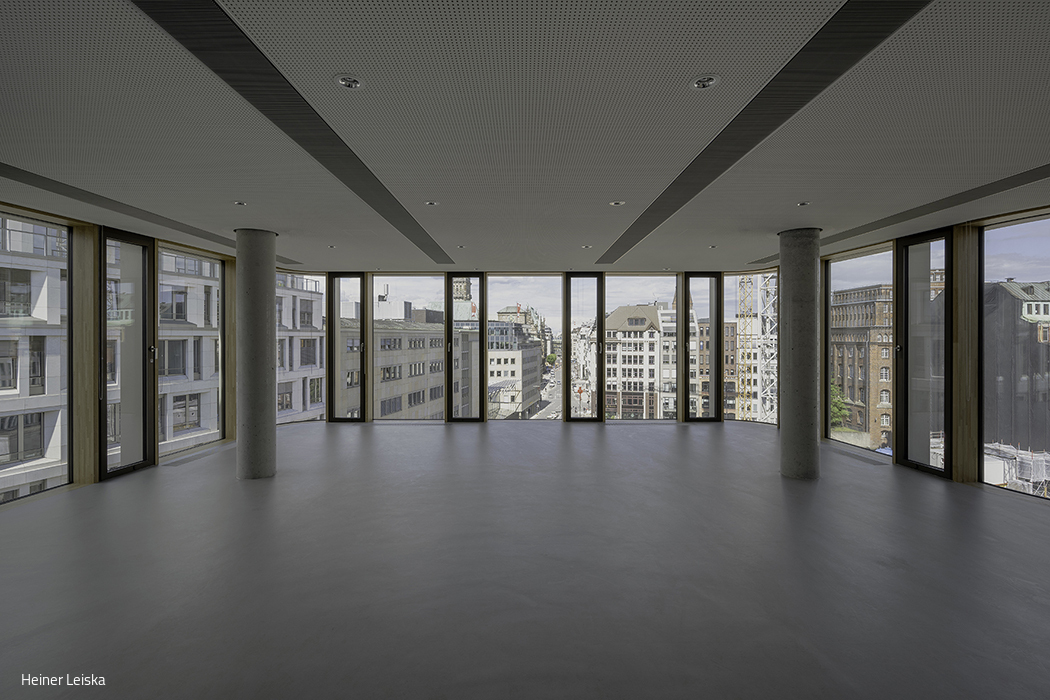
The natural stone surfaces of the new building alternate with nearly full-height window bands, rhythmically articulated by slender ventilation windows. Above the ground floor with its central reception area, six standard floors and a top-level setback floor follow. The standard floors cantilever approximately 3.20 x 10.00 meters over the ground level, emphasizing the curved, expressive façade form. Through its sweeping profile, the new office building guides pedestrians and traffic from Rathausmarkt into Großer Burstah, reinforcing the historically rooted and newly revitalized central role this street plays within the Nikolai Quarter.
Highlights include the representative foyer on the ground floor with its elaborate specialty plaster finish and the setback floor on the seventh level, which offers expansive views over Hamburg's city center and invites special meetings and receptions. With a footprint of just 225 m², the new building restores the quarter's original fine-grained character along Großer Burstah. For the client, the unique opportunity to build within Hamburg's medieval core was more important than maximum economic efficiency—today, usable floor space comprises roughly one-third of the total, with the remainder dedicated to circulation and auxiliary spaces.
Photography Credits:
Heiner Leiska
www.leiska.de
(Published in CUBE Hamburg 04|20)
One Becomes Three
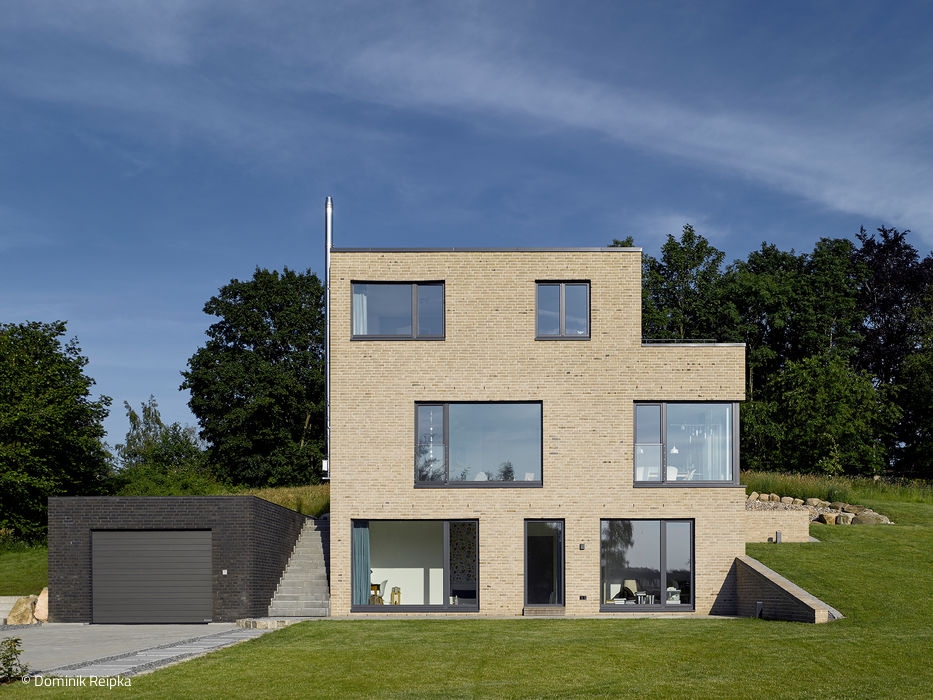
Making brilliant use of the slope to maximize space
Living and studying
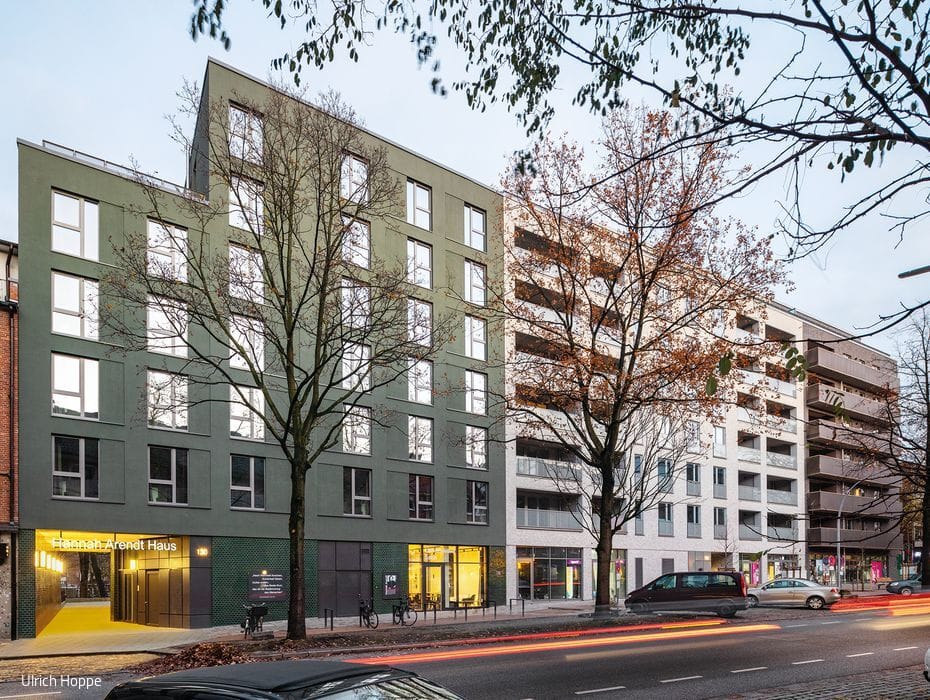
An award-winning neighbourhood on the Schanze—a case study in intelligent infill development
Between Tradition and Modernity
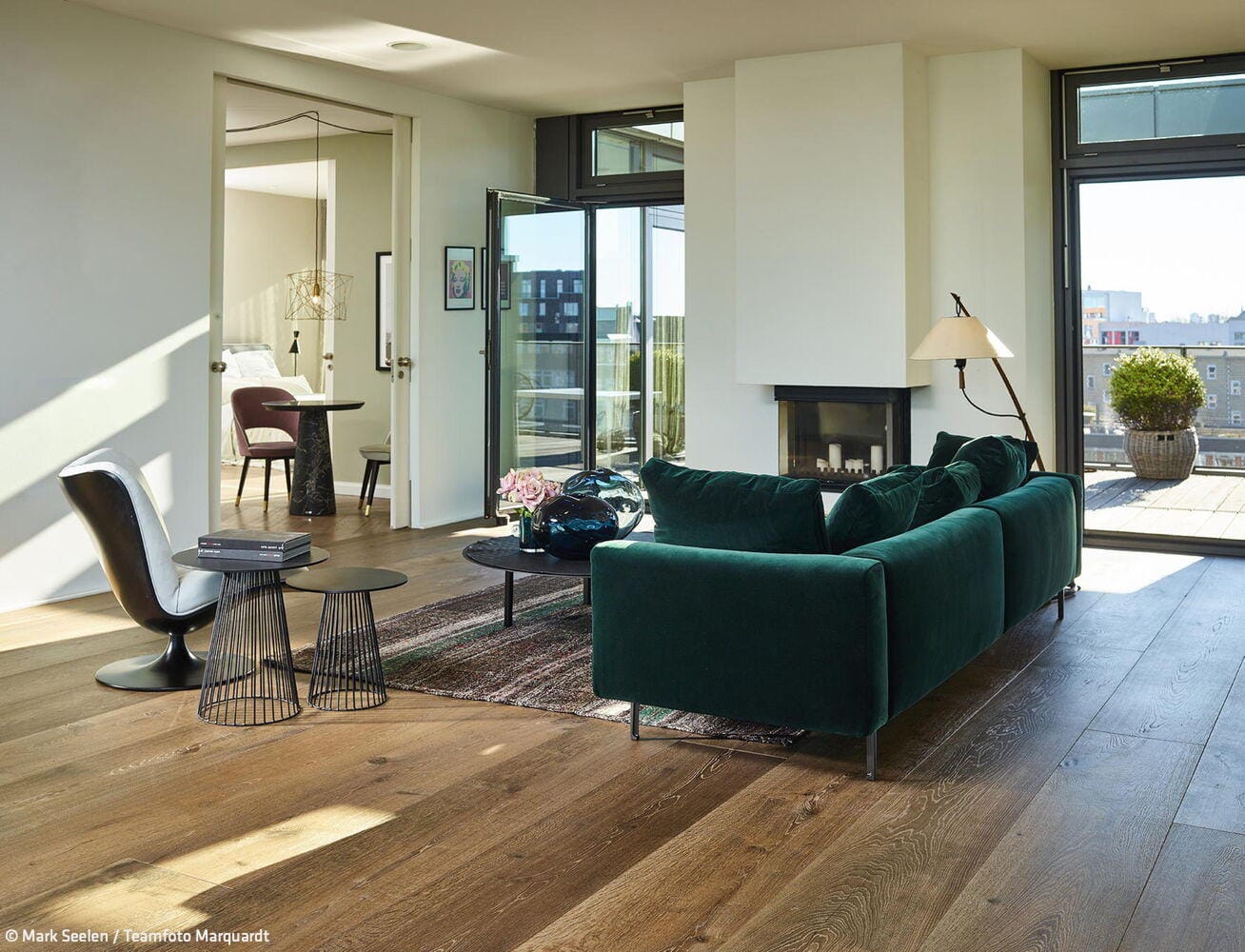
History and the present meet at the Parketthaus in Eppendorf

Flowing Spaces
After comprehensive renovation and reimagining, this 19th-century villa reclaims its former grandeur