


Spaces as Membranes
Thoughtful spatial design ensures peace and privacy in a two-family home
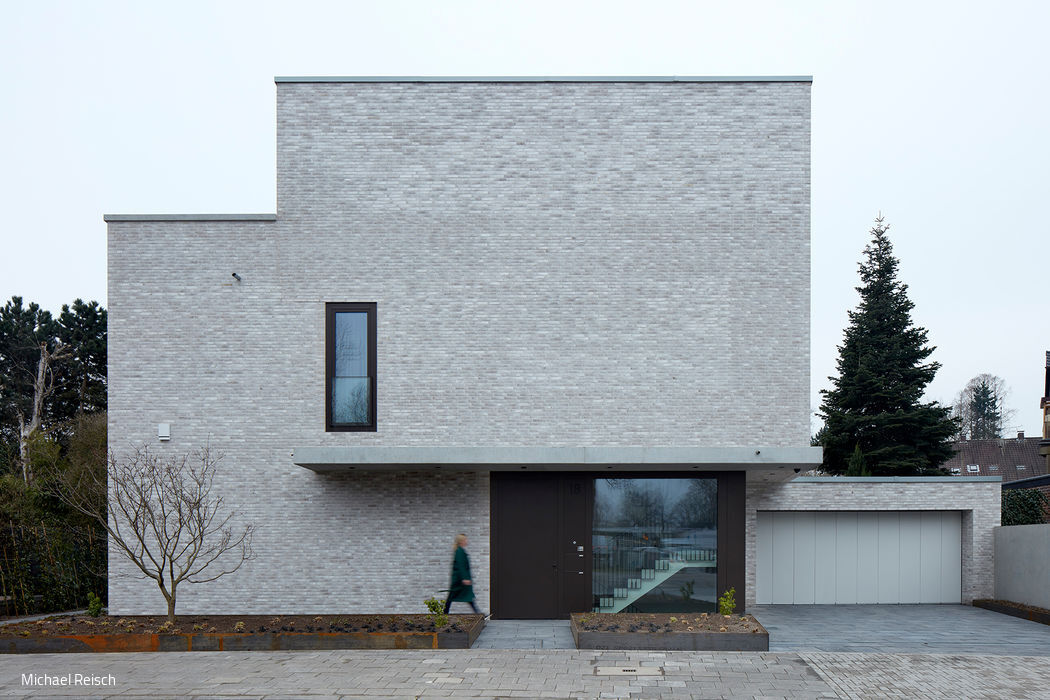
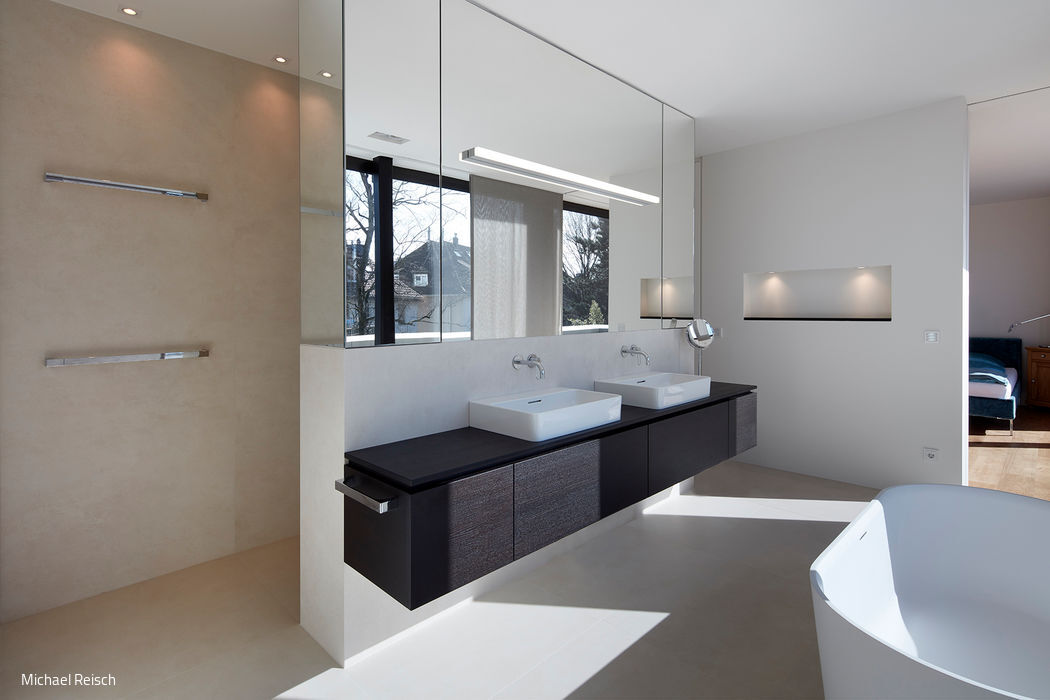
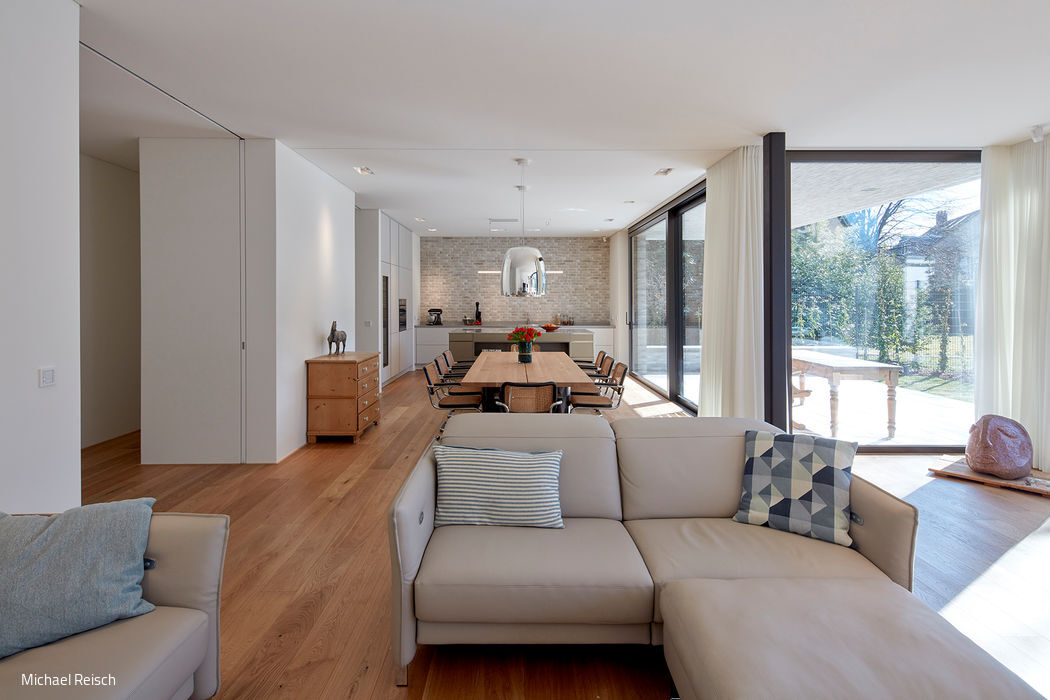
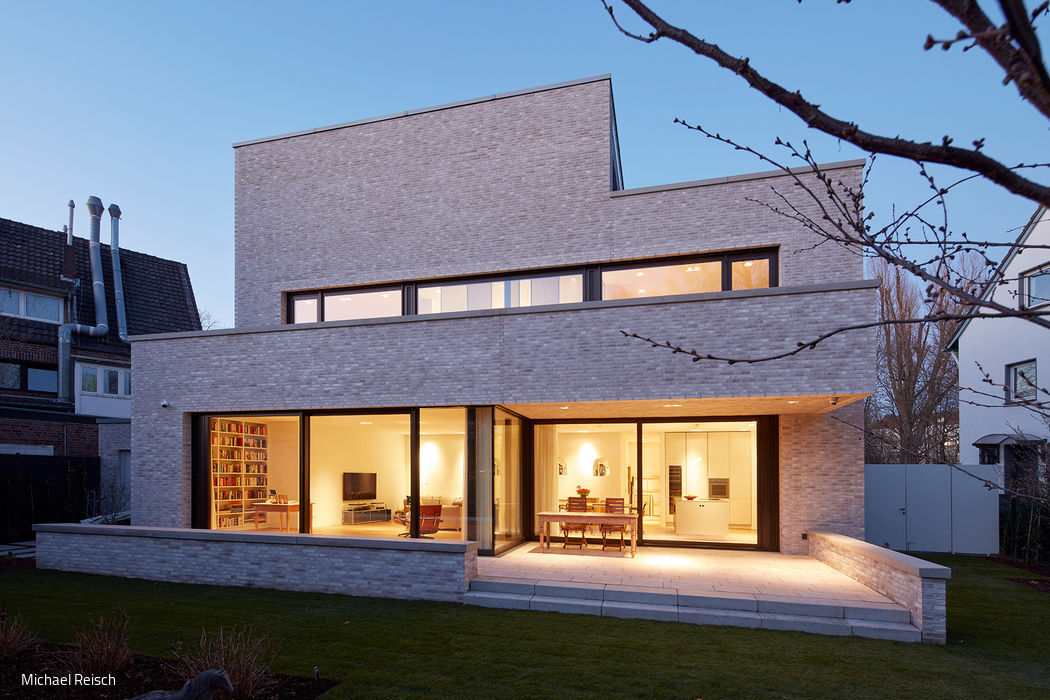
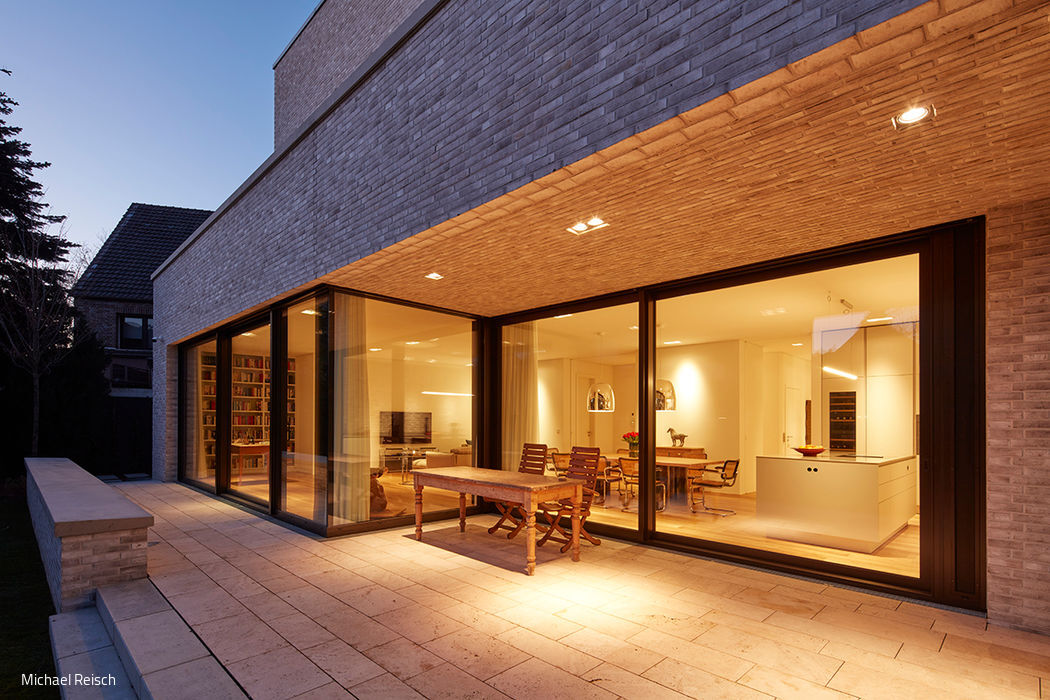
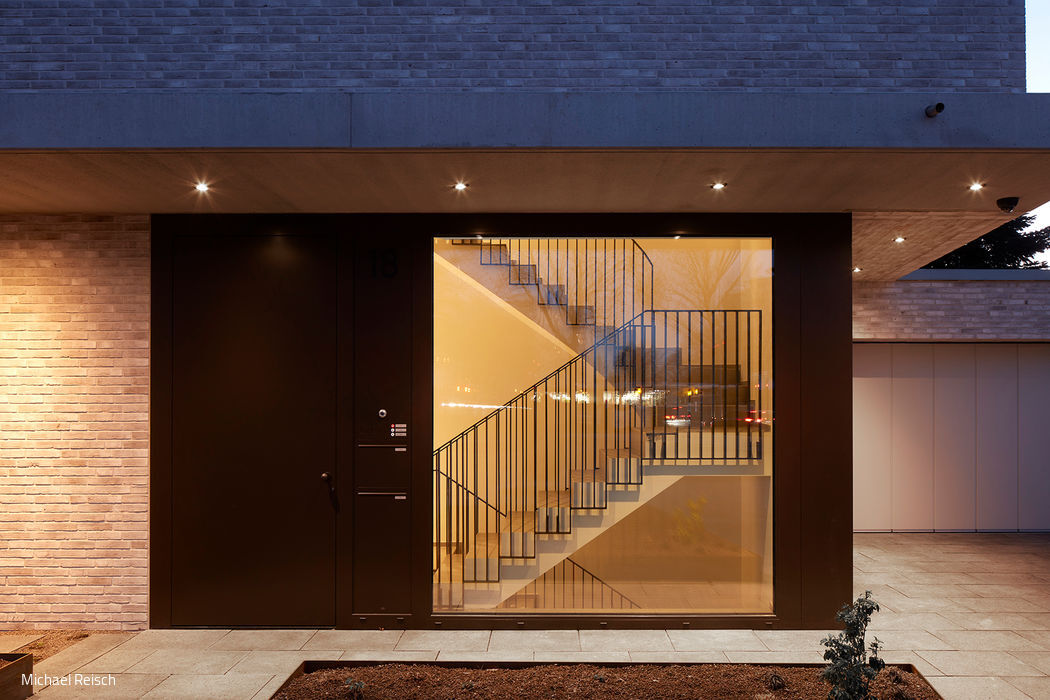
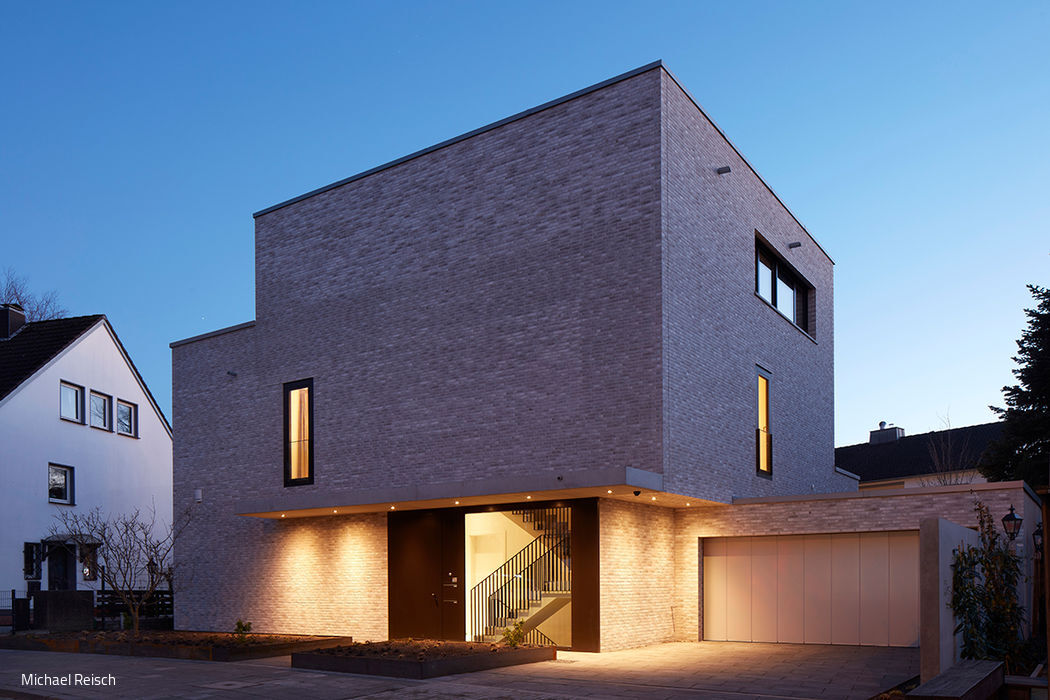
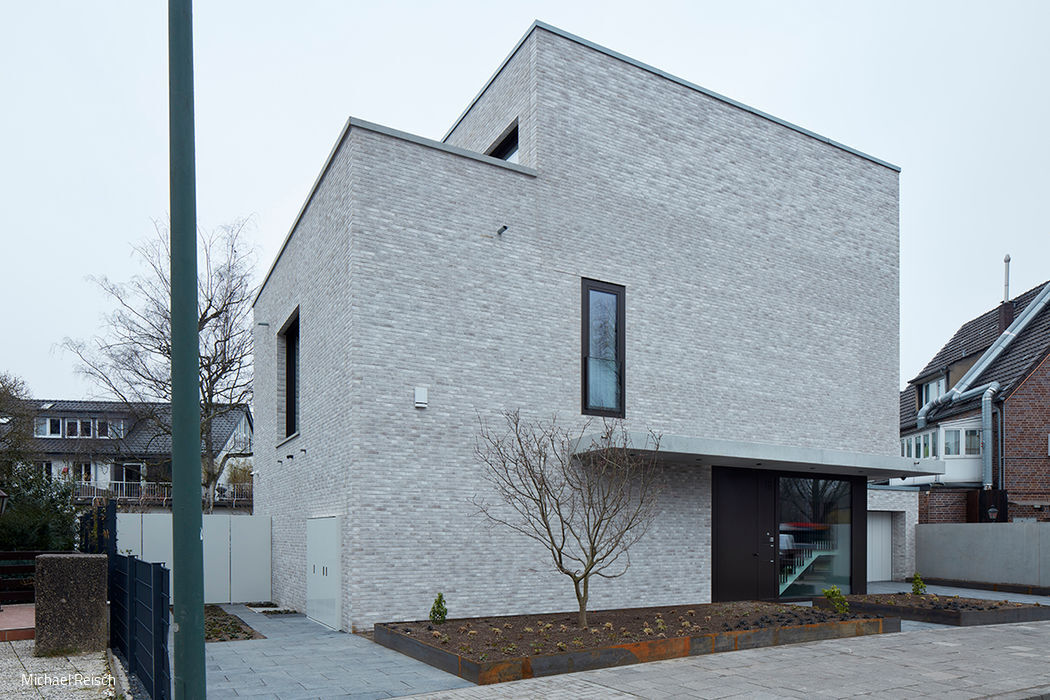
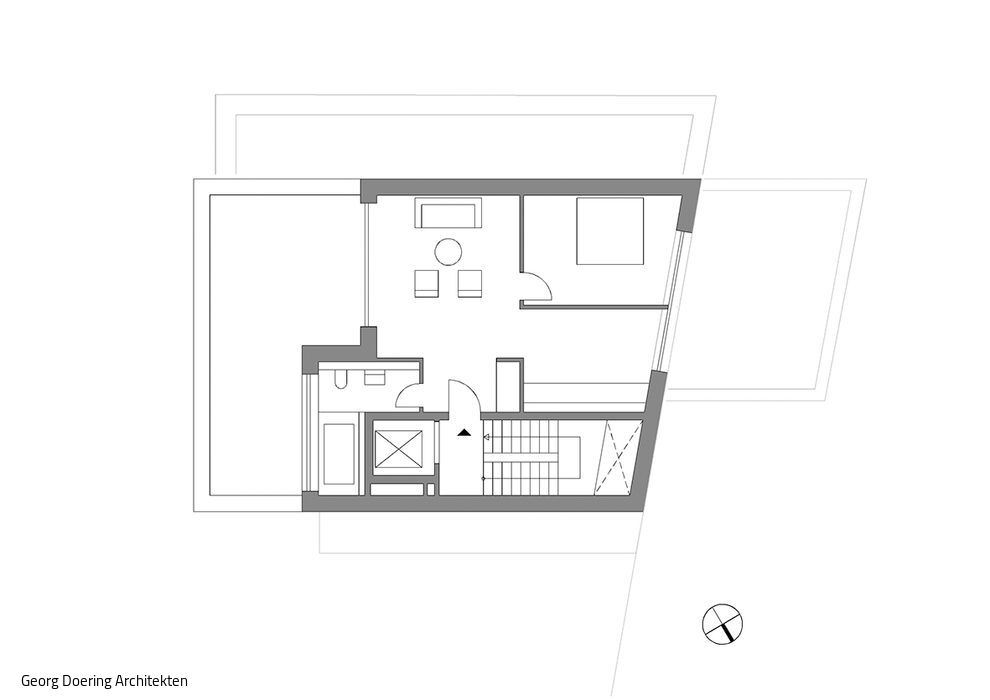
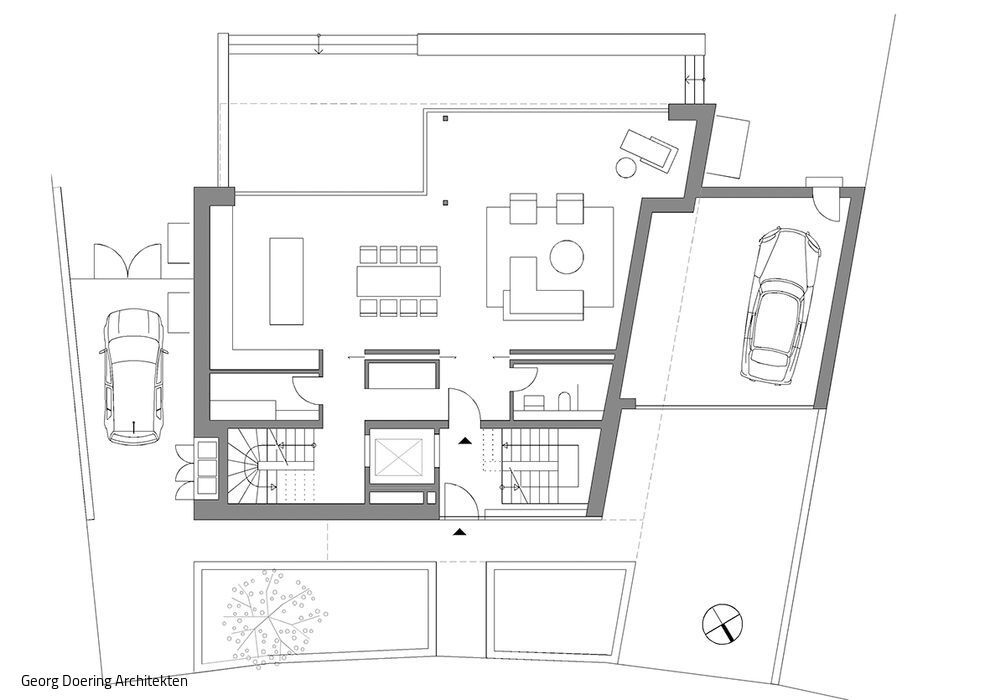
Turning constraints into opportunities is essential to any architect's skill set. A townhouse in eastern Düsseldorf presented just such a challenge: while the detached site sits picturesquely on the curve of a quiet residential street, the urban setting tells a different story across the way. A car park frequented by restaurant patrons and a busy intersection just metres beyond create constant traffic noise—day and night. Georg Döring Architects from Düsseldorf took on the complete design and execution, developing a two-storey, two-family residence that responds to these site challenges through a precisely zoned spatial strategy.
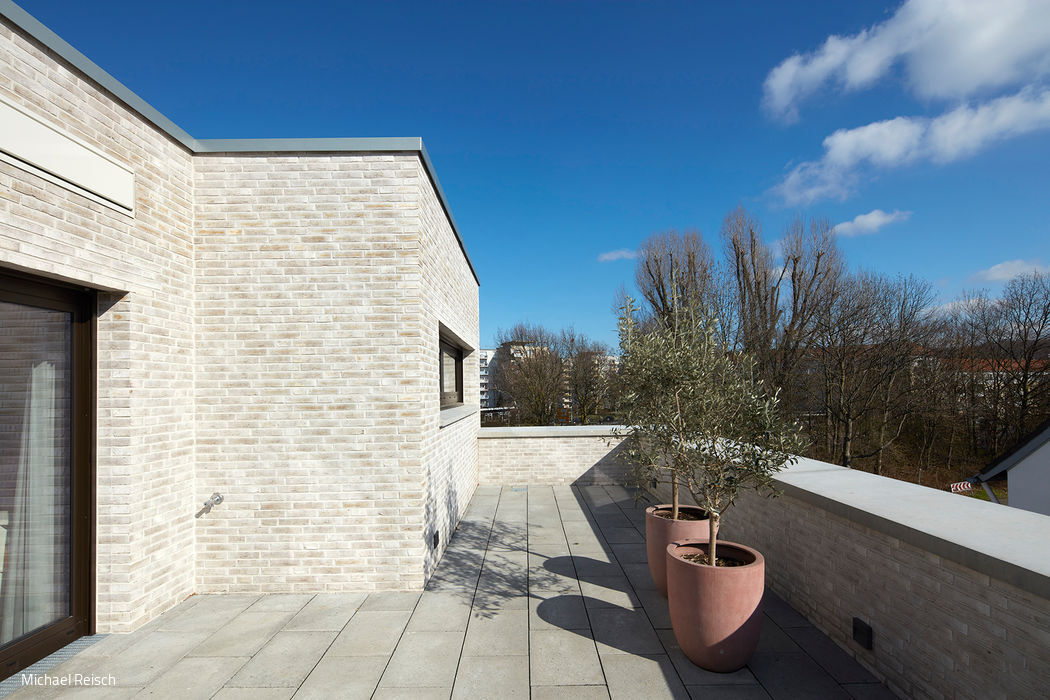
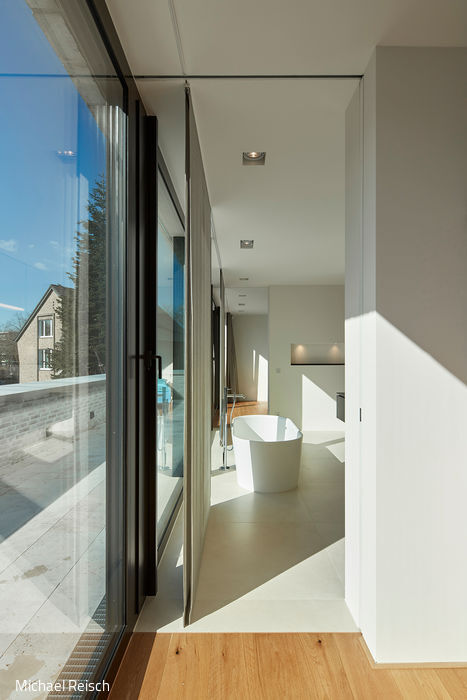
The house's sculptural form emerges from the intersection of two cubic volumes. The street-facing façade commands attention: a closed, monolithic expression punctuated only by an entrance and single window. Light-coloured brick, a projecting concrete canopy, and bronze window frames create a visual dialogue with neighbouring buildings—one white-rendered, the other dark brick. This reticent street front transforms entirely on the garden side, where the massing steps back in multiple tiers. Floor-to-ceiling sliding glass dissolves the boundary to the south and east, opening the residence to expansive terraces and views into the surrounding greenery.
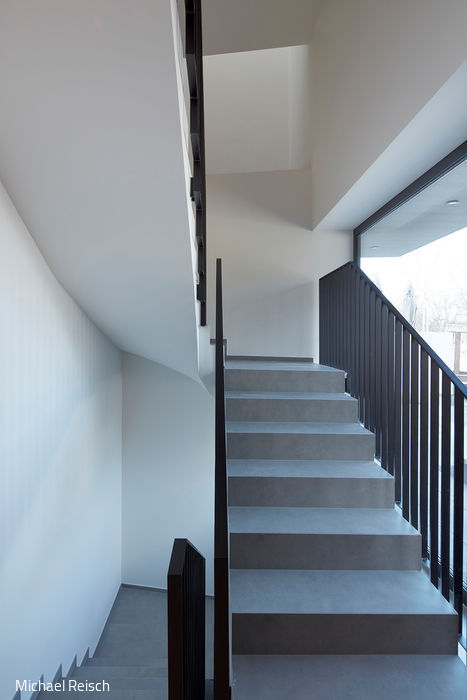
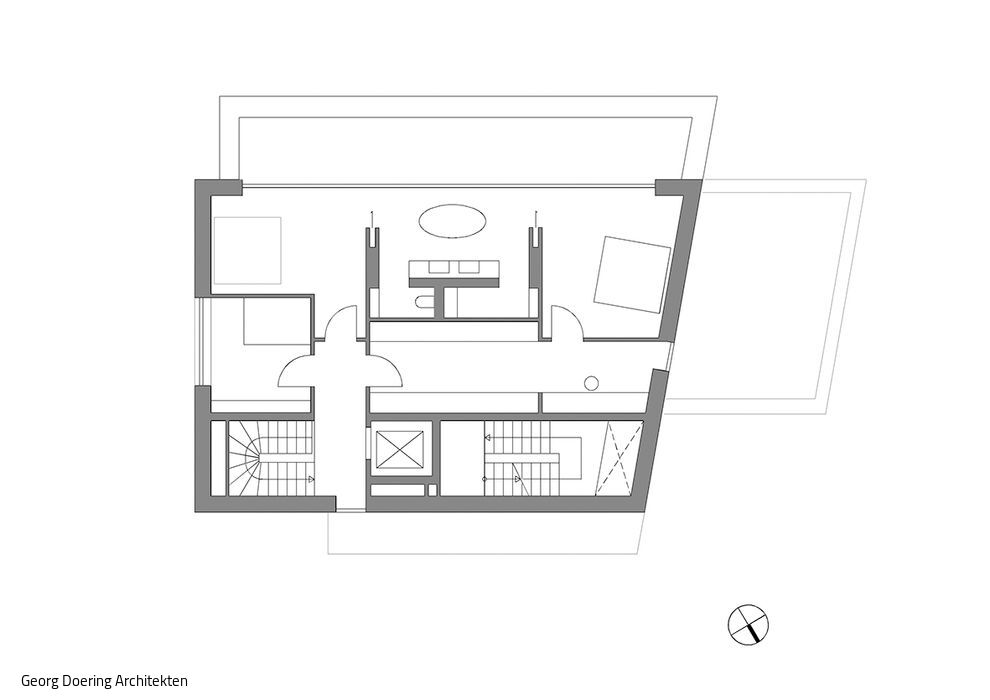
The main residence spans three floors, with a second residential unit nestled in the attic. Across its total 380 m² of living space, the building is orchestrated by a sophisticated spatial framework: three distinct functional layers—comprising service and living areas, open and enclosed spaces—flow through the structure. These zones move like membranes across all three floors in parallel progression. The first membrane lines the street side, housing the circulation core with two separate stairwells and a dual-access elevator. The second, central membrane accommodates the pantry, cloakroom, and guest toilet on the ground floor; guest bedroom, dressing room, and study on the first floor; and bathroom and kitchen in the attic. The third membrane is devoted entirely to living: the living spaces, dining area, and bedrooms, along with their adjoining terraces, are positioned exclusively along the garden façade—sheltered from street noise and traffic disturbance.
An air-source heat pump, efficiently positioned on the flat roof, provides heating. Ventilation flows from the garden side through the glazing—even with windows closed. Slender vertical flaps equipped with insect screens integrated into the window system ensure continuous fresh air circulation without compromise.
Photography Credits:
Michael Reisch
www.michaelreisch.net
(Published in CUBE Düsseldorf 03|21)
Radically Minimal
A Minimalist Family Home with Substance to Discover
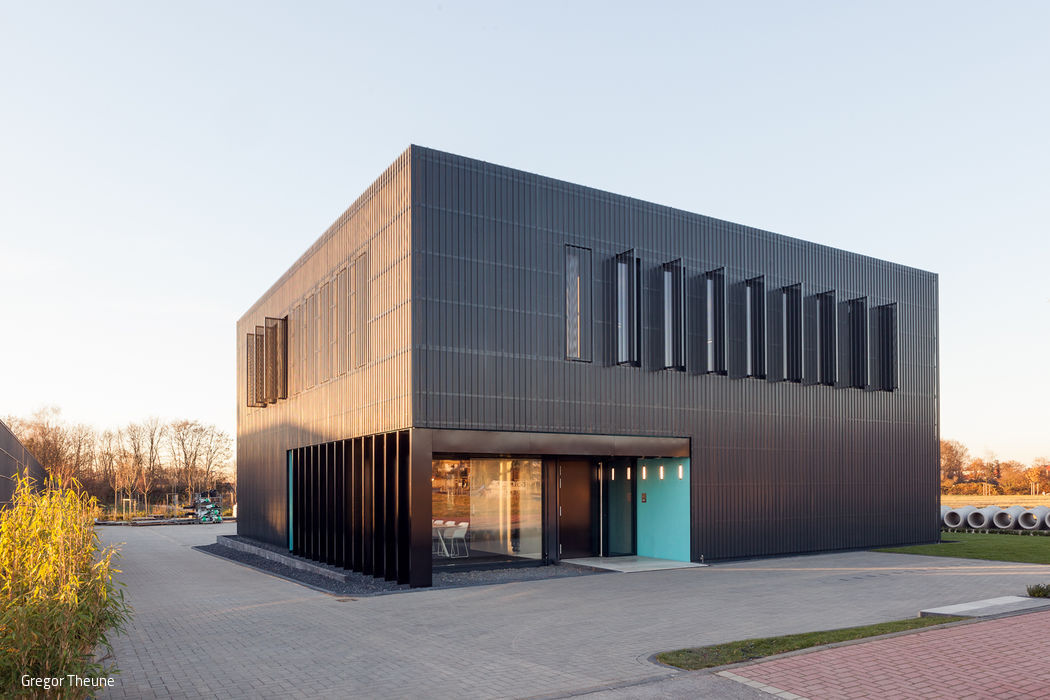
Network as Design Philosophy
The Langenfeld headquarters embodies the company's core philosophy in architectural form.
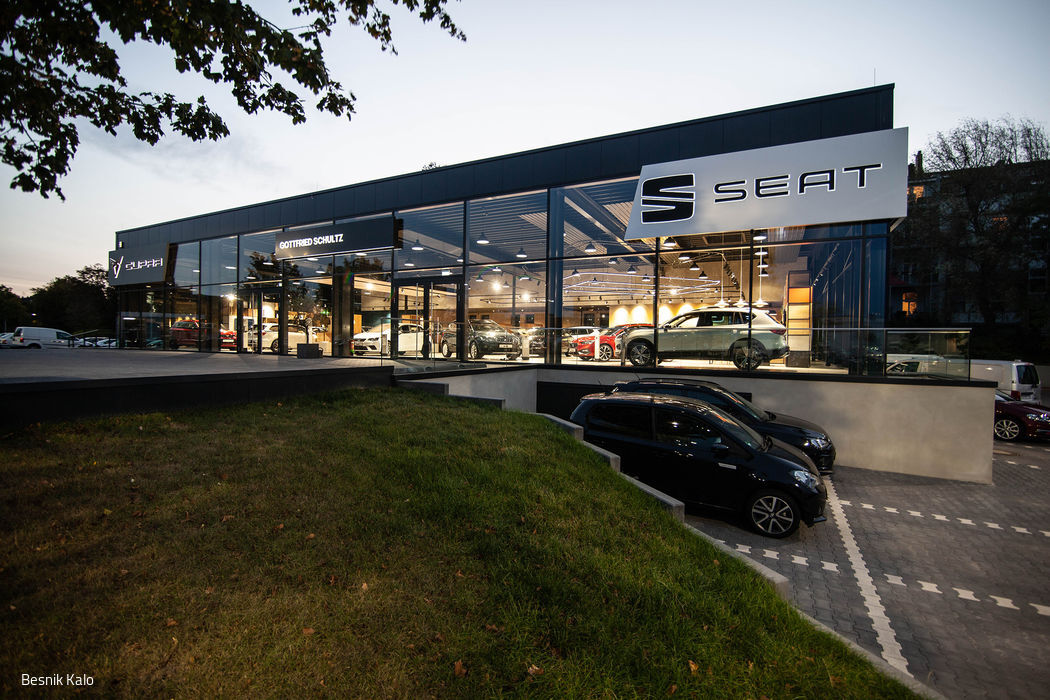
Welcome to Düsseldorf
New Showroom for Spanish Car Brands on Höherweg
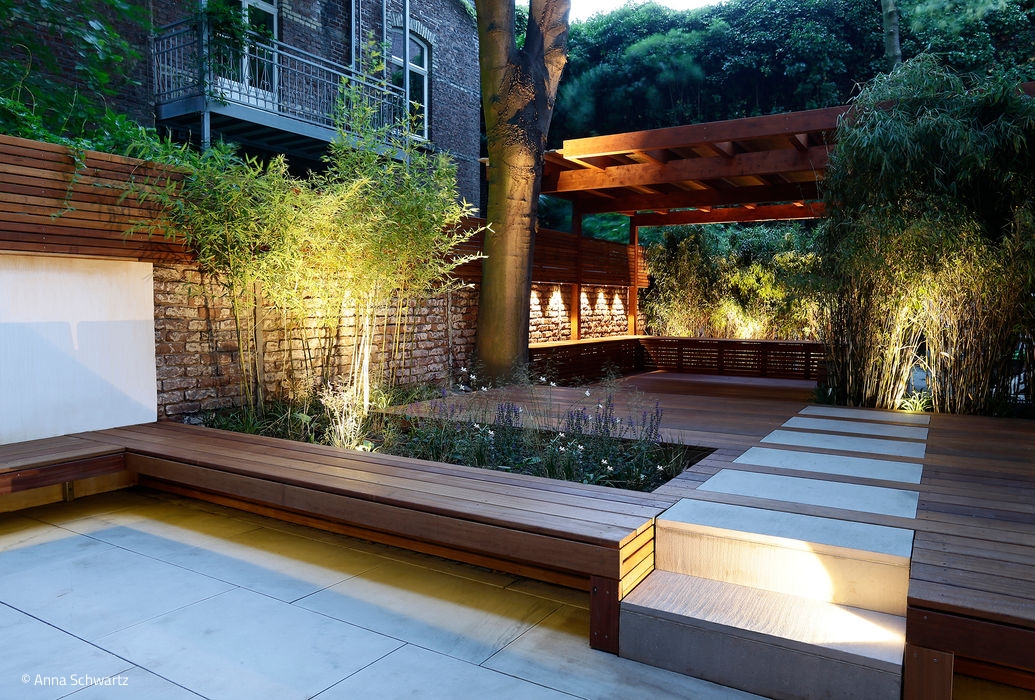
Intimate Lounge Living
The design incorporates the four classical elements—fire, water, earth, and air—expressed through minimalist forms with restrained...