


Timeless Charm Meets Modern Flow
A grand residence in Düsseltal draws you in with its light-filled, open design


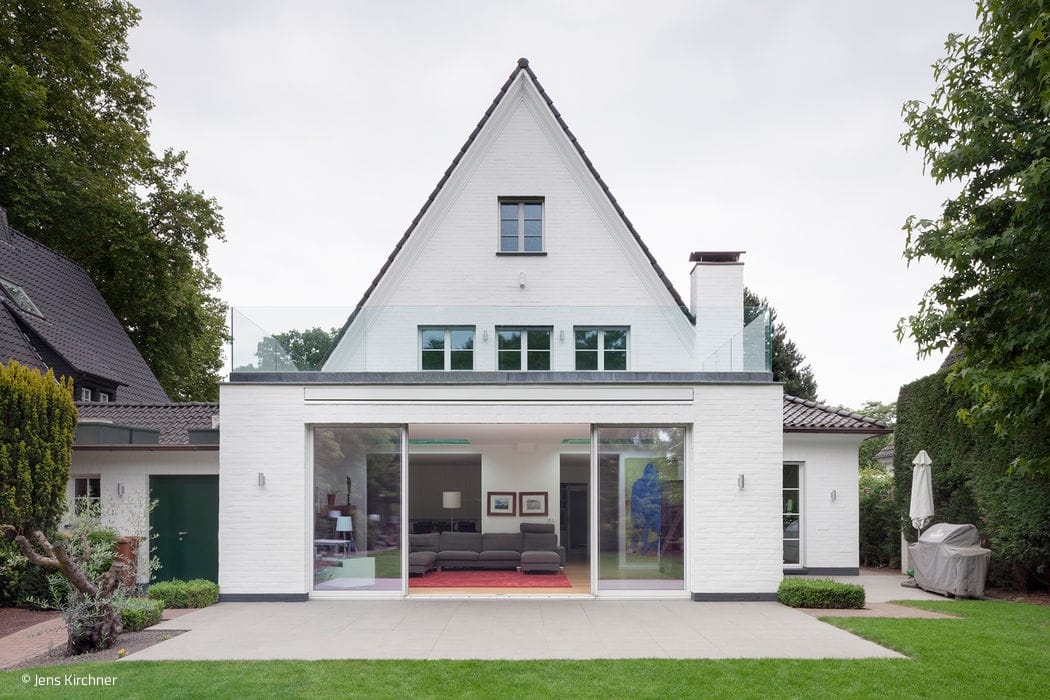
Built in 1909, this elegant townhouse on Grunerstraße represents a rare early example of reinforced concrete residential construction in the city, predating World War I. Its distinctive façade—marked by a sweeping dormer window and triangular gable—has been meticulously preserved. When an art auctioneer purchased the home for his young family, he envisioned something bold: flowing, loft-like interiors that would unite the spaces seamlessly. Yet the original period character had to remain intact. Kremmel + Budde, the Düsseldorf architectural firm commissioned for the project, achieved precisely this balance—creating dynamic sightlines that frame garden views while providing generous display space for art.
A seasoned international gallery owner and art collector, the client and his partner had been captivated by a loft café with its transparent steel and glass walls—a design that spoke to their cosmopolitan outlook. This concept of fluid, interconnected spaces became the guiding principle for the entire renovation. The result: three main floors plus a reimagined garden level now feature expansive rooms that flow seamlessly into one another, unified by continuous sight lines. The mezzanine level opens with a generous entrance hall and wooden staircase lit by a skylight, which flows directly into the kitchen. The dining and living areas extend in one unbroken axis from street to garden. To keep these open spaces livable without sacrificing comfort, key zones—like the kitchen—are separated by floor-to-ceiling glass and steel sliding doors with anthracite-colored frames. These frames elegantly frame the views and provide striking contrast against the light walls and ceilings. The expansive, park-like garden with its mature trees was equally important: garden-facing windows on all levels were enlarged, and a new, refined balcony structure was added to the rear, creating a partially covered terrace at mezzanine level and additional balconies for the bedrooms and studios above.
The interior restoration prioritized conservation: wherever possible, original architectural elements were preserved and carefully restored. All existing herringbone oak floors on the living level and wooden board floors throughout the upper stories were meticulously refinished and resealed. Only in the two bathrooms—notably the master suite with its freestanding tub and adjoining dressing room—was new material introduced, in the form of fine porcelain stoneware.
The kitchen received a contemporary cement tile floor with graphic patterns that echo the parquet's fine geometry. Throughout, walls are finished in smooth plaster, creating a neutral stage against the ornate, cream-hued ceiling details rendered in muted grey tones. This restrained backdrop allows rotating artworks to take center stage, filling the spaces with visual life. Yet it's the lower garden level that truly places art at the heart of the design: the entire floor has been transformed into a refined gallery with exhibition space, office, and abundant natural light, all supported by a custom-designed hanging and lighting system for seamless art display.
Photography:
ROBINÉ®, Marcel Dahlke
(Published in CUBE Düsseldorf 04|24)

Carefully renewed
A renovation that extends the house with sensitivity, honoring its cherished period character.
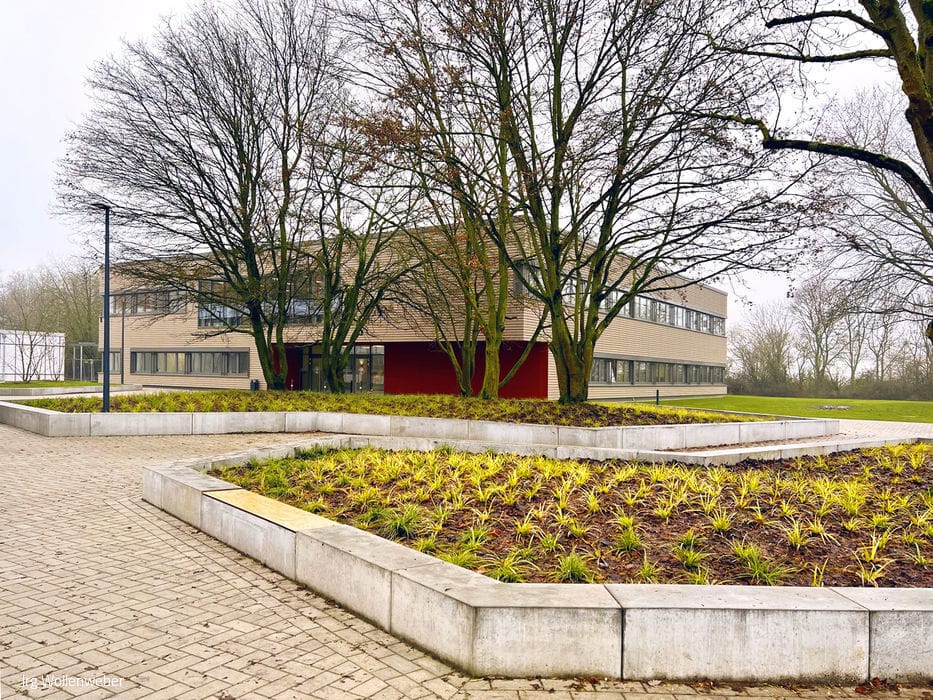
A dialogue in color
Standing as a solitary structure west of the existing complex, the modest square new building features a rectangular light court and service yard...
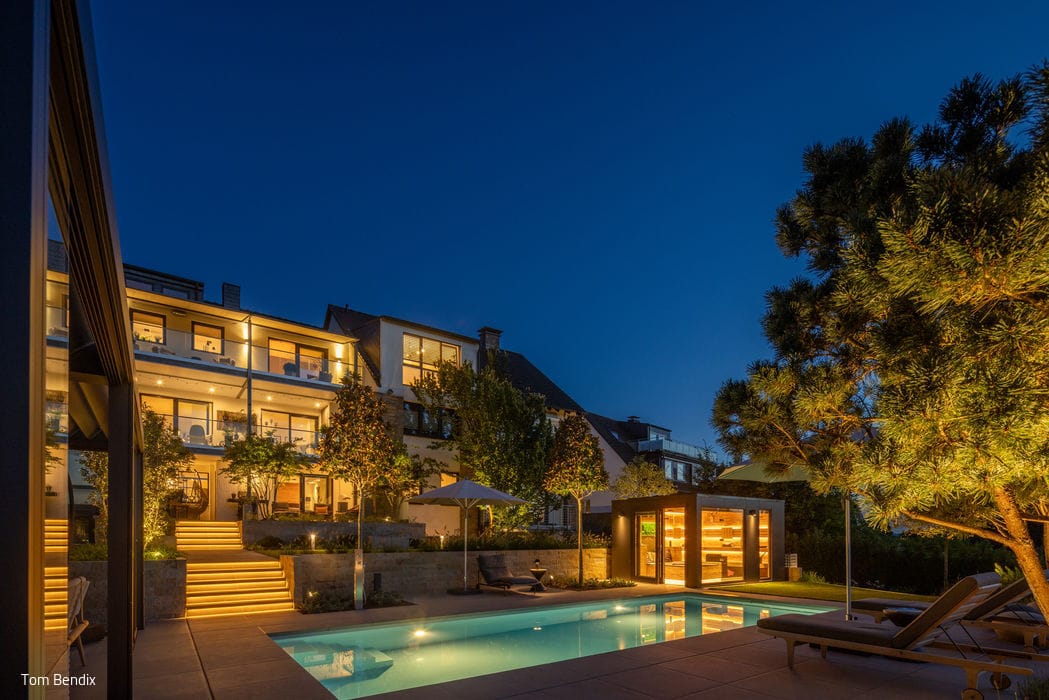
Garden Getaway
A thoughtfully composed landscape of pool, sauna, outdoor kitchen, and relaxation spaces – designed for restorative living.
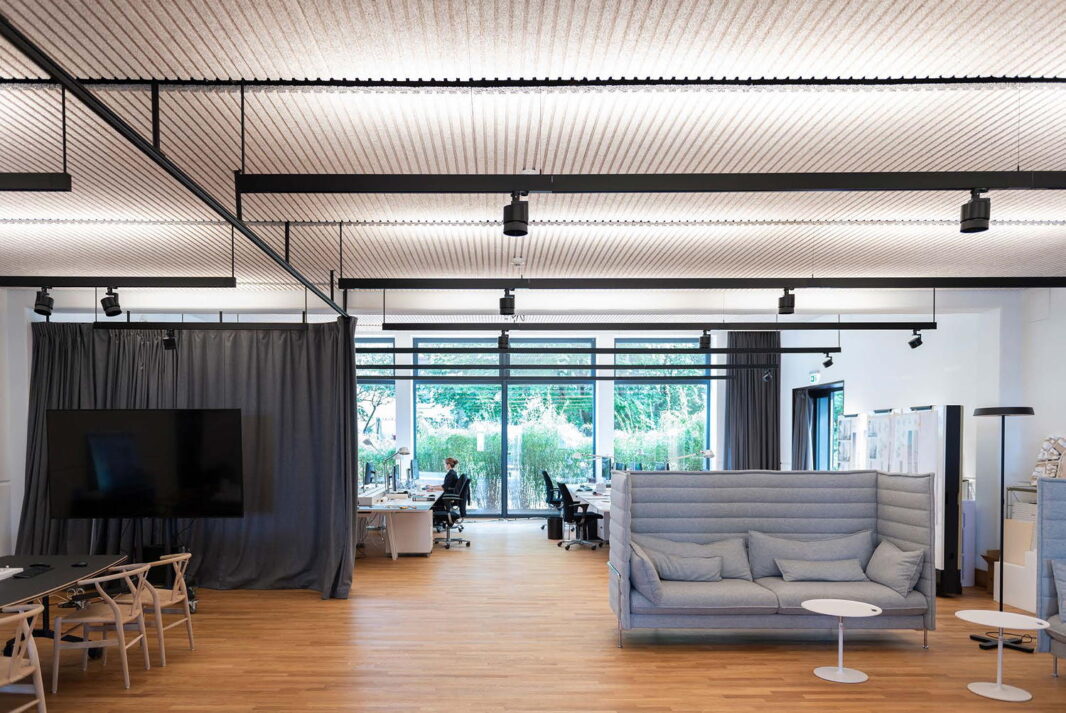
Acoustic Excellence Meets Refined Design
A new way of working at Campus Rainvilleterrasse