


Flowing Spaces
A beautifully restored Gründerzeit villa showcases its full architectural splendor following comprehensive renovation and redesign.



Rotherbaum ranks among Hamburg's most coveted addresses, thanks to its proximity to the city centre and prime location along the Outer Alster. Stretching between Rothenbaumchaussee and Alsterufer, this neighbourhood encompasses Badestraße, Feldbrunnenstraße, Heimhuder Straße and Johnsallee—a masterclass in 19th-century urban design. The district showcases grand villas surrounded by park-like gardens, elegant terraced villas, apartment buildings with private gardens, and distinctive terraced houses and arcades. Towering old street trees and mature plantings—many with original walls, gates, pavilions and terraces—bear testament to the refined garden aesthetics of an earlier era.
The entire area is legally designated as a conservation district of the highest category—one of citywide significance for Hamburg. Its exceptional scale and the outstanding quality of its preserved architecture make it an urban ensemble of considerable distinction. It embodies both the defining architectural vocabulary of the 19th century and the lifestyle of Hamburg's prosperous bourgeoisie. The historic Jewish quarter at Grindel forms part of this heritage, as do the former homes of renowned artists and scholars. This particular villa was likely constructed in 1882 by an architect whose name remains unknown. Building records document various owners and uses over the generations. The current owner acquired the property in 2015 for combined residential and workspace, commissioning BUB Architekten BDA to undertake a comprehensive restoration and conversion. The basement was refurbished as office space, while the mezzanine now features distinguished reception and meeting rooms. Upper floors serve residential functions, and the roof has been transformed into an accessible green terrace.
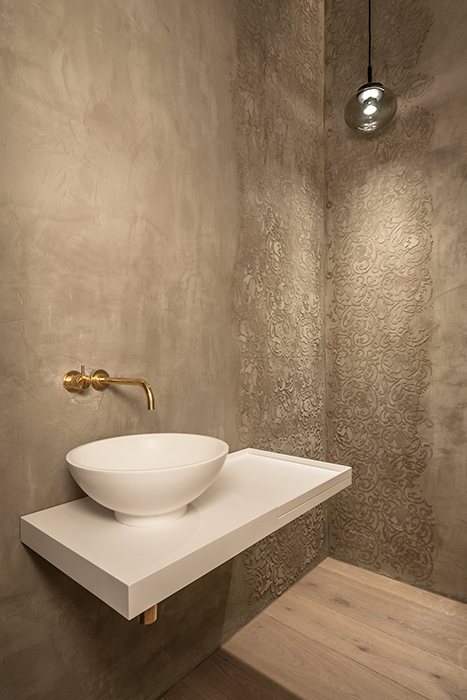
The renovation was guided by a clear vision: honour the villa's original character and elegance, reverse the aesthetic damage of 1960s alterations, and introduce deliberate modern, minimalist counterpoints. As an art collector, the owner sought expansive wall surfaces for displaying paintings—a desire met through floor-to-ceiling joinery and steel-glass room dividers that maintain visual flow throughout. The kitchen dissolves into the garden along its entire width. During restoration, historic murals in the stairwell were revealed, and elaborate stucco work was meticulously cleaned and restored. The guest powder room features a distinctive textured plaster finish. Windows and entry doors were recreated in traditional style, while historic timber ceilings were upgraded to meet fire safety codes. A striking sculptural spiral staircase now ascends to the new roof terrace.
Photography:
Alexandra Bub
(Featured in CUBE Hamburg 04|23)
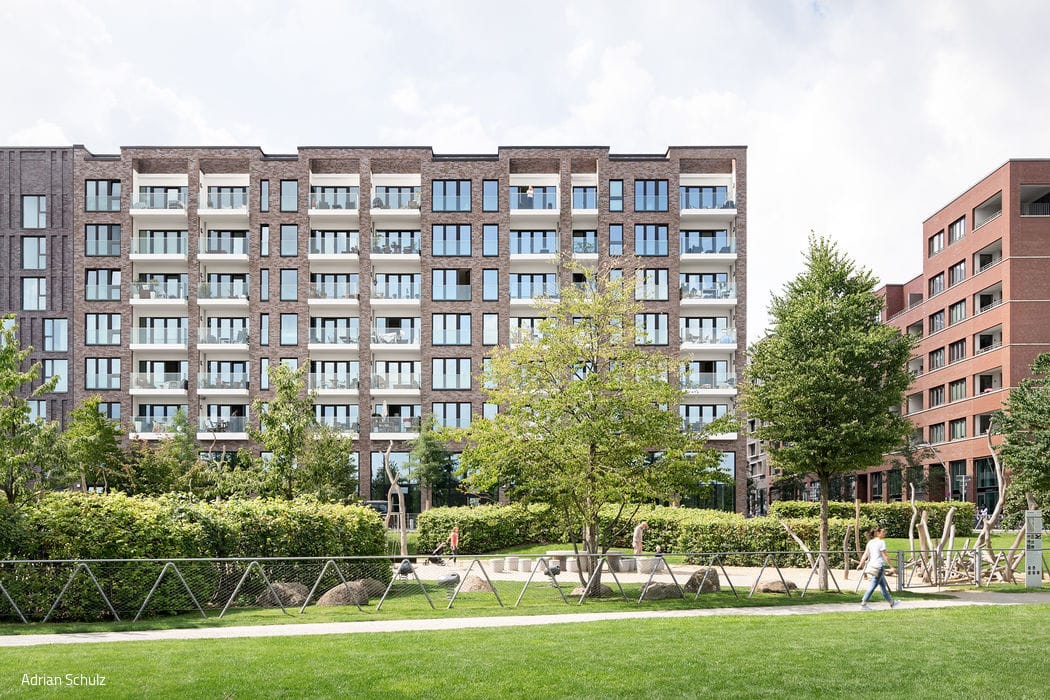
Residential Diversity at Lohsepark
A student housing complex and park apartments mark the neighbourhood's southern edge.

Live in Design
Discover an entire design universe at Hotel Heimhude

Innovative & Sustainable
Steffen Knies on the new Porsche Approved & Service Centre in Hamburg-Rahlstedt and its distinctive approach
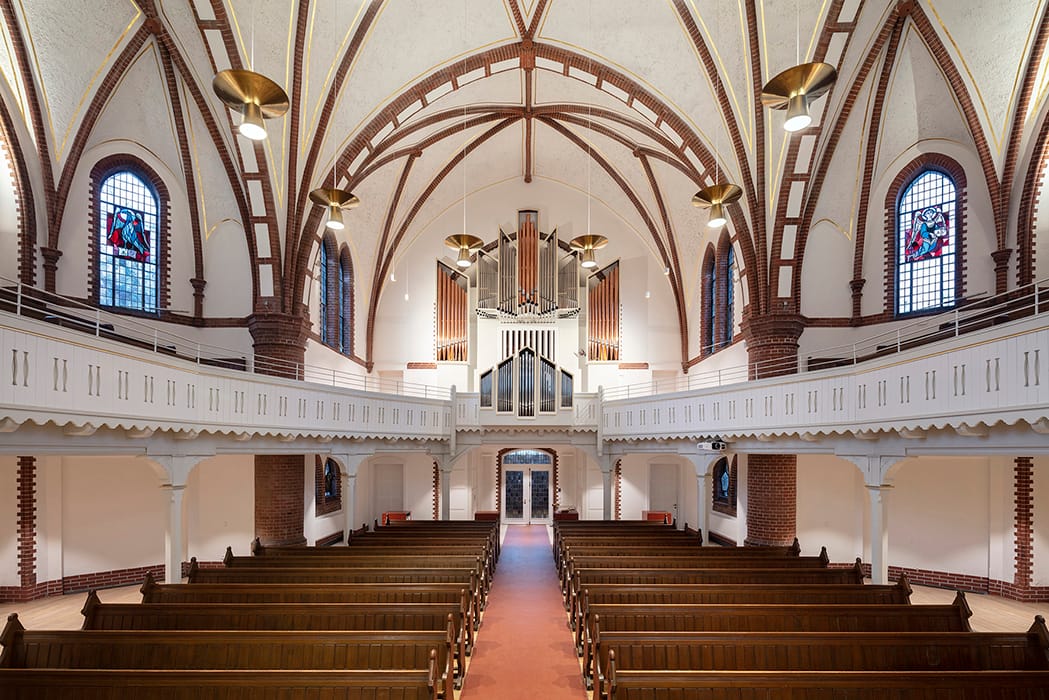
a special assignment
The Kreuzkirche in Wandsbek: Sensitively restored to radiant beauty