


A Former Church Reimagined as an Art Space
Thoughtful renovation transforms a historic church into a vibrant gathering place


Built between 1955 and 1957 to designs by Dominikus and Gottfried Böhm, the Catholic parish church of Heilig Geist in Essen-Katernberg stands as a landmark of post-war modernism, located near the Zollverein Coal Mine Industrial Complex. The structure—encompassing both the church and adjoining parish hall—has been a protected monument since 2019. Following its deconsecration in 2020, architect Claudia Dahm undertook a thoughtful conversion, reopening the space in spring 2025 as Kunstraum Heilig Geist. Through careful, measured interventions, Dahm preserved the building's original spatial character while sensitively adapting it for contemporary use.
The building represents one of the first post-war sacred structures to employ concrete as a primary structural element. Its design draws from the vision of the congregation as a nomadic people—a concept made tangible through the central nave's striking, vault-like roof form, which evokes a tent canopy unfurling overhead and defines the space both inside and out. The industrial aesthetic is further emphasized by a glass grid façade, later replaced in the 1980s with colored glass. A-shaped concrete beams once divided the nave from the lower side aisles, with the altar positioned centrally.The renovation, executed in close coordination with the heritage authorities, introduced a reversible white coating to the original red brick interior walls, revealing the material's distinctive tactile quality while providing a neutral backdrop for displaying art. Original fixtures—including the organ loft and floor lamps in the former lower church—were carefully removed to restore the space's original character. "The removal of the colored glass panes was particularly significant," notes Claudia Dahm. "It allows the room to glow again with its distinctive luminosity." Belgian artist Kris Martin transformed the former altar marble into a sculpture now sited in the outdoor forecourt, bridging past and future. Interior designer Felix Hemmers contributed specialized expertise in spatial details, while a new flexible lighting rail system illuminates the space according to its new programming. The former sacristy now accommodates facilities and office space; the parish hall is being converted into artist studios. Connected to the Zollverein World Heritage Site, this reimagined venue weaves contemporary art with local engagement, welcoming the community anew.
Photos:
Felix Hemmers
www.studiohemmers.de
(Published in CUBE Ruhrgebiet 03|25)
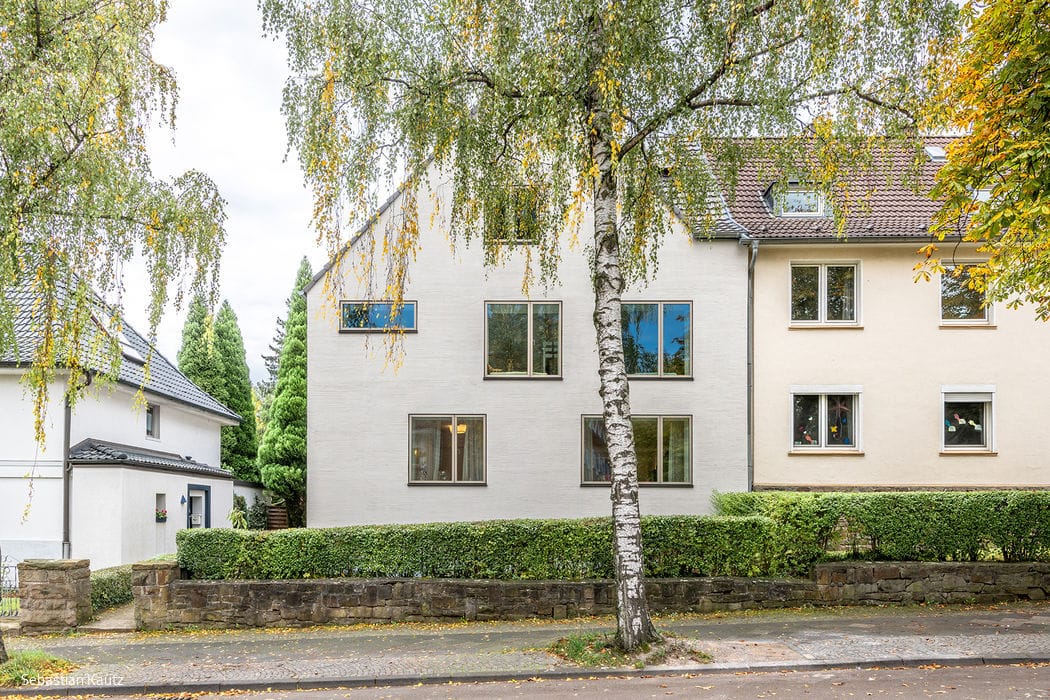
Making Two into One
A two-family house in Bochum undergoes modernization and conversion into a single-family residence.
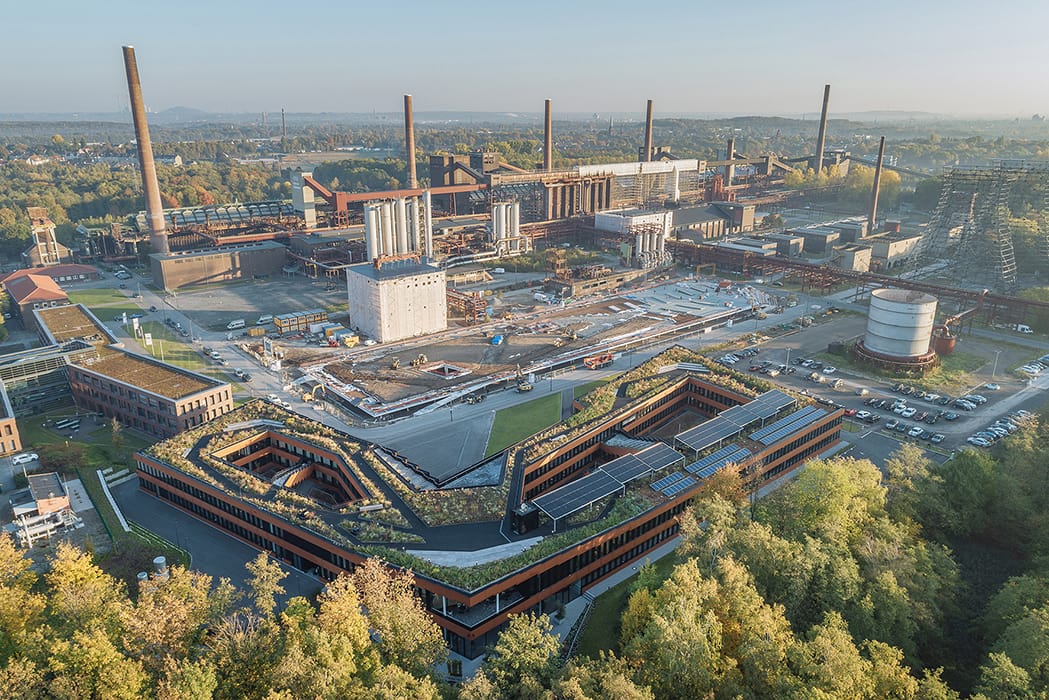
Innovative Circular House
Thoughtfully Designed – Every Square Meter of World Heritage Is Sacred Ground
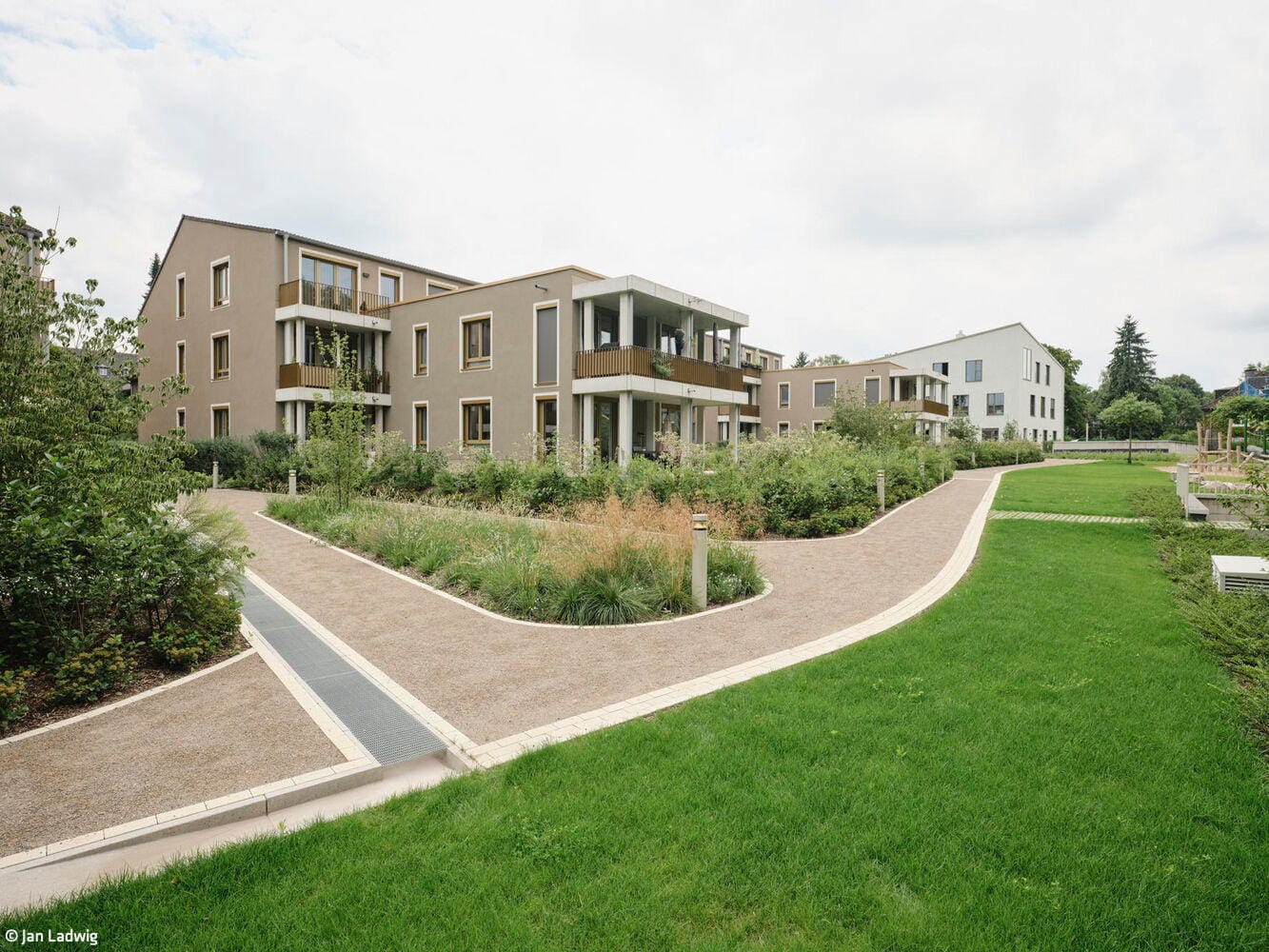
Urban and Communicative
The outdoor facilities at the new buildings in Margarethenhöhe meet a wide range of requirements
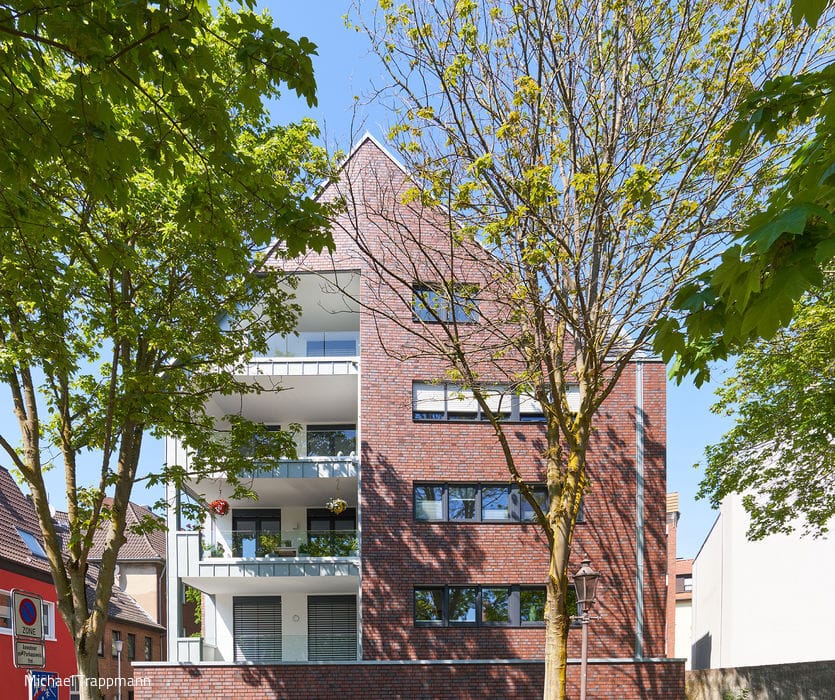
A Breathing House
A Model for North Rhine-Westphalia and Beyond: The Multi-Storey Timber Building in Haltern am See