


A Matter of Perspective
Old and new converge on a former wine tavern estate


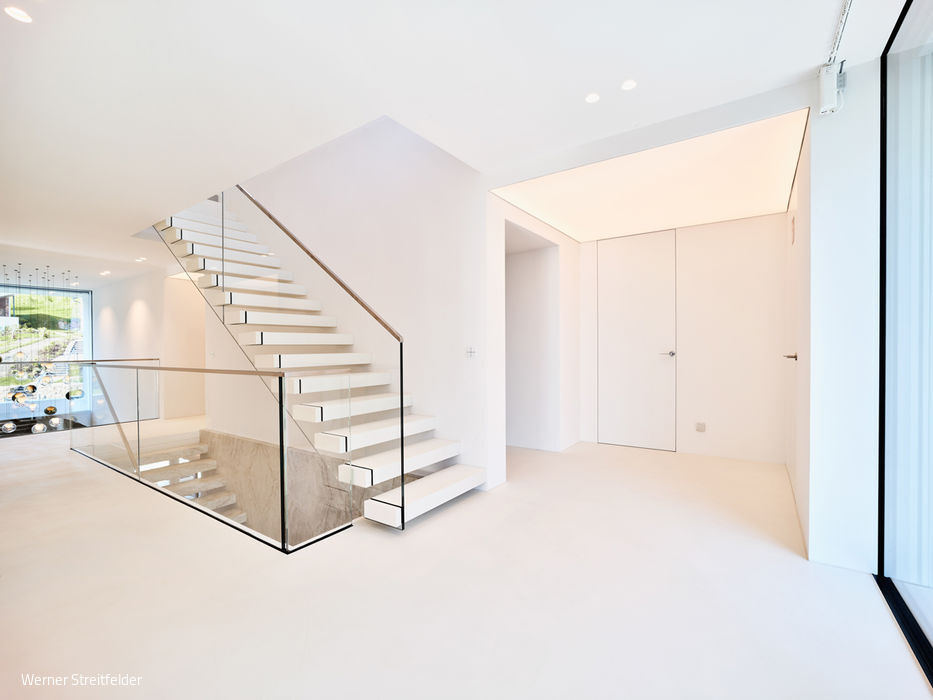
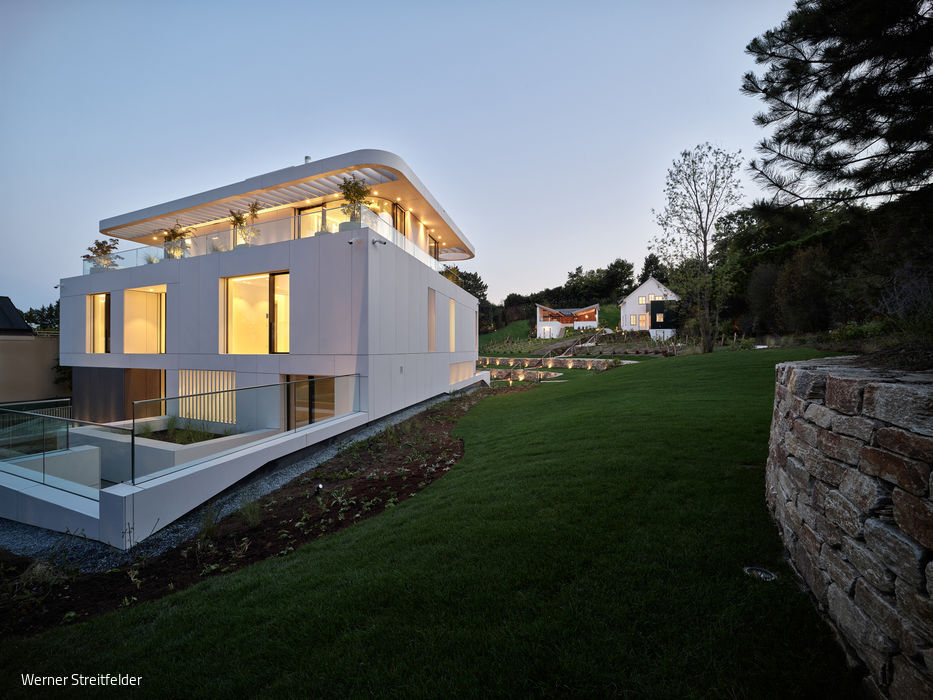
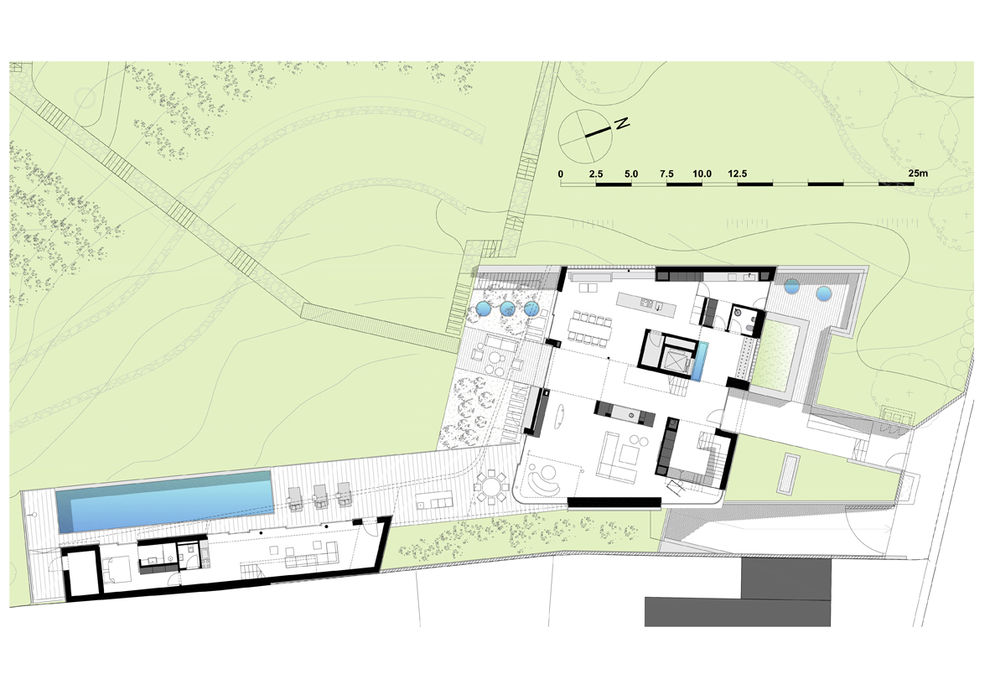




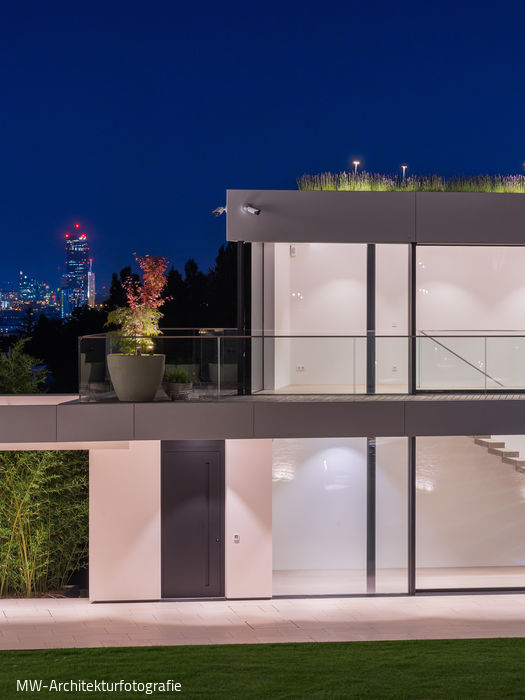
Nestled between Vienna and the Vienna Woods—where locals once flocked to traditional wine taverns—this property emerged as a home for residents yet to be determined at the time of conception. Its appeal lies in two factors: location and scale. The latter was only possible through consolidating several parcels of land. Perched at the top of the slope stand structures from the estate's wine tavern days. Though in poor condition, they held immediate significance: building restrictions prevented new construction here, no matter how compelling the views. Demolition was simply not an option. Instead, development was directed to the lower edge of the property, facing the street. Working within these constraints and across a 5,200 m² plot presented a distinctive challenge for architectural firm archiguards and all partners involved.
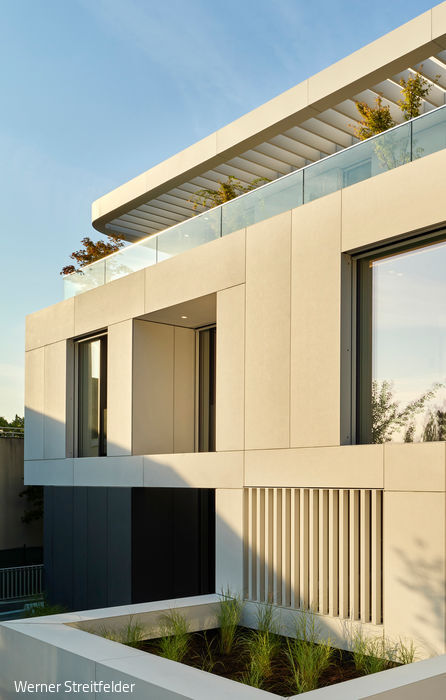
The result is an interplay between new and existing buildings, characterised by the location with a view over the city. The main building appears monolithic and closed off from the street. This character dissolves towards the slope. Balconies shade large glass openings. They lead the view up the slope to the carefully renovated existing buildings. Above one of them, a reactivated wine cellar, there is now an outdoor terrace, while the other serves as a guest house. From up here, the large terrace area below looks like a stage, surrounded by the main house and pool house, which are connected across the corner by a bridge. "We used drone photos to determine the best orientation and lines of sight," says architect Alexander Nieke. The ground floor, with its south-west facing garden, is designed for grand entrances. The first basement, which is fifty per cent larger than the ground floor, houses the indoor swimming pool and home cinema, among other things. There is also a granny flat here.
Inside and outside merge in this property, and not just because of the flowing transitions. It is the architecture itself that creates the connection here. The cubic elements of the building accommodate the functional areas and are continued in the fixtures and fittings. There is no division between the shell and the core. Light-coloured limestone can be found on the floors in and around the house. In addition, oak floorboards have been laid inside. The type of wood corresponds to the dark-stained oak, which complements the walnut fittings. In a project of this magnitude, the building services are also exceptional. The second basement is reserved specifically for this purpose. From the outside, buffer storage tanks, geothermal heat pumps and the like are therefore not visible.
Usable floor space: 1,200 m²
Plot size: 5,200 m²
Project timeline: 5 years, 20 months of construction
Construction method: Reinforced concrete
Energy concept: Geothermal probes with solar panels in the rear garden, radiant floor heating, ceiling cooling, thermal storage, rooftop photovoltaics, rainwater cisterns for garden irrigation
Photography Credits:
Werner Streitfelder
www.werner-streitfelder.com
(Published in CUBE Select 02|24)

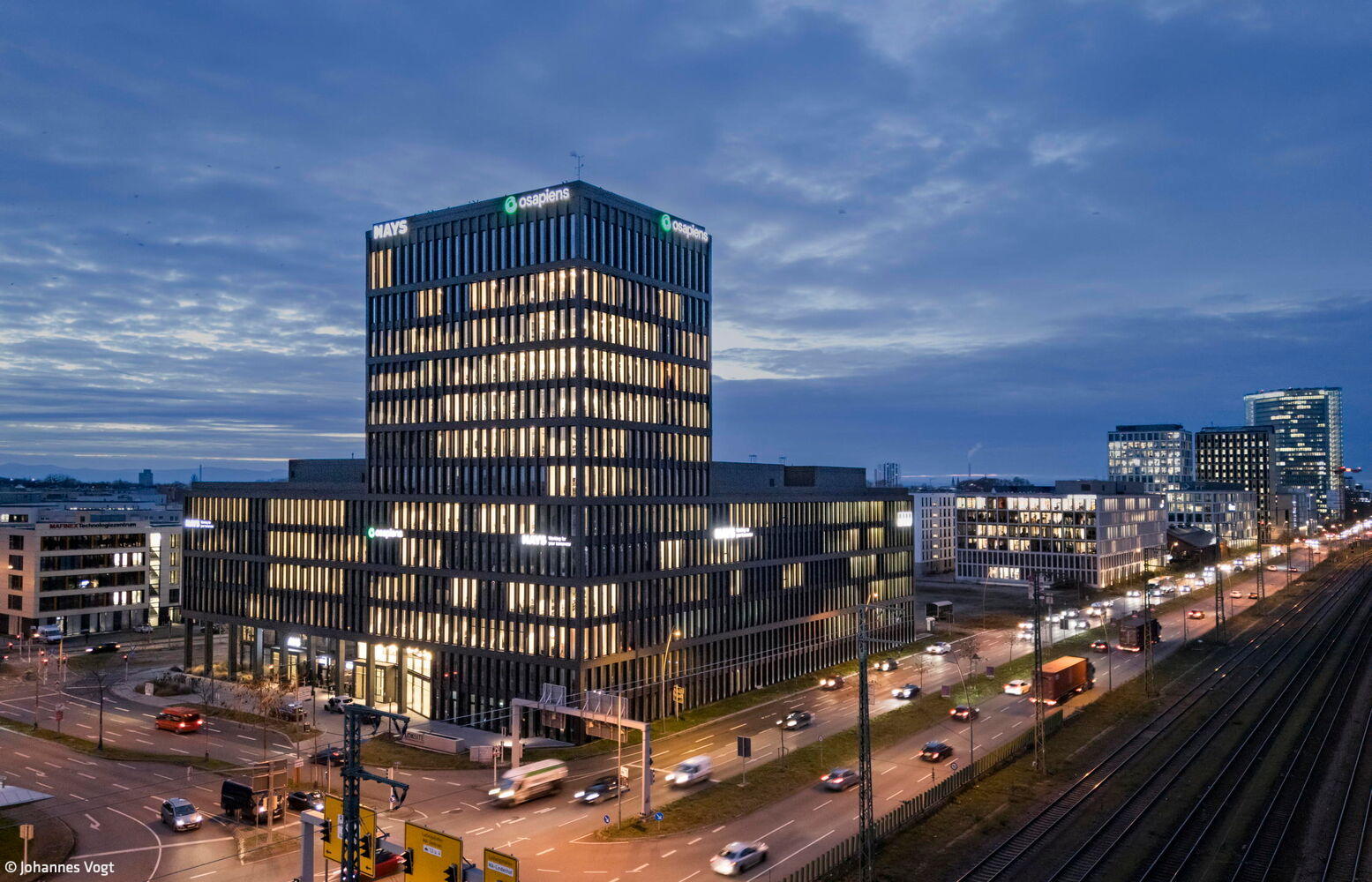
Agile Landmark
The Loksite office building stands out for its exceptional adaptability and functional flexibility.

The Office of Tomorrow is Already Here
Sustainability, ecology, and design in office architecture
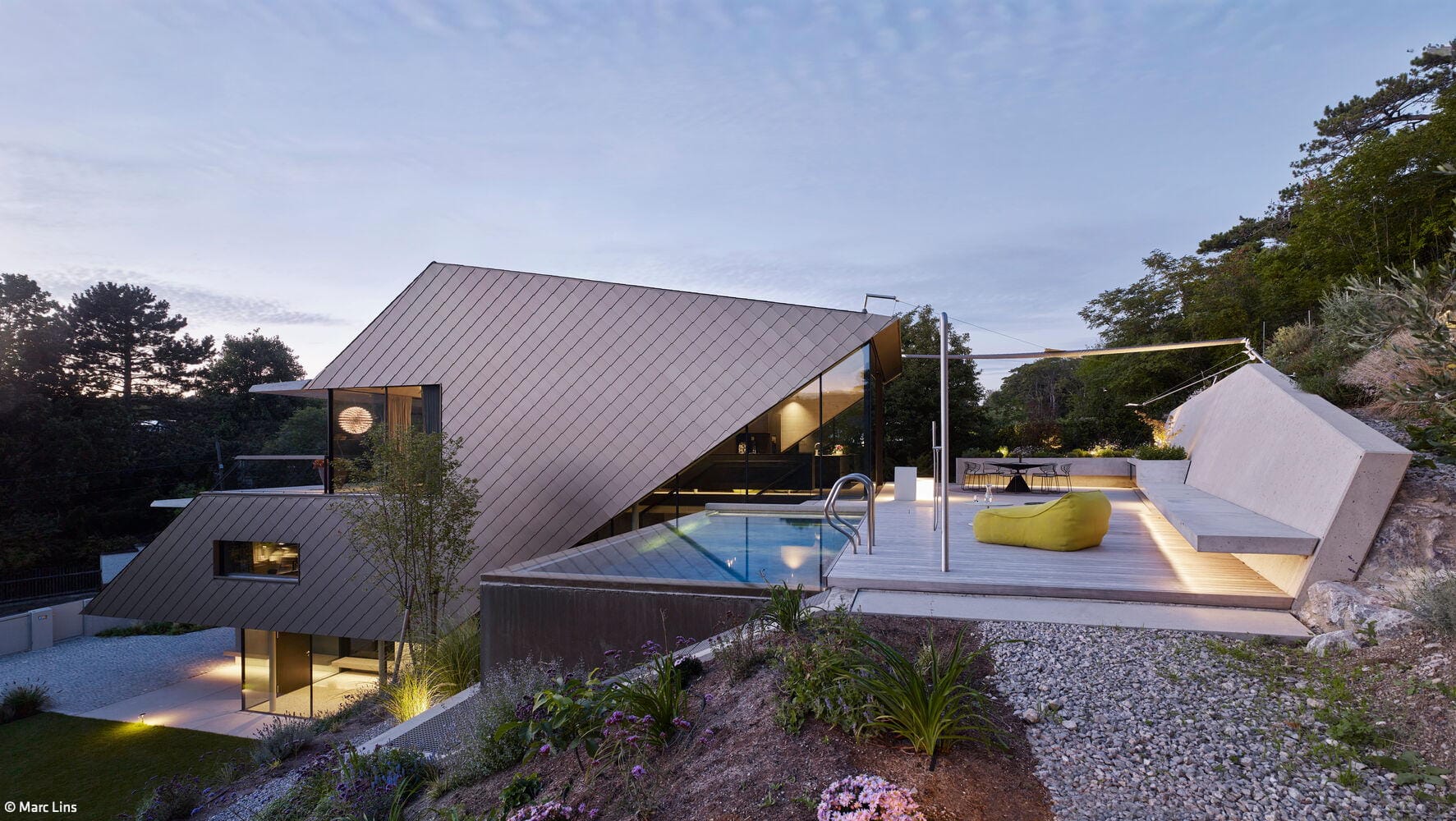
Between Sky and Slope
Where Light, Space, and Nature Converge into a Sensory Experience
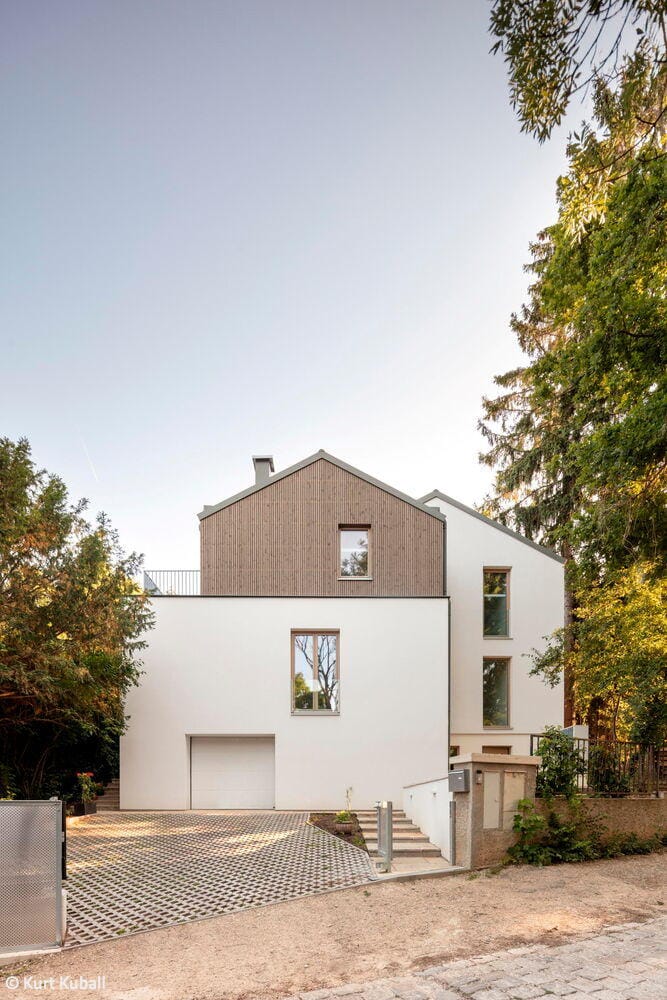
From Fragmented to Generous Spaces
1970s home reimagined for today