


A Differentiated Approach
A single-family home that maximizes space, harnesses natural light, and seamlessly blurs the boundary between interior and exterior living in an urban setting


As the "leader" in a row of residential buildings, this new structure dares to be different. The austere black cube distinguishes itself through its material palette, distinctive roof geometry, and even its window placement. The homeowners had a clear vision: to create a living and working environment where nature feels genuinely present—something rarely achievable in an urban setting. Drawing inspiration from Tadao Ando's powerful minimalism, they sought a home where materials, forms, and light become tangible, immersive experiences.
Before breaking ground—a project the owner designed in his dual role as architect—the building site required careful assessment. Post-WWII Stuttgart was systematized with abundant construction debris used to reshape the terrain. Here too, excavation revealed a bomb crater filled with rubble that had to be completely cleared to establish a secure foundation for the basement-level residence. The house's structural frame is concrete—raw, exposed, and deeply present throughout the interiors. Concrete embodies solidity, calm, and security. Beyond its psychological impact, concrete functions as thermal mass, moderating temperature swings and supporting the low-energy building concept. A solar thermal system converts sunlight into heating and domestic hot water. Operating as an "intelligent" building to KNX standards, networked sensors and actuators communicate seamlessly, with all devices sharing a unified transmission protocol and data exchange via a common bus line.
The ground floor brings together living, cooking, and dining functions. A vertically open atrium above the living room connects the two stories, with an 8 m² skylight offering glimpses of the night sky from the sofa below. During colder months, when life gravitates indoors, the open fireplace becomes the heart of the home. The private quarters occupy the upper floor—two bedrooms positioned to catch the morning sun to the east and southeast, plus a bathroom conceived in a semi-open layout. With 215 m² of living space, the design allows the living and work areas to be reconfigured into a separate dwelling if needed. Smoked oak parquet and matte black epoxy resin compose the primary flooring palette. Expansive glass surfaces dissolve the boundary between indoors and out, establishing visual continuity while positioning natural light as a defining architectural element. The architect custom-designed all furnishings in the living-dining area and kitchen, as well as the bathroom vanities, specifically for this residence.
Photography:
Matthias Dengler
www.matthiasdengler.com
(Published in CUBE Stuttgart 04|24)
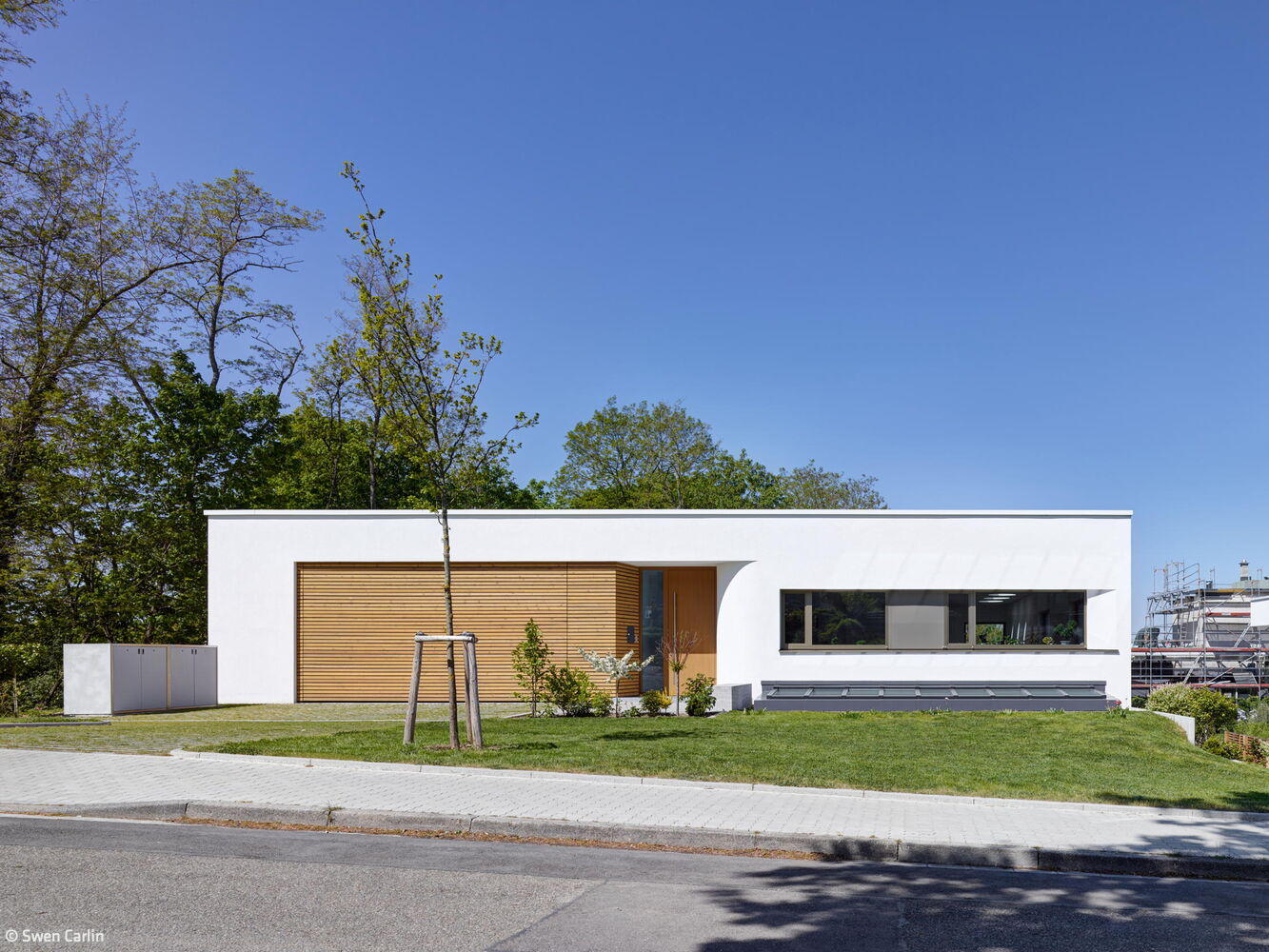
Open to Nature
Angular home deliberately looks inward, not outward
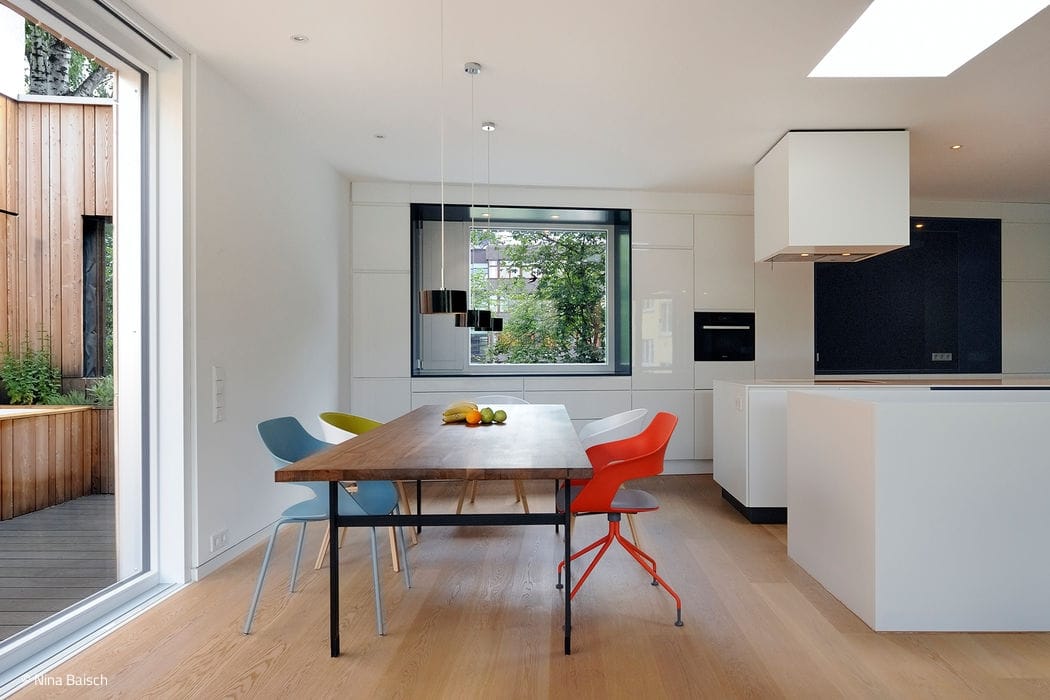
Timber Home in a Turn-of-the-Century District
An open staircase serves as the focal point of this residential and commercial building, drawing light from the skylight down through to the ground-floor entrance and...
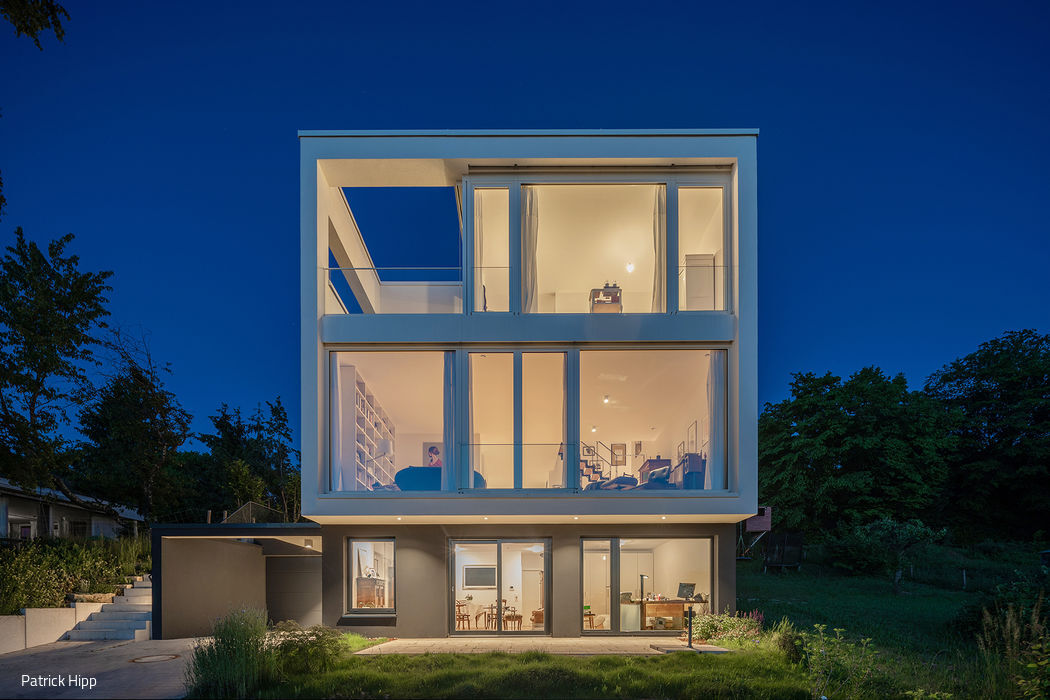
Close to Nature, Family-Friendly
A shared vision: three generations, one home under a new roof
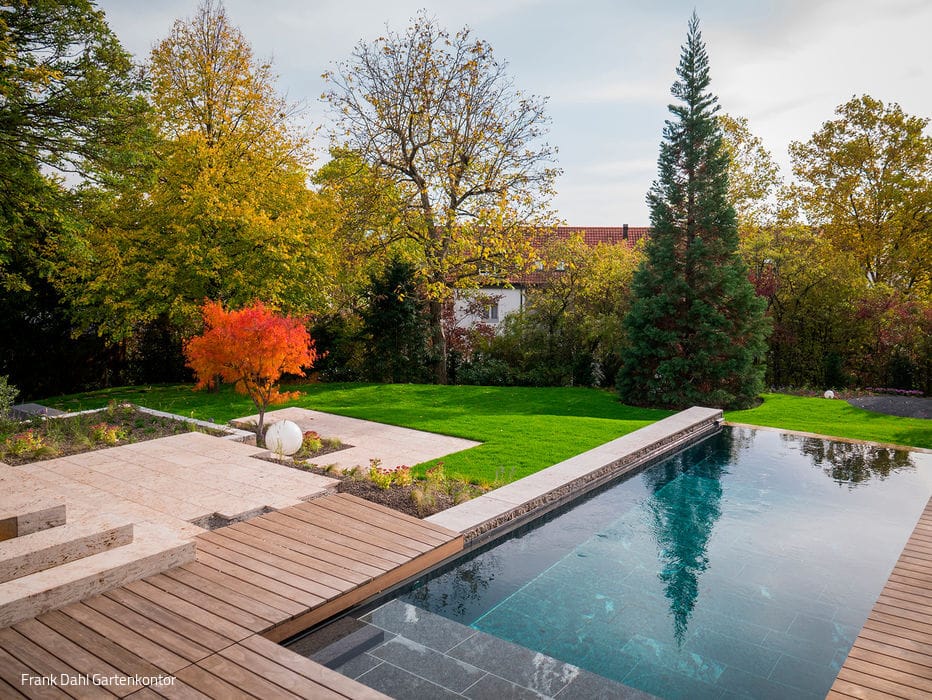
Life in Motion
From overgrown garden to hillside family retreat—complete with natural pool