


Density and distance
Two apartment buildings disguised as detached houses
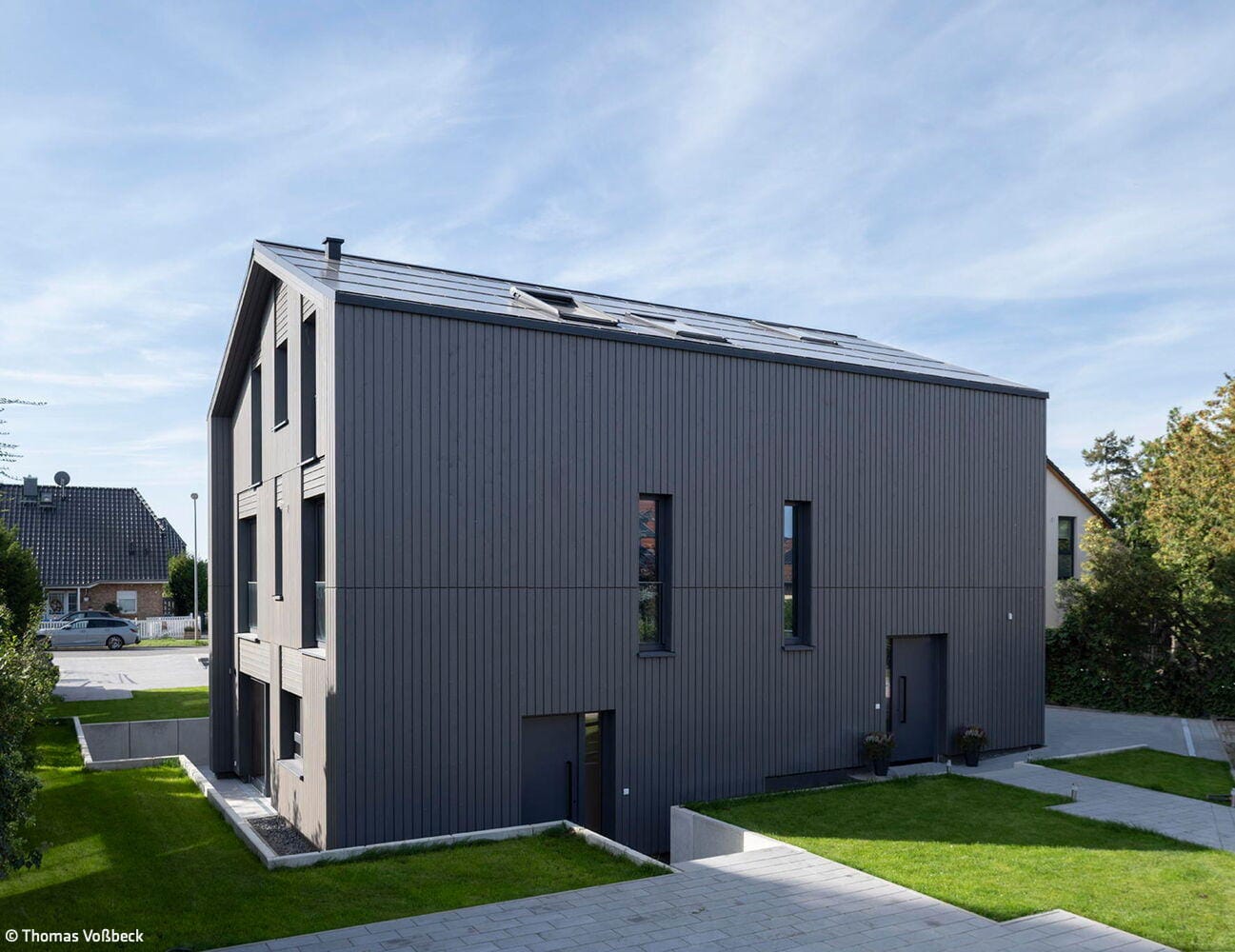
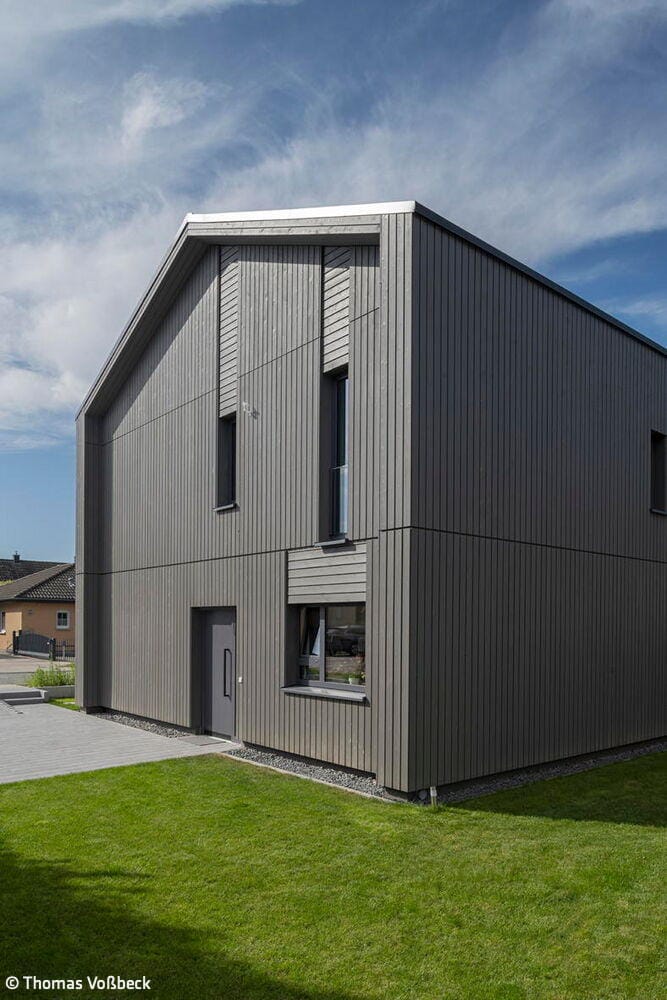
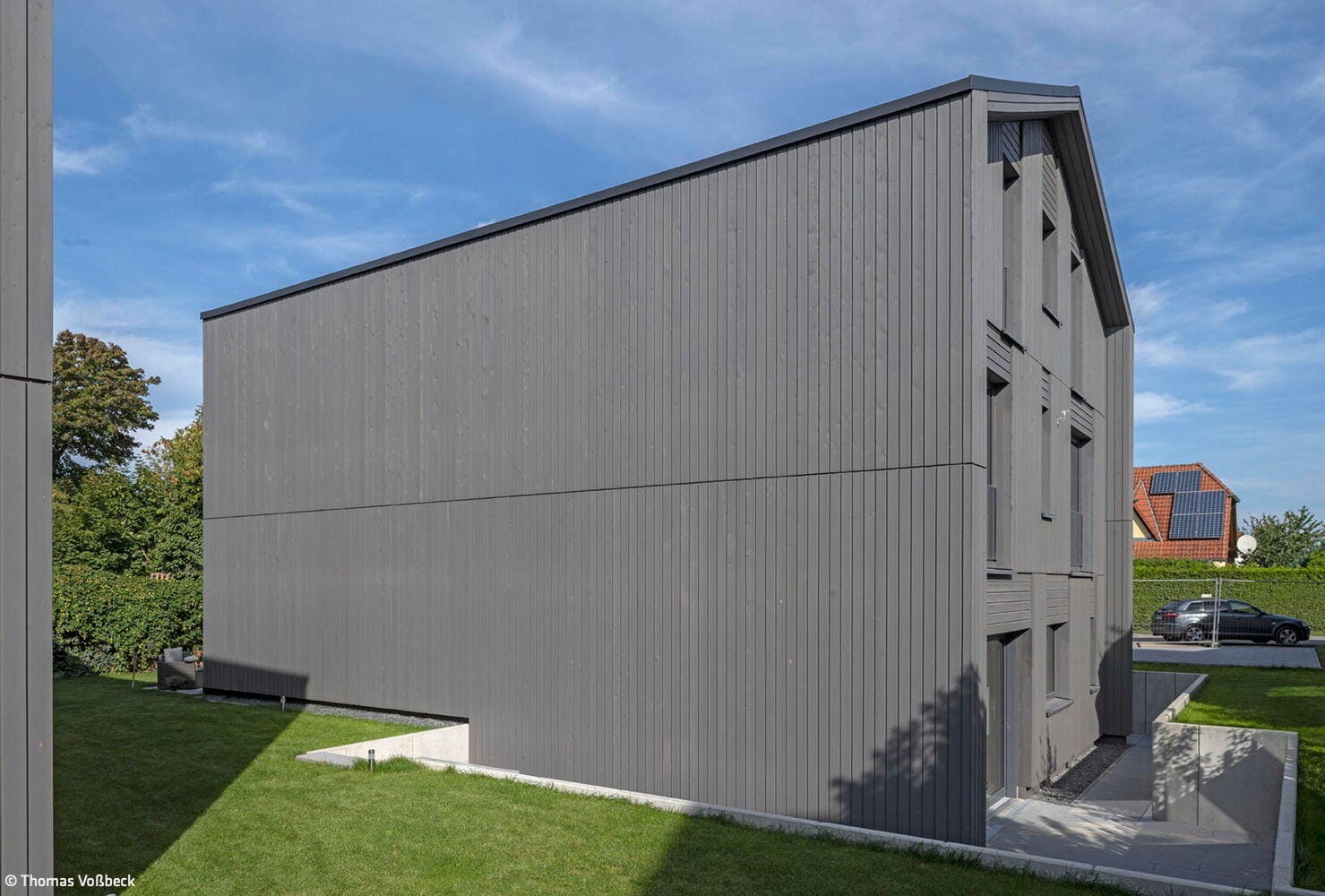
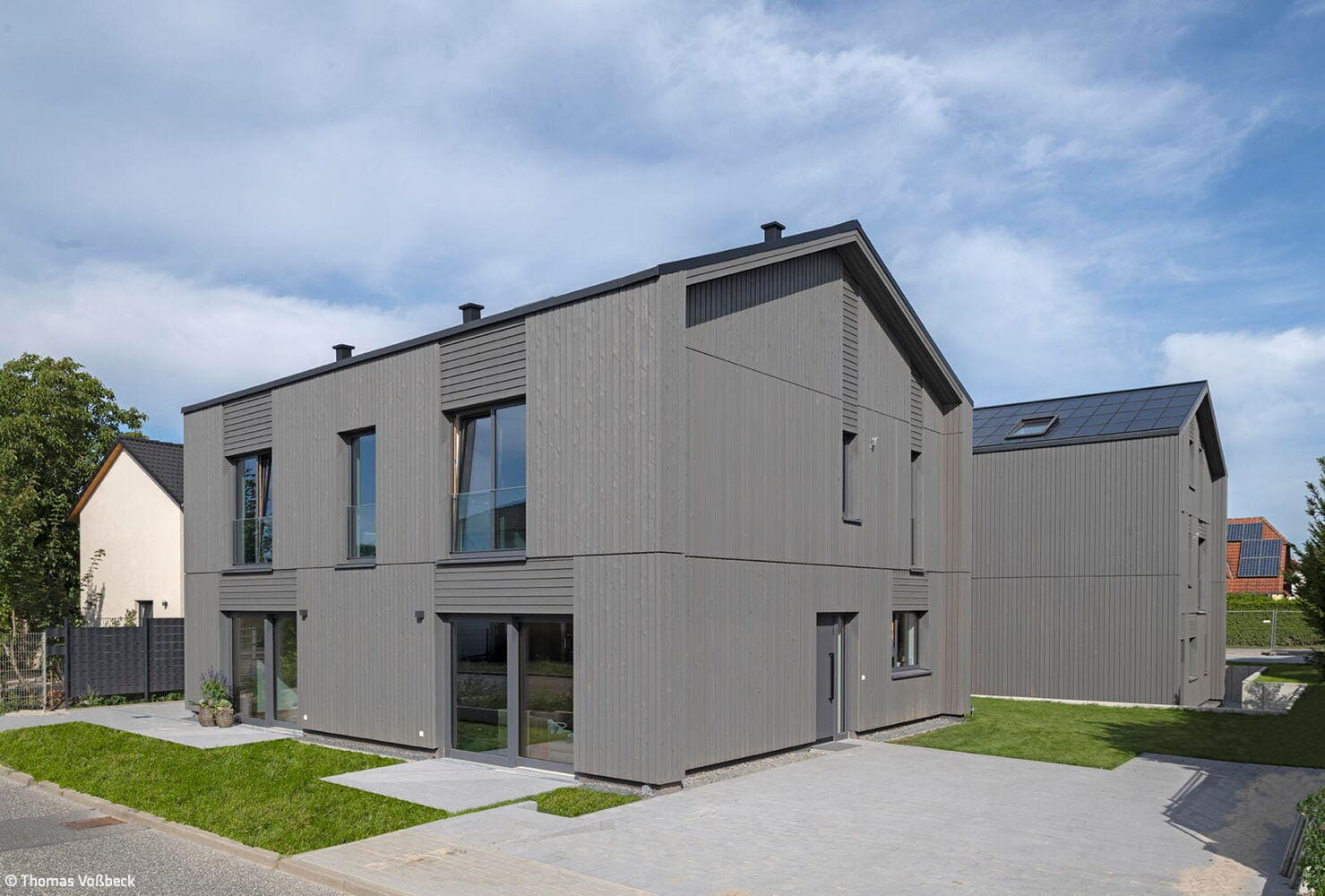
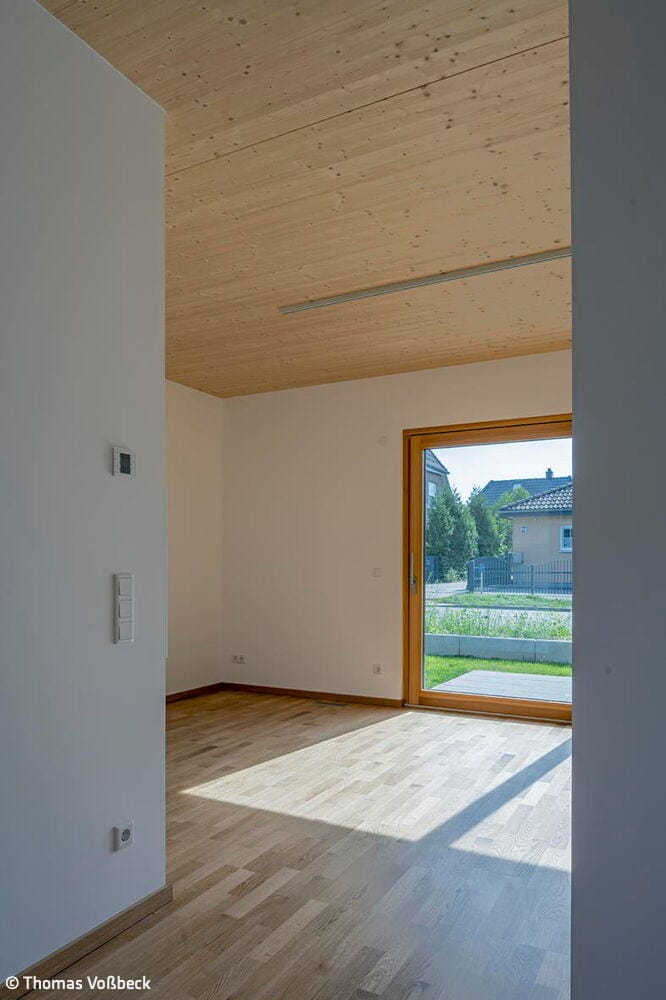
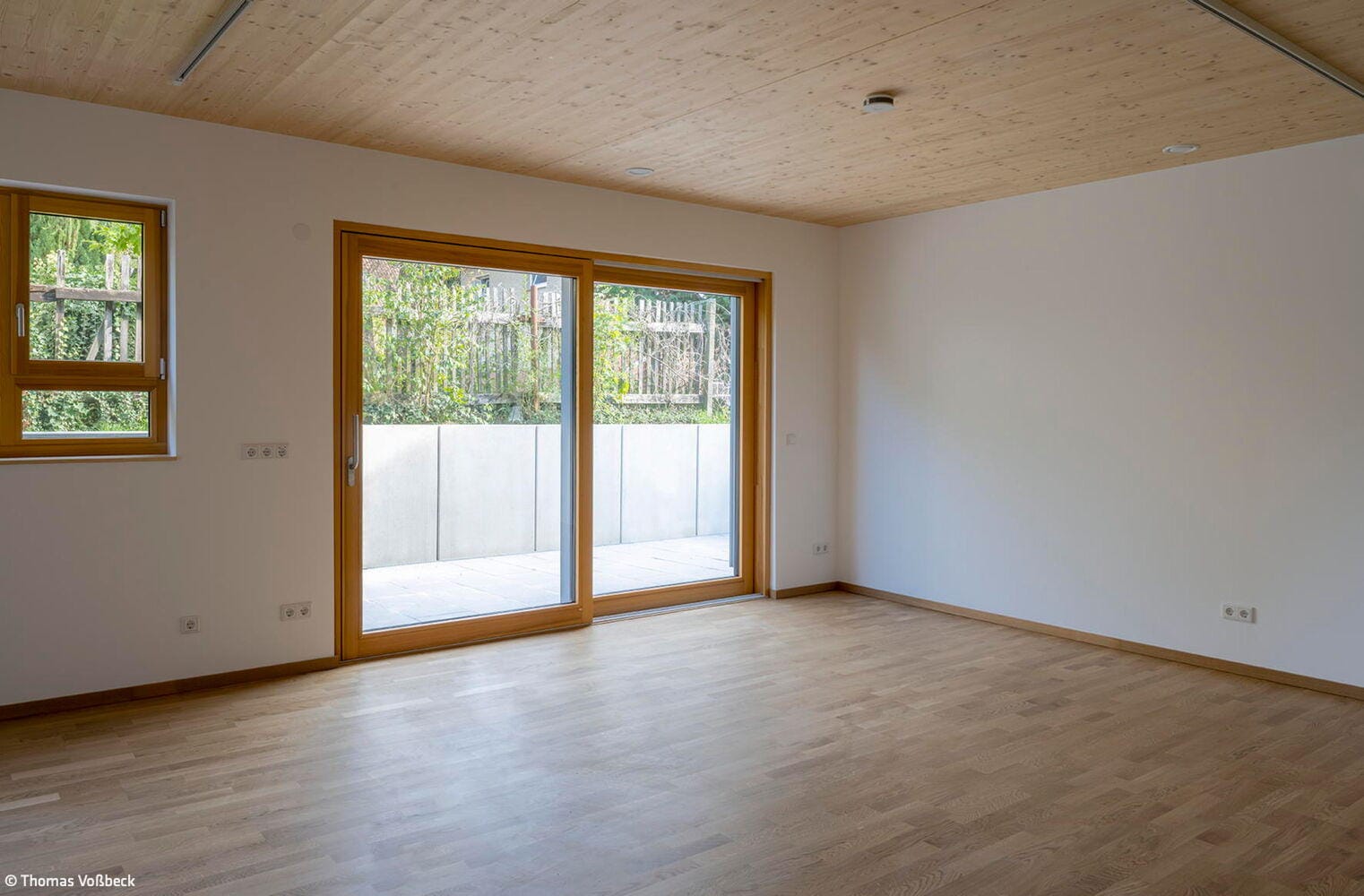
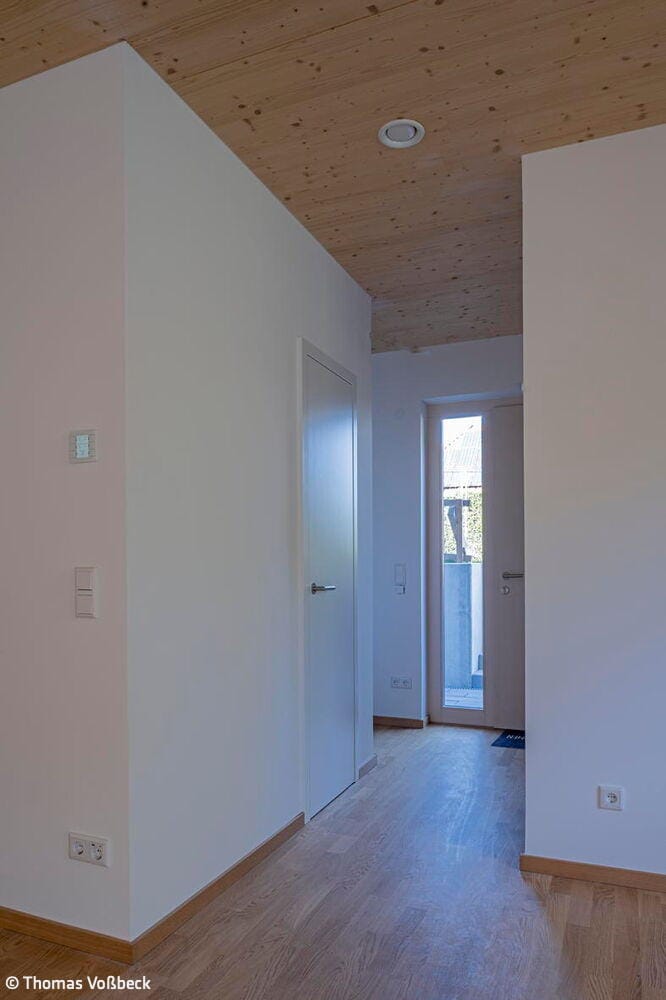
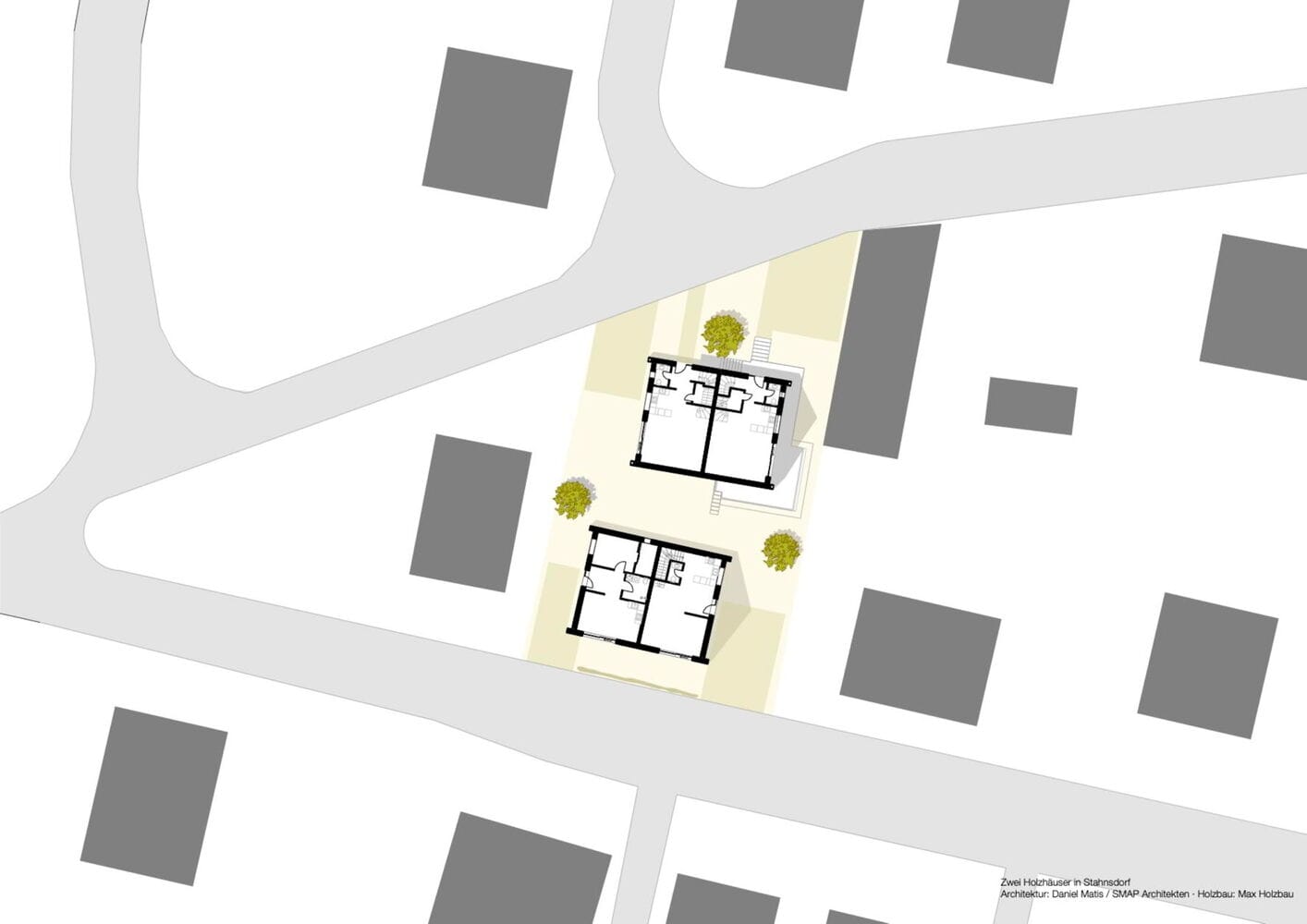
In Stahnsdorf, not far from Lake Wannsee, two houses were built on a relatively small plot of land measuring just 800 m². They are disguised as detached houses, but in fact form an ensemble comprising a total of four flats: individually tailored, ranging in size from 56 to 145 m² – from single-person to multi-generational flats. Daniel Matis from SMAP Architects in Berlin succeeded in the "feat" of distributing so much living space across two houses. For five years now, the firm has consistently focused on sustainable construction. Timber construction in combination with innovative materials and energy-efficient construction methods plays a central role in this. The flats are arranged in a nested pattern, so to speak: one of the two buildings contains a two-storey and a three-storey flat, while the neighbouring building contains a two-storey and a single-storey unit. With the exception of the latter, the other three extend over several floors, suggesting exciting floor plans. To make both structures appear to be the same height, even though one is taller, the ground floor of the taller building was lowered below ground level. Each flat has its own separate entrance, which creates autonomy despite the limited space. The building site is located between two streets, which means that each house also has its own address. Both buildings were constructed using timber panel construction. The Brandenburg-based company Max Holzbau supplied all the parts prefabricated, so that it only took a few days to construct the houses on site. The roofs are gabled with a slight slope and consist of an in-roof photovoltaic system: the PV panels are not mounted on top, but integrated into the roof, combining the PV system and the roof functionally. A perfectly designed, elegant and space-saving solution. Roofs of this type generate up to 35 kWp, more than mounted panels. The energy supply is supplemented by a geothermal system with a heat pump and ventilation with heat recovery. Thanks to this combination, the houses have been certified according to the QNG standard (Quality Seal for Sustainable Buildings). Water management also follows ecological principles: rainwater is collected and fed into two 10,000-litre cisterns. Excess water is collected in trenches with double the capacity, thus complementing the circulation system. The architects received the Real Estate Architecture Award for this sustainable overall concept.
Photos:
Thomas Voßbeck
www.iv-fotografie.berlin
(Published in CUBE Berlin 04|25)

Exciting Transformation
Two Become One – Apartment Berlin X Unveils Expansive New Possibilities
Architecture That Speaks
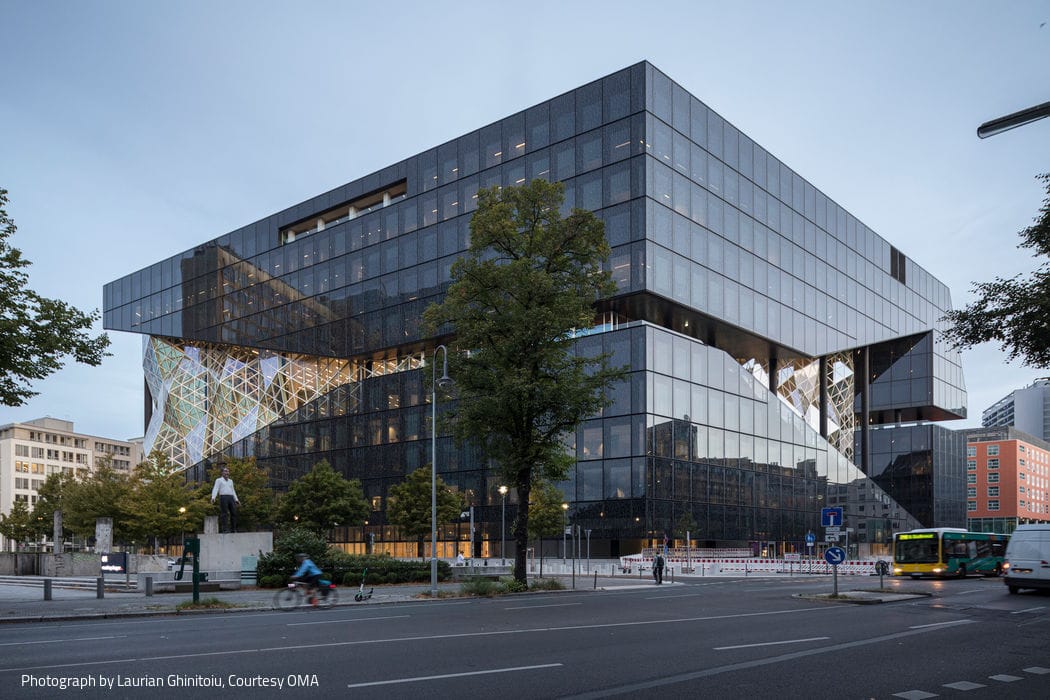
Icon and Symbol: The New Springer Headquarters
Remise Reloaded
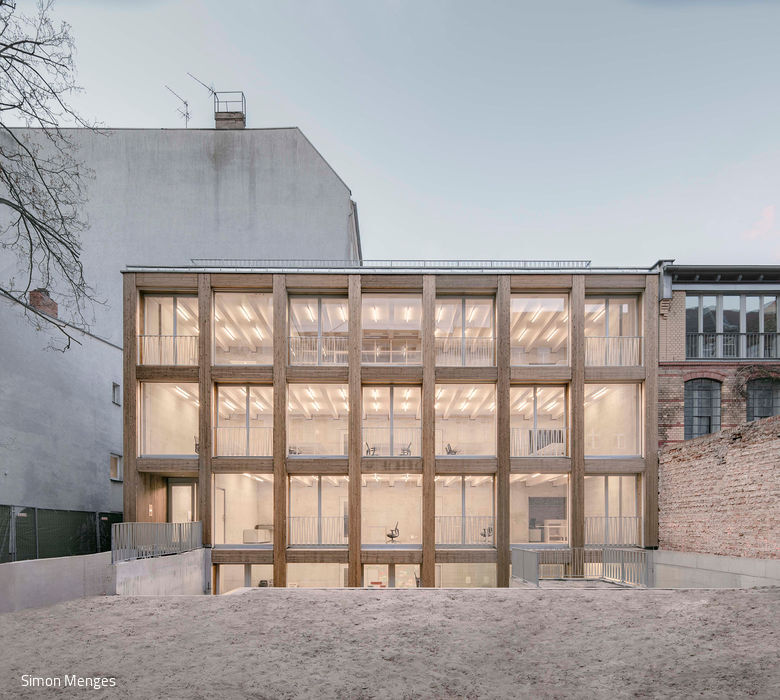
Once a workshop, now a workspace—and unmistakably striking

Glass Dome
A Cosmopolitan Penthouse of Superlatives