


Chasing the Sun
How a challenging site became a cherished haven for children
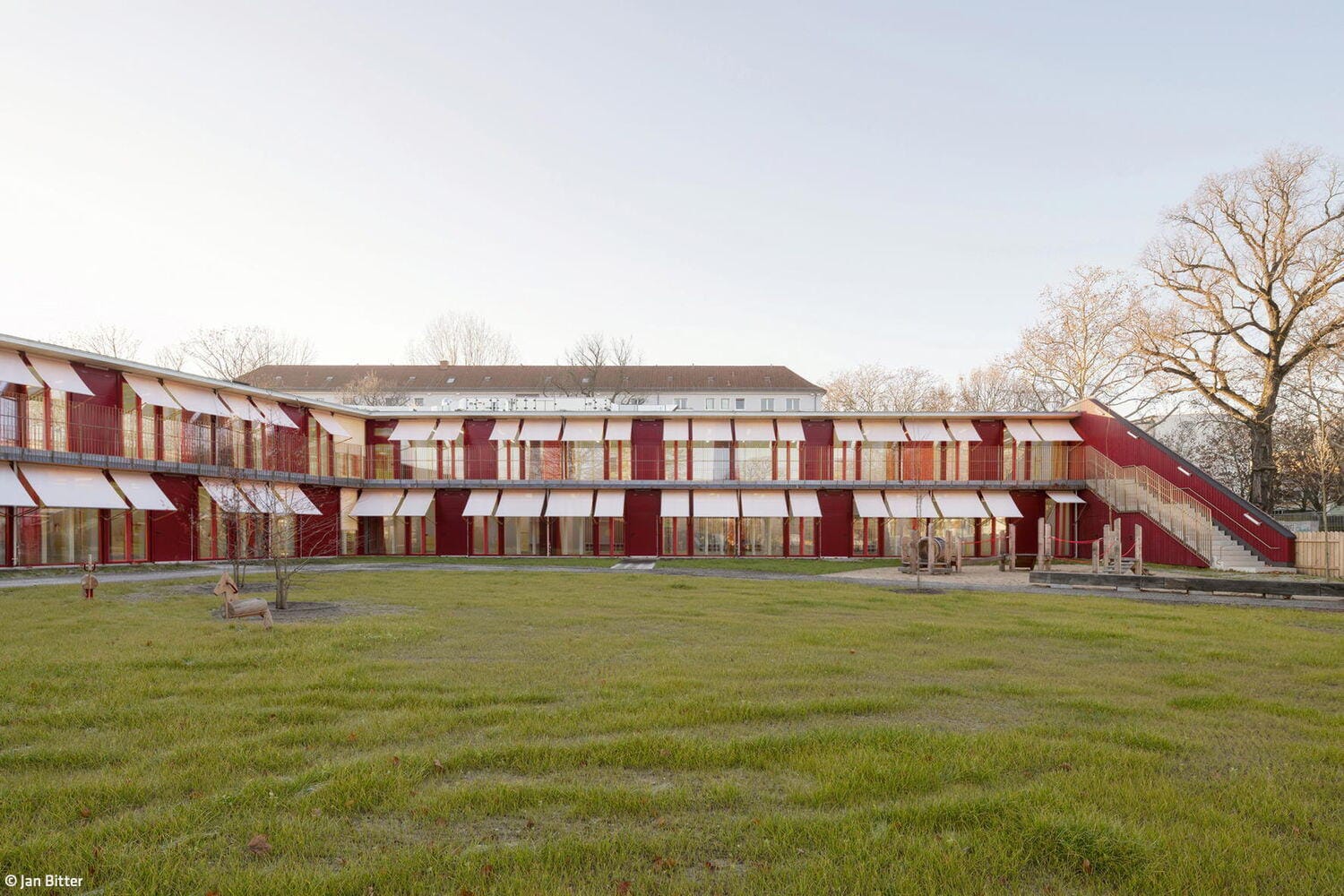
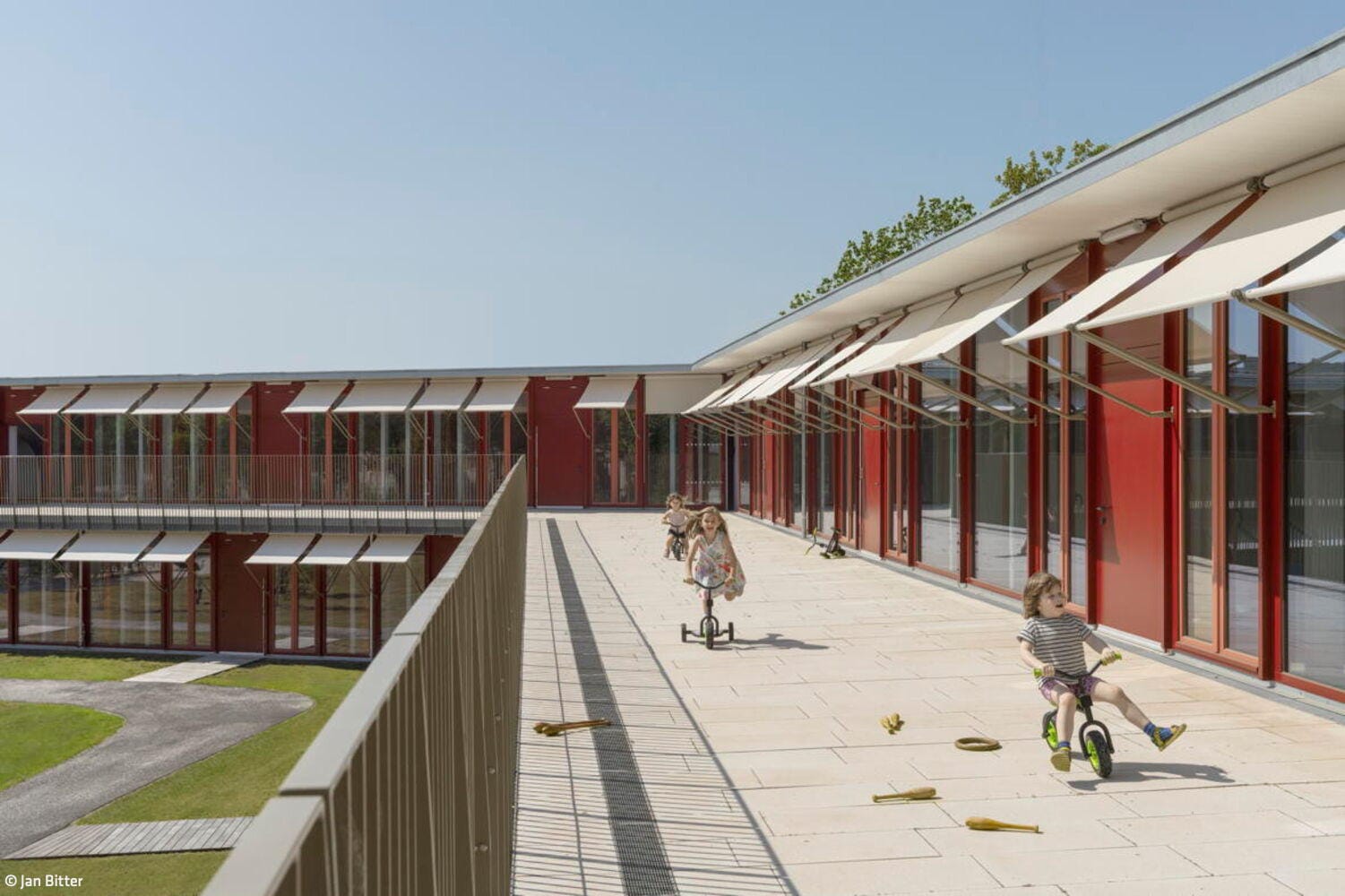
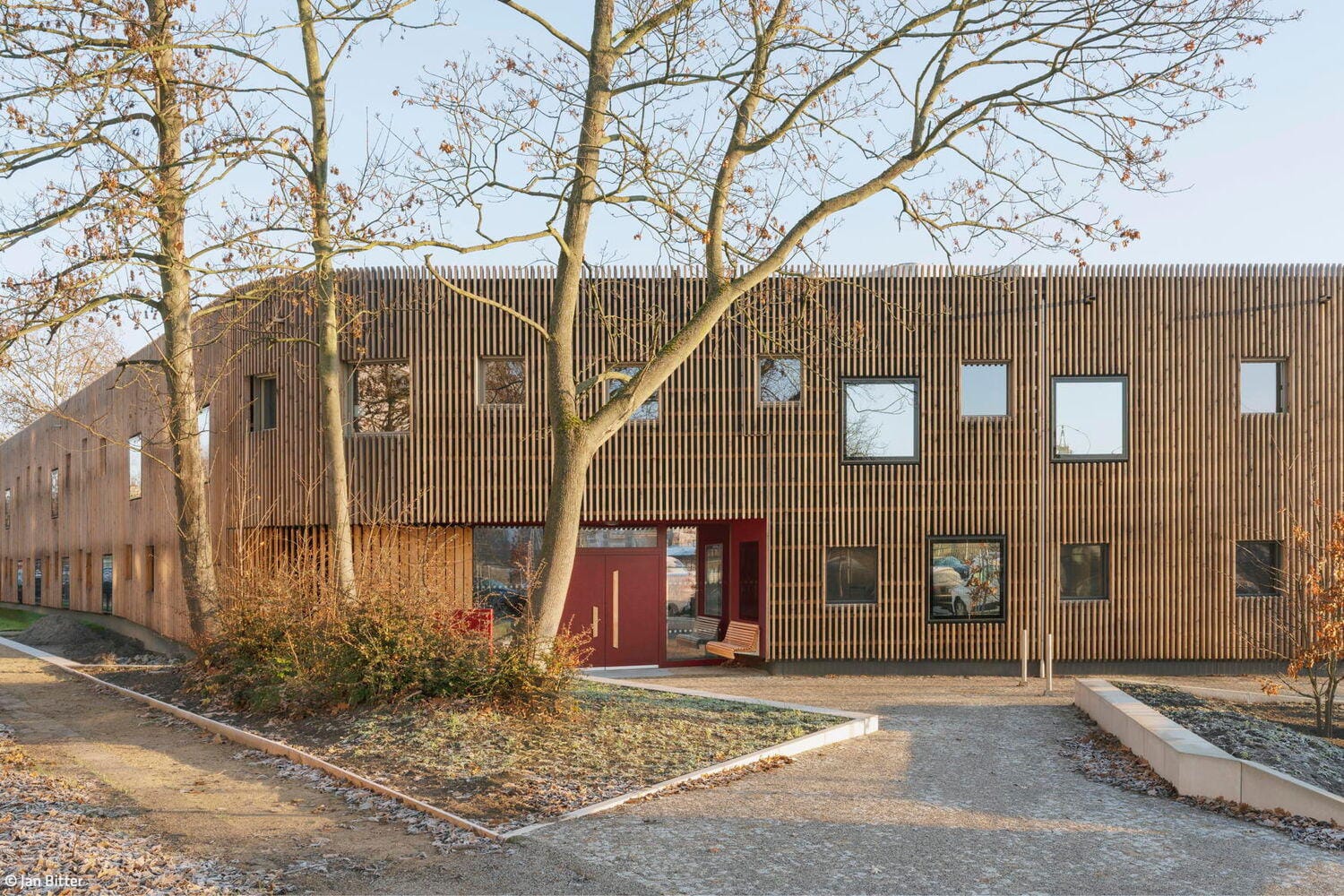
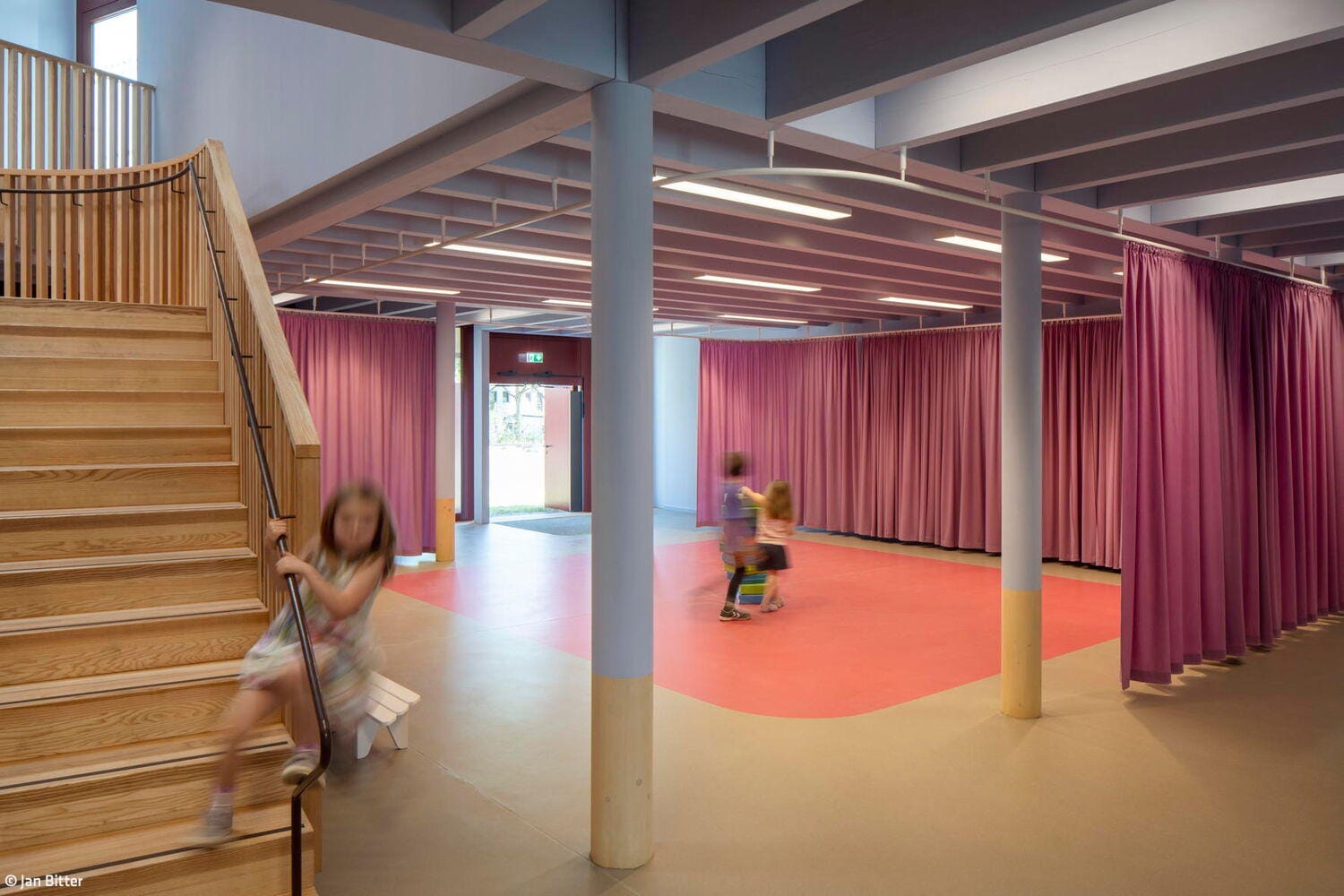
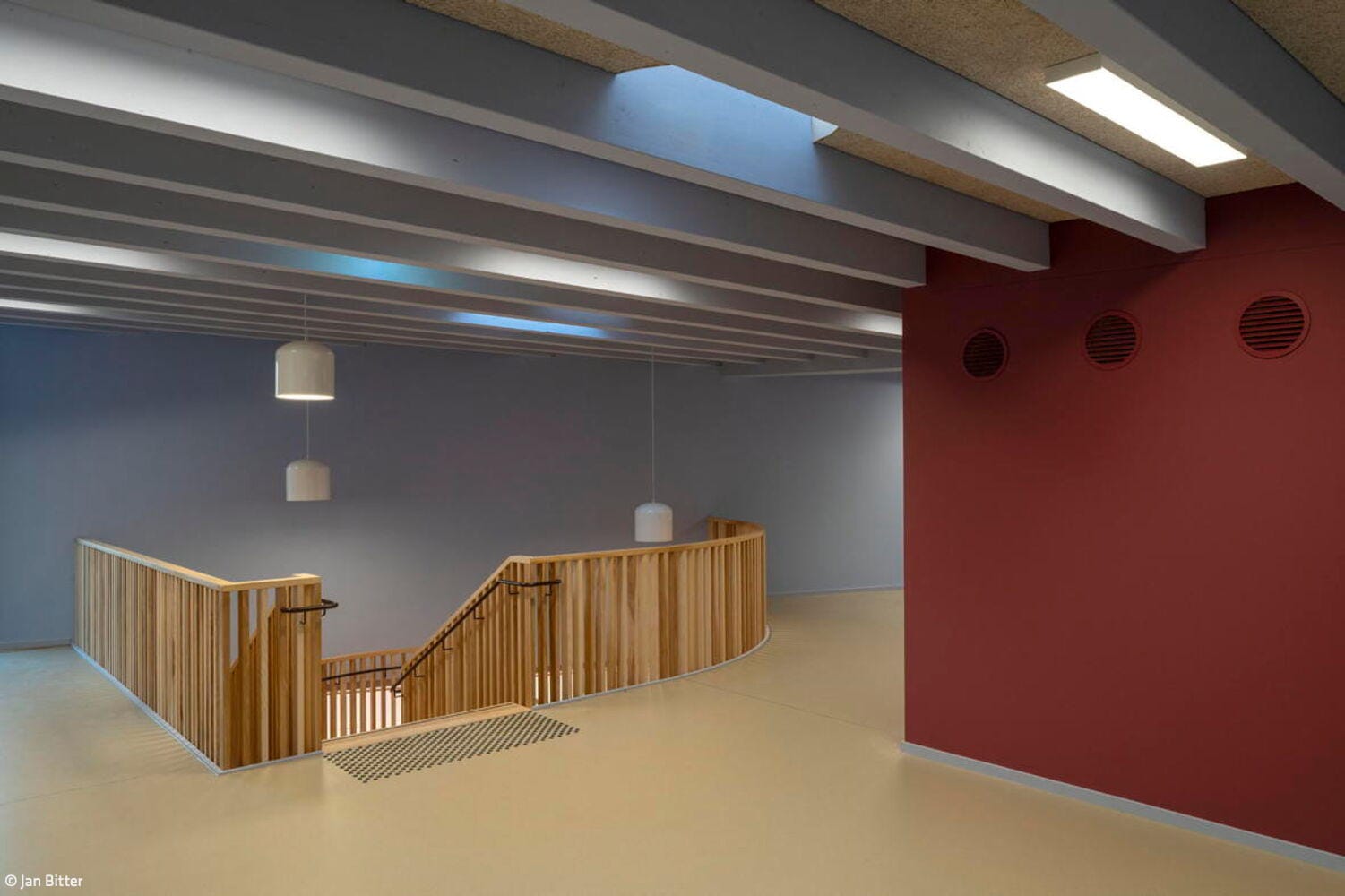
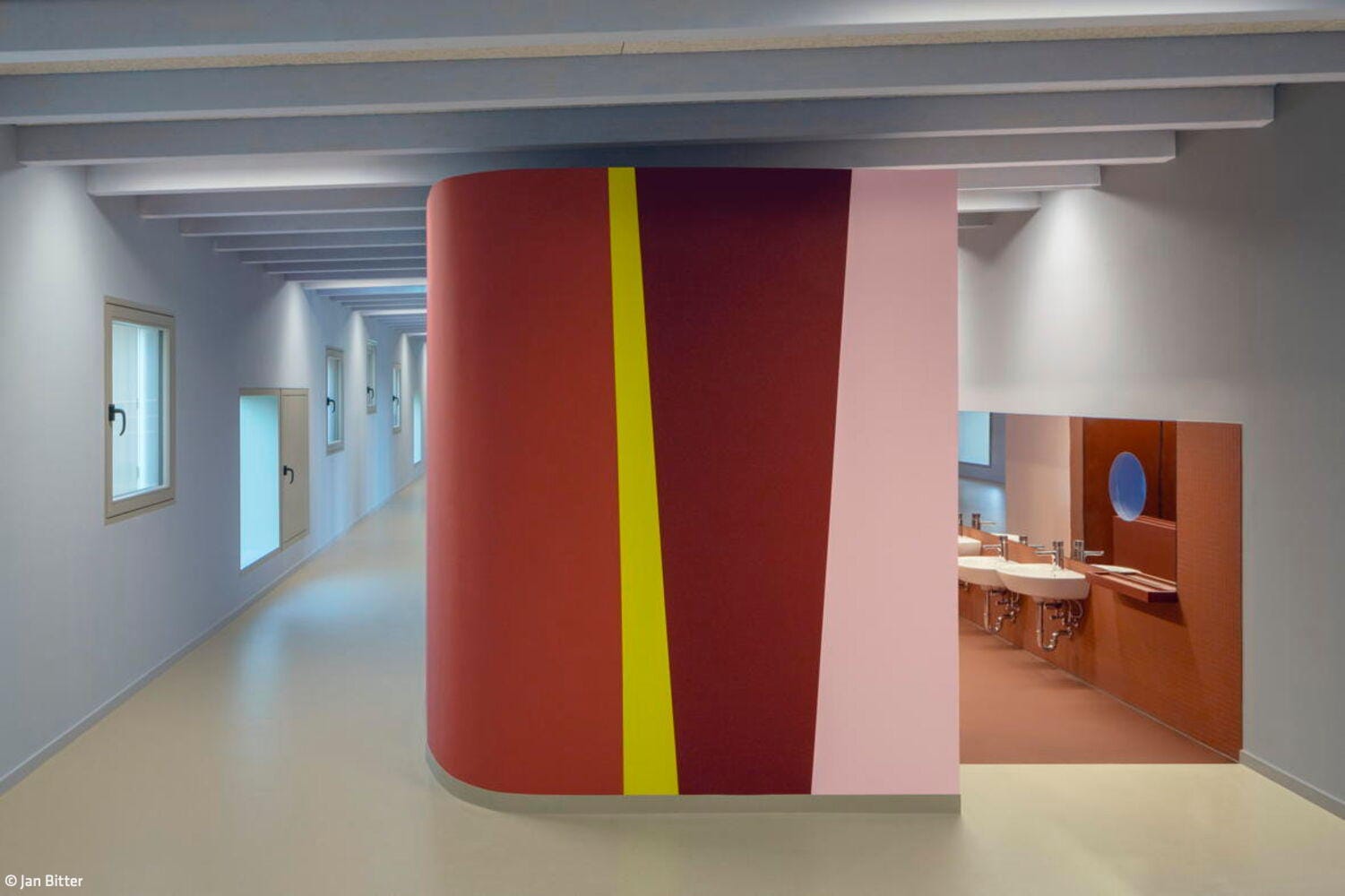
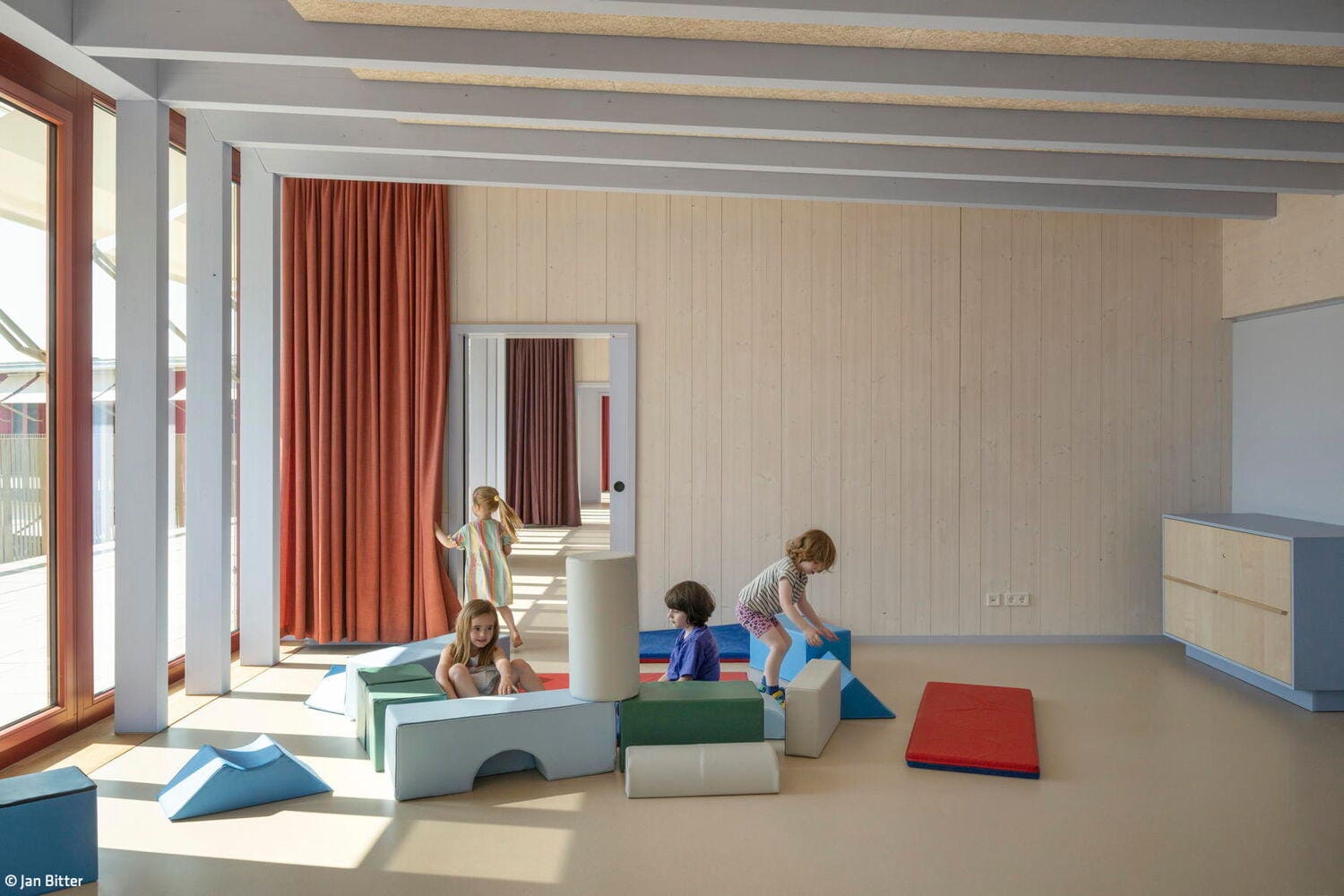
Against the odds, a neglected plot of land has been transformed into an ideal setting for an early learning center. Opening its doors just this past May, the kindergarten is already thriving with activity and energy. Named after its location, it's simply known as "Kindergarten Gudrunstraße."
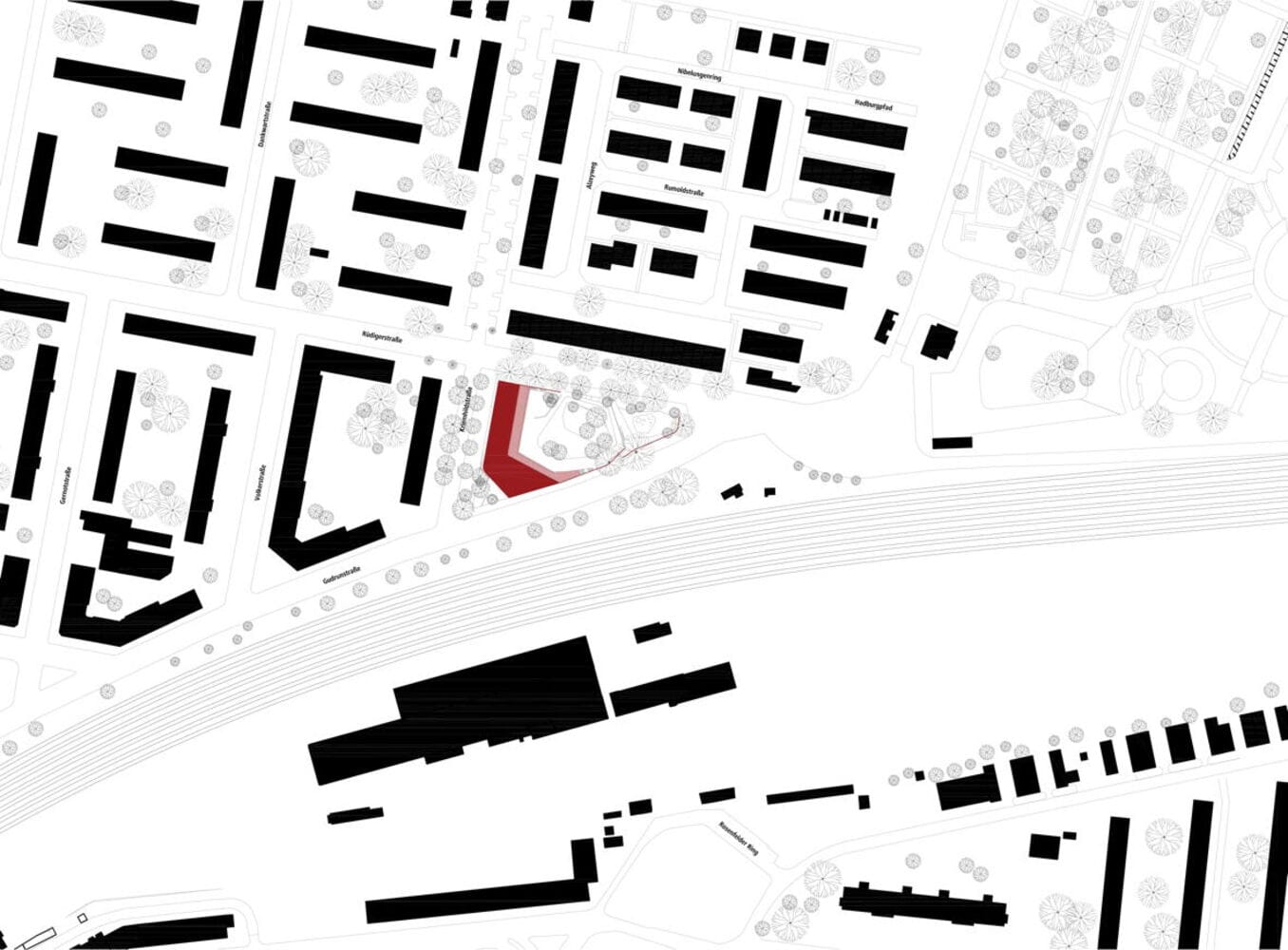
Thirty architectural practices competed in this closed urban design competition. Berlin-based Ludloff Ludloff took first place in 2019 with this exceptional project. The jury was captivated by their integration of progressive pedagogical design with sustainable construction methods and thoughtful urban planning. This last aspect encompasses the architects' clever solution to a genuinely challenging site: an almost triangular parcel of land wedged between residential blocks to the north and west, with a busy regional rail line to the south—where trains rumble past every minute. Not exactly a kindergarten's dream location.
The architects turned this constraint into an opportunity with remarkable elegance. The triangular site tapers toward the east, and the design strategically positions the kindergarten buildings along the broad western and southern edges. This orientation ensures that morning sunlight floods through the nearly continuous glazing on the building's interior side throughout the day. A public children's playground anchors the eastern tip of the site, while the street-facing facade presents itself as a refined perforated screen of elegant larch wood slats. Perhaps most impressive from a sustainability perspective is the building's construction from CNC-prefabricated timber components that could be rapidly assembled on-site without metal fasteners. Each piece connects through traditional joinery—shear tenons and dovetail joints—while round timber posts span larger distances with mortise-and-tenon connections secured by hardwood dowels. The entire timber structure was conceived for circularity: ideally, all components can be recovered and reused in their original form.
Inside, the interiors burst with color: bold, distinct hues guide children through the space and distinguish each group's area, which comprises a larger group room, a smaller group room, and a rest room. The outdoor spaces were masterfully designed by gmo13 landscape architects as child-scaled, nature-integrated environments brimming with play and movement opportunities. The entire facility reads as a genuine oasis—a sheltered island within the urban landscape. This two-story building accommodates 185 children across 13 groups.
Photography:
Jan Bitter
www.janbitter.de
(Published in CUBE Berlin 04|25)

Courtyard Within a Courtyard
Converting Backyard Garages into Creative Studios and Living Spaces
Living in the Composers' Quarter
A new residential area in an established neighbourhood in Weissensee
For Night Owls Only
The New York Bar is every inch its name

Rooms within rooms
Reimagining an Office: Creating an Entirely New Experience