


Contrasts incorporated
Converting an attic creates individual spaces along the roofline
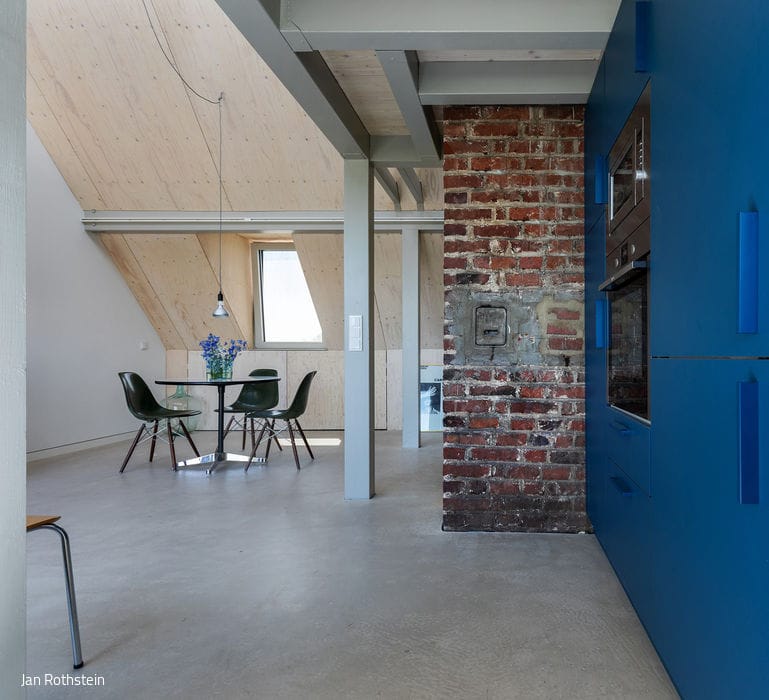
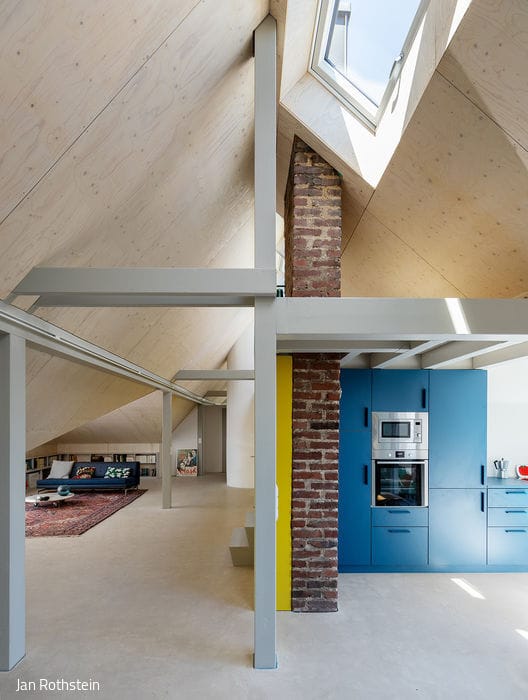
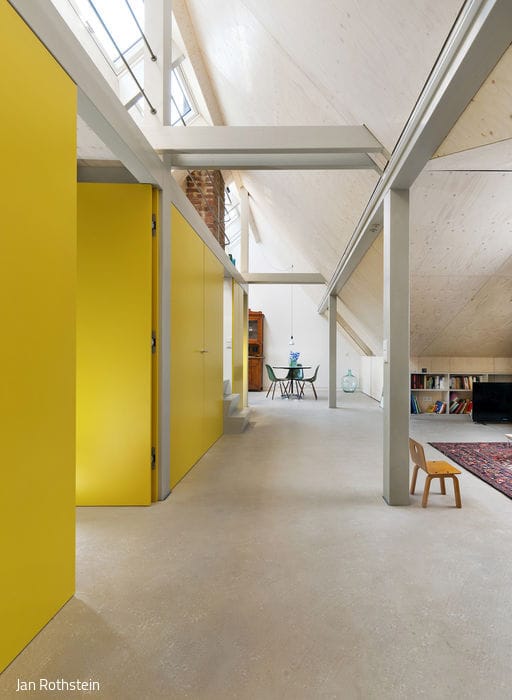
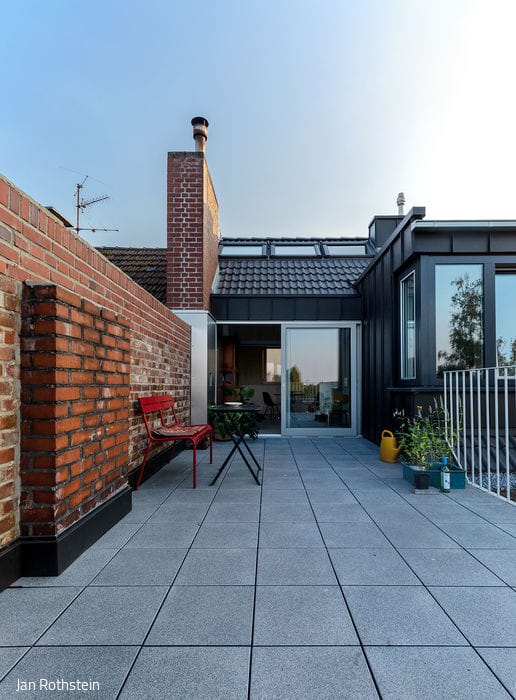
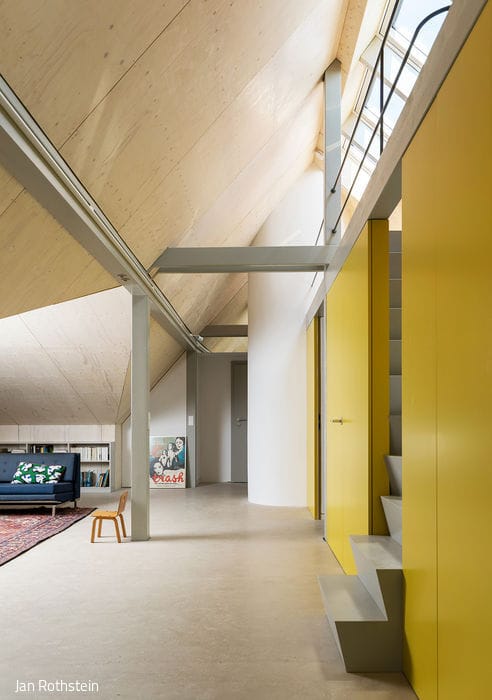
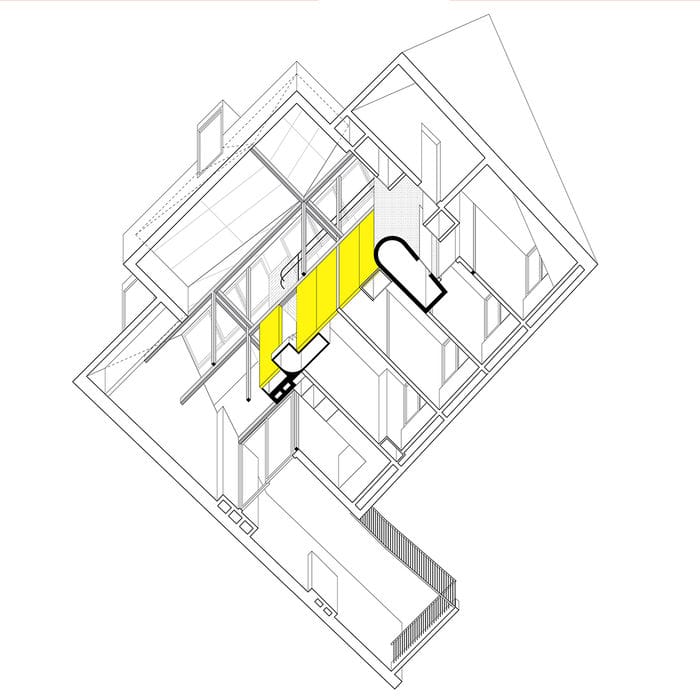
Attics and storage spaces offer considerable development potential. This project—a roof conversion in Cologne-Klettenberg—demonstrates how compelling spatial experiences can emerge from a careful interplay between existing fabric and new residential use. Architect Matthias Hoffmann of Demo Working Group designed and realized the conversion of a storage room on the fourth floor of a 1930s apartment building into living space for a young family.
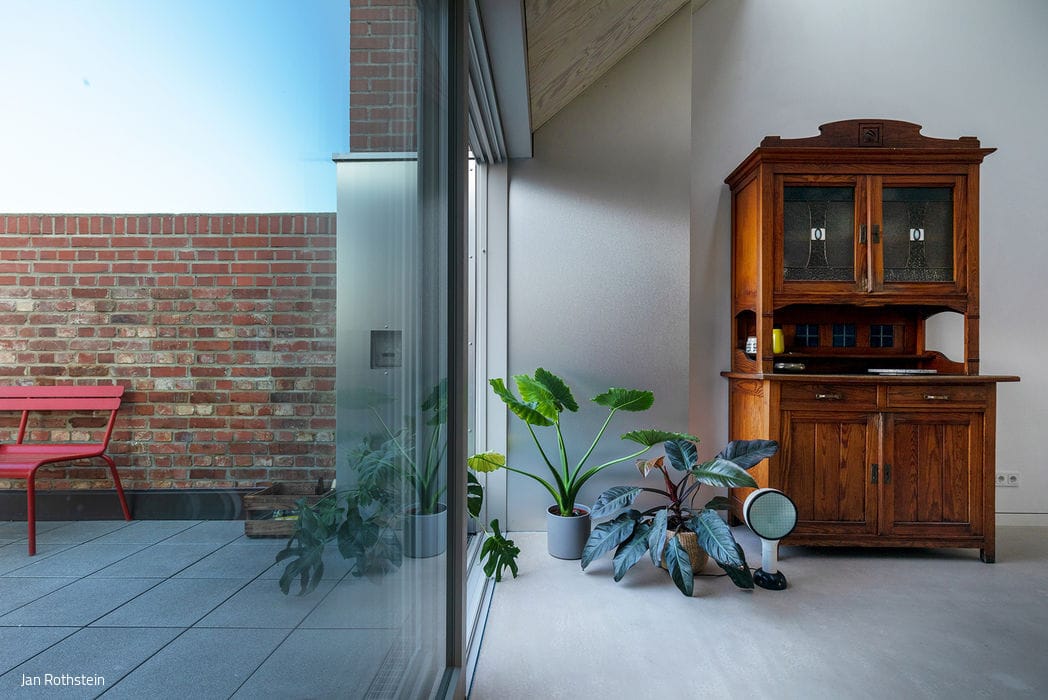
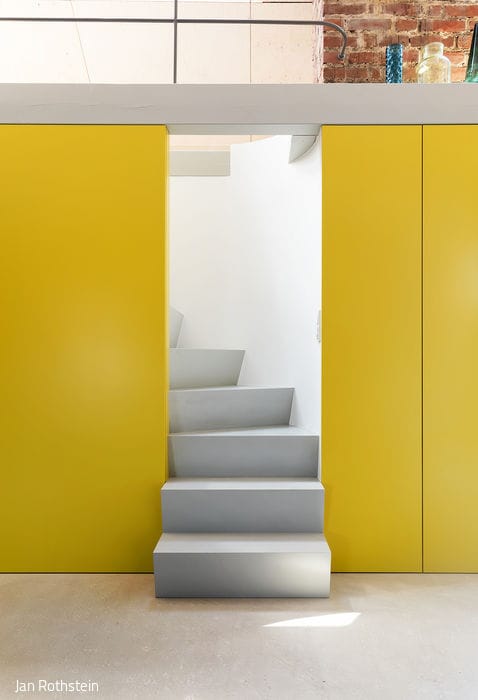
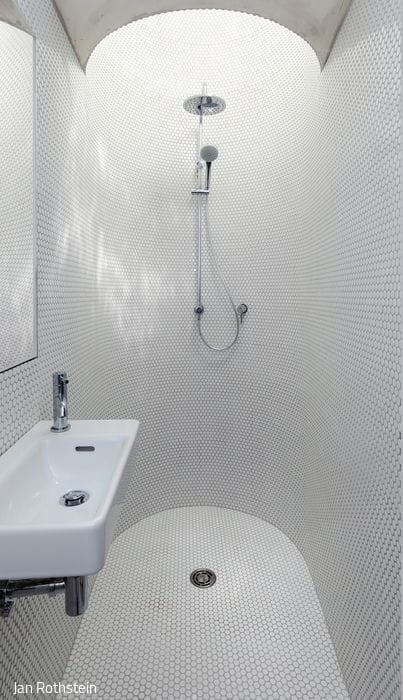
The existing conditions shaped the project's fundamental structure. Building code requirements mandated restoration of the original gable roof volume. At one end, the existing stairwell connects to this roof; at the other, a roof terrace—cantilevered on a small extension—completes the composition. These two endpoints define the longitudinal axis that guides the entire design. The storage room's generous proportions and full ceiling height were preserved to accommodate the residential program with multiple individual rooms. A longitudinal axis running parallel to the roof ridge extends across the full length, functionally dividing the apartment into an open, communal living area that also serves circulation purposes. The other section comprises a linear cluster of compact private spaces concealed behind a striking yellow cabinet wall. Centered on this axis sits a cylindrical volume extending to the ridge—the central bathroom, dramatically illuminated from above by a circular skylight. At the far end of the longitudinal axis, in the dining area, the view pivots 90 degrees toward the roof terrace: facing a generous courtyard with impressive mature trees, residents enjoy an unobstructed vista across Cologne's roofscape.
Photography Credits:
Jan Rothstein
(Featured in CUBE Cologne Bonn 02|22)


The big sister
A Bold Riverside Home in Leverkusen Creates Meaningful Links to Its Surroundings

A Beautiful Way to Live Together
Where New Architecture and Heritage Create a Vibrant Living Community
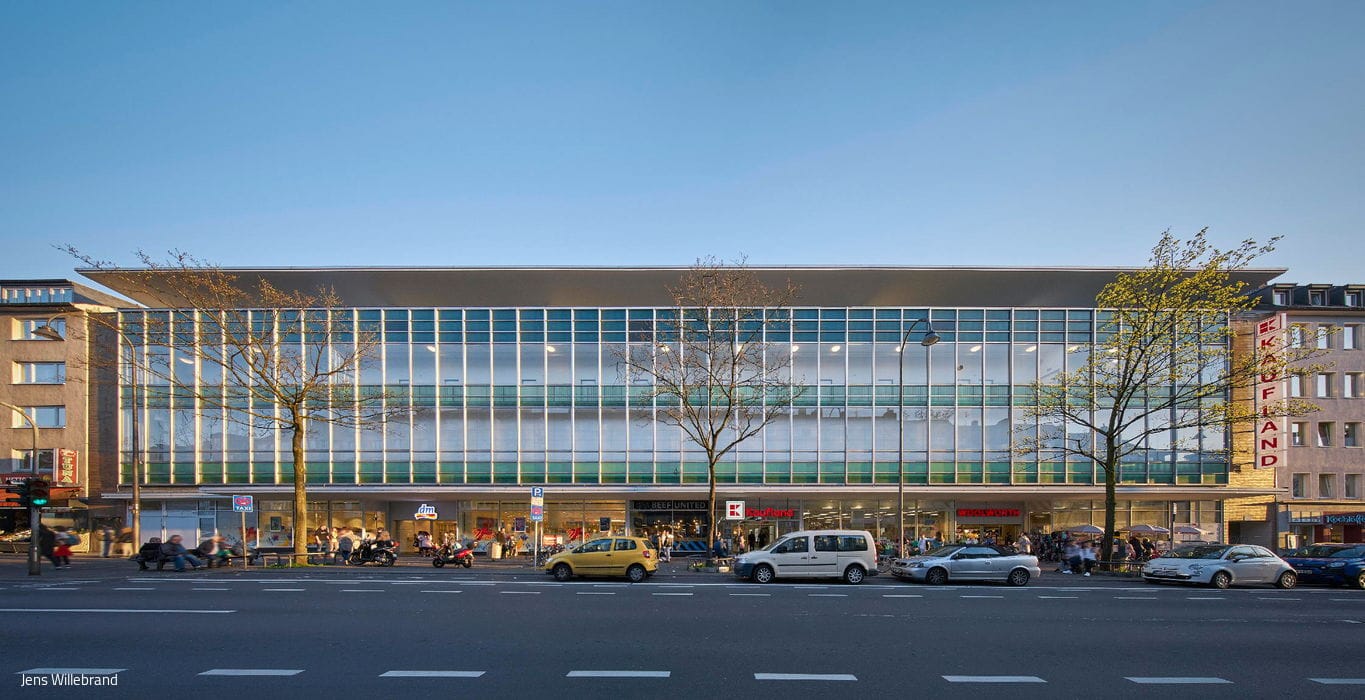
Relaxed Residential Street
A Department Store Reimagined: Kalk's New Mixed-Use Quarter Blends Commerce and Community
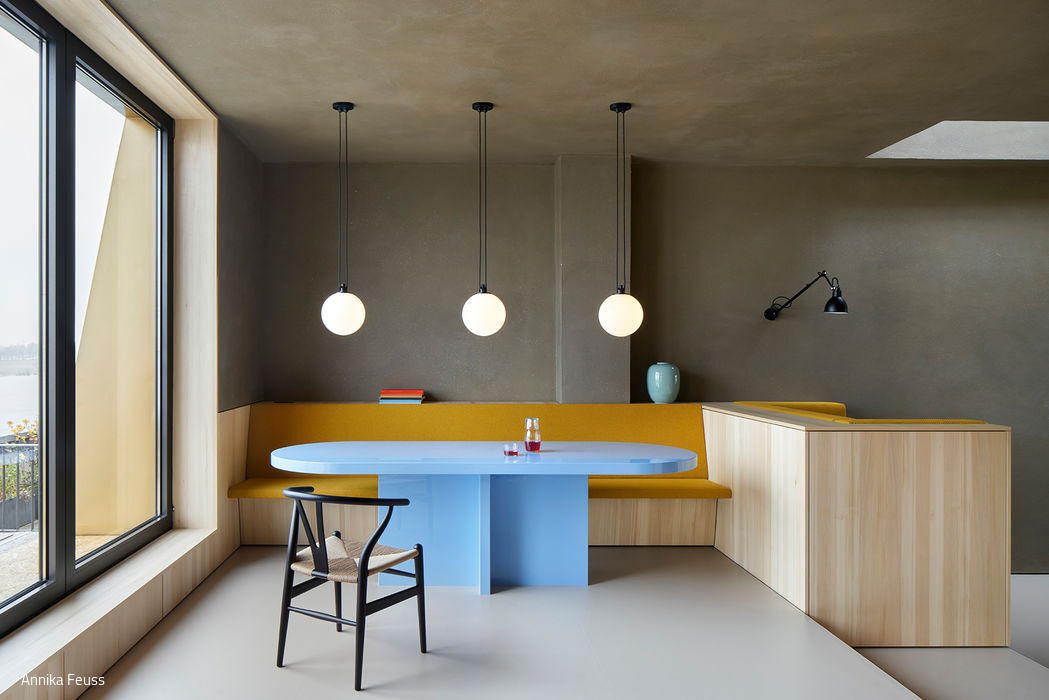
Living Room and Loft
A Rheinauhafen residence reimagined with minimalist clarity