


Timeless elegance reimagined – bathing culture for the modern age
From public bathhouse to luxury hotel – the Oderberg's remarkable transformation
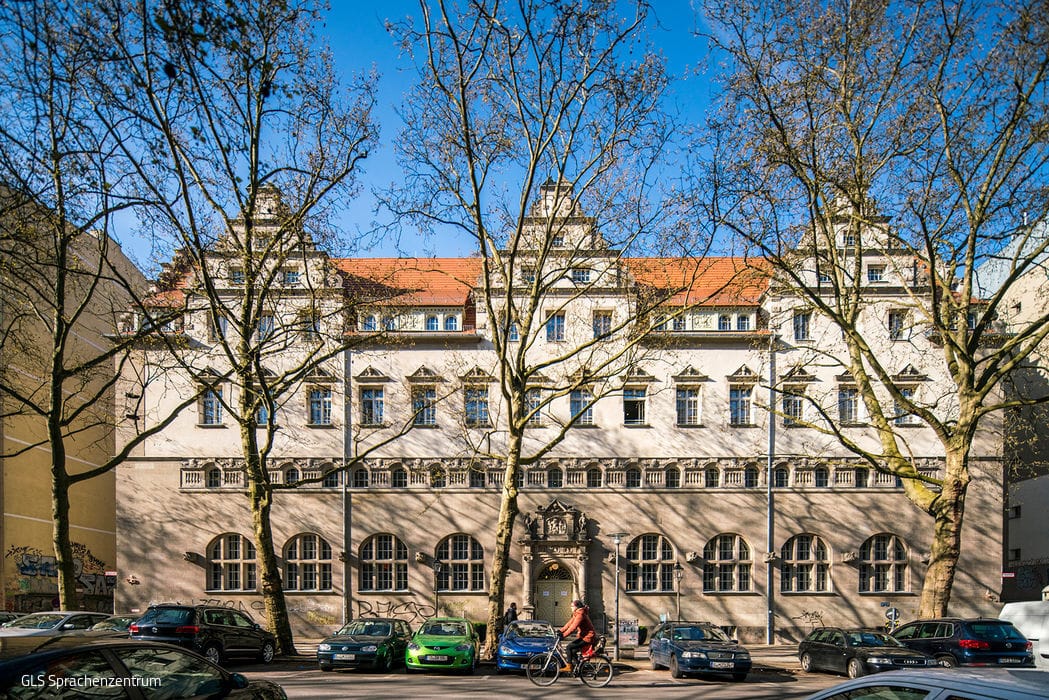
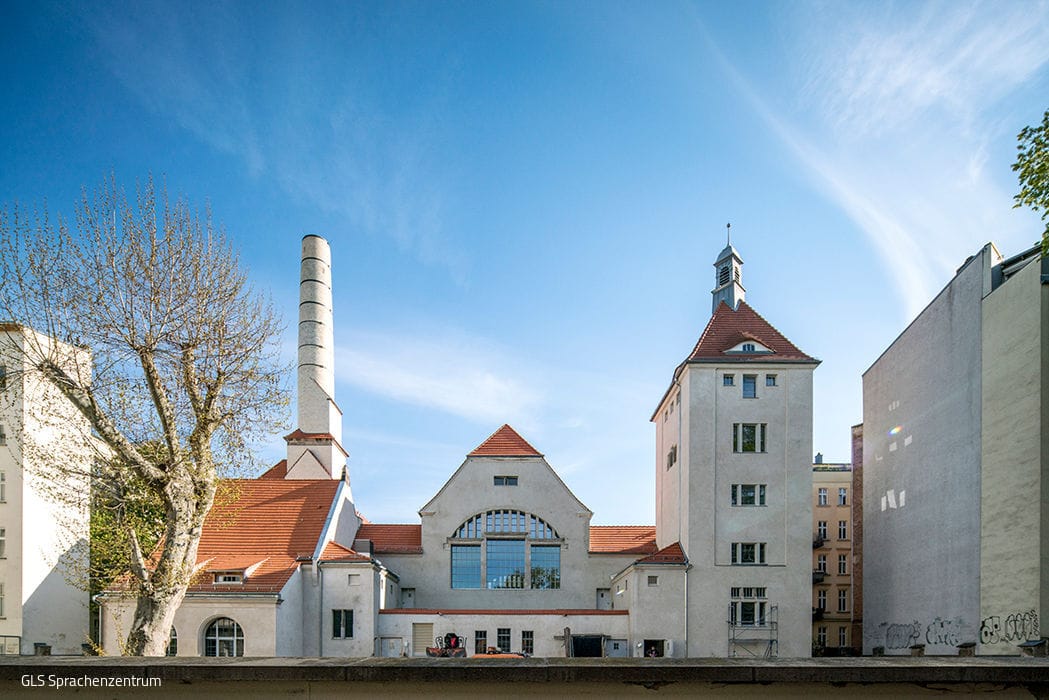
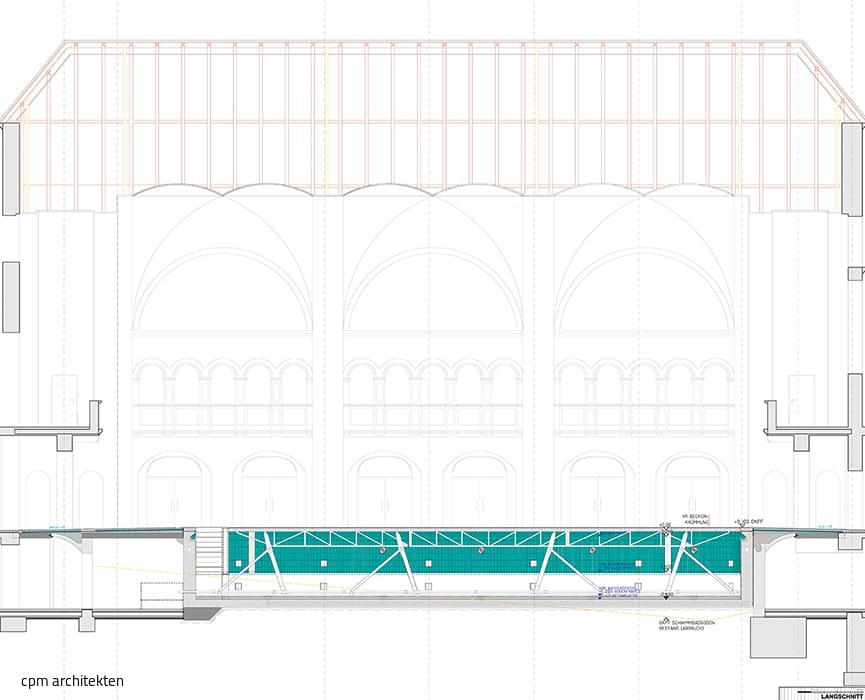
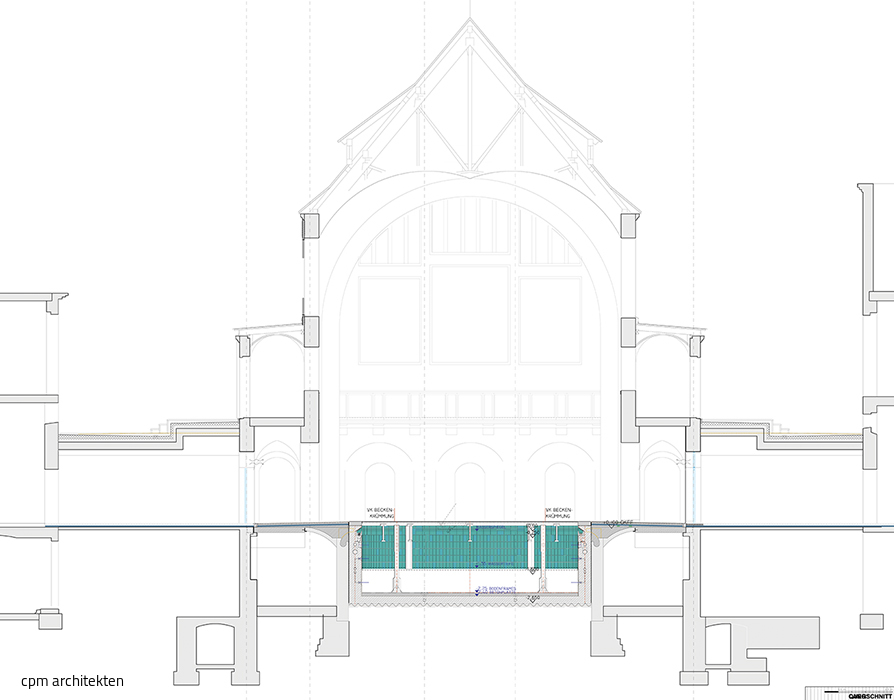
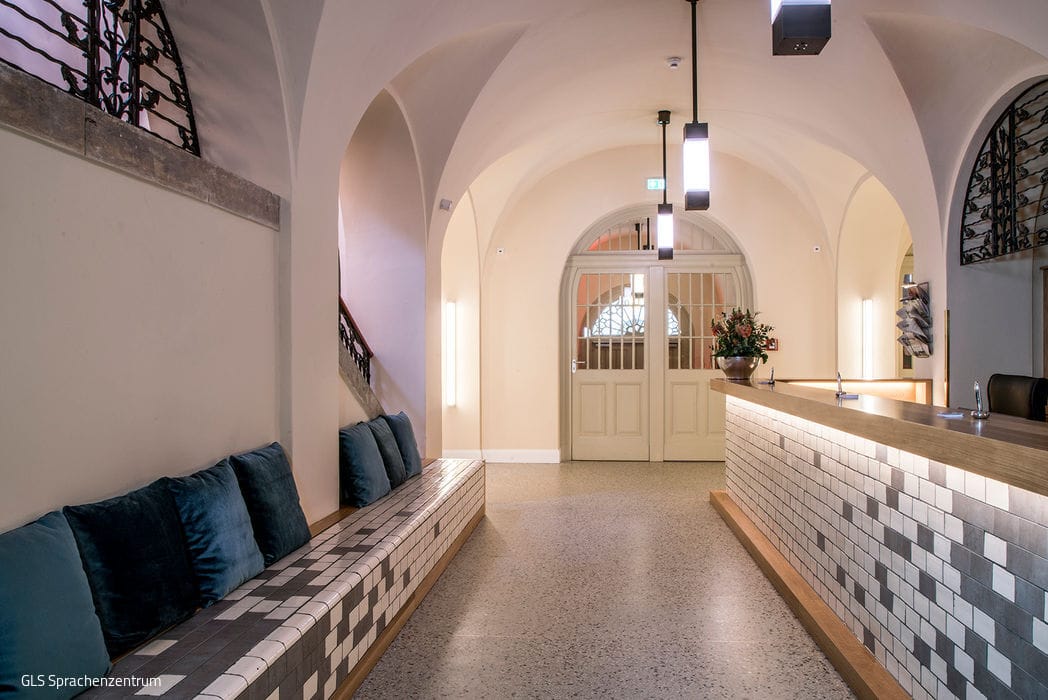
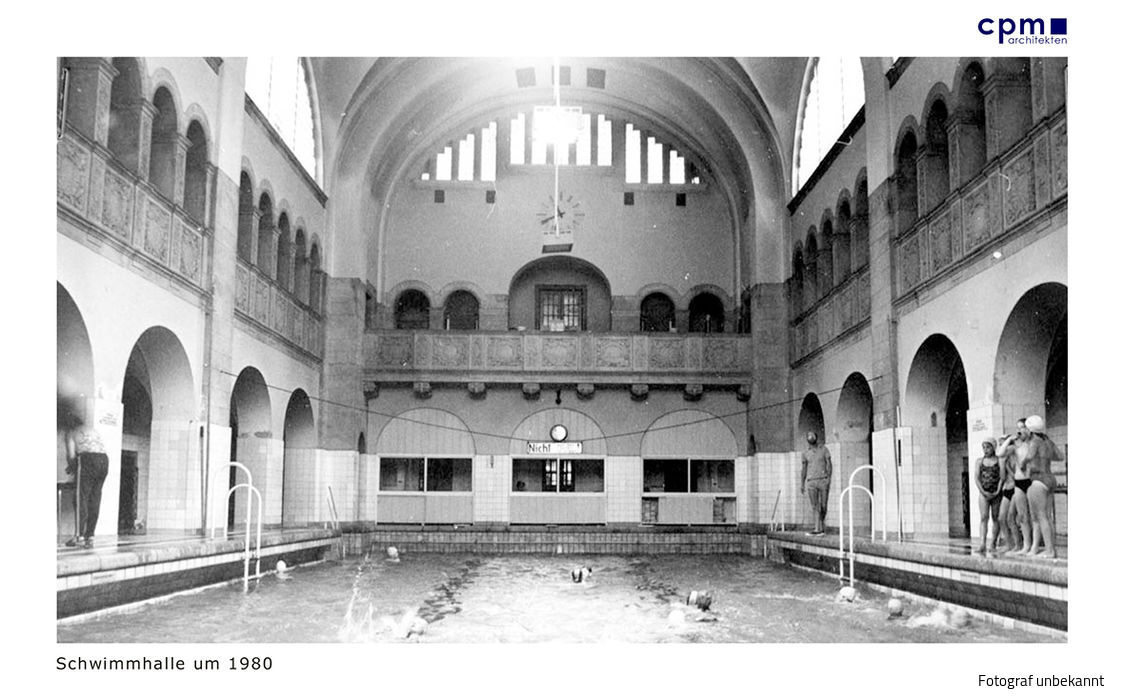
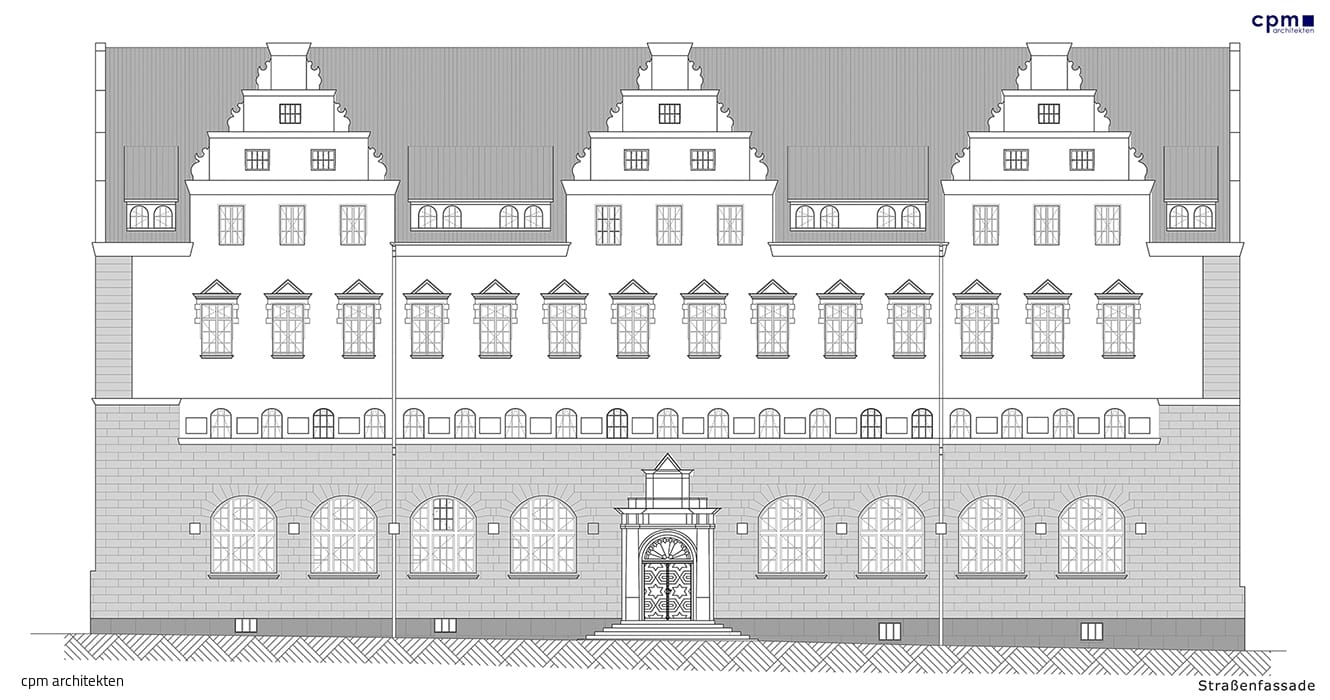
On 1 February 1902, the doors of the Oderberger Stadtbad opened for the first time in Berlin's Prenzlauer Berg district. Designed by renowned architect and city planner Ludwig Hoffmann (1852–1932), this imposing structure rose in just three years. Hoffmann was a prolific master builder who transformed Berlin's skyline with nearly 300 projects – from hospitals and government buildings to schools and public baths. These baths were vital social infrastructure at the time, providing essential sanitation for residents whose homes lacked private facilities. While Hoffmann's designs typically reflected the ornate historicism of the era – often richly embellished and somewhat elaborate – the Oderberger Stadtbad distinguished itself through its restrained elegance, winning widespread acclaim that endures today following its recent reopening. Closure came in 1987 due to structural damage to the pool floor. During decades of dormancy, the building found an unexpected second life as an event venue and underground hotspot for Berlin's creative scene. More than two decades later, the neighboring property owner—who operated a language school there—made the bold decision to acquire the adjacent bathhouse complex, revitalize it, and reimagine it as a luxury hotel. Today, both the school campus and hotel have been operating successfully for several years, together creating an unmistakable destination that celebrates nostalgic charm alongside modern comfort.
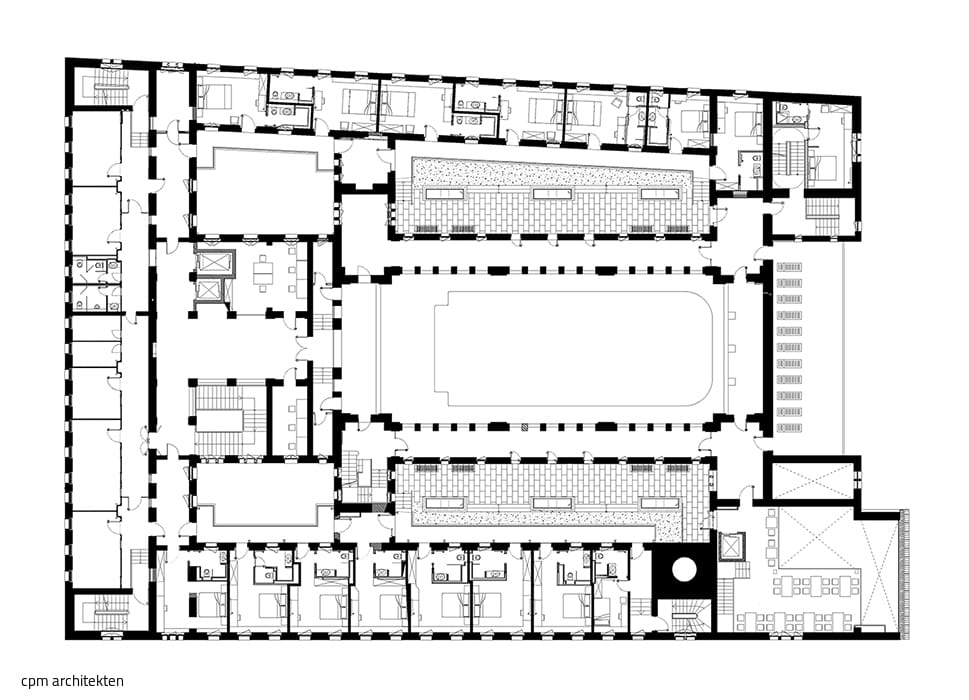
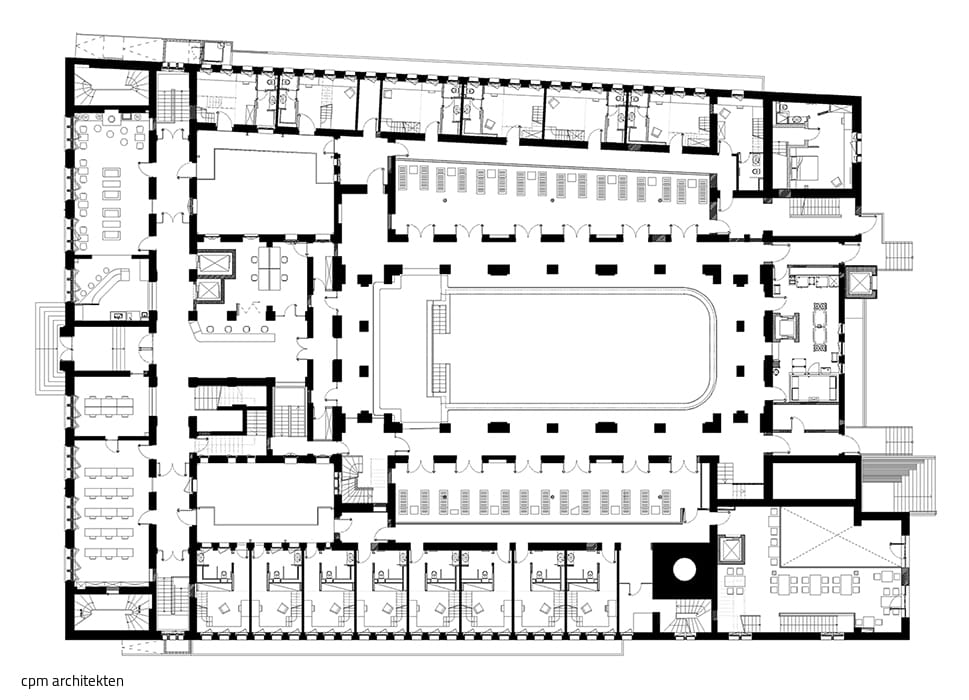
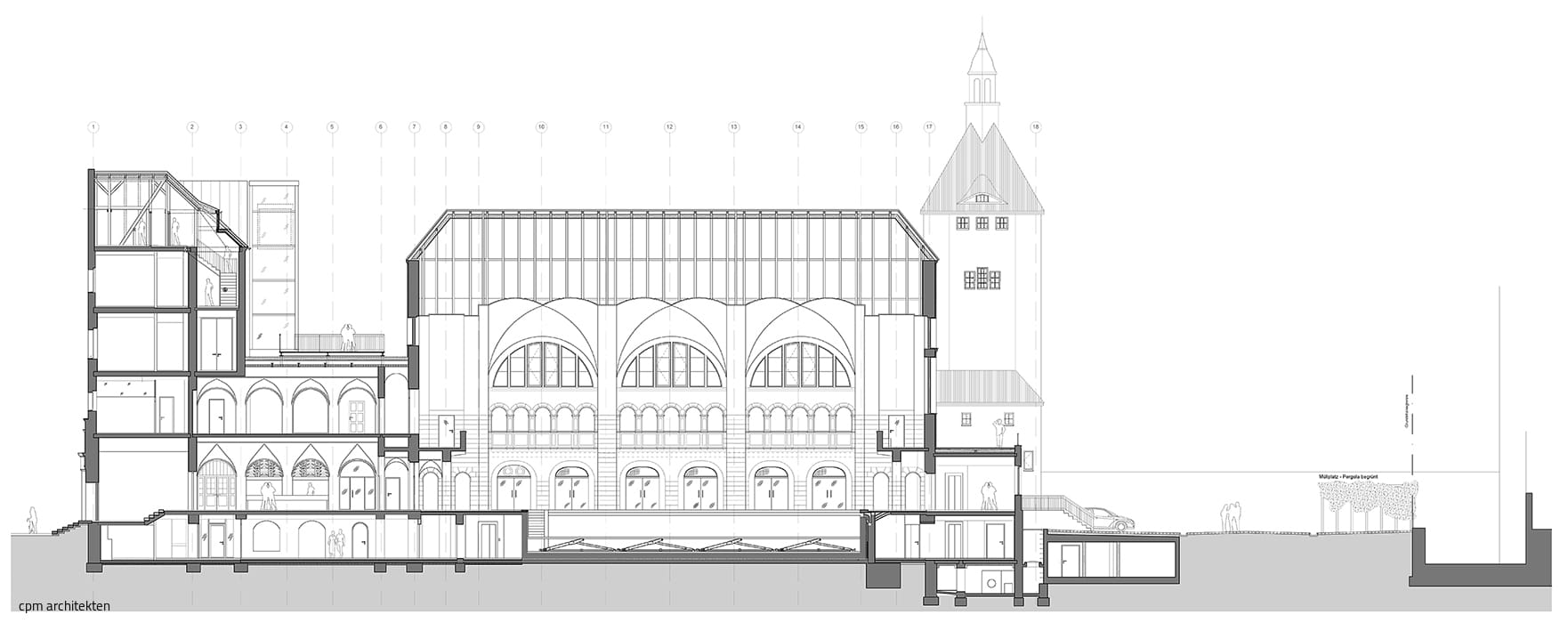
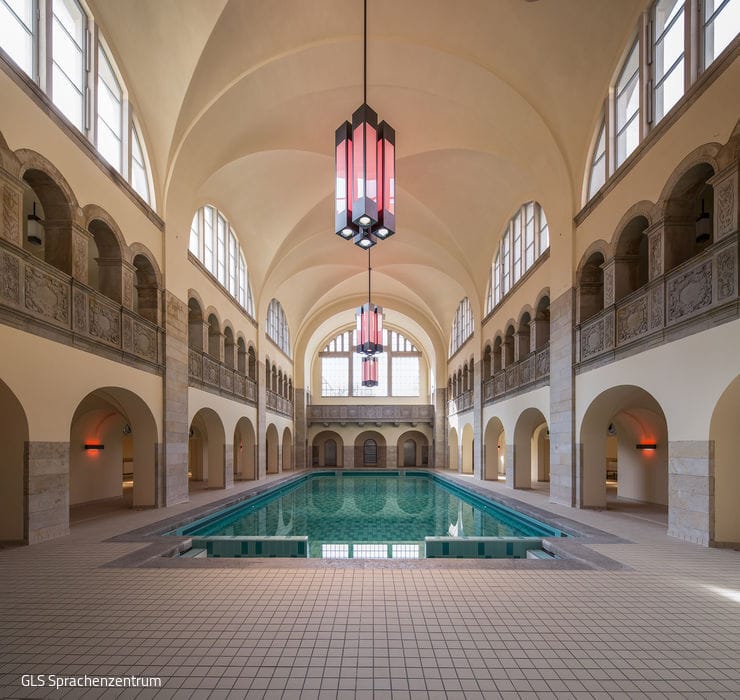
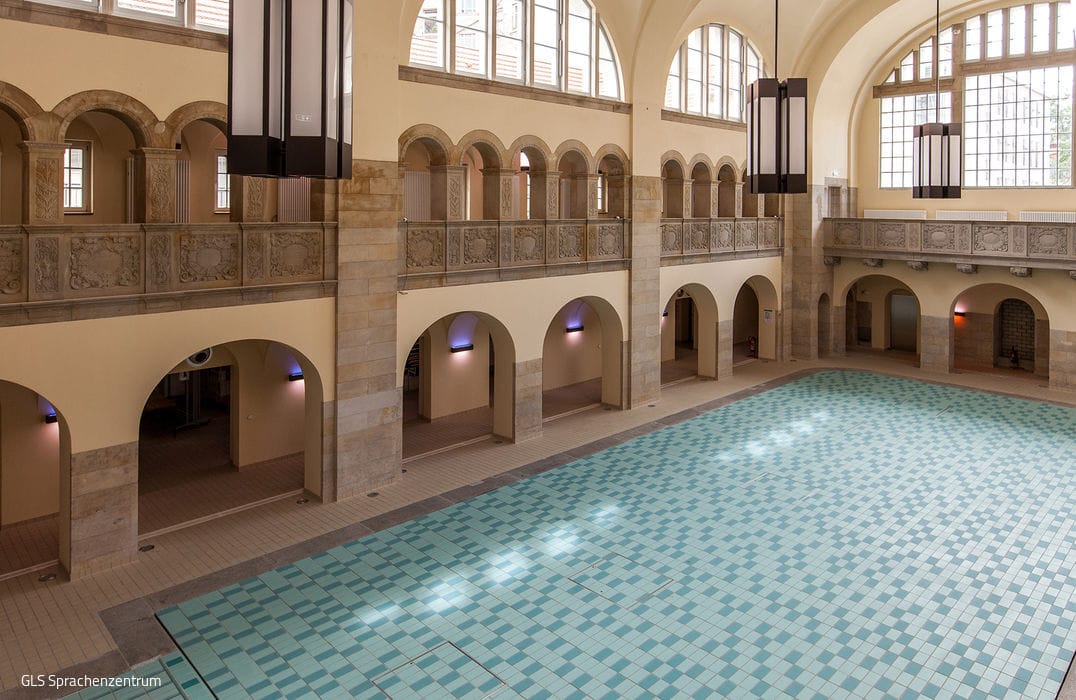
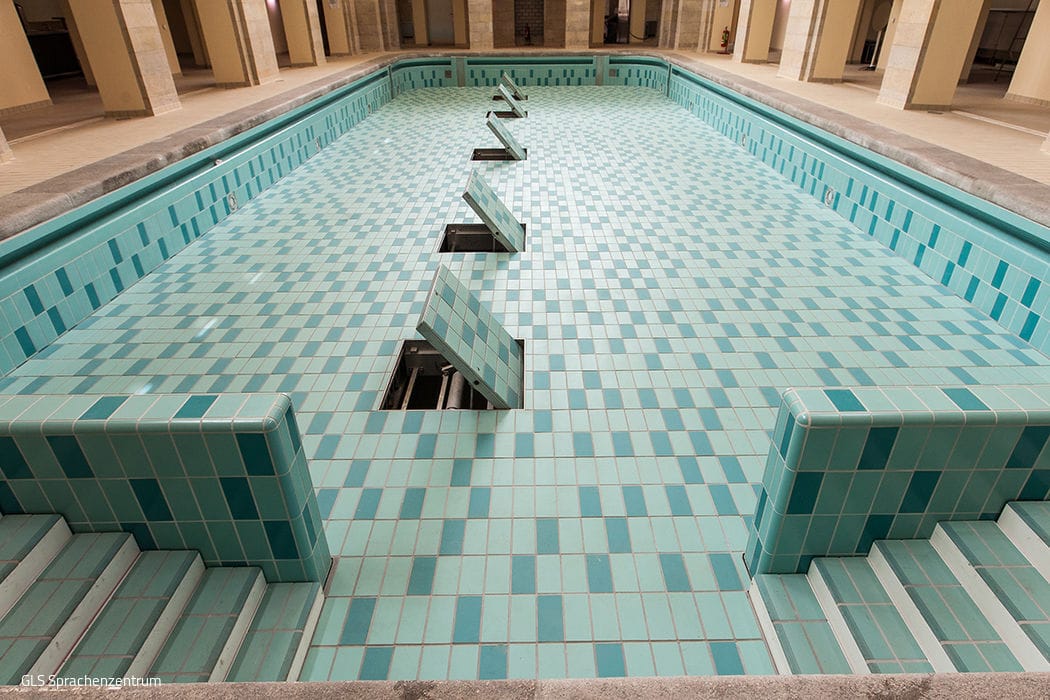
The architectural firm cpm Architekten took on this intricate renovation and redesign challenge, a four-year undertaking of considerable scope. Following their earlier renovation of the GLS language school and responding to its expanding space needs, the bathhouse received comparable attention. The project encompassed a restaurant, bar, training facilities, 70 guest rooms, two apartments, and five signature tower suites. Yet the undisputed heart of the entire complex is the cathedral-like swimming hall. The pool received a new tiled floor – with heritage authorities demanding that each tile match the original dimensions and be custom-fired to period specifications. The true innovation is the hydraulic lifting floor, engineered by Mathias Jensch. This ingenious system raises and lowers within 20 minutes, allowing the floor to remain submerged while adjusting its depth; strategically placed flaps in the pool floor facilitate water displacement. The event space books consistently for weddings and celebrations multiple times weekly, necessitating a full commercial kitchen. During daylight hours, the pool remains publicly accessible – Berliners can still swim their laps as they have for generations, followed by a visit to the newly installed sauna in the basement.
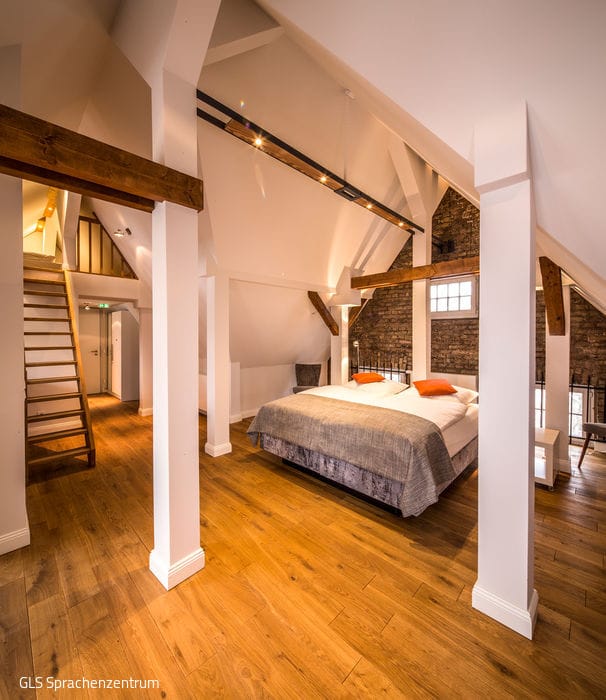
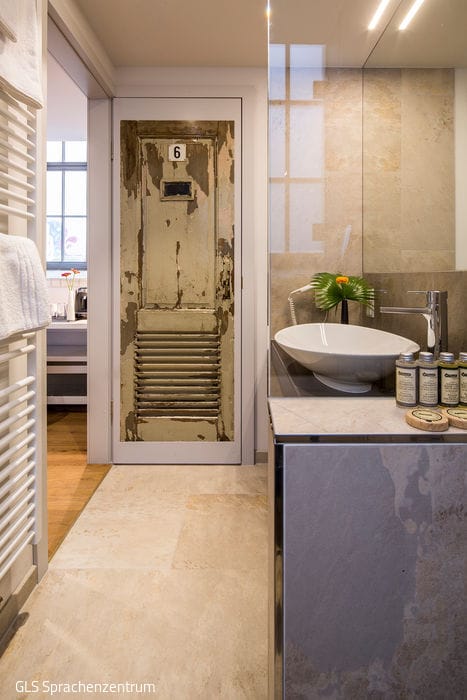
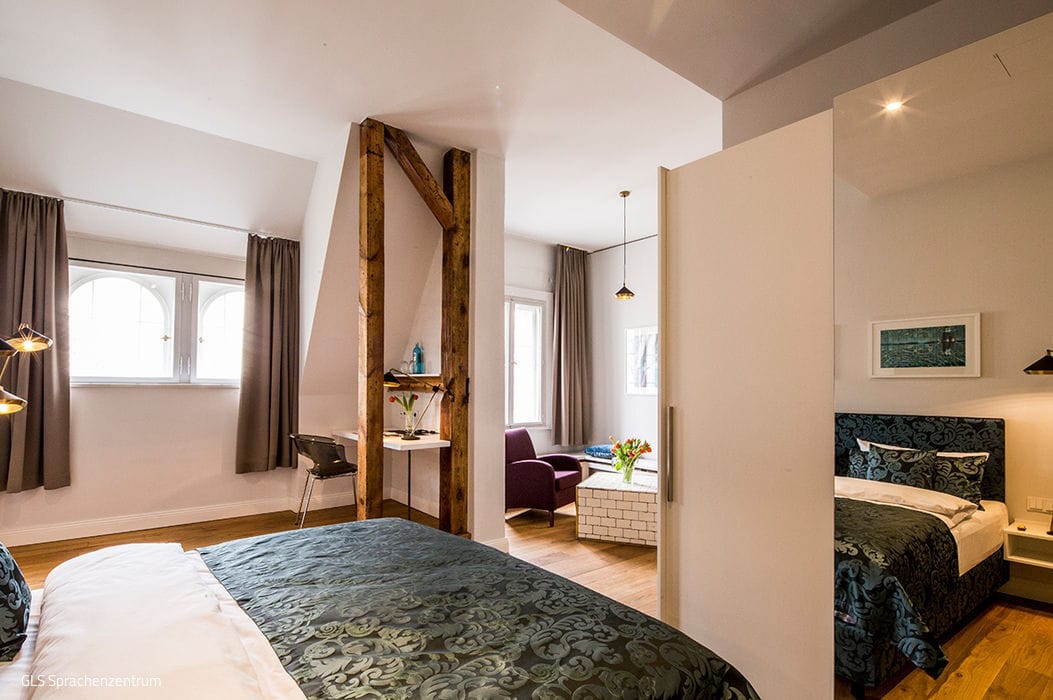
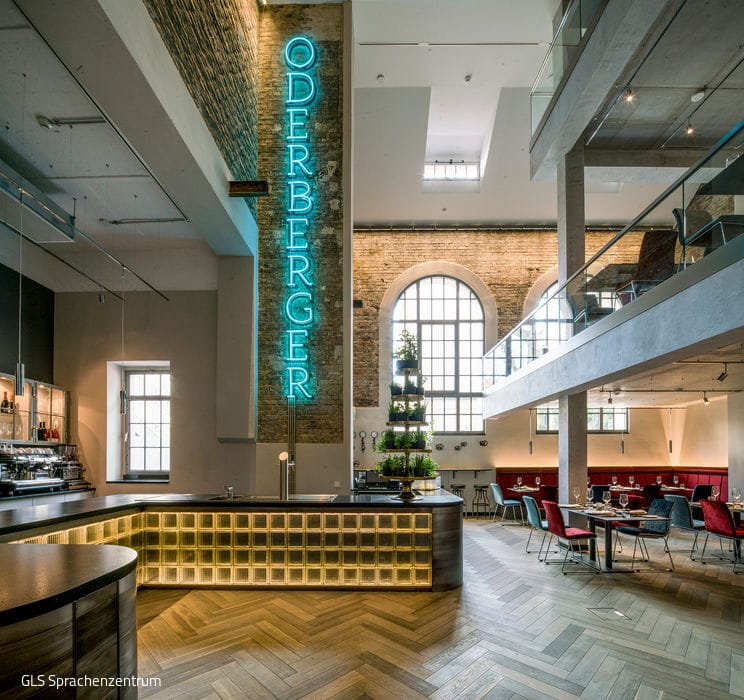
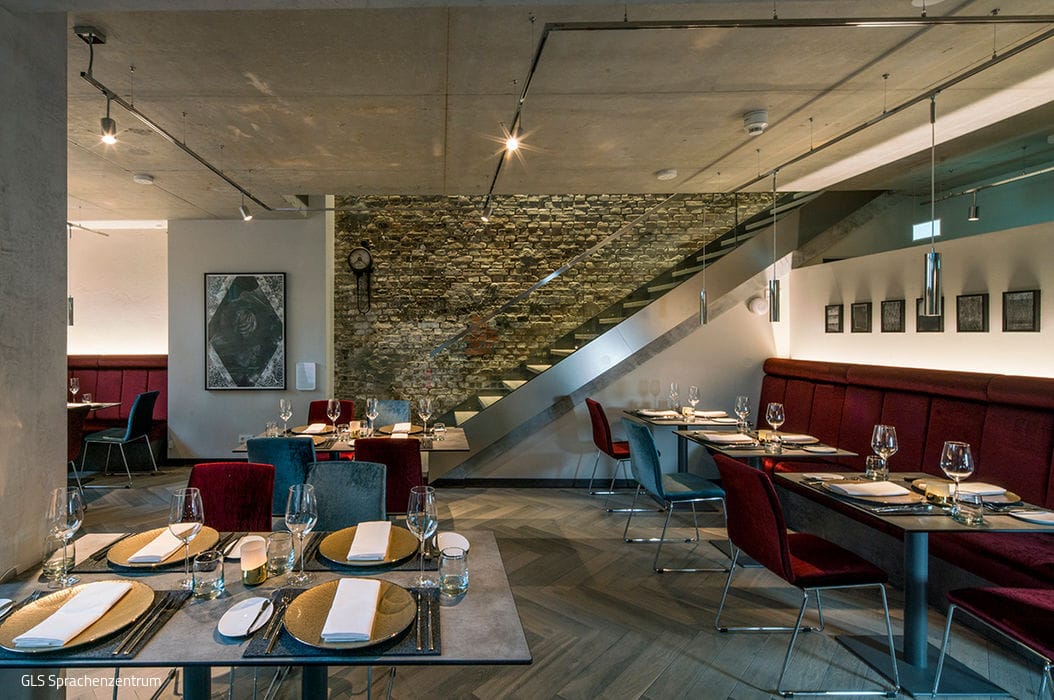
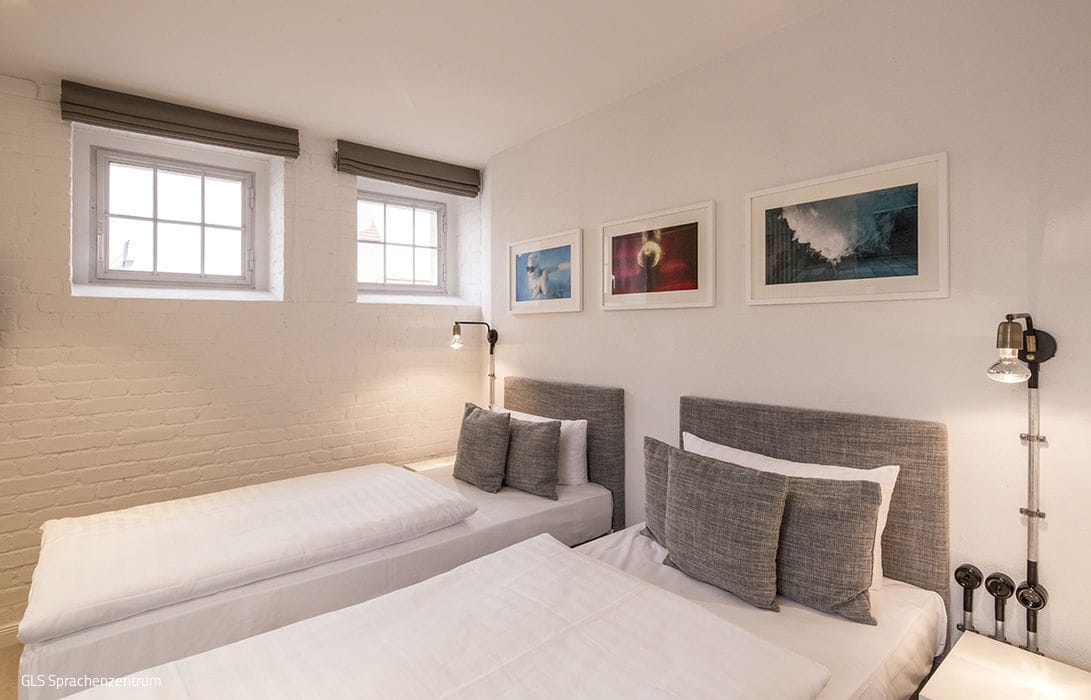
The architects and planners have achieved a remarkable feat. Every sculptural ornament adorning the bathhouse walls has been meticulously preserved or expertly restored where damage occurred. It borders on miraculous that the structure survived World War II bombing campaigns so intact – only the expansive window facing the campus was lost to blast damage. Former shower stalls on the first floor were ingeniously reconfigured into seminar rooms through strategic consolidation. Throughout the renovation, original details were honored wherever possible: vintage cubicle doors were mounted behind glass and repurposed as bathroom doors in the hotel rooms. Historic waiting areas were reimagined as a library and an upscale bar on opposite sides. Period-appropriate furnishings from the original building remain in use. Each of the 70 rooms showcases individual character and refined design – including intimate tower apartments fitted with custom intermediate ceilings. The restaurant, now situated in the former boiler room, was expanded vertically with inserted concrete floors to create dining areas across two levels. Few renovation projects achieve such an elegant balance between historical respect and contemporary functionality. This transformation stands as a compelling testament to thoughtful adaptive reuse.
Photography Credits:
GLS Language Centre
www.gls-sprachenzentrum.de
(Published in CUBE Berlin 02|21)


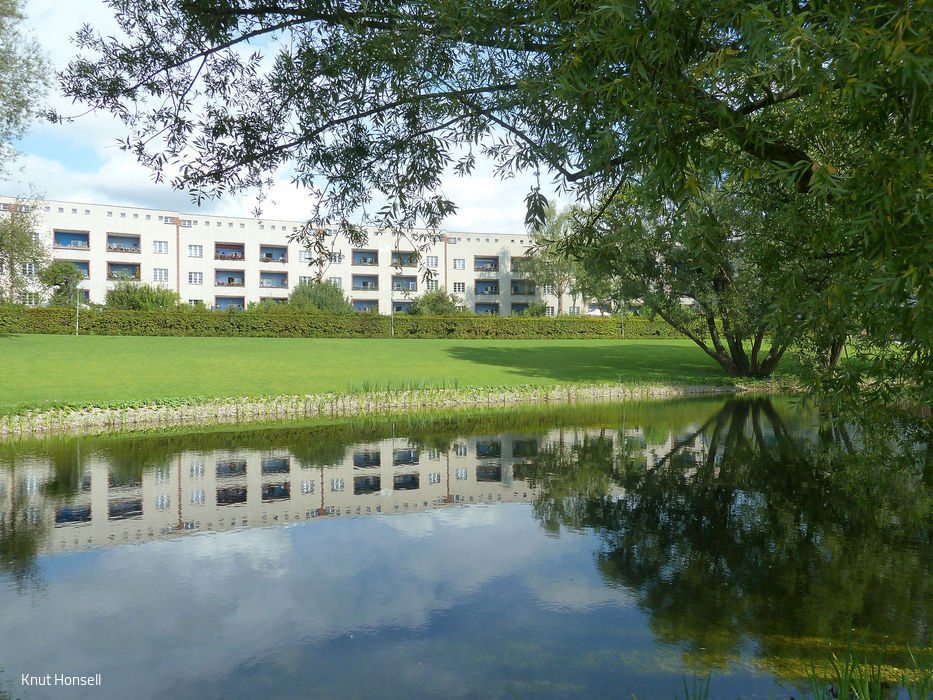
Hufeisensiedlung: A Listed Garden Monument
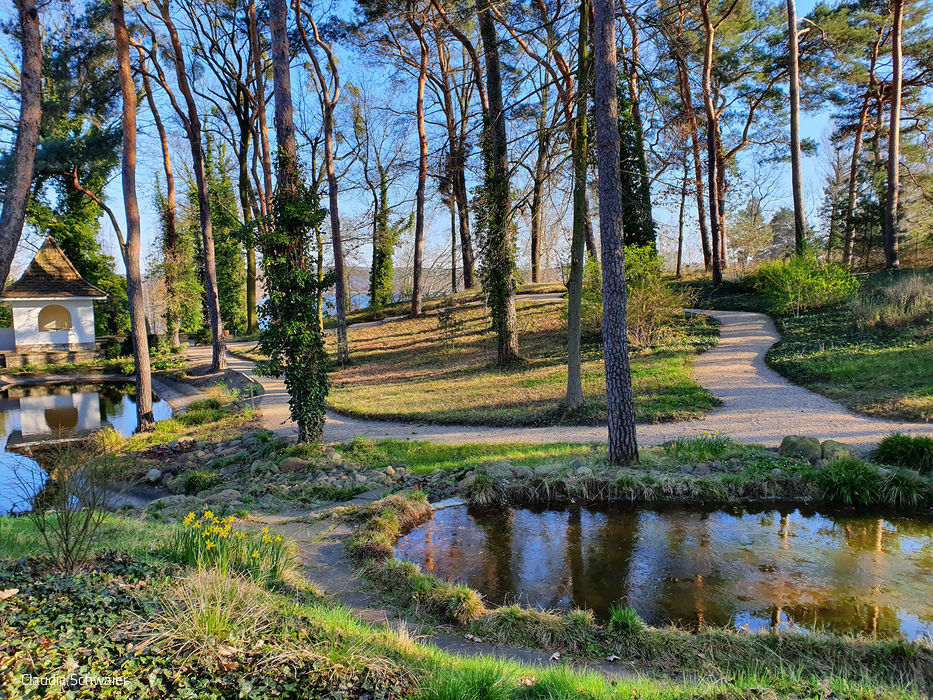
Green spaces now protected as an ensemble
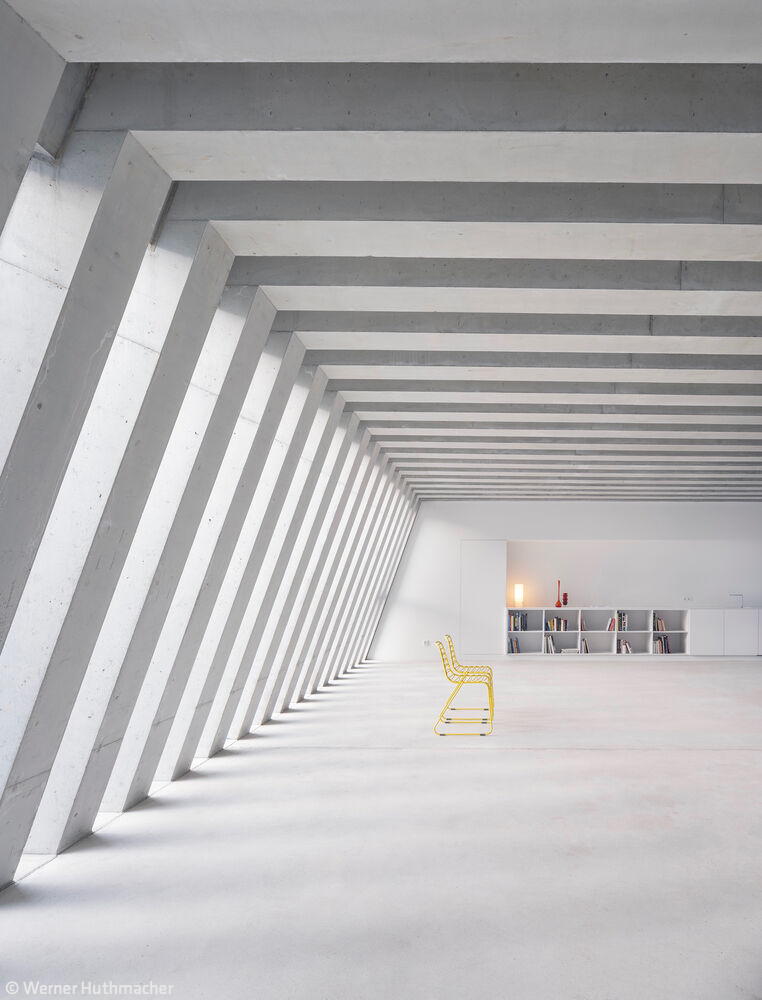
Light Takes the Stage
An innovative roof extension featuring a series of concrete ribs that crowns a historic industrial building

Bespoke Design Objects
Wood offcuts serve as the raw material for far more than lighting—tables, stools, cutting boards, and a bed all represent the expanding range of pieces the team creates.
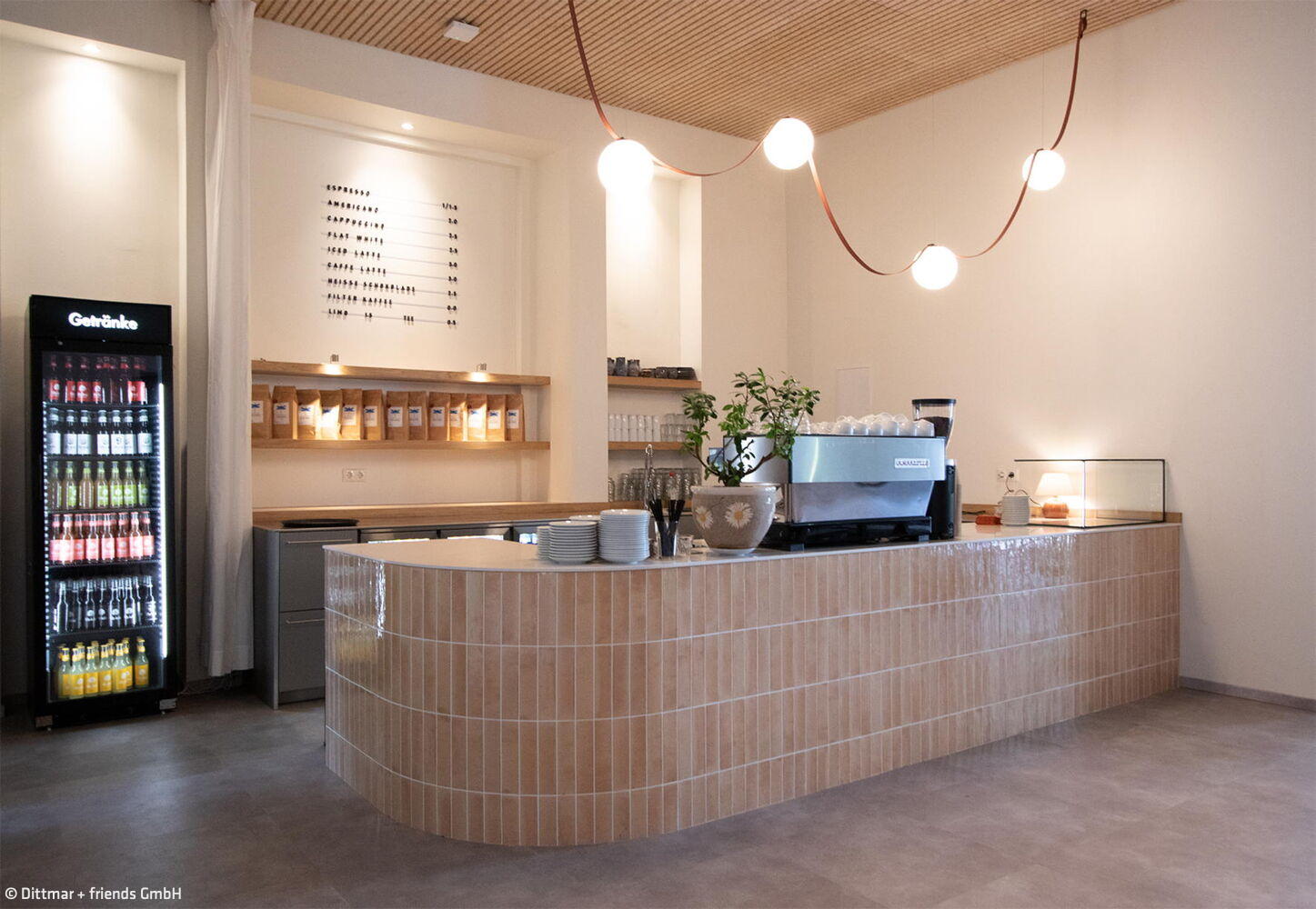
Bright, Modern and Dynamic
Café Lukasgemeinde – Where Design and Community Connect Effortlessly